


What Causes Hyperpigmentation on Face: A Clinical Guide
Most advice about facial hyperpigmentation fails for one reason. It treats every dark spot as the same problem.
That's why people bounce from vitamin C to acids to scrubs to “brightening” masks and still don't get durable results. A brown patch from melasma doesn't behave like a post-acne mark. A sunspot doesn't respond like periocular darkening triggered by medication. And if you don't identify the trigger, even a strong product routine can stall.
When people ask what causes hyperpigmentation on face, they usually want one answer. There isn't one. There are several distinct causes, and they act through different biological pathways inside the skin. Some increase melanin production directly. Some keep pigment from clearing efficiently. Others keep re-triggering inflammation, so the skin lays down more pigment every time it tries to heal.
That distinction matters because hyperpigmentation is not just a surface stain. It's a signaling problem, an inflammation problem, a UV problem, and in some cases a hormone or medication problem. If you only chase the visible color, you miss the process that created it.
Clinical reality: Single-ingredient routines often underperform because they target one part of pigment formation while ignoring the trigger that keeps driving it.
The better approach is structured. First identify the type. Then remove the trigger where possible. Then use a routine that interrupts pigment production, supports turnover, and avoids creating more irritation. That's how you stop guessing and start treating dark spots like a biological condition instead of a cosmetic annoyance.
Introduction
Hyperpigmentation on the face isn't a mystery, but it is commonly mismanaged. The biggest mistake I see is the quick-fix mindset. People assume one “hero” serum should erase every mark, regardless of whether the cause is sun exposure, acne inflammation, hormones, friction, or medication.
That approach fails because facial pigmentation is a pattern, not a single diagnosis. Some discoloration starts with ultraviolet exposure. Some starts with inflammation after acne or eczema. Some appears in symmetrical patches because hormones and UV interact. Some develops around the eyes because a medication changed local pigment behavior.
If you've been using random brightening products without understanding the trigger, that's often why results are inconsistent. The skin may look a little clearer for a while, then darken again after one breakout, one beach day, one irritating treatment, or one season of cumulative exposure.
Why dark spots keep coming back
Most facial hyperpigmentation has a repeat driver behind it. That's the piece people miss.
- Ongoing UV exposure keeps stimulating melanin production.
- Persistent inflammation from acne, rubbing, or harsh skincare keeps telling melanocytes to stay active.
- Hormonal signaling can keep melasma cycling.
- Unrecognized medication effects can keep pigment returning even when the rest of the routine looks reasonable.
The solution is not to use more products. It's to use a protocol that matches the mechanism. That starts with understanding how pigment is made in the first place.
The Biological Root of Facial Pigmentation
The skin doesn't produce pigment by accident. It does it for protection.
Think of pigment production as a factory. Melanocytes are the specialized cells that run the factory. Melanin is the pigment they manufacture. Tyrosinase is one of the key enzymes that helps start the production line. Once pigment is produced, it's packaged into melanosomes and transferred into surrounding skin cells called keratinocytes, where the visible color shows up on the surface.

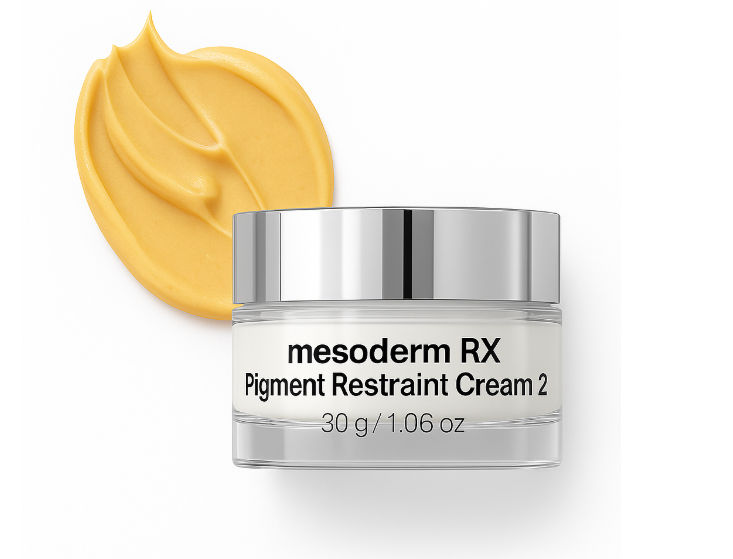
Featured Product
Pigment Restraint Cream
Visibly fade the look of dark spots and uneven tone — no clinic visit required. A brightening cream made to target the look of stubborn discoloration, whether it’s from post-blemish marks, sun exposure, or dullness that years of serums haven’t improved.
Shop Now →The three ways pigmentation becomes excessive
Hyperpigmentation on the face is biologically driven by three distinct mechanisms: increased melanin production, altered melanosome transfer to keratinocytes, or impaired melanin clearance, with inflammatory mediators such as prostaglandins, IL-1, and TNF-α directly increasing melanogenic enzyme expression in PIH cases, as outlined in this clinical review on hyperpigmentation etiology and mechanisms.
That matters because a dark spot can form even when the problem isn't only “too much pigment.” In some patients, the issue is how pigment is distributed. In others, the problem is that pigment remains visible because the skin isn't clearing it efficiently.
Why exfoliation alone doesn't solve the problem
Many routines fail to properly address exfoliation. Exfoliation can help improve the appearance of uneven tone because it supports surface renewal and works with the skin's natural cell turnover process. But exfoliation doesn't shut down every trigger behind pigment formation.
A formula like AHA + BHA + PHA Skin Brightening Serum 30ml fits this biology when used appropriately because it combines exfoliating acids with kojic acid and hydrating support. In practical terms, that means one product can address surface buildup, uneven texture, and part of the pigment pathway at the same time. It still works best inside a wider protocol, not as a standalone fix.
Pigment control works better when you target production, transfer, and clearance together, while also removing the trigger that started the cycle.
Distinguishing Types of Hyperpigmentation
Not all dark spots deserve the same label. Patients often call everything “sun damage” or “acne marks,” but the pattern on the skin usually tells a different story.
Hyperpigmentation types at a glance
| Characteristic | Post-Inflammatory (PIH) | Melasma | Sunspots (Solar Lentigines) |
|---|---|---|---|
| Typical appearance | Flat brown, tan, or gray marks left after skin injury or inflammation | Symmetrical brown or gray patches | Discrete darker spots with a more localized pattern |
| Common pattern | Appears where acne, bites, burns, eczema, or irritation occurred | Often shows on cheeks, forehead, and upper lip | Appears on chronically exposed facial areas |
| Primary cause | Inflammatory signaling triggers excess pigment | Hormonal influence, often worsened by UV exposure | Cumulative ultraviolet exposure |
| What often worsens it | Picking, squeezing, harsh treatments, friction | Sun exposure and heat | Ongoing unprotected sun exposure |
If you're unsure what category your discoloration fits into, this guide to types of dark spots on face is a useful companion because pattern recognition matters before treatment selection.
Post-inflammatory hyperpigmentation is not just “leftover acne”
PIH is one of the most misunderstood causes of facial dark spots. It isn't dirt under the skin and it isn't a scar in the classic texture sense. It's a pigment response to inflammation.
According to this review of post-inflammatory hyperpigmentation, PIH occurs in up to 65% of patients after acne breakouts and is particularly prevalent in Fitzpatrick skin types III to VI. The same source notes that acne lesions that are mechanically irritated, picked, or squeezed have a 90% higher likelihood of resulting in persistent dark spots.
That's why aggressive “spot extraction” at home often backfires. You don't remove the problem. You increase the inflammatory signal that tells melanocytes to deposit more pigment.
Melasma and sunspots are not interchangeable
Melasma behaves differently from PIH. It tends to appear as broader, symmetrical patches rather than isolated post-breakout marks. Hormonal shifts can be involved, and sunlight commonly intensifies it. Treatment also tends to require stricter trigger control because melasma is prone to recurrence.
Sunspots, by contrast, are more clearly tied to cumulative UV exposure and usually appear as individual lesions on frequently exposed skin. They still need pigment-correcting treatment, but they don't carry the same hormonal pattern that melasma does.
If the diagnosis is wrong, the routine is usually wrong too.
Primary Triggers and Overlooked Risk Factors
Sun is the easiest answer. It is rarely the whole answer.
Facial hyperpigmentation usually develops when melanocytes receive repeated signals to make and transfer more pigment than the skin can clear evenly. UV exposure is one signal. Inflammation is another. Hormones, heat, visible light, friction, and certain medications can keep that pigment pathway active long after the original trigger seems minor. This is why single-ingredient routines so often disappoint. If the trigger is still active, the serum is working against biology.

The main triggers clinicians look for
Clinically, I look for trigger patterns before I look at products.
- UV exposure: Ultraviolet radiation increases oxidative stress and activates signaling pathways that upregulate melanogenesis. On the face, repeated exposure also makes existing discoloration more persistent, especially in melasma and post-inflammatory pigment.
- Inflammation: Acne, eczema, insect bites, burns, over-exfoliation, and poorly tolerated procedures release inflammatory mediators that stimulate melanocytes. In darker skin tones, this response is often stronger and slower to resolve.
- Hormonal shifts: Melasma is strongly influenced by hormonal signaling. Pregnancy, oral contraceptives, and hormone fluctuations can change how aggressively melanocytes respond to light and heat.
- Visible light and friction: Patients with deeper skin tones often remain pigment-prone even with decent UV protection if visible light exposure is high or if rubbing from towels, masks, cleansing devices, or habitual touching continues.
These triggers stack. A patient with mild acne, inconsistent sunscreen use, and daily friction from aggressive cleansing can generate more pigment than someone with sun exposure alone.
The medication link many people miss
Medication history changes the assessment more often than people expect.
Topical and ocular drugs can alter local pigment behavior. Prostaglandin analogues such as latanoprost and bimatoprost, used for glaucoma, are known to cause periocular darkening. Around the eyes, that can be mistaken for fatigue, irritation, or age-related shadowing when the pattern is drug-related.
The same principle applies outside the eye area. If discoloration started after a new prescription, a cosmetic procedure, or a treatment series, the timeline matters. Pigment that appears after a trigger is often being sustained by that trigger. Adding another brightening product without identifying the cause usually leads to slow, partial results.
Why aggressive treatment often prolongs the problem
A common mistake is treating pigment as surface debris that can be exfoliated away. Skin does not respond that way.
Mechanical scrubs, frequent peels, strong acid layering, high-strength retinoids introduced too quickly, and poorly selected device settings can all create enough irritation to restart melanocyte activity. That trade-off matters most in patients with inflammation-prone skin and in Fitzpatrick III to VI, where even well-intended treatment can produce new post-inflammatory hyperpigmentation.
Procedure choice matters too. If someone is assessing device-related risk, this hyperpigmentation from laser guide is a useful reference because it explains how laser type, settings, and operator judgment affect pigment outcomes.
If treatment keeps provoking inflammation, pigment control stays unstable.
A Systematic Approach to Prevention
Prevention is where pigment control is won or lost. A brightening serum can slow melanin production, but it cannot outwork daily UV exposure, repeated irritation, or a damaged barrier.

The foundation
Sun exposure drives a large share of facial hyperpigmentation, especially melasma, freckles, and lingering post-inflammatory marks. UV light increases melanocyte activity, visible light can worsen pigment in darker skin tones, and heat can aggravate melasma even when the skin does not look sunburned.
That is why sunscreen has to be treated as daily maintenance, not occasional protection. Broad-spectrum SPF 30 or higher is the baseline. In practice, many patients need tinted mineral formulas, hats, shade, and reapplication to keep results stable, particularly if they spend time commuting, exercising outdoors, or sitting near windows.
Prevention works in layers
Effective prevention has three parts, and each one addresses a different step in the pigment pathway.
- Reduce incoming triggers Use daily broad-spectrum sun protection and add physical measures when exposure is predictable. Prevention is not only about avoiding burns; it is about reducing the repeated low-grade stimulation that keeps melanocytes active.
-
Control inflammation before it becomes pigment
Acne flares, eczema, friction, harsh exfoliation, and poorly tolerated actives all increase inflammatory signaling in the skin. In patients prone to PIH, that inflammation often matters as much as the original lesion. -
Keep the barrier functional
Barrier disruption increases stinging, redness, and treatment intolerance. Once that starts, people often cycle between over-treating and stopping everything. Pigment improves slowly under those conditions because the skin is being pushed and reset at the same time.
Why single-step prevention often fails
One product rarely solves a pigment problem because the biology is not singular. Sunscreen helps, but it does not stop pigment caused by acne picking. Acne control helps, but it does not offset unprotected UV exposure. A tyrosinase inhibitor can reduce melanin formation, but if irritation continues, the skin still receives signals to produce more pigment.
This is the practical mistake behind many stalled routines. The plan targets one mechanism and ignores the others.
Common prevention errors
- Using SPF only for outdoor events: incidental exposure adds up during driving, walking, errands, and window-side work.
- Trying to scrub or peel marks away: extra irritation can reactivate pigment, especially in skin that develops PIH easily.
- Stopping protection when spots fade: melanocytes do not develop discipline after one good month. If triggers return, discoloration often returns with them.
- Treating every skin type the same way: patients with Fitzpatrick III to VI often need slower escalation and stricter inflammation control.
The goal is straightforward. Keep melanocyte stimulation low, keep inflammation controlled, and keep the barrier intact. That is how prevention supports treatment instead of undoing it.
Evidence-Based Ingredients and Treatment Protocols
Good pigment routines are built around mechanism, not trend cycles. If you're trying to correct hyperpigmentation, you need ingredients that do one or more of the following: reduce melanin formation, improve how pigment is shed, limit inflammation, and support the skin barrier so treatment remains tolerable.

Ingredient groups that actually make sense
Exfoliating acids
AHAs, BHAs, and PHAs help remove surface buildup and support visible tone improvement by encouraging the shedding of pigmented cells. They don't solve every cause of hyperpigmentation, but they're useful when dullness, congestion, rough texture, and uneven tone overlap.
The trade-off is irritation. Stronger or more frequent exfoliation is not always better. If acids create burning, persistent redness, or barrier disruption, they can worsen the same inflammatory pathways that drive PIH.
Tyrosinase-targeting ingredients
Tyrosinase is one of the key enzymes involved in pigment production, so ingredients that interfere with that process make biological sense in dark spot routines. Kojic acid is one example commonly used for this purpose.
This category matters most when the skin keeps producing excess pigment. Surface exfoliation can help remove what's already visible, but if production remains active, discoloration often returns.
Supportive brighteners and barrier-focused ingredients
Niacinamide is often useful in pigment routines because it fits well into multi-step protocols and tends to pair well with other actives. Hydrating and calming ingredients also matter more than many people realize. A patient who can tolerate a consistent routine usually outperforms a patient who uses stronger actives for one week and then stops because their skin is irritated.
For a consumer-facing roundup of complementary options, this guide to expert tips for fading dark spots is a practical reference.
A protocol works better than a hero product
A basic structure looks like this:
- Morning Gentle cleanse, pigment-supportive treatment if tolerated, then diligent sun protection.
- Evening Cleanse, apply targeted actives, then support the barrier with hydration.
- Weekly adjustment Increase or reduce exfoliation based on tolerance, not impatience.
If prescription-strength turnover support is being considered, understanding where tretinoin fits can help. This breakdown of tretinoin cream and Obagi routine context is useful for people comparing over-the-counter pigment routines with medical-grade options.
Here's a practical explainer that reinforces why ingredient selection and pacing matter in real routines:
What usually fails in practice
The most common mistakes are predictable.
- Using too many actives at once: More ingredients can mean more inflammation, not faster clearing.
- Changing products too often: Pigment correction needs consistency.
- Skipping SPF while using brighteners: That undercuts the entire protocol.
- Treating all dark spots the same: PIH, melasma, and sunspots don't respond identically.
Clinical rule: If a routine is potent enough to trigger repeated irritation, it's often too inflammatory to be a good long-term pigment routine.
When to Consult a Dermatologist for Hyperpigmentation
At-home care has limits. Knowing those limits protects your skin and often saves time.
Signs you shouldn't keep self-treating
See a dermatologist if the pigmentation is spreading, unusually dark, asymmetrical, changing in appearance, or accompanied by other skin changes that don't fit a straightforward dark spot pattern. New or changing lesions deserve proper evaluation rather than cosmetic guessing.
Professional care also makes sense when melasma is stubborn, when discoloration is widespread, or when a well-structured home routine hasn't meaningfully improved the skin after a consistent trial. At that point, the issue may be diagnosis, depth of pigment, trigger persistence, or treatment strength.
What professional treatment can add
A dermatologist may consider options such as prescription topicals, supervised use of stronger pigment-modulating agents, tretinoin, in-office chemical peels, or device-based treatments such as laser or light therapies. Those interventions can help, but only when matched carefully to skin type, diagnosis, and inflammation risk.
This is especially important in patients with skin that pigment-reacts easily. The wrong peel, the wrong laser setting, or the wrong frequency can create more discoloration instead of less.
Medication review matters
If pigmentation appears around the eyes, after a medication change, or during treatment for another medical condition, bring a full medication list to the visit. That includes eye drops, topicals, and “non-skin” prescriptions. The cause may not be obvious from the face alone.
A good dermatology consultation should answer three questions clearly:
- What type of pigmentation is this
- What is still triggering it
- What is the safest effective plan for this skin type
If you don't get those answers, the treatment plan is incomplete.
Frequently Asked Questions
How long does it take for hyperpigmentation to fade?
It depends on the type of pigmentation, the depth of pigment, the trigger, and how consistent the routine is. Some superficial marks improve gradually with a steady protocol, while deeper or hormonally driven pigmentation can take much longer and may need professional care. The key is not speed. It's whether the routine is reducing the trigger while treating the pigment pathway.
Can hyperpigmentation come back after treatment?
Yes. That's common when the original trigger is still active. Sun exposure, recurring acne, hormonal shifts, friction, and certain medications can all cause discoloration to return. Maintenance matters, especially daily sun protection and inflammation control.
Is it safe to combine multiple active ingredients?
Sometimes, but only if the skin tolerates them. A rational routine combines ingredients with different roles without overwhelming the barrier. If your skin becomes tight, hot, flaky, or persistently red, the routine is too aggressive. Pigment correction should be progressive, not punitive.
Are dark spots always caused by acne or the sun?
No. Those are common causes, but not the only ones. Hormonal pigmentation, medication-related periocular darkening, eczema-related PIH, and treatment-induced inflammation all show up on the face. If the pattern doesn't match the obvious explanation, don't force the diagnosis.
Should I exfoliate more to clear dark spots faster?
Usually not. Over-exfoliation is one of the fastest ways to create more irritation, especially in skin prone to PIH. Exfoliation should support pigment correction, not drive inflammation. If the skin is stinging, peeling excessively, or becoming reactive, reduce intensity and restore the barrier.
Clearer skin usually comes from a smarter protocol, not a harsher one. If you want a results-focused routine built around brightening, resurfacing, and daily protection, explore Mesoderm RX for targeted formulas designed to support uneven tone without unnecessary additives.