


A Clinical Guide to Tretinoin Cream for Hyperpigmentation
Obagi Tretinoin Cream is a prescription-strength topical medication, not a cosmetic. It contains retinoic acid, the most potent and biologically active form of Vitamin A. This is not comparable to over-the-counter retinol—it’s a clinical tool designed to correct deep-set photodamage and hyperpigmentation by issuing direct commands to skin cells.
What Obagi Tretinoin Is and Its Mechanism of Action
To understand why tretinoin operates in a separate class from cosmetic retinols, one must grasp the biological mechanism. Cosmetic retinols (retinol, retinaldehyde) require multi-step enzymatic conversion within the skin to become active, a process where significant potency is lost. This inherent inefficiency leads to slower, less dramatic outcomes.
Tretinoin is different. It is already retinoic acid—the final, bio-available molecule that directly binds to retinoic acid receptors (RARs) within skin cell nuclei. It doesn't suggest change; it dictates cellular function. This binding initiates a cascade of transcriptional events that reprogram cellular behavior.

Tretinoin does not merely treat symptoms on the skin's surface; it fundamentally corrects the dysfunctional cellular processes that lead to textural irregularities and pigmentary disorders. It compels the skin to function as younger, healthier tissue. This is why it remains the undisputed gold standard in dermatology.
This "cellular reboot" triggers three critical biological actions:
- Accelerated Keratinocyte Turnover: It commands the basal layer of the epidermis to proliferate and shed old, damaged, and hyperpigmented keratinocytes more rapidly, revealing uncompromised skin.
- Collagen Synthesis: It stimulates dermal fibroblasts—the skin's "collagen factories"—to upregulate production of new, healthy Type I and Type III collagen, leading to a denser, firmer dermis and reduction in rhytids.
- Pigment Regulation: It modulates melanocyte activity and melanin distribution, breaking up existing pigment clusters and inhibiting the formation of new ones.
Concentrations as Clinical Tools
Obagi offers tretinoin cream in several strengths, most commonly 0.025%, 0.05%, and 0.1%. It is a clinical error to view these as merely "weak" or "strong." They are precise instruments selected based on the patient's condition, skin tolerance, and therapeutic goals. Correct concentration selection is critical for balancing efficacy with manageable side effects, primarily retinoid dermatitis.
Obagi Tretinoin Concentrations and Clinical Targets
| Concentration | Primary Clinical Target | Ideal Candidate Profile |
|---|---|---|
| 0.025% Cream | Initial photodamage, mild-to-moderate acne, retinization phase, long-term maintenance. | For tretinoin-naive patients, individuals with sensitive or reactive skin, or for sustained use after achieving primary correction. |
| 0.05% Cream | Established rhytids, moderate hyperpigmentation, moderate acne. | The standard therapeutic concentration, ideal for tolerant skin requiring significant correction of photoaging or pigmentation. |
| 0.1% Cream | Severe photodamage, deep wrinkles, recalcitrant hyperpigmentation, cystic acne. | A high-potency option reserved for experienced users, those with resilient skin, or for conditions unresponsive to lower strengths. |
A 0.025% concentration is the standard entry point for acclimating the skin. The 0.05% strength represents the therapeutic workhorse for many patients. The 0.1% concentration is a high-impact tool reserved for severe or resistant conditions.
The demand for such effective treatments is significant. The global tretinoin market is projected to reach an estimated value of $500 million by 2025, with North America as the dominant market. This growth is not driven by marketing hype, but by proven clinical efficacy. You can find more insights on this market trend at Archive Market Research. This sustained demand underscores the necessity of a clinical, results-first approach.
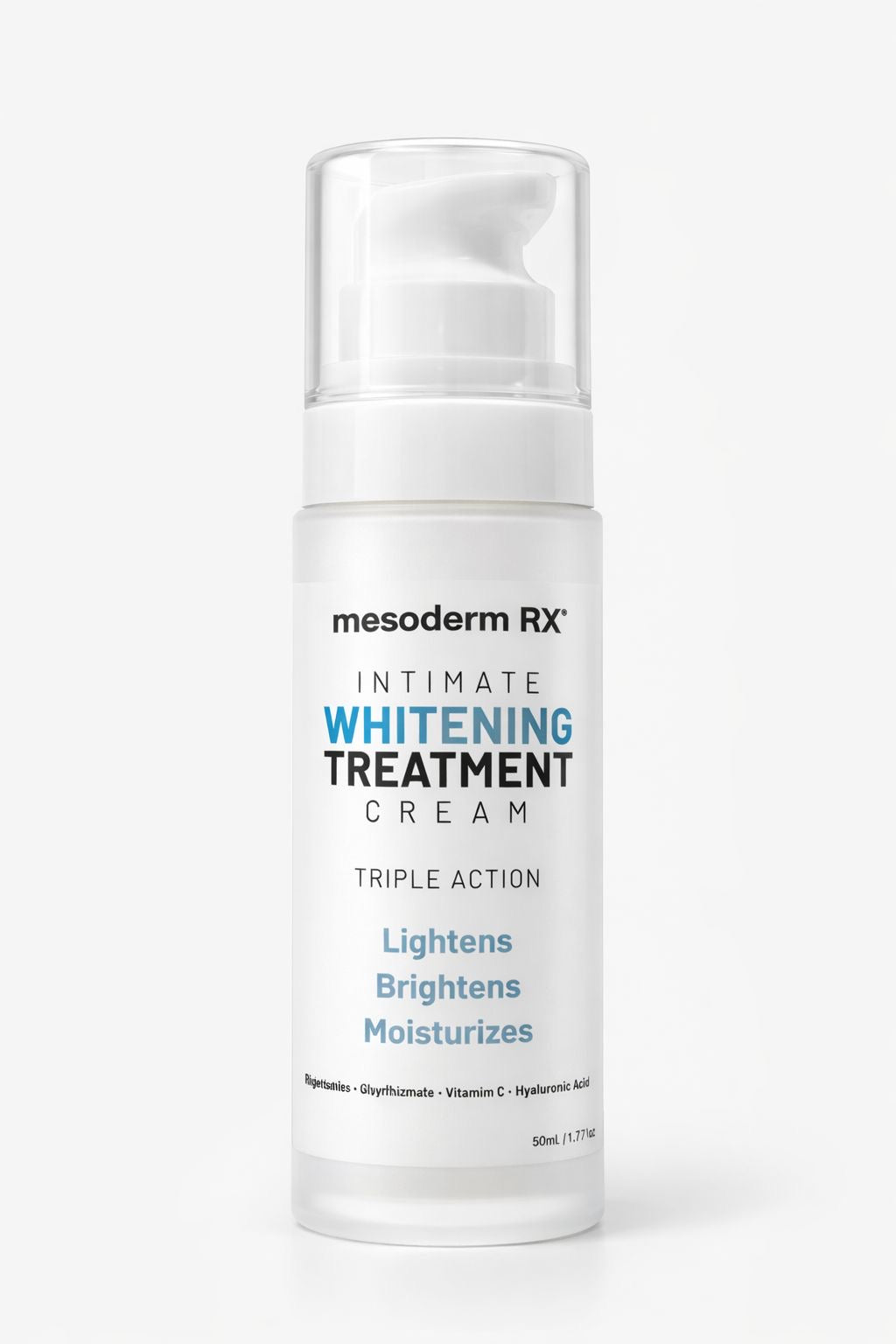
Featured Product
Intimate Skin Brightening Cream | Underarms, Inner Thighs & Sensitive Areas | Even Tone Care
Gentle cream formulated for sensitive areas to help improve the appearance of uneven skin tone and dark patches. Lightweight, soothing formula suitable for daily care.
Shop Now →The Biological Process for Correcting Pigmentation and Aging
To understand tretinoin's status as a gold-standard therapy, one must look beyond surface-level effects. Tretinoin functions as a biological regulator, correcting the very cellular dysfunctions that manifest as hyperpigmentation and chronological aging.
For hyperpigmentation, tretinoin acts as a systems regulator for melanin production and distribution. It does not simply bleach the skin; it systematically dismantles the overactive pigment-producing machinery through three primary mechanisms:
- Inhibition of Melanogenesis: It downregulates the expression of tyrosinase, the rate-limiting enzyme required for melanin synthesis. Reduced tyrosinase activity effectively slows the pigment assembly line.
- Inhibition of Melanin Transfer: It interferes with the transfer of melanosomes (melanin-containing packets) from melanocytes to the surrounding keratinocytes. If pigment cannot be delivered to surface cells, it does not become visible.
- Accelerated Epidermal Turnover: It increases the desquamation rate of the stratum corneum, physically clearing existing hyperpigmented cells from the skin's surface.
This multi-pronged attack is precisely why tretinoin is effective against various forms of hyperpigmentation where surface-level treatments fail.

Distinguishing Types of Hyperpigmentation
A common point of failure is treating all hyperpigmentation uniformly. Accurate diagnosis is the first and most critical step, as each pigmentary disorder has a distinct etiology.
Tretinoin’s power lies in its ability to regulate the core biological processes that go haywire in different pigmentary disorders. It doesn’t just fade spots; it corrects the dysfunction causing them.
Melasma: This is a complex, hormonally-mediated and UV-exacerbated condition presenting as symmetric, patchy hyperpigmentation. Melanocytes are in a state of chronic hyperactivity. Tretinoin addresses the root of the problem by normalizing melanocyte function and promoting the dispersion of melanin deposits.
Sun Spots (Solar Lentigines): These are discrete, well-demarcated macules resulting from chronic UV exposure and localized sun damage. Tretinoin works primarily by accelerating the shedding of these damaged, melanin-laden keratinocytes.
Post-Inflammatory Hyperpigmentation (PIH): This is a reactive hypermelanosis following an inflammatory event (e.g., acne, dermatitis). The initial inflammation triggers an overproduction of melanin as a protective response. Tretinoin resolves PIH by accelerating cell turnover and mitigating the inflammatory pathways that initiated the pigment production.
For a deeper analysis of these conditions, our guide on the causes and effective treatments for hyperpigmentation provides further clinical detail.
Reversing the Architecture of Aging
In the context of aging, tretinoin acts as a structural engineer for the dermal matrix. As we age, the skin's supportive framework degrades, leading to rhytids and loss of turgor. A key driver of this degradation are enzymes called matrix metalloproteinases (MMPs), which are activated by UV radiation and break down collagen and elastin.
Tretinoin intervenes by inhibiting MMP activity, thereby preserving existing collagen from degradation. Simultaneously, it stimulates fibroblasts to synthesize new, high-quality Type I and Type III collagen and elastin. Over months, this process rebuilds the dermal matrix, resulting in a measurably thicker, firmer, and more resilient dermis. This is not wrinkle smoothing; it is the reversal of the underlying structural damage.
Diagnosing Why Most Tretinoin Journeys Fail
A common narrative exists: a patient begins tretinoin cream, perhaps from a clinical brand like Obagi, with high expectations. Within weeks, they cease treatment, reporting severe peeling, redness, and breakouts—concluding the product has "wrecked" their skin.
This outcome is so prevalent it has fostered a subculture of misinformation, leading users to abandon the single most effective topical agent for skin transformation.
The failure is rarely due to the tretinoin itself. It is a failure of protocol and a fundamental misunderstanding of its mechanism. Most users quit during the predictable and necessary retinization phase, misinterpreting signs of cellular adaptation as signs of product incompatibility. Achieving superior results with tretinoin cream Obagi is not a matter of having "tough" skin; it is a matter of executing a correct protocol.
Debunking Destructive Tretinoin Myths
An effective protocol cannot be built upon a foundation of myths. These misconceptions generate fear, promote incorrect application, and lead to premature discontinuation of therapy.
-
Myth 1: "Tretinoin thins your skin." This is biologically inaccurate. Tretinoin thins the non-living stratum corneum (the outermost layer of dead cells), which causes desquamation (peeling). However, its primary therapeutic action is to thicken the living epidermis and dermis by stimulating keratinocyte proliferation and collagen synthesis. The skin becomes structurally stronger and denser, not weaker.
-
Myth 2: "The purge is uncontrollable acne." The initial breakout period, or "purge," is not the formation of new acne lesions. Tretinoin accelerates cellular turnover, forcing pre-existing micro-comedones—subclinical, invisible follicular plugs that were already destined to become inflammatory papules or pustules—to the surface simultaneously. It is evidence of the medication clearing underlying congestion, not causing it.
Understanding this is critical. The purge is not a random assault on the skin; it is an organized, accelerated clearance of pre-existing pathology. It is the temporary, visible manifestation of a deep-cleaning process.
The Real Reason for Failure: The Protocol
The breakdown almost universally lies in the protocol, or lack thereof. Treating a prescription-strength active like a cosmetic moisturizer is the primary error. The most significant mistakes occur during initiation and the failure to provide adequate barrier support.
Incorrect Initiation: Too Much, Too Soon
This is the classic error. A patient begins with a 0.05% or 0.1% concentration applied nightly. This does not accelerate results; it overwhelms cellular receptors, triggering an acute inflammatory response (retinoid dermatitis). The resulting erythema, soreness, and severe peeling are not an "allergic reaction," but a predictable consequence of improper dosing. A correct protocol always begins with a low concentration and frequency, allowing for gradual receptor upregulation and tolerance building.
Neglecting the Skin Barrier
The second fatal error is a failure to support the skin's lipid barrier. Tretinoin is inherently drying and compromises barrier function, especially during the initial retinization phase (the first 4-6 weeks). This crucial window is when the skin adapts to retinoic acid.
Without concurrent barrier support—using stripping cleansers, omitting moisturizers, or forgoing sunscreen—trans-epidermal water loss (TEWL) increases dramatically. This leads to intense xerosis, flaking, and sensitization. The skin is not merely "irritated"; its defensive capacity has been dismantled. Success depends on pairing tretinoin with a system that provides gentle cleansing and barrier-restorative ingredients. It is about creating a healthy biological environment in which the active can function optimally.
A Step-by-Step Guide to Using Tretinoin Cream Safely
To successfully use a potent active like tretinoin, a precise, intelligent protocol is not optional. The objective is to build a system that facilitates cellular adaptation, minimizes retinoid dermatitis, and protects the therapeutic outcome. This is where most self-directed attempts fail. Following a structured protocol is the determining factor between premature discontinuation and profound, lasting results.
Phase 1: The "Low and Slow" Acclimation Period
For nearly all patients, initiating therapy with a low concentration like 0.025% tretinoin cream is the correct clinical approach. Starting with a higher strength does not yield faster results; it overwhelms cellular receptors and induces severe irritation that forces cessation of treatment.
The initial application schedule must be conservative.
- Frequency: Apply two to three nights per week on non-consecutive days (e.g., Monday and Thursday) to allow for barrier recovery.
- Amount: A pea-sized amount is sufficient for the entire face. Using more does not increase efficacy; it only increases the incidence and severity of side effects.
- Application: Apply to completely dry skin. Wait a minimum of 10-20 minutes post-cleansing. Applying tretinoin to damp skin increases its penetration rate, which can lead to unnecessary irritation.
This methodical approach allows for gradual upregulation of retinoic acid receptors, building tolerance rather than shocking the system. Only after tolerating this schedule for four to six weeks without significant irritation should the frequency be increased by one additional night per week.
Phase 2: Building Your Support System
Tretinoin does not function in isolation. Its success is entirely dependent on the supportive products used in concert. Attempting to use tretinoin without robust barrier support and daily sun protection is analogous to building a structure on an unstable foundation. It is destined for failure.
A successful tretinoin protocol is less about the active cream itself and more about the structured ecosystem built around it. "On-nights" and "off-nights" must be managed with equal strategic intent.
This system is built on two non-negotiable pillars: relentless sun protection and strategic barrier repair.
First, daily use of a high-SPF, broad-spectrum sunscreen is mandatory. Tretinoin accelerates cell turnover, which temporarily thins the stratum corneum, making the skin significantly more susceptible to UV-induced damage. Without rigorous sun protection, you are not just risking sunburn; you are actively reversing any progress made on hyperpigmentation and photoaging. A product like Pigment Restraint Ultra High Sun Protection is essential for shielding newly sensitized skin and preventing the recurrence of pigmentation.
Second, your "off-nights" are now dedicated "recovery nights." This is the time to replenish what tretinoin depletes. Do not use other aggressive actives. Instead, apply barrier-fortifying hydrators containing ingredients like ceramides, cholesterol, fatty acids, and hyaluronic acid. This is how you mitigate the xerosis and desquamation that cause most users to quit. A hydrated, resilient barrier is better equipped to tolerate tretinoin's potency.
The medical community's reliance on tretinoin is telling. Tretinoin cream, particularly the 0.1% concentration, is a primary tool for managing moderate-to-severe acne and the resultant post-inflammatory hyperpigmentation. North America's market dominance, projected at a 39.2% share in 2026, reflects a preference for proven, prescription-grade solutions. You can read the full analysis on Fortune Business Insights for the data. This reinforces why a precise, structured protocol is critical for safe and effective use.
Managing Retinization: The Purge, The Peel, and Photosensitivity
Initiating a potent active like tretinoin cream Obagi involves a predictable adaptation period. Many users experience peeling, dryness, and a sudden onset of breakouts, misinterpreting these signs as product intolerance and ceasing treatment. This is the single greatest error in the process.
These phenomena are the normal, expected signs of retinization—the physiological process by which the skin acclimates to retinoic acid. The key to success is to interpret these side effects not as problems, but as data. Your skin is providing feedback, and understanding this feedback allows you to modulate your protocol for optimal results without compromising barrier integrity.
Decoding the Tretinoin Purge
The "purge" is the most misunderstood and anxiety-inducing phase. It presents as a sudden eruption of acne lesions shortly after initiating treatment. However, the purge is not the creation of new acne. It is the accelerated clearance of pre-existing, subclinical micro-comedones that were already present deep within the follicles. Tretinoin's potent effect on cellular turnover brings all this underlying congestion to the surface simultaneously.
Think of it as a deep, scheduled clean-out for your pores. It’s temporary chaos that comes right before lasting clarity. It is a definitive sign that the medication is working as intended.
It is crucial, however, to differentiate a normal purge from a compromised skin barrier. Some dryness and flaking are expected. Intense stinging, burning, or persistent erythema are red flags indicating barrier damage. The correct response is not to push through, but to pause tretinoin application and focus exclusively on barrier repair with gentle, hydrating products until the skin normalizes.
This guide illustrates a safe initiation protocol.

The protocol is simple: start slow, increase frequency gradually, and apply broad-spectrum sunscreen daily. This last point is non-negotiable.
Dealing with Sun Sensitivity: Your New Reality
Tretinoin-induced photosensitivity is a biological fact that must be managed. By accelerating desquamation, tretinoin temporarily thins the stratum corneum, which provides a minor degree of innate UV protection. This makes the underlying living epidermis more vulnerable to sun damage.
Therefore, sunscreen is not an optional add-on; it is a mandatory component of therapy. Without it, you will not only experience sunburn more easily but will completely negate any therapeutic gains against hyperpigmentation and photoaging. For a review of the risks, you can learn more about tanning with SPF and its limitations.
Navigating these challenges requires a system-based approach.
-
Use a Gentle Cleanser: Your cleanser should effectively remove impurities without stripping the skin's lipid barrier. Harsh, high-pH cleansers will exacerbate dryness and weaken barrier function.
-
Pair Products Strategically: During the initial retinization phase, avoid other potent actives. Once the skin is fully acclimated (typically after several months), complementary products can be introduced to enhance results.
For example, on nights when tretinoin is not used, a multi-acid serum like Mesoderm RX’s AHA BHA PHA Dark Spot Whitening Serum can be incorporated. It complements tretinoin by addressing pigmentation through different pathways—surface exfoliation and pore clearance—thereby improving skin tone and texture without causing excessive irritation.
Advanced Tretinoin Strategies and Complementary Systems
While tretinoin is the gold standard for cellular renewal, it is not a complete system in itself. A sophisticated approach recognizes that its efficacy can be enhanced by complementary actives and that a robust non-prescription alternative is necessary for those who cannot or choose not to use it. This is where thinking in systems, not single ingredients, becomes paramount.
Tretinoin is a powerful regulator of cell turnover, but it addresses skin concerns from a specific biological angle. For a multifactorial condition like hyperpigmentation, a multi-pathway attack is required for complete and lasting resolution. This is an ideal application for an intelligent serum used in synergy with a prescription. For instance, the Mesoderm RX AHA BHA PHA Dark Spot Whitening Serum is engineered to be an ideal partner to a tretinoin regimen, targeting pigment from multiple angles.
A Multi-Pathway Approach to Pigmentation
On "off-nights" from tretinoin, this serum provides gentle yet effective chemical exfoliation. Its blend of Alpha, Beta, and Polyhydroxy Acids works synergistically to:
- Lift Surface Pigment: AHAs like glycolic and lactic acid work on the skin's surface, dissolving intercellular bonds to accelerate the shedding of hyperpigmented keratinocytes, amplifying the desquamation process initiated by tretinoin.
- Clear Out Pores: BHA (salicylic acid), being lipophilic, penetrates into the pore lining to clear sebum and debris, reducing the formation of comedones that can lead to post-inflammatory hyperpigmentation (PIH).
- Hydrate and Strengthen: PHAs, large-molecule acids, provide surface exfoliation with minimal irritation while also acting as humectants, helping to counteract the xerosis associated with retinization.
This strategy ensures continuous, multi-level pressure on pigmentation pathways without compromising the skin barrier. It represents a more intelligent and sustainable approach to achieving a clear, even-toned complexion.
The Evidence-Aware Alternative
It must be acknowledged that tretinoin is not a universal solution. It is contraindicated during pregnancy and may not be tolerated by individuals with extremely sensitive skin or conditions like rosacea. For these patients, a non-prescription system built on the same principles of multi-pathway correction is not merely an "alternative," but an essential therapeutic option.
A truly results-driven system doesn't rely on a single hero ingredient. It strategically combines multiple high-potency actives that work synergistically to address a condition from every possible biological angle.
Mesoderm RX offers a complete, hydroquinone-free system engineered for potent pigment correction and anti-aging, without a prescription. By combining targeted exfoliants, multiple tyrosinase inhibitors, antioxidants, and robust sun protection, our systems are designed to deliver clinical-level results.
This positions Mesoderm RX not as a competitor to prescription therapy, but as a logical component of an intelligent skincare strategy—whether used to complement tretinoin or as a powerful standalone solution for those who demand high-performance, evidence-based skincare.
Your Top Questions About Obagi Tretinoin Cream, Answered
Initiating therapy with a prescription retinoid generates predictable questions. Clear, evidence-based answers are critical for patient compliance and therapeutic success with a potent active like Obagi tretinoin cream.
How Long Until I Actually See Results?
Tretinoin therapy requires patience. You are initiating a biological process of skin remodeling, which occurs over months, not days.
-
For Texture and Acne: Initial improvements in skin smoothness and a reduction in comedones and new inflammatory lesions are typically observed within 4 to 6 weeks. This corresponds to the first full cycle of accelerated epidermal turnover.
-
For Pigmentation and Wrinkles: Correcting deeper issues like solar lentigines, melasma, and rhytids is a longer-term objective. A visible reduction in hyperpigmentation and softening of fine lines generally requires 3 to 6 months of consistent application. This timeframe is necessary for significant collagen remodeling and pigment redistribution.
Can I Use Vitamin C with Tretinoin?
Yes, and this is a clinically sound combination. However, application timing is critical to avoid irritation and preserve the efficacy of both ingredients. They operate at different optimal pH levels and should not be applied simultaneously.
The correct protocol is to apply a Vitamin C serum in the morning to leverage its antioxidant properties for photoprotection, and apply your tretinoin cream Obagi at night, when the skin is in a regenerative state and shielded from UV radiation.
Tretinoin thrives in a low-inflammation environment. Pitting it against another potent, low-pH active in the same routine just cancels out the benefits of both and causes redness. Separation isn't a suggestion; it's a requirement for success.
Is It Safe to Use Tretinoin Long-Term?
Yes. Tretinoin possesses one of the most extensive long-term safety profiles in dermatology, supported by decades of clinical data. It is considered the gold standard for topical photoaging therapy and is safe for continuous, indefinite use under medical supervision. The myth of "skin thinning" is biologically false; long-term use leads to a thickening of the dermis, making skin stronger and more resilient.
What Happens If I Stop Using It?
Tretinoin is a maintenance therapy, not a cure. The cellular functions it upregulates, such as cell turnover and collagen synthesis, will gradually revert to their baseline rate upon cessation. Consequently, any improvements in texture, pigmentation, and wrinkles will slowly diminish over time. To maintain results, continued use is necessary. Many patients transition to a maintenance protocol of a few applications per week to preserve the clinical benefits long-term.
At Mesoderm RX, we build systems around powerful, evidence-based actives. Whether you are looking to support a prescription tretinoin protocol or seeking a high-potency non-prescription system, our formulas are engineered to deliver clinical-level results with an emphasis on total skin health. Find the appropriate solution for your skin at https://www.mesodermrx.com.