


Vegan Skincare for Sensitive Skin: A Clinical Guide
Most advice on vegan skincare for sensitive skin is too passive. It treats sensitivity as a simple avoidance problem. Remove fragrance, skip acids, use something bland, hope the skin calms down.
That approach often fails.
Sensitive skin isn't only “easily irritated” skin. In practice, it's usually skin living in a repeated inflammatory cycle. Once that cycle starts, the barrier weakens, reactivity rises, and pigment pathways get pushed in the wrong direction. The result isn't just stinging or redness. It's also lingering dark marks, uneven tone, rough texture, and earlier visible aging.
That matters because many people with sensitive skin are told to accept a trade-off: stay calm but never correct, or treat aggressively and flare up. Clinically, that’s the wrong framework. The key issues are formulation strategy, dose control, and sequencing. Potent vegan actives can work on sensitive skin when the formula is minimal, the barrier is respected, and the routine is built as a system instead of a pile of trending ingredients.
The Sensitive Skin Paradox Why 'Gentle' Is Not Enough
The market has moved fast because consumers want formulas that are ethical, cruelty-free, and less irritating. The global vegan skincare products market was valued at $16.6 billion in 2023 and is projected to reach $35.75 billion by 2032, according to this market overview on plant-based skincare.
Growth alone doesn't solve the clinical problem.
A lot of “gentle” vegan skincare is built around exclusion only. No animal-derived ingredients. No harsh surfactants. No obvious irritants. That's useful, but it doesn't automatically produce visible correction in skin that is red, blotchy, pigment-prone, and aging at the same time.
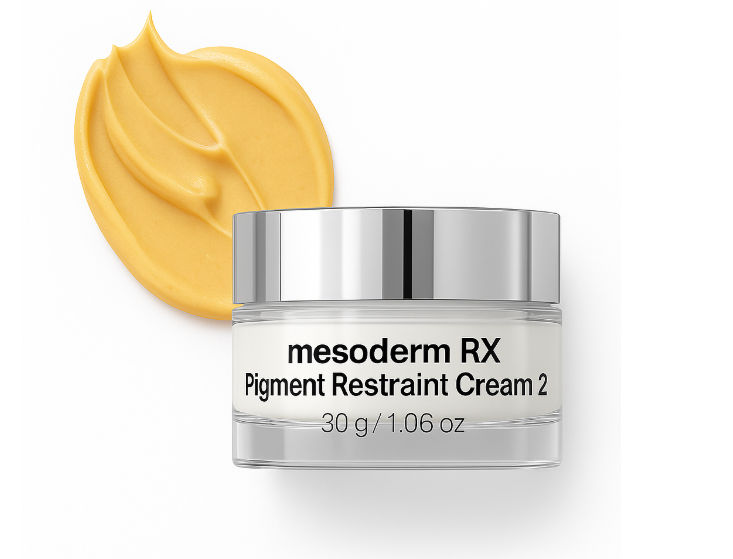
Featured Product
Pigment Restraint Cream
Visibly fade the look of dark spots and uneven tone — no clinic visit required. A brightening cream made to target the look of stubborn discoloration, whether it’s from post-blemish marks, sun exposure, or dullness that years of serums haven’t improved.
Shop Now →Why low-potency routines stall
Skin with chronic sensitivity usually needs two things at once:
- Barrier support so the skin stops overreacting.
- Targeted correction so discoloration, roughness, and lax-looking texture don't linger for months.
Many routines handle the first part and ignore the second. They soothe temporarily but never interrupt the pattern that keeps dark marks and uneven tone in place.
Sensitive skin doesn't need weak skincare. It needs accurate skincare.
That means avoiding the false choice between “active” and “gentle.” A well-built vegan routine can do both. Plant-derived systems can calm inflammation, support hydration, and still address visible pigment and photoaging when the actives are stable and the rest of the formula isn't crowded with unnecessary triggers.
The bigger mistake is assuming every product labeled clean, natural, or vegan is automatically suitable for reactive skin. It isn't. If you want a useful primer on what low-irritation formulation should look like, this guide to clean skincare for sensitive skin is a sensible starting point.
What actually changes outcomes
Three variables matter more than marketing language:
| Variable | What helps | What fails |
|---|---|---|
| Formula design | Minimal-additive, fragrance-free, stable actives | Overbuilt formulas with too many botanicals |
| Layering | Intentional sequencing by skin tolerance | Random ingredient stacking |
| Consistency | Repeated use at tolerable frequency | Stop-start routines after irritation |
The goal isn't to baby the skin forever. The goal is to restore control, then use that stability to brighten, smooth, and protect.
Understanding the Link Between Sensitivity and Hyperpigmentation
Hyperpigmentation in reactive skin isn't random. It's a biological consequence of inflammation.
When the barrier is compromised, irritants penetrate more easily, water escapes faster, and the skin shifts into defense mode. That defense response involves inflammatory signaling. In pigment-prone skin, those signals can stimulate melanocytes, the cells that produce melanin. Once melanocytes are activated, they don't always return to baseline quickly. That's why a small rash, one inflamed blemish, or repeated friction can leave marks that outlast the original trigger.

The barrier inflammation pigment chain
Think of it as a loop, not a single event.
- Barrier disruption happens first. Over-cleansing, harsh exfoliation, fragrance exposure, heat, pollution, UV, or overuse of actives can weaken the outer protective layer.
- Inflammation follows. The skin becomes red, warm, tight, itchy, or persistently reactive.
- Melanocytes respond. Inflammation can increase melanogenic activity, so the skin lays down excess pigment.
- Dark marks remain even after the visible irritation fades.
- More treatment gets added too fast. The person chases the pigment aggressively, re-injures the barrier, and the cycle restarts.
That is why “spot treating” pigmentation without controlling sensitivity often backfires.
Clinical rule: If the skin still burns, flushes, or stings easily, pigment treatment has to be conservative and barrier-aware.
PIH isn't the same as melasma or sun spots
These conditions get lumped together, but they behave differently.
| Condition | What it is | Common trigger pattern | Why treatment differs |
|---|---|---|---|
| Post-inflammatory hyperpigmentation (PIH) | Excess pigment after inflammation or injury | Acne, eczema, friction, irritation, picking, harsh products | Barrier repair and inflammation control are central |
| Solar lentigines | Localized pigment from cumulative sun exposure | UV over time | Photoprotection is the anchor |
| Melasma | Chronic pigment disorder with a deeper regulatory component | UV, heat, hormonal influence, inflammation | It relapses easily and needs long-term control |
In sensitive skin, the distinction matters because the wrong intensity creates more inflammation, and more inflammation can worsen pigment.
Why vegan actives can fit this biology
Well-formulated vegan skincare for sensitive skin can help because it often avoids known irritant classes such as harsh detergents, heavy fragrance, and animal-derived ingredients that some reactive users don't tolerate well. It gives formulators access to plant-based calming and brightening systems that can be layered without overloading the skin.
The useful question isn't “Is it vegan?” The useful question is “Does this formula lower inflammatory burden while applying enough active pressure to change pigment behavior?”
If your dark marks sit on top of redness, frequent stinging, or visible irritation, that combination usually points back to barrier dysfunction. A brightening serum for sensitive skin should therefore be judged by two criteria at the same time: can it reduce visible discoloration, and can it do so without keeping the skin inflamed.
What this means in practice
A sensitive hyperpigmented complexion usually needs:
- Lower irritation load across the whole routine
- Fewer overlapping actives
- Consistent sun protection
- Steady brightening, not harsh brightening
- Enough hydration to reduce ongoing reactivity
If one part is missing, the skin often plateaus. You may see less dryness but no change in tone, or some brightening followed by rebound irritation. The fix is rarely a stronger single product. It's usually a better-controlled system.
Common Missteps in Vegan Skincare for Sensitive Skin
The most common failure isn't choosing a non-vegan product. It's choosing a poorly constructed vegan one.
A label can say vegan, botanical, green, or clean and still be a bad match for reactive skin. Sensitive skin doesn't care about ideology. It responds to exposure, concentration, stability, and cumulative irritation.

Mistaking natural for non-irritating
Some of the worst reactions I see start with “but it's natural.”
Essential oils, citrus extracts, raw scrubs, acid toners made without buffering, and DIY brightening mixtures often create more inflammation than they resolve. Lemon juice is a classic example of bad skin logic. It feels active, so people assume it must brighten. What it often does instead is sting, inflame, and set up a darker mark afterward.
The same applies to rough face cloths, walnut-type scrubs, and frequent cleansing to “remove pigment.” Pigment isn't debris sitting on the surface. You don't scrub it off. You regulate the pathways that keep producing and retaining it.
Ingredient hopping instead of system building
Many people with sensitive skin use too many products but no real regimen.
They buy one niacinamide serum, then a bakuchiol oil, then an exfoliating toner, then a vitamin C suspension, then a cica mist. None of the products are necessarily bad. The problem is there's no sequencing logic, no frequency control, and no barrier recovery plan.
That creates three predictable issues:
- Cumulative irritation from too many “gentle” actives layered together
- No way to identify the trigger when the skin flares
- Inconsistent efficacy because products are started and stopped constantly
If your skin changes every week because your routine changes every week, you can't evaluate what works.
Ignoring oxidation and formula stability
Many trendy vegan formulas often fall apart due to these factors.
Long-term efficacy data is often missing, and some popular plant oils can oxidize faster than non-vegan alternatives, potentially causing new sensitivities in 10% to 15% of long-term users, as noted in this discussion of vegan skincare trade-offs. Oxidation matters because a soothing oil on day one can become a less elegant, less stable material over time, especially if packaging and storage are poor.
That doesn't mean plant oils are bad. It means stability matters. So do opaque packaging, restrained ingredient lists, and realistic shelf-life expectations.
The myths that keep sensitive skin stuck
Myth one: If it tingles, it's working
Tingling is not a goal. In sensitive skin, it often means the barrier is too open or the formula is too aggressive. Controlled activity is different from irritation.
Myth two: More exfoliation clears dark spots faster
Over-exfoliation usually extends recovery time. You may get a short-lived glow, then more dryness, more redness, and eventually more uneven tone.
Myth three: One hero ingredient will fix everything
Not in reactive skin. Results come from a chain of decisions. Cleanser, serum, moisturizer, sunscreen, and exfoliation frequency all affect outcomes.
A better way to judge products
Use this filter before adding anything new:
| Ask this question | Why it matters |
|---|---|
| Is the formula minimal or crowded? | More additives mean more chances to react |
| Is the active stable in this format? | Unstable formulas give inconsistent performance |
| Does it solve a defined problem? | Random overlap creates confusion |
| Can my barrier tolerate it at realistic frequency? | Efficacy only counts if you can keep using it |
A vegan routine becomes clinically useful when it stops acting like a trend collection and starts acting like a treatment system.
Constructing Your Foundational Vegan Skincare Regimen
A foundational routine for sensitive skin should do three jobs every day. Clean without stripping. Treat without provoking. Protect without excuses.
That sounds simple. It isn't, as the treatment phase is often overloaded while the protection phase is neglected.

A useful benchmark comes from a clinical sensitive-skin study. A nature-based regimen adaptable to fully vegan use showed 100% tolerability and improved skin barrier function by 17% over four weeks, according to the study summary published by JDD Online. That reinforces a point formulators already know: a coherent botanical system can work well when the products are built for tolerability.
Cleanse without stripping
Cleansing is where many sensitive routines go wrong first.
The skin doesn't need to feel squeaky. That sensation usually means too much lipid removal. For a reactive complexion, the right cleanser should remove sunscreen, sweat, and surface debris while leaving the skin comfortable enough that you don't rush to compensate with a heavy cream.
Look for:
- Low-foam or cream-gel formats that rinse clean without a tight afterfeel
- Fragrance-free composition because fragrance adds exposure without adding therapeutic value
- Minimal additive load so the cleanser doesn't act like a treatment product
In the morning, some people tolerate a very light cleanse or even a water rinse if the night routine is simple. At night, a proper cleanse matters more because sunscreen residue, pollution, and sebum can sit on the skin long enough to keep inflammation active.
What not to do at the cleansing step
- Don't double cleanse by default. Use it when makeup or heavy sunscreen requires it.
- Don't use cleansing tools daily. Brushes and textured pads can create friction pigment in sensitive skin.
- Don't chase oil control with harsh surfactants. Tight skin isn't cleaner skin.
Treat with fewer but smarter actives
Treatment is where visible change happens, but only if you control the order and the number of variables.
For sensitive, pigment-prone skin, I prefer one primary leave-on treatment per routine window. In the morning, that often means a brightening or antioxidant serum under sunscreen. At night, it may mean a barrier-supportive corrective serum, with exfoliation reserved for scheduled nights rather than daily improvisation.
This is the point in the routine where a product like Mesoderm RX AHA BHA PHA Dark Spot Whitening Serum can fit as one option. It is a vegan, cruelty-free formula positioned for dark spots and uneven tone. The important principle isn't the brand name. It's the architecture: multiple corrective acids and brightening support need to be introduced at a frequency the skin can sustain.
A good serum for this skin type should do at least one of these jobs clearly:
| Serum role | What it should help with |
|---|---|
| Barrier-supportive corrective | Redness-prone skin that also needs tone improvement |
| Brightening | Uneven tone, post-inflammatory marks |
| Age-supportive | Dullness, roughness, loss of bounce-looking skin |
If a product claims to do all three aggressively on day one, be cautious.
Formulation note: Sensitive skin responds better to repeatable exposure than heroic exposure. A moderate serum used consistently beats an aggressive serum used twice and abandoned.
Here's a practical way to structure it.
Morning sequence
- Gentle cleanse
- One treatment serum
- Moisturizer if needed
- Broad-spectrum sunscreen
Evening sequence
- Gentle cleanse
- Treatment serum or exfoliant, not both every night
- Barrier-supportive moisturizer
This short video gives a visual reference for how many people structure a calming vegan routine before adding stronger correction.
Moisturize and protect like it matters
Barrier repair isn't glamorous, but it changes outcomes.
A moisturizer for sensitive hyperpigmented skin should reduce water loss, soften roughness, and make actives easier to tolerate over time. It doesn't need to be greasy. It needs to be dependable. If your skin gets redder, shinier, or itchier after moisturizer, the formula is wrong for you even if the marketing sounds ideal.
Sunscreen is an essential step. Without daily UV protection, brightening work becomes maintenance of damage rather than correction. UV exposure doesn't just deepen existing marks. It also prolongs inflammatory pathways and makes treatment progress less stable.
The foundational routine in one view
| Time | Step | Priority |
|---|---|---|
| AM | Cleanse | Remove overnight residue without stripping |
| AM | Treat | Use one tolerable brightening or antioxidant serum |
| AM | Protect | Apply broad-spectrum sunscreen every day |
| PM | Cleanse | Remove sunscreen and environmental residue |
| PM | Correct | Alternate between corrective serum and exfoliation nights |
| PM | Recover | Use moisturizer to support barrier function |
The people who improve fastest usually aren't using the most products. They're using the right products at the right frequency, with enough restraint to let the skin stabilize between interventions.
Targeted Vegan Actives for Exfoliation Brightening and Anti-Aging
Once the foundation is stable, you can push results further. These factors determine whether vegan skincare for sensitive skin is effective or destructive.
The difference is not whether you use actives. The difference is how you use them.

A useful clinical reference comes from a 12-week trial of a serum with plant-based adaptogens. The study reported 50% reduction in erythema and 21% reduction in uneven pigmentation, supporting the point that well-formulated plant-based actives can produce measurable improvement.
Exfoliation that doesn't wreck the barrier
Sensitive skin still benefits from exfoliation. It just can't tolerate the “more is more” model.
The practical goal is to reduce the buildup of uneven, pigment-holding surface cells while keeping the barrier intact enough to recover. That usually means lower-frequency chemical exfoliation rather than frequent scrubbing.
Good candidates often include:
- PHAs when you want the gentlest resurfacing profile
- Mandelic-acid based systems when you need a slower, more forgiving exfoliation pattern
- Blended acid systems when the formula is designed for low-irritation correction rather than sting-driven intensity
If you want a broader framework for acid selection and skin behavior, this resource on AHA and BHA products is worth reviewing.
Brightening needs pathway control, not harshness
Brightening sensitive skin requires precision because every unnecessary flare can create more pigment.
The most useful brightening actives are the ones that reduce visible discoloration without making the skin feel raw. In practice, that often means combining a pigment-regulating approach with anti-inflammatory support. Bakuchiol is a good example of a vegan-compatible active that can fit anti-aging and tone-focused routines when the formula is calm enough for repeat use.
A simple layering logic
| Goal | Better pairing | What to avoid |
|---|---|---|
| Uneven tone | Brightening serum plus sunscreen | Alternating multiple strong pigment products at random |
| Texture and dullness | Scheduled exfoliant plus moisturizer | Daily acid stacking |
| Early aging signs | Bakuchiol or peptide-style support on non-exfoliation nights | Mixing every “anti-aging” product together |
Anti-aging for reactive skin
Sensitive skin ages under inflammatory stress. Chronic low-grade irritation degrades the skin's ability to stay even, smooth, and resilient-looking.
That means anti-aging work for this skin type is less about aggressive peeling and more about long-term signal correction. If the skin looks smoother, more even, and less red over time, you're already treating aging biology in a meaningful way.
Use advanced actives on a schedule, not on impulse.
A practical rhythm might look like this:
- Night one exfoliant
- Night two recovery and hydration
- Night three brightening or age-supportive serum
- Night four recovery again if needed
That cadence gives the barrier time to respond. It also makes reactions easier to identify.
What works better than trend stacking
People often assume they need a separate bottle for exfoliation, brightening, redness, texture, and fine lines. Sometimes they do. Often they don't.
A better question is whether each added product changes the routine's total inflammatory burden. If the answer is yes, the routine is probably too crowded. Sensitive skin improves when active pressure is deliberate, not constant.
The right vegan actives can absolutely brighten, smooth, and support firmer-looking skin. They just need enough quiet around them to keep working.
The Non-Negotiables Patch Testing and Evaluating Products
Most bad reactions don't come from one catastrophic product. They come from poor testing discipline.
If you have sensitive skin, patch testing isn't cautious behavior. It's basic methodology. That becomes even more important as formulas evolve beyond simple soothing. One emerging direction for 2026 is microbiome support. Urban pollution is described as disrupting skin flora in 60% of users, and recent data cited in this trend review on vegan sensitive skincare reports 72% improved resilience with vegan postbiotics. Whether or not you pursue that category, the implication is clear: modern sensitive-skin formulas can be more advanced, and advancement requires careful evaluation.
A practical patch test protocol
Use a controlled approach.
- Choose one new product only. Never test three products at once.
- Apply it to a small discreet area such as along the jawline or behind the ear.
- Repeat use for several days if the product is meant for regular use.
- Watch for delayed signs, not just immediate sting. Redness, heat, roughness, itching, or new bumps all matter.
- Then move to full-face use at reduced frequency.
If the product is an exfoliant or brightening serum, start slower than the label suggests if your skin has been reactive recently.
A patch test doesn't prove a product is perfect. It reduces the chance that you turn your whole face into a test site.
How to evaluate a formula without falling for claims
Marketing language is cheap. Product architecture is not.
Look for these signals:
- Certification clarity such as cruelty-free verification, including Leaping Bunny when relevant
- A restrained ingredient list rather than a long parade of extracts added for label appeal
- A defined function so you know whether the product is for barrier repair, exfoliation, pigment, or antioxidant support
- Packaging that protects stability, especially for reactive formulas with delicate botanical components
The red flags
A product deserves skepticism when:
- It relies on vague words like pure, toxin-free, or chemical-free without explaining function
- It promises fast correction but gives no guidance on frequency or tolerance
- It combines too many strong actives in one step for skin that already reacts easily
Sensitive skin responds well when you think like a clinician. Test one variable. Watch the skin. Adjust based on response, not excitement.
Frequently Asked Questions
How do I switch from non-vegan products without triggering a flare
Don't replace everything at once. Keep your cleanser, moisturizer, or sunscreen stable if one of them already works, and swap in one vegan product at a time. Start with the category causing the most obvious trouble, which is often a fragranced treatment or a harsh cleanser.
Can I use high-potency vegan actives around the eye area
Only if the product is intended for that zone or your skin has already shown excellent tolerance. The eye area has less margin for error. It is safer to keep exfoliants away from the orbital area and use only a very conservative brightening or barrier-supportive product there.
What does purging look like versus a bad reaction
Purging is usually limited to areas where you already tend to break out and is associated with increased turnover. A bad reaction looks different. Burning, diffuse redness, itching, swelling, shiny tight skin, or rash-like bumps point to irritation, not purging.
How long should I wait before adding a second active
Wait until the first active is clearly tolerated. The skin should feel stable, not barely surviving. If you're still noticing frequent sting, warmth, or flaking, don't add another correction step yet.
Is vegan skincare for sensitive skin enough to treat dark spots on its own
It can help significantly if the routine includes targeted brightening and strict sunscreen use. But the outcome depends on the type of pigment, the depth of discoloration, and whether inflammation is still ongoing. If new marks keep appearing, the root trigger hasn't been controlled.
Mesoderm RX makes vegan, cruelty-free, minimal-additive skincare built around the idea of more actives and fewer unnecessary extras. If you're looking for a system focused on dark spots, uneven tone, texture, and daily protection, you can review the collection at Mesoderm RX.