


Clean Skincare for Sensitive Skin A Clinical Guide
The most common advice for sensitive skin is to stop everything. Strip the routine down. Avoid actives. Focus only on calming products and hope the skin settles.
That advice is often necessary at first. It’s also incomplete.
Sensitive skin doesn’t just need less irritation. Many people also need treatment for uneven tone, post-inflammatory marks, rough texture, and recurrent redness. If the routine never moves beyond damage control, the barrier may feel calmer while the underlying concerns remain untouched. That’s why so many people cycle between “gentle” products that do very little and “results” products that set their skin off.
The category itself adds to the confusion. Clean skincare for sensitive skin sounds like the obvious answer, yet the label “clean” often says more about marketing than formulation discipline. A formula can avoid a few trend ingredients and still contain fragrant botanicals, volatile essential oils, or a cluttered ingredient deck that reactive skin doesn’t tolerate well.
A better approach starts with biology, not branding. Sensitive skin is a barrier problem, an inflammation problem, and often a formulation problem. Once you understand those three pieces, product decisions get much clearer. You stop asking whether a product is “clean” and start asking whether it protects barrier function, limits unnecessary triggers, and delivers actives in a way reactive skin can handle.
Featured Product
Skin Perfection Liquid Exfoliant Peel | AHA BHA PHA Resurfacing Formula
A multi-acid exfoliating peel that helps remove dead skin cells, refine pores, and smooth texture. Promotes a clearer, brighter, and more even-looking complexion with regular use.
Shop Now →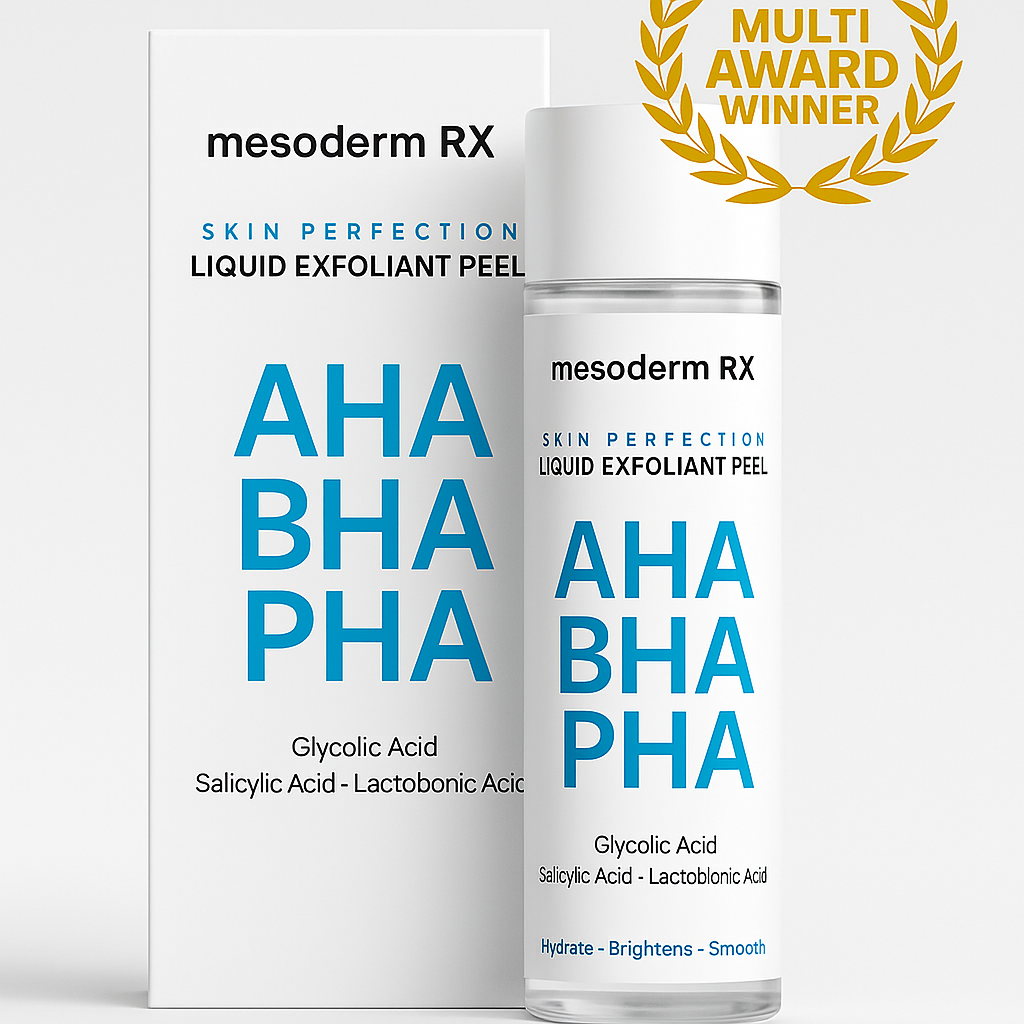
The Growing Problem with 'Clean Skincare'
Sensitive skin isn’t a niche issue. A meta-analysis of 26 studies found that 71% of the general population experiences sensitive skin, and self-reported cases have surged by 55% over the past two decades according to Crodabeauty’s summary of the evidence and consumer shifts.
That rise helps explain why “clean” became such a powerful selling term. People with reactive skin want fewer triggers, fewer unnecessary additives, and fewer unpleasant surprises. That instinct is rational.
The problem is that “clean” is not a clinical standard. It’s a loose marketing category that can include excellent formulas, mediocre formulas, and formulas that are almost designed to irritate a compromised barrier.
Why the label creates false confidence
Many shoppers assume “clean” means:
- Lower risk of irritation because the formula sounds simpler
- More skin-compatible ingredients because the branding emphasizes nature
- Better long-term tolerance because the product avoids a shortlist of controversial ingredients
That logic breaks down quickly in real formulation work. A product can be free of parabens and still be overloaded with fragrant extracts. It can be natural and still be reactive. It can be minimalist on the front label and chaotic on the ingredient list.
Sensitive skin usually doesn’t fail because the user picked the “wrong trend.” It fails because the formula didn’t respect barrier biology.
What matters
For reactive skin, the useful questions are more precise:
| What to ask | Why it matters |
|---|---|
| Is the barrier already impaired? | Compromised skin tolerates far less friction, acid load, and fragrance exposure. |
| Does the formula remove triggers or just advertise that it does? | Front-label claims often hide allergens and sensory additives. |
| Are the actives delivered in a restrained system? | Sensitive skin usually responds better to fewer variables and tighter formulation control. |
People with sensitive skin don’t need a prettier label. They need formulations that reduce avoidable irritation while still doing a job.
Defining Sensitive Skin A Clinical Perspective
Sensitive skin is often described emotionally. Skin that “hates everything.” Skin that “gets red for no reason.” Skin that “stings with products other people tolerate.” Those descriptions are familiar, but they aren’t precise enough.
Clinically, sensitive skin is better understood as a state of impaired tolerance. The barrier is less efficient, water escapes more easily, irritants penetrate faster, and the skin’s sensory network reacts more aggressively than it should.

The barrier is the first problem
The outermost layer of skin is often described as a brick-and-mortar structure. The skin cells are the bricks. Lipids such as ceramides help form the mortar. When that structure is intact, it limits water loss and keeps irritants out.
When it’s disrupted, the skin becomes easier to provoke. Cleansers sting. Toners burn. Temperature shifts show up as flushing. Products that should feel neutral suddenly feel active.
A clinical marker used in this setting is the Sensitive Scale-10, or SS-10. A score above 12.7 indicates sensitive skin and correlates with increased transepidermal water loss, or TEWL, and increased reactivity, as described in the clinical review published on PubMed Central.
TEWL matters more than most routines account for
TEWL is exactly what it sounds like. Water escapes through the skin more readily than it should. That doesn’t just mean dryness. It changes how the skin behaves.
When TEWL rises, the surface becomes less resilient. Small formulation details start to matter more:
- Foaming strength can become the difference between cleansing and stripping
- Fragrance load can shift from pleasant to inflammatory
- Acid intensity can move from effective to destabilizing
- pH drift can push already reactive skin into stinging and visible redness
For this reason, sensitive skin shouldn’t be treated as a personality trait or a permanent “type.” In many cases, it’s a dysfunctional state. That state can improve when barrier repair, inflammation control, and product selection all line up.
Sensitivity is more than dryness
Not every sensitive-skinned person looks dry. Some have oiliness, breakouts, or pigment issues. Others have redness with a shiny surface. The common thread isn’t appearance. It’s reduced tolerance.
Clinical takeaway: If skin reacts to ordinary products, the question isn’t “What stronger product will fix this?” It’s “What part of barrier function is currently failing?”
That distinction matters because treatment changes. A reactive barrier doesn’t need random soothing ingredients thrown at it. It needs lower trigger exposure, better lipid support, and a routine that stops forcing the skin into repeated inflammatory cycles.
The pH issue people overlook
Reactive skin usually does better when formulas stay close to skin’s natural acidic environment. When that balance is disturbed, the barrier becomes less organized and irritation becomes more likely.
In practice, that means harsh soaps, aggressive surfactants, and highly stimulating leave-on treatments often create the exact symptoms people interpret as proof that their skin “can’t use anything.” Often, it can. It just can’t use badly structured formulas.
The Clean Skincare Paradox Why Many Formulas Fail
The clean beauty movement promised gentler skincare. For sensitive skin, that sounded like progress. In practice, it often replaced one problem with another.
A formula doesn’t become safer because it leans botanical. In reactive skin, plant-derived ingredients can be every bit as provocative as the synthetics people have been taught to fear.

Natural is not the same as low-risk
A review of 1,651 natural personal care products found that 94.2% contained at least one known skin allergen, according to Dr. Heather D. Rogers’ discussion of the 2022 review and the problem with undefined clean beauty claims.
That single fact explains a large share of routine failure in sensitive skin. People think they’re stepping into a safer category, then end up using formulas packed with ingredients that smell pleasant, photograph well, and behave poorly on a compromised barrier.
What typically goes wrong
The recurring offenders are familiar:
- Essential oils such as citrus, lavender, peppermint, or tea tree. These are often framed as pure and therapeutic. Reactive skin often reads them as volatile irritants.
- Fragrant botanical extracts that add sensory appeal without improving tolerance.
- Overbuilt formulas with too many extracts, too many actives, or too many “hero” ingredients competing in the same bottle.
- Harsh cleansing systems that remove oil efficiently but also disturb the lipid matrix the barrier depends on.
A product can be free from one blacklist and still be wrong for sensitive skin because the formula asks too much from already stressed tissue.
Greenwashing thrives in vague categories
“Chemical-free” is not a scientific term. Everything in skincare is made of chemicals. When a brand uses language like that, it usually signals that the marketing team is doing more work than the formulator.
The same applies to “toxin-free” when it’s used without precision. Sensitive skin doesn’t improve because a label sounds morally clean. It improves when the ingredient system is disciplined.
Here’s a trade-off often overlooked. Removing a few controversial ingredients can make a formula look better on a website. It does nothing if the product still contains hidden fragrance components, irritating solvent systems, or enough plant material to turn a serum into an exposure experiment.
Safe synthetic versus reactive natural
A clinical approach differs from trend-led advice at this point. The question isn’t whether an ingredient is synthetic or natural. The question is whether it is predictable, stable, and well tolerated in a sensitive-skin context.
A safe synthetic preservative can be far better for reactive skin than a “natural” preservation strategy that’s weak, unstable, or built around fragrant plant compounds. A simple lab-made humectant can be gentler than a complex botanical blend.
A formula should be judged by skin response and formulation logic, not by whether it sounds rustic.
Why many soothing products still disappoint
Some products do reduce immediate discomfort. They make skin feel coated, cool, or briefly hydrated. But if they also contain allergens, aggressive surfactants, or excess fragrance, the skin never fully exits the inflammation loop.
That’s why people say things like:
| Common experience | What it usually means |
|---|---|
| “It felt nice at first, then I got red.” | The sensory profile was pleasant, but the formula still triggered irritation. |
| “It’s natural, but my skin burns.” | Natural ingredients can still be allergenic or inflammatory. |
| “I switched to clean and became more reactive.” | The new routine may have increased exposure to fragrant botanicals or poorly tolerated extracts. |
The most reliable clean skincare for sensitive skin isn’t the formula that makes the strongest purity claim. It’s the formula with the fewest unnecessary triggers and the clearest functional purpose.
A Clinical Ingredient Index For Sensitive Skin
The fastest way to improve a reactive routine is to stop thinking in categories like “luxury,” “natural,” or “viral.” Read products by function. For sensitive skin, ingredients fall into two practical groups. Some help restore tolerance. Others repeatedly undermine it.

Barrier allies
These ingredients earn their place because they support the skin systems that sensitive skin struggles to maintain.
- Niacinamide supports barrier function and helps calm visible redness. It can reduce redness by 28% through anti-inflammatory pathways, based on the ingredient-focused review at Orientana’s sensitive skin care overview.
- Panthenol, also called provitamin B5, is useful when skin is dry, tight, or repeatedly irritated. The same source notes that panthenol enhances fibroblast proliferation by 40% at 2-5% concentrations.
- Ceramides matter because a damaged barrier usually isn’t short on trend ingredients. It’s short on structural support.
- Hyaluronic acid can help with water binding, but on sensitive skin it works best inside a broader barrier-focused formula, not as a standalone answer.
- Squalane is often useful because it softens and supports without the sensory volatility that fragrant oils can bring.
These are support ingredients. They don’t need dramatic branding. They need good formulation.
Potential antagonists
Some ingredients aren’t universally bad. They’re frequent problems in reactive skin, especially when the barrier is unstable.
- Added fragrance is a common reason a product feels elegant and performs badly.
- Drying alcohols can increase sting and surface dehydration in already compromised skin.
- Sulfate-heavy cleansing systems often remove more than they need to.
- Essential oils regularly show up in “clean” lines despite being an obvious risk for many reactive users.
- Multi-extract formulas can appear complex while making reactions harder to predict.
Why concentration and context matter
An ingredient list isn’t a morality test. It’s a delivery system. Niacinamide can help, but not every niacinamide serum is calm. Acids can work, but not every acid formula is appropriate for a compromised barrier.
That’s why the surrounding system matters:
| Ingredient | Good context | Bad context |
|---|---|---|
| Niacinamide | Fragrance-free, barrier-supportive serum or moisturizer | Formula overloaded with perfumes or multiple aggressive actives |
| Panthenol | Calming hydrator or recovery cream | Product paired with stripping surfactants |
| Ceramides | Moisturizer designed for daily barrier support | Tiny inclusion in a formula that is otherwise irritating |
| Exfoliating acids | Restrained, low-irritation formula with clear purpose | Acid stacked with fragrance, essential oils, and harsh alcohols |
For readers trying to sort through exfoliants specifically, Mesoderm RX has a practical explainer on AHA and BHA products that helps distinguish where those categories fit.
What to look for on a real label
The best ingredient decks for reactive skin often look slightly boring. That’s usually a good sign.
Look for formulas that are:
- Fragrance-free, not just lightly scented
- Focused, with a clear job instead of ten competing claims
- Barrier-aware, using hydrators and lipid support together
- Low-noise, meaning fewer decorative extracts and fewer sensory additives
Formulation rule: Sensitive skin usually improves when you subtract distractions before you add treatment.
A strong routine starts by making the skin more tolerant. Then you can decide which actives the skin has earned.
A Foundational Skincare Protocol For Reactive Skin
Most reactive skin doesn’t need a bigger routine. It needs a stricter one.

The goal at this stage is simple. Reduce avoidable triggers, restore daily tolerance, and create a stable baseline. If that baseline isn’t there, treatment products become much harder to judge. You won’t know whether a reaction came from the active itself, from bad layering, or from an already unstable barrier.
The first reset
A foundational routine only needs a few moving parts:
- Use a gentle cleanser once or twice daily. If the skin is very dry or easily flushed, a non-stripping cleanse at night may be enough, with a water rinse in the morning depending on comfort.
- Apply a barrier-supportive hydrator. Moisture alone isn’t enough. The formula should help reduce tightness and improve tolerance over time.
- Wear daily sun protection. Sensitive skin often becomes even harder to manage when UV exposure keeps feeding inflammation and discoloration.
- Stop adding extras too quickly. If three new products arrive at once, you’ve lost the ability to identify the problem.
Patch testing without guessing
Patch testing only works if you treat it like a method, not a gesture.
Apply a small amount of the new product to a discreet area and watch the skin for 48 hours before using it more broadly. Then introduce only one product per week so the skin has time to show you a real response. Those practical steps align with the clinical guidance summarized in the PubMed Central review cited earlier.
Common mistakes include testing three products at once, patch testing on intact skin but then applying to an actively inflamed face, or ignoring mild burning because the product is supposed to be “working.”
If a product stings a compromised barrier on contact, don’t assume that discomfort is proof of efficacy.
The order that usually works
Reactive skin tends to do better with consistent sequencing:
| Morning | Evening |
|---|---|
| Gentle cleanse if needed | Gentle cleanse |
| Hydrating or barrier-supportive layer | Treatment or recovery layer, depending on tolerance |
| Moisturizer if needed | Moisturizer |
| Broad-spectrum sunscreen | Nothing extra unless the skin clearly tolerates it |
A pH-aware routine can also help reduce unnecessary irritation. For readers trying to understand where toners fit, this guide on pH balance skin toner covers the role of pH in a practical way.
A short visual primer can also help when simplifying the routine:
What not to do during the reset
Avoid the usual sabotage points:
- Don’t rotate acids nightly because one influencer tolerates it.
- Don’t keep cleansing harder when the skin feels rough. Roughness is often barrier injury, not dirt.
- Don’t chase redness with more products. Reaction often improves when the routine gets smaller, not more complicated.
This phase isn’t passive. It’s diagnostic. Once the skin stops reacting to basics, you can introduce correction with far more control.
Beyond Soothing Targeting Pigmentation Safely
The standard message to sensitive-skin users is to avoid actives. That advice is understandable. It’s also one reason so many people remain stuck with dark spots, uneven tone, and post-inflammatory marks for far longer than necessary.
Sensitive skin can’t tolerate careless treatment. That doesn’t mean it can’t tolerate treatment at all.
Why pigmentation and sensitivity often collide
Inflammation is a pigment problem. When skin gets repeatedly irritated, melanocytes receive signals to produce more pigment. That’s why sensitive skin and discoloration so often travel together. The person trying to calm redness is usually also trying to fade the marks left behind by inflammation, breakouts, friction, or prior product reactions.
If the routine only soothes, it may reduce some ongoing irritation. It often won’t do enough to improve uneven tone.
The gap in the market
Here, most “clean” advice breaks down. It tells reactive users what to avoid but not how to treat the concerns that matter to them. An Iraya Life article on clean beauty products for sensitive skin describes that gap directly: 68% of sensitive-skin users seek clean brightening options for pigmentation, but only 12% find suitable products, even though gentle actives in “more actives, less additives” formulas can reduce dark spots by 25-40% over 8 weeks without barrier disruption.
That’s the clinical opening. Sensitive skin needs more than retreat. It needs controlled correction.
Which actives make sense
For reactive skin, the useful question isn’t “Should I exfoliate?” It’s “What exfoliation load can my barrier handle, and what is the formula built around?”
The best candidates usually share three traits. They are restrained, purposeful, and low on unnecessary additives.
- Niacinamide is often the easiest first step because it supports barrier function while also helping with visible tone irregularity.
- PHAs are often more forgiving than stronger resurfacing systems because they can smooth gently while placing less stress on a fragile barrier.
- Well-formulated AHAs and BHAs can work when concentration, frequency, and the surrounding formula are sensible. Product architecture matters more than category names.
How to integrate treatment without destabilizing the barrier
A practical sequence looks like this:
- Stabilize first. If cleansers already sting and moisturizers burn, it’s too early for exfoliation.
- Choose one corrective product. Don’t stack a brightening serum, acid toner, and retinoid at the same time.
- Use limited frequency. Start a few nights per week, not nightly.
- Protect aggressively with sunscreen. Pigment correction without UV control is inefficient.
- Watch for cumulative irritation. Some products feel fine on day one and become inflammatory by day five.
What works versus what fails
Here’s the contrast I see most often in reactive pigmentation care:
| Usually fails | Usually works better |
|---|---|
| Scrubs and highly fragranced brightening products | Fragrance-free leave-ons with a clear active strategy |
| Stacking multiple acids immediately | One targeted formula introduced gradually |
| Chasing rapid peeling | Slow, controlled turnover support |
| Treating spots while ignoring barrier support | Pairing corrective actives with daily barrier maintenance |
Sensitive skin often tolerates potency better than chaos.
A formula philosophy built around fewer additives and purposeful actives fits this need well. One example is Mesoderm RX, which formulates around a “More Actives, Less Additives” approach and offers products such as the AHA BHA PHA Dark Spot Whitening Serum for users who want correction without a heavily fragranced or cluttered formula. Readers looking specifically for that category can review this guide to a brightening serum for sensitive skin.
The key trade-off
There is no zero-risk brightening. Any active capable of changing tone or texture has to interact with the skin meaningfully. The goal is not to remove all biological activity. The goal is to remove unnecessary irritation.
That means:
- choosing fewer products,
- using better formulas,
- respecting the barrier,
- and treating pigmentation with enough consistency to matter.
The old binary is wrong. It isn’t “soothing” or “results.” Sensitive skin needs both.
Frequently Asked Questions
| Question | Answer |
|---|---|
| Can sensitive skin use exfoliating acids at all? | Yes, but only when the barrier is stable enough to tolerate them. The mistake isn’t using acids. The mistake is using the wrong acid system, using it too often, or layering it into a routine that’s already irritating the skin. Start with one corrective product, use it sparingly, and stop if stinging accumulates instead of settling. |
| Is fragrance-free more important than “clean”? | For many reactive users, yes. “Clean” is vague. Fragrance-free is specific. A formula can call itself clean and still contain reactive botanicals or essential oils. Sensitive skin usually benefits more from low-trigger formulation than from trend-aligned branding. |
| Why does my skin react to products marketed as soothing? | Because “soothing” often describes the marketing story, not the formula logic. A product may contain calming ingredients and still include fragrance, essential oils, or too many extracts. The skin responds to the whole system, not to the most attractive ingredient on the label. |
| How long should I wait before adding a treatment serum? | Wait until cleansing, moisturizing, and sunscreen feel uneventful. If basic products still sting, your barrier hasn’t stabilized. Once the skin is consistently calm, add one treatment product at a time and monitor for delayed irritation, not just immediate burning. |
| Do I need a toner in a routine for reactive skin? | Not always. A toner is useful only if it serves a clear function, such as gentle hydration or helping maintain a comfortable, skin-friendly routine. If it adds fragrance, sting, or another layer of uncertainty, skip it. Sensitive skin rarely benefits from unnecessary steps. |
| What’s the biggest mistake people make with clean skincare for sensitive skin? | They substitute ideology for evaluation. They assume natural is gentler, or that avoiding a few trending ingredients makes a formula safe. Reactive skin improves when products are judged by barrier impact, trigger load, and formulation discipline. |
| Can I treat dark spots without making sensitivity worse? | Yes, if you stop treating brightening as an all-or-nothing project. Use a stable baseline routine, add one well-formulated corrective serum, support the barrier daily, and make sunscreen use essential. The skin usually handles that approach far better than aggressive cycling or spot treating with multiple actives. |
If your skin is reactive but you still want visible correction for dark spots, uneven tone, or texture, Mesoderm RX is worth considering for its high-potency, minimal-additive approach. The formulas are fragrance-free, hydroquinone-free, vegan, cruelty-free, and built around the idea that sensitive skin doesn’t need decorative extras. It needs focused actives delivered with restraint.