


The Clinical Guide to AHA and BHA Exfoliants in 2026
When you hear "chemical exfoliant," the biological reality is far more precise than the term suggests. AHA and BHA products are not harsh stripping agents. They are targeted chemical solvents that dissolve the protein "mortar"—corneodesmosomes—holding dead, dysfunctional cells (corneocytes) to your skin's surface. This controlled dissolution allows for efficient shedding, revealing the healthier, more functional skin underneath.
Alpha Hydroxy Acids (AHAs) are hydrophilic (water-soluble) and act primarily on the skin's surface. Beta Hydroxy Acids (BHAs) are lipophilic (oil-soluble), granting them access to the lipid-rich environment of the pores to dissolve sebum and cellular debris. This dual-front approach is what makes them fundamental for correcting a range of conditions, from textural irregularities and dullness to persistent acne and dyschromia.
How Chemical Exfoliants Correct A Dysfunctional Skin Cycle
To understand the efficacy of AHAs and BHAs, you must first understand the skin's intrinsic renewal process: desquamation. This is the biological mechanism for shedding old, terminally differentiated keratinocytes to make way for new, healthy cells migrating from the basal layer of the epidermis.
This cycle, which takes approximately 28 days in healthy, youthful skin, occurs in the epidermis. New keratinocytes are produced in the stratum basale and migrate upwards, undergoing a programmed process of differentiation and flattening. They eventually form the stratum corneum—the skin's outermost protective barrier, composed of anucleated, dead cells.

The stratum corneum can be visualized as a brick wall. The corneocytes are the "bricks," and the "mortar" holding them together is a complex of lipids and proteins, primarily corneodesmosomes. For normal desquamation, endogenous enzymes must proteolytically cleave these protein bridges, allowing the old corneocytes to shed evenly and invisibly.
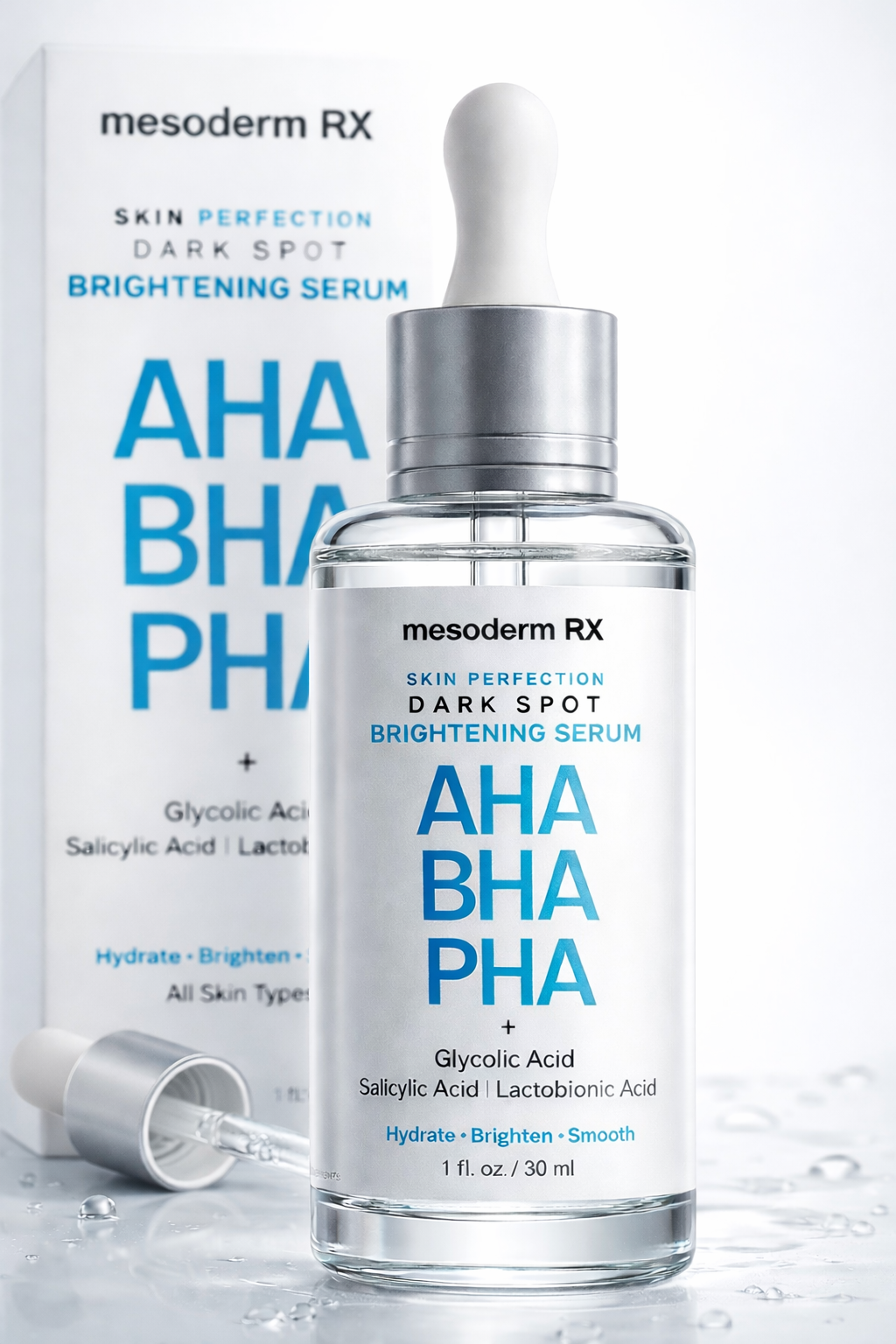
Featured Product
AHA + BHA + PHA Skin Brightening Serum (30ml) | Gentle Exfoliating Formula
Multi-acid serum with AHA, BHA, and PHA to gently exfoliate, refine texture, and support brighter-looking skin. Lightweight, fast-absorbing formula for daily skincare.
Shop Now →Why Your Skin's Shedding Process Fails
In healthy skin, this is an efficient, self-regulating system. However, multiple factors can disrupt this process, leading to an accumulation of corneocytes on the surface—a condition known as hyperkeratosis.
- Intrinsic Aging: As we age, cellular turnover slows significantly. The enzymatic activity required to break down corneodesmosomes becomes less efficient, leading to dullness and fine lines.
- Photoaging (Sun Damage): Chronic UV exposure thickens the stratum corneum and disrupts the desquamation pathway, contributing to a leathery, uneven texture.
- Dehydration: The enzymes responsible for desquamation are hydrolytic, meaning they require water to function. Dehydrated skin cannot shed cells properly.
- Pathophysiological Conditions: Genetic predispositions and skin conditions like acne vulgaris and keratosis pilaris are characterized by abnormal keratinization and cell retention.
When desquamation is impaired, the corneodesmosomal "mortar" becomes excessively strong, effectively cementing dead cells to the skin. This build-up is the root cause of dullness, rough texture, clogged pores, and the accentuation of fine lines. It also creates an impermeable barrier that prevents other active ingredients from penetrating effectively.
From a clinical perspective, many common aesthetic complaints are not new problems but symptoms of a single root cause: a dysfunctional shedding process. Correcting this biological mechanism is the primary objective of effective exfoliation.
The Targeted Intervention of Chemical Exfoliants
This is where AHAs and BHAs provide a precise, biological solution. They are not indiscriminate physical abrasives; they are targeted solvents designed to dissolve the specific molecular bonds causing the problem.
Alpha Hydroxy Acids (AHAs), being water-soluble, work at the surface and within the intercellular matrix of the stratum corneum. They dissolve the corneodesmosomal links, forcing a controlled, uniform release of accumulated dead cells. This action accelerates cell turnover, revealing the healthier, more vibrant cells beneath.
Beta Hydroxy Acids (BHAs) possess a unique lipophilic structure. This allows them to penetrate the skin's lipid barrier and work deep within the sebaceous environment of the pore lining. There, they exfoliate the compacted mass of dead cells and sebum that leads to comedones (blackheads and whiteheads) and inflammatory acne.
By intervening directly in the desquamation process, aha and bha products do more than cosmetically polish the skin. They restore a critical biological function that has become impaired, effectively training the skin to behave in a younger, healthier manner. This corrective mechanism is what elevates chemical exfoliation from a simple beauty step to a foundational therapeutic treatment.
Why Your Exfoliation Strategy Is Failing
You are using acids, yet the textural issues, breakouts, and hyperpigmentation persist. This common complaint is rarely due to a lack of effort. It is almost always a result of a flawed strategy rooted in a misunderstanding of skin biology.
If your AHA and BHA products are failing to deliver the expected clinical outcomes, it is highly probable that your approach is compromised by one of three fundamental errors. These are not minor missteps; they are strategic failures that undermine the efficacy of even the most potent ingredients.

Failure 1: The "Single Acid" Approach to a Complex Problem
Relying on a single acid to correct a multifactorial skin condition is clinically naive. Using only glycolic acid (an AHA) to treat both surface hyperpigmentation and deep, inflammatory acne is analogous to using a single-blade scalpel for a complex, multi-tissue surgery. It may address one aspect of the problem while completely ignoring others.
Complex conditions like melasma or post-inflammatory hyperpigmentation (PIH) are not one-dimensional. They involve a pathological cascade at multiple skin depths, from hyperactive melanocytes and tyrosinase activity to chronic inflammation and impaired cell turnover.
A single acid has a single target. Clinically significant results require a multi-pronged attack that addresses the pathology at every relevant depth and pathway. This is why multi-acid systems are biologically superior.
A properly formulated system, such as the Mesoderm RX AHA BHA PHA Liquid Exfoliant, layers different classes of acids (AHAs, BHAs, PHAs) to work synergistically. This removes the diagnostic burden from the user and ensures all facets of the condition are being treated concurrently.
Failure 2: The Fallacy of Percentage Over pH
The market has conditioned consumers to equate a higher acid percentage with superior efficacy. This is a gross oversimplification. An acid's biological activity is determined not by its concentration alone, but by the formula's pH and resulting free acid value (FAV).
For an acid molecule to be biologically active—to penetrate the stratum corneum and perform its function—it must exist in its "free acid" form. This state is only achieved in a low-pH environment, typically below 4.0. If a product with a high percentage of acid is buffered to a higher pH, the acid molecules are neutralized and rendered largely ineffective.
Many mass-market brands intentionally buffer high-concentration acids to a pH of 4.5 or higher to minimize consumer complaints about irritation. The result is a product with an impressive-looking label but poor clinical efficacy. A lower-concentration acid in a well-formulated, low-pH vehicle will always outperform a high-concentration, poorly buffered formula.
Failure 3: The Inflammatory Cycle of Physical Exfoliation
The use of physical scrubs—gritty cleansers, abrasive brushes, or rough cloths—alongside chemical exfoliants is not just ineffective; it is actively counterproductive. The immediate "smoothness" from a scrub is the result of creating widespread, uncontrolled micro-tears across the stratum corneum.
This physical trauma initiates an inflammatory cascade, leading to a host of downstream problems:
- Barrier Impairment: The micro-abrasions compromise the skin's lipid barrier, leading to increased transepidermal water loss (TEWL), dehydration, and chronic sensitivity.
- Exacerbated Hyperpigmentation: For individuals prone to PIH, inflammation is a primary trigger for melanogenesis. The scrubbing action signals melanocytes to produce more pigment, worsening the very condition you aim to treat.
- Aggravated Acne: The irritation can intensify erythema and edema around existing lesions and can even facilitate the spread of P. acnes bacteria, leading to new breakouts.
Chemical exfoliation is a controlled, non-traumatic process that works with the skin's biology to dissolve cellular bonds. Aggressive scrubbing is a declaration of war against your skin barrier. Eliminating physical exfoliants is a non-negotiable prerequisite for achieving resilient, healthy skin.
How to Correctly Implement AHA and BHA Products
The use of potent actives like AHAs and BHAs should be a precise, repeatable protocol, not a game of chance. The goal is to achieve predictable clinical results without compromising the skin's barrier function. This requires a strategy that respects skin biology.
The primary directive is ‘start low and go slow.’ The skin is an adaptive organ and must be acclimated to potent topicals. Initiating treatment with a high-strength acid used daily is the most direct path to inducing irritation, erythema, and barrier compromise.
Begin by applying your acid two to three times per week, exclusively in the evening. This allows the skin to acclimate to the altered pH and the accelerated rate of cell turnover. After several weeks, assuming no signs of distress (e.g., persistent erythema, tightness, flaking), frequency may be increased. Monitor your skin's response; it is the ultimate arbiter of your protocol's suitability.
The Non-Negotiable Application Sequence
Product layering is not a matter of preference; it is a matter of chemistry. For an acid to function, it requires an unobstructed pathway to the stratum corneum. Applying it over serums or occlusive moisturizers neutralizes its efficacy.
The correct sequence is as follows:
- Cleanse: Use a gentle, pH-balanced cleanser to remove surface lipids, makeup, and debris.
- Pat Skin Completely Dry: This is a critical, often overlooked step. Residual water on the skin can dilute the acid and alter its pH, reducing its bio-availability.
- Apply Exfoliant: Dispense a sufficient amount to create a thin, even layer across the treatment area (face, neck). Avoid the immediate periorbital area.
- Wait: Allow the product to absorb for at least one to two minutes without interruption. This provides the necessary time for the acid to penetrate and begin its action.
- Hydrate and Protect: Follow with hydrating serums (e.g., hyaluronic acid) and a barrier-supportive moisturizer to replenish lipids and mitigate potential dryness.
This sequence ensures your exfoliant can perform its function under optimal chemical conditions.
Sunscreen: The Clinical Imperative
The use of AHA and BHA products without a strict, daily commitment to broad-spectrum sunscreen is not merely inadvisable; it is clinically negligent and will sabotage your results. Chemical exfoliants work by revealing new, immature keratinocytes. These cells are significantly more vulnerable to UV-induced damage.
When using acids, sunscreen is not an ancillary step; it is the most critical component of the treatment protocol. You are not just preventing future damage; you are protecting the investment you have made in correcting existing damage.
This is not a new concern. Between 1992 and 2004, the FDA recorded 114 adverse event reports related to AHA products, including burns and pigmentary changes. This data catalyzed a shift toward safer formulation standards and underscored the absolute necessity of sun protection when undergoing acid-based treatments.
A complete system addresses both correction and protection. Results-driven formulas like the Mesoderm RX AHA BHA PHA Liquid Exfoliant are designed with this comprehensive approach in mind. Pairing a potent, multi-acid exfoliant with proper hydration and non-negotiable sun protection creates a complete therapeutic system for achieving and maintaining clear, resilient, and structurally sound skin.
Selecting The Appropriate Acid for Your Clinical Concern

The conventional wisdom—AHAs for dry skin, BHAs for oily skin—is a gross oversimplification that ignores the fundamental biochemistry driving results. Effective acid selection requires a more sophisticated understanding of how an acid's molecular structure dictates its specific biological action.
This is not about guessing; it is a diagnostic process. You must match the clinical presentation—be it textural irregularities, comedonal acne, or post-inflammatory hyperpigmentation—with the acid molecule specifically engineered to correct it. An acid's molecular weight and solubility are not minor details; they are the primary determinants of its penetration depth and therapeutic target.
Molecular Weight: The Determinant of Potency and Irritation
An acid's biological activity and potential for irritation are inversely proportional to its molecular weight. Small molecules have lower molecular weights, allowing for rapid and deep penetration, which translates to potent resurfacing but also a higher risk of an inflammatory response.
Larger molecules have higher molecular weights, leading to slower, more superficial penetration. This provides a gentler, more controlled exfoliation with a lower risk of irritation.
- Small Molecules (e.g., Glycolic Acid): These are the gold standard for significant surface renewal. Their small size enables rapid penetration of the stratum corneum to aggressively dissolve corneodesmosomal bonds. This makes them highly effective for treating extensive photodamage and severe textural issues.
- Large Molecules (e.g., Mandelic Acid): These are the preferred choice for sensitive skin or conditions where inflammation is a key pathological factor (e.g., PIH, rosacea). Their slow, superficial action minimizes the risk of triggering an inflammatory cascade.
The failure to match molecular weight to the patient's skin type and condition is a primary cause of suboptimal outcomes in at-home exfoliation.
The most common mistake I see in at-home exfoliation is a mismatch between the acid’s job and the person's main skin problem. Picking the right acid is a diagnostic process, not a lucky guess.
Clinical Comparison of Common Hydroxy Acids
To make an informed selection, you must compare these acids based on their specific biochemical properties. This table provides a clinical breakdown of the four most common hydroxy acids, focusing on the science that dictates their application.
| Acid Type | Molecular Size | Solubility | Primary Mechanism | Optimal For |
|---|---|---|---|---|
| Glycolic Acid (AHA) | Smallest | Water-Soluble | Rapid surface resurfacing and collagen stimulation. | Sun damage, significant textural issues, fine lines. |
| Lactic Acid (AHA) | Medium | Water-Soluble | Surface exfoliation with added humectant properties. | Dryness, dullness, mild hyperpigmentation, sensitive skin. |
| Mandelic Acid (AHA) | Largest | Water-Soluble | Slow, gentle surface exfoliation with antibacterial benefits. | Sensitive skin, post-inflammatory hyperpigmentation (PIH), rosacea. |
| Salicylic Acid (BHA) | Medium | Oil-Soluble | Penetrates sebum to exfoliate inside the pore lining. | Clogged pores, blackheads, whiteheads, cystic and hormonal acne. |
Understanding these distinctions is critical. For example, while both are effective exfoliants, learning more about why lactic acid for skin is often a superior choice for dehydrated or sensitive skin due to its dual-action as a humectant is key to proper selection.
The Superiority of Multi-Acid Systems
While understanding individual acids is crucial, the most advanced approach for complex skin issues is often a synergistic blend of multiple acids within a single formulation. This strategy removes the diagnostic burden from the consumer and ensures a comprehensive, multi-pathway treatment.
A formula that combines a surface-refining AHA with a pore-clearing BHA, for instance, can simultaneously address both texture and comedones. This is the foundational principle behind advanced AHA and BHA products. By strategically blending acids of varying molecular weights and solubilities, a product can deliver thorough exfoliation across multiple skin layers without the irritation associated with a high-concentration, single-acid formula. It is a more intelligent, biologically comprehensive approach to skin resurfacing.
The Scientific Evolution of Exfoliating Acids
To appreciate the sophistication of modern AHA and BHA products, one must consider their clinical evolution. These ingredients transitioned from niche tools in dermatology clinics to cornerstones of at-home skincare, a journey driven by decades of rigorous scientific research and clinical validation.
This transition began in earnest in the early 1990s. The first-generation commercial hydroxy acid formulas, while potent, were often characterized by high irritation potential. They demonstrated clear efficacy but highlighted the need for more nuanced formulation strategies.
The undeniable clinical results, however, captured the market's attention, initiating a wave of research and development that continues to this day.
From Niche Ingredient to Market Leader
The market response validated the demand for effective, science-backed skincare that could deliver professional-grade results at home. This demand has fueled three decades of growth, establishing hydroxy acids as a permanent fixture in modern skincare regimens.
The data is telling. In 1992, the FDA monitored just four cosmetic lines utilizing glycolic acid. By 1997, this number had grown to forty-two. Today, the global Alpha Hydroxy Acid (AHA) market is valued at USD 386.47 million and continues its upward trajectory. You can examine the data on the growth of the AHA market on globalmarketstatistics.com.
This was not a trend; it was the establishment of a new paradigm in skincare, built on a foundation of tangible results. As the science advanced, so did our understanding of acid chemistry, skin biology, and intelligent formulation.
The credibility of today’s exfoliating acids isn't a new development. It's the direct result of 30 years of cumulative data, clinical observation, and constant improvements in formulation technology.
The Advancement of Formulation Science
The most significant evolution in AHA and BHA products has been in formulation science. The focus has shifted from simply including an acid to designing intelligent delivery systems that maximize efficacy while minimizing irritation.
This evolution is defined by several key breakthroughs:
- Optimized Delivery Systems: Modern formulations utilize advanced technologies to control the release and penetration of acids, ensuring they reach their target depth without overwhelming the skin's surface.
- Synergistic Formulations: The most effective products today are not just acids. They are complex systems that combine exfoliating actives with barrier-supporting agents like antioxidants, anti-inflammatories, and hydrators.
- pH and Free Acid Value Mastery: Formulators now possess a precise understanding of how to buffer a product to its optimal pH. This ensures the maximum free acid value—the measure of an acid's true bio-availability—without compromising skin barrier integrity.
This history confirms that the leading AHA and BHA products available today are not arbitrary mixtures. They are the culmination of decades of scientific refinement, engineered for superior safety, predictable efficacy, and clinically significant results. We have progressed far beyond the simplistic, and often irritating, formulas of the past.
Frequently Asked Questions: A Clinical Perspective
Here are direct, evidence-based answers to the most common questions regarding AHA and BHA use. This is not anecdotal advice; this is the clinical consensus.
Can I Use AHA and BHA Products Together?
Yes, and for many conditions, a combined approach is therapeutically superior. Using both AHAs and BHAs provides a more comprehensive treatment, addressing pathology at multiple levels. AHAs resurface the stratum corneum, correcting texture and surface pigmentation, while lipophilic BHAs penetrate the pilosebaceous unit to clear comedones.
There are two primary methods for this:
- Use a single, pre-blended formula. This is the most reliable and safest approach. Expertly formulated products, such as those from Mesoderm RX, contain a balanced ratio of different acid types, ensuring synergistic action without over-exfoliation.
- Alternate their use. One can use an AHA product on one night and a BHA on another. This can be effective but requires careful monitoring of the skin's tolerance.
What you must never do is layer two separate, high-strength acid products in the same application. This dramatically increases the risk of over-exfoliation, leading to acute barrier damage, inflammation, and sensitivity.
How Long Until I See Results?
The timeline for visible results is dependent on the specific clinical endpoint.
Initial improvements in skin radiance and smoothness can be observed within 1-2 weeks due to the removal of superficial, dead corneocytes. However, for the correction of more complex, structural issues such as significant hyperpigmentation, textural irregularities, or fine lines, the timeline must align with the skin's natural cell turnover cycle. Meaningful, lasting change in these areas typically requires 8-12 weeks of consistent use, representing two to three full epidermal turnover cycles.
Remember, results depend on a solid routine. Consistent use, proper application, and daily sunscreen are non-negotiable. They’re what get you to the finish line and keep you there.
Are These Products Safe for Sensitive Skin?
Yes, provided the correct acid and formulation are selected. For sensitive or inflammation-prone skin, the key is to use acids with a larger molecular weight, as they penetrate more slowly and are less likely to trigger an inflammatory response.
The ideal choices for sensitive skin are:
- Mandelic Acid (AHA): Its large molecular structure makes it one of the gentlest AHAs, ideal for skin prone to post-inflammatory hyperpigmentation or erythema.
- Lactic Acid (AHA): Another excellent option that provides gentle exfoliation while also functioning as a humectant to hydrate the skin.
- Polyhydroxy Acids (PHAs): These have an even larger molecular weight than AHAs and work exclusively on the very surface of the skin, making them exceptionally gentle.
The vehicle is as important as the active. Look for formulas free of common irritants like fragrance and denatured alcohol. Always perform a patch test before full-face application and initiate use at a low frequency (1-2 times per week).
What Ingredients Should I Avoid When Using Acids?
To maintain barrier integrity and prevent irritation, it is critical to avoid combining exfoliating acids with other potent active ingredients within the same application. These ingredients can still be part of a weekly regimen, but they require temporal separation.
Exercise extreme caution with these combinations:
- Retinoids: Never apply AHAs/BHAs at the same time as prescription tretinoin or high-concentration retinol. The standard clinical protocol is to use acids in the AM and retinoids in the PM.
- Vitamin C (L-Ascorbic Acid): Layering two low-pH products can increase the potential for irritation. A common strategy is to use them on alternate mornings.
- Benzoyl Peroxide: This potent acne therapeutic can be extremely drying and irritating when combined with a chemical exfoliant in the same routine.
The recommended concentrations for at-home products have been refined through extensive research. BHAs are most effective at 1-2%, with a range from 0.5% to 5%. AHAs in consumer products typically range from 2-10%, a significant shift from the high concentrations once exclusive to professional treatments. As you can discover more insights about acids for skin care market trends, this evolution has democratized access to high-efficacy skincare. Remember, proper use necessitates sun protection; for more on this critical topic, check out our guide on tanning with SPF 30.
At Mesoderm RX, our formulation philosophy is "More Actives, Less Additives." We develop potent, clinically-driven systems designed to produce significant, visible results without compromising skin health. It is time to move beyond generic advice and adopt a scientifically sound routine for clear, resilient skin.