


Your Step Skincare Routine: Biology-Based Results
Most advice about a step skincare routine gets one thing wrong from the start. It treats product count as a proxy for effectiveness.
It isn't.
Skin doesn't improve because you own more bottles. It improves when each step matches a biological job: defend the skin when it's exposed, repair it when it's recovering, and avoid creating irritation that cancels out the benefit of treatment. That's why many ambitious routines fail. The problem usually isn't lack of effort. It's poor sequencing, incompatible actives, and no respect for the skin barrier.
A routine that works is usually simpler than social media suggests and more structured than commonly expected. The model I use is straightforward: Protect by day. Repair by night. Everything else is optional and should earn its place.
Beyond the 10-Step Myth Why Your Routine Fails
More steps do not give skin more control. They usually give skin more variables, more irritation, and a much harder recovery path.
I see the same pattern repeatedly. Someone builds a routine around ambition instead of tolerance, layers three or four treatment products in one session, then assumes purging or tightness means the plan is working. In many cases, the skin is overwhelmed. Barrier disruption, inflammatory signaling, and inconsistent use follow, which is why expensive routines often deliver unstable results.
A longer routine can work. It works only when each product has a clear role, the order supports absorption and tolerability, and the full sequence matches what skin can realistically handle for months instead of four motivated nights.
Why routines break down
Failed routines usually fall apart for three specific reasons:
- Over-layering actives: Exfoliating acids, retinoids, benzoyl peroxide, pigment inhibitors, and strong vitamin C formulas are often combined without regard for cumulative irritation.
- Poor compatibility: Individual products may be effective on their own but perform badly together because pH, vehicle type, or irritation load makes the stack harder to tolerate.
- Impatience: People change products before the skin has had time to adapt, or they increase frequency too quickly and create the very inflammation they were trying to treat.
Cell turnover and pigment clearance already run on a biological timetable. For context, skin cell turnover slows and shifts with age and irritation, which is one reason aggressive routines so often backfire.
Hormonal fluctuation can complicate the picture further, especially with acne and pigment instability. If breakouts or oil swings track with your cycle, it may help to improve your hormonal wellness alongside topical treatment rather than forcing the skincare routine to solve everything on its own.
The better model
A reliable routine needs a simple operating system. Protect during the day. Repair at night. Then add targeted treatment only if the skin can tolerate it consistently.
That structure reduces decision fatigue and lowers the chance of accidental over-treatment. It also reflects how skin behaves in real life. Daytime skin deals with UV exposure, pollution, heat, friction, and visible light. Nighttime skin has a better window for renewal-focused ingredients and barrier support because the routine does not have to compete with environmental exposure.
The practical test is straightforward. Every step should either reduce incoming damage, support recovery, or directly treat a defined problem without destabilizing the rest of the routine. Steps that do none of those things add complexity without adding much benefit.
The routines that hold up long term are rarely the longest. They are the ones patients can repeat, tolerate, and adjust without losing the barrier in the process.
The Biological Foundation of Effective Skincare
Good routines make sense only when you understand what they're trying to control. Hyperpigmentation, irritation, dehydration, and early aging don't happen randomly. They reflect specific biological processes.

How pigment actually forms
Hyperpigmentation isn't one condition. Melasma, post-inflammatory hyperpigmentation, and sun spots can all look similar to a patient, but they don't behave identically. What they share is abnormal pigment activity.
Hyperpigmentation is biologically driven by increased melanin production, altered melanosome transfer, or impaired melanin clearance, with UV radiation remaining the dominant trigger. Visible light and infrared radiation also contribute by inducing pigmentation and stimulating melanocytes, as outlined in this review on hyperpigmentation etiology and clinical triggers.
That matters because many people treat dark spots as a surface stain. They scrub harder, exfoliate more often, and inflame the skin further. Pigment is a signaling problem first. Surface texture is only part of the picture.
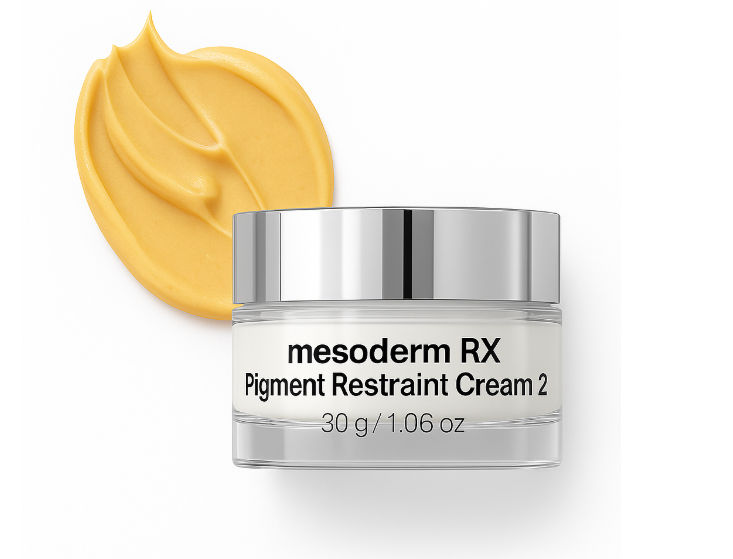
Featured Product
Pigment Restraint Cream
Visibly fade the look of dark spots and uneven tone — no clinic visit required. A brightening cream made to target the look of stubborn discoloration, whether it’s from post-blemish marks, sun exposure, or dullness that years of serums haven’t improved.
Shop Now →Why the barrier decides what your routine can tolerate
The barrier is your skin's control membrane. It regulates water loss, limits entry of irritants, and helps determine whether active ingredients can be used productively or whether they'll trigger stinging, flaking, and rebound inflammation.
When the barrier is compromised, even well-formulated brightening products can become difficult to tolerate. In skin prone to pigmentation, that matters twice. Inflammation itself can worsen discoloration.
Protect the barrier first. Brightening on top of inflammation is slower, less predictable, and often self-defeating.
This is also why endocrine and systemic triggers sometimes show up on the face before people recognize them elsewhere. For readers trying to connect internal patterns with visible skin changes, this guide on how to improve your hormonal wellness is a useful companion resource.
Cell turnover determines how fast improvement becomes visible
Even when pigment production is controlled, existing discoloration doesn't disappear overnight. Pigment has to move upward through the epidermis and shed with natural turnover. That cycle is one reason exfoliants and retinoid-style renewal strategies are useful when they're chosen carefully.
If you want a deeper explanation of that renewal process, Mesoderm RX has a clear primer on skin cell turnover. It helps explain why irritation and impatience are such common reasons people abandon routines too early.
For patients targeting uneven tone, a treatment such as AHA + BHA + PHA Skin Brightening Serum 30ml fits this biology-based model because it combines exfoliating acids with hydrating and brightening components including kojic acid, glycolic acid, lactic acid, salicylic acid, lactobionic acid, hyaluronic acid, and hexapeptides. The relevant question isn't whether a formula has many ingredients. It's whether those ingredients support turnover and tone correction without overwhelming the skin.
The Core Framework Your AM and PM Routine Blueprint
Most routines improve when they're split into two jobs instead of one giant list. Morning care should reduce incoming damage. Evening care should support recovery and controlled correction.
The pattern already shows up in consumer behavior. 74% of respondents maintain both a dedicated morning and evening skincare routine, and the most universally adopted products are moisturizers at 93%, cleansers at 85%, and sunscreens at 83%, according to this skincare routine and product adoption analysis. Those aren't filler steps. They're the foundation because they match the skin's basic needs.

AM routine for protection
In the morning, think in terms of exposure. Your skin is heading into UV, visible light, heat, pollution, friction, and incidental inflammation.
-
Cleanse lightly
Remove sweat, oil, and overnight residue without stripping the barrier. If your skin is dry or sensitive, a very gentle cleanse is enough. -
Treat if needed
Antioxidant or brightening support can fit here. Not everyone needs a complex serum layer every morning. If a treatment causes sting or pilling under sunscreen, it isn't helping. -
Moisturize
Moisturizer isn't optional for compromised or treatment-focused skin. It supports water balance and makes stronger steps more tolerable. -
Use broad-spectrum SPF
This is the essential lock on every brightening and anti-aging routine. Without it, you're treating injury while allowing fresh injury every day.
For readers comparing routine philosophy with procedural skin planning, this ultimate guide to radiant skincare offers a useful adjacent perspective on maintaining skin quality.
A visual demonstration helps here:
PM routine for repair
Night care is where correction belongs. Skin isn't fighting the day at the same intensity, so it can tolerate more deliberate treatment.
-
Double cleanse when needed
If you wear makeup, water-resistant sunscreen, or heavier products, start with an oil-based cleanse and follow with a water-based cleanser. -
Apply your primary treatment
Retinoids, exfoliating acids, or pigment-focused formulas are common choices for this step. Pick one main treatment direction per night when you're building tolerance. -
Finish with barrier support
A good moisturizer reduces friction from active use and lowers the chance that your repair routine turns into a cycle of irritation.
Skin responds better to consistent architecture than to constant experimentation.
Strategic Layering for Targeted Results
Layering determines whether a routine produces steady improvement or repeated irritation. The failure point is rarely product count alone. It is poor sequencing, incompatible actives, and asking skin to process too many corrective signals at once.

Under a Protect and Repair framework, layering has one job. Put each formula where it can work without disrupting the barrier or interfering with the next step.
What the sequence should accomplish
Order changes outcomes because skin is not a blank surface. It is a barrier with selective permeability, changing water content, surface lipids, and a limited tolerance for acid load and solvent exposure. If a routine ignores those constraints, performance drops fast.
A sound sequence improves three things:
- Access: Leave-on treatments contact the skin before heavier films reduce penetration.
- Tolerance: Corrective steps are spaced so inflammation does not cancel out progress.
- Retention: Moisturizers and sunscreen form the final layer that reduces water loss and protects the work underneath.
The practical rules that matter
Start with the thinnest leave-on product and finish with the most film-forming one. That rule is useful, but it is not enough.
Biology matters more than texture alone. An exfoliating acid, a retinoid, and a strong pigment inhibitor may all be lightweight, yet stacking them in one session can push skin into irritation before any of them deliver consistent benefit. I see this often in pigment-prone skin. Patients keep adding treatment because they want faster fading, then barrier injury prolongs the discoloration they were trying to treat.
Use these rules instead:
- Choose one lead active per routine: Give the session a single correction goal, such as antioxidant defense, exfoliation, pigment control, or retinoid renewal.
- Apply low-viscosity treatments before creams and oils: Serums and watery essences go first. Occlusive layers go later.
- Do not crowd brightening steps: Multiple pigment products can work together, but only if irritation stays low enough for regular use.
- Place oils last: Early oil use can reduce contact between water-based treatments and the skin surface.
- End the morning routine with sunscreen: Makeup can sit on top. Treatment steps should not.
For a practical reference on order and product texture, this guide on how to layer skin care correctly is useful.
Match the active to the time of day
Layering also has to respect context. Daytime skin needs protection against UV exposure, oxidation, and pigment triggers. Night routines can carry more of the repair load because the skin is not dealing with the same environmental stress at that moment.
| Time | Better fit | Why it belongs there |
|---|---|---|
| Morning | Antioxidants, niacinamide, pigment-support serums that do not increase irritation risk | Supports defense and helps limit daily triggers that worsen discoloration and collagen breakdown |
| Evening | Retinoids, exfoliating acids, peptide or repair-focused treatments | Uses the recovery window for turnover, renewal, and barrier repair |
What works better than random layering
The usual question is whether every good active should appear in the same routine. In practice, that approach fails more often than it works.
Targeted rotation is usually the better system. Use an antioxidant-focused morning under sunscreen. Use a retinoid on selected nights. Put exfoliation on separate nights if the skin still needs it. Keep some evenings for barrier repair only. That pattern gives skin enough stimulus to change and enough recovery to stay functional.
Trade-offs matter here. More treatment can produce faster short-term smoothing, but it also raises the risk of stinging, scaling, delayed barrier recovery, and rebound inflammation. Fewer, well-placed actives usually outperform an ambitious stack that the skin cannot tolerate for more than a week.
For dullness and uneven tone, controlled exfoliation during the repair phase can help remove compacted surface cells and improve reflectance. For fine lines or reduced firmness, renewal-focused products usually belong at night. For reactive or pigment-prone skin, restraint wins. Consistency beats intensity.
Common Mistakes That Sabotage Your Routine
Most skincare failure isn't about choosing one terrible product. It's about accumulating several small mistakes that keep the skin in a constant state of low-grade irritation or inconsistency.

Mistake one over-exfoliation
People trying to fade dark spots often exfoliate too aggressively. They use a scrub, then an acid toner, then a resurfacing serum, and then wonder why their skin burns when moisturizer touches it.
Exfoliation should help normal shedding. It shouldn't strip the barrier. Gentle, non-invasive daily exfoliation can be useful, but aggressive or frequent exfoliation can trigger irritation and uneven recovery, as discussed in this review of foundational skincare and treatment support.
Mistake two mixing actives without a plan
A 2026 clinical review found that 38% of patients misapplied active combinations, leading to reduced efficacy or chemical burns, according to this summary on active combination errors and skin injury. That's exactly what happens when people combine strong acids, retinoids, and other corrective products because each one looked useful on its own.
Use combination logic, not ingredient greed.
- Separate high-irritation steps: If one treatment already causes tingling or peeling, don't layer another aggressive active over it automatically.
- Watch for barrier signals: Tightness, stinging, shiny redness, and sudden flaking usually mean the routine needs less intensity, not more.
- Build slowly: Introduce one new corrective product at a time so you can identify the trigger if the skin reacts.
Mistake three treating without protecting
SPF inconsistency is the fastest way to sabotage pigment treatment. People spend months trying to fade discoloration while leaving the skin exposed to the exact triggers that darken it again.
If your morning routine skips broad-spectrum sun protection, your evening routine has to work against fresh stimulation every day. That's not an efficiency problem. It's a biology problem.
Barrier damage and UV exposure can make a technically correct routine perform like a bad one.
Mistake four changing products before they have time to work
Impatience keeps a lot of routines from ever reaching their therapeutic window. People often stop after a few weeks because they expected a dramatic shift too soon.
A biologically sound routine needs enough uninterrupted time to alter pigment signaling, improve turnover, and restore barrier stability. Product hopping usually resets that clock.
Sample Routines for Hyperpigmentation and Aging
A good step skincare routine should reflect the problem you're trying to solve. Hyperpigmentation needs pigment control, turnover support, and strict photoprotection. Aging-focused care needs renewal, hydration, and barrier preservation.
Patients using tyrosinase inhibitors typically need 6 to 8 weeks to see any skin color difference, and most need 16 weeks of continuous treatment before visible results emerge, according to this explanation of tyrosinase inhibitors and realistic timelines. That timeline is one reason consistency matters more than novelty.
For readers comparing skincare with procedural options, this overview of facial rejuvenation and tightening offers a broader look at how aging concerns can be approached.
If dark spots are the main concern, this Mesoderm RX article on a skincare routine for dark spots and hyperpigmentation is a helpful reference point.
Sample AM PM routines for targeted concerns
| Step | Hyperpigmentation Routine (AM/PM) | Anti-Aging Routine (AM/PM) |
|---|---|---|
| Cleanse | AM: Gentle cleanse. PM: Thorough cleanse, double cleanse if wearing sunscreen or makeup. | AM: Gentle cleanse. PM: Thorough cleanse to remove film and debris. |
| Primary treatment | AM: Brightening support if tolerated. PM: Tyrosinase inhibitor or controlled exfoliating step on selected nights. | AM: Antioxidant support if tolerated. PM: Retinoid or peptide-focused treatment depending on tolerance. |
| Secondary support | AM: Barrier-supportive moisturizer. PM: Hydrating layer if skin feels dry or reactive. | AM: Moisturizer to support comfort and barrier function. PM: Additional hydrating serum or cream if using renewal actives. |
| Protection or seal | AM: Broad-spectrum SPF every day. PM: Moisturizer to seal in treatment and reduce irritation risk. | AM: Broad-spectrum SPF every day. PM: Moisturizer to support overnight repair. |
How to choose between a full routine and a restrained one
If your skin is reactive, start with the smallest effective system: cleanse, treat, moisturize, protect. Once the skin stays calm, add complexity only if there's a clear reason.
If your skin is resilient and you're targeting stubborn discoloration or texture, a more developed sequence may help. The decision should come from skin behavior, not trend pressure.
Mesoderm RX builds routines around that exact principle. Use fewer, more purposeful steps. Protect aggressively in the morning, repair methodically at night, and choose active formulas that target dark spots, uneven tone, dryness, and visible aging without unnecessary additives. Explore the full Mesoderm RX collection if you want a results-driven system built for consistent use rather than cosmetic clutter.