


Mastering Layering Skin Care for Optimal Results
Most advice about layering skin care is too simple to be useful. “Apply products from thinnest to thickest” is a decent starting rule, but it doesn't tell you why some routines brighten skin while others keep it inflamed, dehydrated, and reactive.
That distinction matters most in hyperpigmentation. Dark spots don't only come from UV exposure or old breakouts. They also come from inflammation, and many people create that inflammation themselves by stacking too many acids, pairing the wrong actives, or forcing a complicated routine onto a skin barrier that is already struggling. If your routine stings, pills, flakes, or leaves you persistently “purging” and red, the issue usually isn't that you need more products. It's that your sequence and compatibility are wrong.
Why "Thinnest to Thickest" Is Incomplete Advice
The standard rule exists for a reason. Product order affects contact with the skin, and one guide notes that correct layering can increase absorption by up to 40% when products are applied in the proper order, especially for actives such as vitamin C, retinoids, and exfoliants, because formulation thickness influences skin contact and delivery (SEACRET's layering guide).
But texture alone doesn't decide performance.
A watery formula can still be irritating if it contains a strong acid and you place another active directly on top before the skin has settled. A richer cream can be perfectly appropriate earlier in a routine if it's being used as a buffering step for fragile skin. And a toner isn't automatically helpful just because it's thin. If the formula is poorly matched to your barrier, it can make the rest of the routine less tolerable.
Order matters, but chemistry matters more
When I evaluate a routine clinically, I look at three things first:
- Vehicle and solubility. Water-based treatments generally need direct access to the skin before heavier occlusive layers.
- Irritation load. Even good ingredients fail when too many stimulating actives land in the same session.
- Compatibility. Some combinations are technically possible, but biologically unwise for reactive or pigment-prone skin.
That last point is where most routines collapse. People hear “layering” and think stacking. They apply an acid toner, a vitamin C serum, a retinoid, and a pigment serum in one evening because each product targets discoloration. Then they wonder why the skin is hot, shiny, flaky, and darker in the same areas they were trying to treat.
Practical rule: Layering skin care isn't a race to fit every active into one routine. It's a method for deciding what deserves direct skin contact, what should be separated, and what should be left out.
Hyperpigmentation changes the equation
If your concern is uneven tone, you can't evaluate a product only by whether it is “brightening.” You have to ask whether the formula also raises the risk of irritation. In melanin-rich or reactive skin, irritation can prolong discoloration rather than resolve it.
That is why pH, strength, and barrier condition matter as much as viscosity. Even your toner choice matters more than people think. A properly chosen toner can prepare the skin, while an aggressive one can destabilize the whole routine. If you're sorting out that step, this guide on skin pH balance and toner function is a useful reference point.
“Thinnest to thickest” is the skeleton. Compatibility, tolerance, and biological response are the organs. Without them, the routine may look correct on paper and still perform badly on skin.
The Biological Foundation of Product Absorption
Your skin is not waiting passively for products to enter. It is built to keep things out. The outermost layer, the stratum corneum, acts like a compact barrier made of cells and lipids. That barrier is useful when it blocks irritants and limits water loss. It becomes frustrating when you're trying to deliver treatment ingredients efficiently.
Here is the core issue. The skin rewards the right formula applied in the right order to a barrier that is intact enough to function, but not so coated in residue that active ingredients can't make good contact.

What the skin lets in
Lighter, water-based formulas usually go first because they contact the skin more directly before heavier layers create drag, slip, or occlusion. That doesn't mean every serum penetrates effectively or every cream sits uselessly on top. It means formulation design influences where a product performs best.
Consider it this way:
| Factor | What it changes | Why it matters |
|---|---|---|
| Barrier condition | Skin tolerance and permeability | Irritated skin may sting more and handle actives worse |
| Formula type | Spread, film formation, and contact | Water-based treatments usually belong before richer creams |
| Molecular size | How easily ingredients move through the surface layers | Smaller functional ingredients are often used in serum textures |
| Hydration level | Surface flexibility and comfort | Better-hydrated skin usually tolerates routines more predictably |
Absorption is not the same as effectiveness
Consumers often confuse “I applied many layers” with “my skin received more treatment.” That isn't how it works. If the first products disrupt the barrier or if later products pill, roll, or dilute what came before, the routine gets less precise, not more potent.
This matters in a category where people are investing heavily. Drive Research summarized that 74% of women use 3 or more products in their evening routine, and projected the global skincare market at about $222.07 billion by 2030 (Drive Research skincare statistics). Multi-step routines are mainstream. Understanding how skin handles those layers is no longer optional.
Why hydration changes performance
Dry, tight skin is harder to treat well because it is more reactive. A hydrating step can reduce friction, improve comfort, and make stronger treatments easier to tolerate. That is the practical role of a lightweight hydrator in a routine. For example, Hydrating Skin Booster is described as a lightweight formula with hyaluronic acid, peptides, and antioxidant-rich botanical extracts, and that type of product placement makes sense before heavier creams because it adds hydration without creating a greasy film.
Healthy absorption depends on more than order. It depends on whether the skin barrier is calm enough to receive treatment in the first place.
Common Layering Mistakes That Worsen Skin
Most routine failures don't come from choosing one terrible product. They come from a series of small, avoidable errors that create chronic irritation. For pigment-prone skin, that irritation is a serious problem. Independent dermatology guidance stresses that ignoring ingredient compatibility can increase irritation, and irritation can worsen post-inflammatory hyperpigmentation, especially in reactive or melanin-rich skin (Youth To The People's layering guidance).
The kitchen-sink routine
People with dark spots often try to accelerate results by stacking every brightening active they own. That usually looks like this: exfoliating toner, exfoliating serum, vitamin C, retinoid, spot treatment, then a heavy cream to “lock it in.”
That routine may feel productive. Biologically, it often creates low-grade inflammation.
Melanin production doesn't only respond to UV light. It also responds to injury signals. If skin remains repeatedly irritated, melanocytes can stay active. That is one reason persistent redness, stinging, and peeling often travel with persistent discoloration.
Common errors that look harmless
- Applying occlusives too early. Oils and dense creams placed before water-based treatments can interfere with even contact.
- Doubling up on exfoliation. An acid toner plus an acid serum in the same routine is a common reason for overprocessing.
- Chasing fast brightening. Strong active after strong active often backfires on sensitive skin.
- Ignoring recovery nights. Skin needs sessions with hydration and barrier support only.
If your skin is already reactive, a dedicated sensitive-skin exfoliant guide can help clarify how much exfoliation is enough and when it's too much.
Compatibility is more important than ambition
The biggest myth in layering skin care is that disciplined people use more products. In practice, disciplined people use the fewest products necessary to get a response without provoking inflammation.
That applies to facial hyperpigmentation and body discoloration alike. If you're treating darker areas on friction-prone or delicate body zones, compatibility becomes even more important because the skin is often more vulnerable to irritation from rubbing, shaving, sweat, and overuse of actives. For instance, Intimate Skin Lightening Cream for Under Arms, Inner Thighs & Private Area is described as using tranexamic acid, niacinamide, and arbutin for dark spots and discoloration on sensitive areas, which illustrates a targeted approach rather than indiscriminate layering of face acids onto body skin.
More layers can create more variables, more friction, and more inflammation. None of those help hyperpigmentation.
The Core Layering Protocol Morning and Evening Routines
A good routine should be easy to repeat. Expert guidance recommends keeping routines to 3 to 5 steps and applying products from thinnest to thickest, with SPF last in the morning to reduce pilling and support proper absorption (Nuebiome's step-by-step layering guide).
Use that as the frame, then adjust the treatment step based on your skin's tolerance.
A visual sequence is typically more helpful than a long paragraph.

Morning routine for protection
Morning layering should prioritize defense, hydration, and pigment control without overload.
-
Cleanse lightly
Remove overnight oil, sweat, and residue. If your skin is dry or sensitive, a gentle cleanse is usually enough. -
Apply toner or essence if needed
This step should add hydration or prep the skin, not aggressively exfoliate before daytime exposure. -
Use your treatment serum
Morning is where many people place antioxidant support or non-irritating brightening care. -
Seal with moisturizer
Use enough to support the barrier, but not so much that the skin feels coated. -
Finish with sunscreen
SPF belongs last in the morning. If dark spots are your concern, this is the step that protects every other investment in the routine.
A short pause between layers helps reduce pilling. You don't need a long ritual. You need each layer to settle before the next one slides over it.
Evening routine for repair
Night routines are where people usually make mistakes because they try to fit every active into one session. Keep the sequence tighter.
| Step | Function | What to watch |
|---|---|---|
| Cleanse | Remove sunscreen, makeup, and debris | Use a double cleanse if you've worn heavy layers |
| Treatment | Target texture, discoloration, or aging | Choose one primary active direction per night |
| Hydrating serum | Add water-binding support and comfort | Useful after stronger treatments if tolerated |
| Moisturizer | Reduce water loss and support recovery | Don't over-occlude if you're acne-prone |
Here is a demonstration of routine sequencing in practice.
What actually works in real life
The best routine is the one your skin can tolerate for months, not the one that looks complex for three nights. For most patients and clients, a stable protocol beats a dramatic one:
- If you're sensitive: keep the morning routine simple and avoid daytime over-exfoliation.
- If you're pigment-prone: center the routine on protection in the morning and controlled treatment at night.
- If you're dry: use hydration to support tolerance, not to compensate for an overly aggressive active schedule.
The protocol isn't glamorous. That's why it works.
Advanced Actives How to Pair and Cycle Ingredients
Layering skin care becomes either strategic or destructive. Strong actives can produce excellent results, but only when you stop forcing them to compete in the same session.
Expert guidance recommends cycling instead of stacking too many actives at once. It also advises introducing retinoids gradually, for example 2 to 3 times per week at first, while acids are often added slowly and used on separate nights because acids and vitamin C should rarely be layered together due to irritation risk (RMS Beauty's guide to layering and cycling).

A simpler way to pair actives
Think in lanes, not piles.
-
Vitamin C lane
Usually fits best in the morning when the routine is built around protection. -
Retinoid lane
Usually fits best at night, started gradually, on nights when the rest of the routine is calm. -
Exfoliation lane
Reserve for separate nights, especially if your skin is prone to burning, redness, or post-inflammatory marks. -
Barrier lane
Hydration and moisturizer only. No ambition. These nights keep the rest of the program workable.
What not to combine casually
Some pairings are where problems begin:
| Combination | Why it often fails |
|---|---|
| Retinoid plus exfoliating acids | Raises irritation risk fast |
| Acids plus vitamin C | Often too stimulating for one routine |
| Multiple exfoliants in one session | Creates cumulative barrier stress |
| Every “brightening” active nightly | Increases inflammation and unpredictability |
That doesn't mean every skin will react the same way. It means pigment-prone skin usually benefits from restraint.
If you're choosing an exfoliation product, this overview of AHA and BHA product use is a useful companion to a cycling approach.
Use actives with a calendar, not with impulse. The skin responds to consistency better than intensity.
A workable weekly rhythm
A practical cycle often looks like this in concept:
- One exfoliation night
- One or more recovery nights
- A retinoid night
- Another recovery night if needed
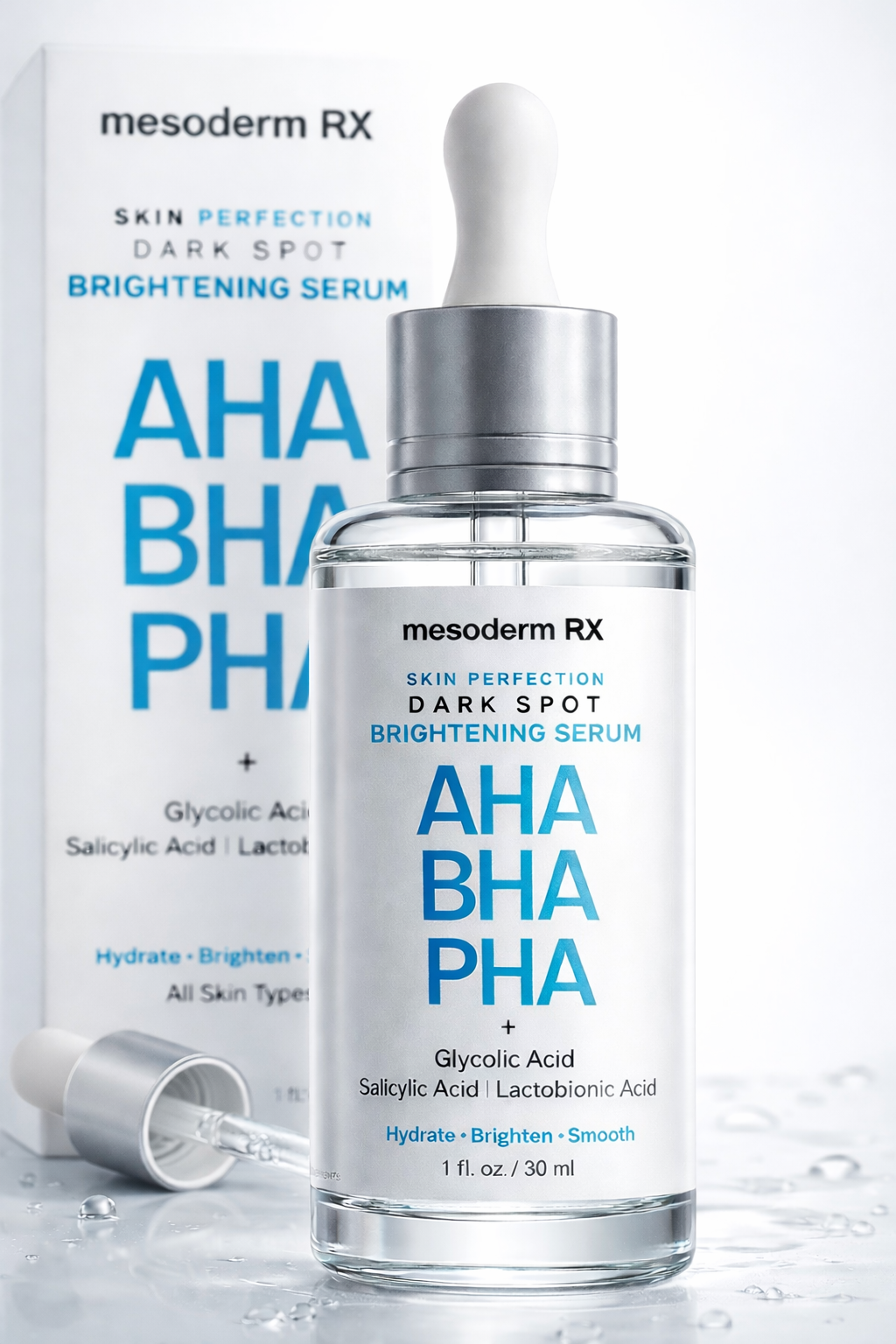
If you're using a multi-acid formula such as Mesoderm RX's AHA BHA PHA Dark Spot Brightening Serum, treat it as an exfoliation-night product, not as something that automatically belongs in the same routine as every other brightening active. Its ingredient profile includes glycolic acid, lactic acid, salicylic acid, and lactobionic acid, so the decision isn't just whether the serum is good. The decision is what must be removed from that night's routine to keep the barrier calm.
That is the shift often needed. Stop asking, “What else can I add?” Start asking, “What should I separate?”
Troubleshooting and Customizing Your Routine
When a routine fails, the skin usually tells you quickly. Pilling means the product film isn't sitting well. Persistent stinging means the barrier is asking for less. New dark marks after “brightening” often mean irritation is driving the problem.

Fix pilling first
Pilling usually comes from one of four issues:
- Too much product. Heavy application creates roll-off instead of an even film.
- No absorption window. Layers need a short pause before the next one.
- Too many silicone-rich textures. Slippage can turn into product balling.
- Friction during application. Pressing and smoothing is often better than aggressive rubbing.
If your skin turns reactive
Strip the routine back temporarily:
- Cleanser
- Moisturizer
- Sunscreen in the morning
Then reintroduce one active at a time. Not every brightening routine should begin with acids. In reactive skin, non-irritating support and strict UV protection often outperform aggressive resurfacing.
For people who like soothing adjuncts, Morfose's aloe vera insights are a useful reminder that calming support has a place, especially when skin feels overheated or overworked.
Customizing for hyperpigmentation
Hyperpigmentation is not one condition. Melasma, sun-induced spots, and post-inflammatory hyperpigmentation don't behave the same way, even if they all look like “dark patches” to the consumer. That is why random product stacking fails so often.
For pigment-prone routines, the priorities are usually:
- Lower inflammation
- Use brightening actives strategically, not all at once
- Keep daily UV protection essential
- Treat body or delicate-area discoloration with products made for those zones, not leftover face actives
If your routine feels complicated, that is often the clue that it needs editing. Results come faster when the skin is calm enough to respond.
Mesoderm RX approaches pigmentation and barrier care with a systems mindset rather than a maximalist one. If you're trying to simplify layering skin care while still targeting dark spots, uneven tone, dryness, or texture, explore the brand's focused treatment lineup at Mesoderm RX.