


Best Skincare Routine for Dark Spots and Hyperpigmentation
The most common advice for dark spots is also the reason many routines fail. People stack acids, vitamin C, retinoids, brightening serums, and scrub-like exfoliants onto already reactive skin, then wonder why the discoloration looks darker, redder, or more persistent.
A skincare routine for dark spots and hyperpigmentation only works when it respects skin biology. Pigment is not just sitting on the surface waiting to be polished away. It’s produced, transferred, deposited, and often re-triggered by ultraviolet light, irritation, heat, hormones, or inflammation. If you treat hyperpigmentation like a simple surface stain, you usually create more of it.
The practical rule is simple. Repair the barrier first, then treat pigment through multiple pathways, then protect the skin every day without fail. That sequence is what separates a disciplined protocol from product roulette.
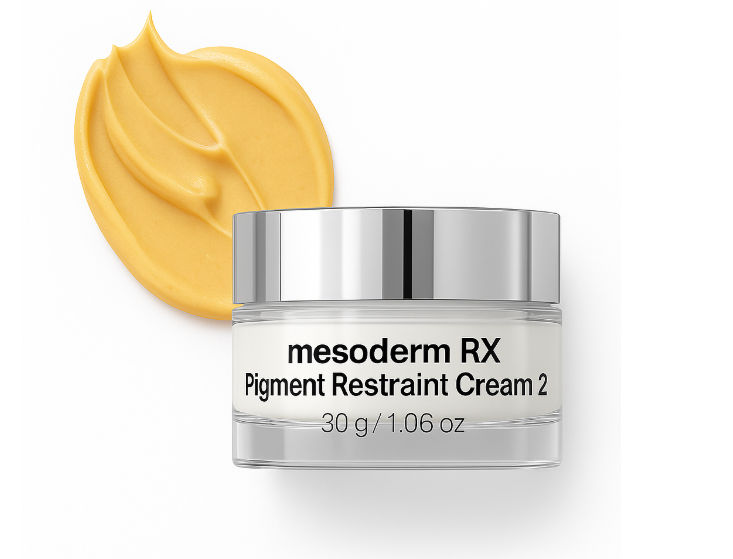
Featured Product
Pigment Restraint Cream
Visibly fade the look of dark spots and uneven tone — no clinic visit required. A brightening cream made to target the look of stubborn discoloration, whether it’s from post-blemish marks, sun exposure, or dullness that years of serums haven’t improved.
Shop Now →Beyond Brightening The Biology of Stubborn Dark Spots
Hyperpigmentation is a problem of melanin regulation, not just dullness. Melanocytes produce melanin as a protective response. When skin detects stress, those cells increase pigment output. The dark mark you see is the visible end point of a deeper signaling process.
What creates a dark spot
Three pathways matter most.
- Pigment production: Enzymes such as tyrosinase help drive melanogenesis. If this pathway stays active, skin keeps producing excess pigment.
- Pigment transfer: Melanin doesn’t help create a visible spot until it’s moved from melanocytes into surrounding skin cells.
- Pigment retention: Once pigmented cells sit in the upper layers of skin, they need to be shed gradually through normal turnover.
That’s why single-ingredient routines often disappoint. One product may slow pigment production while doing nothing about transfer or removal.
Not all hyperpigmentation behaves the same way
A flat brown spot from long-term UV exposure is not the same problem as melasma, and neither behaves like post-inflammatory hyperpigmentation, which often follows acne, friction, eczema, picking, or harsh treatments. The trigger matters because treatment tolerance and recurrence risk are different.
A few broad distinctions help:
| Type | Common trigger | Typical behavior |
|---|---|---|
| Sun spots | Cumulative UV exposure | Often persistent, usually worsens with more sun |
| Melasma | Hormonal influence plus light exposure | Tends to recur and can be stubborn |
| PIH | Acne, irritation, inflammation, trauma | Often darkens when skin stays inflamed |
If you want a more detailed breakdown of causes and categories, Mesoderm RX’s guide on what hyperpigmentation is, its causes, and how to treat it effectively is a useful companion.
Hyperpigmentation treatment fails when people chase “brightening” without identifying the trigger that keeps telling melanocytes to make more pigment.
Why generic routines miss the point
Most over-the-counter routines are built around ingredient popularity, not pathway control. They tell you to “use vitamin C for brightness” or “add retinol for turnover,” which isn’t wrong, but it’s incomplete.
What works is a structured system. You suppress excess pigment signaling, reduce transfer, support cell turnover, and stop re-triggering the process. The missing step in many routines is even more basic than that. The skin barrier has to tolerate treatment. If it doesn’t, every active can become another inflammatory trigger.
The Critical Mistake That Worsens Hyperpigmentation
People often assume dark spots need stronger treatment. More acid. More scrubbing. Faster turnover. That logic sounds reasonable and is frequently wrong.
Most dark spot skincare content focuses on active ingredients such as vitamin C, retinol, and AHAs or BHAs, but underemphasizes how a compromised barrier can worsen hyperpigmentation. It also rarely explains why barrier dysfunction perpetuates pigment problems or how to assess barrier status before starting treatment, as noted in this discussion of dark spot routine gaps by Versed.

Why barrier damage makes pigment harder to clear
The barrier regulates water loss, irritant penetration, and inflammatory signaling. When it’s disrupted, skin becomes easier to inflame. That matters because inflammation is one of the clearest pathways to excess pigment, especially in skin that develops post-inflammatory hyperpigmentation easily.
If your routine stings, burns, leaves the skin shiny-tight, or creates flaking that doesn’t feel like healthy renewal, your skin isn’t “purging toward results.” It’s reacting.
That reaction creates a destructive loop:
- You over-treat the skin
- The barrier weakens
- Inflammation increases
- Melanocytes receive more pigment signals
- Dark spots persist or deepen
- You add more actives because results are slow
That’s the cycle.
The signs often overlooked
Barrier impairment doesn’t always look dramatic. It often looks mild enough that people ignore it while continuing treatment.
Watch for these signs:
- Stinging from basic products: If even a bland moisturizer burns, your skin is signaling reduced tolerance.
- Persistent tightness after cleansing: Clean skin shouldn’t feel stripped.
- Shiny but dehydrated skin: This often reflects irritation, not improved exfoliation.
- Patchy redness or heat: These suggest ongoing inflammatory activity.
- Flaking plus worsening pigmentation: That combination usually means the routine is too aggressive.
Clinical rule: If the skin can’t tolerate hydration and sunscreen comfortably, it is not ready for an aggressive pigment-correction plan.
What to do before you chase fading
For reactive or sensitized skin, the first phase should be calm, not corrective. That means stripping out avoidable irritants and reducing treatment frequency.
A barrier-first reset usually includes:
- A gentle cleanser: Low-foam or non-stripping.
- A simple moisturizer: Focus on comfort and water retention rather than exfoliation.
- Daily sunscreen: Essential even while you pause stronger actives.
- Limited actives: Use only the most tolerable ones initially.
Niacinamide is often useful in this phase because it supports barrier function while also fitting into pigmentation management. Aggressive acids and retinoids can wait until skin stops reacting.
What doesn’t work
Several habits repeatedly sabotage outcomes.
- Using every brightener at once: Layering multiple low-pH or high-intensity actives on day one creates irritation faster than results.
- Daily exfoliation on inflamed skin: This is one of the quickest ways to worsen post-inflammatory dark marks.
- Treating visible peeling as success: Peeling can happen with effective treatment, but chronic irritation is not proof of progress.
- Ignoring friction: Picking, rubbing, aggressive cleansing brushes, and even repeated towel friction can keep PIH active.
Mesoderm RX’s formulation philosophy is relevant here because minimal-additive, fragrance-free routines tend to remove common irritant variables. That doesn’t make every active automatically tolerable, but it does improve the odds that the skin can stay calm enough for a consistent protocol.
When to restart treatment
Restart only when skin feels boring again. No stinging. No tightness. No low-grade redness. No urge to “fix” the irritation with another active.
That restraint is not passive. It’s strategic. Hyperpigmentation responds better to a routine the skin can tolerate for weeks than to a strong routine abandoned after several days.
Your AM Protocol for Pigment Prevention and Protection
Morning treatment should do two jobs well. It should reduce the signals that drive new discoloration and make the skin more resistant to the triggers you’ll encounter during the day.
The useful model is not “brighten in the morning.” It’s prevent, interrupt, protect.

A step-by-step morning approach for dark spots targets pigment production, melanosome transfer, and pigment clearance. It begins with a gentle cleanser, then a high-potency vitamin C serum, then a targeted brightener such as tranexamic acid, and finishes with broad-spectrum SPF 50+. Clinical benchmarks described in this expert overview report significant melanin synthesis reduction and substantial clearance with consistent use over several weeks to months in relevant treatment settings (YouTube expert data point).
Step one starts with restraint
If you wake up oily, sweaty, or layered in heavy nighttime products, cleanse. If your skin is dry or reactive, a rinse or very gentle cleanser may be enough.
The point of the morning cleanse is not deep purification. It’s to remove residue without disrupting the barrier you’re trying to preserve.
Choose a cleanser that leaves the skin comfortable. If your face feels squeaky, the cleanser is likely too harsh for pigment-prone skin.
Step two targets pigment production
Vitamin C earns its place in a morning routine. It serves two important functions. It acts as an antioxidant against environmental stress, and it helps suppress excess melanogenesis through tyrosinase-related pathways.
For practical use, apply it to dry skin after cleansing. Then give it a few minutes before layering the next step. That spacing matters less for ritual and more for reducing pilling and unnecessary friction.
Vitamin C is useful when:
- You’re dealing with uneven tone plus environmental exposure
- Your skin tolerates acidic formulations well
- You want daytime antioxidant support alongside pigment control
It is less useful when:
- Your barrier is currently compromised
- Every low-pH serum causes immediate burning
- You keep layering it with too many other strong actives
Step three limits transfer and supports calm skin
A complete skincare routine for dark spots and hyperpigmentation shouldn’t rely on one pathway. Ingredients that help reduce pigment transfer or support a steadier barrier can be valuable here.
Niacinamide often fits well here. It’s especially practical for people who need a gentler route because it supports skin function while addressing uneven tone. Tranexamic acid also belongs in this category of targeted brighteners for many routines.
You do not need every brightener available. You need a compatible combination your skin will tolerate repeatedly.
A workable morning treatment stack often looks like this:
| Skin behavior | Better AM choice |
|---|---|
| Reactive, easily stings | Niacinamide-focused serum |
| Tolerant, sun-triggered pigmentation | Vitamin C plus targeted brightener |
| Mixed concerns, prior overuse | One corrective serum, then moisturizer, then SPF |
A good morning protocol should feel stable by the third or fourth day. If it feels more inflamed every morning, the formula choice or layering strategy is wrong.
Step four secures water and reduces friction
Hydration is not cosmetic padding. It changes how the skin tolerates the rest of the routine. A well-chosen moisturizer reduces friction from application, limits dehydration, and improves comfort under sunscreen.
Keep this layer plain if you’re already using multiple actives. The more reactive the skin, the more valuable a simple moisturizer becomes.
Step five seals the routine with sunscreen
This is the part many people treat as optional or casual. It isn’t. Hyperpigmentation management falls apart without daily UV protection.
Use a broad-spectrum sunscreen every morning as the final step. If you’re outdoors, sweating, or exposed for extended periods, reapply.
A practical morning template
Use this as a clinical baseline, not a maximalist routine.
- Gentle cleanse
- Vitamin C or a gentler brightening serum
- Niacinamide or tranexamic acid if tolerated
- Moisturizer
- Broad-spectrum SPF 50+
If your skin is sensitive, reduce that to cleanser, one treatment serum, moisturizer, sunscreen. Better consistency beats ingredient overload every time.
Mesoderm RX can fit into this phase when you want a minimal-additive brightening routine built around pigment-focused actives rather than fragrance-heavy layering.
Your PM Protocol for Correction and Cellular Renewal
Night treatment is where correction happens. You’re no longer trying to defend against daytime exposure. You’re trying to push pigmented cells outward, improve turnover, and interrupt the persistence of existing discoloration.
That doesn’t mean the night routine should be harsher. It means it should be more deliberate.

Evening protocols commonly use a non-stripping cleanser, an AHA or BHA exfoliant several times weekly, and a core treatment built around retinol at a relevant concentration with niacinamide at an effective concentration. Clinical data summarized in this routine guide reports significant spot fading over several weeks to months, while overuse can lead to rebound pigmentation in a notable percentage of cases. The same source stresses cycling and hydration as central to success (111SKIN journal).
Your evening routine should rotate, not pile up
The biggest PM mistake is trying to use exfoliants and retinoids aggressively on the same nights, then adding brightening serums on top because the skin “needs extra help.”
It usually doesn’t. It needs fewer competing signals.
A cleaner structure works better:
- Exfoliation nights: Focus on removal of pigmented surface cells
- Retinoid nights: Focus on turnover and long-term correction
- Recovery nights: Focus on hydration and barrier support
Exfoliation nights
Use an AHA, BHA, or PHA product only on selected evenings. The right choice depends on tolerance and skin behavior.
AHAs help with surface roughness and visible dullness. BHAs can be useful when breakouts and post-acne marks overlap. PHAs are often easier for sensitive skin.
Keep the rest of the routine simple:
- Non-stripping cleanse
- Exfoliant
- Moisturizer
Do not add another acid “just because it’s mild.” Do not chase tingling.
Retinoid nights
Retinoids are useful because they support cellular renewal and help move pigmented cells through the epidermis more efficiently. They are not fast, but they are often effective when used consistently and tolerated well.
A practical retinoid night usually looks like this:
- Cleanse
- Allow skin to dry fully
- Apply retinoid
- Add niacinamide or moisturizer as needed for tolerance
If your skin is sensitive, use the buffering approach. Moisturizer first, then retinoid, then another light layer of moisturizer if needed.
Practical rule: Retinoids should increase skin function, not produce nightly damage. If every use leaves the skin raw, reduce frequency before changing to a stronger formula.
Recovery nights are part of treatment
People often treat recovery nights like lost progress. They aren’t. They’re what lets the treatment nights keep working.
A recovery night can be just:
- Gentle cleanse
- Hydrating serum or simple moisturizer
- Nothing else
That kind of restraint matters more for people with PIH-prone skin than most guides acknowledge.
A useful weekly rhythm
Not everyone needs “skin cycling,” but the logic is sound. Build a rhythm your barrier can maintain.
One example:
- Night 1 exfoliant
- Night 2 retinoid
- Night 3 recovery
- Night 4 retinoid or recovery depending on tolerance
Then repeat based on how your skin behaves, not how ambitious the label sounds.
Product form matters as much as ingredient list
A strong ingredient in an irritating base can still fail. Fragrance, drying alcohols, and unnecessarily busy formulas add noise to a protocol that depends on consistency.
Carefully formulated resurfacing products can matter. The ideal exfoliating serum or liquid exfoliant gives enough renewal to keep pigmented cells moving without pushing the skin back into the inflammatory cycle described earlier.
What usually slows progress at night
A few patterns show up repeatedly in stubborn cases:
- Using exfoliants too often
- Increasing retinoid frequency too quickly
- Skipping moisturizer because skin is oily
- Combining multiple corrective serums without a plan
- Stopping after a few weeks because fading is gradual
Visible progress in hyperpigmentation rarely comes from one dramatic night. It comes from controlled repetition.
The Undeniable Role of Sun Protection in Your Routine
If you use brightening serums, exfoliants, and retinoids but don’t protect your skin from ultraviolet exposure, you’re working against yourself.
Sun exposure is the primary causative factor for hyperpigmentation, and daily broad-spectrum SPF 50+ is the most effective preventative strategy according to Harvard Health’s review of causes and treatment. The same source notes that the global hyperpigmentation treatment market was valued at USD 1.39 billion in 2024 and is projected to reach USD 2.02 billion by 2030, which reflects the scale of concern and treatment demand (Harvard Health).

Why sunscreen is treatment, not just prevention
UV exposure does not just create future spots. It can also maintain the signals that keep existing pigmentation visible. That’s why people often feel they are “treating correctly” but never getting clear payoff.
Incidental exposure matters. Walking the dog. Driving. Sitting near a bright window. Outdoor errands. Those exposures may not feel intense, but hyperpigmentation-prone skin often responds to repeated light exposure with more pigment activity.
For people asking whether lower-SPF products are enough for daily life, Mesoderm RX’s article on whether you can tan with SPF 30 helps clarify how protection level and real-world use interact.
What broad-spectrum SPF 50+ means in practice
For pigment-prone skin, sunscreen has to be usable, not theoretical. It should be a product you’ll apply at the needed amount and reapply when exposure continues.
A good sunscreen for this purpose should:
- Cover UVA and UVB exposure: Broad-spectrum coverage is essential.
- Sit well over skincare: If it pills, people under-apply.
- Work for sensitive skin: Mineral filters such as zinc oxide and titanium dioxide are often easier for reactive users.
- Be used daily, not only outdoors: Hyperpigmentation doesn’t wait for beach weather.
This visual explanation is useful if you want a clearer sense of why application habits matter so much in pigment control.
The common sunscreen failures
The pattern is familiar.
- Applying too little
- Using SPF only on sunny days
- Skipping reapplication during prolonged exposure
- Treating hats and shade as complete substitutes
- Assuming indoor days don’t count
Existing dark spots won’t fade well if light exposure keeps telling the skin to defend itself.
For hyperpigmentation, sunscreen isn’t the final cosmetic layer. It’s the treatment step that protects the rest of the routine from being undone.
Targeting Hyperpigmentation Beyond the Face
The same pigment biology applies beyond the cheeks and forehead, but the skin doesn’t behave identically everywhere. The neck, chest, back, hands, underarms, and intimate areas each bring different levels of friction, sensitivity, occlusion, and barrier resilience.
That means the routine has to adapt.
Sensitive skin needs a narrower lane
If your skin reacts easily, simplify first. Use fewer active categories and introduce them one at a time. A gentle brightening routine sustained over months is usually more productive than a strong routine that repeatedly triggers irritation.
A few modifications help:
- Use PHAs before stronger acids: They’re often easier to tolerate.
- Buffer retinoids: Moisturizer before or after can improve comfort.
- Avoid treating every night: Frequency is a dose variable. Lower it.
- Stop rubbing the area: Friction is a trigger, not a neutral habit.
Body hyperpigmentation often involves friction and delayed care
Pigmentation on the chest, shoulders, back, arms, or hands is often treated inconsistently because people think of those areas only when they become visible. That’s one reason body discoloration tends to linger.
The basic body protocol is straightforward:
- Cleanse without over-drying
- Use a leave-on brightening or exfoliating body product at a tolerable frequency
- Moisturize
- Protect exposed areas with sunscreen
The logic remains the same as facial care. Reduce triggers, improve turnover, support barrier function, and prevent re-darkening.
Underarms and high-friction areas need a different standard
Underarms are a common problem area because the trigger is often not just pigment biology. It’s repeated friction, shaving, occlusion, and irritant exposure from deodorants or hair-removal methods.
That’s why routines in these zones need extra caution. A face-strength acid strategy can be too aggressive.
For practical guidance specific to this area, Mesoderm RX’s article on how to get rid of dark armpits covers common causes and more appropriate approaches.
Intimate areas are not face skin
Many people make dangerous assumptions about intimate areas. Delicate areas need formulas designed for lower tolerance and a much lower threshold for irritation. Strong peels, high-frequency exfoliation, and improvised DIY treatments are poor choices here.
Use products specifically intended for delicate skin. Keep expectations realistic and prioritize comfort over speed.
A useful way to think about non-facial treatment
| Area | Main challenge | Better approach | |---|---| | Chest and hands | UV exposure | Gentle correction plus daily sunscreen | | Back and shoulders | Breakouts plus marks | Control acne triggers, then fade residual marks | | Underarms | Friction and irritation | Low-irritation brightening and less aggressive hair-removal habits | | Intimate areas | High sensitivity | Dedicated formulas only, slow introduction |
The principle stays the same across the body. If treatment creates inflammation, it can prolong the very discoloration you’re trying to clear.
Achieving Clarity A Long-Term Strategy
Hyperpigmentation improves when the routine becomes less emotional and more procedural. Barrier first. Correct consistently. Protect without gaps. That sequence is more reliable than chasing the strongest ingredient or the fastest peel.
Clinical data supports realistic but encouraging timelines. In a 12-week study of a complete facial hyperpigmentation regimen, subjects reported lighter spots by week 2 with 76% improvement and more even skin tone with 67% improvement. By week 12, the regimen achieved a 26% median improvement in MASI scores, with progressive improvement across measured outcomes throughout the study (PMC review).
That matters for expectation-setting. Some people will notice early visual changes. More meaningful improvement usually builds with repetition, not aggression.
What lasts is not a random mix of “brightening” products. It’s a system:
- Calm skin before escalating treatment
- Use morning care to suppress triggers and defend against exposure
- Use night care to renew skin without breaking the barrier
- Treat sunscreen as part of therapy
- Adjust the protocol to the body site and your tolerance
A disciplined skincare routine for dark spots and hyperpigmentation doesn’t need to be complicated. It needs to be coherent. When every step has a job and the skin can tolerate the plan, progress becomes much more predictable.
If you want a routine built around that logic, Mesoderm RX offers pigment-focused, minimal-additive skincare designed for brightening, resurfacing, and daily protection without relying on hydroquinone or unnecessary fragrance.