


SkinMedica TNS Ceramide Cream: A Clinical Guide
Many treat skinmedica tns ceramide cream like a luxury moisturizer with a better story. That is the wrong frame.
This product is not most useful when skin is merely dry and you want a richer cream. It is most useful when skin function is disrupted and you need repair support fast. That distinction matters because the wrong strategy wastes money, delays progress, and keeps people chasing “anti-aging” results from a product that is built first for barrier recovery.
I see this mistake often in patients and consumers who buy premium repair products for concerns that are not primarily repair problems. If your main issue is post-procedure irritation, retinoid burn, chronic dryness, or a barrier that is clearly unstable, this cream makes sense. If your main issue is melanin overproduction, persistent discoloration, or age-related textural decline on otherwise stable skin, it may be the wrong place to put your budget.
A useful skincare plan starts with biology, not branding. First, identify whether the barrier is broken. Second, decide whether the skin needs repair signaling, active correction, or both. Third, stop expecting one product to do the work of an entire treatment system.
That is where this product deserves a more precise review. SkinMedica TNS Ceramide Treatment Cream is a specialized barrier-support and recovery formula built around ceramide replacement plus growth-factor signaling. It can be a strong tool. It is not a universal answer.
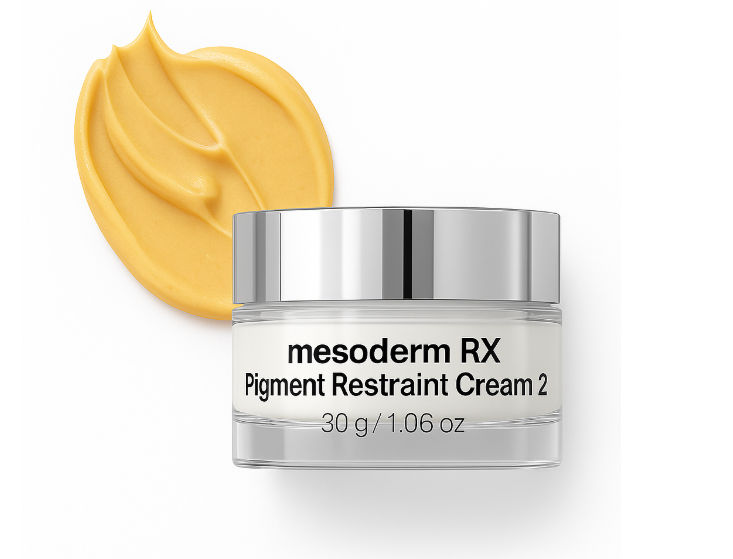
Featured Product
Pigment Restraint Cream
Visibly fade the look of dark spots and uneven tone — no clinic visit required. A brightening cream made to target the look of stubborn discoloration, whether it’s from post-blemish marks, sun exposure, or dullness that years of serums haven’t improved.
Shop Now →Introduction: Beyond a Simple Ceramide Cream
SkinMedica TNS Ceramide Treatment Cream gets misread when it is judged like a standard moisturizer. That framing misses the clinical role of the formula.
The interesting part is not that it contains ceramides. Many barrier creams do. The relevant question is whether combining barrier lipids with TNS signaling gives the product a defined use case in practice. In my view, it does, but that use case is narrower than the marketing language suggests.
This cream functions best as a recovery tool for skin that is temporarily failing. That includes retinoid irritation, post-procedure dryness, seasonal barrier collapse, and skin that has become reactive enough that even well-chosen actives start to sting. In those settings, a product like this can help restore comfort, reduce visible inflammation, and improve treatment tolerance.
Confusion starts when buyers expect the same formula to act as a primary correction product for chronic pigmentation, laxity, or established photoaging.
Those concerns usually need a system, not a repair cream with prestige pricing. A calmer barrier can make discoloration look less obvious for a while, and better hydration can soften the look of fine lines. That is supportive care. It is different from interrupting melanogenesis, increasing epidermal turnover in a controlled way, or building a long-term anti-aging plan around targeted actives such as the ones used in Mesoderm RX programs.
The common mistake
The mismatch usually shows up in people shopping for broad cosmetic goals with one expensive product. They want help with fine lines, uneven tone, firmness, prevention, and irritation at the same time. Skin does not usually work that way. A formula built for recovery can improve the conditions that make treatment possible, but it rarely replaces treatment.
I tell patients to separate two questions. Is the barrier unstable right now? And after that, what is the main biological problem that still needs to be corrected?
What determines value
The answer determines whether SkinMedica TNS Ceramide Cream is a smart buy or a detour.
For acute barrier disruption, it is a rational tool. For chronic hyperpigmentation, persistent textural aging, or dullness on otherwise stable skin, it often becomes an expensive support step that feels good without delivering enough correction on its own.
The right clinical lens asks whether this is the correct tool for the current skin state.
The Biology of a Healthy Skin Barrier
The skin barrier is not a vague wellness concept. It is a physical and biochemical structure, mainly within the stratum corneum, that controls water loss, environmental exposure, and inflammatory reactivity.

The brick-and-mortar model still matters
The simplest way to understand the barrier is the classic brick and mortar model.
The bricks are flattened skin cells called corneocytes. The mortar is the intercellular lipid matrix made largely of ceramides, cholesterol, and free fatty acids. When that mortar is intact, skin holds water, resists irritants, and stays less reactive.
When that mortar is depleted or disorganized, several things happen at once:
- Water escapes more easily, which increases transepidermal water loss.
- Irritants penetrate more easily, which can trigger stinging, redness, and low-grade inflammation.
- Actives become harder to tolerate, even if they are otherwise appropriate.
- Pigment disorders often worsen, because inflammation can drive uneven melanocyte activity.
That is why people trying to treat dark marks often fail. They keep pushing exfoliants, acids, or retinoids through a barrier that is already unstable.
What barrier damage looks like in real life
A compromised barrier rarely announces itself with dramatic peeling alone. More often it presents as a pattern:
- Persistent tightness after cleansing
- Burning when applying products that never used to sting
- Dryness with simultaneous breakouts
- Patchy redness
- A shiny but dehydrated surface
- Poor tolerance to retinoids, acids, or vitamin C formulas
This is not a skin type. It is a skin condition.
That difference is important. Dry skin can be a baseline trait. Barrier impairment is a functional problem that can happen to oily, acne-prone, sensitive, or aging skin.
Why repair has to come before correction
No active regimen performs well on inflamed, leaky skin. Exfoliants become irritating. Retinoids become intolerable. Brightening agents become inconsistent because the skin keeps reacting.
A stable barrier does not solve melasma, post-inflammatory hyperpigmentation, or collagen loss by itself. But it sets the conditions for treatment to work.
One overlooked trigger is routine overload. People often add exfoliating toners, peel pads, retinoids, and strong cleansers all at once. If your skin is already reactive, even your toner choice matters. A well-balanced formula can support tolerance better than a harsh or stripping one, which is why pH and irritation profile matter in daily use: https://mesodermrx.com/blogs/news/ph-balance-skin-toner
Later, once the barrier is stable, you can ask more from the skin. Before that, repair is not optional.
A visual refresher helps if you want to see barrier structure in a more accessible format.
Healthy skin is not just hydrated skin. Healthy skin is skin that can keep water in, irritants out, and tolerate the actives required for real change.
How TNS and Ceramides Reboot Skin Function

The value of SkinMedica TNS Ceramide Cream is not that it is a better basic moisturizer. Its value is that it combines barrier lipids with biologic repair signaling, which is a different job entirely.
That distinction matters in irritated, overtreated, or post-procedure skin. In stable skin with long-standing pigment or age-related change, it matters less.
Ceramides rebuild the barrier structure
Ceramides supply part of the lipid matrix that keeps the stratum corneum organized. When that matrix is disrupted, water escapes more easily, irritants penetrate more easily, and skin becomes harder to treat.
In this formula, Hydroxypropyl Bispalmitamide MEA functions as a pseudo-ceramide. The goal is not just a softer feel on the surface. The goal is better lipid organization, so the barrier can hold water and resist external stress with more consistency.
That is a functional repair role.
TNS supports repair signaling
The TNS component works through a different pathway. Human Fibroblast Conditioned Media contains growth factor-related signaling molecules intended to support the skin’s repair response after stress or injury.
Unlike a simple filler, TNS acts as a foreman, designed to influence how compromised skin organizes repair.
What the combination is designed to do
The biologic logic is straightforward. Ceramides help restore the physical barrier. TNS is intended to improve how skin coordinates recovery.
According to the product information from Total Skin Health, Human Fibroblast Conditioned Media (TNS®) upregulated genes related to collagen and elastin by 20 to 50 percent within 72 hours in compromised skin models, while Hydroxypropyl Bispalmitamide MEA helped restore the lipid ratio, increased stratum corneum hydration by 25 to 35 percent, and contributed to up to 40 percent faster transepidermal water loss recovery versus vehicle controls (Total Skin Health listing for TNS Ceramide Treatment Cream).
Those are mechanism-driven claims, not proof that this cream should anchor every long-term routine. They do explain why the formula tends to perform best when skin has been pushed past tolerance and needs both structural support and repair signaling.
Why it often outperforms a basic moisturizer in damaged skin
A standard moisturizer can reduce dryness for a few hours. This kind of formula aims to improve recovery quality.
That difference usually shows up in clinical use as less sting, less persistent tightness, more even texture, and better tolerance when reintroducing active treatment. I would consider it most useful in skin dealing with retinoid irritation, over-exfoliation, environmental barrier collapse, or post-procedure fragility.
The trade-off is straightforward. You are paying for a specialized recovery tool, not the most efficient route to fading discoloration or driving long-term collagen remodeling on its own.
Where its role ends
This cream does not directly interrupt pigment pathways in the way a focused brightening system can. It also does not replace a well-built anti-aging regimen if the main goal is ongoing correction rather than short-term stabilization.
Used in the right lane, the TNS and ceramide pairing is intelligent. It helps compromised skin become treatable again. For chronic hyperpigmentation and long-term anti-aging correction, targeted active systems remain the more intelligent tool.
The Clinical Evidence for TNS Technology
The evidence around TNS is stronger than the evidence around many prestige moisturizers, but it is still easy to overread. Most of the visible-outcome support comes from manufacturer-sponsored research on the broader TNS Recovery Complex, not from large independent trials on this cream itself.

What the data supports
As noted earlier, the brand's published wrinkle and texture findings for the TNS platform suggest that the growth-factor component can improve visible signs of photoaging, especially surface texture and the appearance of lines. That matters. It gives the formula a more credible biological basis than a cream that relies on occlusion and slip alone.
In practice, that aligns with how these products tend to perform. Skin often looks less coarse, less creased at the surface, and more cosmetically stable after a period of consistent use. Those are real outcomes, particularly in skin that is healing, irritated, or showing accumulated photodamage.
What the evidence does not establish
The evidence does not make SkinMedica TNS Ceramide Cream the smartest first-line choice for every aging complaint.
It does not show clear superiority for:
- pigment correction
- prevention of recurrent discoloration
- deep structural aging tied to chronic collagen loss
- patients with a stable barrier who need stronger active treatment, not recovery support
That distinction matters clinically. A growth-factor and barrier-repair formula can improve the environment skin heals in. It is less effective at directly interrupting melanogenesis, increasing epidermal turnover in a controlled way, or driving the kind of long-horizon correction many patients want from an anti-aging routine.
How I interpret TNS in treatment planning
I treat TNS technology as a recovery-focused adjunct with visible upside, not as a universal answer. It fits best in a plan where the barrier is impaired, tolerance is low, or the skin needs to become treatable again before stronger actives are introduced.
A patient with transient roughness, post-procedure irritation, or retinoid dermatitis may get meaningful benefit from that approach. A patient whose main issue is melasma, post-inflammatory hyperpigmentation, or etched aging from years of UV exposure usually needs a broader system. That system should match the biology of the problem. Pigment pathways need pigment-directed actives. Collagen decline and established wrinkling often need a more deliberate program than a repair cream can provide.
Line treatment is a good example. Some facial lines are amplified by dehydration and barrier disruption, so a repair cream can soften their appearance. Others come from repetitive muscle movement, dermal matrix decline, or volume changes. Those require a different strategy, which is why understanding what different types of facial lines indicate matters before assigning too much value to any single recovery product.
TNS has a legitimate role. Its limitation is just as important as its benefit. It can help damaged skin recover and look better. For chronic pigmentation and long-term anti-aging correction, targeted active systems remain the more intelligent tool.
Defining the Ideal User for TNS Ceramide Cream
Not everyone needs skinmedica tns ceramide cream. The right user is narrower than the marketing suggests.
Who tends to benefit most
This cream makes the most sense for people dealing with barrier compromise, not just cosmetic dissatisfaction.
The best-fit profiles include:
- Post-procedure skin After in-office treatments, skin often needs calming, lipid support, and a formula designed around recovery rather than aggressive correction.
- Retinoid-irritated skin If your prescription retinoid or high-strength retinol has pushed you into burning, scaling, and low tolerance, a repair-led product has a role.
- Chronic dryness with sensitivity Skin that stays tight, flaky, and reactive despite ordinary moisturizers may benefit from a formula built for structural and signaling support.
- Aging skin that is visibly fragile Some mature skin is not just wrinkled. It is thin, reactive, and poor at recovery. That is a different treatment problem than simple line reduction.

Who often overbuys this product
Many consumers purchasing premium repair creams have a different issue. Their barrier is fine. Their results are poor because they are using the wrong lead category.
Common examples:
- Someone with sun spots or post-acne marks who needs pigment-targeted actives.
- Someone focused on firmness who needs a stronger collagen-support strategy over time.
- Someone chasing “glass skin” but using no meaningful exfoliation, no pigment control, and inconsistent sun protection.
- Someone with stable skin buying a recovery cream because it feels safer than treatment products.
This is a budget-allocation problem as much as a formulation problem.
A simple decision filter
Use this framework:
| Skin situation | Is TNS Ceramide Cream a strong fit? | Why |
|---|---|---|
| Post-procedure irritation | Yes | Recovery and barrier support are the priority |
| Retinoid overuse | Yes | Skin needs repair before more active treatment |
| Dry, reactive mature skin | Often | Barrier instability changes treatment tolerance |
| Hyperpigmentation on stable skin | Usually not as a lead product | Pigment needs direct correction |
| Firmness-focused routine on intact skin | Limited as a lead product | Better as support than centerpiece |
| Healthy skin seeking prevention | Depends | Premium repair can be excessive if no repair is needed |
The cost question is legitimate
This product sits in a premium category. If you clearly need repair, the cost can be rational. If you do not, it becomes harder to justify because you are paying for a technology your skin may not fully need.
That does not make the product bad. It means indication matters.
The best skincare product is not the one with the most prestige. It is the one that matches the skin’s current biological limitation.
Targeted Alternatives for Pigmentation and Anti-Aging
Once the barrier is stable, many people should stop shopping as if they are still in repair mode.
That is where routines stall. Skin is no longer acutely compromised, but the person keeps using recovery-first products while expecting meaningful progress on discoloration, firmness, or long-term textural change. Supportive creams can maintain comfort. They rarely do enough on their own for stubborn pigment or chronic aging concerns.
The central limitation
A key limitation in the existing discussion around TNS is duration and use case. According to the OC Dermatology summary, a major gap is the lack of long-term efficacy data beyond 6 weeks for daily use on non-compromised skin, especially for concerns like hyperpigmentation. The same source notes that while the product is effective for moisturizing, its high cost and the unclear long-term impact of growth factors on sensitive skin make targeted, hydroquinone-free alternatives a more strategic choice for many consumers focused on anti-aging and tone correction (OC Dermatology discussion of TNS Ceramide Treatment Cream).
That is the practical pivot point.
If your barrier is no longer in crisis, your next gains usually come from active correction, not from continuing to escalate repair products.
Barrier repair and active correction are not the same strategy
A repair-first formula helps skin tolerate life and treatment. An active-driven routine tries to produce visible change through direct mechanisms.
For pigmentation, those mechanisms usually involve interrupting excess pigment formation, reducing inflammation, accelerating the release of discolored surface cells, and preventing re-darkening with strict photoprotection.
For anti-aging, the relevant mechanisms are different. You usually need some combination of cell turnover support, collagen-directed ingredients, antioxidant protection, and a routine your skin can sustain.
A premium repair cream can sit inside that system. It should not automatically be the star of it.
Strategy comparison: Barrier repair vs. active correction
| Concern | SkinMedica TNS Ceramide Cream Approach | Mesoderm RX System Approach | Clinical Rationale |
|---|---|---|---|
| Barrier damage | Uses ceramide support and TNS signaling to help compromised skin recover | Uses supportive moisturization as needed, but does not center the routine on repair unless barrier signs demand it | Barrier repair should lead only when barrier failure is the limiting factor |
| Post-procedure recovery | Strong fit because the formula is designed around soothing and recovery support | Usually not the first focus immediately after procedures unless a clinician directs otherwise | Freshly treated skin needs calm, not aggressive correction |
| Hyperpigmentation | Indirect support only. Better skin function may improve tolerance, but the cream is not a pigment-first tool | Prioritizes hydroquinone-free brightening, resurfacing, and daily UV defense in a coordinated system | Uneven tone improves faster when the routine targets discoloration directly |
| Surface roughness | Can help if roughness is tied to dryness or barrier stress | Uses exfoliating and resurfacing products when the barrier can tolerate them | Roughness from retention hyperkeratosis often needs active turnover support |
| Fine lines from dehydration | Can help because better barrier function reduces crepey surface appearance | Often pairs hydration with resurfacing and age-support actives for broader results | Some lines are moisture-related. Others need more than moisture |
| Firmness support | Secondary role through supportive skin quality benefits | Uses a more active-forward structure aimed at long-term visible improvement | Skin resilience and true anti-aging progress usually require sustained active treatment |
| Sensitive skin with stable barrier | May feel good but can be excessive as a lead product | Better to choose minimal-additive actives introduced at the right pace | Sensitivity does not always mean “use only repair products” |
Why consumers with dark spots often misallocate money
People with hyperpigmentation often spend heavily on rich creams because their skin “looks healthier” for a few hours after application. That visual improvement is real. It just is not the same as melanin correction.
Pigment disorders are stubborn because they are driven by a repeating loop of inflammation, UV exposure, hormonal influence in some cases, and delayed turnover. A cream that improves comfort may help support treatment. It does not automatically shut down the loop.
This is also why sunscreen is not optional in any brightening plan, and why exfoliants or resurfacing products have to be matched carefully to tolerance. If you want better results from stronger actives, especially tretinoin-based routines, understanding how they fit inside a broader system matters more than buying one expensive cream: https://mesodermrx.com/blogs/news/tretinoin-cream-obagi
What works better for chronic concerns
For chronic discoloration and age support on stable skin, a stronger strategy usually includes several elements working together:
- Pigment control You need ingredients chosen for brightening and tone regulation, not just barrier comfort.
- Turnover management Carefully selected exfoliating acids or resurfacing products can help remove retained, unevenly pigmented cells from the surface.
- Inflammation control Irritation worsens many pigment problems. The answer is not to avoid actives forever. It is to use the right actives at the right intensity.
- Daily UV defense No brightening routine survives chronic UV exposure. Even excellent formulas fail when UV keeps restimulating pigment.
- Consistency over novelty A sustainable routine with a few biologically purposeful products usually outperforms a shelf full of “recovery” products that never directly address the problem.
What does not work well
Several patterns repeatedly disappoint:
- Using barrier creams as your main pigment strategy Better comfort is not the same as better correction.
- Stacking too many harsh actives after barrier damage This creates more inflammation, which can worsen discoloration.
- Expecting growth-factor technology to replace exfoliation, pigment control, and sunscreen Those categories do different jobs.
- Assuming expense implies completeness Premium does not equal complete.
A more intelligent treatment sequence
For many people, the right sequence looks like this:
First, stabilize the barrier if it is inflamed, overtreated, or clearly compromised.
Then, once stinging and reactivity settle, shift into a targeted plan that addresses the diagnosis effectively. If the problem is hyperpigmentation, use a brightening and resurfacing structure. If the problem is aging texture and firmness, use a long-term system that supports renewal and collagen behavior.
That is what people often miss. They stay in the rescue phase indefinitely because rescue products feel safe. Results usually come from moving out of rescue mode once the skin is ready.
Repair products are excellent at helping skin recover. They are usually not enough to make a stable face significantly brighter, firmer, or more even on their own.
Conclusion: From Barrier Repair to Active Results
Skinmedica tns ceramide cream is best understood as a specialized recovery tool. It is not overpriced fluff, and it is not a universal anti-aging answer.
Its value is highest when the barrier is compromised and the skin needs both structural lipid support and repair signaling. In that setting, the formula makes clinical sense. It can help restore comfort, improve tolerance, and support visible recovery.
The problem starts when people use a barrier-repair product as the centerpiece of a plan for concerns that require direct correction. Hyperpigmentation, chronic uneven tone, and long-term firmness changes need more than a premium moisturizer with advanced signaling. They need a system built around the right active categories.
That is the larger lesson. Good skincare is not about finding one elite product. It is about matching the tool to the biological problem, then changing tools when the problem changes.
Use repair when skin is damaged. Use targeted actives when skin is stable enough to benefit from them. Keep sunscreen consistent. Build routines that are purposeful, not just expensive.
If your goal is brighter tone, smoother texture, and more visible anti-aging progress after the barrier is stable, explore Mesoderm RX. The brand focuses on high-potency, minimal-additive formulas designed for dark spots, uneven tone, dryness, and signs of aging, with hydroquinone-free options built for results-driven routines.