


A Clinical Protocol for Reducing Lines on Face
The appearance of lines on your face is a biological certainty, not a personal failing. To effectively reduce them, one must move beyond surface-level moisturizers and engage with the underlying cellular mechanics of skin aging. This guide provides a clinical framework for understanding why lines form and presents a structured protocol for achieving measurable, structural improvement.
The Cellular Blueprint Of Facial Lines

Before treating a line, you must understand its biological origin. Skin is a complex organ with an intricate support matrix of collagen and elastin fibers. Facial lines are a direct visual indicator that this structural framework is degrading, a process driven by both intrinsic (genetic) aging and extrinsic (environmental) factors.
The demand for effective intervention has driven a significant increase in clinical research, particularly since 2021. The focus is on reversing the cellular processes behind common concerns like forehead creases and smile lines. You can read the full research on this trend on pmc.ncbi.nlm.nih.gov.
Dynamic vs. Static Lines: A Critical Distinction
Not all lines are biologically equivalent. A precise diagnosis is the first step toward effective treatment. Clinically, we classify rhytids (wrinkles) into two primary categories.
This table clarifies the progression from expression-based lines to permanent, structural indentations.
| Characteristic | Dynamic Rhytids (Expression Lines) | Static Rhytids (Resting Lines) |
|---|---|---|
| Appearance | Visible only during muscle movement (e.g., smiling, frowning, squinting). | Visible when the facial musculature is at rest. |
| Primary Cause | Repetitive facial muscle contractions exerting mechanical stress on the overlying dermis. | Loss of collagen and elastin, advanced glycation end-products (AGEs), chronic photodamage, and the permanent etching of dynamic lines. |
| Common Examples | Crow’s feet when smiling, glabellar lines ("11s") when frowning. | Nasolabial folds, marionette lines, and deep-set forehead creases present without expression. |
| Progression | Precursors to static rhytids. | The evolution of dynamic lines into permanent dermal creases due to structural collapse. |
Understanding this progression is paramount. One type of line directly evolves into the other as the skin's structural integrity weakens.
Every permanent, static line on your face began as a temporary, dynamic one. Early intervention is not merely cosmetic; it is a proactive measure to preserve dermal structure before damage becomes permanently etched.
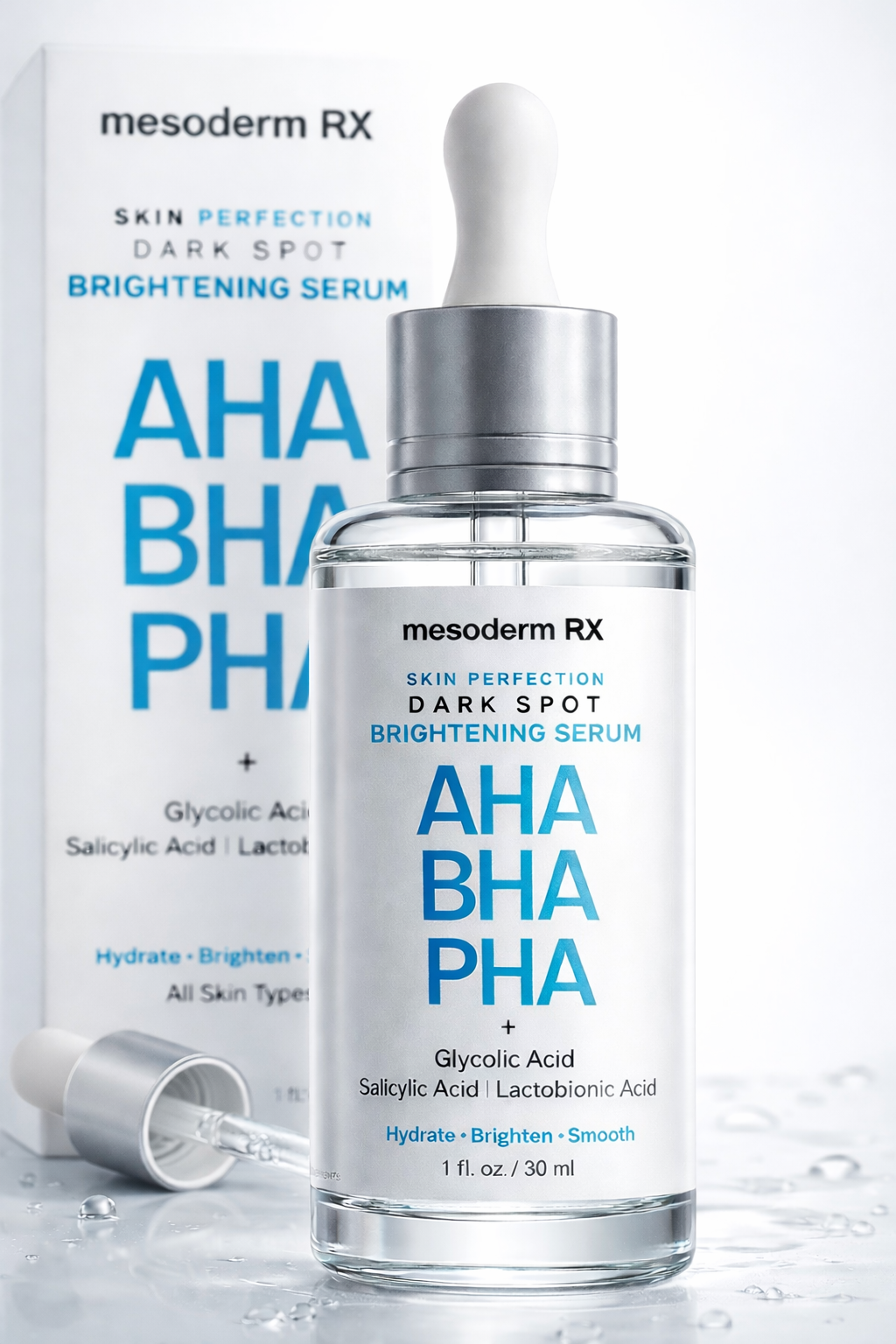
Featured Product
AHA + BHA + PHA Skin Brightening Serum (30ml) | Gentle Exfoliation & Glow Support
Multi-acid serum with AHA, BHA, and PHA to gently exfoliate, refine texture, and support brighter-looking skin. Lightweight and fast-absorbing for daily use.
Shop Now →The transition from a dynamic to a static line is accelerated by key biological saboteurs. One is glycation, a chemical process where excess sugar molecules cross-link with collagen and elastin fibers, making them rigid and brittle. Concurrently, chronic inflammation and oxidative stress from UV radiation continuously degrade the dermal matrix faster than the body can repair it. An effective solution must therefore operate at a cellular level to drive genuine structural repair.
Why Most Anti-Aging Strategies Fail
Widespread dissatisfaction with anti-aging outcomes is not a result of a lack of effort, but of a flawed strategy rooted in marketing myths rather than skin biology. Most consumer routines are designed for failure.
A common pitfall is "ingredient hopping"—the practice of cycling through "miracle" products in search of a rapid solution. Cellular regeneration and collagen synthesis are not overnight events. Meaningful change requires a minimum of three to six months of consistent application to manifest, as the skin must complete multiple turnover cycles.
The Fallacy of the Single-Ingredient Solution
The belief that one hero ingredient can reverse years of multifaceted skin damage is a primary driver of poor results. A single serum, regardless of its potency, cannot simultaneously address collagen degradation, slowed cell turnover, glycation, and oxidative stress. This is the fundamental weakness of most routines: they are not comprehensive.
Relying on low-concentration, "feel-good" formulas is another critical error. A cosmetically elegant cream may temporarily plump the stratum corneum with humectants, creating an illusion of smoothness that disappears within hours. True correction requires clinically relevant concentrations of active ingredients that penetrate to the dermal-epidermal junction and beyond.
Focusing solely on hydration exemplifies this superficial approach. While hydrated skin appears smoother due to temporary plumping of epidermal cells, this effect is transient. Without addressing the underlying loss of structural proteins, the lines will invariably reappear. It is a cosmetic patch, not a structural repair. To understand what is required for genuine structural support, read about the best serums to firm skin and reduce wrinkles.
The Ultimate Act of Self-Sabotage
Even with a potent, multi-pathway system, progress can be entirely negated by one omission: daily sunscreen. Failure to apply a broad-spectrum sunscreen every single day is the single greatest act of skincare self-sabotage. It allows UV radiation to continue degrading the very collagen your active ingredients are working to rebuild.
These common failures point to a single conclusion: achieving measurable results requires a strategic shift away from trend-chasing and toward a disciplined, multi-pathway approach.
- A Synergistic System: Products must work in concert to target different aging mechanisms.
- Clinical Potency: Formulas must contain active ingredients at concentrations proven to elicit a cellular response.
- Unyielding Consistency: The protocol must be followed without exception, particularly regarding sun protection.
Only a cohesive system engineered to address the multifactorial nature of skin aging can deliver the visible, lasting reduction in facial lines that so many seek but few achieve.
Decoding Periorbital Wrinkles (Crow's Feet)
The initial appearance of significant lines almost always occurs in the periorbital region. These wrinkles, colloquially known as crow's feet, are a direct consequence of the unique and fragile anatomy of the skin around the eyes.
Unlike the rest of the face, the periorbital epidermis is exceptionally thin, averaging just 0.5mm. It possesses few sebaceous glands and lacks the subcutaneous fat pad that provides cushioning and support elsewhere. This inherent lack of structural reinforcement makes it extremely vulnerable to mechanical stress and environmental damage.
Add to this the constant muscle activity. The orbicularis oculi muscle contracts over 15,000 times per day through blinking alone. Every smile and squint adds to this mechanical load, repeatedly folding the delicate skin. Over time, as collagen and elastin deplete, the skin loses its ability to recoil, and these expression lines become permanently etched.
Why The Eye Area Ages Faster
It is a perfect storm of anatomical vulnerability and perpetual mechanical stress. While daily expressions carve the lines, extrinsic factors accelerate the process. Without a protective fatty layer, UV radiation penetrates more deeply, directly degrading the dermal matrix.
The appearance of crow’s feet is a significant factor in age perception. We are not discussing faint lines. The density and depth of these rhytids quantify cumulative photodamage, which is precisely why a standard facial serum is inadequate for this specialized zone.
This is not speculation; it is confirmed by research. A major study demonstrated that across diverse ethnic groups, the severity of crow's feet was the single most reliable predictor of perceived age—more so than skin tone or other facial metrics. You can read the full findings on age perception and wrinkles on pmc.ncbi.nlm.nih.gov. This underscores the necessity of a targeted treatment strategy.
The Failure of Generic Eye Creams
Most consumers experience frustration with eye treatments because they are using products that fail to address the core pathology. A basic hydrating eye cream offers temporary surface plumping but does not rebuild lost collagen or defend against ongoing degradation. It is a cosmetic bandage on a structural wound.
To achieve a visible reduction in crow's feet, a system must address the two primary weaknesses of the periorbital area:
- Rebuild Dermal Structure: Ingredients like signaling peptides and growth factors are required. These molecules act as biological messengers, stimulating fibroblasts to synthesize new collagen and reinforcing the skin's internal support network.
- Defend Against Environmental Assault: This necessitates a high-potency antioxidant complex to neutralize the free radicals generated by UV and pollution that constantly fragment collagen fibers.
- Specialized Delivery System: The formula must be potent enough to be effective yet specifically formulated for the delicate periorbital skin to avoid irritation and inflammation.
Treating crow's feet requires moving beyond superficial hydration. By targeting the fundamental causes—structural weakness and environmental assault—a visible, lasting improvement is achievable. This is the precise domain of the Mesoderm RX system, which provides formulations engineered for true cellular repair, not transient cosmetic effects.
A Clinical Protocol For Measurable Results
Understanding the biology of facial lines is insufficient. Achieving measurable results requires adherence to a structured protocol where each step is synergistic. The objective is twofold: correct existing dermal damage at a cellular level and prevent the formation of new lines.
A disorganized approach is counterproductive. For instance, using a potent exfoliant without subsequent, rigorous sun protection exposes new, vulnerable skin to the same UV radiation that caused the initial damage. For lasting improvement, a disciplined, multi-pathway system is non-negotiable.
This flowchart illustrates how compounding factors lead to the formation of crow's feet.

As shown, these lines are not caused by a single factor. They are the result of a biological weak point (thin skin) subjected to chronic mechanical stress (blinking) and accelerated by environmental damage (sun exposure). A successful protocol must address all three vectors.
The Morning Protocol: Defend and Protect
The primary function of the morning routine is to shield the skin from the daily environmental aggressors that degrade collagen and deepen lines. This is your defensive strategy.
- Cleanse: Use a gentle, pH-balanced cleanser. The goal is to remove impurities without stripping the skin's lipid barrier. An aggressive morning cleanse can induce inflammation and dehydration, accentuating the appearance of lines. You can read more about the importance of pH balance for skin health.
- Target & Firm: Apply a peptide-rich serum like our Advanced Age-Defying Serum. Peptides are signaling molecules that instruct fibroblasts to increase collagen synthesis. This step is critical for rebuilding the skin's foundational structure, improving firmness from within.
- Protect: This is the most crucial step. Apply a broad-spectrum SPF 50+, such as our Pigment Restraint Ultra High Sun Protection. Without this non-negotiable shield, UV radiation will continue to destroy collagen, negating all other efforts. Daily, consistent application is the single most effective anti-aging habit.
The Evening Protocol: Renew and Rebuild
Night is the period of peak cellular repair. The evening routine is designed to support and accelerate these natural regenerative processes. This is your offensive strategy.
The evening routine is a controlled "demolition and reconstruction" project for your skin. First, you clear away old, damaged cells to make way for the new, healthy cells beneath.
A thorough double cleanse is required to remove sunscreen, pollutants, and makeup, creating a clean slate for treatment products to penetrate effectively.
Following cleansing, the focus shifts to active renewal.
- Resurface and Renew: This is where controlled chemical exfoliation is critical. A product like our Skin Perfection Liquid Exfoliant with a blend of AHAs and BHAs dissolves the intercellular "glue" holding dead cells to the surface. This action immediately smooths skin texture and, more importantly, stimulates cellular turnover, which slows significantly with age.
- Rebuild and Firm: Post-exfoliation, re-apply the Advanced Age-Defying Serum. With the stratum corneum's dead layer removed, the serum’s peptides can penetrate more deeply and work more efficiently to support collagen and elastin synthesis. This synergistic combination of resurfacing and rebuilding is the core of an effective anti-line protocol.
This disciplined, dual-approach system ensures you are fundamentally restructuring the skin for a visibly smoother, firmer, and more resilient appearance, rather than just temporarily plumping lines.
Advanced Strategies And Lifestyle Integration

A potent, consistent skincare protocol is the non-negotiable foundation for reducing facial lines. To accelerate results and ensure their longevity, however, this external strategy must be supported by internal and clinical interventions. These are not replacements for a daily routine, but powerful amplifiers.
Amplifying Results With Professional Treatments
While a consistent home regimen delivers profound, long-term changes, certain in-office procedures provide a significant advantage, particularly for stubborn, static rhytids. These procedures work by creating a controlled micro-injury to the skin, which powerfully activates the body's natural wound-healing and collagen-synthesis cascades. They are synergistic partners to your daily products.
- Microneedling (Collagen Induction Therapy): This procedure uses fine needles to create micro-channels in the skin. This not only triggers a robust collagen and elastin synthesis response but also dramatically increases the absorption and efficacy of topical serums applied immediately after.
- Low-Level Laser Therapy (LLLT): Unlike aggressive ablative lasers, LLLT uses specific wavelengths of light to energize cellular mitochondria. This boost in cellular energy enhances repair processes, reduces inflammation, and supports the rebuilding mechanisms initiated by your skincare.
Professional treatments function as a periodic "reset," creating a powerful regenerative cascade. Your daily skincare protocol then maintains and builds upon this momentum. View them as a strategic enhancement, not a one-time fix.
The growth of the anti-aging market, projected to expand from $47 billion in 2023 to nearly $80 billion, is fueled by such innovations. Ongoing research validates the tight correlation between wrinkle metrics and perceived age, confirming that facial lines are a true barometer of skin health. You can explore some of the science behind skin aging quantification for more detail.
Internal Defense: The Role of Lifestyle
Daily habits have a direct, biological impact on the skin's capacity to resist and repair damage. You can either accelerate the formation of lines or build a powerful internal defense against them.
- Combat Glycation Through Diet: Glycation stiffens and embrittles collagen. This process can be mitigated internally by reducing the intake of sugar and refined carbohydrates. Simultaneously, a diet rich in antioxidant-dense foods helps neutralize the free radicals that drive oxidative stress.
- Prioritize Regenerative Sleep: The skin's repair cycle peaks during sleep. Sleep deprivation increases systemic cortisol, a stress hormone that actively breaks down collagen and promotes inflammation. 7-9 hours of quality sleep is not a luxury; it is a core component of any serious anti-aging strategy. To understand how specific ingredients function during this period, you can learn more about these skincare powerhouses in our article.
- Manage Cortisol Levels: Chronic stress directly ages the skin by maintaining high cortisol levels. Stress management techniques—such as exercise or mindfulness—lower cortisol, thereby helping to preserve the dermal matrix.
Common Questions About Reducing Facial Lines
When committing to a clinical skincare protocol, certain questions consistently arise. The most frequent is: “How long until I see results?”
There is no single timeline, but expectations can be set based on skin biology. A full skin cell turnover cycle is approximately 28 days in young adulthood, slowing to 45-60 days by age 50. Improvements in texture from chemical exfoliation may be noticeable within weeks. However, rebuilding dermal collagen to soften deep, static lines is a long-term project. Measurable structural improvement requires three to six months of consistent, nightly application of active ingredients.
Can I Combine Actives Like Retinoids and Exfoliants?
Yes, provided it is done strategically. Combining potent actives like retinoids and chemical exfoliants can accelerate results, but it also increases the potential for irritation and barrier impairment. The key is to never apply them in the same session.
Alternating nights is an effective strategy. This provides the skin with the benefits of both ingredients without overwhelming its barrier function.
- Night 1: Apply a retinoid to drive deep cellular renewal.
- Night 2: Use a chemical exfoliant, like our Skin Perfection Liquid Exfoliant, to remove the dead cells that the retinoid has pushed to the surface.
- Night 3: "Rest Night." Focus exclusively on hydration and barrier repair with lipids and humectants.
This cycle allows the skin to fully benefit from each active ingredient without tipping into a state of chronic inflammation. Monitor for signs of irritation (redness, excessive peeling) and add more rest nights as needed.
A disciplined at-home system will always outperform sporadic, expensive in-office treatments. Consistency is the most powerful tool you have. While professional procedures offer a boost, it’s the daily, repeated application of clinically effective ingredients that creates and maintains long-term change.
Many also question the necessity of professional treatments. While procedures like microneedling can amplify results, they are never a substitute for a robust daily regimen. A professional treatment is analogous to a periodic deep-clean of a house; the daily routine is what keeps it in order. Without consistent maintenance, the benefits of any in-office procedure will quickly fade. The synergy of a consistent home system provides the sustainable, long-term correction required for smoother skin.
At Mesoderm RX, we engineer systems for sustained, visible results. Our formulations deliver clinical-strength actives that work in concert with your skin's biology to reduce lines and rebuild its fundamental structure.
Discover the Mesoderm RX system and start your journey to smoother, firmer skin.