


Skin Barrier Repair Serum a Clinical Guide
Most barrier advice is too soft to work. If your skin is stinging, flushing, getting rough, or suddenly reacting to products it used to tolerate, the problem usually isn't that you "need more moisture." The problem is that the barrier's structure has been disrupted, and water alone doesn't rebuild structure.
That distinction matters because many products sold as soothing are really comfort products. They can make skin feel less tight for a few hours, reduce that papery dehydrated look, and still leave the barrier weak. A compromised barrier needs reconstruction of the lipid matrix that keeps the outer layer cohesive. Without that, you get the familiar cycle. Temporary relief, then recurrent irritation.
A good skin barrier repair serum should do more than flood the surface with humectants. It should help the skin hold together, recover after cleansing and environmental stress, and eventually tolerate a more intelligent active routine again.
Beyond Hydration Why Your Skin Barrier Needs Repair
The common advice is simple. Stop everything and pile on moisturizer. Sometimes that helps. Often it doesn't.
Skin barrier damage isn't just dryness. It's a functional failure of the stratum corneum, the outer layer that regulates water loss and screens out irritants. Foundational dermatology literature makes the point clearly. Real barrier repair depends on replacing the skin's lipid architecture, especially ceramides, cholesterol, and free fatty acids, and the most effective moisturizers combine humectants, occlusives, emollients, and physiological lipids to support permeability-barrier restoration while targeting abnormalities associated with xerotic skin changes clinical review on skin barrier physiology.
What moisture-only products actually do
A moisture-only product can still be useful. It can:
- Bind water with humectants such as glycerin or hyaluronic acid
- Reduce immediate tightness with occlusive or emollient films
- Improve feel quickly so skin looks calmer and less ashy
What it usually can't do by itself is restore the lipid architecture that gives the barrier resilience.
Clinical reality: Soft skin and repaired skin aren't the same thing.
This is why people say, "My skin feels hydrated, but it's still reactive." They aren't imagining it. Hydration changes sensation fast. Repair changes function more slowly.
The better question to ask
Instead of asking whether a serum is soothing, ask whether it supports structural repair. Does it include barrier lipids or pathways that help the skin rebuild them? Does it reduce reactivity over time, or only make the skin feel coated?
If you're also considering professional support, some clinics that focus on natural skincare treatments can be useful for identifying when irritation comes from over-exfoliation, inflammation, or an unsuitable routine rather than from simple dehydration alone.
The barrier is a biological system, not a mood. Treat it that way and your results get more predictable.
Your Skin Barrier an Intelligent Wall
The easiest way to understand barrier repair is to stop thinking of skin as a sponge and start thinking of it as a wall.

The bricks and the mortar
The outer barrier is built from corneocytes, which act like bricks. These flattened cells form the visible surface layer. They aren't enough on their own. The space between them must be filled by a lipid matrix that acts like mortar.
That mortar is where barrier competence lives.
When the lipid matrix is intact, the surface stays cohesive and better resists irritants, friction, aggressive cleansing, and environmental shifts. When the lipid matrix is deficient or disorganized, the wall becomes leaky. Water escapes more easily. Irritants penetrate more easily. Skin becomes less tolerant.
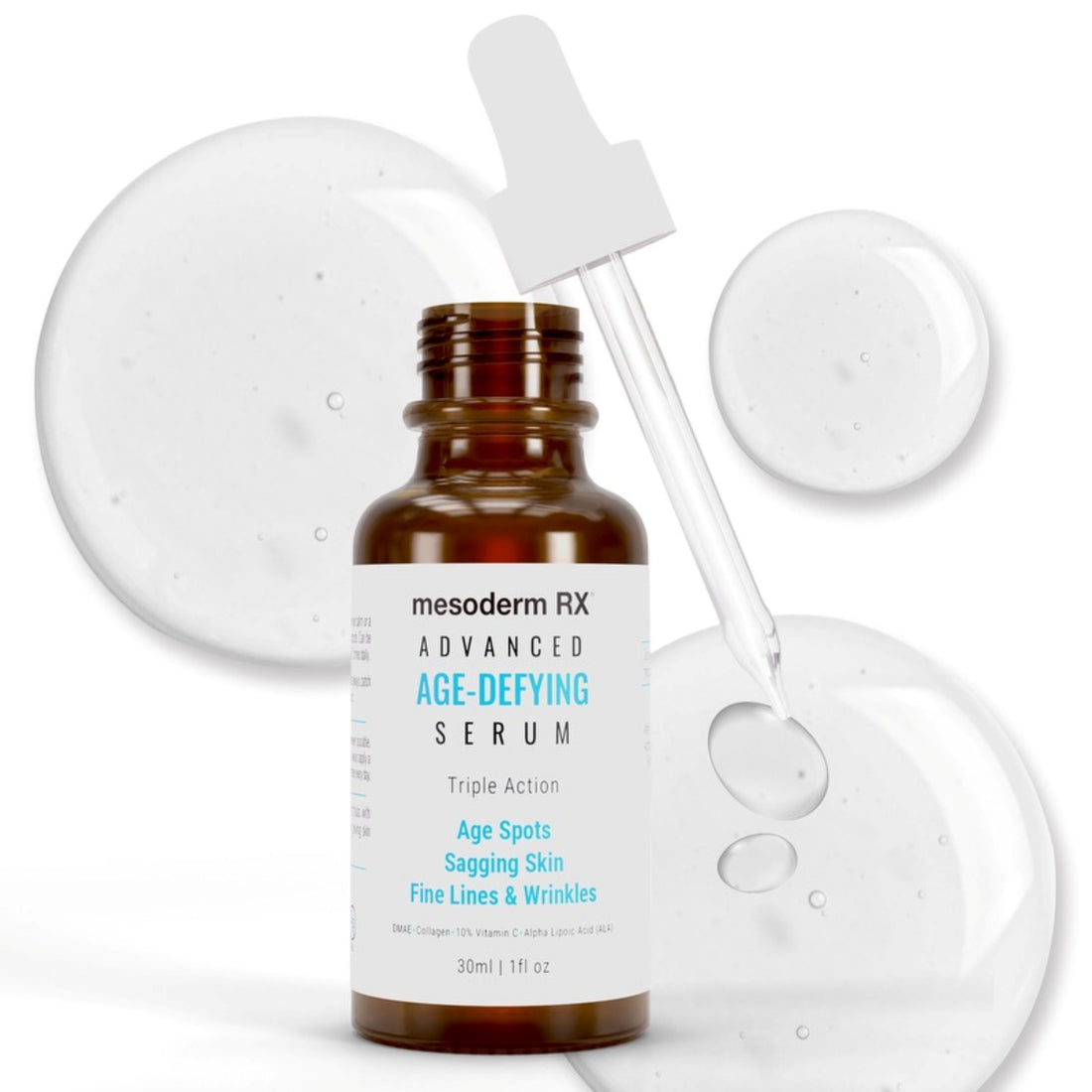
Featured Product
Advanced Triple Action Age-Defying Serum
TURN BACK TIME WITH A SERUM THAT RESTORES, REPAIRS, AND REJUVENATES
Shop Now →Why transepidermal water loss matters
Formulators and clinicians pay attention to transepidermal water loss, often shortened to TEWL, because it reflects how much water escapes through the barrier. Higher loss signals a weaker seal.
TEWL isn't just an abstract lab concept. It shows up in daily life as skin that feels tight after washing, stings when bland products are applied, flakes around the nose or mouth, or gets shiny and dehydrated at the same time. Those signs often tell you the barrier is not holding water where it should.
A skin barrier repair serum should be designed around that problem. Not around the idea of adding water, but around reducing unnecessary escape and improving recovery after stress.
Skin that can't retain water won't stay comfortable for long, no matter how many hydrating layers you add.
What a repair-focused formula must respect
Barrier physiology is selective. The skin doesn't just need any oil and any humectant. It responds best when formulations support the architecture it naturally uses.
A practical way to think about formula design is this:
- Humectants pull water into the upper layers
- Emollients improve flexibility and surface feel
- Occlusives slow evaporation
- Physiological lipids help rebuild what the barrier is made of
The strongest products don't force you to choose only one category. They combine them with a clear purpose.
For mature or dryness-prone skin, a product such as Advanced Triple Action Age-Defying Serum fits part of this logic because it is described as a rich, creamy moisturizer with peptides that fortifies the skin's moisture barrier while supporting firmness, resiliency, hydration, and the appearance of fine lines and wrinkles. That doesn't make it a complete barrier science lesson on its own, but it does reflect the broader principle that support products should reinforce function, not just add slip.
Why the wall becomes unstable
The barrier usually fails for reasons people underestimate:
- Over-exfoliation: acids, scrubs, and retinoids used too aggressively
- Harsh cleansing: repeated stripping with strong surfactants
- Inflammation: acne routines, procedures, or irritation cycles
- Environmental stress: cold air, heat, wind, and low humidity
Once that wall is destabilized, the wrong product choice can keep you stuck in a comfort loop. Skin feels better for the evening and worse again by morning.
Key Ingredients for True Barrier Reconstruction
A competent skin barrier repair serum needs a formula architecture, not a marketing story. Ingredient lists matter, but categories matter more. You need to know what each group is doing.
Lipid replacement comes first
The literature on formulation design points to a ceramides:cholesterol:free fatty acids ratio around 3:1:1 to approximate the native skin lipid matrix, with ceramide systems commonly used around 0.5% to 5% and pH kept near the skin's natural 4.5 to 6 range to support efficacy while minimizing irritation formulation guidance for skin barrier repair products.
This is the part most "hydrating serums" miss.
If a formula gives you hyaluronic acid and little else, you're getting water management, not full structural repair. Ceramides matter because they help restore lamellar organization. Cholesterol matters because it participates in membrane integrity and repair. Free fatty acids matter because they support the matrix that keeps corneocytes sealed together.
Formulation rule: If barrier repair is the claim, lipid replacement can't be an afterthought.
Barrier support ingredients still have an important role
Not every useful ingredient is a barrier lipid. Some help the skin normalize function, reduce irritation potential, or improve hydration kinetics while the lipid matrix recovers.
Here is the framework I use when evaluating a serum.
| Ingredient | Category | Mechanism of Action | Primary Benefit |
|---|---|---|---|
| Ceramides | Lipid replacement | Replenish key barrier lipids in the intercellular matrix | Improves structural cohesion |
| Cholesterol | Lipid replacement | Supports lamellar organization with ceramides and fatty acids | Helps restore barrier function |
| Free fatty acids | Lipid replacement | Contribute to the mortar-like lipid phase of the stratum corneum | Reduces fragility and water loss |
| Glycerin | Humectant | Attracts water into the upper layers | Improves immediate hydration |
| Hyaluronic acid | Humectant | Binds water at the surface and upper epidermis | Increases short-term plumping and comfort |
| Niacinamide | Barrier support | Commonly used to support skin function and tolerance | Useful in recovery routines when tolerated |
| Panthenol | Barrier support | Supports comfort and hydration in stressed skin | Helps calm and condition |
| Peptides | Communication support | Signal-oriented ingredients used in performance formulas | Support broader skin-quality goals |
| Antioxidants | Protection | Help defend against oxidative stress | Support resilience in exposed skin |
Hydration is not enough, but it isn't optional
Humectants still belong in a barrier serum. They just shouldn't be the entire plan.
Glycerin and hyaluronic acid can improve comfort quickly. They reduce that sharp tightness that follows washing and help the skin look less dull. But if you stop there, the barrier may remain permeable and temperamental. That's why people get fooled by a serum that feels elegant yet doesn't improve tolerance.
For readers comparing topical support with internal nutrition discussions, this overview of the best vitamin for skin repair is a useful adjunct. It helps separate nutritional support from what a topical formula must still accomplish on the skin itself.
What to look for on a real label
A repair-focused formula usually gives you more than one mechanism:
- Rebuilders such as ceramides, cholesterol, and fatty acids
- Water managers such as glycerin or hyaluronic acid
- Tolerance supports such as panthenol or niacinamide when appropriate
- Protective adjuncts such as antioxidants or peptides
If you want a reference point for how ceramide-focused products are positioned in barrier care, this discussion of SkinMedica TNS Ceramide Cream and barrier support is useful because it places lipid support in the context of recovery rather than just moisturization.
I also separate topical barrier work from broader skin-quality support. For example, Collagen Revitalizer is presented as a daily skin support system formulated with hydrolyzed collagen peptides, vitamin C, hyaluronic acid, and an antioxidant complex to support hydration, smoothness, and structure. That's a different job from a strict lipid-replacement serum, but it can make sense alongside a barrier-first strategy when firmness and dullness are also concerns.
The chemistry mistake consumers keep making
People often buy based on texture. They assume rich means reparative and watery means ineffective. Both assumptions can be wrong.
A thin serum can be intelligently built. A thick cream can be mostly cosmetic padding. The question isn't texture. The question is whether the formula helps restore the outer lipid organization, maintain a skin-compatible pH environment, and improve tolerance over time.
That's what separates a pleasant hydrator from a serious skin barrier repair serum.
Why Most Barrier Repair Attempts Fail
Most failures are logical. People respond to irritated skin with the wrong tool, or they quit the right tool before it has time to change function.

Failure mode one, chasing instant comfort
The market likes fast claims. A prominent example is The Ordinary's Soothing & Barrier Support Serum, which the brand says can strengthen the skin barrier within 2 hours and provide an immediate 86% boost in hydration while reducing the look of irritation-related redness. The same product is marketed as alcohol-free, oil-free, silicone-free, vegan, and gluten-free, comes in a 30 mL format, and was reported at $17 in a 2024 industry write-up The Ordinary Soothing & Barrier Support Serum.
Those claims explain where the category has moved. Consumers want rapid relief. That's understandable. The mistake is assuming immediate hydration equals reconstruction. It doesn't.
Failure mode two, over-relying on occlusion
A heavy balm can reduce water loss for a while. That's useful in acute irritation. But occlusion without proper barrier support is still not reconstruction.
People often mistake the reduced sting from a coated surface as proof that the barrier is fixed. In reality, they've sometimes created a temporary film over a still-disordered outer layer. Once the film is gone, the reactivity returns.
Failure mode three, treating stinging as a sign the product is working
Stinging on compromised skin often means the barrier is permeable enough to let ingredients penetrate too fast or too far. It isn't a badge of efficacy. It is often a dosing problem, a pH problem, or a sign that the skin needs a reset before actives continue.
For readers sorting through product choices for reactive skin, this guide to clean skincare for sensitive skin is a helpful lens because it focuses on reducing unnecessary irritant load.
If a "repair" routine still leaves you more reactive each week, it isn't repairing enough.
Failure mode four, abandoning treatment goals indefinitely
This is the subtler mistake. Many people swing from over-treatment to complete retreat. They stop acids, retinoids, pigment inhibitors, and every active indefinitely. Their barrier calms, but their acne marks, uneven tone, or age-related concerns stall.
A better strategy doesn't frame barrier care and results-driven treatment as enemies. It treats barrier restoration as the condition that makes future treatment tolerable.
A Structured Protocol for Barrier Restoration
A useful protocol has two phases. First, reduce inflammation and stop adding injury. Then restore tolerance so the skin can handle a thoughtful routine again.

Phase one the reset
When the barrier is actively damaged, the first move is subtraction.
Expert guidance on barrier repair notes a major gap in consumer advice around whether to replace actives or layer with them. The clearest practical recommendation is to pause irritating actives during initial repair, then slowly reintroduce them only after several days to weeks of stability USC guidance on skin barrier repair and reintroducing actives.
That means:
- Stop exfoliants and high-irritation actives if the skin is burning, peeling, or reacting unpredictably.
- Use a gentle cleanser that doesn't leave the skin squeaky or tight.
- Apply a skin barrier repair serum built around humectants plus barrier-supportive lipids or lipid-support logic.
- Seal with a compatible moisturizer if the serum isn't sufficient on its own.
- Protect from UV exposure because inflamed skin is easier to pigment and harder to stabilize.
Don't use this phase as a place to experiment. Keep the routine boring.
A balancing product can also help reduce cumulative irritation. If your routine includes a toner, choose one designed around comfort and skin compatibility rather than astringency, such as this discussion of pH balance in skin toners.
Later in the section, it's worth hearing a practical explainer in another format.
How to know phase one is working
You don't judge barrier recovery only by whether the skin looks dewy. Look for functional signs:
- Less post-cleansing tightness
- Reduced spontaneous stinging
- More tolerance to bland moisturizers
- Less reactivity to heat, wind, and washing
A serum that only hydrates can make skin look improved while these functional markers remain poor. That's why many routines feel promising at first and then plateau.
Phase two reintroduction and integration
Once the skin has been stable for several days to weeks, start rebuilding your active routine carefully. At this point, individuals frequently either rush or stay too timid.
Use this sequence:
- Start with lower-irritation support ingredients if your skin tolerates them well
- Reintroduce only one active category at a time
- Reduce frequency before reducing potency when possible
- Keep the barrier serum in the routine so recovery support continues while you resume treatment goals
Reintroduction should feel uneventful. If it feels dramatic, you're moving too fast.
If your long-term goals include pigmentation, texture, or breakout marks, you don't need to treat barrier support as a permanent no-actives regime. You need to earn the right to use actives again. That means stabilized skin first, then strategic re-entry.
For example, once the barrier is calm, some people can reintroduce a resurfacing product such as Mesoderm RX Skin Perfection Dark Spot Brightening Serum AHA BHA PHA in a controlled way because it is described as combining kojic acid, glycolic acid, lactic acid, salicylic acid, lactobionic acid, hyaluronic acid, and hexapeptides to improve tone and texture while hydrating and soothing. The key is timing. Acids on unstable skin prolong the problem. Acids on recovered skin can be productive.
Special situations after procedures
Barrier planning matters even more after in-office treatments. If you're considering resurfacing, these considerations for ablative laser therapy are worth reviewing because post-procedure skin has a very different tolerance profile from everyday mildly sensitized skin.
Procedure recovery is not the time for random actives, fragrance, or "tingly" experiments. It is the time for disciplined barrier management.
From Fragile to Fortified A Long-Term Strategy
A barrier-first approach isn't a detour from results. It's what makes results sustainable.
When the outer layer is cohesive, active ingredients become easier to tolerate, dosing becomes more predictable, and setbacks become less frequent. That matters if your real goals are fading hyperpigmentation, smoothing rough texture, managing dryness without congestion, or keeping anti-aging products in the routine without constant irritation.
The mistake is treating barrier care as emergency skincare. It should be part of performance skincare. A strong barrier lets you use the right actives with fewer interruptions. A weak barrier turns even good formulas into a problem.
The most durable routines follow a simple principle. Rebuild structure first. Maintain it continuously. Then push treatment only as far as the skin can support.
That is the logic behind a smarter formulation philosophy. Fewer unnecessary additives. More ingredients that contribute to function. Less cosmetic theatre. More resilience.
If you want a routine built around high-potency, minimal-additive formulas that support brightness, texture, and barrier tolerance without unnecessary filler, explore Mesoderm RX.