


Best Creams with Retinol Over the Counter for 2026
Most advice about over-the-counter retinol gets one thing wrong. It treats strength as if the label alone decides outcomes.
It doesn’t.
A poorly built high-strength retinol can leave skin inflamed, dehydrated, and blotchy without delivering durable improvement. A well-built lower-irritation formula can outperform it in real life because skin can tolerate it long enough to remodel pigment and collagen. That’s the difference between buying a number and choosing a system.
If you're searching for the best creams with retinol over the counter, stop thinking like a shopper comparing percentages. Think like a clinician evaluating conversion pathway, delivery vehicle, skin barrier resilience, pigment behavior, and inflammatory risk. Hyperpigmentation, fine lines, rough texture, enlarged pores, and post-acne marks don't all fail for the same reason. They also don't all respond to the same retinoid format.
What matters is matching the retinoid to the biology in front of you. Melasma behaves differently from post-inflammatory hyperpigmentation. Sensitive skin with barrier dysfunction needs a different entry strategy than oily photodamaged skin with thickened stratum corneum. And if your routine ignores moisturizer discipline and sunscreen, even a well-formulated retinol cream can become a source of irritation instead of correction.
Beyond the Hype What Over the Counter Retinol Truly Achieves
The biggest misconception about OTC retinol is that lower access means minor results. In practice, many nonprescription retinoids can produce meaningful change in dyschromia, texture, and early photoaging if the formula is stable, the dose is tolerable, and the routine around it protects the barrier.
A real shift occurred when adapalene 0.1% became available over the counter. That milestone changed the conversation from simple access to smarter selection. The useful question is no longer whether a consumer retinoid is "strong enough." The useful question is whether the specific molecule, vehicle, and usage pattern fit the biology of the skin being treated.
That distinction matters in clinic.
Hyperpigmentation after acne, mottled photodamage, fine wrinkling, and rough texture often improve with OTC retinoids. Deeper melasma, marked laxity, and advanced photoaging usually need a broader plan, sometimes including prescription therapy, pigment suppressors, procedures, or stricter anti-inflammatory control. Overpromising is one reason people abandon retinoids too early or use them too aggressively.
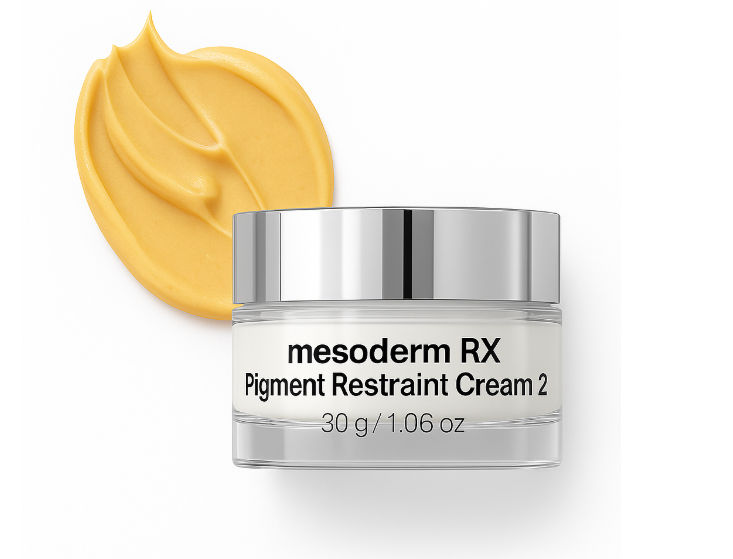
Featured Product
Pigment Restraint Cream
Visibly fade the look of dark spots and uneven tone — no clinic visit required. A brightening cream made to target the look of stubborn discoloration, whether it’s from post-blemish marks, sun exposure, or dullness that years of serums haven’t improved.
Shop Now →Why label strength is a poor shortcut
A retinol cream is a delivery system, not a number on a box. The active has to remain stable in the package, penetrate the stratum corneum, convert efficiently in skin, and do all of that without provoking enough irritation to make the user stop. A nominally stronger formula can fail at any one of those steps.
I see the same selection errors repeatedly:
- Choosing by percentage alone: A high percentage in a weak vehicle or irritating base often underperforms a lower concentration used consistently.
- Ignoring pigment biology: Post-inflammatory hyperpigmentation responds differently from diffuse sun-induced uneven tone. Brown spots are not one category.
- Treating retinoids as isolated actives: Without sunscreen and barrier support, progress on pigment and fine lines slows, and irritation rises.
Clinical reality: The best OTC retinol is the one that your skin can tolerate often enough to produce cumulative cellular change.
What these products can, and cannot, do
Over-the-counter retinoids can normalize epidermal turnover, smooth rough surface texture, reduce the look of fine lines, and gradually improve uneven tone. For acne-prone skin, they can also help keep microcomedones from forming, which indirectly reduces future post-acne marks. Those are real benefits. They are just slower and more variable than marketing suggests.
They are less reliable for stubborn hormonally driven pigmentation, deeper wrinkles, and skin that is already inflamed from over-exfoliation or dermatitis. In those settings, retinoids still have a role, but the role is usually part of a system rather than the whole treatment.
That is the frame readers should use while looking for the best creams with retinol over the counter. Choose the product for the job the skin needs done, not for the claim printed largest on the carton.
How Retinoids Trigger Cellular Renewal in Your Skin
Retinoids change skin because they alter cell signaling, not because they “scrub” the surface. After conversion into a biologically active form, they bind to retinoid receptors in the cell nucleus and shift gene expression. Keratinocytes mature more normally. Melanin is transferred and shed more evenly. Fibroblasts receive signals that support collagen production and matrix repair.
That is why a well-chosen OTC retinoid can improve both discoloration and photoaging over time.

The conversion pathway shapes both results and irritation
All topical vitamin A derivatives aim toward the same endpoint: retinoic acid inside the skin. The difference is how much biochemical work the skin has to do to get there.
- Retinyl esters require the most conversion.
- Retinol requires less.
- Retinaldehyde requires only one main conversion step.
- Retinoic acid is already active.
More conversion usually means a gentler response, but also less efficient signaling. Less conversion usually means stronger biologic effect per application, with a narrower margin for error if the formula is harsh or the barrier is already compromised. That trade-off matters more than the percentage printed on the box.
Patients who want a clearer sense of how prescription-strength retinoids differ from OTC options can compare that pathway with tretinoin cream and Obagi formulations, where the skin does not need to convert the molecule first.
What retinoids do in the epidermis
The epidermis is where readers usually notice the first visible changes. Retinoids increase the rate and quality of keratinocyte turnover, but “turnover” is only part of the story. They also improve how those cells differentiate on the way to the surface.
Poor differentiation creates a familiar clinical picture. Skin looks dull, feels rough, pores clog more easily, and pigment sits unevenly in the upper layers. Retinoid signaling helps correct that pattern. As excess melanin moves upward in a more orderly way, superficial discoloration can fade gradually.
For hyperpigmentation, this matters because pigment is not only a melanocyte problem. It is also a trafficking problem. If pigmented keratinocytes linger too long at the surface, uneven tone lasts longer even after the original trigger has passed.
Why dark spots respond differently
“Dark spots” includes several biologically different problems. The skin cannot be treated intelligently if those categories are lumped together.
Post-inflammatory hyperpigmentation
This follows acne, eczema, picking, friction, burns, or aggressive exfoliation. Inflammation stimulates melanocytes, then the epidermis holds onto the pigment. Retinoids help by normalizing cell turnover and reducing the persistence of pigment-laden keratinocytes. The practical limitation is irritation. If the product causes repeated inflammation, it can prolong the same pigment pathway you are trying to calm.
Sun-induced uneven tone
Chronic UV exposure increases melanogenesis and disrupts collagen at the same time. Retinoids are useful here because they address both compartments. Epidermal renewal helps fade superficial mottling, while dermal signaling supports gradual repair of photodamaged skin. Sunscreen still determines whether that progress holds.
Melasma
Melasma behaves differently. Hormonal influence, vascular factors, inflammation, visible light, and recurrent melanocyte activation all contribute. OTC retinol can support a broader regimen, but it rarely carries melasma treatment alone. In practice, it works best as one part of a pigment system that also controls light exposure and irritation.
Hyperpigmentation improves faster when the retinoid matches the biology of the mark, not the marketing label on the jar.
What happens deeper in the dermis
Retinoids also act below the surface. In the dermis, they influence fibroblasts and the genes involved in collagen synthesis and matrix organization. That is the basis for gradual improvement in fine lines, skin texture, and a looser, crepey look from photoaging.
This is slow tissue remodeling. It depends on repeated signaling over months, not dramatic peeling over a weekend. From a formulation standpoint, I would rather see a patient use a moderately active retinal or retinol consistently in a low-irritant base than quit a stronger product after two inflamed weeks.
Reliable results come from cumulative exposure. The cream has to be active enough to signal change, stable enough to survive the package, and gentle enough that the barrier can stay intact while the biology does its work.
Choosing Your Retinoid Type Retinol vs Retinal vs Esters
Choosing an OTC retinoid is mostly a chemistry decision. The skin has to convert each form of vitamin A into retinoic acid before the cell can use it. The more conversion steps required, the weaker and usually gentler the effect. The fewer steps required, the more efficiently the product can drive change, and the more carefully the formula and routine need to be chosen.

For hyperpigmentation and photoaging, that conversion pathway matters. A patient with post-acne marks, rough texture, and early fine lines usually needs more than a pretty moisturizer with a trace amount of vitamin A. A patient with easily inflamed skin, rosacea tendencies, or a recently damaged barrier often needs the opposite. Better results come from matching the retinoid family to the problem, not from chasing the highest percentage on the box.
Retinyl esters for very cautious beginners
Retinyl palmitate and similar esters sit furthest from retinoic acid. They require the most metabolic work in the skin, so they tend to be the least active and the least irritating.
They make sense for a narrow group:
- very reactive skin
- people recovering from overuse of acids, scrubs, or prescription actives
- hesitant beginners who want to test tolerance before stepping up
The limitation is performance. Esters are often too mild for persistent brown marks, sun damage, or clearly established fine lines. They can still have a place, but usually as an entry step, not as the long-term answer for someone who wants visible correction.
Retinol as the practical middle ground
Retinol remains the standard OTC workhorse because it balances activity with tolerability. It converts more efficiently than esters and can improve uneven tone, texture, and early wrinkling if the formula is stable and the user can stay consistent.
Formulation quality matters more than branding. I look for three things first:
- Stabilization technology: Encapsulation, air-restrictive packaging, and opaque containers help protect retinol from light and oxygen.
- Barrier support: Ceramides, glycerin, cholesterol, fatty alcohols, and simple emollients reduce dropout from dryness and stinging.
- Low-irritant design: Fragrance, strong exfoliating acids, and unnecessary essential oils often make a good retinoid harder to tolerate.
Readers comparing OTC retinol with prescription options often need a clear baseline for what changes once you move to retinoic acid itself. This overview of tretinoin cream and Obagi considerations gives that context.
Retinal for faster visible change
Retinaldehyde, usually labeled as retinal, sits one conversion step away from retinoic acid. That shorter pathway usually makes it more efficient than retinol. In practice, retinal is often the better fit for users targeting stubborn discoloration, rougher photoaged texture, or slower response on standard retinol.
The trade-off is straightforward. A well-made retinal product can produce quicker visible progress, but it is less forgiving if the barrier is already unstable or the routine is crowded with acids and exfoliants. Sensitive skin can still do well with retinal, but the vehicle has to be gentle and the frequency has to be realistic.
A simple decision framework
| Retinoid type | Best fit | Main advantage | Main limitation |
|---|---|---|---|
| Retinyl esters | Very sensitive or hesitant beginners | Lowest irritation pressure | Often too mild for stubborn concerns |
| Retinol | Most users with aging or uneven tone | Balanced efficacy and accessibility | Can still irritate if the formula is poorly built |
| Retinal | Users seeking more visible change without prescription | Higher biologic efficiency | Less forgiving on compromised skin |
Selection rule: If your last retinoid made you quit, reassess the retinoid family, delivery system, and base formula before you assume your skin cannot tolerate vitamin A.
What marketing often gets wrong
Percentages are not interchangeable across retinoid families. A given percentage of an ester does not behave like the same percentage of retinol, and retinol does not behave like the same percentage of retinal. Comparing the number without the molecule tells you very little.
Irritation is also a poor success metric. Redness, burning, and peeling show that the skin is inflamed. Clinical improvement comes from repeatable receptor signaling over time, with enough barrier integrity left to keep using the product.
That is why the best OTC retinol creams are rarely the ones that feel the strongest in week one. The better choice is the one active enough to change the skin and calm enough to keep the treatment going.
How to Build a Retinol Routine Without Damaging Your Barrier
A retinol routine should feel controlled, not heroic. If your skin is red, shiny, stinging, and flaky every morning, the routine isn't advanced. It's poorly calibrated.
The goal is steady exposure with low enough irritation that the barrier can keep functioning.

The starter protocol that actually works
Night use is the cleanest place to begin. Cleanse gently, let skin dry fully, apply your retinoid, then use moisturizer. If you're sensitive, apply moisturizer before and after the retinoid. That “sandwich” method lowers the sting without canceling the treatment.
A practical sequence looks like this:
- Use a mild cleanser: If the skin feels squeaky after washing, the cleanser is usually too aggressive.
- Wait until skin is dry: Damp skin can increase penetration and make irritation worse.
- Apply a small amount: More product doesn't create better signaling.
- Seal with moisturizer: Barrier support isn't optional.
What to pair and what to separate
Retinol doesn't need a crowded routine. It needs a stable one.
Good companions include:
- Ceramide-focused moisturizer: Helps reduce the dryness spiral.
- Niacinamide-containing support products: Often useful when skin is prone to blotchiness or pigment irregularity.
- Morning sunscreen: Non-negotiable for anyone treating pigmentation or photoaging.
The products to separate, especially early on, are leave-on exfoliating acids and other highly active resurfacing layers on the same night. If you want acids in the routine, alternate them. For readers trying to decide how chemical exfoliants fit around retinoids, this guide to AHA and BHA products helps map the division of labor.
Retinol increases the value of sunscreen because it exposes fresher cells more quickly. If UV keeps striking those cells, you can trigger new discoloration while trying to fade the old one.
Why sunscreen determines whether pigment improves
Hyperpigmentation treatment fails in the morning far more often than it fails at night. Retinoids can normalize turnover and influence pigment pathways, but UV exposure keeps reactivating melanocytes.
If you're applying retinol but skipping broad-spectrum sunscreen, you're creating competing instructions. Night says “clear and normalize.” Day says “defend by making more pigment.”
That conflict slows progress.
A quick visual walk-through can help if you're trying to simplify the order of operations before you start.
What a complete weekly rhythm looks like
You don't need maximal frequency on day one. You need a schedule your skin can survive.
| Night type | What to do |
|---|---|
| Retinoid night | Cleanser, retinoid, moisturizer |
| Recovery night | Cleanser, moisturizer only |
| Exfoliation night | Cleanser, acid product, moisturizer |
| Irritated night | Cleanser, bland barrier repair only |
If skin starts burning, tighten the routine immediately. Remove optional actives. Reduce retinoid frequency. Keep sunscreen strict. The fastest way to lose progress is to keep forcing application into a barrier that's already signaling distress.
Navigating Retinoid Irritation and Skin Purging
Most retinoid drop-off happens for one reason. Users can't tell the difference between expected adjustment and a bad reaction.
Those aren't the same event.
What purging usually looks like
Purging happens because retinoids accelerate turnover. Microcomedones that were already forming beneath the surface come up faster. The timing feels unfair, but the biology is predictable.
Purging often shows up as:
- breakouts in areas where you usually break out
- small inflammatory lesions or clogged bumps surfacing faster than usual
- temporary roughness as existing congestion moves upward
This is different from a product causing entirely new irritation patterns in places that were previously calm.
What irritation looks like
Irritation reflects barrier disruption and inflammatory overload. The signs are usually more diffuse than purging.
Watch for:
- burning during or after application
- persistent stinging with bland products
- shiny tight skin
- widespread redness
- itching or rash-like texture
When that happens, frequency matters more than stubbornness. Pull back.
If the skin burns when plain moisturizer touches it, you're not “adjusting.” You're inflamed.
How to troubleshoot the right way
If you're purging but the skin isn't burning, simplify and stay measured. Reduce frequency if needed, but don't assume the product is failing.
If you're irritated, shift strategy:
- Cut back usage: Move from frequent use to fewer nights.
- Buffer the application: Use moisturizer before retinoid.
- Pause other actives: Acids, scrubs, and aggressive brighteners can wait.
- Prioritize UV protection: A reliable non-comedogenic face sunscreen matters even more when skin is reactive.
When to stop completely
Stop and reassess if you develop swelling, significant itching, marked rash, or persistent burning that doesn't settle with reduced use. Those patterns suggest that either the formula, the frequency, or the surrounding routine is wrong for your skin.
Short-term adjustment is common. Ongoing inflammation is not a badge of progress. It’s usually a sign that the retinoid system needs to be rebuilt from the ground up.
Clinically Vetted OTC Retinol Creams for 2026
Shelf labels make OTC retinol sound simple. It is not. The right product depends less on branding and more on three variables that determine outcome: the retinoid form, the concentration, and how much inflammation your skin can tolerate without losing adherence.
For aging and hyperpigmentation, I do not rank products by hype or texture alone. I look at whether the formula gives enough biologic activity to increase epidermal turnover and support collagen signaling, while keeping irritation low enough that the patient will still be using it three months later. A stronger cream that sits unused in a drawer is weaker than a moderate formula used consistently.
For experienced users with visible photoaging
SkinCeuticals Retinol 1.0 Night Cream suits skin that has already adapted to retinoids and needs a true high-strength retinol cream. This category makes sense for established roughness, mottled pigmentation, and lines that have not responded to entry-level formulas.
The trade-off is predictable. At 1% retinol, efficacy can be meaningful, but so can barrier stress. Dry climates, concurrent exfoliants, and inconsistent moisturizer use often turn a strong retinol into a stop-start routine, which slows results more than patients expect.
For sensitive skin that still needs real activity
La Roche-Posay Pure Retinol Face Serum with Vitamin B3 is a more rational choice for reactive skin, early retinoid users, or anyone with a history of stinging from active products. The formula is positioned around lower-irritant delivery, with retinol supported by niacinamide rather than stacked with a long list of aggressive actives.
That matters because sensitive skin usually does not need a weaker goal. It needs less inflammatory collateral damage. For post-inflammatory hyperpigmentation, especially in skin that darkens after irritation, that distinction is clinically important. A calmer retinoid course often outperforms an aggressive one.
For users who want a refined anti-aging cream format
SkinBetter Science AlphaRet Overnight Cream occupies a different lane. It uses a retinoid and alpha hydroxy acid system intended to improve texture, tone, and visible aging with better tolerability than many old-style retinol creams. This NewBeauty feature on retinols dermatologists use discusses why dermatologists keep coming back to this formula category.
The benefit is not magic. It is formulation strategy. If a cream can improve desquamation and retinoid delivery without provoking the same degree of irritation, users often stay on it longer and get better real-world outcomes.
A useful retinol recommendation matches the skin’s tolerance, pigment tendency, and long-term consistency, not just the highest percentage on the box.
For pigment-focused routines that need more than one lever
Hyperpigmentation usually needs a system. Retinoids help by increasing keratinocyte turnover, dispersing existing pigment more efficiently, and reducing the clogging and inflammation that can keep discoloration active. They do not block every pathway that creates uneven tone, especially if UV exposure and inflammatory triggers remain uncontrolled.
That is why combination products can have a role, as long as the formula is not overloaded. Mesoderm RX Advanced Triple Action Age-Defying Serum is one OTC option that combines retinol with niacinamide, vitamin C, peptides, and hyaluronic acid. The value of that kind of formula is practical. It can reduce routine complexity for users trying to address texture, dullness, and visible aging in one night step, provided the skin tolerates the blend.
Top OTC Retinol Creams by Skin Concern
| Product | Retinoid Type & Strength | Best For | Key Features |
|---|---|---|---|
| SkinCeuticals Retinol 1.0 Night Cream | Retinol, 1% | Experienced users with wrinkles, firmness loss, and age spots | High-strength classic retinol cream for retinoid-acclimated skin |
| La Roche-Posay Pure Retinol Face Serum with Vitamin B3 | Pure retinol, 0.3% | Sensitive skin, beginners, uneven tone | Lower-irritant format with niacinamide support |
| SkinBetter Science AlphaRet Overnight Cream | Retinol with lactic acid system | Texture, pores, and aging concerns with irritation sensitivity | Combined resurfacing approach designed for better tolerability |
What to avoid when choosing
A few label patterns usually predict disappointment or dermatitis:
- Heavy fragrance: Better sensory experience, no added retinoid benefit.
- Too many exfoliants in one formula: Retinoid plus strong acids plus scrub-like actives often causes more inflammation than remodeling.
- Vague retinoid labeling: “Retinol complex” says little if the brand does not identify the actual retinoid form.
- Barrier-poor formulas for pigment-prone skin: If the product repeatedly causes redness, it can worsen uneven tone in users prone to post-inflammatory hyperpigmentation.
The most effective OTC retinol is the one that fits the biology of the problem. For wrinkles and photodamage, higher-strength retinol may be reasonable if the barrier is stable. For sensitive skin and pigment disorders, lower inflammation often matters more than raw strength. Choose the formula as part of a treatment system, not as a standalone hero cream.
Expert Answers to Your Top Retinol Questions
Can sensitive skin use OTC retinol
Yes, but sensitivity isn't one thing. Some people have a thin, dry barrier. Others have inflammatory skin that reacts to fragrance, acids, or over-cleansing. Start with a gentle retinol or retinal format, keep the routine minimal, and use moisturizer generously. If skin already burns, repair the barrier first.
Is OTC retinol safe during pregnancy or breastfeeding
Retinoid use during pregnancy should be discussed with your physician. Many clinicians take a conservative approach and avoid topical retinoids during pregnancy because vitamin A derivatives are a special category. Breastfeeding decisions also deserve individualized medical guidance rather than internet reassurance.
How long does OTC retinol take to work
Texture often changes before pigmentation does. Skin may feel smoother first, then gradually look more even. Pigment disorders move more slowly because they involve repeated cycles of melanin production, transfer, and shedding. The key variable isn't just time. It's uninterrupted use with low inflammation and strict sunscreen.
Can I use a facial retinol on the neck, chest, or back
Sometimes, yes. But those areas don't all tolerate actives the same way. The neck is often more reactive than the face. The chest is highly vulnerable to UV. The back may tolerate stronger treatment but often needs a different vehicle. Start cautiously and watch for delayed irritation.
Can rosacea-prone skin use retinol
Sometimes, but not during an active flare. If the skin is hot, stinging, and inflamed, retinol usually isn't the first move. Calm the skin first. Then consider a low-irritation retinoid introduced very slowly, ideally with a simple moisturizer and strict UV protection.
If you're building a routine for dark spots, uneven tone, or visible aging, keep the standard high. Choose formulas that prioritize active performance, barrier compatibility, and minimal unnecessary additives. Mesoderm RX offers that kind of efficient approach, with U.S.-made, hydroquinone-free skincare designed to brighten, smooth, and protect without turning your routine into a chemistry experiment.