


A Clinical Guide to Non-Comedogenic Sunscreen for Acne-Prone Skin
For individuals with acne-prone skin, daily sun protection presents a clinical paradox: shielding the skin from UV-induced damage often seems to trigger follicular occlusion and subsequent breakouts. This is not a compromise you have to accept. A properly formulated non comedogenic face sunscreen is not a cosmetic luxury; it is a critical component of dermatological health for maintaining a clear complexion.
The Sunscreen Dilemma: Understanding the Pathophysiology of Acne
The term "non-comedogenic" is frequently used in marketing, but its biological significance is what truly matters. Understanding the mechanism by which certain sunscreens can induce acne is the first step toward selecting a formula that prevents it.
Follicular Occlusion: The Root Cause of Sunscreen-Induced Acne
The primary issue is follicular occlusion—the clinical term for a blocked pore. Many conventional sunscreen formulations contain heavy, occlusive ingredients that form an impermeable film on the skin's surface. While this enhances the product's substantivity, it also traps sebum, keratinocytes (dead skin cells), and bacteria within the follicle.
This creates an anaerobic (oxygen-deprived) microenvironment, which is the ideal incubator for Cutibacterium acnes, the bacterium implicated in the pathogenesis of acne. As C. acnes metabolizes the trapped sebum, it releases pro-inflammatory byproducts, signaling an immune response.
The result is the formation of a comedo, the precursor to all acne lesions. What begins as a subclinical microcomedo can progress to an open comedone (blackhead), a closed comedone (whitehead), or an inflamed papule or pustule. This is not an arbitrary reaction; it is a predictable biological cascade initiated by follicular blockage.
Why Treating the Pimple and Not the Cause Fails
Most individuals remain in a frustrating cycle of breakouts because they address the symptom (the inflammatory lesion) instead of the etiology (the occlusive formula). They apply aggressive acne treatments, which often leads to skin barrier impairment, increased transepidermal water loss (TEWL), and heightened inflammation—making the skin even more susceptible.
The definitive solution is to prevent follicular occlusion from occurring. This requires a sunscreen engineered for two simultaneous functions:
- Provide broad-spectrum UV protection. This is non-negotiable for preventing cellular DNA damage, photoaging, and hyperpigmentation. Understanding the difference between filter types is crucial, and you can learn more about how different SPFs work in our detailed article.
- Maintain follicular patency. The formula must be "breathable," allowing for normal sebaceous flow and desquamation without contributing to blockages.
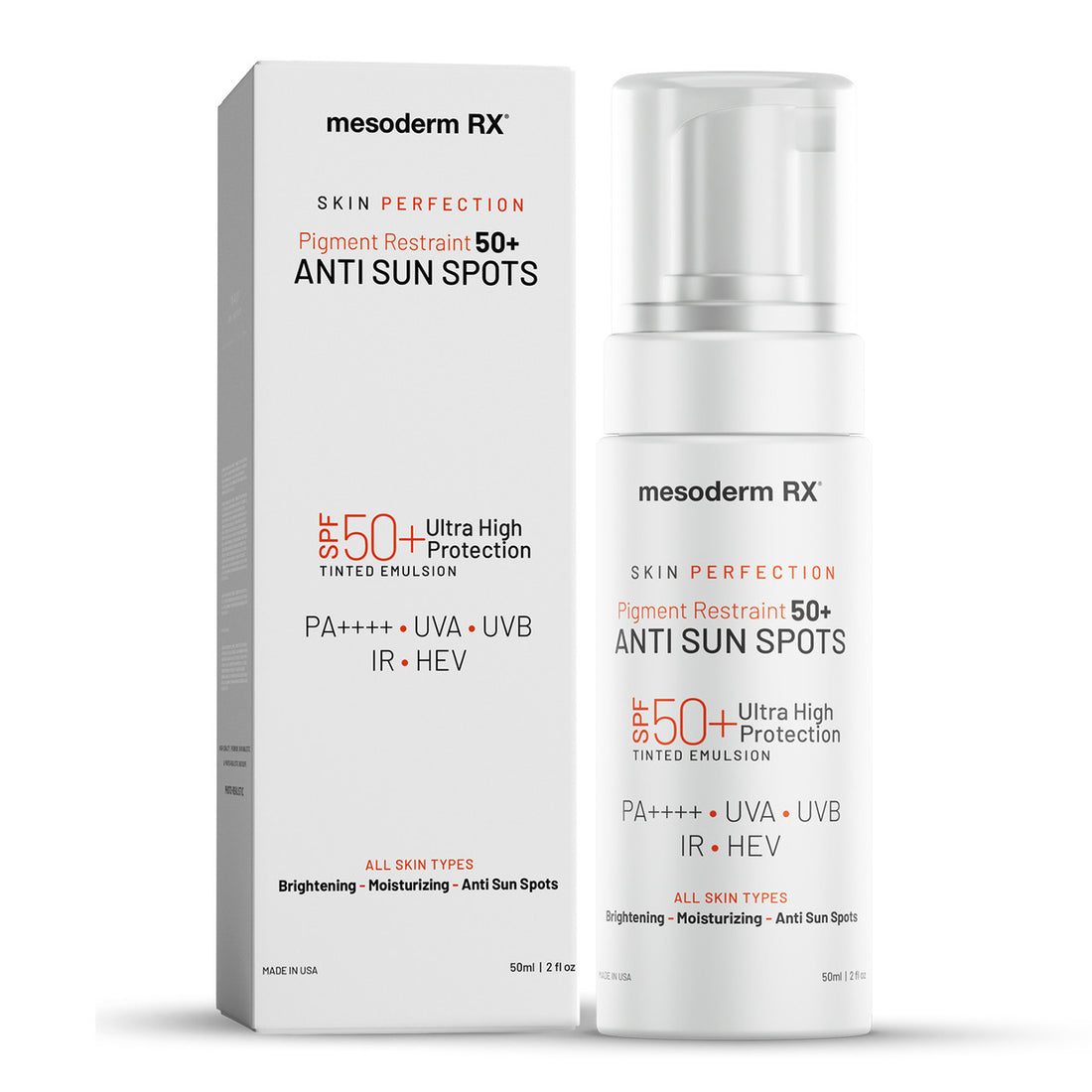
Featured Product
Pigment Restraint Ultra High Sun Protection
SHIELDS FROM UV DAMAGE AND SUN-INDUCED DARK SPOTS
Shop Now →A well-formulated non comedogenic face sunscreen is the cornerstone of any intelligent skincare protocol for acneic skin. It is engineered to provide indispensable UV protection without initiating the inflammatory cascade that leads to breakouts. By selecting a product that respects the skin's biological processes, you can achieve both sun safety and a clear complexion.
Identifying Comedogenic Culprits in Sunscreen Formulations
If you've applied sunscreen only to observe new lesions within 24-48 hours, you are not imagining the correlation. The first step in breaking this cycle is to identify which components within a sunscreen formula are responsible for follicular occlusion. This analysis goes far beyond a simplistic "oil-free" label.
The industry was forced to address this. As dermatologists advocated for daily SPF use, a significant issue emerged. By 2020, reports indicated that a high percentage of acne sufferers were avoiding sunscreens due to breakout concerns. This market pressure drove innovation, leading to the development of superior gel and serum-based sunscreens. You can read more about this market shift and the rise of acne-friendly sunscreens.
So, how does a protective product incite inflammation? It is a direct and predictable chain of events.

This biological process underscores why the specific ingredients in your sunscreen are paramount. A poorly designed formula can be a direct pathway to inflammation.
The "Oil-Free" Myth: A Common Diagnostic Error
Let's dismantle one of the most pervasive and misleading myths in skincare: "oil-free" does not equate to "acne-safe." While certain heavy oils are indeed comedogenic, numerous other ingredients can and do occlude pores with equal or greater efficacy.
These problematic ingredients typically fall into several categories:
- Heavy Emollients and Esters: Ingredients like Isopropyl Myristate, Isopropyl Palmitate, and certain fatty acids (e.g., Lauric Acid, Oleic Acid) are frequently added to enhance a product's texture and spreadability. However, their molecular structure allows them to readily penetrate and obstruct the follicular opening.
- Occlusive Silicones: Not all silicones are problematic. Lightweight, volatile silicones like Cyclopentasiloxane impart a silky feel and then evaporate. Heavier, non-volatile silicones like Dimethicone (in high concentrations or poor formulations) can form a suffocating film that traps perspiration, sebum, and keratinocytes.
- Irritating Chemical UV Filters: Certain older-generation chemical filters, notably Oxybenzone and Octinoxate, are known to cause contact dermatitis and photosensitivity. For acne-prone skin, any form of irritation almost invariably triggers an inflammatory response, which can initiate or exacerbate a breakout.
The bottom line: The term "non-comedogenic" is a more reliable indicator than "oil-free," but it is not an absolute guarantee. The claim simply means the formula was tested on human subjects and did not induce a statistically significant increase in comedones. For highly reactive skin, a granular understanding of the specific ingredients is the only way to ensure follicular patency.
A Clinician's Guide to Reading an INCI List
The ingredient list (INCI) is the formula's blueprint. The first five to seven ingredients constitute the majority of the product, so their identity is critical.
This table contrasts common comedogenic offenders with the superior, non-occlusive alternatives you should seek in a high-performance non comedogenic face sunscreen.
Common Comedogenic Offenders vs. Barrier-Friendly Alternatives
| Ingredient Category | Common Offender (Avoid) | Superior Alternative (Seek) | Mechanism of Action |
|---|---|---|---|
| Emollient/Spreading Agent | Isopropyl Myristate/Palmitate | Caprylic/Capric Triglyceride | The offender is a penetration-enhancing ester known for its high potential to fill and block the follicle. |
| Thickener/Emulsifier | Lanolin or Cocos Nucifera (Coconut) Oil | Cetearyl Olivate/Sorbitan Olivate | These offenders are highly occlusive and can be too rich for acneic skin, promoting congestion and micro-comedones. |
| Chemical UV Filter | Oxybenzone or Octinoxate | Tinosorb S/M or Mexoryl SX/XL | Older-generation filters can be unstable, cause irritation, and generate heat, worsening inflammatory conditions. |
| Silicone | High % non-volatile Dimethicone | Cyclopentasiloxane or Dimethicone Crosspolymer | The offender can create an impermeable film that traps sweat, oil, and cellular debris, leading to follicular impaction. |
Learning to recognize these patterns on an INCI list transforms you from a passive consumer into an informed advocate for your skin's health. It allows you to look beyond marketing claims and select a sunscreen based on its fundamental formulation—finally breaking the cycle of protection-induced breakouts.
Mineral vs. Chemical Sunscreen: A Biological Analysis for Acne-Prone Skin
The "mineral versus chemical" debate is often framed as a matter of personal preference. For acne-prone skin, however, the choice has direct biological implications. Understanding how these two classes of UV filters interact with the skin is the key to differentiating between a calm, clear complexion and a cycle of inflammation. This isn't about "good" versus "bad"—it's about selecting the pathway of least biological resistance for reactive skin.
Mineral sunscreens function via a simple physical mechanism. They utilize inert minerals—Zinc Oxide and/or Titanium Dioxide—to form a protective shield on the stratum corneum. These particles act as microscopic mirrors, reflecting and scattering UV radiation away from the skin before it can be absorbed.
Because these mineral particles do not penetrate the epidermis or interact with the follicular unit, their potential to cause occlusion is minimal. They perform their function from the surface, minimizing interaction with the skin's delicate ecosystem.
The Problem With Heat and Inflammation
Chemical sunscreens operate on a completely different principle. They employ organic compounds that absorb UV radiation, convert it into a negligible amount of heat through a chemical reaction, and then release that heat from the skin. While chemically efficient, this conversion process can be a significant trigger for certain skin conditions.
For individuals managing inflammatory dermatoses like acne and rosacea, even a minor increase in cutaneous temperature can exacerbate vasodilation and trigger an inflammatory cascade. The result is increased erythema (redness), irritation, and a more favorable environment for inflammatory lesions to develop.
This does not mean all chemical sunscreens will cause a reaction. However, the inherent risk of irritation and thermal aggravation is higher when compared to a well-formulated mineral sunscreen centered around the anti-inflammatory properties of Zinc Oxide.
The Decisive Advantage for Reactive Skin
While Titanium Dioxide offers excellent UV reflection, Zinc Oxide is the superior active for acne-prone complexions due to its multifunctional properties. It provides robust broad-spectrum protection while offering distinct therapeutic benefits.
- Anti-Inflammatory: Zinc is clinically recognized for its ability to calm the skin and downregulate inflammatory pathways. This makes it a dual-action agent: it protects from UV damage while actively soothing the inflammation that drives acne.
- Antimicrobial: Zinc possesses mild antimicrobial properties, which can help modulate the skin's microbiome and discourage the proliferation of C. acnes.
- Exceptionally Gentle: As a physical blocker that does not undergo a chemical reaction on the skin, Zinc Oxide is extremely well-tolerated, even by the most sensitive or post-procedural skin.
The market has responded to this clinical need. Gel-based non-comedogenic sunscreens are the fastest-growing segment of the global market as consumers demand effective protection that feels cosmetically elegant. This trend was largely driven by dermatological guidance, with gel formulas now outselling traditional lotions for facial application. Given that 72% of consumers desire SPF in their daily products, the right non-comedogenic formula is a critical intervention. You can explore detailed insights on the sunscreen industry's growth to understand these market dynamics.
For managing acne, a mineral-based non comedogenic face sunscreen is the most reliable and stable choice. It provides powerful protection without introducing the variables of heat conversion and potential chemical irritation, making it the most intelligent strategy for maintaining clear, healthy skin.
The Blueprint for a Superior Non-Comedogenic Formulation
Identifying problematic ingredients is a critical diagnostic skill, but it is only part of the equation. A truly superior non-comedogenic face sunscreen is not defined by a single active ingredient, but by the intelligence of its entire chassis. A product can feature state-of-the-art UV filters and still be comedogenic if its delivery system, emulsifiers, or supporting ingredients are poorly selected.
An effective formula must do more than simply block UV radiation. It must be engineered from the ground up to actively support the physiological requirements of clear, healthy skin. This begins with a lightweight, breathable base that allows the skin to function without occlusion.
Beyond the "Hero Ingredient" Mentality
This is a common failure point for many commercial products. They focus marketing on a single "hero" ingredient while ignoring the vehicle it is delivered in. The base of the product—the cream, gel, or lotion matrix—is as critical as the active ingredients themselves. If that base is heavy, waxy, or occlusive, it negates any potential benefits.
A results-driven formulation considers every component:
- The Delivery System: The formula must possess an elegant, non-occlusive feel. Heavy waxes and pore-clogging oils are obsolete; sophisticated, lightweight emulsions are essential.
- The Emulsifiers: The agents binding the formula must be non-irritating and non-comedogenic. A poor emulsifier choice can disrupt the skin barrier and initiate inflammation.
- The Additives: Every ingredient must serve a functional purpose. Unnecessary fillers, fragrances, and dyes increase the potential for irritation and offer zero therapeutic benefit for acne-prone skin.

A superior formulation is synergistic. It is not merely a list of good ingredients; it is a precisely balanced ecosystem where each component works in concert to deliver protection without compromising follicular health.
The Critical Role of Barrier Support and Antioxidants
UV radiation does more than inflict sunburn and DNA damage; it is a potent source of free radicals and a powerful inflammatory trigger. This UV-induced inflammation is a primary antagonist of clear skin, as it compromises barrier function and can significantly worsen acne. A truly intelligent non comedogenic face sunscreen anticipates this and incorporates a built-in defense mechanism.
This is where barrier-supporting ingredients become non-negotiable. Niacinamide (Vitamin B3) is a key player. It strengthens the skin's lipid barrier, reduces inflammation, and helps regulate sebum production. By fortifying the skin's intrinsic defenses, it increases its resilience against environmental aggressors.
Antioxidants provide another vital layer of defense. They neutralize the free radicals generated by UV exposure, thereby quenching the oxidative stress that fuels inflammation and cellular damage. This dual-action approach—blocking UV radiation and mitigating the inflammatory response it causes—is the hallmark of an advanced formulation.
The personal care sunscreen market is projected to grow from USD 502 million in 2024 to USD 865 million by 2034, reflecting the demand for such integrated solutions. The SPF 30-50 segment dominates, holding over 50% market share due to its optimal balance of protection and cosmetic elegance. To understand these consumer-driven trends, you can explore the full research on the personal care sunscreen market.
This philosophy is the core of Mesoderm RX's Pigment Restraint Ultra High Sun Protection. It is not merely a sunblock; it is a comprehensive skin defense system. It was engineered to deliver high-factor, broad-spectrum protection while actively supporting a clear, even-toned complexion. By integrating potent, skin-beneficial actives into a sophisticated, non-comedogenic base, it meets the demands of those seeking uncompromising protection and visible, clinical results.
Application Protocol for Maximum Efficacy Without Comedogenicity
Selecting a superior non comedogenic face sunscreen is the first step. The second is its correct application. Even the most advanced formula can contribute to breakouts or provide inadequate protection if applied improperly. Achieving clear, protected skin is a matter of precise methodology.

Many common application errors actively sabotage skin health. Applying sunscreen to damp skin, for example, can trap moisture and bacteria, promoting follicular occlusion. Rushing the process and layering subsequent products too quickly can disrupt the formation of the protective UV film, leading to pilling and patchy coverage.
The Correct Order of Application: A Non-Negotiable Sequence
To ensure optimal performance from each product, a specific layering protocol must be followed. This allows treatment actives to penetrate the epidermis and the sunscreen to form an intact, protective shield.
- Cleanser: Begin with a thoroughly cleansed face.
- Actives (Serums): Apply targeted treatments (e.g., antioxidants, exfoliants) directly onto dry, bare skin. Allow for penetration time of at least 60-90 seconds.
- Moisturizer: Apply a lightweight, non-comedogenic hydrator. Allow it to absorb completely until the skin is dry to the touch.
- Sunscreen: This is the final, inviolable step of your morning regimen.
This sequence is critical. Applying a moisturizer after sunscreen will dilute the formula and disrupt the integrity of the UV-protective film, compromising its efficacy. Likewise, actives such as AHAs or BHAs cannot perform their function if applied over the barrier created by a sunscreen. To understand the science of chemical exfoliation, review the mechanism of the Mesoderm RX AHA BHA PHA Liquid Exfoliant.
The Right Amount and Technique
The "two-finger rule" is a useful heuristic. Dispensing a line of sunscreen along the length of your index and middle fingers provides a good approximation of the correct volume. For a more precise dose, this equates to approximately 1/4 teaspoon (1.25 ml) for the face alone. Applying less than this amount significantly reduces the stated SPF value.
For application, dot the sunscreen across the forehead, cheeks, nose, and chin. Gently spread and pat the product into the skin. Avoid aggressive rubbing, which can cause pilling and an uneven finish. Allow the sunscreen to set for at least 15 minutes before applying any cosmetics.
Reapplication Over Makeup: Reapplication every two hours during periods of sun exposure is essential. To do this without disturbing makeup, use a cosmetic sponge to gently press or stipple a fresh layer of sunscreen onto the skin. This technique deposits a new protective film without smearing the underlying products.
By adhering to this precise protocol—correct order, sufficient quantity, and proper technique—you ensure your non comedogenic face sunscreen provides maximum protection without contributing to follicular occlusion. This disciplined approach is the key to maintaining clear, healthy, and defended skin.
Decoding Sunscreen Labels: From Marketing Claims to Clinical Reality
The sunscreen market is saturated with claims designed for marketing impact, not clinical education. To select a truly effective non comedogenic face sunscreen that will not compromise your skin's health, you must learn to bypass the marketing noise and analyze what truly matters: the label.
This skill is what separates a perpetually frustrated consumer from an individual in control of their skin's health.
First, dismiss unregulated marketing terms. Claims like "dermatologist-tested" or even "non-comedogenic" are not governed by the FDA. "Dermatologist-tested" simply means a dermatologist was involved at some stage; it provides no information about the test's outcome. "Non-comedogenic" indicates the final formula did not cause a statistically significant increase in comedones in a test panel, but it is not a universal guarantee that it will be non-comedogenic for your specific skin biology.
How to Analyze an INCI List
The ingredient list (INCI) reveals the product's true composition. The first five ingredients typically comprise over 80% of the entire formula.
If you identify known comedogenic agents like Isopropyl Myristate, Cocos Nucifera (Coconut) Oil, or certain heavy, non-volatile silicones within this top section, it is a significant red flag, regardless of the claims on the front of the bottle.
Next, identify the UV filters and their regulatory certification. A product must state "Broad Spectrum" on its label. This is a regulated term verifying that the product has passed FDA-mandated testing to provide proportional protection against both skin-aging UVA rays and skin-burning UVB rays. Without this specific phrase, you are not receiving complete UV protection.
Understanding Sun Protection Factor (SPF) is also critical. SPF is a measure of protection against UVB radiation, the primary cause of sunburn. For daily, incidental exposure (e.g., commuting, office environments), a well-formulated SPF 30 is clinically sufficient. However, for extended outdoor exposure or for individuals actively managing hyperpigmentation, an SPF 50 offers a measurable advantage in long-term damage prevention.
Your objective is to locate a formula that meets all criteria: a lightweight, non-occlusive base free of red-flag ingredients, certified broad-spectrum protection, and an SPF level appropriate for your lifestyle.
The total architecture of a formula dictates its performance. It is why a meticulously engineered system like the Mesoderm RX Pigment Restraint Ultra High Sun Protection is so effective—every ingredient is selected to support the ultimate goal of a clear, protected complexion. Mastering label analysis is the most powerful tool you have to achieve this.
Answering Your Toughest Non-Comedogenic Sunscreen Questions
Let's address the critical details directly. When it comes to protecting breakout-prone skin, nuance is everything. Here are concise, evidence-based answers to the most common questions we receive.
Can a "Non-Comedogenic" Sunscreen Still Cause Breakouts?
Yes, absolutely. This is a primary point of clinical confusion.
The term "non-comedogenic" is not regulated by the FDA. It indicates that a formula did not cause a statistically significant increase in comedones during a controlled human trial. It serves as a useful screening tool, but it is not a 100% guarantee for your individual skin biology.
Your skin may have a unique inflammatory or sensitivity reaction to an ingredient that is well-tolerated by the general population. The base formulation, emulsifying agents, and overall product architecture are just as critical as the listed active ingredients. For this reason, patch testing any new product is a non-negotiable clinical best practice.
Is Double Cleansing Mineral Sunscreen Truly Necessary?
It is highly recommended for optimal follicular health. A common misconception is that because mineral filters are particulates that sit on the skin's surface, they rinse away with a simple water-based cleanser.
However, modern mineral sunscreens are formulated for high substantivity and water resistance. They form a tenacious film that adheres to the skin, binding with sebum, makeup, and environmental pollutants throughout the day. A single water-based cleanse is often insufficient to break down this matrix.
The correct analogy is trying to clean a greasy pan with water alone. You first need a solvent for the grease. An oil-based cleanser acts as a lipophilic solvent, dissolving the sunscreen, makeup, and sebum. Following this, a gentle, water-based cleanser can effectively cleanse the skin itself, ensuring pores are free of residue and prepared for nighttime treatment protocols.
Should I Use SPF 30 or SPF 50?
This decision should be based on your daily UV exposure levels and primary skin concerns.
For most days involving incidental sun exposure—such as commuting or working near a window—a high-quality, broad-spectrum SPF 30 is clinically sufficient. It blocks approximately 97% of UVB rays.
However, if you are managing pigmentary disorders like melasma, post-inflammatory hyperpigmentation (PIH), or if you spend extended periods in direct sun, upgrading to an SPF 50 provides a distinct clinical advantage. The increase from 97% to 98% UVB protection may seem marginal, but over time, that additional 1% results in a significant reduction in cumulative UV-induced damage. Ultimately, the most effective SPF is the one you will apply correctly and consistently, every single day.
At Mesoderm RX, we do not just sell products; we provide the clinical strategy and scientific rationale required to achieve tangible, visible results. Our goal is for you to feel confident that you are not just purchasing a sunscreen, but investing in a complete system for a clear, protected, and radiant complexion.
Find your solution with the Mesoderm RX collection.