


Alpha Hydroxy Face Wash: Brighter, Smoother Skin Secrets
Clean skin isn't the same as over-exfoliated skin. A lot of people still treat brightness like a friction problem. They scrub harder, use grainy cleansers, then wonder why their face looks shinier, redder, tighter, and somehow more uneven.
That approach fails because hyperpigmentation and rough texture are usually biology problems, not dirt problems. If you create repeated low-grade inflammation, melanocytes can respond by making more pigment. If you weaken the barrier, skin loses water more easily, becomes reactive, and tolerates every other active ingredient more poorly. The result is familiar: dark marks that linger, stinging with routine products, and a cycle of chasing “glow” with methods that keep the skin irritated.
A well-formulated alpha hydroxy face wash can interrupt that cycle. It exfoliates by loosening the attachments between dead surface cells rather than sanding the skin mechanically. That difference matters, especially when you're trying to fade post-acne marks, improve dull texture, or build a routine that also includes vitamin C, retinoids, and daily sunscreen.
The Exfoliation Myth That Damages Your Skin
The most common exfoliation myth is simple: if your skin feels squeaky, tight, or slightly raw after cleansing, the product must be working. It usually means the opposite.
Physical scrubs remove surface buildup indiscriminately. They don't distinguish between compacted dead cells that need to shed and healthy barrier components your skin still needs. On acne-prone or pigment-prone skin, that matters because excess rubbing can amplify redness and keep discoloration active longer than it should.
Why harsh scrubbing backfires
When people describe their skin as dull, they often assume they need “more exfoliation.” What they usually need is more controlled exfoliation. A rough scrub can create a temporary smooth feel, but it also increases the chance of irritation around inflamed breakouts, healing marks, and already-sensitive areas such as the sides of the nose or corners of the mouth.
For anyone dealing with post-inflammatory hyperpigmentation, that trade-off is poor. The skin may look polished for a day, then become dry, blotchy, and more reactive to treatment products.
Physical exfoliation often gives fast sensory feedback. That doesn't make it the better tool.
AHAs became mainstream for a reason. The global AHA market was valued at USD 1.2 billion in 2021 and is projected to reach USD 3.2 billion by 2030, with over 48% of demand driven by skincare products targeting uneven tone, dark spots, and hyperpigmentation, according to AHA market analysis from Spherical Insights.
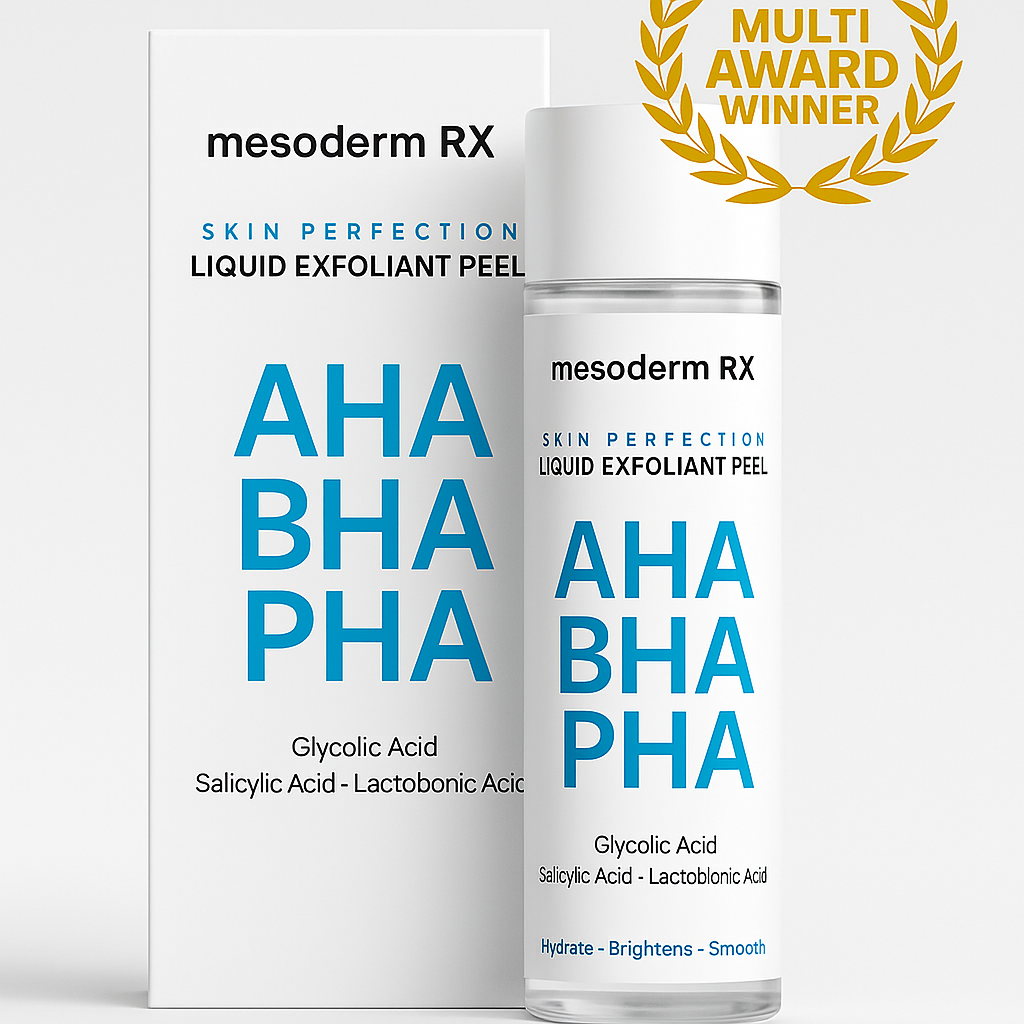
Featured Product
Skin Perfection Liquid Exfoliant Peel | AHA BHA PHA for Smooth & Clear Skin
Gently exfoliates with a blend of AHA, BHA, and PHA to remove dead skin cells, unclog pores, and refine texture for a clearer, brighter, and more even-looking complexion.
Shop Now →What a better cleanser should do
A good exfoliating cleanser shouldn't leave skin stripped. It should do three things well:
- Lift surface buildup so light reflects more evenly off the skin
- Improve treatment penetration by clearing compacted dead cells at the surface
- Preserve enough barrier function that the rest of the routine remains tolerable
That last point is where many routines fall apart. People don't fail because actives never work. They fail because they combine the right ingredients with the wrong vehicle, wrong frequency, or wrong cleansing step.
An alpha hydroxy face wash is often the smarter entry point because it's a rinse-off format. You get exfoliation, but with less contact time than a leave-on acid. For many skin types, that makes it easier to build a routine that treats pigmentation and texture without pushing the barrier into chronic irritation.
How Alpha Hydroxy Acids Renew Your Skin
AHAs are water-soluble exfoliating acids. They work primarily on the skin's surface by loosening the bonds that hold dead corneocytes together in the stratum corneum. In practical terms, they help old cells shed in a more orderly way.
That mechanism is why a strong alpha hydroxy face wash feels different from a scrub. A scrub relies on force. An AHA relies on chemistry.

The actual mechanism
The outermost skin layer isn't supposed to hold onto dead cells forever. Normal shedding happens continuously, but it slows or becomes uneven in many common scenarios: sun damage, dryness, acne recovery, age-related turnover changes, and repeated irritation from harsh products.
AHAs help by disrupting desmosomal bonds, which act like microscopic connectors between dead surface cells. Once those links loosen, the accumulated layer sheds more evenly. Skin usually looks brighter not because it's “bleached,” but because the rough, light-scattering surface has been reduced.
This is also why AHAs can help with discoloration. Pigmented cells don't vanish instantly. They move upward and out over time. Faster, better-regulated turnover helps that process along.
Why rinse-off acids make sense
A leave-on exfoliant isn't automatically superior. For many people, a rinse-off acid is the more strategic choice. You still expose the skin to an active exfoliant, but with less prolonged contact. That makes it easier to pair with other actives later in the day or on alternating schedules.
In a cleanser, AHAs can function as a foundational prep step. They refine the surface, reduce the dead-cell barrier, and make the skin feel less congested without forcing the same level of cumulative irritation that some leave-on acids can create in a crowded routine.
For a deeper look at one of the most practical AHA molecules, Mesoderm RX's guide to lactic acid for skin is useful because lactic acid often sits in the sweet spot between efficacy and tolerability.
AHA compared with BHA and PHA
These acids don't do the same job, even when the marketing makes them sound interchangeable.
| Attribute | AHA (e.g., Glycolic, Lactic) | BHA (e.g., Salicylic) | PHA (e.g., Gluconolactone) |
|---|---|---|---|
| Primary solubility | Water-soluble | Oil-soluble | Water-soluble |
| Main zone of action | Skin surface | Inside pores and oily follicles | Surface-level exfoliation |
| Best known for | Dullness, rough texture, discoloration, visible aging | Congestion, blackheads, oily acne-prone skin | Gentle resurfacing for reactive or dry skin |
| Typical feel in routine | Smoother, brighter skin over time | Cleaner pores, less clogging | Mild polishing with less sting |
| Common trade-off | Can increase sensitivity if overused | Can feel drying in some routines | Usually gentler, but often less corrective |
Physical scrubs don't offer this precision
The reason I rarely recommend abrasive scrubs for pigment-prone skin is that they can't target what matters. They don't selectively loosen dead-cell adhesion. They abrade whatever they're dragged across.
Practical rule: If a cleanser leaves your skin feeling polished but also hot, tight, or shiny in a stressed way, it's not helping your long-term pigment correction plan.
An alpha hydroxy face wash, when properly formulated, gives you a narrower and more controllable form of exfoliation. That's what lets it fit into a serious routine instead of functioning as a once-weekly act of damage control.
Targeting Dark Spots Texture and Aging
People often buy an alpha hydroxy face wash for one reason, then keep using it for another. They may start with dark spots in mind, but the first noticeable change is often texture. The skin reflects light more evenly, makeup stops catching on dry patches, and the face looks less tired because the surface is no longer dulled by compacted dead cells.

Dark spots are not all the same
Generic skincare advice often gets imprecise. “Dark spots” can mean several different things, and they don't all behave the same way.
- Post-inflammatory hyperpigmentation follows acne, picking, friction, or other inflammation.
- Sun spots are linked more directly to cumulative UV exposure.
- Melasma is more complex and usually more stubborn. Heat, hormones, and light exposure can all contribute.
AHAs help most predictably when pigment is sitting in the upper layers and the skin can benefit from more efficient turnover. They are not a shortcut around diagnosis. If someone treats melasma like it is leftover acne marking, they often get partial improvement at best and ongoing relapse at worst.
Why texture improves first
Texture changes often show up before dramatic pigment changes because the mechanism is immediate at the surface. As dead cells detach more evenly, the skin feels smoother and looks more uniform. That doesn't mean deeper discoloration has been solved. It means the top layer has become less irregular.
Clinical improvement with AHAs is not just anecdotal. In a study with 52 volunteers, consistent AHA use produced a 32.5% reduction in wrinkle depth, a 42.9% improvement in surface smoothness, and a 15.2% increase in gross elasticity after 21 days, as reported in this AHA clinical summary.
The aging benefit people underrate
AHA cleansers are often dismissed as “just exfoliating.” That's too narrow. Surface renewal affects how skin looks, but repeated appropriate use can also support a skin environment that appears firmer and less rough over time.
What matters clinically is that smoother texture and better elasticity are not cosmetic illusions alone. They reflect a change in how the skin surface behaves and how well it sheds accumulated damage.
A quick visual explainer can help if you want to see how this translates in practice.
What results look like in real routines
A well-used alpha hydroxy face wash tends to improve these areas:
| Concern | What AHA cleansing can realistically help with |
|---|---|
| Dullness | Reduces the buildup that makes skin look flat and grey-toned |
| Uneven texture | Smooths rough patches and softens the look of post-breakout irregularity |
| Post-acne marks | Supports gradual fading when paired with daily UV protection |
| Fine lines | Improves the appearance of superficial lines by refining the skin surface |
| Product absorption | Helps leave-on serums contact skin more evenly |
The mistake isn't expecting too much from AHAs. It's expecting them to do everything alone.
For pigmentation, texture, and visible aging, cleansing with an AHA is best viewed as the opening move. It prepares the skin. It doesn't replace pigment control, antioxidant support, or sun protection. People who understand that distinction usually get farther with fewer setbacks.
Why Concentration and pH Determine Success or Failure
The percentage on the front label doesn't tell you whether an alpha hydroxy face wash is good. That's one of the most expensive misunderstandings in skincare.
AHA performance depends on concentration and pH together. If the acid is present but too neutralized, the formula may sound impressive while doing very little exfoliating work. If the formula is too aggressive, you can get irritation without the kind of steady correction desired.

Why pH changes the outcome
An AHA has to remain sufficiently acidic to exfoliate effectively. When formulators talk about usable acid activity, they're really talking about how much of the acid is available in the right form to interact with the skin.
That is why a lower-percentage, well-balanced formula can outperform a higher-percentage product that sits at the wrong pH. The molecule matters. The vehicle matters. The final pH matters.
The FDA's AHA overview includes one of the clearest examples. A comparison of 3% lactic acid at pH 3 versus pH 7 found that the acidic formula improved skin firmness by 35% and smoothness by 44%, underscoring how strongly efficacy depends on pH, as described in the FDA discussion of alpha hydroxy acids.
What usually goes wrong
Consumers often make one of three mistakes:
- They chase the highest percentage and ignore whether the formula is balanced for actual use on facial skin.
- They judge by sting alone and assume more burning means more efficacy.
- They combine too many exfoliants and then blame the AHA molecule when cumulative irritation is the problem.
For facial cleansers, formulation discipline matters more than shock value. A cleanser has brief contact time. That means every part of the formula has to make sense, including surfactant choice, buffering, and overall skin feel after rinsing.
What to look for instead
A smarter evaluation framework is short:
- Check the type of AHA. Glycolic tends to penetrate more readily. Lactic is often well-tolerated. Mandelic is frequently preferred by reactive skin.
- Respect the formula, not the marketing. A flashy acid claim in a poorly balanced cleanser won't rescue dull results.
- Watch your skin after rinsing. Mild freshness is fine. Lingering heat, tightness, or increasing sensitivity means the formula or frequency isn't right.
If you're trying to understand why some exfoliating products support the barrier better than others, Mesoderm RX's article on pH balance in skin toner is a useful companion read because it highlights the same principle in a different product category.
A product can be acid-branded and still be functionally weak. It can also be strong enough to create irritation without being intelligently formulated.
That is why success with AHAs isn't about bravado. It's about controlled chemistry.
The Modern Protocol for Integrating Active Ingredients
The neglected question isn't whether an alpha hydroxy face wash works. It's how to place it inside a complete routine without creating a barrier problem.
That matters because interest in combined routines keeps rising. A 2025 trend report noted a 40% rise in searches for “AHA cleanser + retinol”, while pointing out that most advice remains generic and doesn't really explain how rinse-off AHA products can fit into advanced routines with less irritation. That finding appears in Cosmopolitan's discussion of alpha hydroxy acid routines.

Who benefits most from this setup
This kind of routine usually makes the most sense for people with:
- Dull, compacted surface texture
- Post-acne marks or uneven tone
- Early visible aging, especially roughness and loss of radiance
- A need for exfoliation without committing to another leave-on acid
It requires more caution if you have a compromised barrier, active eczema, highly reactive rosacea, or are already overusing retinoids, benzoyl peroxide, and exfoliating toners all at once.
Why rinse-off AHA is often the better stackable option
A rinse-off AHA cleanser gives you a controlled exfoliation window. That shorter contact time is the practical reason it can be easier to pair with stronger leave-on treatment categories. You're not saturating the entire routine with continuous acid exposure.
This is especially useful when the goal is not “more acids,” but better coordination between exfoliation, pigment control, antioxidant defense, and barrier preservation.
A workable morning routine
For people chasing brightness and discoloration control, morning is often where an AHA cleanser makes the most sense.
- Cleanse with the alpha hydroxy face wash. Keep contact reasonable. You don't need to leave it on like a mask.
- Apply vitamin C if your skin tolerates it. The aim is antioxidant support and a more even-looking tone.
- Use a moisturizer if needed. This depends on skin type and climate.
- Finish with broad-spectrum SPF. This is essential when you're exfoliating.
Why this order works: the rinse-off AHA refines the surface first, the antioxidant step follows on cleaner skin, and sunscreen protects against the UV exposure that can undo pigment progress.
Clinical shortcut: If you're exfoliating and not strict with sunscreen, you're creating competing instructions for the skin.
A cleaner evening strategy
Night is where many people overload their face.
If you're using a retinoid, the simplest structure is often better:
- Use a gentle non-exfoliating cleanser
- Apply retinoid to dry skin
- Follow with moisturizer if needed
That separation reduces the chance that your evening routine turns into an irritation stack. People often assume advanced skincare means using every active in the same session. Usually it means the opposite. It means assigning each active a role and a time.
What not to combine casually
A few patterns repeatedly create trouble:
| Routine mistake | Why it fails |
|---|---|
| AHA cleanser plus leave-on acid toner in the same routine | Often unnecessary cumulative exfoliation |
| AHA cleanser followed by retinoid on already reactive skin | Increases chance of dryness and sting |
| Skipping moisturizer because skin is oily | Oily skin can still become dehydrated and more inflamed |
| Using active cleansers twice daily from day one | Frequency often matters more than ingredient choice |
A better way to think about active layering
The best routines aren't built around product excitement. They're built around skin behavior. If the face feels smoother, less congested, and more tolerant over time, the routine is probably structured well. If every active seems to “suddenly stop working,” the barrier is often the hidden problem.
For people building a broader resurfacing regimen, Mesoderm RX's guide to AHA and BHA products can help clarify where a cleanser fits compared with leave-on exfoliants.
Use the AHA cleanser as the controlled exfoliation step. Let vitamin C handle antioxidant support. Let retinoids do their remodeling work at night. Let sunscreen defend the progress. That's a system. Most irritation comes from people substituting enthusiasm for structure.
The Mesoderm RX System for Clarity and Radiance
Skincare works best when the routine is built like a treatment plan, not a shopping list. That's especially true for pigment-prone skin, where irritation, inconsistent exfoliation, and poor sun protection can cancel out the benefits of otherwise good actives.
A system-based approach solves a problem that single-product thinking can't. An exfoliating cleanser may improve surface turnover, but it won't manage UV-triggered relapse on its own. A dark spot serum may target uneven tone, but it performs better on skin that isn't covered in compacted dead cells. A retinoid may support smoother-looking skin, but it becomes harder to tolerate if the barrier has already been stressed by random layering.
Why the system matters more than the hero product
What moves skin forward is coordinated function:
- Exfoliation improves the surface environment
- Targeted treatment addresses discoloration and texture more directly
- Protection prevents avoidable re-darkening and irritation
That logic is why the strongest routines usually look restrained, not dramatic. They remove redundancy. They reduce unnecessary fragrance and filler. They focus on getting enough active performance without creating a cycle of inflammation.
What a results-driven brand philosophy should prioritize
Mesoderm RX's positioning makes sense within that framework because it leans into high-potency, minimal-additive formulas. The brand's "More Actives, Less Additives" approach is aligned with what sensitive and pigment-prone skin often needs most: less sensory clutter, fewer unnecessary irritants, and a clearer role for each step.
A practical example is how an exfoliating cleanser can prepare the skin for leave-on correction, while treatment products such as a resurfacing serum or liquid exfoliant take on the heavier corrective work after cleansing. Daily UV defense then protects the gains you've made, which is where many brightening routines either succeed or subtly fail.
Good skincare systems don't try to make every product do every job. They make each step support the next one.
That is the right lens for evaluating any brand, including Mesoderm RX. Not whether one product sounds exciting, but whether the full routine respects skin biology, manages irritation risk, and gives pigmentation a real chance to fade instead of being continuously retriggered.
Frequently Asked Questions About AHA Face Washes
Is tingling normal or is it a warning sign
Mild transient tingling can happen with an alpha hydroxy face wash, especially when you're new to acids. Burning that persists, visible redness that builds, or post-wash tightness that lasts is not something to normalize.
The test isn't whether you feel the cleanser. The test is how your skin behaves in the hours after use. If the face becomes more reactive to moisturizer, vitamin C, or sunscreen, the routine is too aggressive or too frequent.
Is an AHA face wash enough for dark spots
Sometimes it's a useful start. It is rarely the entire answer.
A cleanser can improve turnover and help dull, pigmented surface cells shed more evenly, but persistent hyperpigmentation usually needs a broader strategy. That means controlling inflammation, using targeted leave-on treatment, and preventing UV-driven recurrence.
Which AHA is smarter for sensitive skin
Mandelic acid is often the more forgiving option. It has a molecular weight of 152.15 g/mol, compared with 76.05 g/mol for glycolic acid, and that slower penetration is associated with a 50% to 70% reduction in irritation risk, which is why it's often favored for sensitive or hyperpigmentation-prone skin, according to this mandelic acid overview.
That doesn't make glycolic acid bad. It means molecule size affects behavior. Some skin types want speed. Others need control.
Can I use it with retinol
Yes, but don't assume “can” means “should use both at once.” In many routines, the cleanest setup is AHA cleansing in the morning and retinoid use at night, or alternating based on tolerance.
If your skin is already dry, stinging, or flaky, adding more overlap usually makes things worse. The goal is cumulative results, not maximal stimulation in a single session.
Do I really need sunscreen with an AHA cleanser
Yes. This is not optional.
AHAs can increase photosensitivity. If you're trying to correct discoloration while skipping daily sunscreen, you're asking exfoliation to uncover newer skin while leaving that skin underprotected.
Use the alpha hydroxy face wash if you want brighter skin. Use sunscreen if you want to keep it brighter.
Can I use an AHA face wash on the body
Often, yes. It can be useful on rough areas, post-breakout marks on the chest or back, and keratosis pilaris-prone zones that need smoother turnover. The same rule applies: don't combine it with aggressive scrubbing and don't apply it to already irritated or freshly shaved skin.
Body skin may tolerate more than facial skin, but irritation can still trigger more discoloration. The mechanism doesn't change just because the treatment area is larger.
The Foundational Step to a Brighter Complexion
A good alpha hydroxy face wash is not a gimmick cleanser. It is a controlled exfoliation tool. Used well, it can help lift dull surface buildup, improve texture, support a brighter-looking tone, and make the rest of a pigment-focused routine work more intelligently.
But it isn't a solo act. The best outcomes come from structure: exfoliation that doesn't inflame the skin, treatment steps chosen for the actual type of discoloration you're dealing with, and daily sun protection that prevents regression. That's why random product mixing underperforms so often.
If your goal is smoother, clearer, more even-looking skin, start with the cleanser. Then build the rest of the routine like it matters, because it does.
If you want a routine built around that logic, explore Mesoderm RX. The brand's high-potency, minimal-additive approach fits the needs of people targeting dark spots, uneven tone, texture, and visible aging without relying on unnecessary fragrance, dyes, or hydroquinone.