


What Is PHA in Skin Care: What Is PHA in Skincare
Most advice about PHA stops at one lazy sentence: it's a gentler acid for sensitive skin. That's incomplete, and clinically it leads people to use it badly.
Regarding what is PHA in skin care, think of PHA as a multi-function resurfacing system. It exfoliates, yes. But it also helps hold water in the skin and supports barrier function. That combination matters because many people don't fail exfoliation from lack of strength. They fail because their routine strips the barrier faster than their skin can recover.
That's why PHA has become so useful in advanced routines. It gives you a way to improve roughness, dullness, and uneven texture without forcing the skin into an irritation cycle that then creates redness, stinging, flaking, and inconsistent results.
Understanding PHAs The Molecular Advantage for Skin
Polyhydroxy acids, or PHAs, were developed as a newer generation of hydroxy acids. In dermatology literature, they were introduced to deliver exfoliation and anti-aging effects similar to alpha-hydroxy acids, but with less sensory irritation, including use in clinically sensitive skin and after cosmetic procedures, as noted in this PubMed review on polyhydroxy acids.

Why molecular size changes how skin reacts
The key advantage is structural. PHAs such as gluconolactone and lactobionic acid are larger molecules than classic AHAs. In practical terms, that means they move through the outermost skin layer more slowly and stay more superficial.
A simple way to think about it is this: pushing a basketball through a narrow opening is different from pushing a tennis ball through it. The larger object doesn't pass through as quickly or as far. Skin behaves similarly. Larger acid molecules interact with the surface more gradually, so the user often gets smoothing and brightening with less sting.
That's why PHAs tend to make sense for people who say things like:
- “Every acid burns my face.” The issue often isn't exfoliation itself. It's penetration speed and barrier tolerance.
- “My skin gets shiny, tight, and red after exfoliating.” That usually signals that the routine is too aggressive for the current barrier state.
- “I want smoother skin, but I'm using retinoids too.” A more surface-oriented acid is often easier to integrate than a harsher exfoliant.
Clinical point: A “gentle” acid isn't weak. It's simply engineered to create a different balance between efficacy and irritation.
Why this matters biologically
The outer layer of skin, the stratum corneum, isn't dead waste that should be stripped away aggressively. It's an organized barrier made of corneocytes and lipids. Exfoliation works best when it loosens excess surface buildup without disrupting that barrier faster than the skin can restore it.
PHAs fit that model well. They help with surface renewal, but they were also developed to be more tolerable in skin that is already reactive, dry, or recovering. If you need a broader primer on acids and resurfacing, this guide on chemical exfoliation and how it works is a useful companion.
PHA vs AHA and BHA A Clinical Comparison
The wrong acid is often worse than no acid. Patients and clients frequently choose by trend instead of mechanism, then wonder why their skin becomes flaky, inflamed, or congested.
PHA, AHA, and BHA do not do the same job, even when all three are called exfoliants.

Acid Comparison PHA vs AHA vs BHA
| Attribute | PHA (Polyhydroxy Acid) | AHA (Alpha-Hydroxy Acid) | BHA (Beta-Hydroxy Acid) |
|---|---|---|---|
| Primary action zone | Skin surface | Skin surface | Pore lining and oil-rich areas |
| Molecule behavior | Larger molecule, slower and more superficial penetration | Smaller than PHA, typically more active at the surface | Oil-soluble behavior supports pore-focused exfoliation |
| Main use case | Sensitive, dry, reactive, texture-focused skin | Dullness, rough texture, visible photoaging | Congestion, blackheads, oily acne-prone skin |
| Irritation profile | Usually lower | Often higher than PHA | Can be drying depending on routine |
| Secondary benefits | Humectant and barrier-supportive behavior | Stronger resurfacing emphasis | Clarifying emphasis |
A useful clinical distinction comes from penetration pattern. PHAs are larger-molecule chemical exfoliants than AHAs, so they penetrate more slowly and more superficially, which is the main reason they're generally less sensitizing and better tolerated in reactive skin, according to this expert overview of PHA behavior in skincare.
Where each acid earns its place
AHA is usually the choice when the main goal is visible resurfacing of dull, rough, photodamaged skin. It can be effective, but many people overestimate how much their barrier can tolerate.
BHA is more useful when pore congestion is the driver. If someone has blackheads, oily buildup, and inflamed breakouts, BHA often addresses the problem better than an AHA-only routine.
PHA belongs in a different category than “weaker AHA.” It's the option I reach for when skin needs controlled renewal but can't tolerate a harsh push. That includes redness-prone skin, dehydrated skin, and routines already carrying a retinoid or pigment-correcting load.
If you're considering stronger in-office resurfacing, a physician-led med spa chemical peel guide can help frame what at-home acids can and can't replace.
Why many people fail with mixed-acid routines
The common mistake isn't using too few actives. It's combining too many strong ones without a barrier plan. An AHA can be appropriate. A BHA can be appropriate. But stacking them thoughtlessly with retinoids, vitamin C, benzoyl peroxide, and scrub cleansers often creates inflammation rather than progress.
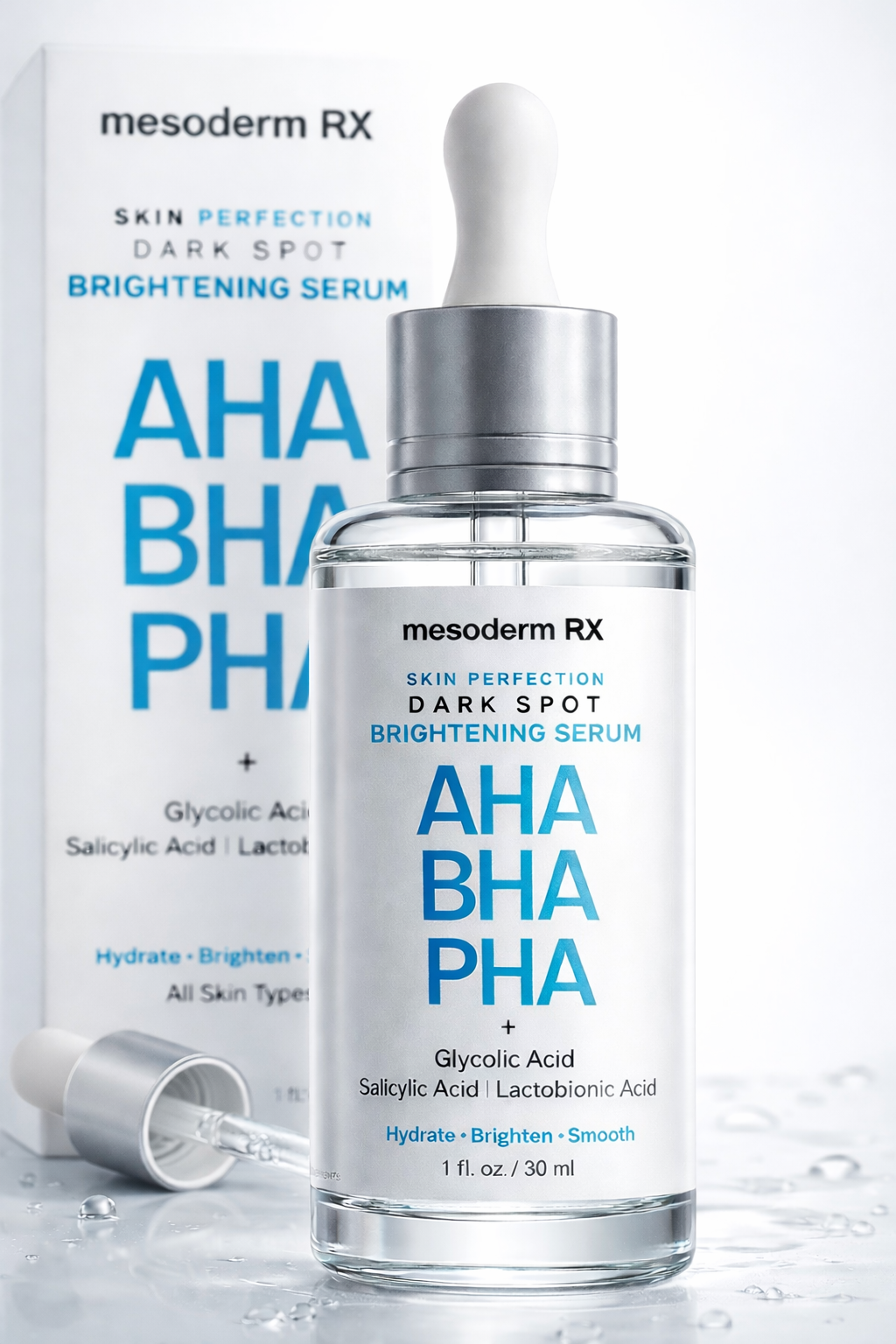
That's where formulation matters. A product such as AHA + BHA + PHA Skin Brightening Serum 30ml combines glycolic acid, lactic acid, salicylic acid, and lactobionic acid in one formula. Clinically, that kind of blend makes sense only when the user understands each acid's role and adjusts frequency accordingly. For a broader breakdown of combination acid use, this guide on AHA and BHA products is worth reading.
The Benefits of PHAs Beyond Exfoliation
PHA earns its place in a routine because it does more than loosen dead surface cells. In practice, it behaves like a system ingredient. It changes how skin tolerates exfoliation by contributing to water balance, surface smoothness, and barrier resilience at the same time.

Why hydration changes the exfoliation outcome
The stratum corneum needs orderly shedding, but it also needs enough water and lipid structure to stay flexible. PHAs help on both sides of that equation. Their multiple hydroxyl groups make them strongly water-binding, so ingredients such as gluconolactone and lactobionic acid can function as humectants while they promote controlled desquamation.
That distinction matters clinically. A patient with rough, dull skin often does not need more acid strength. They need an exfoliant that does not push the barrier into a cycle of stinging, tightness, and rebound dehydration.
Some PHAs also bring antioxidant activity, which adds another layer of support in routines already dealing with UV exposure, inflammation, or post-inflammatory discoloration. The result is usually subtler than a strong glycolic peel, but the trade-off is better consistency and fewer setbacks.
The trade-off PHAs solve
The usual failure point with exfoliation is simple. Texture improves for a week, then the barrier starts to fray.
PHA helps reduce that pattern because its larger molecular structure slows penetration compared with smaller AHAs. That lower reactivity can make room for better adherence and better pairing with moisturizers, ceramides, and retinoids.
Three practical benefits follow:
- Dry or dehydrated skin: PHAs smooth visible flaking while pulling water into the upper layers, so skin feels less stripped after use.
- Reactive skin: Lower sting potential makes PHAs a sensible option in a sensitive skin exfoliant routine, especially when stronger acids keep causing irritation.
- Mature or photoaged skin: Surface refinement looks better when corneocytes are shedding evenly and the skin still holds water. Aggressive exfoliation can briefly brighten the face, then leave it looking thinner and more inflamed.
The popular “glass skin” look depends on this same biology. Light reflects evenly from a surface that is smooth, hydrated, and intact. It does not reflect well from skin that has been over-processed. Professional approaches marketed as glass skin treatments in Maidenhead follow the same principle. Controlled renewal works better than repeated barrier injury.
Here's a deeper visual explanation of how that fits into routine design:
Where supportive formulas matter
PHA performs best inside a complete barrier strategy. The acid does one job. The rest of the formula, and the products around it, determine whether the skin can benefit from that job repeatedly.
A product such as Advanced Triple Action Age-Defying Serum is positioned as a rich moisturizer with peptides that supports firmness, hydration, and moisture-barrier function. That does not replace PHA exfoliation. It supports the environment PHAs need to work well. In real routines, this pairing often matters more than chasing a higher acid percentage.
Treat hydration as part of the exfoliation protocol itself. Results are usually better, and irritation is easier to avoid.
Who Should Use PHAs and for Which Concerns
PHA isn't for everyone. It's for specific skin behavior patterns. When I recommend it, I'm usually solving for tolerance first, then results.
Sensitive and redness-prone skin
This is the clearest use case. Skin that flushes easily, stings with many actives, or struggles after cleansing often doesn't need stronger exfoliation. It needs more controlled exfoliation. PHAs were developed with lower sensory irritation in mind, which is why they've been used in clinically sensitive contexts.
That doesn't mean every rosacea-prone person should automatically use a PHA. It means PHA deserves consideration before you escalate to stronger acids.
Dry and dehydrated skin
Dry skin often gets worse when people treat flaking as proof they need more exfoliation. Usually they need less friction and better water balance.
PHA makes sense here because it can smooth the surface while supporting hydration. That's a materially different profile from a routine built around repeated stripping.
Early aging and rough texture
Fine lines often look worse when the surface is dehydrated and uneven. PHA can help smooth that superficial roughness without forcing the kind of irritation that leaves mature skin looking tired.
This matters across skin tones. Clinical work cited in a consumer dermatology overview reported that PHA-containing products improved photoaging across diverse skin tones and were effectively paired with hydroquinone for skin-lightening outcomes, which places PHAs in the role of a supportive resurfacing ingredient rather than a standalone pigment treatment in many cases, as described in this overview of polyhydroxy acid and dark spot care.
What PHA does well: soften roughness, improve surface clarity, support tolerance in active-heavy routines.
What PHA doesn't do well alone: correct every cause of stubborn discoloration.
Hyperpigmentation support, not magic
People need to be realistic: Hyperpigmentation isn't one condition. Post-acne marks, melasma, and sun-induced spots don't behave the same way biologically. PHA can help by improving cell turnover and smoothing the surface, but it usually isn't the central corrective ingredient for difficult pigment.
For dark spots, PHA works best inside a system that may also include pigment regulators, anti-inflammatory support, and daily sun protection. If your skin is reactive and most exfoliants trigger setbacks, PHA is often the more sustainable starting point. This guide to a sensitive skin exfoliant strategy gives that issue the attention it deserves.
A Clinical Protocol for Integrating PHAs Into Your Routine
Misuse of PHA doesn't stem from carelessness. It often occurs because users interpret “gentle” to mean “I can use it however I want.”
That's how over-exfoliation starts.

Start with a controlled schedule
A practical protocol is simple.
- Patch test first. If the skin is already reactive, don't assume lower irritation means zero irritation.
- Apply on clean, dry skin. Wet skin can increase the intensity of active products for some users.
- Begin with 2% to 3 times per week. That pacing appears in the infographic guidance, and it's a reasonable behavioral rule when introducing any acid.
- Follow with hydration. A bland moisturizer reduces the chance that mild exfoliation turns into cumulative barrier stress.
- Watch for delayed irritation. Tightness, increased shine, prolonged warmth, and sudden stinging with other products are early signs that frequency is too high.
Layering rules that prevent the usual mistakes
A key challenge with PHA is combining it with other actives. Practical guidance matters because even gentle acids still require strategy. Clinical literature has noted compatibility with ingredients such as retinoic acid, but that does not mean every person should layer everything in the same routine, as discussed in this overview of using PHA with other actives.
Use these rules.
- With retinoids: Start by alternating nights. If the skin remains calm, some users can combine them, but alternating is usually the cleaner starting point.
- With vitamin C: If the vitamin C formula already stings, don't force PHA into the same session. Use one in the morning and the other at night, or alternate days.
- With niacinamide: This is usually the easiest pairing because niacinamide supports barrier function and doesn't add exfoliation pressure.
- With benzoyl peroxide: Be cautious. Both can be useful, but together they often push acne-prone skin into dryness and rebound irritation.
- With other acids: Don't stack them casually. A routine that includes AHA, BHA, and PHA can work, but only if the formula was designed that way or the schedule is deliberately spaced.
Practical rule: If your skin starts feeling “too clean,” squeaky, hot, or shiny after cleansing, reduce acid frequency before adding more soothing products.
Sun protection is not optional
Exfoliation exposes fresher surface skin. If you're trying to improve tone and texture but skip daily sunscreen, you're undermining the treatment. In pigment-prone skin, that mistake is especially costly because inflammation and UV exposure keep feeding discoloration.
Choosing an Effective PHA Product
Product selection determines whether PHA behaves like a controlled resurfacing tool or just another mildly acidic toner. The label should tell you three things clearly: which PHA is used, how the formula is built around it, and whether the rest of your routine can tolerate that formula.

What to look for on the ingredient list
The two PHA names that matter most are gluconolactone and lactobionic acid. Both exfoliate at the skin surface, but they also behave like water-binding molecules, which is part of why PHA can fit sensitive or dehydration-prone skin better than stronger acid systems.
Concentration still matters. Lower-strength formulas usually make sense for maintenance, very reactive skin, or routines that already include retinoids or acne drugs. Higher-strength formulas are more useful when rough texture or persistent dullness is the main target, provided the vehicle includes enough humectants, solvents, and buffering support to keep the acid from becoming an irritation trigger.
pH matters too. An acid can look good on the front of the bottle and still underperform if the formula is not adjusted to keep that acid meaningfully active. At the same time, the lowest possible pH is not automatically better. In practice, I would rather see a well-balanced formula that gives repeatable results than an aggressive one that forces the user to cut back after a week.
Why formula design matters more than acid count
A strong PHA product works as a system. It is not just a bottle that happens to contain gluconolactone.
Humectants, film-formers, and barrier-supportive ingredients change how the skin experiences exfoliation over time. That is especially relevant with PHA, because one of its advantages is that it can resurface while reducing some of the dryness pattern commonly seen with more aggressive acids. A well-built formula can use PHA alone for low-irritation renewal, or pair it with AHA and BHA in a controlled way so each acid addresses a different layer of the problem.
That trade-off is real. Multi-acid formulas can improve texture, visible buildup, and uneven tone more efficiently than separate single-acid products. They can also push the skin past its tolerance threshold if the percentages, pH, or usage frequency are poorly matched to the user.
How to decide if a product fits your routine
Start with the job you need the product to do. If the issue is mild roughness with barrier fragility, a PHA-forward formula usually makes more sense than a peel built around stronger AHAs. If congestion is the dominant problem, PHA alone may be too superficial and a formula with some BHA support may be more useful. If discoloration is the goal, consistency matters more than intensity. A tolerable leave-on product used for months will usually outperform an aggressive acid that has to be stopped repeatedly.
Then look at the surrounding formula. Glycerin, hyaluronic acid, panthenol, and similar support ingredients do not make an exfoliant weak. They often make it usable.
If your routine needs one leave-on step that combines surface renewal with pore-focused exfoliation, Skin Perfection Liquid Exfoliant Peel AHA BHA PHA is an example of that system-based approach. Its product description lists AHA, BHA, and PHA, including lactobionic acid, along with hydrating support such as hyaluronic acid. That type of formula suits users who want one controlled exfoliating product instead of stacking separate acids and creating cumulative irritation by accident.
The Final Verdict on Polyhydroxy Acids
PHA deserves a more precise reputation than “the gentle one.” It's a smart resurfacing ingredient class with a distinct molecular profile and a practical clinical role.
If you came here asking what is PHA in skin care, the concise answer is this: it's an exfoliating acid category designed to renew the skin more superficially while also contributing hydration and barrier support. That makes it especially useful for people who want smoother, clearer skin but don't tolerate aggressive exfoliation well.
In modern routines, the best results rarely come from using the strongest acid possible. They come from using the right system, at the right frequency, with enough respect for the barrier to let the skin improve.
If you want a routine built around intelligent exfoliation, pigment control, barrier support, and daily practicality, explore Mesoderm RX. The brand's approach is straightforward: high-potency, minimal-additive formulas designed to brighten, smooth, and protect without turning your routine into an irritation experiment.