


A Clinical Authority's Guide to Vegan Anti-Aging Skincare
Effective vegan anti-aging skincare isn't defined by what it lacks—it’s defined by the precise, evidence-backed actives used to correct the biological mechanisms of aging.
This is not about ideology or "clean" marketing. It is about delivering measurable improvements to skin structure and function. This guide provides a clinical framework for understanding how to achieve this.
Layer 1: The Biological Mechanisms of Skin Aging

To correct the visible signs of aging—lines, laxity, and discoloration—one must first understand the cellular processes driving them. Effective skincare is engineered to intervene at this source.
The Collapse of the Dermal Matrix
Youthful skin possesses a resilient dermal-epidermal junction and a dense matrix of structural proteins: collagen provides firmness, while elastin provides recoil. This structure is synthesized by dermal cells called fibroblasts.
With age and photodamage, fibroblast function declines. They produce less collagen and elastin. Simultaneously, destructive enzymes called Matrix Metalloproteinases (MMPs) are activated by UV radiation and inflammation. MMPs act like molecular scissors, actively degrading existing collagen and elastin fibers.
This creates a structural deficit: collagen breakdown outpaces synthesis. The dermal matrix weakens and thins, manifesting as wrinkles and sagging. Understanding how these changes lead to visible lines on your face is the first step toward effective intervention.
Featured Product
Advanced Triple Action Age-Defying Serum | Firming, Smoothing & Hydration
A powerful anti-aging serum that helps reduce the appearance of fine lines, improve skin firmness, and boost hydration for a smoother, more youthful-looking complexion.
Shop Now →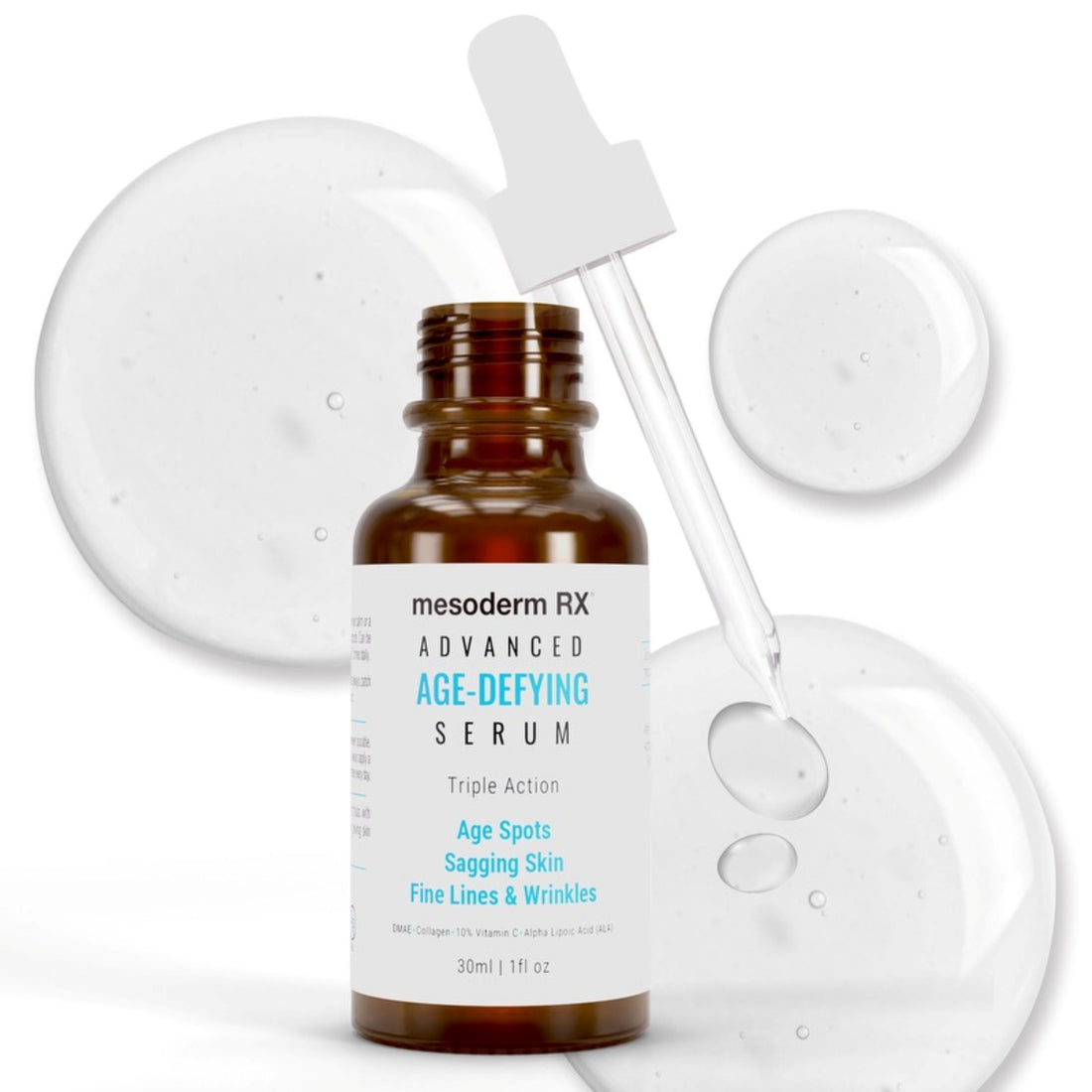
The Assault of Oxidative Stress
This entire degradative process is accelerated by oxidative stress. This is a state of cellular imbalance caused by an excess of unstable molecules called free radicals, which are generated by UV exposure, pollution, and normal metabolic processes.
To stabilize themselves, free radicals steal electrons from healthy cells, causing a cascade of damage to critical cellular components:
- Cell Membranes: Damage leads to inflammation and compromised barrier function.
- Cellular DNA: Damage impairs a cell's ability to repair itself and replicate correctly, accelerating senescence.
- Structural Proteins: Free radicals directly degrade collagen and elastin, fast-tracking the loss of firmness.
A clinical approach to vegan anti-aging prioritizes neutralizing these free radicals with potent, stable antioxidants before this damage occurs.
The Enzymatic Pathway of Hyperpigmentation
Discoloration—dark spots, uneven tone—is the direct result of a specific enzymatic process being pushed into overdrive.
The pigment melanin is produced by cells called melanocytes. When triggered by UV exposure, hormonal shifts, or inflammation (e.g., from acne), melanocytes increase melanin production. This entire process is governed by a single key enzyme: tyrosinase.
Tyrosinase is the rate-limiting enzyme in melanogenesis. It acts as the "on" switch for the entire pigment-creation pathway. To effectively inhibit hyperpigmentation, you must block this specific enzyme.
It is critical to differentiate the types of hyperpigmentation, as the triggers vary:
- Sun Spots (Solar Lentigines): A direct result of chronic UV exposure signaling melanocytes to overproduce melanin as a protective, albeit uneven, response.
- Melasma: Larger patches of discoloration, often symmetrical, linked to hormonal fluctuations and exacerbated by UV exposure.
- Post-Inflammatory Hyperpigmentation (PIH): Dark marks left after an inflammatory event like acne or a scratch. The inflammation itself triggers localized melanin dumping.
Understanding these precise biological targets—fibroblasts, MMPs, oxidative stress, and the tyrosinase enzyme—is the foundation of any skincare strategy that delivers structural change.
Layer 2: Why Most Vegan Skincare Formulations Fail

The demand for vegan skincare has saturated the market with products that are ethically compliant but clinically ineffective. The failure is not in the vegan ingredients themselves, but in poor formulation philosophy that prioritizes marketing claims over biological efficacy.
Myth: "Chemical-Free" Purity Equates to Efficacy
The marketing concept of "chemical-free" skincare is a scientific fallacy. Water is a chemical (H₂O). Botanical extracts are complex mixtures of phytochemicals. Your skin itself is a chemical factory.
This myth leads brands to favor simple, unprocessed botanicals while avoiding effective, lab-stabilized actives. A "pure" product that does not interact with cellular pathways is functionally useless for correcting aging.
The objective is not "chemical-free" but "results-driven." This requires selecting the correct bio-active compounds—whether plant-derived or lab-stabilized—at clinically-proven concentrations to elicit a specific biological response. Efficacy, not ideology, is what changes skin.
The Pitfall of "Ingredient Sprinkling"
A common deception is to feature a trending vegan active (e.g., Bakuchiol) prominently on packaging, while its actual position on the ingredient list is negligible. This is known as ingredient sprinkling.
An active ingredient is only effective at a therapeutic concentration demonstrated in clinical research. When "sprinkled" at a sub-therapeutic dose, it provides a marketing story, not a biological result. The product is merely a basic hydrator.
Over-Reliance on Simple Botanical Oils
Many vegan lines are built almost entirely on simple carrier oils (jojoba, rosehip, marula). While these oils are excellent emollients that support the lipid barrier and prevent transepidermal water loss (TEWL), they are not comprehensive anti-aging solutions.
Their function is primarily occlusive and emollient. On their own, simple oils cannot:
- Trigger new collagen synthesis in the dermis.
- Inhibit the tyrosinase enzyme to prevent hyperpigmentation.
- Accelerate cell turnover with the efficacy of retinoids or alpha-hydroxy acids.
An effective anti-aging strategy must do more than moisturize. It must communicate with skin cells. An over-reliance on basic oils fails to address the root causes of aging.
Potent Actives Without a Delivery System
Finally, even a high concentration of a superior active is useless if it cannot penetrate the stratum corneum to reach its target. The skin is a barrier designed to keep things out.
A sophisticated delivery system—such as encapsulation or liposomal technology—is non-negotiable. It protects the active from degradation and shuttles it past the skin's outer defenses to the deeper layers where fibroblasts and melanocytes reside.
This is the primary reason most vegan formulas fail. They may possess an appealing ingredient list but lack the formulation science to ensure bioavailability. This gap between marketing and performance is what separates ineffective products from clinical-grade systems like those developed at Mesoderm RX.

Layer 3: Prescribing A Results-Driven Vegan System
Individual products are merely tools. Clinical results are achieved through a systems-based approach where products work synergistically to target multiple aging pathways simultaneously. A routine is not a random assortment of products; it is a strategic protocol.
The global vegan skincare market hit $16.60 billion in 2023 and is projected to more than double by 2032, driven by consumer demand for results, not just ethics. This comprehensive market analysis confirms the shift towards performance.
System 1: A Protocol for Correcting Hyperpigmentation
Effective management of hyperpigmentation requires a multi-pronged assault. The goal is not merely to fade existing spots but to inhibit the melanogenesis pathway to prevent their formation.
- Accelerate Desquamation: First, remove the existing, hyper-pigmented corneocytes from the skin's surface. A gentle exfoliating agent (e.g., PHA) accelerates cell turnover, clears the slate, and enhances the penetration of subsequent treatment products.
- Inhibit Tyrosinase: This is the core of the treatment. A potent serum containing a direct tyrosinase inhibitor, such as stabilized Vitamin C (3-O-Ethyl Ascorbic Acid), must be applied to block the enzymatic trigger for melanin production.
- Mandatory UV Blockade: All progress is nullified by unprotected UV exposure. UV radiation is the primary trigger for melanogenesis. A broad-spectrum sunscreen with SPF 30+ is not an optional step; it is the shield that prevents the initial signal.
This is a closed-loop system: exfoliation removes old pigment, the serum blocks new pigment synthesis, and sunscreen prevents the trigger. Removing any component creates a point of failure.
System 2: A Protocol for Improving Firmness & Texture
To address structural aging—loss of firmness and rhytids—the target is the fibroblast. The protocol must stimulate new collagen synthesis while protecting existing collagen from degradation.
- Stimulate Fibroblasts with Signal Peptides: The engine of this system is a serum containing signal peptides. These short-chain amino acids act as messengers, binding to fibroblast receptors and instructing the cell to increase production of collagen and elastin. This is how the dermal matrix is rebuilt. This is the mechanism behind products like Mesoderm RX's Advanced Age-Defying Serum.
- Refine Surface Texture with Bakuchiol: A retinoid functional analog like Bakuchiol provides a dual benefit. It stimulates cell turnover to smooth surface texture and has been shown to modulate collagen-stimulating pathways, complementing the work of the peptides. It achieves this without the inflammatory response often associated with traditional retinoids.
- Support the Barrier with Ceramides & Antioxidants: Lock in the actives with a moisturizer formulated with barrier-identical lipids (ceramides) and antioxidants. A compromised barrier leads to chronic, low-grade inflammation, which in turn upregulates MMPs and accelerates collagen breakdown. A healthy barrier is a prerequisite for anti-aging. You can learn more about how exfoliation supports skin health and pH balance in our detailed guide.
This systematic methodology transforms a skincare routine from a game of chance into a predictable, results-driven process. The synergistic power of Vitamin C, retinoids, and peptides is unlocked when they are used within such a system.
Vegan Actives vs. Their Biological Targets
This table connects key vegan actives to the specific biological pathways they modulate.
| Vegan Active | Biological Target | Primary Outcome |
|---|---|---|
| Bakuchiol | Retinoid Receptors | Increased Collagen Synthesis, Accelerated Cell Turnover |
| Signal Peptides | Fibroblast Cells | Firmer, Denser Dermal Matrix |
| Stabilized Vitamin C | Free Radicals & Tyrosinase Enzyme | Reduced Oxidative Damage, Inhibition of Melanogenesis |
| PHAs (Polyhydroxy Acids) | Corneocyte Cohesion | Gentle Surface Exfoliation, Improved Hydration |
This illustrates a strategic deployment of actives, not a random application.
Clinical FAQs
Can vegan skincare truly compete with retinol?
Yes, when using actives that function as retinoid analogs. The efficacy of retinol comes from its ability to bind to and activate retinoid receptors in the skin.
Bakuchiol, a plant-derived compound, is not a structural retinoid but acts as a functional analog. It docks with the same receptors to initiate a similar cascade of gene expression, leading to increased cell turnover and collagen synthesis. This provides comparable benefits for texture and fine lines without the common inflammatory side effects (erythema, peeling) of retinoids, making it a clinically sound alternative.
How long until clinical results are visible?
Surface hydration improves immediately. However, structural changes operate on the timeline of skin biology.
The average epidermal turnover cycle is 28 to 40 days, a period that lengthens with age. Therefore:
- 4-6 Weeks: The first measurable changes in texture and clarity become apparent as at least one full cycle of skin cells has been influenced by the new regimen.
- 3-6 Months: Visible improvements in firmness and pigmentation become evident. Consistent use of signal peptides is required to build a meaningful density of new collagen. Inhibition of tyrosinase over several months is needed to see a significant reduction in established hyperpigmentation.
Lasting results are the product of biological processes, not marketing promises.
Is "Cruelty-Free" the same as "Vegan"?
No. The terms are distinct and not interchangeable.
- Cruelty-Free: Certifies that the final product and its individual ingredients were not tested on animals. The Leaping Bunny logo is a common third-party verification.
- Vegan: Certifies that the product formula contains no animal-derived ingredients or by-products (e.g., honey, beeswax, lanolin, carmine, animal-derived collagen).
A product can be cruelty-free but contain beeswax (not vegan). A product can be technically vegan but made by a parent company that engages in animal testing for other products. For full alignment, consumers should seek products certified as both vegan and cruelty-free. The boom in the vegan cosmetics market and its drivers is largely due to consumers understanding this distinction.
A clinical approach moves beyond marketing claims to deliver measurable results. At Mesoderm RX, we build systems based on biological precision. Our "More Actives, Less Additives" philosophy ensures every formulation is engineered to work with your skin's biology.
Discover your results-driven vegan skincare system at Mesoderm RX