


Triple Rosacea Cream: A Clinical Guide for Sensitive Skin
The most popular advice about rosacea is also the least useful: find one “hero” cream, apply it consistently, and expect your skin to calm down.
That's not how rosacea behaves in real life.
People usually aren't dealing with one isolated problem. They're dealing with redness, inflammatory bumps, stinging, barrier fragility, and trigger-reactivity at the same time. When treatment only targets one pathway, the rest of the biology keeps driving the condition. That's why a cream can help one symptom while the skin still looks angry, feels hot, or flares the moment weather, exercise, or a new product enters the picture.
A triple rosacea cream exists because clinicians and compounders know rosacea rarely responds well to oversimplified thinking. Combining multiple established actives in one prescription vehicle is not about making treatment look more advanced. It's about matching the therapy to the condition.
Rethinking Rosacea Treatment Beyond a Single Cream
Rosacea isn't just “sensitive skin with redness.” It's a chronic, relapsing inflammatory disorder with overlapping drivers. In practice, that means the patient who says, “I have bumps and redness, but everything burns,” is describing the condition accurately.
A lot of failed treatment history comes from trying to separate symptoms that are biologically linked. The papules and pustules are one expression. The background erythema is another. The stinging and intolerance are often signs that the skin barrier is already compromised. If you treat only the visible bumps and ignore barrier instability, adherence drops fast. If you focus only on soothing products and avoid active treatment entirely, inflammatory lesions often persist.
Why monotherapy often feels incomplete
Single-ingredient topical treatment can work well for the right patient. But many patients don't present as clean textbook cases. They have residual redness after bumps improve. Or fewer lesions, but ongoing sensitivity. Or partial control that collapses during seasonal change, heat exposure, or over-cleansing.
That's where treatment has to become strategic rather than product-led.
Rosacea management works best when you stop asking, “What cream should I buy?” and start asking, “Which pathways are still uncontrolled, and what is my skin barrier capable of tolerating?”
This is also why “clean” or “gentle” by itself isn't enough. Skin can be reactive and still need real pharmacology. What matters is choosing actives and vehicles that respect barrier limitations. For people trying to reduce unnecessary irritants in the rest of their routine, a practical starting point is a more stripped-down approach to clean skincare for sensitive skin.
What a smarter treatment framework looks like
A better framework usually includes three decisions:
- Match the treatment to the subtype pattern. Inflammatory bumps and persistent redness don't respond the same way.
- Treat the barrier as part of therapy. Barrier support isn't cosmetic padding. It affects whether a patient can stay on treatment long enough to benefit.
- Use combination logic when monotherapy stalls. If multiple rosacea drivers are active, one ingredient may not be enough.
A triple rosacea cream fits inside that framework. It's not a miracle product, and it won't replace trigger control, sunscreen, or vascular treatment when vascular redness dominates. But for the right patient, it's a rational tool. The formulation exists because rosacea is more complex than the average skincare routine admits.
What Is a Triple Rosacea Cream
A triple rosacea cream is usually a compounded prescription topical built around azelaic acid, ivermectin, and metronidazole. The point is not novelty. The point is to combine established rosacea actives in one customized formula so the treatment can address several biologic contributors at once. A pharmacy source describes the rationale as mechanistic stacking of anti-inflammatory, antimicrobial, and anti-Demodex effects to address papules, pustules, and persistent erythema in inflammatory rosacea, as outlined in this overview of triple rosacea cream compounding.

Featured Product
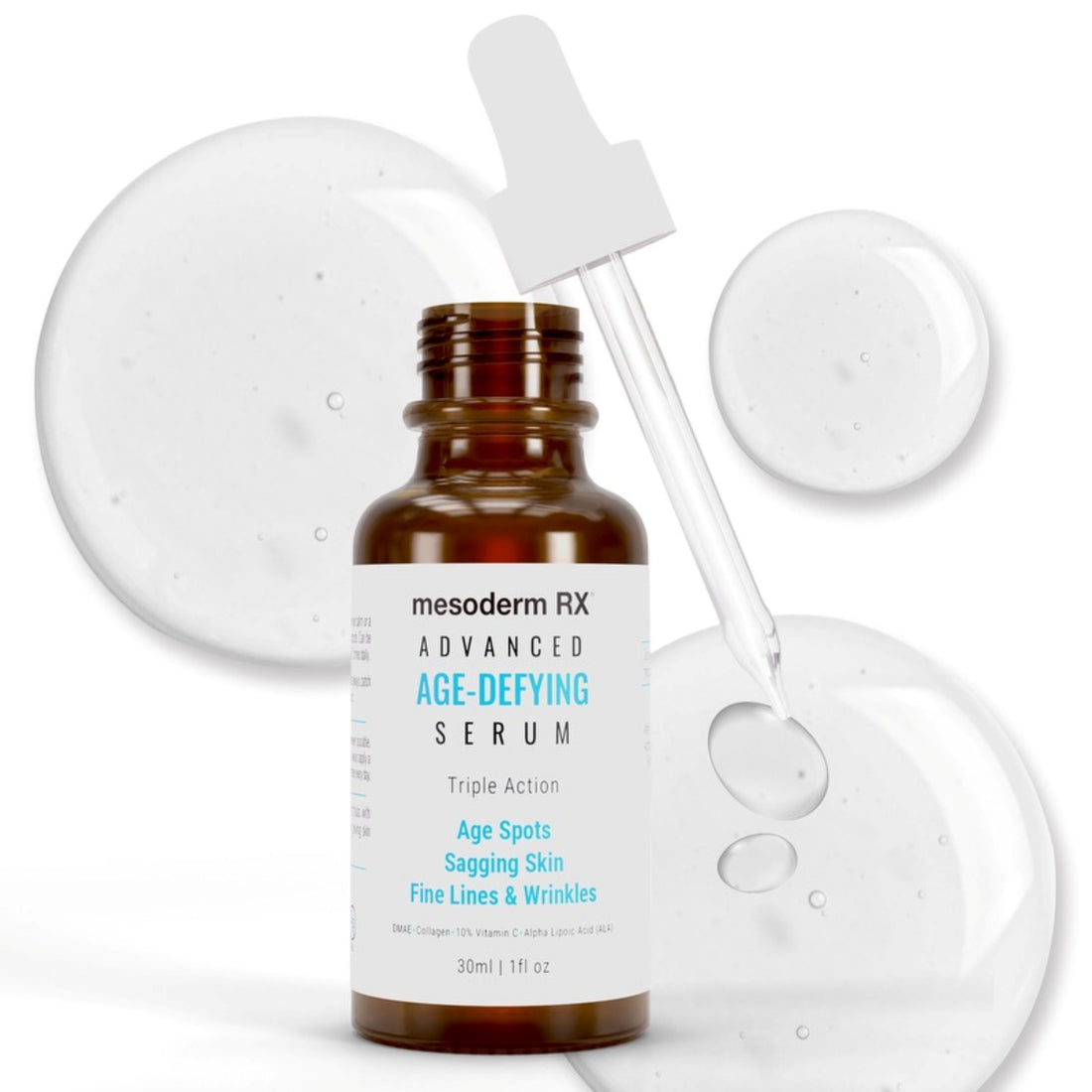
Advanced Triple Action Age-Defying Serum
TURN BACK TIME WITH A SERUM THAT RESTORES, REPAIRS, AND REJUVENATES
Shop Now →Why compounding matters
This isn't a standard over-the-counter cream sitting unchanged on a shelf. It's typically prepared through a compounding pharmacy, which means the formula can be adjusted around the patient rather than forcing the patient to adapt to a fixed product.
That matters for two reasons.
First, rosacea is heterogeneous. One patient mainly has inflammatory lesions. Another has diffuse redness with a few bumps. Another has highly reactive skin that stings with nearly everything. A compounded product gives the prescriber and pharmacist room to think in terms of concentration, vehicle, and tolerability, not just ingredient list.
Second, combining actives into one topical can reduce regimen complexity. That sounds minor, but in rosacea it matters. Patients often stop treatment because the routine becomes too irritating, too confusing, or too hard to maintain.
Why these three ingredients are combined
The formulation logic is straightforward:
- Ivermectin is used for its anti-Demodex and anti-inflammatory role.
- Metronidazole has long-standing use in rosacea care and helps target inflammation.
- Azelaic acid adds anti-inflammatory and keratolytic activity, which can help with bumps, texture, and visible redness over time.
Used together, these ingredients try to cover more of the disease process than monotherapy often can.
A short visual explanation helps clarify that treatment logic.
What it is not
Triple rosacea cream is not a universal answer for every red face. It's most relevant when inflammatory rosacea is part of the picture and when a clinician wants a more integrated topical approach.
Clinical distinction: If the dominant complaint is flushing, diffuse vascular redness, or visible vessels, a compounded triple cream may help only part of the problem.
That distinction is where many online recommendations go wrong. They describe triple cream as if all rosacea is one thing. It isn't. The formulation is most useful when the biology matches the tool.
The Three Core Actives and Their Mechanisms
Rosacea affects approximately 5.46% of the adult population, and one survey found that 98.7% of dermatologists prescribed metronidazole, while 9.1% prescribed azelaic acid and 4.1% prescribed ivermectin, supporting that these are established actives in clinical use, as reported in this systematic review and prescribing analysis.
That context matters. Triple rosacea cream is not built from fringe ingredients. It is built from familiar therapeutic tools used in a more coordinated way.

Ivermectin
Ivermectin is included for more than one reason. The Demodex angle is a known factor, and that's relevant because mite-associated immune activation can be part of inflammatory rosacea. But ivermectin also has anti-inflammatory value, which helps explain why it can improve papules and pustules beyond the mite discussion alone.
In practical use, ivermectin tends to fit best when the skin shows inflammatory lesions and reactivity rather than simple dry redness. It is not primarily a vessel treatment. It is part of an inflammation-control strategy.
Metronidazole
Metronidazole has deep roots in rosacea management. Its role is usually framed around anti-inflammatory and antimicrobial effects. In clinic, that translates to a reliable baseline active for inflammatory disease that needs control without overly aggressive exfoliation.
This is one reason many formulations still lean on metronidazole as an anchor ingredient. It has long-standing familiarity in rosacea care, and that matters when treating a condition where the skin often tolerates very little.
A useful way to think about metronidazole is that it often provides the “steadying” part of the triple formula, while the other ingredients expand what the cream can cover.
Azelaic acid
Azelaic acid is the ingredient that often adds both value and difficulty. It contributes anti-inflammatory activity, and it also brings keratolytic or exfoliative action, which can help normalize texture and follicular plugging over time. That makes it especially relevant when rosacea includes roughness, bumps, and uneven surface quality.
But azelaic acid is also the ingredient most likely to expose a bad formulation strategy. In highly reactive skin, it can increase stinging if the concentration is too aggressive, the vehicle is poorly chosen, or the barrier is already impaired.
That doesn't mean it should be avoided. It means it should be respected.
Triple Cream Actives at a Glance
| Active Ingredient | Primary Mechanism | Main Target in Rosacea | Considerations for Sensitive Skin |
|---|---|---|---|
| Ivermectin | Anti-Demodex and anti-inflammatory activity | Papules, pustules, inflammatory activity linked to mite-associated immune response | Can still sting in reactive skin depending on vehicle |
| Metronidazole | Anti-inflammatory and antimicrobial support | Inflammatory lesions and baseline rosacea control | Often well-established in rosacea routines, but tolerability still depends on formula |
| Azelaic acid | Anti-inflammatory plus keratolytic activity | Bumps, rough texture, uneven tone, some visible redness over time | Most likely of the three to provoke stinging if skin barrier is impaired |
The formulation lesson most people miss
Three strong actives don't automatically produce a better result. They produce a higher ceiling if the patient can tolerate and continue the treatment. That's a different thing.
For patients who also need support for age-related dryness or barrier fragility, a separate bland support product can make the routine more sustainable. One example is Advanced Triple Action Age-Defying Serum, a rich, creamy moisturizer with peptides that supports the skin's moisture barrier and hydration. It isn't a rosacea drug, and it shouldn't be treated like one. But that kind of barrier-conscious support can matter when prescription topicals are doing the heavy lifting.
Why Standard Rosacea Treatments Often Fail
Most rosacea treatment failure isn't true drug failure. It's strategy failure.
A patient gets a reasonable active, applies too much, uses it on compromised skin, layers it with exfoliants, keeps a fragranced cleanser in the routine, skips moisturizer because they're “already oily,” and then concludes the prescription didn't work. In reality, the treatment plan never had a fair chance.

Tolerability is the choke point
Real-world rosacea care often breaks down at the point of tolerability. Pharmacy guidance notes common adverse effects such as burning and stinging, and suggests starting potent creams every other or every third day, which highlights irritation as a practical bottleneck in routine use, as discussed in this rosacea treatment overview from GoodRx.
Generic skincare advice often fails patients by treating irritation like a side note. In rosacea, irritation determines whether the treatment is even usable.
The usual reasons patients stall out
- They chase strength instead of fit. A stronger formula isn't better if the skin can't tolerate it long enough to benefit.
- They ignore the barrier. Rosacea skin often behaves like compromised skin. If cleansing, climate, or overuse of actives has already weakened the barrier, even a good prescription may feel harsh.
- They treat all redness the same. Inflammatory redness and vascular redness aren't interchangeable.
- They stack too many “helpful” products. Acids, scrubs, retinoids, essential oils, and fragranced calming products can all complicate the picture.
Practical rule: If a rosacea routine gets more complicated as the skin gets more reactive, the routine is moving in the wrong direction.
What doesn't work well
One of the most common mistakes is trying to force rosacea skin into an acne framework. Frequent exfoliation, oil-stripping cleansers, and lesion-focused spot treatment usually worsen the background irritation that keeps flares cycling.
Another problem is assuming any prescription cream will override trigger exposure. It won't. Heat, ultraviolet exposure, harsh weather, aggressive skincare, and individual dietary or lifestyle triggers can keep inflammation active even when the topical choice is sensible.
Standard treatment often fails because people focus on the active ingredient and ignore the delivery environment. If the skin is inflamed, dehydrated, and chemically overworked, the formula may be correct on paper and wrong in practice.
A Strategic Protocol for Using Triple Cream
A triple rosacea cream should be introduced like a potent prescription, not like a cosmetic moisturizer. The goal is steady control with minimal reactivity. If you push too fast, you often lose the patient before the treatment has time to work.
Clinical use guidance describes noticeable change within 1 to 2 months with daily use, and treatment commonly lasting 6 to 8 weeks before assessment. The same source notes common tolerability issues including mild irritation, itching, and burning, as described in this clinical case using compounded triple rosacea cream.
Start slower than you think you need to
Patients with sensitive rosacea skin often sabotage treatment by starting at full frequency. A better approach is titration.
- Patch test first. Apply a small amount to a limited facial area or the jawline for several nights.
- Begin with spaced use. If your prescriber allows flexibility, start a few nights per week rather than pushing into daily use immediately.
- Increase only if the skin stays calm. Mild transient sensation can happen. Escalating burning, spreading irritation, or ongoing sting means the pace is too fast.
This isn't hesitation. It's pharmacologic discipline.
Use less product than most patients expect
More cream doesn't create more control. It usually creates more irritation.
For full-face use, the amount should be thin and deliberate. Spread it evenly over the affected areas rather than dabbing thick layers on the reddest spots. On rosacea skin, overdose often looks like “my prescription made everything worse,” when the actual problem is application load.
Use enough to create a light treatment film, not a visible mask.
Layering order matters
The routine should stay boring. Boring is good when the skin is unstable.
- Cleanse gently first. Skin should be clean and fully dry before application if dryness doesn't worsen sting for you.
- Apply the triple cream as the treatment step. Keep the layer thin.
- Follow with a barrier-supportive moisturizer. This helps buffer reactivity and support adherence.
- Protect in the morning. Daily sun protection matters because UV exposure amplifies inflammation and can destabilize control.
If you need help choosing a daily protective layer, tinted sunscreen for sensitive skin is often a practical option because it adds camouflage while keeping the morning routine simple.
What to watch during the first weeks
Early treatment should be judged by trend, not by day-to-day emotion. Rosacea fluctuates. Patients often stop a useful therapy because they react to a temporary bad day instead of the overall direction.
Watch for:
- Better lesion control
- Less baseline reactivity
- Improved tolerance over time
- Whether redness is inflammatory or still mainly vascular
If the skin becomes progressively more irritated, the answer isn't always to abandon the concept of triple therapy. Sometimes the fix is lower frequency, better barrier support, a different vehicle, or a reassessment of concentration.
The Non-Negotiable Skincare Support System
A triple rosacea cream can fail inside a bad routine. That's the part many people don't want to hear.
They want the prescription to do all the work. But rosacea management depends on what carries the active, what surrounds it, and what the skin has to defend against every day. Vehicle and concentration choices materially affect tolerability, and barrier repair can reduce transepidermal water loss and cutaneous irritation, which can in turn reduce erythema. Compounded therapy is most useful when paired with barrier-supportive skincare, as explained in this prescription rosacea cream formulation guide.

The three pillars that keep treatment on track
The support system is simple, but it has to be disciplined.
- Gentle cleansing: Use a non-stripping cleanser that removes sunscreen, sweat, and debris without leaving the skin tight or hot. If cleansing makes the face feel squeaky, it's usually too aggressive for rosacea.
- Barrier repair: Moisturizer is not optional padding. It helps the skin tolerate treatment and stay on treatment.
- Daily sun protection: Ultraviolet exposure drives inflammation and can keep skin reactive even when the prescription is otherwise appropriate.
Vehicle decides whether the formula is usable
A technically strong set of actives can still fail in the wrong base. Fragrance, drying solvents, or a texture that drags across inflamed skin can all reduce persistence. In compounded dermatology, vehicle selection is often the difference between “effective on paper” and “workable in practice.”
That's also why I push patients to evaluate the whole routine, not just the prescription line item. If the treatment is solid but the rest of the skincare is chaotic, the skin keeps paying the price.
For people comparing professional skincare frameworks and barrier-first routines, ProMD Health Ashburn medical skincare offers a useful example of how clinicians frame product selection around skin function rather than marketing language.
Support products should make prescription therapy easier to tolerate. If they create tingling, tightness, or heat, they are not support products for rosacea skin.
What a support routine should avoid
- Added fragrance: Commonly tolerated by some skin types, but often unnecessary risk in reactive rosacea skin
- Exfoliant stacking: Especially during the early adjustment period with a compounded active cream
- Too many treatment steps: More variables make it harder to identify what's helping and what's provoking
If your skin is persistently stingy, dehydrated, or red despite using the “right” active, review the barrier first. A focused discussion of that process is covered in this guide to skin barrier repair serum.
Frequently Asked Questions About Triple Cream
Can triple rosacea cream help flushing and visible vessels
Sometimes only partially. Triple cream is more useful for inflammatory lesions than for the vascular side of rosacea. Persistent erythema and telangiectasia may not clear with creams alone, and vascular laser and IPL are often used specifically for those features, as reviewed in this clinical overview of rosacea treatment options.
How long should I use it before deciding whether it's working
You should judge it over weeks, not days. Triple rosacea cream is a control therapy, not an overnight cosmetic quick fix. If there's ongoing worsening, repeated burning, or inability to maintain use even with slower titration, the plan needs reassessment.
Can I use exfoliating acids or retinoids with it
Usually, caution is smarter than ambition. Many rosacea patients already have reduced tolerance. Adding AHAs, BHAs, scrubs, or retinoids on top of a compounded triple formula often creates more irritation than benefit, especially early on. If those ingredients are part of a broader regimen, they should be introduced only with clear intent and careful pacing.
Is this something I use forever
Rosacea is chronic and relapsing, so management often involves maintenance thinking. That doesn't mean every patient uses the exact same compounded formula continuously at the same frequency. Some need long-term control. Some step down. Some need additional treatment for vascular redness that cream won't resolve.
When should I see a dermatologist instead of trying to manage it on my own
See a dermatologist if the redness is persistent, if papules or pustules are recurring, if the skin burns with most products, if visible vessels are becoming more prominent, or if your eyes are involved. Also seek evaluation if “rosacea” treatment keeps failing, because not every red, reactive face is rosacea.
If your skin is reactive, the answer usually isn't more products. It's a tighter system: targeted treatment, barrier-first support, and fewer unnecessary irritants. Mesoderm RX follows that same logic with high-potency, minimal-additive skincare designed to support skin function without loading the routine with avoidable extras.