


Tretinoin on Neck Before and After: The Clinical Truth
Most advice about tretinoin on neck before and after gets the central issue wrong. It tells people to extend their facial routine downward and expect the same response from the neck. That’s exactly how many people end up with redness, scaling, burning, and a barrier that’s too inflamed to improve.
The neck is not a smaller face. It behaves differently, tolerates actives differently, and shows damage differently. If you want visible change in crepiness, discoloration, rough texture, or early laxity, the protocol has to respect that biology.
A good neck result with tretinoin looks controlled. The skin becomes smoother first. Tone evens out next. Structural change takes longer. A bad result also looks predictable: too much strength, too much frequency, poor buffering, and weak sun protection. That pattern is common, and it’s avoidable.
Stop Applying Tretinoin to Your Neck Like Your Face
The most popular instruction is also the most damaging: “Use whatever tretinoin you use on your face, just bring it down to the neck.”
That shortcut fails because the neck usually has less tolerance and less margin for error. When people copy a facial routine onto the neck, they often trigger what many patients describe as “tret-neck”. That means persistent irritation, diffuse redness, peeling around folds, stinging with moisturizer, and in some cases a surface that looks older because the barrier is compromised.
Why the usual advice backfires
Facial routines are often built around stronger tolerance. People may already be using tretinoin regularly on the face, may have more oil support there, and may be willing to push through temporary dryness. The neck rarely rewards that approach.
A clinician's first job here is to separate effective stimulation from excess injury. Tretinoin works by changing cell behavior. It does not need dramatic peeling to “prove” it’s working.
Practical rule: If your neck is burning, staying red, and reacting to water or bland moisturizer, you are not accelerating results. You are interrupting them.
What the neck actually needs
The neck needs a slower entry, a lower threshold for stopping, and tighter control over dose. It also needs more support around cleansing, moisturization, and daily UV protection than most facial guides mention.
That’s why a before-and-after worth pursuing starts with restraint, not aggression. Good neck protocols look boring at first. Low concentration. Limited frequency. Small amount. Consistent SPF. Those choices are what make visible change possible later.
Featured Product
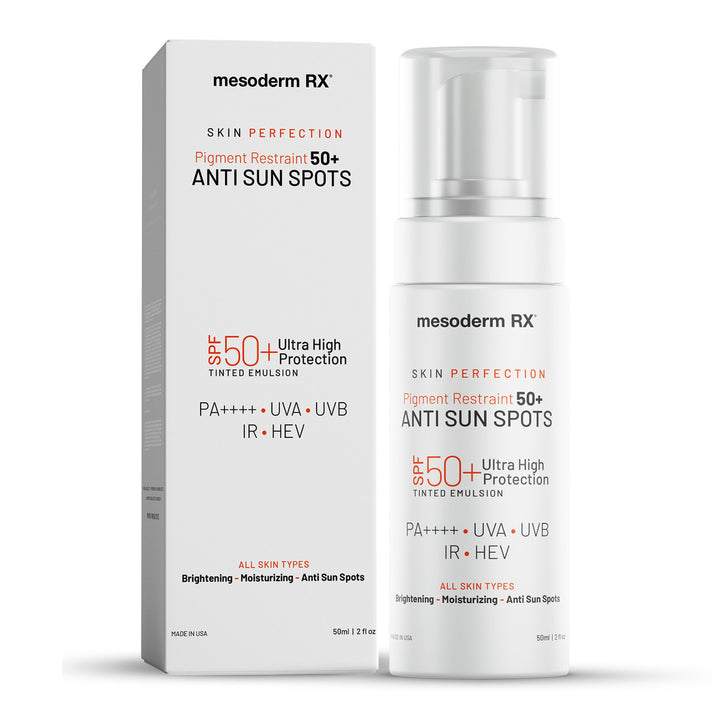
Pigment Restraint Ultra High Sun Protection
Its advanced formula defends against UV damage, helps protect againstsun-induced dark spots, and promotes a radiant, even-looking complexion—all while maintaining optimal hydration.
Shop Now →The Cellular Reality of Neck Aging and Discoloration
Neck aging is a tissue problem, not just a neglected-skincare problem. The neck has thinner skin, fewer reserves, more repetitive folding, and more daily friction from clothing, sleep position, posture, and hair products. That combination changes how damage shows up and how well the area tolerates treatment.

Why the neck shows age early
The signs grouped under “neck aging” do not come from one process. In clinic, the pattern is usually mixed:
- Fine lines and crepiness from water loss, slower surface renewal, and reduced dermal support
- Horizontal lines from repeated mechanical folding at the same points
- Laxity from collagen decline and thinning of the dermal matrix
- Patchy discoloration from UV exposure, low-grade inflammation, friction, or prior irritation
- Rough or uneven texture from abnormal shedding and barrier disruption
Those details matter because tretinoin helps some of these changes far more than others. It improves epidermal turnover, supports collagen formation, and can smooth early textural roughness. It does not remove established neck bands or erase deep fixed creases created by anatomy and years of repetitive folding.
What tretinoin changes at the cellular level
Tretinoin is already in the active retinoic acid form, so the skin does not need to convert it first. It binds retinoid receptors in keratinocytes and influences how those cells divide, mature, and shed. It also affects fibroblast signaling in the dermis, which is why long-term use can improve fine wrinkling and skin texture rather than just causing surface peeling.
Pigment is more complicated. Neck discoloration may involve excess melanin, retained pigment in slower-turning surface cells, friction, post-inflammatory change, or a thicker, more compact stratum corneum. Tretinoin can help by normalizing turnover and reducing the time excess pigment stays visible in the upper epidermis. If the neck is also being over-exfoliated with acids, that benefit gets blunted by inflammation. That is why I usually separate tretinoin from strong exfoliation and review whether a patient is already using AHA and BHA products that can aggravate neck irritation.
A useful clinical reference comes from treatment of neck hyperpigmentation in acanthosis nigricans. In that setting, low-strength topical tretinoin improved pigmentation, thickness, and texture with better tolerability than stronger retinol peel approaches. That does not mean every darker neck is acanthosis nigricans. It supports a narrower point. Controlled tretinoin dosing can produce visible change on neck skin without using aggressive strengths.
Why discoloration on the neck is often misread
Neck darkening is often treated as if it were a simple exfoliation issue. It rarely is. Some cases are driven by sun exposure. Some follow irritation from fragrance, acids, rubbing, or hair dye transfer. Some reflect metabolic conditions, including insulin resistance in acanthosis nigricans. If the cause is misidentified, the routine fails before tretinoin has a fair chance to work.
This is one reason neck protocols need tighter control than face protocols. A neck with pigment change plus barrier instability will not respond well to a harsh “peel and push through” routine.
Tissue behavior matters as much as the ingredient
The neck has less room for error because product tends to collect in folds and stay there longer. Repeated contact time in those creases increases irritation even when the applied dose looks small. The same amount spread comfortably across the face can be excessive on the neck, especially near horizontal lines and under the jaw.
A quick comparison
| Area | Tissue behavior | What you see clinically |
|---|---|---|
| Face | Better oil support, broader treatment surface | Faster adaptation in many users |
| Neck | Thinner skin, more movement, more dehydration | Earlier irritation and slower tolerance building |
| Neck folds | Occlusion and product pooling | Redness, peeling, and darkening after overuse |
Neck skin responds best to precise dosing, low inflammation, and time. Those are biological requirements, not conservative preferences.
Why Most Neck Tretinoin Attempts Fail
Most failed neck routines don’t fail because tretinoin is ineffective. They fail because the method is careless.
The pattern is consistent. Someone already uses tretinoin on the face. They assume the neck can keep up. They apply too much, too often, onto skin that already has lower resilience. Then they start peeling, stop for a week, restart aggressively, and repeat the same cycle.
Failure pattern one: wrong strength
The first error is concentration. Many people begin with the same strength they use on the face, or they jump straight to a stronger prescription because they want faster tightening or faster fading. That usually creates inflammation before the neck has built tolerance.
Inflamed neck skin doesn’t remodel well. It becomes reactive, dry, and harder to treat. In patients with pigment concerns, irritation can also make uneven tone harder to control.
Failure pattern two: daily use from the start
Daily application sounds disciplined, but on the neck it’s often premature. The barrier needs time to adapt to retinoid signaling. If you push frequency too early, you get cumulative irritation instead of productive adaptation.
Frequency is a dose multiplier. Even a suitable strength becomes too much if the skin never gets recovery time.
Failure pattern three: no buffering, no barrier support
People often apply tretinoin straight onto completely dry skin and then wonder why the neck becomes raw. Others stack it with exfoliating acids, scrubs, cleansing brushes, or harsh body washes.
If you’re also using chemical exfoliants elsewhere in your routine, understand what they do well and where they can complicate retinoid use. The distinction matters, especially on a fragile area like the neck. Mesoderm RX’s guide to AHA and BHA products and how they function differently is useful here because acids and retinoids are not interchangeable, and they shouldn’t be piled onto a compromised barrier.
What does not work
- Chasing visible peeling: Peeling is not a scorecard for collagen stimulation.
- Layering multiple strong actives on the same night: That increases irritation load without giving the neck a better remodeling signal.
- Using body friction as an afterthought: Collars, scarves, hair products, and sweat can keep an irritated neck inflamed.
- Skipping sunscreen because the neck is “usually covered”: Partial coverage is not reliable protection.
Failure pattern four: poor sun discipline
This is the most expensive mistake in biological terms. Tretinoin can improve turnover and support repair, but UV exposure keeps generating the very damage you’re trying to reverse. If the neck is getting daily sun and you’re not protecting it well, you’re working against your own treatment.
If your neck peels hard and stays inflamed, the answer usually isn’t more commitment. It’s a better protocol.
A Medically-Sound Protocol for Using Tretinoin on the Neck
Neck skin does not reward aggression. It rewards precision.
The protocol that works on the neck is deliberately slower than a face protocol because the tissue is thinner, drier, and more prone to friction-related inflammation. The goal is consistent retinoid signaling with the lowest irritation load possible. If you try to force rapid adaptation, the neck usually responds with dermatitis, not better remodeling.
A practical starting point is 0.025% tretinoin in a cream base. That strength gives enough biologic activity to improve dyschromia and texture while staying within a range many necks can tolerate if frequency and application are controlled. Stronger is not automatically better here. On the neck, tolerance determines outcomes.

Step one: prepare the skin first
Start with a quiet baseline. Use a gentle cleanser, stop scrubs, and remove fragranced or highly active body products from the neck on treatment nights. If the area is already red, itchy, or flaky, delay tretinoin until the skin is stable.
Patch testing is more useful on the neck than on the face because delayed irritation is common. Apply a very small amount to a limited area for several applications and watch the trend, not just the first-night reaction.
Step two: buffer the application
For the first several weeks, use the sandwich method. Apply moisturizer, wait until the skin is dry to the touch, spread a small amount of tretinoin in a thin film, then apply another light layer of moisturizer.
This reduces peak exposure at the surface and helps prevent product from collecting in folds. That matters because the neck often irritates in creases long before the flatter skin shows a problem.
Exact application rules
- Amount: Use a pea-sized amount for the entire neck. If you also treat the upper chest, spread that same amount more thinly rather than adding more product.
- Placement: Apply a light, even film. Do not concentrate product in horizontal lines or side creases.
- Timing: Use it at night only, on fully dry skin.
- Avoid: Broken skin, recently shaved skin, and any area that already stings with moisturizer.
Step three: increase frequency on a fixed schedule
Do not increase based on enthusiasm. Increase based on skin behavior.
-
Weeks 1 to 2
Apply twice weekly. -
Weeks 3 to 4
If the neck remains calm between applications, increase to every third night. -
Week 5 and beyond
Increase gradually only if there is no ongoing burning, spreading redness, or tenderness in folds.
Some patients do well with near-nightly use. Many get steady improvement with two to four applications per week and fewer setbacks. Consistency beats intensity on the neck.
If you are comparing vehicles before starting, Mesoderm RX’s guide to tretinoin cream strengths and formulation differences is useful because cream, gel, and concentration can change tolerance substantially.
Step four: treat high-risk zones differently
The lower neck, lateral creases, and collar-rub areas often need less product and slower escalation. These zones experience more occlusion, more friction, and more pooling. They are usually the first places to become shiny, red, and overtreated.
I often advise applying a thinner film to those areas from the start, or skipping the deepest fold itself until the surrounding skin has adapted. That adjustment prevents a common failure pattern where one irritated strip forces the entire protocol to stop.
A simple decision table
| Skin response | What it means | What to do |
|---|---|---|
| Mild dryness, light flaking | Early adaptation | Stay at current frequency |
| Ongoing burning or rawness | Barrier overload | Pause and repair |
| Intermittent tightness only | Usually manageable | Continue buffered use |
| Red patches in folds | Product pooling or friction | Reduce amount and avoid creases |
Clinical reminder: The best neck results usually come from controlled under-treatment early, not from pushing to the edge of tolerance.
Managing Irritation and Supporting Skin Barrier Health
A successful tretinoin result depends on what happens between applications. If the barrier is under-supported, the neck stays in a low-grade inflamed state and never reaches steady improvement.

Retinization versus actual irritation
Retinization is the expected adjustment phase. The skin may feel slightly dry, a little tighter than usual, and show mild flaking. That is different from dermatitis.
True irritation is easier to identify if you stop romanticizing discomfort. Signs include persistent warmth, burning when plain moisturizer is applied, shiny tight redness, itching, and sensitivity that keeps worsening with each use.
What barrier support should do
Barrier support has three jobs:
- Reduce water loss so the neck doesn’t become papery and reactive
- Lower inflammatory noise so tretinoin can work without constant interruption
- Improve tolerance so you can stay consistent long enough to see structural change
That usually means using bland moisturizers with barrier-supportive ingredients and avoiding routines crowded with acids, fragrance, and harsh cleansers.
The support products that actually make sense
The neck doesn’t need a drawer full of “anti-aging” formulas. It needs a few products that serve distinct functions.
On tretinoin nights
Use a simple moisturizer before and after application. A formula with ceramides, niacinamide, and humectants can be useful if your skin tolerates them well. The point is not novelty. The point is reducing friction between treatment nights.
On non-tretinoin nights
Support repair. A peptide serum can be helpful here because it complements, rather than competes with, the retinoid cycle. The neck often responds well to this lower-irritation support approach because it doesn’t have to process two aggressive inputs at once.
Every morning
Use broad-spectrum sun protection on the front, sides, and back of the neck if exposed. If you’re trying to reverse discoloration or improve the look of crepey skin, UV protection is not optional. It is the maintenance arm of treatment.
For people who still underestimate that point, Mesoderm RX’s explanation of whether you can tan while wearing SPF 30 is worth reading. It reinforces a simple reality: sunscreen is protection, not permission to ignore cumulative exposure.
When to pause and when to restart
Pause tretinoin if the neck is persistently red, itchy, burning, or developing fissures around folds. Keep the routine minimal until the skin feels calm again. Then restart at a lower frequency than the one that caused the problem.
Don’t restart with a “catch-up” mentality. The skin doesn’t reward debt repayment.
A well-supported neck often improves with less tretinoin than people expect, because the barrier remains intact long enough for the treatment to stay consistent.
Realistic Timelines and Visual Evidence of Transformation
The phrase tretinoin on neck before and after creates the wrong expectation when people read it as a quick cosmetic flip. Neck improvement is phased. The skin usually changes in sequence, not all at once.

What early improvement usually looks like
In the beginning, the most realistic change is textural. The surface may feel smoother before it looks dramatically different in a mirror. Fine roughness starts to soften. Mild uneven tone may look less dull. If you’re using too much product, this is also the phase where you can sabotage yourself with irritation.
For broader neck rejuvenation, a useful anchor comes from retinoid research focused on the neck. A clinical trial of a neck-specific retinoid treatment showed statistically significant improvement after 12 to 16 weeks in fine lines, crepiness, and laxity, and related tretinoin research showed collagen can increase by up to 80% over 10 to 12 months, helping counter the natural 1% annual collagen decline after age 20, according to the Wiley-published neck retinoid trial and related tretinoin data.
A practical phase model
Early phase
Expect adjustment. The skin is learning the treatment. This is not the time to judge final efficacy.
Visible improvement phase
Surface quality improves first. Texture looks less rough. Crepiness starts to soften. Mild discoloration may appear more even if the barrier remains calm and UV exposure is controlled.
To help people visualize what “phased progress” really looks like, this walkthrough is useful:
Structural phase
Patience is key for significant improvement. Firmer appearance and better resilience take longer because collagen remodeling is slower than surface turnover. The neck rarely gives dramatic early lifting, but it can look noticeably smoother, less papery, and more uniform over sustained use.
How to judge before-and-after images correctly
Most online photos are hard to trust because they change angle, lighting, or neck position. A real comparison should hold those variables as constant as possible.
Use this checklist:
- Same head position: Neck extension can fake firmness.
- Same lighting: Overhead light exaggerates folds and texture.
- Same skincare state: Oily skin can look temporarily smoother.
- Enough elapsed time: Immediate “after” shots are often just moisturized skin.
If your own photos show fewer fine crinkles, smoother texture under side lighting, and less patchy tone over time, that’s meaningful progress.
The Complete Neck Rejuvenation System Beyond Tretinoin
Tretinoin is powerful, but it’s not a complete neck plan by itself. People fail when they treat it like a solo fix for UV damage, uneven tone, crepiness, friction, and barrier fragility all at once.
A durable neck strategy has three parts: correction, protection, and support.
Correction needs restraint
Tretinoin is the correction tool for turnover and remodeling. But correction only works if the protocol is sustainable. If your neck can’t tolerate tretinoin, pushing harder won’t make it adapt faster. In those cases, a lower-irritation routine built around barrier support, peptides, and carefully selected brightening or resurfacing products often makes more sense.
Protection is non-negotiable
The neck is a UV-exposed transition zone. That makes sunscreen the anchor, not an accessory. If someone asks me what ruins the most tretinoin neck routines, the answer is simple: chronic under-protection.
Broad-spectrum daily SPF matters every single day, including cloudy days and short-exposure days. The front of the neck gets attention. The sides and upper chest are often neglected. That’s a mistake.
Featured Product
Pigment Restraint Ultra High Sun Protection
Its advanced formula defends against UV damage, helps protect againstsun-induced dark spots, and promotes a radiant, even-looking complexion—all while maintaining optimal hydration.
Shop Now →Support determines whether results last
On off-nights, the neck usually benefits from repair-oriented care rather than more aggression. Some people do well with a separate exfoliant elsewhere in their routine, but that only works when the barrier is stable and timing is controlled. Others need a more conservative system built around hydration, peptide support, and UV defense.
A complete routine also accepts limits. Tretinoin can improve fine texture, support collagen-related change, and help with certain forms of discoloration. It won’t replace procedures for advanced sagging, and it won’t overcome daily UV exposure or chronic friction by itself.
The best tretinoin on neck before and after results come from people who stop chasing intensity and start managing variables. Lower concentration. Smaller dose. Smarter spacing. Better sunscreen. Fewer conflicting actives. That’s what makes the skin cooperate long enough to transform.
If you want a results-driven routine built around high-potency, minimal-additive care, explore Mesoderm RX. Their formulas are designed for people targeting uneven tone, texture, dryness, and visible aging with straightforward, hydroquinone-free skincare that fits into a disciplined neck protocol.