


Tretinoin Cream Before and After: A Clinical Timeline
Those searching for tretinoin cream before and after often want reassurance. They want proof that the peeling, breakouts, and irritation are worth it. The problem is that the polished "after" image is usually the least useful part of the story.
What matters is the during phase.
Tretinoin is not a cosmetic quick fix. It's a prescription retinoid that changes how skin cells behave. That means the process is often messy before it becomes rewarding. If you treat it like a simple night cream, you're more likely to quit right before it starts working.
Patients usually fail for predictable reasons. They start too aggressively, layer it over damp skin, combine it with exfoliating acids, skip barrier support, then assume the product is "too harsh" or "not for them." In many cases, the issue isn't tretinoin itself. It's the lack of a proper system around it.
Beyond the 'After' Photos What to Really Expect
The most misleading advice about tretinoin is that you should focus on the end result and push through whatever happens. That's incomplete. You shouldn't expect chaos and tolerate it. You should expect a managed biological transition.
That transition has a name in practice: retinization. Skin starts turning over faster, clogged material surfaces, the barrier feels less stable, and inflammation becomes easier to trigger. For some people that looks like flaking. For others it looks like burning, tightness, patchy redness, or a breakout pattern that seems worse before it gets better.
What the photos don't show
Before-and-after photos flatten a long process into two moments. They don't show:
- The early adjustment period when skin may sting, peel, or look rougher
- The decision points where people overapply, panic, or add the wrong supporting products
- The protective work required to keep the barrier intact while the retinoid does its job
- The discipline of sunscreen that determines whether pigment improves or gets re-triggered
A useful way to think about tretinoin is this: the tube is only one part of the treatment. The treatment itself is the protocol.
Clinical reality: If your routine doesn't include irritation control and daily UV protection, you're not doing tretinoin therapy. You're doing a partial version that often fails.
What success actually looks like
Successful tretinoin use is rarely dramatic in the first few weeks. It's usually uneven, frustrating, and slower than patients expect. Then the skin begins to behave differently. Texture gets smoother. Comedones loosen. Tone starts to look less muddy. Over time, collagen support and pigment regulation become more visible.
That is why the best way to read tretinoin cream before and after results is not "How fast did this person glow?" It's "What did they do consistently during the difficult phase that allowed the biology to catch up?"
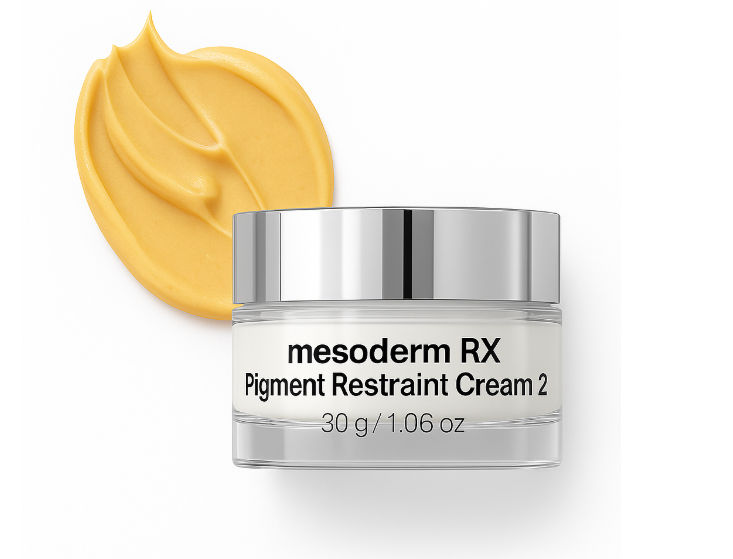
Featured Product
Pigment Restraint Cream
Visibly fade the look of dark spots and uneven tone — no clinic visit required. A brightening cream made to target the look of stubborn discoloration, whether it’s from post-blemish marks, sun exposure, or dullness that years of serums haven’t improved.
Shop Now →How Tretinoin Rewires Your Skin Cells
Tretinoin works because it's already in the biologically active form of vitamin A. Skin doesn't need to convert it first. Once applied, it binds to retinoic acid receptors inside cells and changes gene expression. That sounds abstract, but clinically it means the skin starts following a different set of instructions.

What changes first
The earliest change is usually faster keratinocyte turnover. Old cells move up and shed more quickly. That's why peeling happens. It's also why acne can appear to worsen at first. Microcomedones that were developing beneath the surface get pushed through the cycle faster.
Tretinoin also normalizes desquamation, meaning dead cells don't cling together as stubbornly inside the pore. That matters in acne because comedones don't form just from oil. They form when sticky keratin buildup and sebum get trapped together.
What changes later
Its anti-aging effects take longer because those depend on structural remodeling, not just surface shedding. In anti-aging use, tretinoin upregulates collagen synthesis by 80% over 10 to 12 months and increases epidermal thickness by 20 to 30% through receptor-mediated fibroblast activation, according to Dear Brightly's review of tretinoin before-and-after data. That's the deeper reason skin can look firmer and finer lines soften with sustained use.
Pigment behaves differently too. Tretinoin doesn't bleach the skin. It improves pigment distribution and turnover. The same source notes that it can disperse melanosomes and suppress melanocyte activity, with solar lentigines in UV-damaged skin resolving by 60 to 80% after 4 to 6 months. That's why it can help uneven tone, but the diagnosis matters. Melasma, sun spots, and post-inflammatory hyperpigmentation are not interchangeable, and they don't respond on the same timeline.
| Biological target | What tretinoin changes | What you notice |
|---|---|---|
| Keratinocyte turnover | Speeds cell renewal | Flaking, then smoother texture |
| Pore lining | Normalizes shedding | Fewer clogs over time |
| Fibroblasts and collagen signaling | Increases structural support | Firmer feel, softer fine lines |
| Melanosome handling | Improves pigment distribution | More even tone with time |
Think of tretinoin as a strict cellular supervisor. It doesn't "moisturize" skin into looking better. It pushes skin cells to behave more like well-regulated skin.
The Tretinoin Timeline What Happens and When
The timeline matters because the wrong expectation is one of the main reasons patients stop too soon. Tretinoin doesn't reward impatience. It rewards consistency and restraint.

A useful benchmark comes from a 24-week tretinoin 0.025% clinical discussion, which reported significant improvements in fine lines. That same review notes that weeks 1 to 6 often involve retinoid reactions such as purging, while 8 to 12 weeks is when smoother texture and fewer breakouts typically begin to show. It also cites a 10-month study in which 83% of users saw a reduction in age spots.
Weeks 1 to 4
This is the adjustment period. Skin often feels tighter than usual, and people mistake that tightness for cleanliness. It isn't. It's a sign the barrier is under stress.
Common early patterns include:
- Dryness and stinging after cleansing or moisturizer
- Visible flaking around the nose, mouth, and chin
- Purging in usual acne-prone areas as clogs surface faster
- More reactivity when you use scrubs, acids, or fragranced products
The mistake here is trying to "help" tretinoin by adding more actives. That usually makes the barrier worse and slows adherence.
Weeks 5 to 12
This phase is the turning point if the routine has been controlled well. Inflammatory lesions often start settling, and the skin surface feels less coarse. The face may still look inconsistent from day to day, but the trend should improve rather than spiral.
For patients treating discoloration, expectations often fail. Pigment doesn't vanish because a breakout calmed down. It clears on a separate timetable. If your concern is post-acne marks or persistent uneven tone, this guide on how long hyperpigmentation takes to fade is useful because it frames fading as a process, not a single event.
A practical visual check helps. Compare standardized photos taken in the same light, same distance, same angle. Daily mirror checks are too emotional and too variable.
Later in the course, this video gives a helpful patient-facing look at the progression:
Months 3 to 6 and beyond
True before-and-after changes become evident. Texture is usually more consistent. Tone looks more even. Fine lines may start looking softer because the skin is functioning better both at the surface and below it.
For anti-aging patients, this is also where many finally understand why tretinoin is treated differently from cosmetic retinol. The benefit isn't just exfoliation. It's cumulative structural change.
Why Most Tretinoin Journeys Fail Before the 'After'
Failure usually isn't mysterious. It's mechanical.
People use too much. They apply it too often too soon. They confuse irritation with progress. They keep changing products because they want faster results, then they can't tell what's helping and what's damaging the barrier.
The common failure pattern
Here's the sequence I see most often:
-
Starting with intensity instead of tolerance
A strong start feels efficient, but skin rarely interprets it that way. It reads as injury. -
Applying to damp skin
That increases penetration and often turns a manageable retinoid into an unnecessarily irritating one. -
Treating every rough patch with exfoliation
Peeling from tretinoin is not a signal to scrub harder. -
Skipping sunscreen while chasing pigment improvement
This is the contradiction that undoes months of effort.
What doesn't work
Patients often assume the answer to slow progress is more product. It usually isn't. Tretinoin success depends less on heroic dosing and more on repeatable use without barrier collapse.
A few approaches routinely backfire:
- Using nightly from day one when your skin is already reactive
- Stacking benzoyl peroxide, strong acids, and tretinoin without a clear plan
- Using foaming or stripping cleansers that leave skin squeaky and vulnerable
- Abandoning the routine during a purge before the meaningful phase begins
If your skin burns every time you apply moisturizer, that isn't "the tretinoin working better." That's your barrier asking for a slower plan.
The pigment trap
People with dark spots often make one additional mistake. They focus only on fading pigment and ignore the inflammation that keeps creating new marks. If acne, friction, or over-exfoliation continues, the skin keeps generating fresh discoloration while you're trying to erase the old.
That is why tretinoin must be paired with disciplined irritation control and UV management. Without that support, the "after" photo remains permanently out of reach.
The Clinical Protocol for Tretinoin Success
Tretinoin should be used like a treatment plan, not like an experiment. The strongest routine is rarely the one with the most products. It's the one that keeps skin functional long enough for the retinoid to do its job.

Tretinoin has been FDA-approved for acne since 1971, and a modern 12-week trial found significant improvement in 25.5% of tretinoin users versus 13.0% with vehicle, while anti-aging analyses have reported collagen increases of up to 80% over 10 to 12 months of consistent nightly use, as summarized by Simple Skincare Science's review of tretinoin evidence. The point is not that everyone should apply nightly from the start. The point is that consistency over time matters more than aggression up front.
Application rules that prevent needless irritation
Use these in order:
- Start on dry skin. Cleanse, then wait until the face is fully dry before application.
- Use a pea-sized amount for the entire face. More doesn't speed results. It usually spreads irritation.
- Avoid the high-risk zones at first. Corners of the nose, corners of the mouth, and the immediate eye area are common trouble spots.
- Buffer if you're sensitive. A moisturizer before tretinoin, or a moisturizer-tretinoin-moisturizer sandwich, can reduce friction without abandoning treatment.
Practical rule: The best dose is the highest dose your skin can tolerate consistently, not the highest dose you can survive for one week.
What to pair with it
A supportive routine should include three categories.
| Category | Why it matters | What to look for |
|---|---|---|
| Gentle cleanser | Reduces barrier disruption before tretinoin | Low-residue, non-stripping texture |
| Barrier-support moisturizer | Helps offset dryness and stinging | Humectants plus emollient support |
| Broad-spectrum sunscreen | Limits UV-triggered inflammation and pigment recurrence | Daily wearability, reliable coverage |
If acne is part of the picture, it helps to understand where tretinoin fits within broader dermatologic care. livaclean's guide to acne dermatology gives a useful overview of how clinicians think about acne patterns, treatment selection, and escalation.
For readers comparing formulations and access points, this breakdown of tretinoin cream and Obagi considerations is a practical companion.
What to avoid on the same night
Keep the "tretinoin night" simple. Don't turn it into a full resurfacing session.
Avoid combining it casually with:
- Strong exfoliating acids
- Physical scrubs
- Alcohol-heavy toners
- Any product that already makes your skin sting
Building Your Supportive Skincare Routine
A good tretinoin routine has two jobs. It must protect the barrier in the short term and support visible change in the long term. That means morning and evening shouldn't look the same.
Morning routine
The morning routine is about defense, not treatment intensity.
-
Cleanse lightly if needed
If your skin isn't oily in the morning, a water rinse may be enough. Over-cleansing worsens the cumulative dryness many tretinoin users fight. -
Apply hydration and barrier support
Choose a simple hydrating layer if your skin feels tight. The goal is comfort and function, not piling on actives. - Finish with broad-spectrum sunscreen every day This is essential. If you're treating dark spots, this step is as important as the prescription itself. A dedicated guide to non-comedogenic face sunscreen options is worth reading if you struggle with breakouts or heavy textures.
Evening routine on tretinoin nights
This should be boring on purpose.
- Cleanse gently
- Wait until skin is dry
- Apply moisturizer first if you know you're reactive
- Use a pea-sized amount of tretinoin
- Seal with moisturizer if needed
The skin often responds better to a restrained, repeatable night routine than to a "results-driven" one loaded with extras.
Evening routine on recovery nights
Recovery nights are where many successful patients separate themselves from the people who quit.
Use these nights to:
- Rebuild comfort
- Reduce cumulative irritation
- Maintain adherence
That may mean a bland moisturizer only. In some routines, a very carefully chosen exfoliant can be used away from tretinoin nights, but only if the barrier is stable and the indication is clear. If your skin is already burning, peeling, or inflamed, recovery night should focus on repair, not resurfacing.
For readers documenting progress with photos, especially if makeup is part of how you conceal redness or flaking during the transition, this guide to camera-ready makeup techniques is a practical resource for getting more consistent images.
Recovery is part of treatment. If your routine has no recovery strategy, the retinoid eventually dictates the terms.
Beyond Six Months Sustaining Your Tretinoin Results
Most articles stop once the skin looks better. That misses the more interesting question. How do you keep the gains without living in a constant state of irritation?

Long-term use often shifts from active correction to maintenance. Emerging strategies summarized in a long-term tretinoin maintenance review suggest that after a daily regimen establishes results, switching to weekly or bi-weekly use can maintain 70 to 80% of benefits while reducing side effects by up to 50%. That same review notes this is especially relevant for sensitive skin because dryness and peeling can affect 40% of long-term users.
What maintenance actually means
Maintenance is not quitting. It's controlled frequency.
For some, that means:
- Reducing application frequency once results are stable
- Keeping sunscreen constant
- Continuing barrier support even when the skin looks good
- Resisting the urge to replace tretinoin with weaker over-the-counter products just because the hard part is over
Retinol and other cosmetic retinoids have a place, but they don't occupy the same category. Tretinoin remains the benchmark because it delivers direct retinoic acid activity. That power is why it requires a better protocol, not why it should be used carelessly.
If your tretinoin cream before and after journey has taught you anything, it should be this: results came from the system, not from the tube alone.
If you want a routine that supports prescription-strength results without unnecessary additives, Mesoderm RX offers a focused approach built around brightening, smoothing, barrier support, and daily protection. Their California-born, U.S.-made formulas follow a "More Actives, Less Additives" philosophy, with vegan, cruelty-free products designed for concerns like dark spots, uneven tone, dryness, and visible aging.