


Sun Spots Cream: Clinical Guide to Fading Hyperpigmentation
The most popular advice on sun spots is also the least useful. People are told to find one “dark spot corrector,” apply it for a few nights, and wait for old pigmentation to disappear. That's not how solar lentigines, the true sun spots commonly referred to, behave.
A sun spots cream can help. It can visibly improve pigment. But it can't win against daily UV exposure, poor ingredient selection, barrier damage, and inconsistent use. In practice, that's why so many people say they've “tried everything” when they've really tried disconnected steps that work against each other.
Pigment correction only makes sense when the diagnosis is correct and the routine matches the biology. If you need a broader primer on pigment disorders first, this overview of what hyperpigmentation is, what causes it, and how to treat it effectively is worth reading before you buy another product.
The Reality of Treating Sun Spots
A sun spots cream is not a magic eraser for years of photoaging. It is one tool in a pigment-control system.
That distinction matters because many dark marks are casually grouped together even though they don't behave the same way. A flat brown spot that developed gradually on chronically sun-exposed skin is usually treated differently from hormonally driven melasma or from post-acne discoloration. If you misidentify the problem, you'll judge the product unfairly.
What these creams are actually treating
The term 'sun spots cream' generally refers to treatment for solar lentigines. These are localized pigment deposits tied to cumulative ultraviolet exposure. They are not the same as diffuse patchy discoloration. They are also not the same as the lingering marks left after inflammation.
A good topical formula can reduce visible intensity, soften contrast, and improve overall tone uniformity. It usually cannot behave like an instant reset button.
Clinical reality: Old UV damage fades slowly because the skin has to suppress new pigment formation while also clearing pigment that is already visible.
What works and what doesn't
What doesn't work is relying on one corrective product at night while letting the same trigger continue every morning.
What does work is a coordinated approach:
- Correct pigment formation: Use actives that interrupt melanin signaling or transfer.
- Increase removal of pigmented cells: Use controlled exfoliation or turnover support.
- Prevent recurrence: Use daily broad-spectrum protection so the treatment isn't fighting new stimulation every day.
That's the entire game. If even one part is missing, progress slows or stalls.
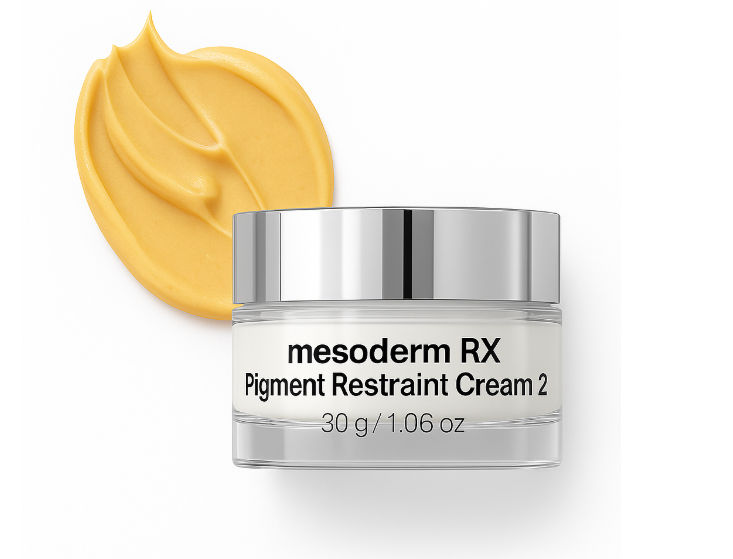
Featured Product
Pigment Restraint Cream
Visibly fade the look of dark spots and uneven tone — no clinic visit required. A brightening cream made to target the look of stubborn discoloration, whether it’s from post-blemish marks, sun exposure, or dullness that years of serums haven’t improved.
Shop Now →The Biological Blueprint of a Sun Spot
A sun spot is the visible output of a pigment system that has been repeatedly overstimulated by ultraviolet light. If you want to choose the right sun spots cream, you need to understand that system, not just memorize ingredient names.

The melanin factory model
Think of pigmentation as a factory.
Melanocytes are the workers. They manufacture melanin, the pigment that helps defend skin from radiation. Tyrosinase acts like a production manager because it helps drive the chemical steps that make pigment. The finished pigment is packaged into melanosomes and transferred into surrounding skin cells, where it becomes visible at the surface.
In healthy skin, this process is regulated. Under chronic UV exposure, the signal stays turned up. The workers keep producing. The transfer keeps happening. Over time, pigment becomes unevenly concentrated in specific areas, and that's when a sun spot becomes visible.
Why UV creates persistent marks
Sun exposure doesn't just darken skin temporarily. It repeatedly tells melanocytes that protection is needed, so the skin keeps making more pigment. In a solar lentigo, that message has effectively been reinforced in the same zone over and over.
This is why pigment correction takes time. A topical has to do more than brighten the surface. It has to reduce ongoing melanocyte activity, limit transfer, and support clearance of pigmented cells that are already there.
For a clearer visual distinction between common pigment problems, this guide to types of dark spots on the face is useful.
Sun spots versus melasma versus PIH
These are not interchangeable.
| Condition | Typical pattern | Main driver | Topical response |
|---|---|---|---|
| Solar lentigines | Discrete brown spots on sun-exposed areas | Cumulative UV exposure | Often responds to long-term brightening plus strict photoprotection |
| Melasma | Symmetric patches, often on cheeks, forehead, upper lip | Hormonal influence plus light exposure | More relapse-prone and usually needs a stricter maintenance strategy |
| Post-inflammatory hyperpigmentation | Marks left after acne, rash, injury, or irritation | Inflammation | Improves when inflammation is controlled and turnover is managed |
A wrong diagnosis is one of the fastest ways to waste months on the wrong formula.
Why Most At-Home Pigment Treatments Fail
People usually don't fail because they're careless. They fail because the routine is biologically incomplete.
The most common mistake is treating pigmentation like a stain. It isn't. It's an active cellular process. If the trigger stays present, the skin keeps making more pigment while the cream tries to reduce what's already there.

The one-way street problem
A person applies a pigment serum every night, then skips meaningful UV protection the next day. That creates a one-way street in the wrong direction. The treatment tries to push pigment down. Daytime exposure pushes melanogenesis back up.
Independent skincare guidance states that daily broad-spectrum SPF is a critical step because ongoing UV exposure continues to stimulate melanogenesis even while a cream is trying to fade existing pigment. Without protection, brightening can plateau or reverse as new pigment forms, as outlined in this explanation of sun spots and dark spot care.
Weak formulas and scattered routines
Some products contain fashionable actives in a token amount, or they include too many irritating steps at once. That creates two separate problems.
First, a low-impact formula won't meaningfully affect pigment biology. Second, an overaggressive routine can inflame skin, and inflammation itself can worsen discoloration in some people.
A sunscreen step also has to be more than symbolic. One option in that slot is Pigment Restraint Ultra High Sun Protection, a fast-absorbing, non-greasy formula described by the brand as providing protection against UVA, UVB, IR, and HEV-combination rays. In a pigment routine, that kind of daily defense is functional, not cosmetic.
Impatience usually ends the routine too early
Pigment doesn't clear on the timeline of marketing claims. It clears on the timeline of skin biology. Even when a product is well-designed, visible change builds gradually.
Most at-home attempts fail because of some combination of these:
- No UV control: The original trigger remains active.
- No mechanism overlap: The product targets only one narrow step in a multi-step process.
- Too much irritation: Barrier disruption creates new inflammation.
- Inconsistent use: Application stops before cumulative change becomes obvious.
If your routine creates new pigment by day and chases it by night, the cream isn't the problem. The system is.
Clinically Proven Actives for Pigment Correction
A credible sun spots cream doesn't rely on a single ingredient story. It works by attacking pigment from multiple directions.

The most useful way to read a formula is to ask one question. Which part of the pigment pathway does this ingredient affect?
Actives that calm pigment production
These ingredients work upstream. They try to reduce how much pigment the melanocyte factory produces in the first place.
Tranexamic acid is relevant because it helps interrupt pigment-triggering pathways. Azelaic acid is often used when you want pigment support with a more inflammation-aware profile. Kojic acid is widely used in brightening formulas because it targets melanin formation.
Many good pigment products earn their value. They don't wait for dark cells to shed naturally. They try to lower production at the source.
Actives that reduce transfer and support resilience
Pigment has to be produced, packaged, transferred, and displayed. You can intervene in transfer too.
Niacinamide matters because it supports barrier function while helping reduce visible discoloration. A stronger barrier usually means less unnecessary irritation, and less irritation means fewer inflammatory signals that can complicate treatment.
Vitamin C and similar antioxidant brighteners are useful because UV-triggered pigmentation doesn't happen in isolation. Oxidative stress and inflammation shape the environment around melanocytes. Antioxidant support helps make that environment less permissive.
For readers comparing ingredient approaches across brands, Finding Favourites' detailed guide on hyperpigmentation is a practical reference.
A short demonstration helps clarify how these categories fit together:
Actives that accelerate removal of visible pigment
Even if you suppress production, existing pigment still has to move out through epidermal turnover. That's where exfoliants and retinoid-style resurfacers come in.
Glycolic acid is especially useful because it accelerates exfoliation and helps move pigmented surface cells off the skin more efficiently. Other acids can serve similar roles depending on skin tolerance and formula design. The point is not to peel aggressively. The point is to create controlled turnover without triggering irritation.
A practical example of this category is AHA + BHA + PHA Skin Brightening Serum 30ml, which the brand describes as containing kojic acid, glycolic acid, lactic acid, salicylic acid, lactobionic acid, hyaluronic acid, and hexapeptides in a daily treatment designed to reduce the appearance of dark spots and improve tone and texture.
Why multi-active formulas outperform one-note products
Clinical and consumer-oriented evidence points in the same direction. Multi-active spot treatments work by targeting different steps in hyperpigmentation biology simultaneously. Tranexamic acid interrupts pigment triggers, niacinamide supports the barrier while reducing discoloration, and glycolic acid accelerates exfoliation. This combination approach has been reported to improve age spots in as little as two weeks, with another lab evaluation finding a 4.5% reduction in visible dark spots over four weeks, as described in this review of dark-spot treatment actives and outcomes.
That doesn't mean every multi-acid or multi-brightener formula is automatically effective. It means a good formula respects the pathway. It lowers production, interferes with transfer, and helps remove pigmented cells already sitting in the upper skin.
The strongest ingredient list on paper still fails if the formula irritates your skin enough to keep inflammation active.
How to Build an Effective Sun Spot Fading System
A sun spots cream should sit inside a routine that does four jobs in the right order: cleanse, treat, moisturize, protect.
That's the difference between random skincare and a pigment strategy.
The order that makes treatment work
Cleanse with a non-stripping formula. You want actives reaching the skin evenly, not fighting through residue, oil, or sunscreen film.
Treat on clean, dry skin. Use a dedicated pigment-correcting cream or serum. Apply a thin layer to the affected areas or, if the pattern is broader, use it over the full face as directed.

Moisturize if your treatment doesn't already provide enough barrier support. This reduces the chance that irritation will become part of the problem.
Protect every morning. This isn't the final optional step. It is the condition that determines whether the rest of the routine has any long-term value.
Why protection is the non-negotiable part
The Skin Cancer Foundation cites research showing that people who use sunscreen with SPF 15 or higher every day show 24% less skin aging than people who do not use sunscreen daily, and daily use of SPF 15+ reduces melanoma risk by 50%. The same source notes that more than 90% of nonmelanoma skin cancers are associated with UV exposure and that more than 9,500 people in the U.S. are diagnosed with skin cancer every day, which is why visible sun spots should be treated as evidence of cumulative UV injury, not a surface-only issue, according to the Skin Cancer Foundation's skin cancer facts.
This is why a fading system has to be prevention-first even when the goal is cosmetic improvement.
What a practical weekly rhythm looks like
You don't need an elaborate twelve-step routine. You need repeatable discipline.
- Morning: Cleanse if needed, moisturize if needed, then broad-spectrum sun protection.
- Evening: Cleanse, apply your pigment treatment, then add moisturizer if your skin needs buffering.
- Adjustment rule: If the skin becomes stinging, tight, or inflamed, reduce frequency before you increase strength.
For readers who want another clinician-style framework, this hyperpigmentation treatment plan offers a useful comparison.
If you're deciding where a dedicated treatment cream belongs, the answer is simple. It belongs in the treat step, not as a stand-alone solution. For a broader discussion of routines that address discoloration, this guide on how to get rid of dark spots is a good companion read.
Frequently Asked Questions on Hyperpigmentation
How long does a sun spots cream really take to work
Faster than people fear, slower than marketing suggests.
In a 12-week study of a pigment-correcting topical, researchers found significant reductions in hyperpigmentation and improvements in tone evenness beginning at Week 2 and continuing through Week 12, including in participants with solar lentigines and post-inflammatory hyperpigmentation. The reported change reached statistical significance with p ≤ 0.018, as shown in the published 12-week clinical study on topical hyperpigmentation treatment.
That supports a practical expectation. Some people see early visible change within a couple of weeks, but more stable improvement is usually judged over months, not days.
Can sun spots come back after they fade
Yes. They can return if the trigger returns.
The American Academy of Dermatology states that creams and lotions can help fade age spots, but they require disciplined use over weeks or months, and age spots can return if sun protection isn't maintained. The same guidance notes that professional procedures such as laser therapy and chemical peels tend to work faster but can cost more and carry more side effects, as explained by the American Academy of Dermatology's guidance on getting rid of age spots.
A faded spot isn't proof that the skin has stopped wanting to make pigment there.
Are these ingredients safe for sensitive skin
Often yes, but formula design and pacing matter more than hype.
Sensitive skin usually does better with fragrance-free, lower-irritation routines introduced slowly. Patch testing helps. So does avoiding the common mistake of stacking acids, retinoids, and scrubs all at once because you want faster results. Barrier injury can undo the whole plan.
When should you stop experimenting and see a dermatologist
See a dermatologist when the diagnosis is unclear, when the pigmentation is changing in shape or color, when the mark is unusually stubborn, or when repeated irritation keeps interfering with treatment.
You should also escalate when the pattern looks more like melasma than a discrete sun spot, or when you've been consistent and the response remains limited. At that point, procedures or prescription-strength options may make more sense than adding yet another over-the-counter cream.
Mesoderm RX builds routines around the principle that pigment correction works best as a system, not a single promise. If you want hydroquinone-free, high-potency options designed to brighten, resurface, and support daily protection, explore the full range at Mesoderm RX.