


How to Get Rid of Dark Spots: A Clinical Plan
If you want to get rid of dark spots, stop chasing “brightening” as if it were a single product category. That advice fails people every day.
Dark spots are not dirt. They are not dead skin you can scrub off. They are not a sign that you need a harsher cleanser, a rougher exfoliator, or three acids layered in the same night. Hyperpigmentation is a pigment regulation problem. In many cases, it's also an inflammation problem, a sun exposure problem, or a hormone-driven problem. Until you identify which one you're dealing with, most routines are just expensive guessing.
The clinical mistake I see most often is simple. People treat every dark mark as if it were the same condition. It isn't. Acne marks, melasma, and age spots behave differently because they are driven by different triggers. That's why a system works better than a hero serum. You need a plan that reduces pigment formation, limits re-triggering, supports turnover, and protects every treated area from re-darkening.
Why Most Dark Spot Treatments Fail
Most dark spot treatments fail because they target the surface while the underlying problem is still active underneath.
Melanin is produced by melanocytes, and that process is heavily influenced by tyrosinase, inflammation, hormones, and ultraviolet exposure. If you only exfoliate the top layer, you may remove some visible pigment temporarily, but you haven't stopped the skin from making more. That's why the spot fades, stalls, or comes back.
A second reason is irritation. People who are frustrated often become aggressive. They scrub. They overuse acids. They combine retinoids, peels, spot correctors, and abrasive cleansing tools. Then the skin gets inflamed, and inflamed skin often makes more pigment. The treatment itself becomes part of the problem.
The common failures I see
- Scrubbing instead of regulating pigment: Physical exfoliation can smooth texture, but it doesn't shut down excess melanin production.
- Using one “miracle” ingredient in isolation: A single active can help, but dark spots usually respond better to a coordinated routine.
- Ignoring UV exposure: If you treat pigment at night and allow daily darkening in the morning, progress slows or stops.
- Applying face-only logic to body discoloration: Knees, elbows, underarms, inner thighs, and bikini line often need a different texture, tolerance profile, and use pattern.
Practical rule: If a routine causes repeated stinging, peeling, or redness, it may be undermining your pigment goals.
People also waste time on ineffective or risky shortcuts. Lemon juice, baking soda, harsh DIY masks, and random imported bleaching creams are not clinical solutions. They create irritation, barrier damage, and uneven outcomes. If you want a blunt review of what works and what doesn't, Mesoderm RX's guide to hyperpigmentation myths is worth reading.
The patients who get traction usually stop doing more and start doing the right things in the right order.
Diagnosing Your Dark Spots Correctly
Before treating pigment, define it correctly. “Dark spots” is a broad description, not a diagnosis.
The biology is straightforward. Melanin is the pigment that gives skin its color. Melanocytes make melanin. Tyrosinase helps drive that production. When the skin is exposed to triggers like ultraviolet light, inflammation, friction, or hormonal shifts, melanocytes can become overactive and deposit excess pigment in certain areas.
That creates visible discoloration, but the pattern matters. The treatment path for post-acne marks is not the same as the treatment path for melasma. If you miss that distinction, you'll often choose the wrong strength, the wrong active, or the wrong expectations.
The three patterns that matter most
Post-inflammatory hyperpigmentation, or PIH, appears after the skin has been injured or inflamed. Acne, picking, eczema, burns, rashes, and friction can all trigger it. PIH usually follows the shape of the original problem. If the inflammation was patchy, the pigment is patchy. If it came from acne, the marks sit where the acne sat.
Melasma tends to look more diffuse and symmetrical. It often shows up in broad patches rather than isolated dots. It commonly appears on the cheeks, forehead, upper lip, or jawline. This form is more reactive to light and heat, and it often relapses if the trigger remains active.
Solar lentigines, often called sun spots or age spots, are usually more discrete. They present as clearly defined flat brown spots on chronically sun-exposed skin. Face, chest, shoulders, forearms, and hands are common locations.
Hyperpigmentation type comparison
| Type | Typical Appearance | Primary Cause | Common Locations |
|---|---|---|---|
| Post-inflammatory hyperpigmentation | Flat marks left after acne, rash, injury, or irritation | Inflammation or trauma | Face, back, chest, body folds, any previously inflamed area |
| Melasma | Patchy, often symmetrical brown discoloration | Hormonal influence plus light exposure | Cheeks, forehead, upper lip, jawline |
| Solar lentigines | Distinct, well-defined dark spots | Chronic sun exposure | Face, chest, shoulders, forearms, hands |
Questions that sharpen the diagnosis
Ask yourself these before buying anything:
- Did the spot appear after inflammation? If yes, PIH moves higher on the list.
- Is the pattern symmetrical? Symmetry raises suspicion for melasma.
- Is it concentrated on high-sun areas? That pattern often points toward sun-related pigmentation.
- Does friction play a role? Inner thighs, underarms, knees, and elbows often darken from repeated rubbing and low-grade irritation.
Dark spots are easiest to treat when you stop calling them all the same thing.
One caution matters here. If a spot is changing rapidly, has irregular borders, bleeds, becomes raised, or looks unlike your other spots, that needs an in-person medical evaluation. Pigment management assumes a benign pigmentation problem. It should never replace skin cancer screening or lesion assessment.
Active Ingredients That Inhibit Pigment Production
Once you know what type of pigment you're dealing with, the next question is pharmacology. Which ingredients change the biology?
The most useful actives do one or more of four things. They reduce melanin production, interrupt pigment transfer, increase removal of pigmented cells, or reduce inflammation that keeps pigment active. Good formulations combine these roles instead of relying on one mechanism alone.
Why hydroquinone is no longer the only answer
Hydroquinone was the gold standard for over 50 years, largely because it inhibits tyrosinase, a key enzyme in melanin production. Over-the-counter versions contain 2% or less, while prescription formulations contain 4% or greater. But modern skincare has shifted toward alternative actives and combination systems. That shift reflects both consumer preference and newer formulations using ingredients such as kojic acid, arbutin, and vitamin C. A formula combining 2% kojic acid, 1% arbutin, and 5% vitamin C showed significant age spot reduction over 12 weeks with no adverse effects, according to Aerolase's dermatologist-reviewed summary.
The ingredients that do the real work
- Kojic acid: A tyrosinase inhibitor. Useful when the goal is to slow new pigment formation.
- Arbutin and alpha arbutin: Support pigment control through melanin-pathway inhibition.
- Vitamin C: Works as an antioxidant and helps defend against pigment triggered by environmental exposure.
- Niacinamide: Useful when inflammation and barrier weakness are part of the picture.
- AHAs, BHAs, and PHAs: These don't “bleach” spots. They improve cell turnover and help disperse pigmented surface cells more efficiently.

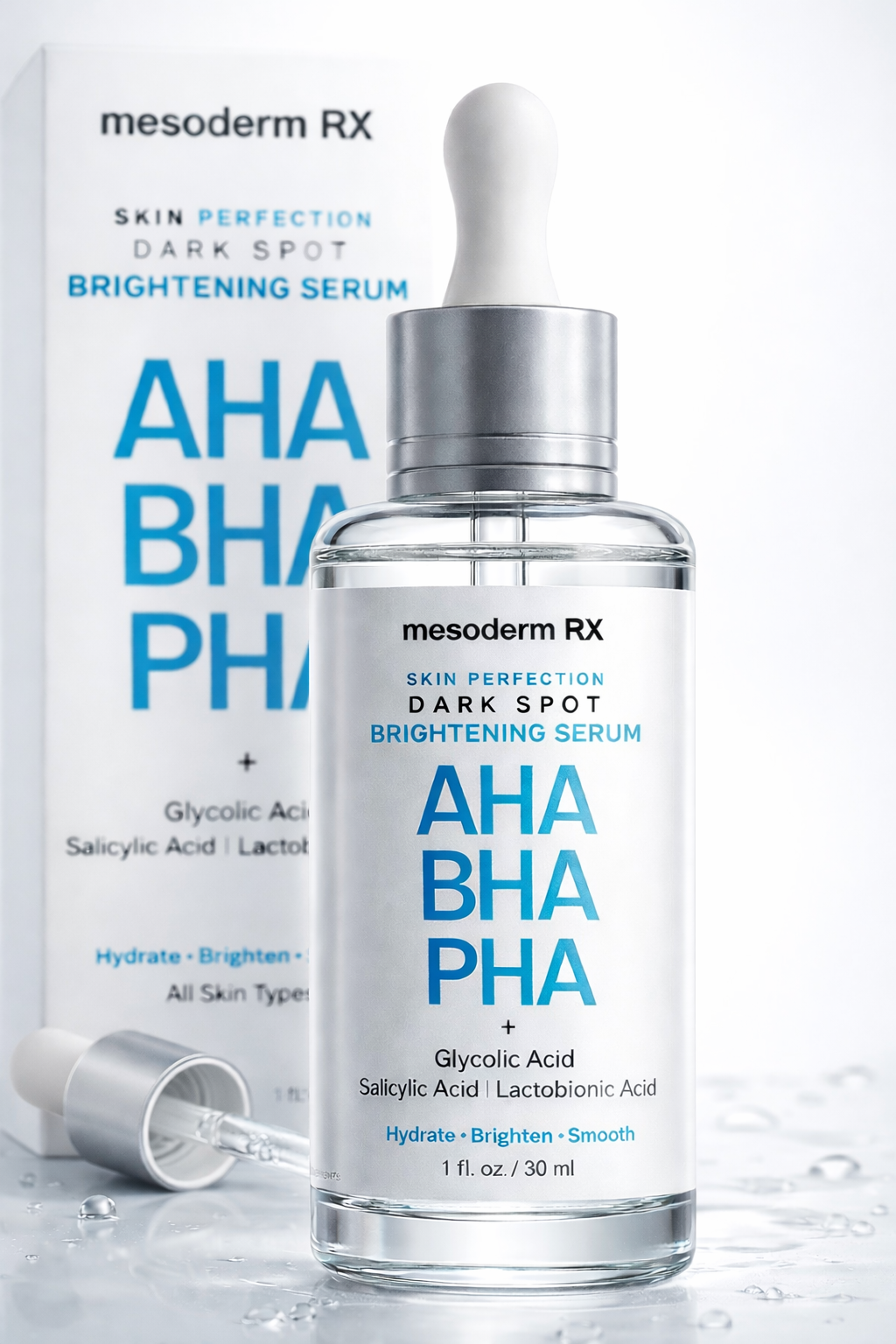
A multi-acid format can be practical when texture, pores, post-acne marks, and tone irregularity overlap. For example, AHA + BHA + PHA Skin Brightening Serum 30ml combines kojic acid, glycolic acid, lactic acid, salicylic acid, and lactobionic acid, along with hydrating and soothing components. That matters because the skin often tolerates pigment treatment better when exfoliation and barrier support are built into the same system.
Single actives help. Systems work better
People often ask whether they should choose vitamin C, niacinamide, kojic acid, or exfoliating acids. The better question is how those categories fit together.
A useful framework looks like this:
- Pigment suppression: kojic acid, arbutin
- Inflammation control and barrier support: niacinamide
- Oxidative defense: vitamin C
- Turnover support: AHAs, BHAs, PHAs
If you want a practical ingredient-by-ingredient breakdown before building your own routine, Mesoderm RX's guide to proven ingredients for hyperpigmentation is a solid reference. And if you're comparing lower-cost entry points to fade dark spots with The Ordinary products, this ingredient-focused overview from Finding Favourites is useful because it frames products by mechanism rather than hype.
Your Daily Protocol for Fading Dark Spots
Treatment succeeds when the routine is boring enough to repeat and precise enough to prevent setbacks.
Most people don't need more products. They need a protocol. The skin responds to repetition. If you want to get rid of dark spots, your daily work is simple: reduce triggers, apply the right actives in a tolerable sequence, maintain hydration, and protect every treated area from re-pigmentation.

Morning protocol
Step 1. Cleanse gently
Use a mild cleanser that removes oil, sweat, and residue without leaving the skin tight. A harsh cleanser doesn't brighten anything. It only makes the barrier less tolerant of treatment.
Step 2. Apply antioxidant and brightening support
Morning is where antioxidant support earns its place. If your skin tolerates it, a vitamin C-based serum can help support brightness and defend against environmental stress. For mature or dull skin, a formula such as Mesoderm RX Advanced Age-Defying Serum fits this slot because it includes vitamin C and barrier-supportive ingredients.
Step 3. Use a targeted pigment treatment if your skin tolerates daytime actives
Some people do well with a mild brightening serum in the morning. Others do better keeping stronger acids for night only. The right answer depends on your tolerance, your climate, and your discipline with sun protection.
Step 4. Seal with moisturizer if needed
Not everyone needs a heavy cream in the morning. But if treatment leaves the skin tight, a light moisturizer reduces the risk of irritation-driven rebound pigmentation.
Step 5. Sun protection is non-negotiable
If you skip this step, don't expect efficient fading. Daily broad-spectrum sunscreen belongs on the face, neck, chest, hands, and any body area you're actively treating.
The fastest way to lose progress is to treat pigment at night and re-stimulate it every day.
Evening protocol
Night is where most corrective work happens.
Start with thorough cleansing. If you wear sunscreen, makeup, or heavy skincare, remove it completely. Residue reduces contact between the active treatment and the skin.
Then choose one corrective lane. On some nights that's an exfoliating serum. On others it may be a retinoid if your clinician has advised one. Don't stack everything at once just because the labels say “brightening.”
Here's the practical sequence I recommend:
- Cleanse completely
- Apply one core corrective treatment
- Wait briefly if needed
- Finish with hydration
A short visual guide helps many patients stay consistent:
How to avoid common routine errors
- Don't rotate randomly: Constant product switching makes it hard to judge tolerance or progress.
- Don't treat irritation as proof a product is working: Pigment treatment should be active, not destructive.
- Don't overload the jawline, corners of the nose, neck folds, or intimate skin with face-level intensity: These areas often react sooner.
- Don't escalate because you're impatient: Stronger is only better when the skin can sustain it.
For readers considering clinic-level options in parallel with home care, professional chemical peel options from ProMD Health Bethesda can give useful context on how in-office resurfacing compares with a topical routine.
Managing Pigmentation on the Body and Intimate Areas
A face-only plan leaves a lot of people undertreated.
Dark spots on the body often come from a different mix of triggers than facial pigmentation. Friction, shaving, occlusion, sweat, inflammation, hormonal changes, and repeated low-grade irritation all matter more on the body. That's why underarms, inner thighs, knees, elbows, bikini line, and around the hairline can darken even in people who take excellent care of their face.
Consumer demand has grown for multi-area brightening and intimate brightening solutions, yet many educational guides still focus mostly on facial discoloration. That leaves a real gap in treatment planning, especially for people who want a coherent hydroquinone-free routine across multiple zones, as noted in Women's Health's discussion of dark spot care trends.

Body skin is not facial skin
The trunk, arms, legs, and intimate zones differ in thickness, friction exposure, and tolerance. That changes product selection.
- Larger body areas: Usually do better with lotion textures that spread evenly and can be used consistently.
- High-friction zones: Need pigment support plus reduction of rubbing, heat, and repetitive irritation.
- Sensitive intimate areas: Need more caution, fewer irritants, and lower risk of barrier disruption.
The clinical rule for multi-zone care
Use one logic across the body, but not one intensity.
That means:
- treat the cause where possible,
- avoid fragrance and unnecessary irritants in reactive areas,
- use broad sun protection on exposed body zones,
- choose formulas appropriate to the site being treated.
If discoloration affects intimate or highly sensitive areas, Mesoderm RX's article on hyperpigmentation in intimate zones is a helpful read because it addresses application logic specific to those areas rather than pretending face products belong everywhere.
This is also where product form matters more than trend ingredients. A body lotion for knees and elbows is not automatically suitable for the bikini line. Clinical judgment starts with location.
When to Expect Results and See a Dermatologist
Individuals often quit too early or escalate too fast.
Pigment improves on a delayed timeline because the skin has to stop producing excess melanin, then gradually move existing pigment upward and out. A routine may be well designed and still look unchanged for a while. That lag is normal. Visible change usually depends on consistency, trigger control, and whether the diagnosis was correct in the first place.
What realistic progress looks like
Expect a gradual response, not overnight clearing.
A useful way to judge progress is to watch for:
- the edges of a spot looking softer,
- old acne marks appearing less dense,
- fewer new marks forming after breakouts,
- more uniform tone across the treated zone.
For anyone with sensitive skin, the first month should focus on tolerance as much as intensity. Patch test. Introduce stronger actives gradually. If a routine produces persistent burning, swelling, or eczema-like irritation, pause and simplify.
Treating dark spots is a long game. The skin has to cooperate before it can brighten.
When home care isn't enough
Topical care is the foundation. It is not the ceiling.
According to the American Academy of Dermatology's guidance on age spots and treatment options, microdermabrasion led to complete clearance in about 40% of patients, and that increased to 50% when combined with a chemical peel. The same guidance notes that procedural treatments can deliver faster, more dramatic results than topicals, although they come with more cost and a greater side effect burden.
That matters in a few situations:
- Spots are stubborn and well established
- Pigment is widespread
- You need faster correction
- Topicals have plateaued
- The diagnosis is uncertain
Laser therapy can also be highly effective, but not every device is appropriate for every skin tone. Provider selection matters. Settings matter. If a clinic treats darker complexions casually, that's a warning sign.
For readers considering fractional resurfacing, Fraxel laser aftercare guidance from ProMD Health Ashburn Med Spa gives a practical sense of downtime and recovery expectations after treatment.
When to book an in-person evaluation
See a dermatologist if:
- The pigment keeps returning quickly
- The pattern suggests melasma and keeps flaring
- The spot changes in shape, border, or behavior
- Your skin reacts badly to multiple reasonable routines
- You want prescription treatment or procedures
The right sequence is straightforward. Use a stable topical system first. Escalate to in-office care when needed. Keep maintenance in place afterward so the skin doesn't drift back to the same problem.
If you want a hydroquinone-free, system-based approach to get rid of dark spots across the face and body, Mesoderm RX offers routines built around active ingredients, low-irritant formulation choices, and daily-use protocols that are easier to sustain than a cabinet full of mismatched products.