


Skin Tightening Cream for Neck: A Clinical Guide
Most advice about a skin tightening cream for neck is wrong at the starting point. It treats the neck like an extension of the face, then wonders why the results stall at “slightly moisturized.”
The neck ages by a different set of rules. Its skin is structurally more vulnerable, it dries out faster, it folds repeatedly with daily movement, and it’s often exposed to sun without the same protection people give their face. If you want real firming, you have to choose actives based on mechanism, not branding, fragrance, or a jar that promises “lifting.”
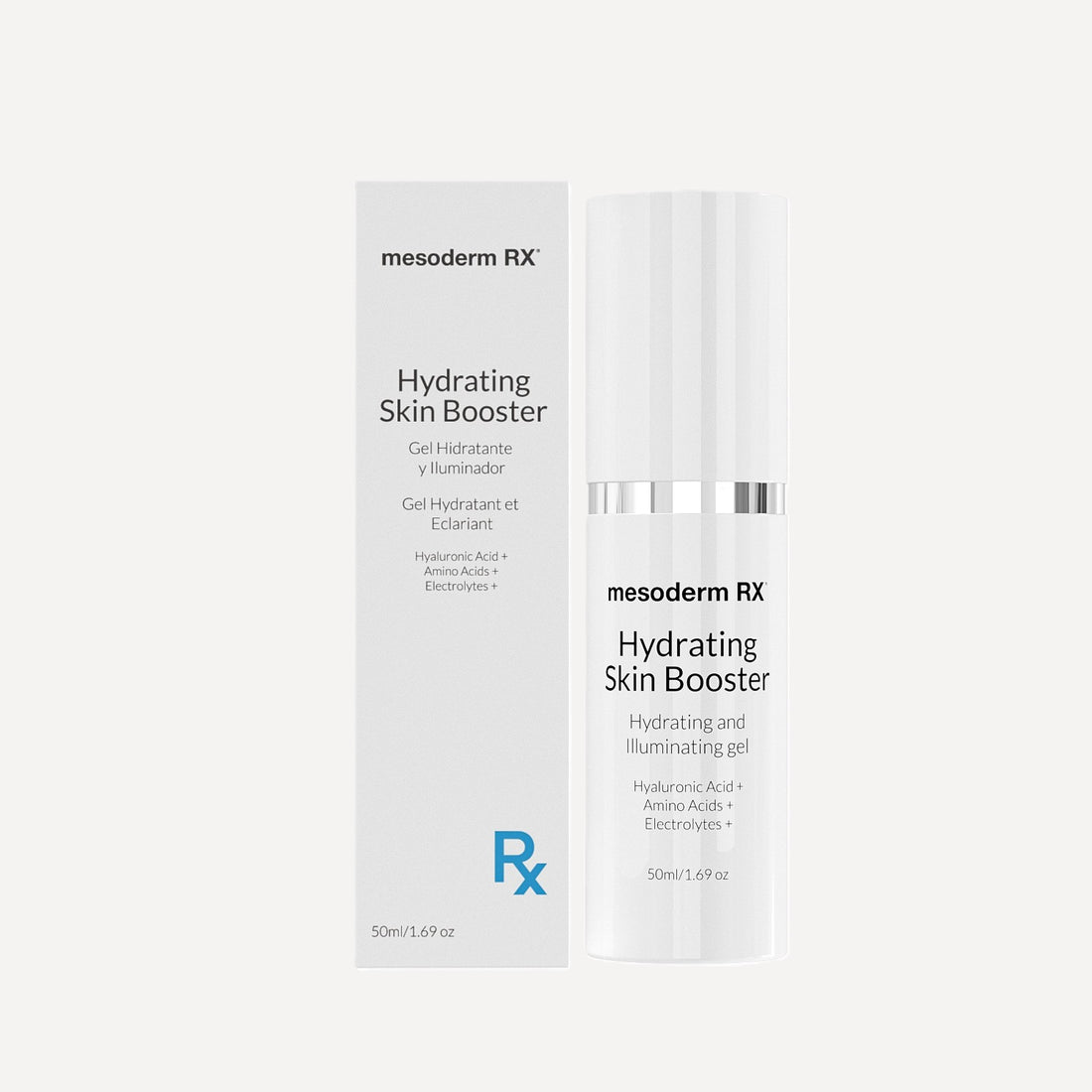
Featured Product
Hydrating Skin Booster Tightening | Firming & Deep Hydration
Deeply hydrates while helping improve skin firmness and elasticity. Leaves your skin feeling smoother, plumper, and visibly refreshed.
Shop Now →A useful neck product does one of two things. It either creates a short-lived cosmetic tightening effect on the surface, or it pushes the skin to rebuild support in the epidermis and dermis over time. The best formulas do both, while respecting that the neck is also one of the easiest places to irritate.
The Unique Biology of Neck Skin Aging
Neck skin isn't facial skin in a different location. It behaves differently, and that difference matters when you're evaluating a skin tightening cream for neck.
The neck has less margin for error. It tends to be thinner, more dryness-prone, and less forgiving of irritation. When the barrier is weak, the skin looks dull, crepey, and folded long before deeper laxity becomes obvious.

Why the neck shows age faster
Three processes usually overlap:
- Barrier weakness: The neck often produces less of the protective surface lipids that help skin stay supple. That means water escapes faster, and fine dehydration lines show up early.
- Structural decline: Collagen and elastin give skin tensile strength and recoil. When those fibers thin, fragment, or remodel poorly, the neck starts to look loose rather than merely dry.
- Mechanical folding: The neck bends constantly. Every downward glance creates repeated compression lines across the same horizontal zones.
People often blame gravity alone. Gravity matters, but it isn't the whole story. Repeated flexion plus chronic dryness plus environmental damage is the more accurate model.
The neck doesn't age as a mini-face. It ages as a high-movement, low-resilience, often neglected skin site.
Tech neck is a real aggravator
A newer layer is tech neck, and most products still ignore it. Some data suggests tech neck can accelerate visible sagging by 20 to 30% in adults aged 30 to 50, and device usage rose 15% since 2024, while few brands explicitly connect neck formulas with robust UV and blue light protection strategies, as noted in Good Housekeeping's discussion of neck-firming products and tech neck trends.
That doesn't mean your phone is single-handedly aging your neck. It means prolonged downward posture repeatedly reinforces the exact lines and skin folding patterns that later become harder to soften.
What this means in practice
A neck strategy has to address more than “dry skin.” It needs to support:
| Problem | Biological issue | What helps |
|---|---|---|
| Crepiness | Barrier disruption and low water retention | Ceramides, humectants, low-irritation moisturizers |
| Horizontal lines | Repeated folding plus collagen decline | Retinoids, peptides, disciplined sun protection |
| Mild laxity | Weak dermal matrix and reduced recoil | Collagen-supporting actives, long-term consistency |
| Irritation from treatment | Neck skin tolerates less than the face | Minimal-additive formulas, slower escalation |
If you miss that biology, you buy texture and scent. Not treatment.
Why Most Neck Creams Are Ineffective
Most neck creams fail for a simple reason. They moisturize a structural problem and market the slip as “firming.”
Hydration matters. A well-moisturized neck can look smoother within hours because water swells the upper layers of the epidermis and reduces the appearance of superficial lines. But a softer-looking surface isn't the same as stronger tissue.
The formula problems hiding in plain sight
A lot of mass-market products rely on one of these shortcuts:
- Temporary film formers: These ingredients can create a quick tightening sensation. The skin feels taut, but the effect washes off.
- Low-commitment actives: An ingredient may appear on the label for marketing value while contributing very little biological change.
- Heavy fragrance systems: These make the product feel premium while increasing the chance that the neck reacts badly over time.
- Face-cream logic: Many people move their facial moisturizer down to the neck and expect equal performance, even though the neck often needs a different balance of potency and tolerability.
A neck cream also fails when it tries to do too much cosmetically and too little biologically. Rich texture, silicone glide, and instant smoothness are not useless. They're just not enough.
What doesn't reliably tighten skin
If your only “active” effect is moisturization, you should expect comfort, not remodeling. If the formula depends on botanical blur language without a clear mechanism, the odds of meaningful firming drop further.
What usually disappoints consumers is the mismatch between claim and mechanism:
| Claim style | What it often really means | Likely outcome |
|---|---|---|
| “Visible lift” | Surface film or reflected light blur | Short-lived cosmetic effect |
| “Nourishes aging skin” | Emollients with no remodeling signal | Better softness, little tightening |
| “For face and neck” | General moisturizer repurposed broadly | May hydrate, may irritate, often underpowered |
| “Retinol-inspired” or similar soft phrasing | Suggestive marketing without strong retinoid action | Minimal change |
Practical rule: If a formula can't plausibly improve collagen signaling, elastin support, barrier integrity, or daily photoprotection, it isn't a real neck-firming program.
The tolerance problem is also a performance problem
Another issue is irritation. Consumers often assume that stronger is better and start using aggressive retinoids or exfoliants on the neck the same way they use them on the face. Then the neck becomes red, itchy, dry, and more visibly lined.
That reaction doesn't mean active treatment never works. It means the product was mismatched to the site. A useful skin tightening cream for neck has to walk a narrow line. Strong enough to change tissue behavior, gentle enough to keep the barrier intact so the user can stay consistent.
Consistency is what drives change. Inflamed skin doesn't stay consistent.
The Clinical Actives That Genuinely Tighten Neck Skin
The ingredients that help the neck fall into a few functional classes. Each one targets a different bottleneck in aging skin. The best formulas don't rely on one hero ingredient. They stack mechanisms.

Retinoids and retinol systems
Retinoids matter because they tell skin cells to behave younger. At a tissue level, they influence retinoid receptors, increase epidermal turnover, and support the production and organization of dermal matrix components.
A clinically studied multi-active cream combining retinol, tripeptides, and glaucine produced statistically significant improvements in neck aging signs including fine lines, wrinkles, crepiness, laxity, and texture after 12 to 16 weeks, with ultrasound showing increased dermal density, according to the Journal of Cosmetic Dermatology report on multi-active neck treatment. That matters because it links visible change to a structural readout, not just photography.
Retinol isn't universally tolerated on the neck, though. That's the trade-off. A well-built retinol system can be highly effective, but this is also where users most often overestimate their tolerance.
Peptides and growth-signaling ingredients
Peptides act more like instruction sets than fuel. Certain peptides signal fibroblasts to support collagen and elastin production, which is exactly what aging neck skin needs. They don't replace structural proteins directly. They encourage the cells that make them to work more effectively.
This is one reason peptide-focused routines often make sense for people who can't handle stronger retinoid pathways on the neck. They may not give the same irritation profile, which can make them easier to use consistently.
For readers comparing options, this overview of the best serum to firm skin and reduce wrinkles is useful because it frames firming around active categories rather than vague anti-aging claims.
Hydrators that do more than moisturize
Hydration gets dismissed too quickly in clinical conversations. That's a mistake. A dry neck looks older because water loss exaggerates microfolding, rough texture, and surface shadowing.
The right hydrators do more than add slip:
- Hyaluronic acid: Pulls water into the upper skin layers, giving a faster plumping effect.
- Ceramides: Reinforce barrier lipids, which helps reduce ongoing water loss.
- Supportive humectant-emollient systems: Improve flexibility so repeated neck movement creates less visible creasing.
These won't rebuild a sagging neck on their own. They create the physiological conditions that let stronger actives work without wrecking tolerance.
Film formers and instant tightening agents
This category is the most misunderstood. Film-forming polymers can be useful, especially when someone wants the neck to look smoother quickly for the day. They create a perceptible tightening effect as they dry and contract slightly on the surface.
The limitation is obvious. They don't remodel the dermis. They improve presentation, not architecture.
Good cosmetic engineering isn't fake. It's just different from long-term tissue repair.
Why combination formulas outperform single-note products
Neck aging isn't one defect. It's barrier breakdown, textural roughness, folding, and matrix decline happening together. A formula that only hydrates leaves laxity untouched. A formula that only pushes retinoid activity may trigger irritation that stops use. A formula that only tightens temporarily leaves the deeper issue unchanged.
A more rational build looks like this:
- A remodeling signal such as retinol or a strong peptide complex
- Barrier support so the skin can tolerate repeated use
- Optional instant effect from elegant film formers
- Daytime protection to stop fresh damage from undoing the work
That is what clinically mature neck care looks like.
Evidence Timelines and Realistic Expectations
People give up on neck products for two opposite reasons. Some expect a lift in a week. Others keep using a weak cream for months because the jar says “firming.”
The neck responds on multiple timelines. Surface changes can happen quickly. Structural changes take repetition.

What can change early
In the first days to weeks, you may notice the neck feels smoother, less dry, and less papery. That's usually a barrier and hydration effect. If the product also contains film-forming agents, there may be a same-day tightening sensation.
Those effects are real, but they're not the same as tissue rebuilding. They improve appearance by optimizing the skin you already have.
What requires patience
Longer-term change depends on collagen and elastin support. In a 2020 double-blind, placebo-controlled trial of a topical neck serum and cream system, by Day 60 74% of active-treated subjects showed at least 1 to 25% improvement in wrinkling, 16% reached 26 to 50% improvement, 68% showed 1 to 25% improvement in skin laxity, and biopsies from one active-treated subject showed increased new collagen and elastic fibers, as reported in the Journal of Clinical and Aesthetic Dermatology study on neck skin rejuvenation.
That trial gives a realistic frame. Topicals can improve wrinkling, laxity, texture, and dryness. They can also support measurable biological change. What they don't do is produce a surgical result.
If you're expecting a cream to remove advanced neck redundancy, your expectation is off. If you're expecting it to improve crepiness, texture, early laxity, and visible smoothness with disciplined use, that's realistic.
A practical timeline
| Time frame | What you may notice | What it usually reflects |
|---|---|---|
| Early use | Better comfort, smoother feel, less ashiness | Barrier support and hydration |
| Ongoing consistent use | Softer look to fine lines, more even texture | Improved surface turnover and water balance |
| Longer use | Firmer appearance, less crepey quality, better recoil | Dermal remodeling and matrix support |
The common mistake is quitting during the middle phase. That's where the product stops feeling exciting but starts doing the work that matters.
How to Choose an Effective Neck Cream
Choosing a neck product shouldn't start with the words “lifting” or “advanced.” It should start with risk control. The first question is whether your neck can tolerate the formula long enough for it to work.
That matters because the market still underserves sensitive neck skin. Many popular products lean on fragrance, richer additive systems, or retinoid intensity that the neck can't comfortably handle.
Start with the irritation filter
A significant gap exists in neck care for sensitive users. Many top-selling products contain potential irritants like fragrance or stronger retinol systems that neck skin may not tolerate, while growth factor and peptide serums are often suggested for people with retinol sensitivity, as discussed in the review context around neck products and sensitive-skin limitations.
If someone tells me their neck “never tolerates actives,” I don't assume they need no treatment. I assume they need a cleaner formulation strategy.
Use this filter first:
- Fragrance-free first: Fragrance adds very little therapeutic value and often adds risk.
- Minimal-additive design: The more decorative a formula becomes, the harder it is to identify what the skin is reacting to.
- Patch-test logic: The neck is not the place for blind enthusiasm.
Then judge the mechanism
After tolerability, ask what the formula is built to do. A useful neck cream should contain ingredients that support one or more of the following:
| What you want to treat | Mechanism to look for | Better ingredient direction |
|---|---|---|
| Crepey texture | Barrier repair and water retention | Ceramides, humectants, supportive emollients |
| Fine lines and roughness | Turnover and matrix support | Retinoid systems, peptide blends |
| Mild laxity | Collagen and elastin signaling | Peptides, retinoid-led systems |
| Daytime preservation | Protection from ongoing degradation | Daily broad-spectrum SPF used alongside treatment |
If a product doesn't clearly map to a mechanism, it's probably selling language, not outcomes.
Match the formula to your neck, not someone else's review
Product reviews create a lot of noise because they often describe texture and short-term feel, not biological change. One person loves a rich neck balm because it makes lines look softer immediately. Another calls the same product useless because it didn't improve laxity after steady use.
Both can be right.
This is a better decision framework:
- If your neck is reactive, start with peptides, barrier support, and no added fragrance.
- If your neck is resilient and photoaged, a retinoid-based system may give more visible long-term remodeling.
- If your issue is mostly dryness and crepiness, don't overprescribe. Barrier restoration may improve the look dramatically.
- If your concern is posture-related folding, combine topical treatment with behavior change. No cream can outwork constant mechanical stress.
The best neck formula is the strongest one your skin will let you use consistently.
What a modern formula philosophy should include
A rational product standard today looks like this:
- High-potency actives with a job to do
- No unnecessary fragrance load
- No dependence on marketing botanicals as the main strategy
- Respect for sensitive skin
- A clear place in a larger regimen, especially SPF
That’s also why many experienced users move toward efficient formulas and away from ornate “luxury” neck creams. Results usually come from disciplined formulation, not decorative excess.
The Optimal Application Routine for Neck and Décolleté
Even an excellent formula underperforms when it's applied casually. The neck rewards precision because movement, friction, and sun exposure constantly compete with your treatment.

Apply from the chest upward
Start lower than the typical starting point. The décolleté and neck usually age as one visual unit, so stopping at the collarbone creates a treatment gap.
Use gentle upward passes from the upper chest to the jawline. That won't “lift” tissue mechanically, but it does help you distribute product evenly without aggressive rubbing. Include the sides of the neck, which people often miss, and don't forget the area just under the jaw where laxity first becomes visible.
Separate treatment from protection
Night is usually the best time for active treatment. Apply to clean, dry skin and let the product settle before layering anything occlusive on top. If you're using a retinoid-led formula, start conservatively and increase frequency only if the neck stays calm.
If you're deciding whether tretinoin belongs on the neck at all, this guide to tretinoin on neck before and after is worth reviewing because the neck often needs a slower schedule than the face.
Morning has a different job. It is about preserving collagen, reducing cumulative damage, and preventing your actives from fighting a losing battle against daily exposure.
Make sunscreen non-negotiable
Daily SPF 30+ on the neck and décolleté is not optional if firming is the goal. UV exposure degrades collagen and elastin, prolongs inflammation, and deepens the contrast between smooth and folded skin.
That means your routine should look more like a treatment system than a single-product habit:
- Cleanse gently: Don't strip the barrier before applying active products.
- Apply your neck treatment evenly: Thin, consistent coverage works better than overloading a few lines.
- Use moisturizer if needed: This helps buffer dryness, especially in reactive skin.
- Finish every morning with broad-spectrum SPF: Extend it to the sides and upper chest.
A short visual walkthrough can help with technique and consistency:
Common routine mistakes
The mistakes I see most often are mechanical, not exotic:
- Using too much pressure: Tugging thin neck skin doesn't improve penetration.
- Applying only to visible lines: Aging doesn't happen in stripes.
- Stopping when mild dryness appears: Sometimes frequency needs adjustment, not abandonment.
- Skipping SPF on cloudy days: Your neck still gets cumulative exposure.
A well-designed skin tightening cream for neck works better when the routine around it stops undermining it.
When to Consider Professional Dermatological Procedures
Topicals have limits, and saying that clearly is part of being honest. A strong neck formula can improve dryness, crepiness, mild to moderate laxity, and fine wrinkling. It cannot remove substantial skin redundancy or recreate the effect of an in-office lifting procedure.
When topicals are still the right first move
If the neck looks rough, folded, mildly loose, or chronically dehydrated, topical treatment is still the correct starting point. It improves skin quality, supports the barrier, and can delay the point at which more invasive correction feels necessary.
Topicals also make sense as maintenance. Even after procedures, the skin still needs daily support and protection.
When procedures enter the conversation
If someone has advanced laxity, deeper structural banding, or visible tissue descent, office-based treatment may be more appropriate. Different procedures target different layers:
| Procedure type | What it generally targets | Best for |
|---|---|---|
| Radiofrequency | Heat-based collagen stimulation | Mild to moderate laxity |
| Microfocused ultrasound | Deeper tissue support | More noticeable sagging |
| Biostimulatory injectables | Collagen stimulation over time | Volume-related thinning and structural support |
These aren't interchangeable. The right choice depends on whether the dominant issue is skin quality, deeper tissue looseness, or volume loss.
For related reading on how lines form and why topical care still matters even when procedures are on the table, see this explanation of lines on face.
Use topicals to improve skin quality. Use procedures when anatomy has changed beyond what a cream can realistically influence.
A good practitioner doesn't sell a jar as a substitute for ultrasound, radiofrequency, or injectables. The better position is simpler. Use a clinically rational topical program as first-line care, then escalate only when the anatomy demands it.
If you want a results-driven routine built around high-potency, minimal-additive skincare, Mesoderm RX is worth a close look. The brand’s formula philosophy is unusually aligned with what neck skin needs: more actives, fewer unnecessary additives, fragrance-free positioning for sensitive users, and disciplined support for firmness, texture, discoloration, and daily protection.