


Sensitive Skin Anti Aging Serum: Your Expert Guide
Most advice about a sensitive skin anti aging serum gets the central issue wrong. It tells you to avoid irritation by choosing the weakest formula in the aisle, then acts surprised when nothing changes except your bank balance.
That approach fails because sensitive skin doesn't need powerless skincare. It needs high-efficiency formulation. There’s a difference. Skin can react to the wrong concentration, the wrong pH, the wrong solvent system, or the wrong delivery vehicle even when the headline ingredient looks impressive on the label. The inverse is also true. A well-built serum can deliver meaningful anti-aging activity without pushing skin into a cycle of stinging, redness, flaking, and repair.
From a formulator’s standpoint, the key question isn’t, “Is this serum strong?” It’s, “Can this skin use it consistently enough to remodel anything?” If the answer is no, the formula is too aggressive. If the formula is so diluted or cosmetically padded that it never affects collagen signaling, pigment pathways, or barrier performance, it’s too weak. Most products sit on one bad side of that line or the other.
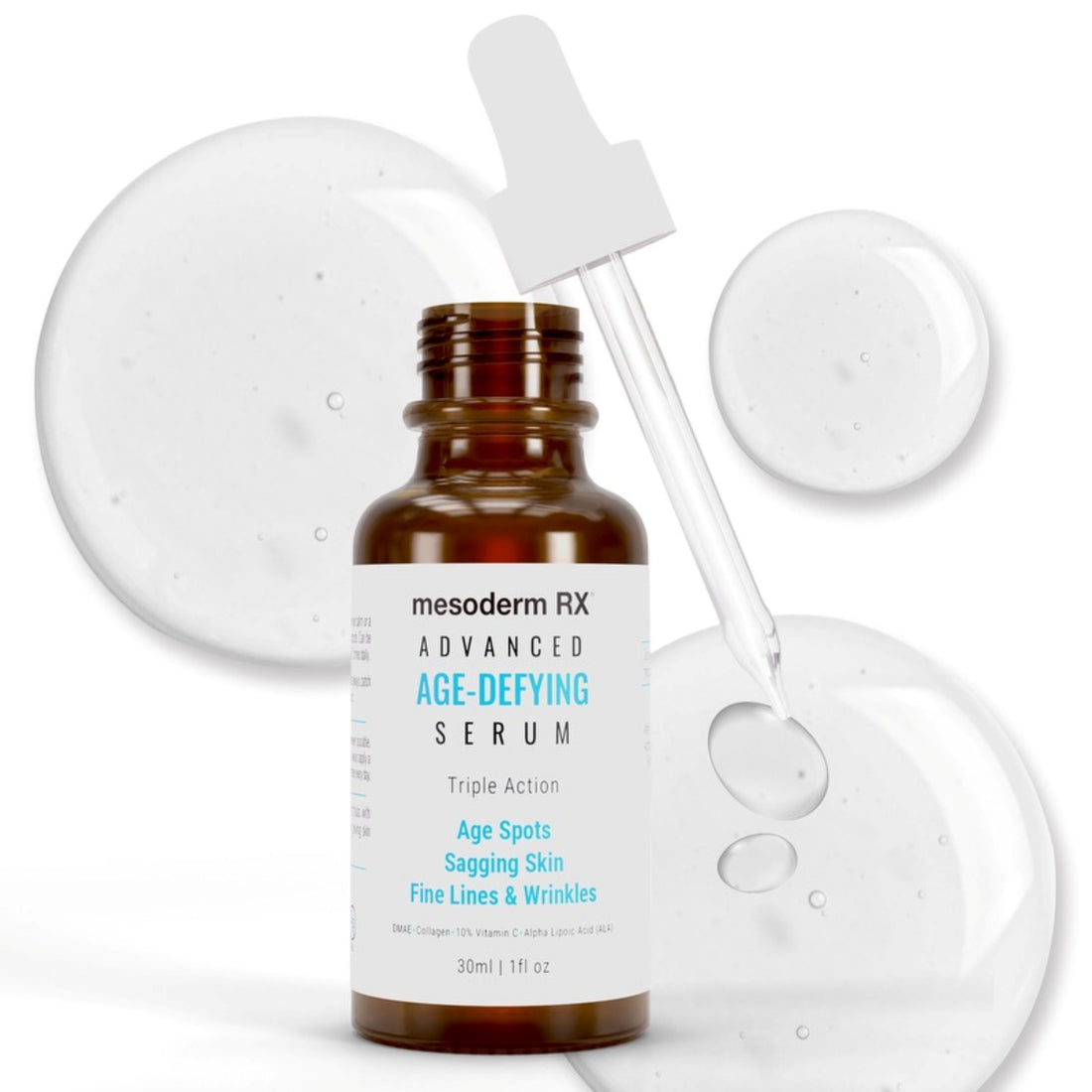
Featured Product
Advanced Triple Action Age-Defying Serum | Anti-Aging, Firming & Hydration
Targets fine lines, loss of firmness, and dryness to support smoother, plumper, and more youthful-looking skin with consistent use.
Shop Now →The Anti-Aging Paradox for Sensitive Skin
Sensitive skin is often pushed into a false choice. Accept irritation to get visible change, or accept comfort from a formula that never does enough to affect lines, tone, or firmness.
That trade-off is a formulation failure, not a skin requirement.
In clinic and product development, the main problem is the efficacy paradox. Many anti-aging serums create results by driving irritation hard enough that users mistake inflammation for progress. The gentler side of the category makes the opposite mistake. It strips out potency, over-buffers the formula, or relies on soothing ingredients alone, so the skin feels better for a few hours but the biology of aging stays largely untouched.
Sensitive skin needs a narrower target. The formula has to produce a meaningful signal for repair while keeping inflammatory spillover low enough for consistent use. That is the standard Mesoderm RX is built around. Potency comes from better active selection, dose discipline, and delivery design, not from making skin endure collateral damage.
Why the category disappoints
Reactive skin users usually cycle through the same pattern. One serum stings, flakes, or leaves persistent redness. The next is marketed as gentle, but behaves like a hydrating cosmetic rather than a corrective treatment.
Both outcomes waste time.
A useful serum for sensitive, aging skin has to meet three conditions at once:
| Requirement | What it has to achieve |
|---|---|
| Biologic activity | Support collagen behavior, texture refinement, and more even pigment expression |
| Inflammation control | Reduce the chance that treatment itself triggers redness, burning, or prolonged sensitivity |
| Barrier compatibility | Maintain enough barrier function that the formula can be used regularly without recovery breaks |
Miss one, and the routine usually fails in practice.
A strong ingredient on a label does not solve this. Retinoids, vitamin C, niacinamide, peptides, and exfoliating acids can all perform well or poorly depending on concentration, pH, solvent system, release profile, and what surrounds them in the base. I see the same headline actives produce opposite outcomes because one formula is built for skin use, while the other is built for marketing copy.
Clinical reality: If a serum cannot be used consistently, it will not deliver meaningful anti-aging results.
That is why “gentle” should not mean diluted into irrelevance. It should mean the formula respects the threshold of sensitive skin while still doing corrective work. Good formulation solves for both. It does not force a choice between them.
If current products leave your skin in a cycle of stinging, flushing, and retreat, guidance on calming irritation for sensitive skin can help you separate baseline sensitivity from a damaged barrier or a poorly matched active system. Those are different problems, and they need different fixes.
The Biology of Sensitive and Aging Skin
Sensitive skin isn’t a personality trait. It’s a biological pattern. In practice, it usually means the skin barrier is easier to disrupt, the inflammatory threshold is lower, and the sensory system reacts faster than it should.

The barrier problem
Think of the skin barrier as a fortress wall. Corneocytes are the bricks. Lipids are the mortar. When the mortar is intact, water stays in and irritants stay out. When that mortar is thin, disorganized, or repeatedly stripped, skin loses water faster and reacts to inputs that normal skin would tolerate.
That’s where transepidermal water loss becomes relevant in practical formulation. Sensitive skin often behaves like dehydrated skin even when it still produces oil. The surface may look shiny while the barrier underneath is unstable. People then over-cleanse, over-exfoliate, or stack “corrective” actives on top of a barrier that’s already leaking.
Humectants and barrier-support ingredients matter here. Sodium PCA helps the skin hold water. Panthenol acts as a humectant and emollient while supporting lipid synthesis. Those aren’t filler ingredients. In sensitive skin anti-aging work, they create the conditions that let actives stay in the routine long enough to work.
The inflammation problem
Aging skin and sensitive skin make a bad pair because inflammation interferes with repair. If the barrier is weak, the skin reads ordinary exposures as threats. Friction, fragranced products, low-pH actives, essential oils, harsh surfactants, and overuse of exfoliants can all set off the same familiar pattern: redness, heat, tightness, then flaking.
That inflammation doesn’t just feel bad. It competes with the very outcomes anti-aging users want. Chronically irritated skin often looks duller, more uneven, and older.
Skin that is always recovering can’t spend enough time rebuilding.
The aging problem
Aging changes the same fortress from the inside. Collagen signaling slows. Elastic support weakens. Turnover becomes less efficient. Pigment becomes easier to trigger and harder to fade evenly. Mature sensitive skin therefore has a double burden. It is more reactive and less forgiving.
A few mechanisms matter most:
- Collagen decline reduces firmness and makes lines more visible.
- Slower renewal lets roughness and dullness persist longer.
- Inflammation-driven pigment signaling can worsen uneven tone after even mild irritation.
- Barrier fragility makes many standard anti-aging formulas harder to tolerate.
Why standard anti-aging advice backfires
This is why “just start retinoids and push through the adjustment period” is poor advice for a lot of reactive skin. The issue isn’t that the skin is lazy or resistant. The issue is that the fortress wall is already compromised, and the defense system is overreacting.
A formula for this skin type has to respect both facts. It must support repair without creating a new inflammatory event every time you apply it. That’s the central biological trade-off, and it’s why ingredient selection alone never solves the problem. Formulation architecture does.
Why Most Anti-Aging Serums Fail Sensitive Skin
The anti-aging market trained consumers to judge serums by intensity. Sensitive skin usually loses under that rule.
I see the same mistake repeatedly in formulation reviews. Brands treat irritation as proof of potency, then tell reactive users to adjust their expectations. In practice, that creates the efficacy paradox. Formulas are often strong enough to trigger inflammation or so diluted and padded with humectants that they behave like basic hydration products with anti-aging branding.
Failure mode one is concentration-first design
Many serums are built around a headline active and a marketing number. That is poor formulation for sensitive skin. High-strength retinoids, aggressive exfoliating acids, and very low-pH antioxidant systems can all be useful tools, but only if the skin can tolerate repeated exposure long enough to benefit.
Retinol is the clearest example. It can improve visible photodamage and support collagen signaling. Yet a reactive patient does not benefit from a retinoid they can only use twice before peeling, burning, or prolonged redness forces them to stop. Results come from tolerable cumulative dosing, not from winning the first application.
That is why I judge anti-aging serums by usable potency. The question is not how much active is present on the label. The question is how much active the skin can receive consistently without entering an inflammatory cycle.
Failure mode two is poor delivery control
The vehicle often determines whether a serum performs like treatment or provocation. Penetration that is too fast can overload the surface. Penetration that is too shallow leaves the formula cosmetically pleasant but biologically weak. Good delivery systems narrow that gap.
Encapsulation, lipid-compatible carriers, buffering systems, and film-forming support all matter because they change exposure kinetics. They can slow the hit on the stratum corneum, improve active stability, and reduce the amount of collateral irritation needed to get a remodeling signal. That is one reason serums combining hyaluronic acid and peptides for smoother, firmer skin make more sense for reactive skin than formulas that rely on brute force alone.
Mass-market products often miss this point. They sell the ingredient story and underbuild the delivery architecture.
What usually fails: formulas that push active load without controlling penetration rate, surface irritation, or barrier recovery.
Failure mode three is the irritation stack around the hero ingredient
Sensitive skin rarely reacts to one thing in isolation. It reacts to the full formula and the routine around it.
A serum can look reasonable until you examine the supporting cast:
- Fragrance adds sensory appeal but raises irritation risk in reactive skin
- Alcohol-heavy bases can improve slip and dry-down while increasing sting and water loss
- Essential oils may sound gentle yet contain sensitizing aromatic compounds
- Low-pH vitamin C formats can be effective but are often poorly matched to a compromised barrier
- Multiple brighteners and exfoliants together create cumulative stress even when each ingredient seems acceptable alone
For sensitive skin, many “clean” and “natural” serums fail. Plant-derived does not mean low-reactivity. Sensitive skin responds to chemistry, dose, and delivery, not branding language.
Failure mode four is safety by dilution
The other end of the market has a different problem. Some products avoid irritation by removing enough biological pressure that very little changes beyond short-term softness.
These formulas can hydrate well. They can reduce tightness. They can make the skin look smoother for a few hours because water content rises and the surface reflects light more evenly. None of that is the same as improving collagen support, texture irregularity, or visible loss of firmness over time.
Here is the practical distinction:
| Serum type | What happens |
|---|---|
| Too harsh | You stop using it |
| Too weak | You keep using it and see little change |
| Well-formulated | You stay consistent and the skin improves without repeated flare cycles |
That middle path is harder to formulate. It requires selective actives, controlled delivery, and enough barrier support to keep treatment adherence high. That approach defines Mesoderm RX’s philosophy. High efficacy for sensitive skin comes from engineering the system properly, not from stripping out potency or forcing the barrier to absorb more than it can handle.
The Pillars of High-Efficacy Gentle Actives
The best way to build a sensitive skin anti aging serum is not to chase one miracle ingredient. It’s to combine actives that do different jobs without overloading the barrier. I use a three-pillar framework for this: renew, protect, support.

Renew with low-irritation collagen signaling
If the goal is smoother, firmer skin, the formula needs something that tells skin to rebuild. For sensitive users, peptides are often the cleanest place to start.
Matrixyl 3000 is a strong example. Clinical data cited in this review of anti-aging ingredients for sensitive skin reports that it can reduce wrinkle depth by up to 68% while supporting multiple collagen types. That matters because mature reactive skin often can’t tolerate constant escalation with harsher renewers.
Peptides don’t replace every retinoid strategy, but they solve a common problem. They give the skin a remodeling signal without making irritation the mechanism of action.
Other gentle renewers may fit here depending on the formula, but the principle stays the same. Choose ingredients that create structural improvement without forcing the barrier into repeated repair mode.
Protect with stabilized antioxidants
Vitamin C is one of the most misunderstood categories in sensitive skin care. People hear “vitamin C works” and buy the most acidic version they can find. Then their skin burns, and they conclude all vitamin C is incompatible.
The chemistry is more nuanced.
L-ascorbic acid at 5% to 15% has evidence for supporting collagen types I and III and inhibiting MMP-1. But sensitive skin often tolerates gentler derivatives more predictably. Magnesium Ascorbyl Phosphate is a useful example because it can deliver antioxidant support with less irritation than pure low-pH L-ascorbic acid.
Formulating for skin type matters more than following ingredient hype. If your antioxidant step triggers inflammation, it undermines the anti-aging mission.
A protective serum should reduce oxidative stress without becoming a daily irritant.
Support with barrier-first actives
No sensitive skin anti-aging program works without a support layer. Many formulas instead cut corners, then wonder why the user can’t stay on plan.
The support pillar usually includes ingredients like these:
- Niacinamide. At 5%, it’s used in sensitive formulations to support cell metabolism and regeneration with minimal irritation when the formula is built well.
- Hyaluronic acid. It can hold up to 1,000 times its weight in water, which makes it useful for hydration and fine-line plumping in reactive skin.
- Panthenol and sodium PCA. These help improve water retention and support barrier function.
- Ceramide-supportive systems. These help reduce the “everything stings now” phase that follows overuse of actives.
For readers comparing how peptides and hyaluronic acid work together in a real anti-aging system, Mesoderm RX has a useful explanation of why anti-aging serums with hyaluronic acid and peptides support smoother, firmer skin.
Why these pillars work together
A strong serum for sensitive skin does not ask one ingredient to do everything.
- Renewers address texture and firmness
- Antioxidants address oxidative stress and uneven tone
- Barrier supports preserve tolerance and hydration
That combination is how you solve the efficacy paradox. You don’t just lower concentrations until the serum becomes cosmetically pleasant. You build a formula that keeps anti-aging activity intact while reducing the chance that the skin will reject the routine.
How to Build Your Sensitive Skin Anti-Aging Routine
A serum only performs as well as the routine around it. Sensitive skin doesn’t need a complicated routine, but it does need a disciplined one.

Start with label triage
Before application, read the formula like a clinician, not a shopper. You’re looking for whether the product is built for regular use on reactive skin.
Green flags
- Fragrance-free base with minimal sensory irritants
- Barrier supports such as panthenol, sodium PCA, hyaluronic acid, or niacinamide
- Targeted anti-aging actives rather than a chaotic stack of everything
- Clear use instructions that imply controlled frequency, not daily aggression
- Minimal-additive design rather than formulas padded with unnecessary extras
Red flags
- Heavy fragrance or essential oil profile
- Alcohol-forward feel that dries down fast but leaves skin tight
- Multiple strong exfoliating and renewing actives together
- Very low-tolerance formulas sold as if irritation proves effectiveness
- Complicated routines that depend on constant trial and error
For a broader view of how clean, minimal-additive products are screened for reactive complexions, this clean skincare for sensitive skin guide from Mesoderm RX is useful.
Use a barrier-first sequence
A smart routine puts the skin in a position to tolerate correction.
-
Cleanse gently
Use a non-stripping cleanser. If skin feels squeaky, the cleanse was too aggressive. -
Apply the serum to dry skin
Dry skin reduces unpredictable sting from already-reactive areas. Use a small amount and spread, don’t scrub. -
Seal with a plain moisturizer if needed
This reduces friction and supports overnight recovery. -
Use broad-spectrum SPF every morning
This is not optional. According to No7’s overview of sensitive skin serum use and sun protection, up to 90% of visible aging signs are caused by UV exposure. A gentle serum without daily SPF is a half-built system.
Practical rule: If you’re treating aging at night and skipping sunscreen by day, you’re asking the skin to rebuild while UV keeps undoing the work.
That’s why a barrier-first routine works better than a serum-first routine. Protection preserves the gains.
Patch test and ramp slowly
Patch testing isn’t optional for reactive skin. Apply the product to a small area first. Watch for delayed redness, heat, itching, or prolonged sting. If skin stays calm, introduce it conservatively.
A simple pattern works well:
- First phase with spaced applications
- Second phase with gradual increase only if the skin remains comfortable
- Hold frequency steady if you feel warmth, tightness, or escalating dryness
Later in the routine, a visual walkthrough can help with technique and layering.
Think in systems, not singles
Retailers often train people to compare serums in isolation, but formulation performance is tied to context. If you work in distribution or merchandising, this guide for Swiss beauty retailers offers a useful market-facing lens on how anti-aging serums are positioned and selected.
For end users, the system is simpler: cleanser, serum, moisturizer when needed, and reliable daytime protection. That approach aligns with Mesoderm RX’s “More Actives, Less Additives” philosophy. In practical terms, a product like Advanced Age-Defying Serum fits this lane because it combines familiar anti-aging actives with hydration-supportive components in a fragrance-free, minimal-additive approach, while a daily SPF step such as Pigment Restraint Ultra High Sun Protection protects the work the serum is trying to do.
Troubleshooting Irritation and Optimizing Results
When irritation happens, individuals often make one of two mistakes. They either push through it and worsen the barrier, or they abandon anti-aging altogether. Neither response is necessary.
Know what kind of reaction you're seeing
Not every bad response means the same thing.
- Irritation usually shows up as burning, tightness, diffuse redness, or dryness soon after use.
- Sensitivity flare often feels cumulative. The skin becomes more reactive over several applications.
- Allergic-type response is more concerning if you see pronounced itching, swelling, hives, or a rash pattern.
- Purging gets overused as an excuse. For most sensitive-skin anti-aging formulas, persistent sting and inflammation are not a sign to continue.
If the skin looks angry, treat it as a barrier problem first.
What to do immediately
Use this sequence:
- Stop the new product
- Strip the routine back to a gentle cleanser and bland moisturizer
- Avoid exfoliants, scrubs, strong acids, and fragranced products
- Keep daytime sun protection consistent
- Wait for full calm before retrying anything
If you later reintroduce the serum, do it at a lower frequency than before. Every third night is often more realistic than nightly use for reactive skin.
Irritation is not the entry fee for results. It’s a signal that the routine is exceeding the skin’s tolerance.
How results actually improve over time
The best outcomes usually come from lower drama and better consistency. Skin doesn’t need to feel challenged to remodel. It needs regular exposure to tolerable signals.
That means checking the whole system:
| Problem | Likely cause | Better fix |
|---|---|---|
| Serum stings on contact | Barrier is already compromised | Pause, repair, then restart more slowly |
| Works for a week then redness builds | Frequency too high | Reduce use and simplify the rest of the routine |
| No visible change after steady use | Formula may be too mild or poorly built | Reassess active profile and delivery strategy |
| Tone improves but dryness worsens | Corrective step is outrunning barrier support | Add more barrier support, not more actives |
For users whose anti-aging goals overlap with brightening and uneven tone, the right system matters even more. Mesoderm RX has a practical resource on choosing a brightening serum for sensitive skin when you need correction without constant rebound irritation.
Frequently Asked Questions
Can sensitive skin use retinol at all
Yes, but not every sensitive skin type can use every retinol format. The question isn’t whether retinol is universally off-limits. It’s whether the formula, delivery system, and use frequency let your barrier stay intact. If your skin repeatedly becomes red, hot, flaky, or tight, the issue may be the total formula rather than retinol alone.
Is peptide serum better than retinol for reactive skin
Not automatically, but peptides often create a better tolerance profile. They’re useful when you want firmer-looking skin and smoother texture without relying on irritation as part of the process. For many reactive users, peptides are easier to keep in the routine consistently, and consistency is what produces visible change.
Which vitamin C is usually easier for sensitive skin
Sensitive skin often does better with gentler vitamin C derivatives than with highly acidic pure L-ascorbic acid formulas. The right answer depends on the full formula, but in general, lower-irritation antioxidant systems outperform “stronger” versions that trigger daily inflammation.
Should I use my serum every night
Not at the beginning. Start conservatively. If the skin stays calm, increase gradually. If the skin feels tighter each day, your frequency is too high even if the ingredient itself is technically appropriate.
Can I combine anti-aging serum with exfoliants
You can, but many sensitive users shouldn’t start there. Combining too many corrective steps at once is one of the fastest ways to confuse the picture and damage tolerance. Build stability first. Then decide whether another active is needed at all.
How much serum should I apply
Use a thin, even layer. More product doesn’t create more remodeling. It usually creates more surface exposure, more friction during application, and a higher chance of irritation.
Why does my skin look dull after starting a new serum
Dullness after starting a product often means the barrier is stressed. Micro-flaking, dehydration, and inflammation can all make skin look rougher and older in the short term. If that happens, reduce frequency or stop and let the barrier recover.
What should I avoid in a sensitive skin anti aging serum
Look carefully at fragrance, essential oils, harsh alcohol-heavy bases, and formulas that stack multiple strong actives without enough barrier support. Also be wary of products that promise dramatic results while offering no clear guidance on ramp-up or compatibility with sensitive skin.
Can one serum fix wrinkles, dryness, and uneven tone
Sometimes one serum can address several concerns, but only if the formula is balanced well. In many cases, the better strategy is a focused serum inside a simple system that includes a gentle cleanser, moisturizer as needed, and daily sunscreen.
How long should I give a serum before judging it
Judge tolerance quickly and results slowly. If the formula causes persistent irritation, it’s not the right fit. If the skin stays calm, give the routine time and stay consistent. Remodeling takes regular use, not constant switching.
If you want a routine built around active performance without unnecessary filler, explore Mesoderm RX. The brand’s formulas are designed around a simple principle: more actives, less additives, with fragrance-free, sensitive-skin-conscious options that fit a barrier-first anti-aging system.