


Neck Skin Tightening: Firm & Youthful Skin Solutions
Most neck tightening advice fails because it starts with the wrong promise. A cream cannot lift structurally loose skin. A device cannot erase every neck problem. Exercises alone won't rebuild a degraded dermal matrix.
That doesn't mean neck skin tightening is futile. It means the neck has to be treated like what it is: a thin, high-mobility area that ages through several mechanisms at once. Skin quality changes. Muscle bands become more visible. Fat can collect under the chin. The jawline-to-neck angle softens. If you treat only one layer, results often plateau fast.
People notice this most after visible body changes, especially after weight loss, when skin support and tissue volume shift at the same time. If that's part of your picture, this guide on tightening loose skin after weight loss gives useful context on why “tightening” and “removing excess skin” are not the same thing.
The Reality of Rejuvenating Neck Skin
The neck ages differently from the face, and it punishes lazy treatment plans. Patients often apply leftover face cream below the jaw, wait a few weeks, then assume nothing works. Usually the issue isn't effort. It's category mismatch.
A better way to think about neck skin tightening is as a treatment hierarchy. At the base, you improve skin quality with barrier support, photoprotection, hydration, and actives that help the skin function better. In the middle, you use in-office procedures when collagen stimulation or muscle modulation is needed. At the top, you consider surgery when excess skin, strong platysmal banding, or submental fat limit the effectiveness of non-surgical care.
Clinical reality: Better texture and mild firming are realistic with a disciplined routine. Significant hanging skin is a structural problem.
The neck also demands patience. Biological remodeling is slower than marketing copy suggests. If someone is promising dramatic tightening from a single bottle without clarifying whether the issue is crepey skin, vertical bands, or skin excess, that's not precision. That's sales language.
The Biological Cascade of Neck Aging
The neck doesn't become lax for one reason. It changes because multiple support systems weaken together. The easiest way to understand it is to think of the neck as a scaffold made of skin, connective tissue, muscle, and subcutaneous volume. When each layer loses stability, the visible result is wrinkling, crepiness, banding, and a softer contour.

Dermal support starts to weaken
The skin's firmness depends on collagen, elastin, and an intact extracellular matrix. As cell function slows, repair becomes less efficient and the matrix doesn't rebound the way it once did. Fine lines deepen into etched folds because repeated motion now acts on weaker tissue.
If you want the skin biology piece in more detail, Mesoderm RX has a useful explainer on skin cell turnover, which connects renewal speed to visible texture and resilience.
This is why the neck often looks crepey before it looks considerably saggy. Surface quality degrades first. Then the support deficit becomes more obvious.
Muscle and contour changes become visible
The platysma is a broad superficial neck muscle. As the neck ages, platysmal bands can become more prominent, creating vertical separation and a strained appearance even when the skin itself isn't the only issue.
Subcutaneous change matters too. Fullness under the chin, downward shift in tissue, and loss of a crisp cervicomental angle all alter how “tight” the neck appears. A person may think they need skin tightening when the dominant problem is under-chin fat or banding.
Environmental stress keeps accelerating the process
The neck gets frequent sun exposure and often less sunscreen than the face. It also bends, twists, and folds through the day. Add chronic downward posture, and horizontal lines become easier to set into the skin over time.
Aging in this area isn't cosmetic trivia. It's mechanics plus biology. Once you understand that, the hierarchy of treatments makes more sense. Surface decline needs one strategy. Structural decline needs another.
Why Most Neck Tightening Efforts Fail
Most failures come from three predictable mistakes. None of them are mysterious, and all of them are common.
Mistake one is treating movement as if it were collagen loss
“Neck yoga” is often presented as if muscle activity alone can reverse laxity. It can't. Repetitive exercises may increase awareness of posture and movement patterns, but they don't replace lost structural support in the dermis. If horizontal lines are etched, or the skin has become crepey, massage and movement work are support measures at best.
That doesn't make them useless. It makes them secondary.
Mistake two is using generic moisturizers and calling it treatment
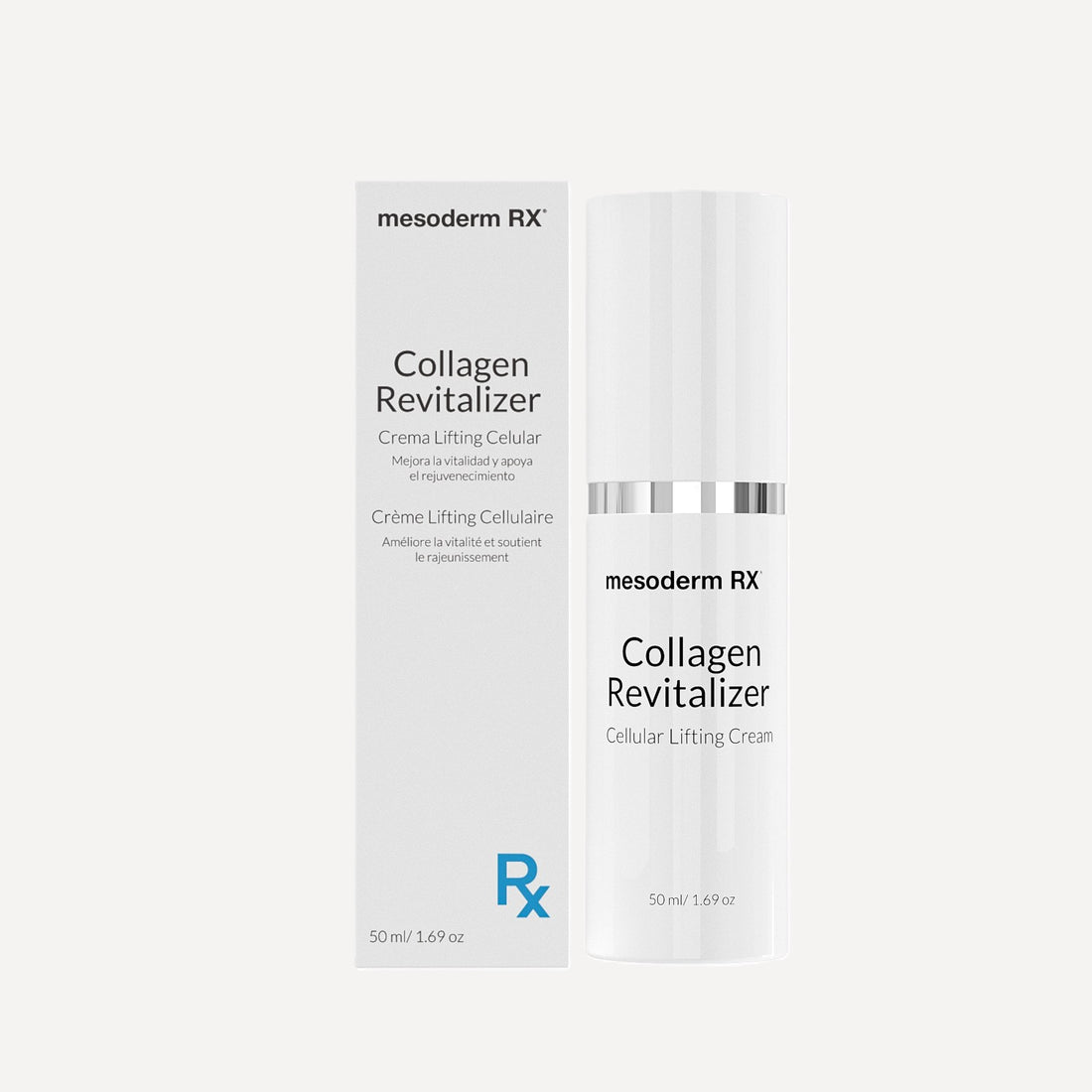
A basic cream can reduce transient dryness and make the neck look smoother for a few hours. That's not the same as meaningful remodeling. The neck usually needs a more deliberate mix of barrier support, antioxidant input, controlled stimulation, and ingredients chosen for texture and firmness concerns.
People often abandon topical care because they were never using a protocol. They were using random products.
A workable topical strategy usually includes:
- Protection every day: The neck is heavily exposed and often under-protected.
- Repair-focused actives: Texture, discoloration, and fine wrinkling need ingredients that do more than sit on the surface.
- Barrier maintenance: Irritated neck skin won't tolerate stronger actives well, and inconsistent use follows quickly.
If the neck is constantly dry, inflamed, or sun-exposed, even good active products underperform.
Mistake three is choosing the wrong tool for the dominant problem
This is the biggest one. Many “neck skin tightening” discussions list devices and injectables without asking the practical question that matters most: what exactly is causing the neck to look old?
According to Cleveland Clinic's guidance on turkey neck and treatment selection, non-surgical treatment is often the wrong tool when the main issue is structural, such as excess skin, platysmal banding, or submental fat. Reviews and surgeon guidance consistently point to matching treatment to the dominant issue. Surgery remains the gold-standard option for more advanced laxity, while injectables and energy devices are generally better suited to milder cases.
That single distinction clears up a lot of frustration. A person with mild crepiness may do well with topical care plus an energy-based procedure. A person with visible loose folds under the chin won't get the same endpoint from the same plan.
What actually needs to be identified first
Before buying another neck product or booking a device session, identify the primary driver:
| Primary issue | What it usually looks like | What tends to help |
|---|---|---|
| Skin quality decline | Crepey texture, fine lines, dryness, uneven tone | Topicals, resurfacing support, selected energy devices |
| Platysmal banding | Vertical bands, downward pull | Neurotoxin in mild cases, procedural correction in stronger cases |
| Submental fat | Fullness under the chin, blurred angle | Fat-targeted treatment, sometimes combination care |
| Excess skin | Hanging or folding skin | Surgical correction is often the realistic option |
Once that diagnosis is honest, the treatment plan usually gets simpler.
Building an Effective At-Home Neck Protocol
Home care matters, but it has to be assigned the right job. It improves skin quality, supports firmness, reduces visible roughness, and helps maintain procedural results. It does not remove significant excess skin.
That distinction is important because dedicated topical care can still produce measurable change. A 2020 prospective, double-blind clinical trial on a neck-specific serum-and-cream regimen found that 63% of treated subjects improved in neck wrinkles, laxity, dyschromia, texture, and dryness after 2 months, and 19 out of 30 participants reported that their neck felt slightly or more youthful by study end. The trial was small, with 20 people on the active regimen and 11 on vehicles, so it supports feasibility and early efficacy rather than universal conclusions, but it does show that a dedicated neck routine can do more than moisturize (clinical trial details).
Protect the area you want to keep
Daily sun protection is an essential step. The neck accumulates UV exposure easily, and chronic exposure degrades visible skin quality. If someone uses actives but skips sun protection on the neck, they often end up chasing damage they keep recreating.
Protection also includes behavior. Constant neck flexion can make horizontal lines more obvious over time. For readers working on mechanics as well as skin care, this guide on fixing forward head posture is a useful adjunct. Posture won't replace treatment, but it can reduce one repeated source of folding stress.
Repair with a system, not a single hero ingredient
The neck usually responds better when repair is layered logically:
- Peptides and supportive anti-aging ingredients: These are useful when the goal is firmness support and improved skin feel.
- Retinoid-type stimulation: Helpful for texture and fine wrinkling, if tolerance allows.
- Exfoliating acids in controlled use: Useful when dullness, roughness, and uneven tone are part of the problem.
- Humectants and barrier lipids: Necessary to keep the area functional enough for consistency.
The product vehicle matters. Neck skin often dislikes harsh, over-fragranced formulas and overly aggressive cycling plans. Consistency wins over intensity.

One example that fits into a repair-focused routine is Advanced Triple Action Age-Defying Serum. Based on the catalog information, it is a rich, creamy moisturizer with peptides that supports the skin's moisture barrier and is intended for fine lines, firmness, resiliency, and hydration. The listed formulation includes DMAE, collagen, vitamin C, and alpha lipoic acid, and it can be used on the face, neck, and back of hands one to two times daily.
For readers comparing ingredient roles, Mesoderm RX also has a practical piece on why anti-aging serums with hyaluronic acid and peptides support smoother, firmer-looking skin.
Hydrate enough to keep actives usable
A neck protocol fails fast when the skin becomes irritated. You don't get firmness benefits from products you stop using after a week. If the neck stings, reddens, or becomes chronically dry, reduce frequency, simplify the stack, and restore barrier support before pushing harder.
Practical rule: The best at-home neck routine is the strongest one your skin can tolerate consistently, not the strongest one available on paper.
Evaluating Clinical Neck Tightening Procedures
Once home care has done what it can, in-office treatment becomes the next rung in the hierarchy, a stage where many patients oversimplify. They ask which procedure is “best” instead of asking which one matches the anatomy in front of them.
A quick visual comparison helps separate the tools.

Radiofrequency for mild to moderate laxity
Radiofrequency works by delivering controlled heat into the dermis while sparing the epidermis. That heat produces immediate collagen contraction and then a longer remodeling response. Clinical reports cited in a review of RF skin tightening for the neck and jawline associate it with about a 20 to 30% reduction in visible neck laxity after 3 to 4 treatments, with firmness improvement reported in roughly 85% of cases and best results developing over 3 to 6 months.
That profile makes RF useful for people with mild to moderate laxity, crepey texture, and a realistic understanding of what “tightening” means outside surgery. It improves. It does not excise.
For a broader brand-side explainer of how this category works, Mesoderm RX has a concise article on radiofrequency for the face.
Ultrasound and RF microneedling target different layers
Focused ultrasound is usually chosen when deeper tissue support is the priority and the patient wants little downtime. RF microneedling is often better when texture, fine lines, and mild laxity need to be treated together. The needles create controlled injury while RF adds thermal stimulation at depth.
Neither is a universal replacement for surgery. Both can be very useful in the right patient.
This overview video helps illustrate where non-surgical devices fit in the broader scope of neck rejuvenation.
Injectables are problem-specific, not general tightening
Botulinum toxin is not a skin-tightening treatment in the strict sense. It is a muscle-modulating treatment. In the neck, that matters mainly when platysmal bands are contributing to the aged appearance.
Fillers and biostimulatory approaches may also have a role in selected patients, especially where contour or line support is needed. But again, diagnosis determines value. If the issue is hanging skin, injectables can polish around the problem without solving it.
The decision rule that keeps expectations sane
Use this framework in consultation:
- Choose topicals first when the problem is mainly skin quality.
- Choose energy devices when there is mild laxity and enough residual elasticity to stimulate.
- Choose injectables when the target is banding or contour mechanics.
- Choose surgery or combined care when excess skin or heavier structural change dominates.
That sequence prevents the most expensive mistake in aesthetics. Using the right treatment on the wrong problem.
Setting Realistic Timelines and Expectations
The neck responds slowly. Patients who expect instant lifting usually bounce between products and procedures before any one approach has had time to work.
That impatience is understandable. It also ruins otherwise reasonable plans.

What timing actually looks like
Neck tightening is a major category, not a fringe one. In the U.S., more than 188,000 Americans received some type of skin-tightening procedure in 2020, according to the neck rejuvenation overview in StatPearls. The same source notes that botulinum toxin for mild platysmal banding may take 1 to 2 weeks to peak and typically lasts 3 to 4 months, while radiofrequency skin tightening is designed to stimulate collagen and elastin, with visible changes usually emerging over 2 to 6 months.
That timeline tells you two things. First, muscle treatment and collagen remodeling do not operate on the same clock. Second, a treatment can be working biologically before the mirror shows the full effect.
Where people quit too early
Topical neck care usually needs sustained use before texture and surface quality look meaningfully different. In-office collagen stimulation also requires a waiting period because the visible endpoint depends on tissue remodeling, not just the day of treatment.
A practical timeline looks like this:
- Early phase: Skin may feel more hydrated and look less dry before it looks firmer.
- Middle phase: Texture and fine wrinkling begin to improve more clearly.
- Later phase: Contour improvement from collagen-based procedures becomes easier to judge.
- Maintenance phase: Aging continues, so results need support rather than abandonment.
The right question isn't “How fast can I tighten my neck?” It's “What result belongs to which treatment, and how long does that biology take?”
What realistic means in practice
Realistic doesn't mean pessimistic. It means defining success correctly.
If your main issue is crepiness, success may be smoother texture and better skin quality. If your main issue is platysmal banding, success may be softening the bands. If your main issue is excess skin, success may require accepting that a non-surgical path has a ceiling.
The best neck plans usually look modest at first and smarter over time.
Frequently Asked Questions on Neck Firming
Can I just use my face products on my neck
Sometimes, yes. But don't assume your face routine is automatically appropriate. The neck often tolerates irritation poorly, and many people neglect sunscreen or overuse strong actives there. If you use face products on the neck, do it intentionally and watch tolerance.
Are neck exercises and facial yoga a complete waste of time
Not completely. They may help some people become more aware of posture and muscle tension. But they aren't a complete neck skin tightening strategy, and they won't correct structural laxity, excess skin, or significant banding.
At what age should I start a dedicated neck routine
Start when the neck begins to show changes or when you're serious about prevention. There isn't a single correct age. Earlier care is usually about protection and maintenance. Later care often needs a combination of skin support and procedure-based intervention.
Can anything be done for horizontal necklace lines
Yes, but the best approach depends on whether those lines are superficial, movement-related, sun-associated, or already etched into the skin. Topicals can improve surface quality. Some in-office options can help texture or muscle contribution. Deep, longstanding lines usually need more than moisturizer.
Is non-surgical neck tightening enough for everyone
No. It works best for milder cases and for people whose main issue is skin quality or modest laxity. When loose skin is significant, surgery remains the most realistic route to major change.
Mesoderm RX makes sense for readers who want a structured, ingredient-led approach instead of generic anti-aging advice. If your goal is to improve skin quality, support firmness, and maintain better results over time with high-potency, minimal-additive formulas, explore Mesoderm RX.