


A Clinical Guide to Radiofrequency for the Face (2026)
Most advice about radiofrequency for the face is too simple. It treats the device like the whole treatment plan, as if heat alone will rebuild aging skin. That's not how skin biology works, and it's not how good outcomes are maintained.
RF can be an excellent tool. But the device is only one part of the result. The other part is the tissue you bring into treatment, the inflammation you control afterward, and the daily topical regimen that supports barrier recovery, collagen remodeling, and pigment stability. Clients often miss that last piece. Then they blame the technology for results that were never properly supported.
The Clinical Reality of Radiofrequency Skin Tightening
Radiofrequency is not a gimmick, but it also isn't a shortcut. RF skin tightening for the face received FDA approval in 2001, and more than 188,000 Americans underwent some form of skin tightening procedure in 2020, according to the Cleveland Clinic overview of RF skin tightening. That same source also notes that a review of 121 clinical studies confirmed efficacy in facial rejuvenation with an excellent safety profile suitable for all skin tones.
That matters because many people still treat RF like a trend. It isn't. It's a long-standing aesthetic treatment with a legitimate place in practice when the indication is correct.
What RF is and what it isn't
RF is a controlled heat-based treatment designed to affect the dermis and deeper support structures without the cutting, lifting, or tissue removal of surgery. It can improve laxity, texture, and fine lines in the right patient. It cannot replace a surgical facelift when tissue descent is advanced.
Clinical point: If someone has significant jowling, heavy lower-face descent, or a neck that needs structural repositioning, the wrong move is pretending a noninvasive device will deliver a surgical endpoint.
The best candidates usually want refinement, not reinvention. They want firmer skin quality, a tighter look, and better support in areas that are beginning to soften. That includes the jawline, lower cheeks, perioral area, and often the neck. If neck laxity is part of the concern, this practical guide on how to tighten neck skin is worth reading alongside any RF consultation.
Why simplistic RF advice fails
Most disappointing outcomes come from one of three issues:
- Wrong indication: Treating severe sagging with a modality better suited to early or moderate change.
- Wrong device selection: Using a superficial treatment when the core problem is deeper structural laxity.
- No support plan: Ignoring topical care, barrier recovery, and pigment control after treatment.
RF works best when you stop thinking in terms of “one session, one result” and start thinking in terms of biologic remodeling. That process is gradual, cumulative, and heavily influenced by what happens between appointments.
How Radiofrequency Biologically Rejuvenates Skin
Skin doesn't tighten because a machine says it should. It tightens because heat changes collagen behavior, then pushes fibroblasts to rebuild support tissue over time. Once you understand that, RF makes much more sense.

The immediate phase
Think of collagen like the framing inside a house. Over time, that frame loosens. RF delivers controlled thermal energy into the skin, and that heat causes existing collagen fibers to contract. This is the short-term tightening phase.
You may see a mild early improvement because the existing scaffold has been compacted. But that early change is not the whole story, and it's not the main reason experienced practitioners use RF.
The remodeling phase
The primary value is the delayed response. Heat functions like a controlled injury signal. It tells the skin to repair itself. Fibroblasts respond by producing new structural proteins, especially collagen and elastin. Histologic analyses in the verified clinical review showed neocollagenesis and neoelastinogenesis, which is why skin can look firmer and more resilient over time, not just tighter for a day or two.
This also explains why RF outcomes are gradual. You are not buying instant lifting. You are initiating a repair process.
Why barrier support matters after energy treatment
Once the skin has received that thermal stimulus, your home care needs to stop working against it. Over-exfoliation, harsh acids too soon, fragranced irritants, and inconsistent UV protection all increase the chance that recovery becomes messy instead of efficient.
A supportive topical can fit here, but only if it respects the skin's state. For example, Advanced Triple Action Age-Defying Serum is described as a rich, peptide-based moisturizer-serum that helps maintain the moisture barrier and improves the appearance of fine lines and wrinkles, with ingredients including DMAE, collagen, vitamin C, and alpha lipoic acid. In practice, products in that category make more sense once the skin is ready for barrier support and antioxidant care, not immediately if the skin is still hot, inflamed, or reactive.
Heat can trigger renewal, but renewal only looks good if the barrier recovers cleanly.
What RF does not directly fix
RF is not a pigment treatment in the way a dedicated pigment protocol is. It doesn't directly target tyrosinase activity the way brightening systems do, and it doesn't erase melasma biology. If you have dark spots, post-inflammatory hyperpigmentation, or uneven tone, you need a separate plan for that problem.
That's where many clients get confused. They improve firmness, then wonder why blotchiness remains. Those are different pathways. Firmness is a structural issue. Hyperpigmentation is driven by melanin signaling, inflammation, and often UV or heat sensitivity. Good treatment planning respects that difference.
Monopolar vs Bipolar vs Microneedling RF Explained
The question isn't whether RF works. The question is which version fits your problem. Most wasted money in this category comes from mismatch, not from the technology itself.
Three devices, three jobs
Monopolar RF is generally chosen when you need broader, deeper heating and a stronger tightening effect. It's often used for more diffuse laxity where structural support is the main concern.
Bipolar RF is more localized and more superficial. Verified data describe bipolar RF as providing 1 to 4 mm penetration, which makes it useful for fine lines and early skin changes rather than profound laxity. It's often easier to tolerate in sensitive skin, but it has limits.
Radiofrequency microneedling combines mechanical injury with thermal energy delivered through insulated or non-insulated needles. That makes it especially useful when the problem is not just laxity, but also texture, pores, acne scars, or crepey skin quality.
What the evidence suggests
A systematic review covering 20 studies and 558 participants found radiofrequency microneedling to be highly effective for facial rejuvenation, with patient satisfaction exceeding 90% in most studies, and some studies reporting 100% satisfaction at 12-month follow-up. The same review reported epidermal thickness increased from 62.7 ± 2.4 µm before treatment to 79.5 ± 9.8 µm at 3 months, and volunteer evaluations showed 35 to 40% improvement in skin tightening, 30 to 35% in texture, 40 to 45% in rhytides, and 85 to 90% overall satisfaction in one set of assessments, as detailed in the radiofrequency microneedling review on PubMed Central.
Separate bipolar RF data showed a 49.68% improvement in a midface lift metric by week 4 in a trial focused on fine-line rejuvenation, reported in the bipolar RF clinical review on PubMed Central.
Radiofrequency Modality Comparison
| Modality | Penetration Depth | Primary Target Concern | Typical Downtime |
|---|---|---|---|
| Monopolar | Deeper tissue heating | Mild to moderate laxity and contour softening | Usually minimal, depends on device intensity |
| Bipolar | 1 to 4 mm | Fine lines, early aging, sensitive or thinner areas | Minimal |
| RF microneedling | Needle-delivered thermal injury at controlled depths | Texture, acne scars, crepey skin, tightening with surface improvement | Mild redness and short recovery are common |
How to choose more intelligently
- If your main issue is texture: RF microneedling usually makes more sense than standard surface RF.
- If your concern is fine perioral or periorbital wrinkling: Bipolar RF can be a reasonable fit.
- If your lower face feels heavier or looser: Ask whether a deeper modality is needed, because superficial heating won't solve a structural problem.
For clients comparing branded treatments, this breakdown of Morpheus8 skin tightening is a useful example of how RF microneedling is framed in real practice. If you're also considering mechanical collagen induction at home between professional visits, use caution and keep expectations realistic with tools like a dermaroller, since home needling is not equivalent to professional RF microneedling.
Assessing Your Candidacy and Setting Realistic Expectations
The right candidate for radiofrequency for the face usually has mild to moderate laxity, early wrinkling, crepey texture, or a general loss of skin firmness. The wrong candidate often wants a non-surgical facelift but has surgical-level tissue descent.

Who tends to do well
People usually benefit most when they still have enough skin quality and elastic function left to respond. Early jowling, soft jawline blur, fine wrinkling around the mouth, mild cheek laxity, and textural aging are all reasonable indications.
Patients with darker skin tones often like RF because it doesn't depend on pigment targeting in the way some laser procedures do. That said, darker skin still requires careful parameter selection and disciplined aftercare, especially if the treatment also creates mechanical injury, as RF microneedling does.
Who needs a different conversation
If the skin hangs heavily, the platysma is markedly lax, or the lower face needs repositioning rather than remodeling, RF won't be enough. In that situation, pretending otherwise only creates frustration.
The best RF consult is often the one that says no to the wrong patient.
A realistic consult should also account for active inflammation, barrier fragility, acne flaring, recent tanning, and pigment instability. Heat is biologically active. If the skin is already irritated, reactive, or heavily sensitized, the sequence matters.
Later in the consult, it helps to see the treatment process and recovery discussed in plain language:
The expectation that leads to satisfaction
RF is best understood as a maintenance and optimization tool. It can delay escalation, improve skin quality, and help preserve a fresher contour. It does not create the same endpoint as surgery, fillers, threads, or weight restoration when those are the actual needs.
Set your benchmark correctly:
- Good expectation: firmer skin, smoother texture, modest tightening, better overall skin quality.
- Poor expectation: major lifting of heavy jowls, dramatic neck correction, or complete reversal of advanced aging.
When the treatment goal matches the biology, RF can be very worthwhile.
The Critical Link Between RF and System-Based Skincare
This is where most consumer education falls apart. The procedure gets all the attention, and the topical plan gets reduced to “gentle cleanser and sunscreen.” That's too shallow for a biologically active treatment.
A practice note in aesthetic literature points to a real gap here. There's no clear clinical protocol for sequencing high-potency topical actives around RF treatments, even though RF is described as a significant advancement and there's obvious interest in combining it with brightening and anti-aging systems, as discussed in the Aesthetic Surgery Journal practice note on RF and topical integration.

Why this gap matters clinically
RF stimulates collagen remodeling. But if you layer strong acids, retinoids, or brightening agents at the wrong time, you can push a good treatment into unnecessary irritation. For clients prone to dark spots, that matters even more. Inflammation is one of the fastest ways to turn a rejuvenation plan into a pigmentation problem.
This is especially relevant when the patient's goals overlap. Many people don't just want tighter skin. They also want to improve uneven tone, post-acne marks, or sun-induced discoloration. Those concerns require a strategy, not random product stacking.
A workable sequence around treatment
What tends to work in practice is not complicated, but it does require discipline.
- Before treatment: Keep the barrier stable. Avoid introducing new irritants. If the skin is already stingy, flaky, or inflamed, fix that first.
- Immediately after treatment: Use bland, non-irritating support. This is not the time for aggressive resurfacing.
- After the skin settles: Reintroduce actives based on tolerance and treatment type. Microneedling RF usually demands more caution than noninvasive surface RF.
- Long-term maintenance: Use antioxidants, barrier support, and strict photoprotection consistently.
Practical rule: Don't treat post-procedure skin like normal skin just because the redness has faded.
What to pause and what to bring back thoughtfully
For most patients, strong exfoliating acids, retinoids, and other sensitizing actives need to be timed carefully around RF. The exact window varies by device, settings, and your provider's protocol, but the principle is constant. Don't stack irritation onto thermal injury.
Once the skin has normalized, a support product focused on moisture barrier function, antioxidant protection, and firmness can make sense as part of maintenance. If you want to understand why peptides are often included in these systems, this analytical guide to anti-aging peptides gives useful background on how they're discussed in skin-focused formulations.
SPF is not optional
If there's one part of the system I'd call non-negotiable, it's daily sun protection. Skin that has just undergone controlled thermal stress is not the skin to test with casual UV exposure. Anyone managing both firmness and discoloration should also understand the limits of sunscreen behavior in real life, including whether you can tan with SPF 30.
A good RF plan isn't just treatment day. It's a full system built to support remodeling while preventing inflammation, dehydration, and pigment rebound.
At-Home RF Devices Versus Professional Treatments
At-home RF devices are not useless. They're just commonly misrepresented.
The physics are different. Home devices are designed with lower output and tighter safety constraints because they're being used without a trained operator, live temperature feedback of the same caliber, or clinical endpoint assessment. That means they generally produce more superficial heating and a milder biologic response.
Why home users get disappointed
Users often buy a home device expecting professional tightening. Then they use it consistently, feel warmth, see a little temporary plumping, and assume it's “not working” when they don't get contour change.
That disappointment usually comes from a category error. Professional RF aims at tissue remodeling under controlled clinical parameters. Home devices are built to be safer and less aggressive. By design, they won't usually chase the same endpoint.
Where home RF actually fits
Home RF can make sense for some people as a maintenance tool. It may help support routine skin care for someone who already understands their skin, tolerates heat well, and has realistic goals. It can also be reasonable for clients who want a very conservative approach and are mainly interested in subtle support rather than procedural change.
What it should not be used as is a substitute for proper evaluation. If the issue is true laxity, deep textural change, acne scarring, or a combination of firmness and pigment instability, a clinic-based plan is more appropriate.
A practical way to think about it
Use professional treatment when you need meaningful collagen remodeling and customized settings. Use home devices, if at all, for low-level maintenance and only within a broader skin plan.
If your device routine is stronger than your cleansing, moisturizing, and UV discipline, the priorities are backward.
Frequently Asked Questions About Facial Radiofrequency
Does radiofrequency for the face hurt
RF is described as a sensation of heat or deep warmth. Comfort depends on the device, treatment depth, and body area. RF microneedling usually feels more intense than noninvasive RF because it combines needle entry with energy delivery.
How long do results take
RF is not an instant-result category. Some people notice early tightness, but the more meaningful changes come as the skin remodels over time. That's why follow-up photography matters more than day-one impressions.
Is there downtime
Downtime depends on the modality. Standard noninvasive RF often has minimal interruption. RF microneedling usually causes short-term redness, sensitivity, and a temporary roughness while the skin settles.
Is RF safe for darker skin tones
It can be a very useful option for darker skin tones because it doesn't rely on targeting pigment in the same way some light-based treatments do. Safety still depends on correct settings, provider skill, and careful aftercare, especially in patients prone to post-inflammatory hyperpigmentation.
Can RF replace a facelift
No. It can improve skin quality and mild to moderate laxity, but it does not reposition tissue the way surgery does.
What should I ask in a consultation
Ask which RF modality is being recommended, why it matches your anatomy, what the aftercare plan is, and how your topical regimen should be adjusted before and after treatment. If that last question gets a vague answer, the plan isn't complete.
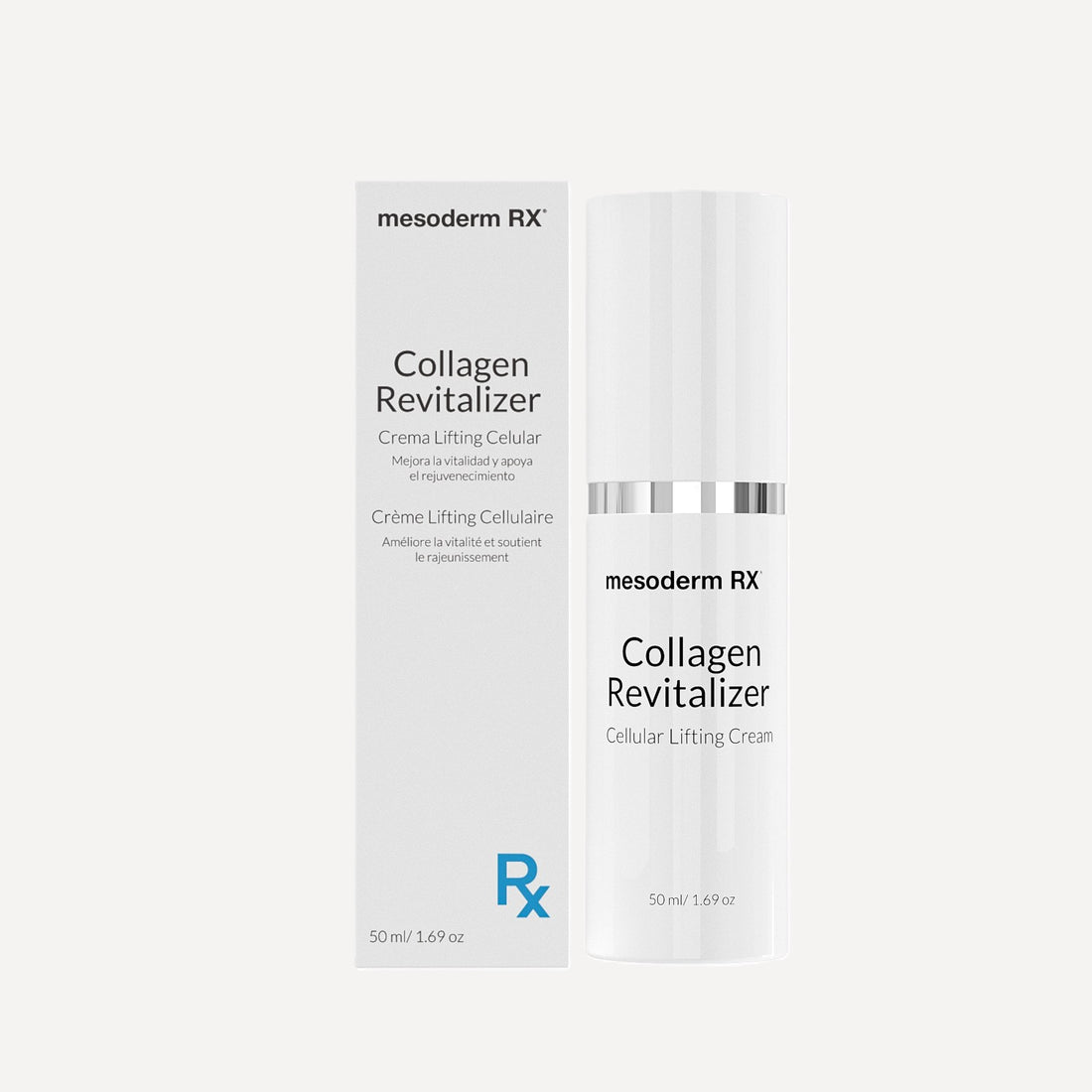
Mesoderm RX makes sense for people who want a results-focused skincare system to support brighter, smoother, firmer-looking skin between treatments, especially if they prefer high-potency, minimal-additive formulas for daily maintenance. Explore the full range at Mesoderm RX.