


Korean Skincare for Hyperpigmentation: Clinical Guide 2026
The most common mistake in Korean skincare for hyperpigmentation is treating it like a product hunt. People look for one serum, one toner pad, one “brightening” ampoule that will erase pigment quickly. That mindset usually leads to disappointment, and in sensitive skin it often leads to more discoloration.
Pigment doesn't form for one reason, and it doesn't clear through one pathway. You're dealing with melanin production, enzymatic signaling, transfer of pigment into surrounding skin cells, and the inflammatory signals that keep the cycle active. Korean skincare became influential in this category because it approached dark spots as a system problem rather than a single-step defect.
Beyond the Hype of a Single Miracle Product
A single “miracle” product is rarely the answer for dark spots. That's especially true when the pigmentation sits on top of chronic irritation, post-acne inflammation, friction, or hormonal triggers. A brightening serum can help, but if the barrier is unstable or UV exposure continues daily, that serum is working against basic skin biology.
That broader approach is one reason this category keeps expanding. The hyperpigmentation skincare market was valued at $8.9 billion in 2025 and is projected to reach $17.4 billion by 2034, with a projected 7.7% CAGR, and Asia Pacific accounted for $3.43 billion, or 38.6% of global revenue, in 2025 according to Dataintelo's hyperpigmentation skincare market report. The commercial growth matters because it reflects sustained demand for routines that focus on brightening without defaulting to harsh bleaching-style methods.
What Korean skincare gets right
The Korean model is strongest when it does three things at once:
- Suppresses excess pigment signaling with actives such as niacinamide, arbutin, tranexamic acid, licorice, and vitamin C
- Reduces avoidable inflammation so the skin stops converting irritation into more pigment
- Maintains barrier integrity with hydration, soothing agents, and gentler layering
That combination is far more rational than the usual “peel harder and hope for faster fading” approach.
Hyperpigmentation improves more reliably when treatment lowers pigment pressure without provoking new inflammation.
Why product minimalism and treatment precision matter
The irony is that many people worsen their own results by over-treating. They rotate acids, stack brighteners, scrub physical exfoliants over inflamed areas, and then wonder why old marks linger and new ones form. Skin doesn't reward aggression when the problem itself is partly inflammatory.
A useful Korean skincare routine for hyperpigmentation isn't defined by how many products you own. It's defined by whether each step has a clear biological role. Cleanse without stripping. Treat without overwhelming. Protect every morning. Repair every night. That's the framework that changes outcomes.
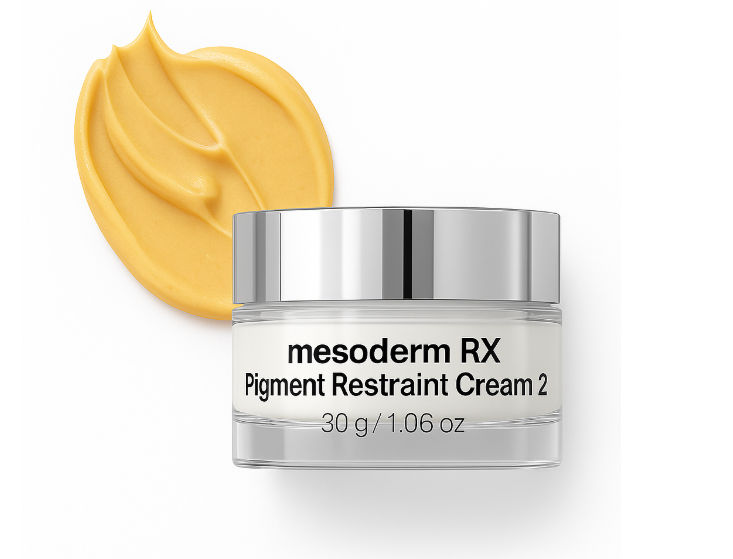
Featured Product
Pigment Restraint Cream
Visibly fade the look of dark spots and uneven tone — no clinic visit required. A brightening cream made to target the look of stubborn discoloration, whether it’s from post-blemish marks, sun exposure, or dullness that years of serums haven’t improved.
Shop Now →The Cellular Basis of Hyperpigmentation
Hyperpigmentation looks simple on the surface. It isn't. At the cellular level, you can think of it as a melanin factory that has become overactive, over-signaled, or poorly regulated after injury, UV exposure, or hormonal influence.

How the melanin factory works
Melanocytes are specialized pigment cells located in the basal layer of the epidermis. Their job is to make melanin. That part is normal and protective. Problems start when the skin receives repeated signals telling those cells to make and distribute too much pigment.
The enzyme tyrosinase is one of the key switches in that process. When tyrosinase activity rises, melanin production rises. After melanin is produced, it doesn't stay inside the melanocyte. It gets packaged and transferred to surrounding keratinocytes, which is why pigment becomes visible on the skin surface.
That distinction matters clinically. You can intervene at more than one point:
- Reduce melanin production
- Interrupt melanin transfer
- Limit inflammatory triggers that keep signaling the factory
- Speed visible turnover without damaging the barrier
Not all dark spots are the same
Many patients call every mark a sun spot. That's inaccurate and it leads to poor treatment decisions.
| Type | Primary trigger | Clinical behavior |
|---|---|---|
| Post-inflammatory hyperpigmentation | Acne, picking, friction, rash, procedures, irritation | Often follows visible inflammation and tends to worsen when skin keeps getting inflamed |
| Melasma | Hormonal influence, UV exposure, heat | Usually presents in patches and is more relapse-prone |
| Solar lentigines | Cumulative sun exposure | More discrete and often appear in chronically exposed areas |
A person with acne marks doesn't need the exact same protocol as a person with melasma. Someone with melasma usually needs a stricter prevention strategy. Someone with PIH from breakouts or over-exfoliation needs inflammation control just as much as brightening.
If you misclassify the pigment, you usually choose the wrong level of treatment intensity.
Why inflammation deserves more attention
Inflammation is not a side issue. In many cases, it's the engine. When skin gets irritated, injured, or repeatedly stripped, melanocytes interpret that stress and respond defensively. That's why a technically “strong” routine can fail in real life. The active ingredients may be correct, but the inflammatory environment keeps feeding the problem.
Korean skincare for hyperpigmentation offers an advantage when formulated well. It tends to pair brightening with hydration, calming support, and lower-irritation layering. That doesn't make it weak. It makes it biologically coherent.
Why Most Pigmentation Protocols Fail
Pigment does not clear faster just because a routine feels aggressive. In reactive skin, that approach often prolongs discoloration.
Most failed protocols are built around one wrong assumption. They treat hyperpigmentation like leftover stain on the surface, then push exfoliation harder and harder. The biology is less forgiving. Once irritation becomes repetitive, keratinocytes release inflammatory signals, melanocytes stay activated, and new pigment keeps getting packaged and transferred while older marks are still trying to fade.
Aggressive acids, harsh cleansing, scrubbing brushes, and unstable DIY remedies often disappoint. They can create temporary smoothness, but they also increase transepidermal water loss, weaken the barrier, and maintain the inflammatory environment that keeps post-inflammatory hyperpigmentation active.

The stronger-is-better myth
Pigment-prone skin does not benefit from intensity for its own sake. It benefits from control.
Acids still have a place. The problem is dose, frequency, and context. If the barrier is already inflamed from acne, friction, retinoid misuse, or over-cleansing, repeated low-pH exfoliation can shift a treatable mark into a cycle of redness, stinging, and delayed recovery. The finding explains what clinicians see every week. Patients use technically correct brightening products, but the background irritation keeps signaling melanocytes to produce more pigment.
This pattern shows up often in patients who keep switching products instead of reducing inflammatory triggers. A useful explanation appears in Mesoderm RX's breakdown of why your skin discoloration cream isn't working.
Common reasons progress stalls
- Over-exfoliation. Repeated acids on compromised skin keep injury signals active.
- No trigger control. Ongoing acne, friction, heat, or UV exposure continues to stimulate pigment.
- Single-active thinking. One ingredient rarely addresses pigment production, transfer, inflammation, and barrier repair at the same time.
- Inconsistent use. Hyperpigmentation responds to steady, tolerable routines more than short bursts of intensity.
- Wrong protocol for the pigment type. PIH, melasma, and sun-induced spots relapse differently and need different levels of prevention.
What usually makes things worse
The patterns are predictable.
- Physical scrubbing increases micro-inflammation in skin that is already reactive.
- Frequent acid layering raises the risk of burning, peeling, and rebound darkening.
- DIY citrus, lemon, or abrasive home remedies expose skin to irritation with no dose control.
- Skipping moisturizer while “focusing on pigment” leaves the barrier under-supported and slows recovery.
The skin does not interpret every strong treatment as helpful. It responds to cumulative stress.
The consequence is simple. If a protocol generates inflammation faster than it clears pigment, it is the wrong protocol. Korean skincare tends to perform better here when it is used correctly, not because it is gentler in a vague sense, but because many formulas combine brightening with hydration, calming agents, and barrier support that make daily use realistic. Some of those support ingredients have a longer history outside skincare as well, including digestive support from licorice root, but on skin the value is different. The goal is to reduce inflammatory signaling while interrupting pigment pathways consistently enough to let discoloration fade.
The Core Actives in Korean Skincare That Work
Hyperpigmentation rarely improves from a single trending ingredient. It improves when a formula interrupts pigment signaling without provoking the inflammation that keeps melanocytes active. In Korean skincare, the best brightening products usually combine several roles in one routine. They slow melanin production, reduce transfer of pigment into surrounding skin cells, and keep the barrier stable enough for daily use.
A review in the Journal of Drugs in Dermatology identified niacinamide, licorice, green tea, and soy as some of the most studied brightening and anti-aging ingredients used in South Korean cosmeceuticals, while also noting that the evidence was modest and higher-quality trials were limited, according to the JDD review on South Korean cosmeceuticals. That is the right way to read this category. Ingredient selection matters, but formulation, tolerance, and consistency determine whether pigment fades.

Niacinamide as a transfer blocker
Niacinamide remains one of the most practical first-line options for pigment-prone skin. Its value is not limited to a general “brightening” effect. It helps reduce the transfer of melanin from melanocytes to keratinocytes, which is a meaningful target if discoloration keeps reforming after acne, rubbing, or low-grade irritation.
It also tends to fit sensitive routines better than stronger depigmenting agents. In clinic, I use it often because patients can usually maintain it without the stinging, peeling, or rebound inflammation that disrupts progress. This is valuable for patients whose hyperpigmentation is tied to an impaired barrier, not just excess pigment production.
Arbutin and tranexamic acid as production-focused tools
Alpha-arbutin and tranexamic acid address a different part of the problem. They are used to suppress pigment formation more directly, which makes them useful when niacinamide alone is not enough. Korean formulas often pair them with humectants, soothing extracts, or barrier lipids, and that pairing is not cosmetic window dressing. It improves adherence by making treatment tolerable enough to continue for months.
This is the trade-off many routines miss. A stronger inhibitor on paper can fail in practice if it creates repeated irritation. A slightly slower formula that patients can use every day often produces better real-world clearance.
Licorice and antioxidant support
Licorice is one of the better-supported botanical options in brightening care. It has relevance in hyperpigmentation because it can calm inflammatory signaling while contributing to a more even tone, which fits the barrier-first logic that Korean skincare tends to do well. There is also broader interest in licorice beyond topical use, including discussion of digestive support from licorice root, though its role in skincare is specifically about managing irritation and discoloration at the skin level.
Green tea and soy also have a place here. I treat them as support actives, not primary correction tools for established melasma or stubborn post-inflammatory marks. They are useful when added to a formula that already contains a true pigment-targeting active.
Exfoliation still has a place, but it needs boundaries
Exfoliation can help, but only when it is controlled. Acids remove some pigment-laden surface cells and can improve penetration of leave-on treatments. They also increase the risk of barrier injury if used too often, layered carelessly, or pushed to the point of persistent sting and peeling. In darker skin tones and reactive skin, that injury can translate into more post-inflammatory hyperpigmentation.
For readers comparing acid options, Mesoderm RX provides a practical guide to AHA and BHA products. One example is AHA + BHA + PHA Skin Brightening Serum 30ml, an exfoliating serum described as a daily treatment with hydrating and soothing support, including hyaluronic acid, and noted as fragrance-free, vegan, and suitable for women and men. Products like this work best when acid use is limited to what the skin can recover from, not when exfoliation becomes the whole protocol.
The most effective Korean pigmentation routines are built around repeatable control. Reduce melanocyte stimulation. Interrupt transfer. Support the barrier. Use exfoliation as a measured tool, not a reflex.
Building Your Daily Anti-Pigmentation Routine
A useful routine separates protection in the morning from repair and correction at night. That sounds simple, but many people reverse the priorities. They spend the morning on treatment and then neglect the one step that protects every bit of progress they're trying to create.
The visual below shows the logic clearly.

Morning routine
In the morning, the objective is to leave skin calm, hydrated, and defended.
- Use a gentle cleanse only if needed. If your skin is dry or reactive, a rinse or very mild cleanser may be enough.
- Apply an antioxidant or brightening serum. Vitamin C or niacinamide can fit here if your skin tolerates them well.
- Add hydrating support. An essence, toner, or serum that increases water content can reduce the sting potential of later steps.
- Seal with moisturizer. This is not optional in pigment-prone sensitive skin.
- Finish with broad-spectrum SPF 50+. Daily use of broad-spectrum SPF 50+ is essential in a hyperpigmentation routine because ongoing UVA and UVB exposure can undermine any progress from brightening actives, according to Eyurs' guidance on Korean skincare for hyperpigmentation.
Evening routine
At night, the goal changes. This is when you treat existing discoloration and support recovery.
- First cleanse thoroughly. If you wear sunscreen or makeup, remove both completely.
- Use exfoliation selectively. Not every night, and not by default if your barrier is unstable.
- Apply your targeted treatment serum. Niacinamide, arbutin, or tranexamic-acid-containing products usually fit here.
- Layer hydration after treatment. This helps reduce irritation and maintain barrier function.
- Finish with a barrier-focused moisturizer. Night is when you want to minimize water loss and reduce low-grade irritation.
Here's a practical demonstration of routine flow and layering:
How to decide your treatment frequency
Not everyone should use active treatment on the same schedule.
| Skin presentation | Better approach |
|---|---|
| Reactive, stinging, easily flushed skin | Start with barrier support and lower active frequency |
| Post-acne marks with oilier skin | Use a more regular but still controlled brightening schedule |
| Pigment after irritation or procedures | Delay stronger actives until skin is fully settled |
Practical rule: if a product increases persistent sting, redness, or heat, it isn't helping your pigment plan, even if the ingredient list looks impressive.
The best Korean skincare for hyperpigmentation is usually the routine you can repeat without provoking your skin.
The Critical Role of Barrier Support and Prevention
A calm barrier is not a side benefit. It is part of pigment treatment itself. When the barrier is dry, inflamed, or repeatedly stripped, the skin becomes more reactive to everything. Cleansers sting. Acids penetrate unevenly. Brightening serums that should be useful suddenly become irritating. Then the inflammation triggers more pigment signaling.
That is why a modern pigment strategy shouldn't be built around “destroying discoloration.” It should be built around normalizing the environment that produces it. In practical terms, that means fewer unnecessary irritants, more hydration, less friction, and more respect for skin that has already shown you it becomes darker when inflamed.
What barrier-aware formulas tend to avoid
A smarter pigment routine often excludes ingredients and product styles that add noise to already stressed skin.
- Added fragrance can become a needless trigger in sensitive users.
- Harsh alcohol-heavy formulas may create immediate lightness but longer-term instability.
- Excessive active stacking often produces redness without better clearing.
- Rough cleansing tools and physical scrubs can prolong post-inflammatory discoloration.
Prevention is treatment
For long-term clarity, prevention and correction have to operate together. If you keep triggering inflammation, no brightening ingredient will fully save the routine. If you skip UV protection, prevention collapses. If you don't moisturize because you're focused only on fading spots, you weaken the skin you're trying to correct.
Patients who want to refine this part of their routine can review Mesoderm RX's guidance on the best sunscreen for hyperpigmentation. The larger principle is straightforward. Prevention isn't separate from treatment. In pigment work, prevention is part of treatment.
Achieving Long-Term Clarity with a Systemic Approach
Lasting improvement in hyperpigmentation comes from consistency, not intensity. You need a routine that lowers pigment signaling, limits avoidable inflammation, and protects the skin every day. That is the reason Korean skincare for hyperpigmentation works best as a system. Not as a random mix of brightening products.
Some stubborn cases also don't behave like a purely topical problem. Hormonal fluctuation, inflammatory load, and broader lifestyle patterns can affect what you see on the skin. For readers exploring that wider lens, it can be useful to learn more about optimal gut balance solutions as part of a general wellness framework. That doesn't replace topical care, but it does reflect a more complete way of thinking about chronic skin concerns.
The key is not to chase the harshest formula or the fastest promise. Use targeted actives. Keep the barrier intact. Protect against UV every morning. Adjust the routine to the pigment type and to the skin's tolerance. That's how discoloration improves without constantly being re-triggered.
If you want a routine built around that barrier-first, results-driven philosophy, explore Mesoderm RX. The line is designed around high-potency, minimal-additive formulas for dark spots, uneven tone, and daily protection, which makes it a practical next step for anyone who wants a more disciplined approach than trend-based brightening.