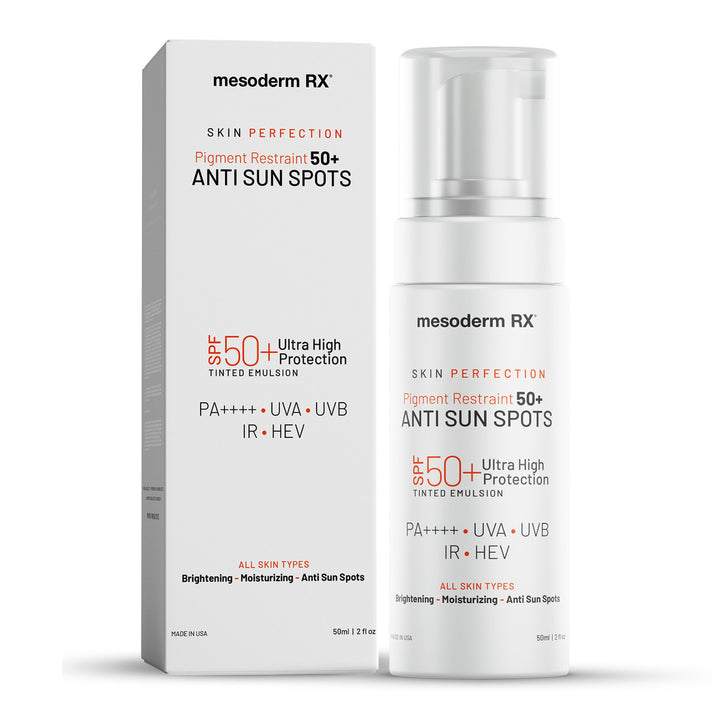
Best Sunscreen for Hyperpigmentation: Clinical Guide 2026
Share
Most advice about the best sunscreen for hyperpigmentation is too shallow. “Use SPF 30” is not wrong, but it's incomplete, and incomplete advice is why so many people keep buying brightening serums while their dark spots stay active.
Hyperpigmentation is not just a stain sitting on the skin. It is a living response to light exposure, inflammation, and repeated cellular signaling. If those triggers continue every morning, your nighttime correctives are working against an open faucet. You cannot fade pigment efficiently while you keep re-stimulating melanocytes during the day.
That is why sunscreen for pigment-prone skin has to be treated as a control mechanism, not a finishing step. The best sunscreen for hyperpigmentation is the one that interrupts the signals driving melanin production, especially the forms of light that basic sunscreen advice often ignores.
Sunscreen Is Not Just Prevention It Is Treatment
For pigment disorders, sunscreen is not optional maintenance. It is part of treatment.
Sunscreen is often still considered a product that prevents future damage but does little for marks that already exist. That framing is outdated for hyperpigmentation. In practice, uncontrolled daytime exposure keeps dark spots biologically “on,” especially in melasma and post-inflammatory hyperpigmentation.
The American Academy of Dermatology recommends broad-spectrum sunscreen with SPF 30 or higher, notes that SPF 30 blocks 97% of UVB rays, advises reapplication about every two hours when outdoors, and specifically recommends a tinted sunscreen for hyperpigmentation because visible light can increase skin darkening, as outlined in the AAD sunscreen guidance.
Why this changes treatment logic
A pigment-correction serum can only do so much if UV and visible light keep triggering melanocyte activity every day. That is the core mistake. People look for a stronger acid, a stronger brightener, or a more aggressive peel when the underlying problem is daytime exposure control.
Clinical point: If your sunscreen strategy does not cover visible-light aggravation, you are often preserving the very discoloration you're trying to fade.
The therapeutic role of sunscreen becomes even clearer when you look at how pigment behaves. Melanin production is a defense response. If skin reads daylight as threat, it continues to defend. The mark stays darker, lingers longer, and relapses faster.
What treatment-grade photoprotection means
For hyperpigmentation, sunscreen has to do three things well:
- Reduce daily stimulation: It needs to limit the incoming light that drives melanogenesis.
- Protect treatment progress: It needs to stop rebound darkening while you're using corrective actives.
- Be wearable enough for consistency: A theoretically ideal formula that pills, stings, or breaks you out won't help if you stop using it.
That last point matters more than people admit. Precision on paper is useless without adherence on skin.
The Biological Cascade Behind a Dark Spot
A dark spot forms because the skin receives a signal and responds by producing more pigment than the area needs. The response is protective, but the visible result is uneven tone.
At the center of that process is the melanocyte, the pigment-producing cell. Think of it as a factory. Its job is to make melanin and package it for delivery into surrounding skin cells. The enzyme tyrosinase acts like the factory switch. When UV exposure, visible light, or inflammation pushes that switch upward, pigment output rises.

The signal comes before the spot
The visible mark is the end of a chain reaction, not the beginning.
A trigger hits the skin. Keratinocytes and inflammatory mediators send distress signals. Melanocytes respond by increasing pigment synthesis. Melanin is packaged into melanosomes, then transferred into neighboring cells. Once enough of that pigment accumulates, you see a brown, gray-brown, or patchy area on the surface.
That is why hyperpigmentation is never just a surface issue. You are dealing with signaling, enzyme activity, pigment synthesis, pigment transfer, and persistence.
Not all hyperpigmentation is the same
Lumping all dark marks together leads to poor treatment decisions.
- Post-inflammatory hyperpigmentation or PIH follows injury or inflammation. Acne, picking, friction, eczema, and harsh treatments can all trigger it.
- Melasma is more complex. It tends to present in broader patches and is strongly influenced by recurrent light exposure. It relapses easily because the skin remains highly reactive to trigger signals.
- Solar lentigines, often called sun spots, are more localized marks associated with cumulative exposure.
These categories overlap visually, but they don't behave identically. PIH often follows a defined inflammatory event. Melasma behaves more like a chronic signaling disorder. Sun spots reflect long-term exposure history.
The darker the mark, the less useful it is to ask only “what fades pigment?” The more important question is “what is still stimulating pigment today?”
This is also why exfoliating or brightening products need a controlled daytime environment. A formula such as AHA + BHA + PHA Skin Brightening Serum 30ml is described by the brand as a daily treatment that works to minimize the appearance of dark spots and acne pigmentation while using ingredients including kojic acid, glycolic acid, lactic acid, salicylic acid, lactobionic acid, hyaluronic acid, and hexapeptides. But the biological target remains the same. Reduce tyrosinase activity, improve turnover, and prevent ongoing daytime reactivation.
Why Most Sun Protection Strategies Fail for Pigmentation
People often say they're “using sunscreen every day” and still not seeing pigment improve. Usually the failure is not sunscreen in theory. It is sunscreen in practice.

SPF alone is not enough
The first problem is relying on the SPF number as if it tells the full story. It doesn't. SPF primarily speaks to UVB protection. Pigment-prone skin also reacts to UVA and, in many cases, visible light. If your routine only addresses the sunscreen number and ignores visible-light defense, the strategy is incomplete.
That is why so many “best sunscreen for hyperpigmentation” lists miss the clinical point. They rank texture, cast, and finish, then stop at broad-spectrum and SPF. For melasma, PIH, and deeper skin tones, that leaves a major gap.
Makeup SPF is usually a false sense of security
Foundation with SPF, a tinted moisturizer with SPF, or a compact labeled with sun protection can help as a supplement. It rarely functions as a reliable primary defense. Individuals often don't apply makeup at the density needed for the stated protection.
If you want a useful breakdown of one common misunderstanding, Mesoderm RX's article on whether you can tan with SPF 30 is worth reading because it addresses the practical limits of relying on the SPF label without considering real-world exposure.
Irritation ruins adherence
The second major failure is formula mismatch. Hyperpigmentation often overlaps with acne-prone, reactive, or sensitive skin. If sunscreen stings, pills, clogs pores, or feels greasy, people apply less of it, skip reapplication, or stop altogether.
Dermatology-oriented guidance stresses that the best formula is the one someone will use daily while still prioritizing broad-spectrum protection and minimizing irritation and visible-light triggers, as discussed in this hyperpigmentation sunscreen guidance.
That same principle applies to the rest of the routine. A product like Anti-Aging Powerhouse includes a peptide-rich serum that the brand describes as supporting the moisture barrier, hydration, and the appearance of fine lines. Those supportive features matter because a compromised barrier makes sunscreen wear less comfortable and inflammatory flare-ups more likely.
The common failure points
- Too little product: People apply a thin cosmetic layer, not a protective layer.
- No reapplication: Morning-only use doesn't reliably cover a full day outdoors.
- Wrong formula for skin behavior: If it causes breakouts or burning, compliance collapses.
- No visible-light strategy: This is the technical miss that keeps melasma and stubborn darkening active.
Your sunscreen is only as good as your willingness to wear it correctly, daily, and in enough quantity to matter.
The Non-Negotiable Features of a Pigment-Blocking Sunscreen
If you want the best sunscreen for hyperpigmentation, stop shopping by marketing category and start shopping by function. The label has to answer one question clearly. Does this formula reduce the light signals that keep pigment active?

Start with broad-spectrum and go higher for pigment-prone skin
Broad-spectrum is the floor, not the finish line. The American Academy of Dermatology sets SPF 30 or higher as the baseline in the guidance cited earlier. For hyperpigmentation-prone skin, many clinicians and reviewers push higher because recurrence is easier to trigger than most patients realize.
For this reason, I typically treat SPF 50+ as the practical target when someone is dealing with melasma, persistent PIH, or repeated relapse.
Visible-light protection is the real separator
This is the feature most shoppers miss.
A clinical review states that tinted sunscreens containing iron oxides are highly recommended for preventing and treating hyperpigmentation disorders, especially in intermediate and dark skin tones, and advises broad-spectrum SPF50+ formulas, as detailed in this review on photoprotection by skin phototype and dermatoses.
Tint usually is not just cosmetic in this context. It often signals the presence of iron oxides, which are the relevant pigment-blocking tools for visible light. Without them, many formulas protect well against UV but leave a visible-light gap.
If you're comparing options, Mesoderm RX's guide to tinted sunscreen for sensitive skin is useful because it frames tint as a functional choice, not just a shade preference.
The ingredient checklist that matters
Not every feature carries the same weight. This is the order I'd use:
| Feature | Why it matters for pigment |
|---|---|
| Broad-spectrum | Covers both UVA and UVB exposure |
| SPF 50+ | Provides a stronger margin for real-world underapplication |
| Tint with iron oxides | Helps protect against visible light, a key trigger in hyperpigmentation |
| Low-irritation wear | Reduces the risk of inflammation-driven rebound darkening |
| Photostable formula | Helps protection remain more reliable after application |
Mineral versus elegant wear
People often want a hard rule here. There isn't one universal answer.
Mineral filters such as zinc oxide and titanium dioxide are often favored for reactive skin because they're generally well tolerated and work well in tinted formats. But the best sunscreen for hyperpigmentation is not the one that wins an ingredient debate online. It is the one that gives broad, repeatable, daily protection with visible-light coverage and that you will reapply.
Here's a useful visual explanation of what to look for in a formula and how those features function on skin.
Selection rule: For melasma, PIH, or relapse-prone discoloration, a non-tinted UV-only sunscreen is often a partial solution, not a complete one.
Building a System for Pigment Correction
Photoprotection stabilizes the condition. Correction then becomes possible.
That distinction matters because people often expect sunscreen to do the entire job. It won't. Sunscreen is the shield. It reduces incoming triggers. But if you want to improve existing discoloration more efficiently, you usually need a second arm of the system that targets pigment formation and turnover.

Why sunscreen unlocks the rest of the routine
A review of nine relevant studies found that sunscreens protecting against both UV and visible light help stabilize melasma and post-inflammatory hyperpigmentation. One comparison reported a 75% reduction in MASI score with a UV+VL sunscreen versus 60% with a UV-only sunscreen, and the same review also reported an 8-week study where daily sunscreen use led to lightening of preexisting hyperpigmented macules in 81% of patients, fewer macules in 59%, and overall skin lightening in 85% by week 8, according to this review on sunscreens in melasma and PIH.
Those numbers are why I don't treat sunscreen as passive support. For pigment disorders, the right sunscreen changes the treatment environment itself.
Protection plus correction works better than correction alone
If you're using acids, tyrosinase modulators, brightening agents, or procedural treatments without strict daytime light control, you get unstable progress. Marks fade, then re-darken. Tone improves, then stalls. Melasma softens, then returns.
A system-based routine looks more like this:
- Morning defense: Use a sunscreen selected for pigment control, not just UV compliance.
- Barrier preservation: Keep irritation low so the skin doesn't create more inflammatory pigment.
- Targeted corrective care: Add a pigment-focused topical to interfere with melanogenesis and help lift visible discoloration.
This is also where procedural timing matters. If someone is considering more aggressive options for texture and pigment overlap, House of Glam HQ's treatment guide gives a useful comparison of when chemical peels and microneedling make sense. The practical takeaway is simple. Procedures can help, but they do not replace disciplined photoprotection.
Where Mesoderm RX fits
One example within a pigment-correction system is Mesoderm RX Pigment Restraint Cream. In a routine built around strong daytime photoprotection, a product in this category serves the corrective side of the equation by targeting existing uneven tone rather than replacing sunscreen.
That sequencing matters more than brand loyalty. If the daytime step is weak, the nighttime step has less room to work.
Your Daily Protocol for Lasting Clarity
Hyperpigmentation improves when you stop treating sunscreen like an accessory. It is the main daytime intervention.
The most overlooked gap in pigment care is visible-light protection, especially in deeper skin tones and melasma. Expert guidance increasingly recommends SPF 50+ plus iron oxides for hyperpigmentation-prone skin because visible light can worsen relapse, as discussed in this dermatologist guide to sunscreens for melasma and hyperpigmentation.
The protocol that holds up in real life
- Choose for pigment biology, not just SPF marketing: Look for broad-spectrum coverage, a tinted format, and ideally SPF 50+ when you're trying to control relapse-prone discoloration.
- Apply every morning without negotiating with yourself: Cloud cover, indoor light exposure near windows, and short outdoor trips still count as cumulative exposure.
- Reapply when exposure continues: If you wear makeup, use a practical method. Mesoderm RX's guide to reapplying sunscreen over makeup is a useful reference because reapplication is where many otherwise solid routines fail.
- Pair protection with correction: Use a targeted brightening or pigment-regulating treatment only after the daytime shield is absolutely essential.
Hyperpigmentation doesn't respond well to random products. It responds to control. Control the triggers first, then correct what remains.
If your current sunscreen doesn't address visible light, doesn't feel comfortable enough for daily wear, or doesn't survive real-world use, it's probably not the best sunscreen for hyperpigmentation, even if the SPF number looks respectable.
Mesoderm RX formulates products around this exact principle: control the triggers, support the barrier, and use targeted actives where they have a chance to work. If you're building a pigment-focused routine and want options designed for daily protection and correction, explore Mesoderm RX.