


Hydroquinone Free Dark Spot Corrector Guide
The most popular advice about dark spots is also the least complete: find one powerful serum and apply it until the mark disappears. Pigment correction doesn't work that way. Melanin production, pigment transfer, inflammation, skin-cell turnover, and light exposure all influence what you see in the mirror, so a single active can interrupt one pathway while the others continue.
A well-designed hydroquinone-free dark spot corrector can be effective, but only when it forms part of a coherent system. The practical question isn't whether hydroquinone has been replaced by a fashionable ingredient. It's whether your routine controls the biological triggers that create and preserve excess pigment without damaging the barrier and provoking more inflammation.
The Regulatory Shift in Pigment Correction
Hydroquinone earned its reputation for a reason. It directly inhibits tyrosinase, an enzyme involved in melanin synthesis, and dermatology has treated it as a reference depigmenting agent for more than five decades. A summary of historical evidence reports that Spencer's 1961 study found improvement in hyperpigmentation in 45% of 98 subjects treated with 1.5% to 2% hydroquinone, an early result that helped establish the ingredient as a benchmark (dermatology textbook summary).
That history doesn't make hydroquinone suitable for indefinite, unsupervised use. The FDA describes serious adverse events associated with hydroquinone skin-lightening products, including rashes, facial swelling, and exogenous ochronosis, a potentially permanent blue-black discoloration. Hydroquinone is commonly used at 2% to 4%, while reviews note that higher concentrations can raise irritation risk (clinical review of hydroquinone use).
Why over-the-counter access changed
The U.S. regulatory position is clear. The FDA states that skin-lightening products containing hydroquinone aren't approved for over-the-counter sale. Since the CARES Act took effect on September 23, 2020, OTC products containing hydroquinone must be removed from the marketplace unless they have FDA approval. In April 2022, the agency issued warning letters to 12 companies selling OTC hydroquinone products as unapproved drugs (regulatory review and FDA information).
The restriction isn't proof that every hydroquinone-free product works. It does, however, encourage a more sustainable formulation philosophy. Instead of relying on one aggressive enzyme-targeting active, developers can combine tyrosinase modulation, melanosome-transfer control, exfoliation, antioxidant support, inflammation management, and barrier repair.
Practical rule: A restricted ingredient isn't automatically the only effective ingredient. It may simply be the ingredient with the longest history and the clearest single target.
Hydroquinone remains a medical option in appropriate circumstances, usually with professional oversight and a defined treatment plan. For people seeking a non-prescription routine, a hydroquinone-free approach is better understood as an evolution toward multi-pathway pigment management, not as a weaker substitute.
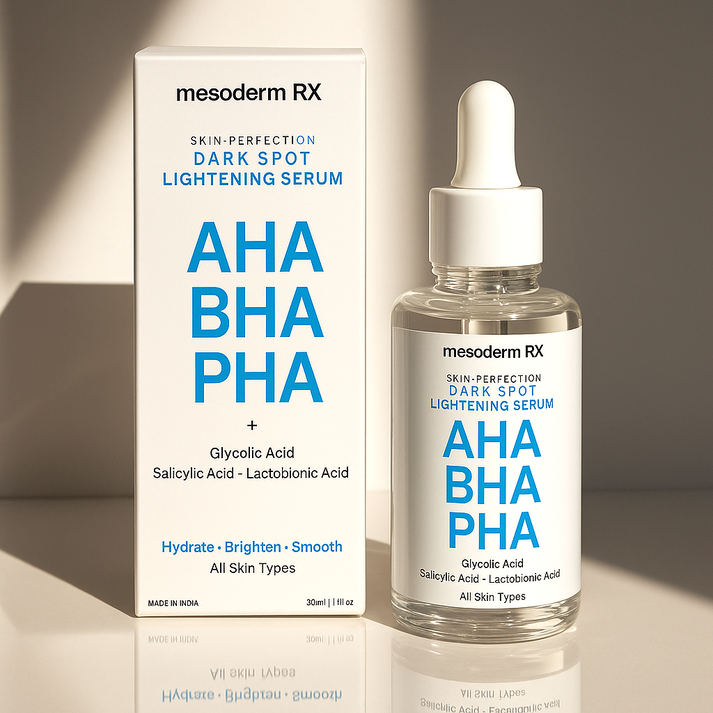
Featured Product
AHA + BHA + PHA Skin Brightening Serum 30ml
This powerful formula combines exfoliating acids to brighten dark spots, refine skin texture, and reveal a smoother, more radiant complexion. Perfect for tackling uneven tone and promoting skin renewal, it leaves your skin feeling fresh, hydrated, and rejuvenated.
Shop Now →Biological Mechanisms of Melanin Production
A dark spot begins with excess melanin, but the visible mark is the end of a chain of events. Light exposure, hormonal signaling, and inflammation can stimulate melanocytes, the pigment-producing cells in the epidermis. Those melanocytes make melanin inside specialized structures called melanosomes, which then transfer pigment to surrounding keratinocytes.
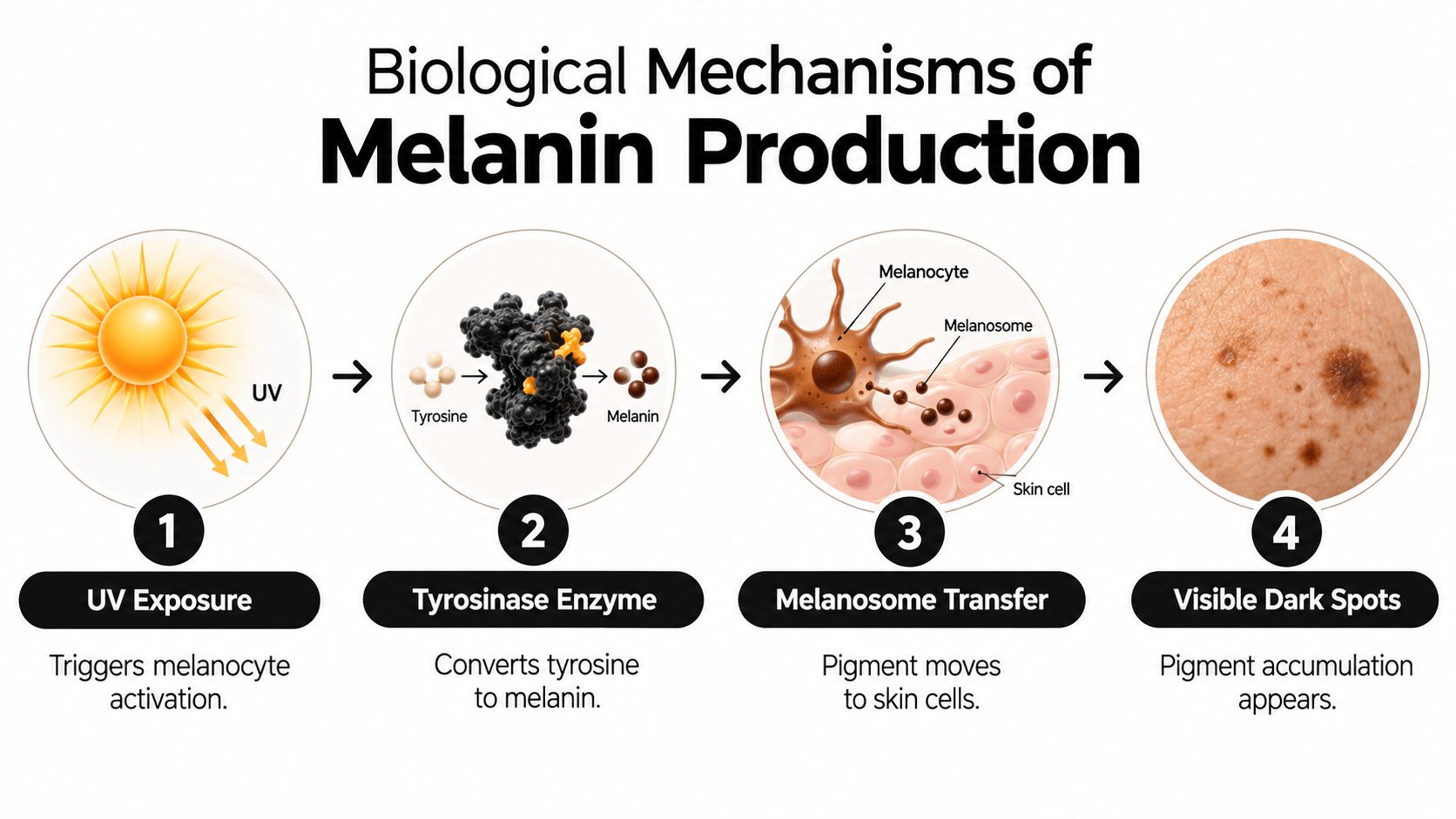
The pathway a corrector must address
Tyrosinase helps convert tyrosine into melanin. That makes tyrosinase inhibition an important strategy, but it isn't the whole process. A formula can reduce new pigment synthesis while existing pigmented cells remain visible, or it can improve surface shedding without reducing the signals that keep melanocytes active.
A useful clinical model has four linked stages:
- Activation: UV exposure, hormonal changes, or inflammation signal melanocytes to increase activity.
- Synthesis: Tyrosinase participates in converting tyrosine into melanin.
- Transfer: Melanosomes move pigment into surrounding skin cells.
- Accumulation: Pigment becomes visible as a brown, gray, or uneven patch.
This explains why single-ingredient routines often plateau. Exfoliation may help remove pigmented surface cells, but it doesn't necessarily control pigment synthesis. Niacinamide can reduce pigment transfer and support the barrier, but it doesn't replace light protection. A tyrosinase inhibitor can reduce new melanin formation while irritation creates another inflammatory signal.
Diagnosis changes the treatment
Melasma is generally chronic and flare-prone, often presenting as larger, symmetrical patches. Post-inflammatory hyperpigmentation, or PIH, follows acne, eczema, injury, or another inflammatory event. Sun-related spots are more concentrated areas of pigment associated with cumulative UV exposure. These conditions can overlap, but they don't have identical triggers or treatment demands.
Broad-spectrum protection matters for both melasma and PIH because UVA, UVB, and visible light can help sustain pigment activity. A review of pigment disorders in skin of color describes protection across these light ranges as an adjunct that can stabilize and improve hyperpigmentation (review of melasma and PIH management).
The implication is straightforward. A hydroquinone-free dark spot corrector should not be judged only by whether its ingredient list includes a famous brightener. Judge it by whether the full routine addresses inflammation, tyrosinase activity, pigment transfer, surface turnover, and ongoing light exposure.
Comparing Hydroquinone-Free Active Ingredients
Hydroquinone-free correction works through coordinated pathways, not a single substitute ingredient. Choose actives according to the suspected trigger, pigment distribution, treatment depth, and your skin's tolerance for irritation. A useful system may reduce pigment transfer, moderate melanin formation, support turnover, and protect the barrier, while daily light protection prevents repeated stimulation.
| Active Ingredient | Primary Mechanism | Best For | Irritation Risk |
|---|---|---|---|
| Niacinamide | Supports the barrier and helps regulate pigment transfer | Sensitive skin, maintenance, uneven tone | Generally low, though concentrated formulas can irritate some users |
| Tranexamic acid | Helps modulate pathways associated with persistent pigmentation | Melasma and recurring discoloration | Generally low in well-tolerated formulas |
| Vitamin C | Antioxidant support and brightening activity | Dullness and prevention-focused routines | Variable, depending on form and formulation |
| AHA, BHA, and PHA | Surface exfoliation and support for cell turnover | Superficial PIH and rough texture | Moderate, especially when layered with other acids |
| Kojic acid | Tyrosinase inhibition | Uneven tone and localized discoloration | Moderate, particularly on reactive skin |
Niacinamide
Niacinamide is a practical foundation when barrier weakness or irritation contributes to uneven tone. It supports the barrier and helps regulate pigment transfer without aggressively stripping the surface, which suits maintenance and skin that repeatedly develops PIH after over-treatment. A double-blind, placebo-controlled study reported that 4% topical niacinamide used nightly for 9 weeks produced a luminosity value change of 8.9, with 68% of subjects rated good-to-excellent by Physician Global Assessment (niacinamide clinical study). The evidence supports niacinamide as a consistent maintenance component, not as a replacement for light protection or treatment of the initiating cause.
Tranexamic acid
Tranexamic acid fits persistent pigmentation and melasma-like recurrence, particularly when a routine needs another pathway beyond surface exfoliation. It should remain part of a coordinated plan rather than being treated as a magic eraser. A 2025 randomized controlled trial found that both niosomal and conventional tranexamic acid 2% with niacinamide 2% achieved efficacy comparable to hydroquinone 4%, with fewer treatment-related adverse effects and lower relapse rates (randomized controlled trial summary).
Vitamin C and exfoliating acids
Vitamin C provides antioxidant support and can complement pigment-focused actives, but its performance depends heavily on the derivative, vehicle, stability, and tolerability. A morning product that repeatedly stings may sustain inflammation and undermine the purpose of brightening.
AHAs such as glycolic and lactic acid loosen connections between surface cells. BHA, commonly salicylic acid, is useful when congestion or acne contributes to PIH. PHAs are generally milder and can provide surface renewal with less disruption. These acids are most useful for superficial discoloration and rough texture, while frequent or excessive application can compromise the barrier and prolong visible marks.
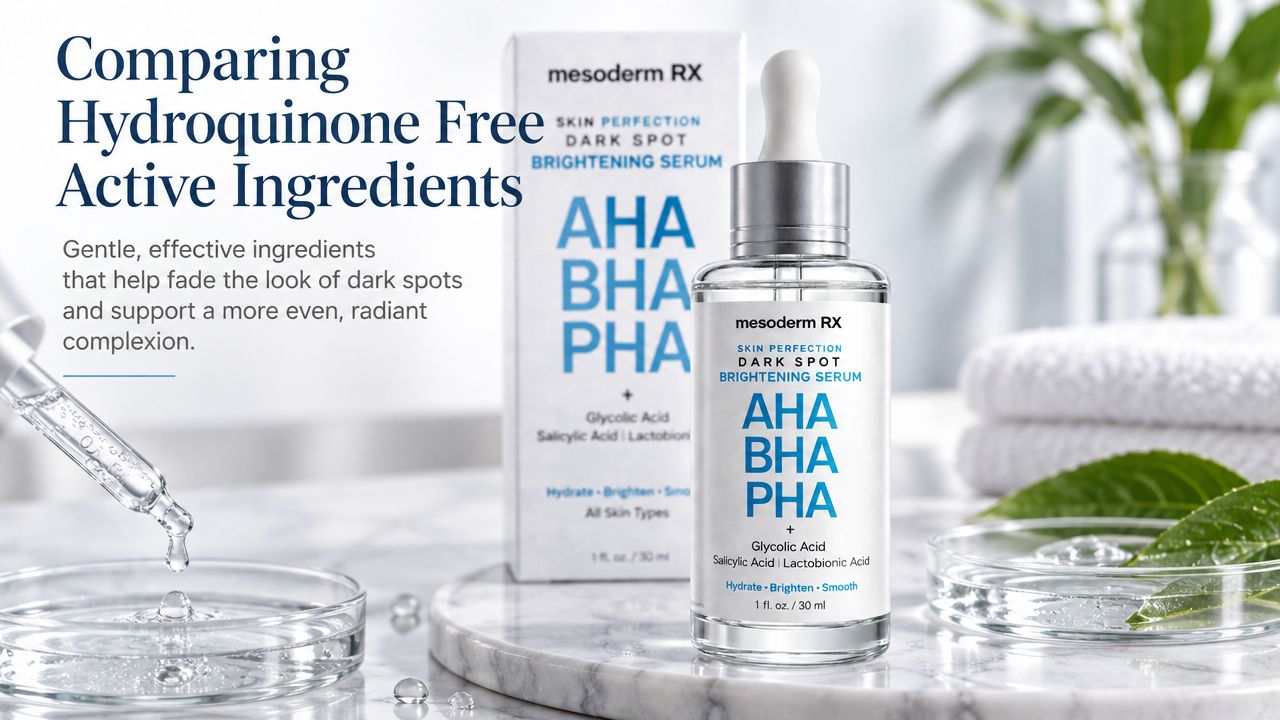
A practical multi-acid option is the AHA + BHA + PHA Skin Brightening Serum 30ml. Its listed actives include kojic acid, glycolic acid, lactic acid, salicylic acid, lactobionic acid, hyaluronic acid, and hexapeptides. The product snapshot describes daytime and nighttime use for the appearance of dark spots, acne pigmentation, sunspots, and uneven tone. It also identifies the formula as made in the USA, vegan, cruelty-free, paraben-free, and fragrance-free.
Kojic acid can support a tyrosinase-focused routine, although reactive skin may not tolerate it well. This comparison of kojic acid versus hydroquinone explains the distinction between those approaches. The practical decision is whether the complete regimen remains tolerable. A moderate system that combines complementary pathways and is used consistently will usually be more useful than an aggressive product discontinued after irritation.
Diagnosing Your Specific Hyperpigmentation Type
Start with the history, not the product label. Ask what happened before the discoloration appeared, where it sits, whether it forms a pattern, and whether it flares after light exposure or hormonal changes.
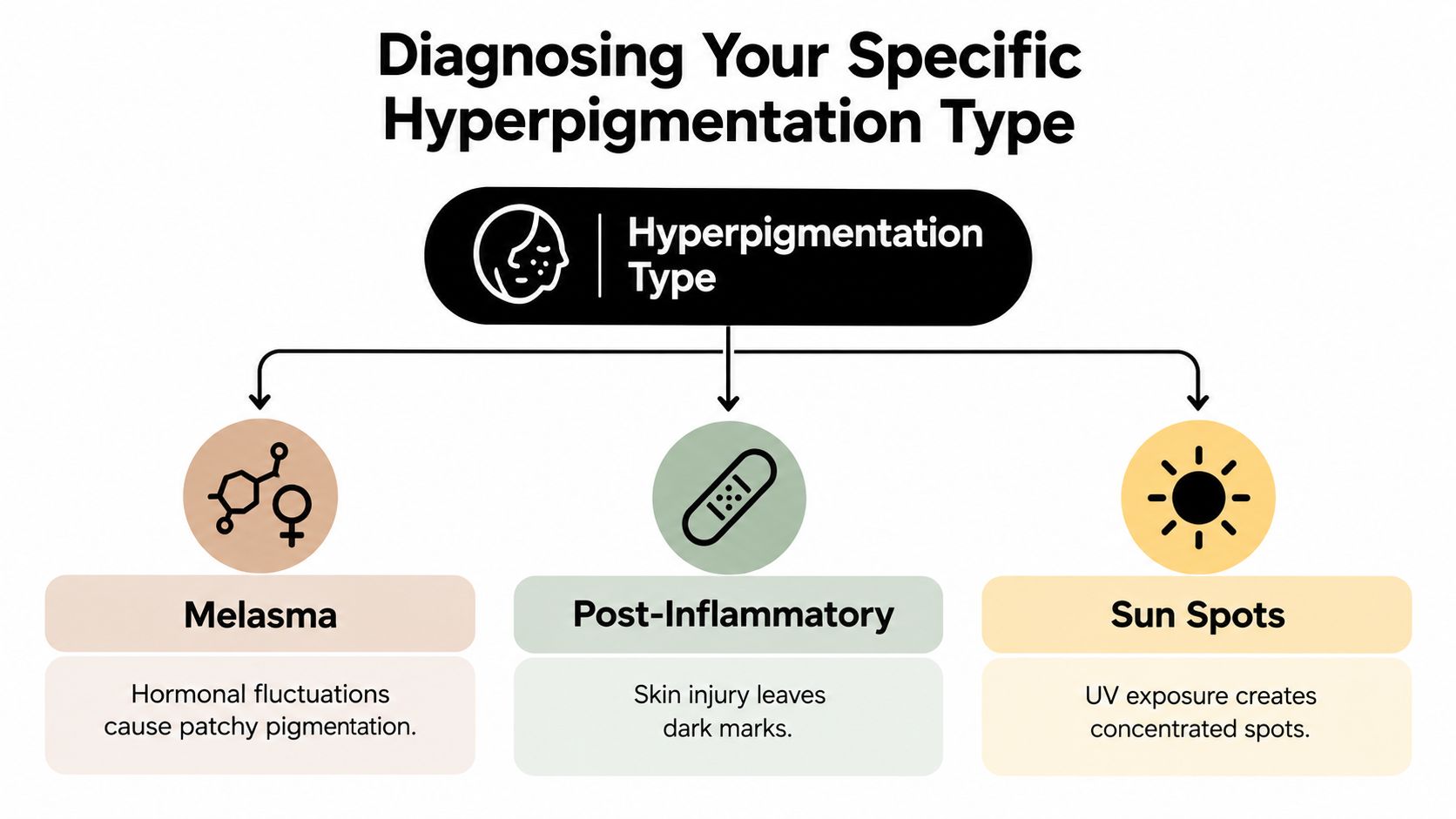
Melasma
Melasma usually appears as broader, fairly symmetrical patches on areas such as the cheeks, forehead, upper lip, or jaw. It often behaves unpredictably because hormonal signaling and light exposure can keep melanocytes active even after the skin looks improved.
Choose a routine built around low-irritation pigment modulation and strict light protection. Tranexamic acid and niacinamide are logical components, while aggressive peeling can backfire if it provokes inflammation. Tinted broad-spectrum sunscreen may be useful when visible light contributes to recurrence.
Post-inflammatory hyperpigmentation
PIH follows an identifiable insult, such as acne, picking, eczema, shaving irritation, or a rash. The mark may be flat and brown, gray, or darker than the surrounding skin, and it often appears exactly where the inflammation occurred.
The first intervention is control of the original trigger. If acne keeps forming, a corrector is treating the aftermath while new pigment continues to appear. Once inflammation is controlled, niacinamide, tranexamic acid, and carefully introduced AHA, BHA, or PHA exfoliation can address different stages of the pathway.
Sun-related spots
A sun spot is usually a discrete, flat area on chronically exposed skin. It may respond to pigment-modulating products, but ongoing UV exposure will keep challenging the result. Sunscreen and physical light protection aren't optional accessories for this pattern.
Use the guide to types of dark spots on the face as a visual reference, but don't diagnose every new or changing mark as ordinary hyperpigmentation. A spot that changes in size, shape, color, or symptoms deserves assessment by a qualified clinician.
Diagnostic rule: If you can't identify the trigger, start with barrier repair and light protection rather than escalating to stronger acids.
Structuring a Clinical Brightening Routine
A hydroquinone-free corrector is only one part of pigment control. The routine must address prevention, pigment signaling, surface renewal, and barrier support without provoking inflammation. Sequence matters because a biologically sound plan is easier to tolerate and repeat.
Morning
Cleanse gently, or rinse with water if your skin is dry and comfortable without a morning cleanser. Apply one pigment-focused product, such as niacinamide or tranexamic acid, then moisturize as needed. Finish with broad-spectrum sunscreen covering UVA and UVB. A tinted formula may be useful when visible light contributes to discoloration.
Avoid stacking vitamin C, exfoliating acids, and several brightening serums just because each has a plausible role. Multiple irritating products can cause redness and stinging, while inflammation can reinforce persistent discoloration.
Evening
After cleansing, apply your primary hydroquinone-free corrector to dry skin. If it contains exfoliating acids, follow the product instructions and do not automatically add another exfoliant. Finish with a barrier-supporting moisturizer, choosing humectants and emollients according to your skin's dryness and sensitivity.
Niacinamide has useful clinical support as a nightly option, as noted earlier. The practical lesson is a measured maintenance dose, not more product or simultaneous use of every available active. One pigment-focused product per application step also makes irritation easier to identify and manage.
A simple weekly structure usually works better than daily experimentation:
- Most mornings: Corrector, moisturizer, and broad-spectrum sunscreen.
- Selected evenings: One exfoliating or resurfacing product, followed by moisturizer.
- Other evenings: A pigment-modulating serum and barrier support.
- During irritation: Stop acids and reduce the routine to gentle cleansing, moisturizer, and sunscreen until comfort returns.
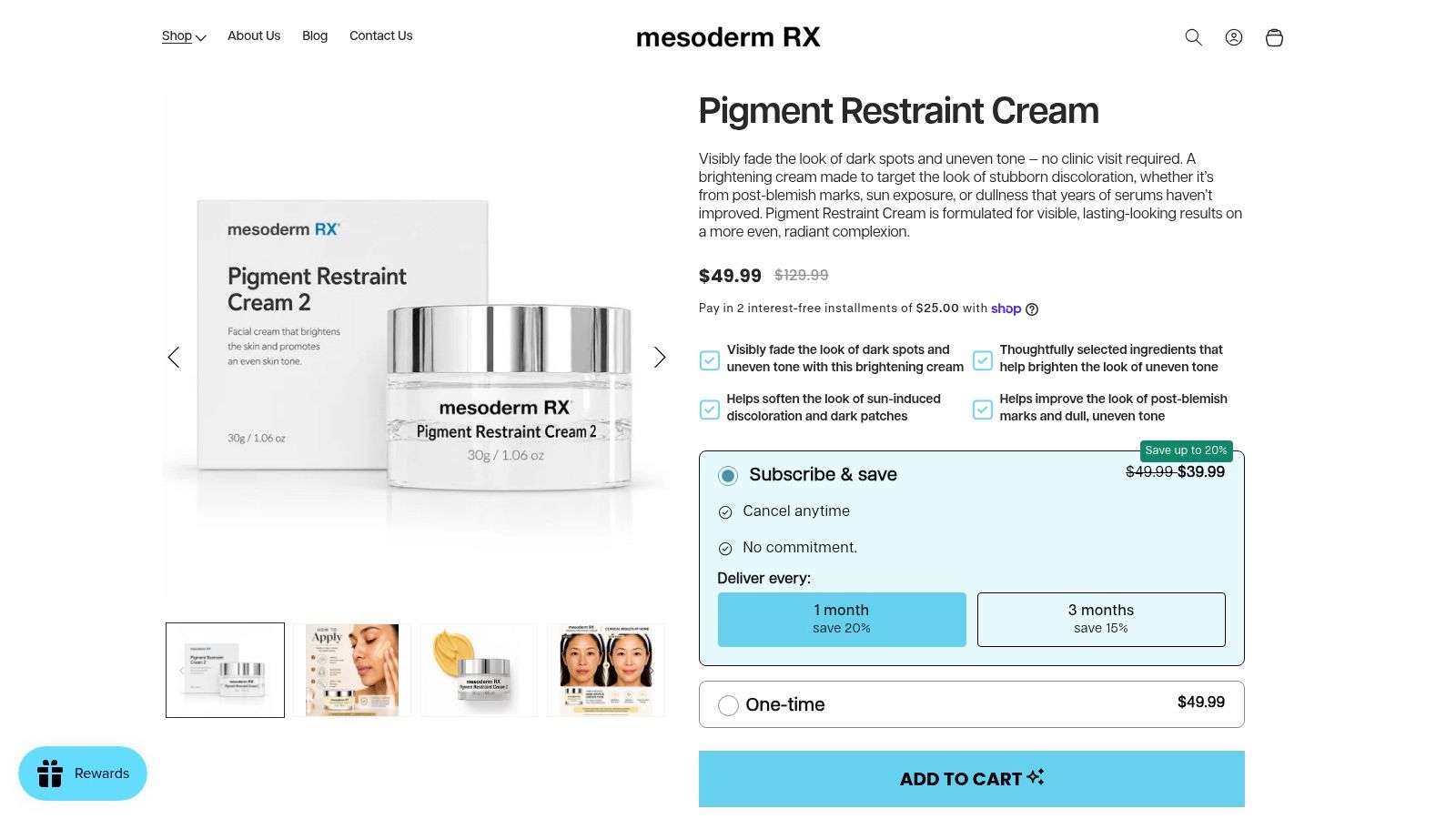
Use this brightening skincare routine guide for a practical sequencing reference. Consistency matters, but tolerance determines whether consistency is possible. Mesoderm RX's Pigment Restraint Cream fits this hydroquinone-free, multi-pathway approach by combining pigment-focused treatment with a routine designed for repeated use.
The Case for Minimal Additive Formulation Systems
A long ingredient list doesn't automatically make a formula complete. The relevant distinction is whether the product combines complementary actives in a stable, tolerable vehicle or just piles on stimulants that increase the chance of irritation.
Fragrance isn't a pigment treatment. If an added scent irritates your skin, the resulting inflammation can work against PIH control. The same principle applies to any unnecessary component that makes a formula less comfortable or less compatible with your barrier. Product selection should focus on the active system, the vehicle, instructions, and your skin's response.
Why systems beat fragmented routines
A fragmented routine creates several problems. You may combine duplicate acids, fail to notice which product caused irritation, or alternate between incompatible instructions. You may also address surface texture while ignoring pigment transfer, inflammation, or light exposure.
A minimal-additive system can reduce those decisions by placing multiple functions in fewer products. That doesn't make every multi-active formula appropriate, and it doesn't remove the need for patch testing. It does make it easier to evaluate the routine as a whole.
Mesoderm RX positions its products around “More Actives, Less Additives”, with hydroquinone-free formulas that avoid parabens, sulfates, phthalates, mineral oil, petrolatum, dyes, and added fragrance. Its Pigment Restraint Cream and AHA BHA PHA Dark Spot Whitening Serum are presented as multi-active products for brightening, uneven tone, and visible discoloration. The useful clinical point is the architecture, not the marketing language: one routine can combine pigment modulation, resurfacing, hydration, and protection without asking you to assemble every function from separate serums.
The product still has to earn a place through tolerability. Start one new active at a time, use the smallest effective amount, and don't interpret burning as evidence that the formula is working. A good system should let you maintain the routine long enough to assess whether the tone is becoming more even.
Implementation Timelines and Progress Tracking
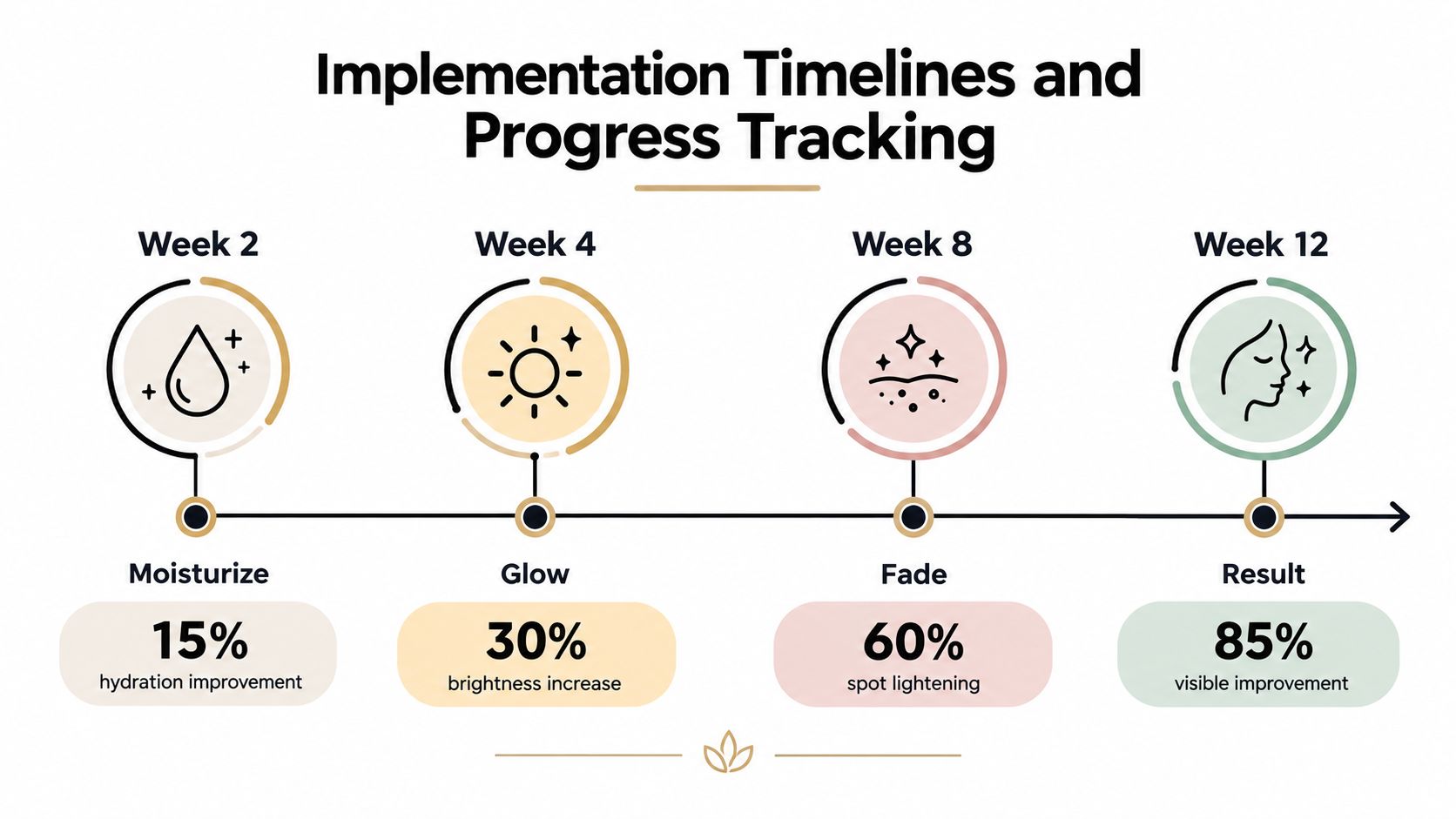
Pigment correction is a biological process, not an instant surface effect. Set expectations around gradual change and judge the routine by both visible tone and skin comfort.
A practical tracking checklist
Before starting: Photograph the same areas in consistent lighting. Record the products you already use, especially acids, retinoids, acne treatments, and sunscreen.
Early use: During the first few weeks, prioritize comfort. Mild adaptation to a new active can occur, but persistent burning, swelling, marked redness, or worsening discoloration means the routine needs to be reduced or reviewed.
Later assessment: Compare photographs rather than relying on memory. Look for softened contrast between the mark and surrounding skin, fewer new spots, more even tone, and improved texture. If there is no meaningful change after a consistent trial, reassess the diagnosis, the trigger, the product instructions, and sunscreen use.
Don't assume every breakout after an exfoliating product is a harmless purge. A purge should be limited and temporary, while persistent new lesions, itching, burning, or a spreading rash suggests irritation or an unsuitable formula. Stop the suspected product and seek professional advice if symptoms are significant.
For melasma, recurrence doesn't mean the routine was useless. It reflects the condition's chronic, flare-prone behavior and the need for ongoing light protection and maintenance. Seek dermatologic assessment for rapidly changing lesions, extensive inflammation, or pigment that doesn't fit the usual pattern.
A hydroquinone-free dark spot corrector works best when you match the active profile to the diagnosis, protect against light every morning, support the barrier, and give the routine enough time to show whether it is changing the biology rather than only producing temporary brightness.
Mesoderm RX offers hydroquinone-free, multi-active options such as its AHA BHA PHA Dark Spot Whitening Serum and pigment-focused cream for routines targeting uneven tone and visible dark spots. Visit Mesoderm RX to review the formulas and choose a structured brightening system that fits your skin's tolerance and pigment pattern.