


How to Lighten Dark Knuckles: A Clinical Approach
Most advice on how to lighten dark knuckles fails for one reason. It treats the skin like a dirty surface instead of a reactive organ.
Dark knuckles usually aren't a stain you can scrub off. They're often the visible result of friction, dryness, irritation, and pigment overproduction. When people attack that with lemon, baking soda, harsh soaps, or aggressive scrubs, they often push the skin into more inflammation. More inflammation means more pigment. That's why many routines feel active but produce little except roughness and disappointment.
A better approach is clinical, not cosmetic. First identify why the knuckles are dark. Then calm the skin and rebuild the barrier. Only after that should you add controlled exfoliation and pigment-targeting actives. If you want lasting improvement, think in systems, not tricks.
The Critical First Step Most People Miss
Many individuals start with the wrong question. They ask, “What will lighten this fastest?” The right question is, “Why did my knuckles darken in the first place?”
That distinction matters because darkening on the knuckles can come from more than one pathway. Sometimes it's mostly friction and dryness. Sometimes it's post-inflammatory hyperpigmentation after irritation. Sometimes it's part of a broader pattern linked to medications, weight changes, or systemic conditions. Medical guidance notes that dark knuckles can be associated with dryness, friction, irritation, medications, diabetes, obesity, and other underlying issues, which is why cause comes before treatment choice in any sensible plan, as outlined in Healthline's overview of dark knuckle causes.
Why scrubbing usually backfires
Knuckle skin is thick, mobile, and exposed to repeated mechanical stress. It bends constantly. It rubs against desks, steering wheels, gym equipment, pockets, bags, and cleaning tools. That repeated stress can create a cycle:
- Friction increases irritation
- Irritation increases pigment signaling
- Dryness makes the surface look duller and darker
- More scrubbing worsens the barrier
- A compromised barrier keeps the cycle going
Clinical reality: If the skin is inflamed, rough, or dehydrated, brightening treatments penetrate unpredictably and sting more easily.
That's why a routine that begins with exfoliation alone often stalls. The biology is working against the strategy.
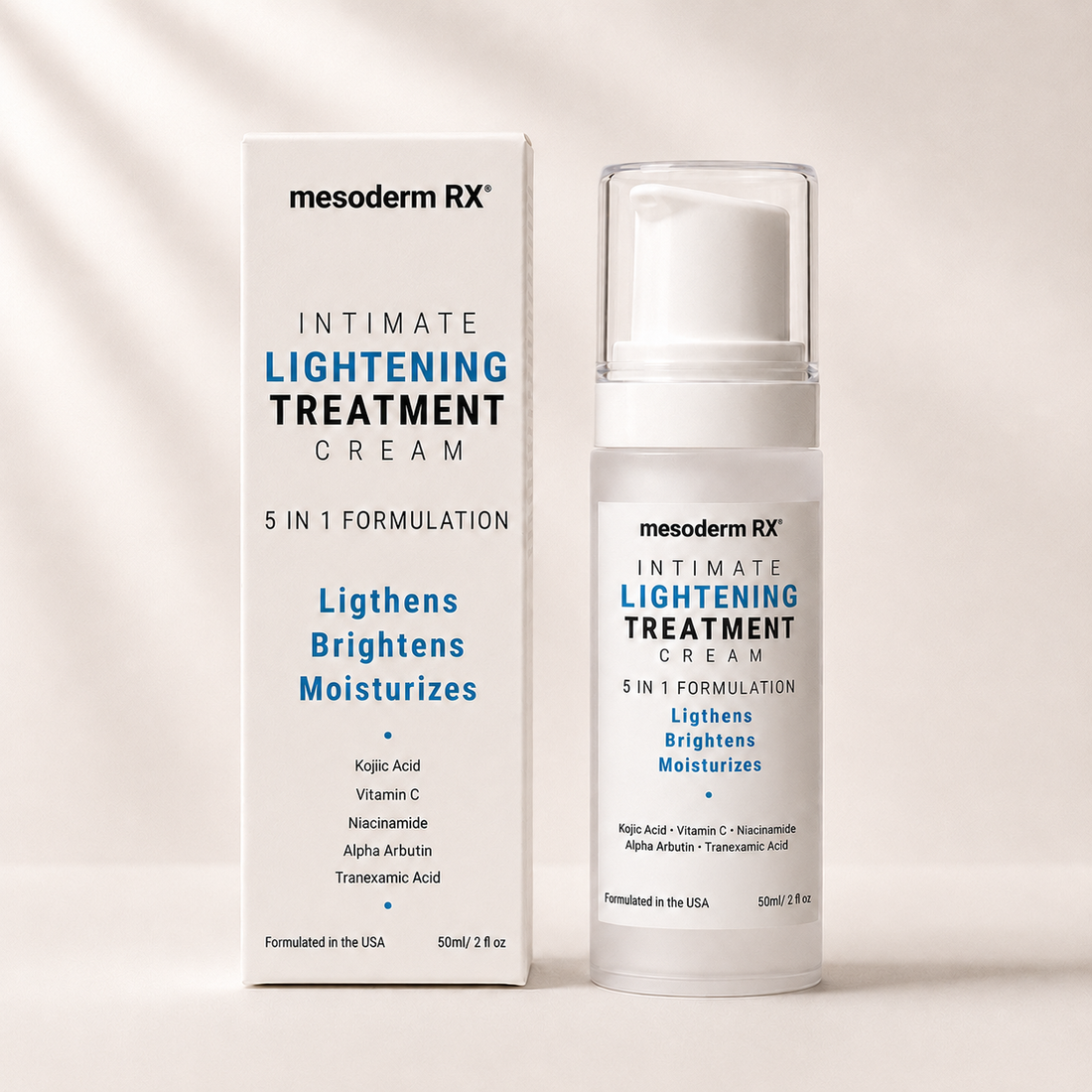
Featured Product
Intimate Skin Lightening Cream for Under Arms, Inner Thighs & Private Area
WHITENS AND LIGHTENS FOR A SMOOTHER, EVEN COMPLEXION.
Shop Now →What an intelligent treatment plan looks like
When I evaluate knuckle hyperpigmentation, I don't treat “dark color” as the diagnosis. I treat it as a symptom. The useful framework is simple:
-
Identify the trigger
Friction, dryness, irritation, sun exposure, or a pattern that needs medical review. -
Stabilize the skin
Reduce hand trauma, improve moisturization, and stop harsh cleansing. -
Add controlled actives
Use measured exfoliation and pigment-regulating ingredients instead of random DIY mixtures.
One practical area people miss is the role of daily UV exposure on the hands. Even short bursts of cumulative sun can keep discoloration hanging around longer than expected, so education on hand SPF matters. If you want a plain-language primer on that side of care, discover aloe vera sun care for a useful overview of daily sunscreen habits.
Why Knuckles Darken A Biological Explanation
Dark knuckles are a visible pattern, not a diagnosis. The biology matters because treatment changes depending on whether the skin is reacting to friction and barrier damage or signaling a broader medical issue.

The pigment pathway
The main process is melanogenesis, the skin's pigment response. Repeated rubbing, low-grade inflammation, irritation from cleansers, and UV exposure all increase signaling to melanocytes. Those cells produce more melanin, and that extra pigment becomes more noticeable as it moves into the upper layers of skin.
Knuckles often look darker for a second reason. The skin in that area commonly becomes dry, rough, and mildly thickened. That changes how light reflects off the surface and lets dead cells accumulate. In practice, patients are often seeing pigment plus texture, not pigment alone.
That distinction matters. If the problem is part color and part thickened, damaged surface, aggressive brightening from day one is a poor strategy. Skin with an impaired barrier stings more easily, responds less predictably, and is more likely to stay inflamed.
For a broader explanation of how this fits into the larger category of discoloration disorders, Mesoderm RX's guide on what hyperpigmentation is, its causes, types, and treatment options is a useful companion.
Friction darkening versus something more serious
Friction-related darkening usually stays localized over the joints. The skin may feel dry, coarse, or slightly thicker, and the history often fits. Frequent handwashing, strong soaps, repeated pressure on the hands, and contact with tools or surfaces can all drive this pattern.
Acanthosis nigricans has a different clinical feel. The skin often looks more velvety, thicker, and more diffuse, and similar darkening may show up on the neck, underarms, or other body folds. In that setting, the priority is evaluation, not a stronger exfoliant.
New, persistent, thickened, or velvety darkening needs a diagnosis before it gets a treatment plan.
Which ingredients make sense biologically
Once the cause is clearer, ingredient choice becomes straightforward. Rough, friction-driven knuckles usually respond best to a combination of barrier repair, controlled keratolytic exfoliation, and pigment-regulating actives. Useful categories include alpha hydroxy acids for built-up surface cells, urea or lactic acid for rough texture, and ingredients such as azelaic acid, kojic acid, retinoids, or vitamin C when the skin can tolerate them.
The trade-off is simple. Stronger actives can improve texture and discoloration faster, but they also raise the risk of irritation on skin that is already dry or inflamed. That is why I start by calming the barrier, then add exfoliating or brightening steps in a measured way. On knuckles, restraint usually works better than intensity.
Ineffective Treatments and Myths to Avoid
Bad advice spreads because it feels intuitive. If the skin looks dark, people assume they should bleach it, scrub it, or “naturally exfoliate” it with something from the kitchen.
That instinct is exactly what keeps many cases of dark knuckles going.

Four habits that waste time or make things worse
-
Lemon juice
It's a classic internet remedy because people equate acidity with exfoliation. In practice, uncontrolled acidity on already stressed skin is a poor trade. Knuckle skin may sting, dry out, and become more reactive, especially when the area is also getting sun exposure. -
Baking soda scrubs
This is mechanical irritation disguised as skincare. Rubbing an abrasive paste over hyperpigmented skin can create more inflammation, which is the exact signal pathway you're trying to reduce. -
Harsh soaps and constant degreasing
Many hands are exposed to detergents all day. If you're repeatedly stripping the skin, you're feeding dryness and barrier damage. Dark knuckles won't improve reliably on top of an impaired barrier. -
Unregulated bleaching creams
These are risky because the label often tells you less than you need to know. If a product promises dramatic lightening without clear ingredient transparency, caution is appropriate.
The clinical reason these approaches fail
They ignore the difference between surface debris and pigment biology.
A little roughness on the skin surface can make knuckles look darker, yes. But once inflammation and melanin are involved, the solution can't be more trauma. Medical-style guidance specifically warns that common pitfalls include over-scrubbing and harsh soaps, and favors a routine built around thick, fragrance-free moisturizers plus gentle chemical exfoliants like lactic acid or glycolic acid only a few times weekly, as summarized in RealSelf's dermatologist-style guidance for dark knuckles.
If a treatment burns, peels aggressively, or leaves your knuckles raw, that isn't “proof it's working.” It may be proof you've created a new inflammation problem.
What to stop immediately
Use this as a quick audit.
| Habit | Why it's a problem | Better replacement |
|---|---|---|
| Scrubbing with brushes or rough cloths | Increases friction and micro-irritation | Gentle washing with hands only |
| Strong soap after every wash | Strips oils and worsens dryness | Mild cleanser and immediate hand cream |
| Layering multiple actives at once | Raises irritation risk | Add one active slowly |
| Treating only at night and ignoring daily triggers | Ongoing friction keeps pigment active | Reduce rubbing and improve daytime care |
One more myth deserves mention. Consistency alone won't fix a flawed routine. Plenty of people are consistent with treatments that are biologically wrong for the problem. The answer isn't “be more disciplined.” The answer is “stop repeating the trigger.”
The Foundational Routine Repair and Protect
If you want to know how to lighten dark knuckles without making them angrier, start by treating the skin like damaged skin, not stained skin.
That means two priorities. Barrier repair first. UV protection every day.
Step one is heavy moisturization
Dry knuckle skin often looks darker because it's rough, thickened, and packed with dead cells. It also tolerates active treatment poorly. That's why the first phase should center on a thick, fragrance-free hand cream.
Real-world ingredient choices matter more than branding here. Useful categories include:
- Shea butter for occlusion and softness
- Ceramides for barrier support
- Urea 10% to 20% when the skin is thick, dry, and rough
Apply it daily, and reapply after handwashing when possible. This is not glamorous, but it changes the treatment environment. Actives perform better on skin that isn't cracked, stripped, or tight.
Step two is hand sunscreen, every day
The most practical preventive measure is daily broad-spectrum sunscreen on the hands. Guidance for dark knuckles commonly recommends SPF 30 or higher, because UV exposure can maintain or intensify friction-related and post-inflammatory pigmentation. Improvement is usually gradual over several weeks to a few months, and if there's no response after a couple of months, that's a reasonable point to seek prescription evaluation, as outlined in WikiHow's patient guidance on clearing dark knuckles.
That daily hand SPF habit is where many treatment plans subtly fail. People use brightening products at night and then drive, walk, or sit by windows with unprotected hands. Pigment doesn't care that you used a serum twelve hours earlier.
If you want guidance on choosing UV protection that works well within a pigment-focused routine, Mesoderm RX has a practical article on the best sunscreen for hyperpigmentation.
Non-negotiable: If you're trying to fade dark knuckles and skipping sunscreen on your hands, you're working against your own routine.
A simple barrier-first schedule
Here's the baseline I'd use before introducing stronger brightening steps:
-
Morning
Wash gently if needed, then apply hand cream and hand sunscreen. -
After washing
Reapply hand cream, especially if soaps or sanitizer leave the skin tight. -
Evening
Apply a thicker layer of moisturizer over the knuckles. If friction at night is an issue, keep the area coated rather than bare and dry. -
Throughout the day
Reduce repetitive rubbing. The product can't outrun the trigger.
This stage feels understated, but it's where resistant cases often begin to turn.
A Targeted Protocol for Exfoliation and Brightening
Active treatment starts only after the knuckle skin is stable. If the area is still tight, shiny, cracked, or stinging with moisturizer, brightening steps usually backfire. In practice, the fastest route to improvement is often slower at the start. Repair first, then treat pigment.
The goal here is specific. Smooth the excess surface buildup that makes knuckles look dull and thickened, then reduce the pigment signaling that keeps them dark. Those are separate problems, and they respond best to separate tools introduced in a controlled order.

What each ingredient category is doing
Dark knuckles often have two visible features at once. The skin is darker, and the skin is thicker. Treating only pigment leaves roughness behind. Treating only texture can irritate the area and deepen post-inflammatory discoloration.
Exfoliating acids address the built-up surface.
- Lactic acid 5% to 10% suits dry, ashy, or mildly thickened knuckles because it exfoliates while pulling in water.
- Glycolic acid penetrates more aggressively and tends to work better on thicker, rougher skin, but it also causes more irritation in people with a weak barrier.
- Salicylic acid can help when there is a very compact, stubborn surface layer, though it is usually not my first choice if dryness is prominent.
Keep exfoliation to a limited weekly cadence. Knuckles tolerate less than people assume, especially if friction from gripping, cleaning, or frequent hand washing is still part of the trigger.
Pigment-focused actives address excess melanin production.
- Azelaic acid is useful when discoloration is persistent and the skin also runs reactive.
- Kojic acid is common in formulas designed for uneven tone.
- Niacinamide is a reasonable lower-irritation option when the barrier still needs a margin of safety.
- Vitamin C can help, but only if the formula is stable and the skin tolerates it.
Start low and stack slowly
Poor results usually come from timing errors. Patients add exfoliation, brighteners, retinoids, and handwashing-related irritation all in the same week, then assume the product failed.
Use a staged progression instead:
-
Early treatment phase
Keep the barrier routine unchanged. Add one exfoliating product on a limited schedule. -
If the skin stays comfortable
Add one pigment-focused active on nights when you are not exfoliating. -
If burning, peeling, or tenderness shows up
Stop the actives, return to moisturizer-only care, and restart at a lower frequency once the skin is calm.
A combined formula can make sense once the skin has proven it can tolerate acids. AHA + BHA + PHA Skin Brightening Serum 30ml includes kojic acid, glycolic acid, lactic acid, salicylic acid, and lactobionic acid, along with hydrating support ingredients such as hyaluronic acid. That kind of formula belongs in the "active treatment" category. It is not a daily default for every case, and it is not the place to start if the knuckles are still irritated from friction.
For a clearer breakdown of how these acids differ in practice, Mesoderm RX's guide to AHA and BHA products for exfoliation and tone correction gives useful background.
A workable weekly rhythm
Knuckle protocols work best when they are boring enough to repeat for weeks.
-
Night one
Exfoliating acid on the knuckles, then moisturizer. -
Night two
Recovery only. Thick hand cream. -
Night three
Pigment-focused active, then moisturizer. -
Night four
Recovery only. -
Repeat based on tolerance
Keep exfoliation limited to a few nights per week. If the skin starts looking glossy, flaky, or sore, reduce frequency before changing products.
Here's a short visual guide to the type of product category many people use in this phase:
What works better than chasing one miracle ingredient
The useful question is not whether glycolic acid is better than kojic acid, or whether azelaic acid beats vitamin C. The useful question is whether the routine covers the jobs that matter.
| Function | What it addresses |
|---|---|
| Surface smoothing | Thick, dull, compacted buildup |
| Pigment control | Ongoing melanin overproduction |
| Barrier support | Tolerance, consistency, fewer setbacks |
| UV defense | Re-darkening after progress starts |
Office procedures have a role, but they are not automatically the next step. I reserve that conversation for cases that do not respond to a disciplined topical plan, or for patients whose pigmentation pattern suggests something deeper than friction-related darkening. For a practical comparison of topical care and procedures for uneven tone, ProMD Health Columbia's skin treatments are a useful reference.
A good protocol fades pigment only if the skin can keep tolerating it. Calm skin responds better than overtreated skin.
Advanced Care for Sensitive Skin and Other Areas
Sensitive skin changes the pace, not the logic. If your knuckles sting easily, get red fast, or react to fragrance and frequent washing, your margin for error is smaller.
That doesn't mean you can't improve discoloration. It means you need a lower-friction protocol with wider recovery windows.
How to adjust for sensitivity
A practical sensitive-skin version looks like this:
-
Patch test first
Try new actives on a small area before treating both hands. -
Reduce frequency
Use brightening or exfoliating products less often, not more aggressively. -
Keep the base routine plain
Fragrance-free cream, gentle cleansing, and sunscreen on the hands remain the anchors. -
Watch the texture, not just the color
If the skin becomes shiny, tight, flaky, or sore, pause the actives and return to barrier repair.
This barrier-first logic matters because many people with dark knuckles also have high-friction routines. Cleaning, gym training, repeated washing, and chronic rubbing can all keep the area inflamed. Practical guidance has increasingly emphasized that the fastest visible improvement may come from repairing the barrier and reducing friction first, then layering gentle brightening actives, as discussed in this overview of dark knuckle care for sensitive and high-friction routines.
The same principles apply to other body areas
Elbows, knees, underarms, and inner thighs often darken for similar reasons. The difference is tolerance. Some areas can handle more exfoliation. Delicate areas usually can't.
That's where product selection has to match the zone being treated. A multi-zone brightening cream designed for sensitive external areas can make more sense than repurposing a stronger acid serum everywhere.

For delicate external areas beyond the hands, Intimate Skin Lightening Cream for Under Arms, Inner Thighs & Private Area is formulated with tranexamic acid, niacinamide, and arbutin, and is positioned for sensitive multi-zone use. The broader principle is what matters most. Match the strength of the formula to the fragility of the skin.
When to stop self-treating
Home care is reasonable when the pattern looks cosmetic and friction-related. It's not the right move when the presentation changes category.
Seek medical evaluation if the darkening is:
- New and unexplained
- Thickened or velvety
- Spreading to folds or multiple areas
- Not improving despite consistent care over several weeks to a few months
That last point matters because realistic timelines are slower than people want. Improvement usually unfolds over weeks to months, not overnight. A disciplined routine can move the skin in the right direction. It cannot force pigment biology to operate on social media time.
If you want a straightforward, results-focused routine built around active brightening, barrier support, and daily protection, explore Mesoderm RX. The line is designed around high-potency, minimal-additive formulas for uneven tone, dark spots, dryness, and sensitive-skin-friendly care without the clutter that often complicates treatment.