


Expert Guide: How to Get Rid of Fine Lines in 2026
Most advice on how to get rid of fine lines starts in the wrong place. It starts with the strongest serum, the newest laser, or the promise that one ingredient will “erase” lines. That's not how skin ages, and it's not how skin improves.
Fine lines are a structural problem first. They show up when skin loses resilience, hydration balance shifts, cell renewal slows, and repeated movement or ultraviolet exposure leaves a visible trace. If you don't address the cause in the right order, you end up spending money on products that make skin feel active without making it look materially smoother.
The hierarchy is simple. Protect first. Repair second. Escalate only when the biology demands it. That's the framework that produces durable improvement at home and helps you decide when topical care has reached its limit.
The Biological Blueprint of a Fine Line
A fine line isn't just “dry skin” and it isn't automatically a wrinkle that needs an injectable. It is an early visible crease formed when skin's surface and support structure stop behaving like tightly woven fabric and start behaving like fabric with loosened threads.
In healthy skin, the upper layers sit on top of a stable support network. Collagen helps provide firmness. Elastin helps skin recover after movement. Natural water-binding components help maintain fullness and flexibility. When that structure is intact, the skin surface looks smoother because it has support underneath it.
When that support weakens, lines appear sooner and linger longer.

Where fine lines actually come from
Two mechanisms matter most.
First, movement-driven lines form from repeated facial expression. Squinting, frowning, and lifting the brows crease the same zones over and over. Early on, those lines disappear when the face is at rest. Later, they remain because the skin itself has changed.
Second, texture-driven lines develop from cumulative environmental and age-related decline in skin quality. Ultraviolet exposure holds the most significance. Fine lines are strongly tied to cumulative UV exposure, and the American Academy of Dermatology recommends daily broad-spectrum sunscreen with SPF 30 or higher. The same Mayo Clinic review notes that topical tretinoin may improve fine wrinkles in people with photodamage when used daily, and also advises SPF 30+ when using retinoids because they can increase sun sensitivity (Mayo Clinic guidance on wrinkles and treatment).
That point gets overlooked. People chase repair before they stop the daily trigger.
The structural weak points
The dermal-epidermal junction is where the surface layer and the deeper support layer meet. When skin is youthful and resilient, that interface is stronger. When skin ages and absorbs chronic UV damage, the interface flattens and the deeper matrix becomes less organized. The result is weaker rebound, rougher texture, and shallow creasing that catches light differently.
Clinical reality: Moisture can make a line look better quickly. Only interventions that protect structure, stimulate remodeling, or reduce mechanical folding change the line itself over time.
That's why a rich cream can make skin look smoother by evening, while the line returns by morning. The cream improved optical appearance and reduced dehydration. It did not rebuild the underlying architecture.
Hormonal shifts can also change how quickly skin becomes thinner, drier, or less elastic. If someone notices skin changes alongside cycle disruption, sleep changes, or other systemic clues, it can help to look beyond skincare alone. A useful overview is this guide to recognizing low estrogen symptoms.
For a closer look at how facial lines develop across different areas, Mesoderm RX also breaks down common patterns in this article on lines on the face.
Your Foundational Daily Treatment Protocol
If you're serious about how to get rid of fine lines, your home routine should behave like a treatment plan, not a shelf of disconnected products. The sequence matters because each step has a different biological job.
The basic framework is straightforward. Daily broad-spectrum sunscreen comes first, then a collagen-stimulating topical at night, with consistent moisturization to support barrier function. Cleveland Clinic also notes a common pitfall: applying actives without daily sunscreen undermines results (Cleveland Clinic wrinkle treatment guidance).
A routine built on that logic is much more effective than ingredient-hunting.
The morning protocol
Your morning routine should focus on defense.

Start with a gentle cleanser. If cleansing leaves skin tight, you're already making the day harder. Overstripped skin is more likely to sting with actives, look crepey, and reflect light unevenly.
Then use a supportive serum layer. In practice, this usually means antioxidant support and hydration. Antioxidants help address daily environmental stress. Hydrating humectants help reduce the dehydrated look that exaggerates early lines. This is not where you need maximum aggression.
Finish with sunscreen, every day, with enough coverage to function as prevention rather than as a symbolic last step. If your routine includes a dedicated sunscreen option, Pigment Restraint Ultra High Sun Protection is a fast-absorbing, non-greasy formula designed to help reduce the look of visible sun damage while providing protection against UVA, UVB, IR, and HEV-combination rays.
Morning should feel boring. Boring is good. Boring protects collagen.
The night protocol
Night is where you ask skin to do repair work.
Use a clean, dry face. Apply your treatment layer first, then moisturizer. If you're using a retinoid, keep the rest of the routine simple enough that you can tolerate it.
A practical sequence looks like this:
- Cleanse without stripping: Remove sunscreen, makeup, and debris so treatment can contact skin properly.
- Apply a targeted active: Retinoids are the classic option because they support cell turnover and collagen-focused repair over time. Peptide serums can fit here for those who want a gentler support layer.
- Seal with moisturizer: Barrier support matters because irritated skin is inconsistent skin, and inconsistent skin doesn't improve.
Practical rule: If a routine makes you flaky, red, and noncompliant, it is too aggressive for long-term wrinkle work.
For readers trying to choose a retinol product rather than jumping to prescription strength, this effective retinol solution is a useful reference point for what a dedicated retinol step can look like in a home routine.
Mesoderm RX has also outlined how treatment categories work together in this piece on why Vitamin C, retinoids and peptides are skincare powerhouses.
A quick visual walkthrough can help if you're refining application order:
What each category can and cannot do
People often confuse product feel with biological effect. They aren't the same.
| Product category | What it does well | What it does poorly |
|---|---|---|
| Moisturizer | Softens surface lines temporarily, improves comfort, supports barrier | Doesn't remove established fine lines permanently |
| Retinoid | Supports gradual texture refinement and collagen-focused repair | Doesn't deliver instant smoothing and can irritate if overused |
| Peptide serum | Offers a gentler support option in a repair routine | Usually won't outperform a disciplined retinoid strategy on its own |
| Sunscreen | Slows new UV-driven damage and protects treatment progress | Won't erase existing lines by itself |
The sequencing errors that waste time
The most common mistakes are mechanical.
- Using too many actives at once: You don't get bonus collagen because you layered every trending ingredient in one evening.
- Applying retinoids without daytime UV protection: That exposes more vulnerable skin to the same trigger you're trying to correct.
- Changing products too fast: Fine-line care depends on repetition. Constantly restarting the routine interrupts tolerance and progress.
- Treating dehydration as aging alone: Sometimes the skin first needs water balance and barrier repair so lines stop looking amplified.
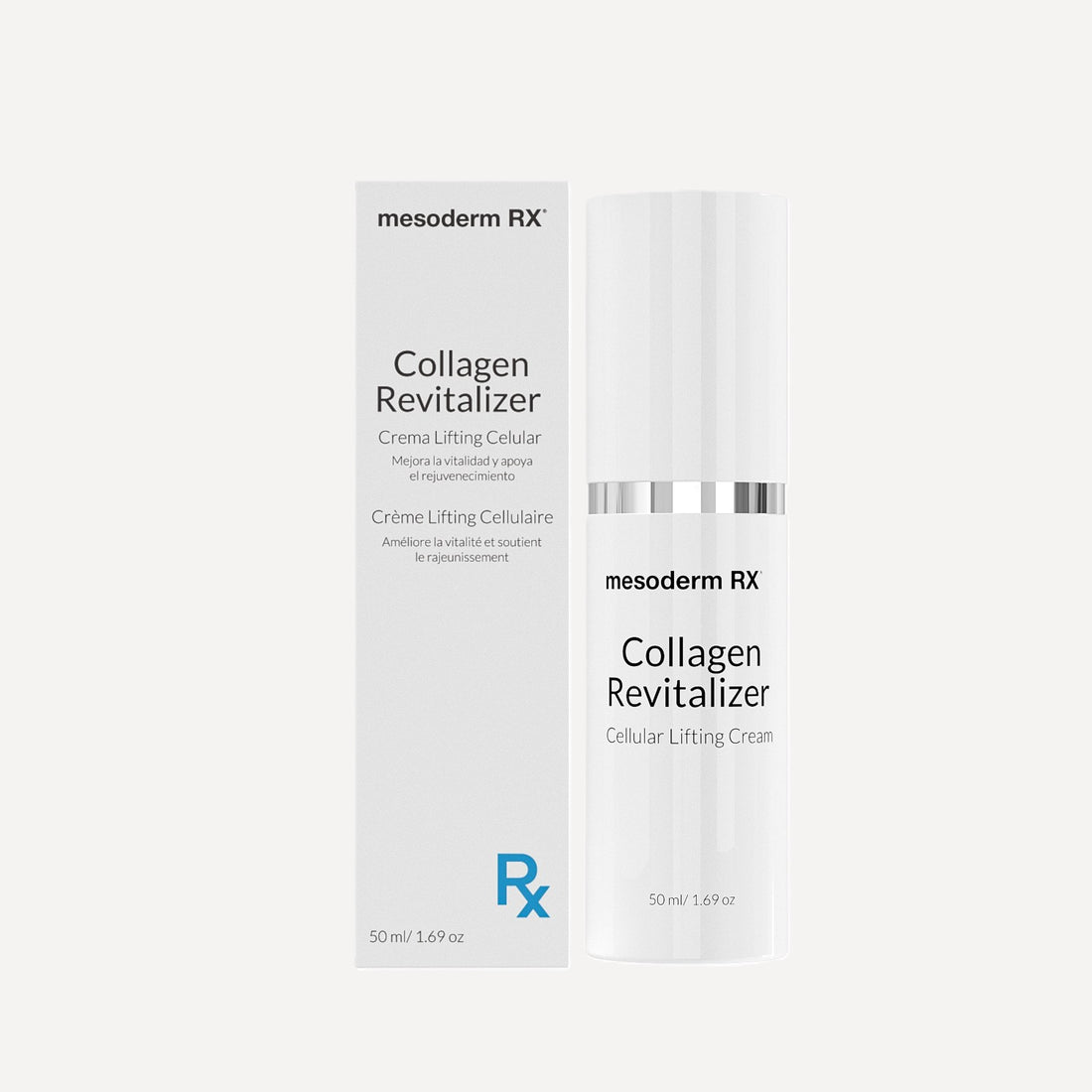
Mesoderm RX is well-positioned in home care because the brand's philosophy is system-based rather than novelty-based. Fine lines respond best to structured routines with strong daily protection, targeted night repair, and formulas that don't burden already reactive skin with unnecessary extras.
Why Most At-Home Routines Fail to Deliver
Most failed routines don't fail because the user bought “bad” products. They fail because the routine has no hierarchy.
People often start with the strongest active they can find, then add exfoliants, then add another serum because the first one didn't transform their face in a week. The result is predictable. Skin gets irritated, texture looks rougher, and fine lines appear more obvious because the barrier is inflamed and dehydrated.
Dermatology sources consistently push a less glamorous truth. Prevention does the heavy lifting, sunscreen is the baseline, and moisturizers mainly soften the look of fine lines temporarily rather than removing them permanently (fine-line treatment perspective from Alastin).
The myth of the miracle product
There isn't a single cream that handles every line type.
Dynamic lines involve repeated muscle movement. Texture-based fine lines involve surface damage, collagen decline, and uneven skin quality. Volume loss changes how lines sit on the face. If you use one serum as if all three mechanisms are the same, the routine won't match the problem.
That mismatch is why people say they “tried everything” when they tried the same category repeatedly.
The more-is-more mistake
An overloaded routine often looks elaborate and performs poorly.
Common examples include:
- Stacking acids and retinoids nightly: This usually creates irritation faster than visible improvement.
- Using moisturizer as the entire anti-aging strategy: Hydration helps appearance, but it doesn't replace true prevention or remodeling.
- Skipping sunscreen on cloudy days or indoor days: Fine-line care breaks down when protection is optional.
- Chasing immediate smoothing only: Instant plumping has value, but it isn't the same as long-term structural change.
Skin that is constantly inflamed doesn't remodel efficiently. It spends its time recovering from your routine instead of benefiting from it.
What actually separates productive routines from expensive ones
The effective routine usually looks less exciting. It is consistent, tolerable, and matched to the actual line type.
It also respects time. Retinoid work is gradual. Barrier repair is gradual. UV prevention only pays off if it happens daily. If someone expects dramatic change from a scattered home routine while continuing the same exposure and irritation cycle, disappointment is built in.
A strong home plan doesn't need to feel intense. It needs to keep working long enough to matter.
Escalating Your Strategy with In-Office Treatments
At-home treatment has a ceiling. Once a fine line is established, topicals can improve texture, hydration balance, and surface quality, but they can't solve every mechanism. That's when escalation makes sense.
For established fine lines, procedural options such as chemical peels, lasers, and microneedling are used to reduce lines by removing damaged outer layers and triggering new collagen. The key is matching the procedure to the wrinkle type. Expression lines respond best to neuromodulators, while texture-driven lines respond better to resurfacing (procedural overview for wrinkle reduction).
Match the treatment to the line
The most important clinical question isn't “What is the strongest treatment?” It's “What is creating this line?”
If the line appears mainly when you move your face, a neuromodulator targets the cause better than another resurfacing serum. If the problem is etched-in roughness, crepey texture, and photodamage, resurfacing or collagen-induction procedures make more sense than muscle-relaxing treatment alone.
That distinction saves people from doing the wrong procedure well.
At-home versus in-office
| Treatment | Best For | Timeline | Notes |
|---|---|---|---|
| Sunscreen and topical routine | Early fine lines, prevention, maintenance | Gradual | Foundational. Necessary even if you later choose procedures. |
| Retinoid-based home care | Mild texture change and early photodamage | Gradual over weeks to months | Useful for repair support, but limited on established movement-driven lines. |
| Neuromodulators | Expression lines | Visible improvement after treatment window, then maintenance | Best when movement is the driver. Not a resurfacing treatment. |
| Chemical peels | Surface roughness and fine textural lines | Series-based | Useful for resurfacing. Requires proper skin selection and aftercare. |
| Microneedling | Texture and collagen-focused improvement | Series-based | A collagen-induction option often used for gradual refinement. |
| Laser resurfacing | More advanced texture issues and photodamage | Depends on device intensity and recovery plan | Stronger technical effect, but not appropriate for every skin type or tolerance level. |
The trade-offs people underestimate
Procedures work because they are stronger. That also means they ask more from the skin.
Chemical peels and lasers can improve texture-driven fine lines, but they require planning for irritation, healing time, and post-treatment protection. Microneedling is often better tolerated, but it still demands patience because collagen remodeling is not immediate. Neuromodulators can soften expression-driven lines more directly, but they do not fix diffuse surface roughness.
There is no universally superior category. There is only the right match.
If a provider recommends the same procedure for every line on every face, that is a sales process, not a treatment plan.
For readers considering energy-based options, Mesoderm RX has a useful primer on radiofrequency for the face, including where it fits relative to other tightening and resurfacing strategies.
When to escalate
Escalation usually makes sense when one or more of these are true:
- The line remains at rest: This suggests the skin itself, not just movement, is holding the crease.
- Texture is the bigger complaint: Roughness, crepiness, and diffuse photodamage often need more than moisturizer and one serum.
- You've been consistent with home care: If the routine has been disciplined and improvement has plateaued, a procedure may be the missing layer.
- You can commit to aftercare: Procedures without strict UV protection and barrier recovery are a poor investment.
The right office treatment should complement home care, not replace it. If the routine underneath is weak, even a good procedure produces less durable improvement.
Building Your Long-Term Anti-Aging Blueprint
An anti-aging strategy is often interpreted as finding the strongest thing they can tolerate today. That approach usually creates instability. A better model is to build a layered system you can maintain as skin changes.
The question isn't just how to get rid of fine lines. It's how to reduce the ones you have while making new ones harder to form.
That requires a long view, especially if your skin concerns overlap.
Build in phases, not impulses

A practical blueprint works best in three phases.
Phase one is stabilization. Daily protection, barrier support, and a tolerable night treatment come first. After these steps, skin often improves enough to make the persistent problem evident.
Phase two is controlled intensification. If skin is tolerating the routine well, you can increase retinoid frequency or refine supporting actives. This is also the point where persistent concerns become easier to classify as movement-related, texture-related, pigment-related, or mixed.
Phase three is optimization. Procedures, if needed, are chosen with more precision at this stage because the skin has already been conditioned by disciplined home care.
When fine lines and dark spots show up together
Many routines become clumsy. Fine lines and pigment changes often coexist because UV exposure drives both, but they don't always tolerate the same treatment intensity.
WebMD's wrinkle overview notes that resurfacing procedures can address both fine lines and texture but can also carry pigmentation risk, especially in darker skin tones. That's why combination strategies should be customized for skin tone and barrier status rather than treated as one-size-fits-all (wrinkle and pigmentation overview from WebMD).
That matters clinically. A person focused on dark spots may choose a more aggressive peel and then create inflammation that complicates both pigment control and barrier stability. Another person may avoid all active treatment because they fear irritation, then never meaningfully address the fine lines at all.
A better sequencing model looks like this:
- If barrier function is poor: Repair first. Reactive skin magnifies every downside.
- If pigment is the dominant concern: Prioritize protection and careful brightening support before stronger resurfacing.
- If lines are mild and diffuse: Home care may be enough for a meaningful change in appearance.
- If lines are established and mixed with rough texture: Layer home care with office-based collagen induction or resurfacing when appropriate.
The long-term rules that keep working
Good anti-aging care is repetitive by design.
Use products and procedures that fit your actual tolerance. Track progress in months, not days. Keep one lens on prevention even while treating correction. Reassess when hormonal status, climate, stress, or skin sensitivity changes.
The best routine is the one that survives real life. It still works when you're tired, traveling, busy, or dealing with reactive skin.
This is also why systems outperform isolated products. A strong sunscreen without a repair strategy leaves existing damage under-addressed. A strong retinoid without barrier support often burns out the user. A procedure without disciplined maintenance invariably ages back into the same environment.
Mesoderm RX fits logically into this blueprint because the brand's home-care approach supports the structure that fine-line treatment needs. High-potency actives can be useful, but they only become results-driven when they sit inside a complete protocol with daily protection, sensible repair, and enough restraint to keep skin functional.
If you're building a routine that needs to do more than moisturize, explore Mesoderm RX for treatment-focused home care designed around brightening, smoothing, and protection. The right system won't promise to erase biology. It will give your skin a disciplined way to age better.