


How Often to Reapply Sunscreen for Maximum Protection
At least every two hours outdoors, according to the FDA and American Academy of Dermatology, and immediately after swimming or sweating. The important qualification is that sunscreen protection often fails because water, sweat, rubbing, and towel drying disrupt the film, not just because a timer reaches two hours.
That distinction matters most when you're treating melasma, post-inflammatory hyperpigmentation, or persistent dark spots. A morning layer of sunscreen can be perfectly applied and still become uneven by midday. Conversely, someone sitting indoors with minimal exposure may not need to mechanically reapply on a rigid schedule if the film remains intact. The practical question isn't only, “How often should I reapply sunscreen?” It's, “What has happened to the protective layer since I applied it?”
Hyperpigmentation patients often focus on the brightening serum and underestimate the protection step. That reverses the order of control. UV exposure can stimulate melanin production and undermine weeks of pigment treatment, so sunscreen needs to function as a consistent defense system, not a decorative final step.
Why the Two-Hour Rule Is Both Right and Misleading
The two-hour rule is useful, but it isn't a precise biological countdown. The FDA's sunscreen guidance says to reapply at least every two hours, with more frequent application after swimming or sweating. The American Academy of Dermatology and World Health Organization use the same baseline. That consistency makes the rule a dependable public-health standard, but it doesn't mean every sunscreen film fails at the exact same moment.
What happens to the sunscreen film
Sunscreen loses reliability through two overlapping processes. UV filters may undergo photodegradation, while the physical film itself becomes patchy through friction, sweat, sebum, moisture loss, touching, clothing, and ordinary movement. A product can still feel present on the skin while coverage has become uneven.
That unevenness is particularly problematic for pigment-prone skin. Melanocytes respond to UV exposure and inflammatory signals by increasing melanin production, with tyrosinase acting as a key enzyme in the pathway that produces pigment. A small unprotected area over a cheek, forehead, or upper lip can become the weak point in an otherwise disciplined routine.
Clinical rule: Don't use the absence of redness as proof that your protection is still adequate. Pigmentation can worsen without an obvious sunburn.
Melasma, sun spots, and post-inflammatory hyperpigmentation aren't interchangeable. Melasma is typically a chronic, recurring pattern of brown or gray-brown patches influenced by UV, visible light, hormones, and inflammation. Sun spots are more localized areas of accumulated pigment. Post-inflammatory hyperpigmentation, or PIH, develops after inflammation or injury, including acne, irritation, or procedures. Each condition can darken when exposure exceeds your protection, but the trigger pattern and treatment plan differ.

The correct interpretation is simple: follow the two-hour standard when you're outdoors, but move faster when the film is disrupted. If you're indoors, inactive, and away from meaningful sunlight, exposure and film integrity may matter more than an arbitrary alarm.
For a clearer understanding of UVA and UVB protection, review this explanation of what broad-spectrum SPF means. It provides the foundation for choosing protection that addresses the wavelengths relevant to visible skin aging and discoloration.
Featured Product
Pigment Restraint Ultra High Sun Protection
Its advanced formula defends against UV damage, helps protect against sun-induced dark spots, and promotes a radiant, even-looking complexion—all while maintaining optimal hydration.
Shop Now →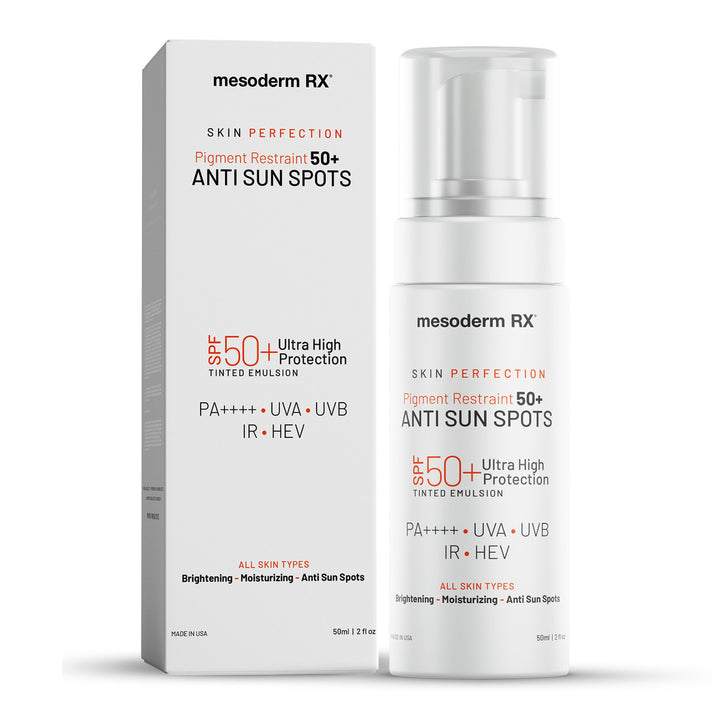
Official Reapplication Timelines From FDA and AAD Guidelines
Public-health guidance gives you a baseline, and the details on the label determine how you adapt it to water and sweat. The FDA, WHO, and AAD all support reapplication at least every two hours when outdoors, including on cloudy days. The FDA's topical sunscreen discussion also shows how durable this guidance has been across consumer recommendations and regulatory updates.
Read water-resistance claims literally
Water-resistant does not mean waterproof. It describes a tested protection window during swimming or sweating. Under FDA labeling requirements, a water-resistant sunscreen states either 40 minutes or 80 minutes of swimming or sweating before reapplication is needed, depending on the product's tested performance. The AAD summarizes the same practical milestones, with reapplication after 40 minutes for water-resistant products and after 80 minutes for very water-resistant products, as explained in its sunscreen guidance.
Towel drying changes the decision immediately. Rubbing the skin with a towel can remove or redistribute the film, so you should reapply after drying even if the printed water-resistance window hasn't elapsed. The clock doesn't “reset” just because you stepped out of the water. You need a fresh, even layer.
| Exposure Scenario | Reapplication Interval | Key Trigger |
|---|---|---|
| Ordinary outdoor exposure | At least every two hours | Time outdoors |
| Swimming or sweating with a water-resistant product | After the labeled 40-minute window | Water or sweat exposure |
| Swimming or sweating with a very water-resistant product | After the labeled 80-minute window | Water or sweat exposure |
| Towel drying | Immediately | Friction removes or shifts the film |
| Outdoor activity with heavy sweating | Sooner than the standard interval when needed | Sweat, wiping, or rubbing |
The FDA's OTC sunscreen monograph requires water-resistance labeling to pair the tested window with reapplication instructions. That makes label literacy clinically relevant, especially when you're trying to prevent pigment rebound rather than merely avoid a visible burn.
If your skin feels dry or tight before reapplying, a lightweight hydrating layer can improve comfort. The Hydrating Skin Booster contains hyaluronic acid, peptides, and antioxidant-rich botanical extracts, and its catalog description states that it absorbs quickly before makeup or sunscreen. Hydration won't replace sunscreen, but a comfortable routine is easier to maintain.
Scenario-Based Reapplication Protocols for Real Life
The best schedule depends on what your skin is doing and what your day exposes it to. A person at a desk, an outdoor runner, and someone swimming can't use the same decision rule.
Indoor office worker
Apply a generous, even layer before the morning commute or first meaningful daylight exposure. If you remain indoors with minimal sun exposure and little sweating or rubbing, independent guidance notes that mandatory reapplication within an eight-hour period isn't clearly established when the initial layer was applied correctly and remains undisturbed, as discussed by Typology's analysis of daytime sunscreen reapplication.
Use an exposure-based trigger instead:
- Before leaving work: Reapply if you'll walk, drive, or spend time outdoors.
- After disruption: Reapply if you sweat, wipe your face, wear a mask, or experience repeated friction.
- Near strong daylight: Be more cautious if you sit beside bright windows for prolonged periods.
Outdoor exercise
Start with sunscreen before the activity, then use the two-hour outdoor baseline as the maximum interval, not a target you must stretch. Heavy perspiration, wiping your face, helmet straps, clothing, or a towel can create gaps sooner.
For hyperpigmentation-prone skin, reapply after heavy sweating or wiping, even when less time has passed. Pay attention to the hairline, ears, neck, and the tops of the feet. Those areas are easy to miss and often receive direct exposure.
Beach or pool exposure
Apply before exposure and choose a product with a water-resistance claim that matches the activity. Reapply immediately after swimming, after towel drying, and again according to the product's labeled water-resistance window while you remain in the sun.
Don't wait for heat, redness, or discomfort. Water can make skin feel cool while UV exposure continues. Broad-spectrum protection is especially important when you're trying to prevent a dark spot from becoming more visible.
Makeup wearers
A full removal and reapplication gives the most dependable coverage, but it isn't always realistic during a workday. Blot sweat and oil first, then press a compatible sunscreen over exposed skin with clean hands or a sponge rather than aggressively rubbing.
Sunscreen sticks, sprays, powder products, setting sprays, and cushion compacts can help with convenience, but thin or uneven touch-ups shouldn't become your only protection layer during extended outdoor exposure. The practical guidance in this guide to sunscreen over makeup is useful when appearance and protection compete.
Chemical Versus Physical Sunscreen Reapplication Behavior
The filter category affects how a sunscreen behaves, but it doesn't eliminate the need for reapplication. Chemical filters absorb UV radiation and convert the energy, while mineral filters such as zinc oxide and titanium dioxide remain in the surface film and interact with incoming radiation.
Chemical filters can lose performance through photodegradation as they absorb UV. Formulators use stabilizing systems to improve formula behavior, but no product should be treated as an all-day shield. Follow the label and the outdoor two-hour baseline.
Film stability is not the same as real-world durability
Mineral filters are often described as more photostable, but the finished product still depends on the vehicle, film-forming ingredients, skin oils, sweat, and friction. A mineral sunscreen can remain chemically stable while being physically removed from the nose, cheeks, ears, or neck.
The most useful comparison is practical:
- Chemical formulas: Pay attention to time in UV exposure and follow the directed reapplication schedule.
- Mineral formulas: Watch for visible removal, rubbing, sweating, and water, in addition to the standard interval.
- Combination formulas: Treat them according to the product label and the exposure conditions, not according to one filter category alone.

For melasma and stubborn discoloration, consistency matters more than choosing a category based on marketing language. A mineral formula may suit someone who reacts to certain chemical filters, while a lightweight chemical or hybrid formula may make repeated application easier. The product you can apply generously and renew consistently is often more useful than a theoretically ideal formula that you avoid because it pills, stings, or feels heavy.
How Much Sunscreen to Apply for Full Protection
Reapplication can't correct an inadequate first layer. Sunscreen testing uses a standardized application amount of 2 mg/cm², and StatPearls translates that to roughly 30 mL for a full-body application, as summarized in its clinical sunscreen overview. The FDA describes the full-body amount for an average-size adult or child as about one ounce, roughly a shot glass.
Measure the first application
For the face and neck, use the two-finger method shown below, applying a continuous strip along the length of the index and middle fingers. Adjust for your anatomy and extend coverage to the ears and the exposed hairline.
For the body, divide the product into sections rather than spreading one small pool over everything. Apply to the torso, arms, hands, legs, feet, ears, scalp part lines, and back of the neck. The shoulders, backs of the legs, and tops of the feet are common omissions.

A two-pass application can improve coverage. Apply half the intended amount across the face and neck, allow it to settle, then apply the remainder. This is not a license to use less. It's a way to distribute the correct quantity without creating missed patches or pilling.
Application check: If you can't identify whether your ears, neck, and hairline received sunscreen, assume they didn't.
For outdoor days, carry enough product for meaningful renewal, not just a token swipe across the center of the face. If you plan prolonged beach exposure, physical shade can reduce the amount of direct sunlight reaching your skin. A pop up tent for beach can provide a practical shelter option, but it doesn't replace sunscreen on exposed areas.
The video below demonstrates a practical sunscreen application approach:
Building a Complete Hyperpigmentation Defense System
Sunscreen prevents new UV-driven stimulation, but it doesn't erase pigment that already exists. A complete plan separates prevention, pigment regulation, surface renewal, and barrier support.
Melanin production is influenced by tyrosinase activity, inflammation, and repeated environmental exposure. Brightening ingredients can help regulate the appearance of discoloration, while gentle exfoliating acids can support the removal of pigmented surface cells. Neither category performs well if it repeatedly irritates the barrier or if daily UV exposure keeps stimulating new pigment.
Morning structure
Use a gentle cleanser if needed, followed by a hydrating layer and a targeted brightening product that your skin tolerates. Finish with broad-spectrum sunscreen in the correct amount, then renew it according to exposure, sweat, water, and friction.
For product research beyond sunscreen, you can browse the Pep Tea skincare tag for additional routine ideas. Keep the selection disciplined. Adding multiple strong actives at once makes it difficult to identify irritation, and inflammation can worsen PIH.
Evening structure
Cleanse thoroughly, then use a pigment-focused treatment or a gentle exfoliant according to your tolerance. Follow with a barrier-supporting moisturizer. If the product is designed for body discoloration, keep it on the intended body areas and follow its usage directions rather than transferring it to the face.
Mesoderm RX Pigment Restraint products can fit into a routine focused on discoloration, while consistent daytime protection helps limit the UV exposure that contributes to visible rebound. For product-selection principles specific to discoloration, see the guide to sunscreen for hyperpigmentation.
The system works because each part has a separate job. Sunscreen limits ongoing stimulation, brightening actives address the appearance of existing uneven tone, exfoliation supports surface clarity, and barrier care helps reduce the irritation that can perpetuate pigment.
Mesoderm RX offers targeted brightening, exfoliating, hydrating, and high-protection skincare for routines built around dark spots and uneven tone. Visit Mesoderm RX to choose a focused system that supports consistent sunscreen use rather than treating reapplication as an isolated step.