


Growth Factors for Skin: A Clinical Guide to Results
Most advice about growth factors for skin gets the hierarchy wrong. People talk about them as if the ingredient name alone guarantees collagen repair, wrinkle reduction, and brighter tone. It doesn't. A growth factor serum can be biologically advanced and still underperform on real skin.
That gap matters most for patients chasing multiple concerns at once, especially fine lines, barrier fragility, post-procedure recovery, and hyperpigmentation. Growth factors can support repair signaling. They are not automatic pigment correctors, and they are not replacements for sunscreen, targeted brighteners, retinoids, or disciplined formulation work.
The useful way to think about growth factors is simple. They are conditional tools. When the formula protects them, the delivery system makes sense, and the product is placed correctly inside a full regimen, they can be valuable. When brands sell them as stand-alone miracle workers, the results usually disappoint.
The Truth About Growth Factors in Skincare
Growth factors have a marketing problem. They are sold like high-tech fix-everything actives, but in practice they are narrow, formulation-dependent signaling ingredients. That difference explains why one patient sees smoother, calmer skin and another sees no meaningful change after finishing an expensive bottle.
In clinic, I do not judge a growth factor serum by the ingredient name on the front label. I judge it by a harder standard. Can the formula keep the proteins stable? Can the delivery system get enough activity to the upper skin layers to matter? Does the product sit inside a routine that already covers sunscreen, pigment control, barrier support, and cell turnover? If the answer is no, results are usually underwhelming.
Clinical reality: A well-built growth factor product can support remodeling and recovery. A poorly built one is expensive protein water.
Some topical growth factor products have shown improvement in fine lines, texture, and skin quality in clinical use. That signal is real. The problem is that brands often stretch that evidence into claims about pigment correction, dramatic collagen rebuilding, or universal anti-aging results. Those claims go beyond what most formulas can deliver on intact skin.
The practical use case is more limited, and more useful. Growth factors fit best as support for repair, recovery after procedures, texture refinement, and gradual improvement in skin quality. They are weaker as a first-line strategy for melasma, post-inflammatory hyperpigmentation, or diffuse sun damage, especially if the patient is not using daily sunscreen or proven pigment agents.
That trade-off matters for sensitive skin. Many people who cannot tolerate aggressive retinoid schedules, low-pH acids, or layered brightening regimens still want some improvement in texture and recovery. A good growth factor product can be a reasonable addition here because it aims to support signaling rather than force rapid exfoliation. But "gentler" does not mean "better for everything." Sensitive, pigment-prone skin still needs a complete plan.
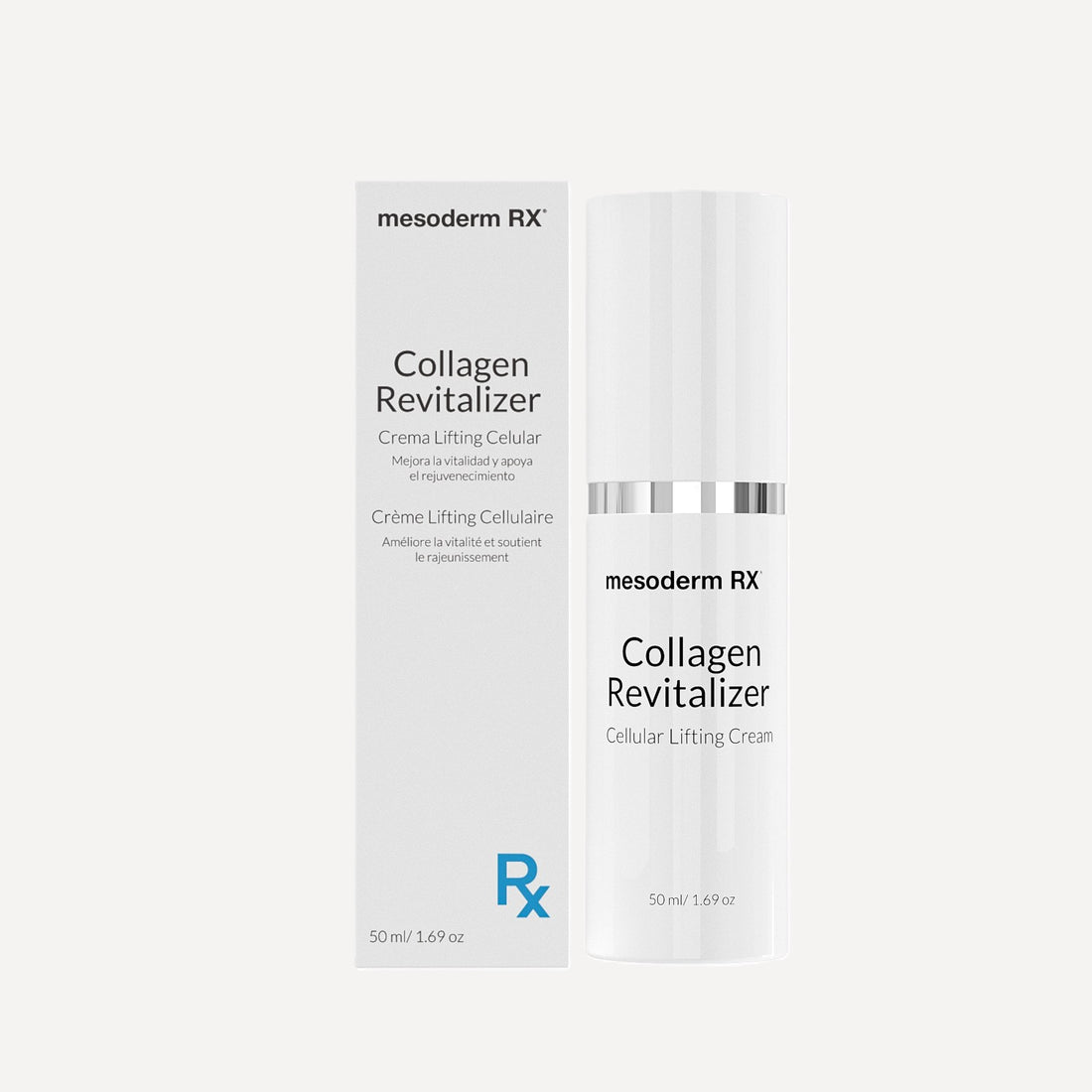
What the hype gets wrong
- It treats all growth factor products as interchangeable. They are not. Source material, purification, stability, packaging, and vehicle can change performance dramatically.
- It ignores delivery limits. These are large signaling molecules. If the formula does not address penetration and stability, the biology looks impressive on paper and weak on skin.
- It confuses supportive care with primary treatment. Growth factors may improve skin quality while doing very little for stubborn pigment unless the rest of the regimen is doing the heavier lifting.
- It oversells speed. Some patients notice improved feel or recovery first. Visible structural change is slower and usually subtle.
The better question is not whether growth factors are "worth it." The better question is whether this specific formula has a plausible delivery strategy, a realistic job to do, and a place in a routine that already addresses the main diagnosis. That is how growth factors help. That is also why many products fail.
What Are Skin Growth Factors Biologically
Growth factors are signaling proteins that skin cells use to coordinate repair. That is their real job. They do not add volume like a filler, resurface like an acid, or suppress pigment the way tyrosinase inhibitors do. They send instructions to keratinocytes, fibroblasts, and other cells involved in barrier repair and tissue remodeling.

In practice, that signaling matters most when skin is under stress. Injury, inflammation, irritation, and age-related slowing all change how skin communicates internally. Growth factors help organize that response. If the formula keeps them stable and gets them to the right place, the goal is better repair behavior from the skin itself.
The main jobs they perform
Three families come up repeatedly in skincare discussions.
| Growth factor family | Main biological role | What that can mean on skin |
|---|---|---|
| EGF | Supports epidermal signaling and repair activity | Smoother texture and support for recovery |
| FGF | Helps regulate fibroblast-related activity | Support for firmness and dermal matrix function |
| TGF-β | Involved in collagen-related remodeling and wound signaling | Useful in repair and structural skin changes |
This table simplifies a complicated biology, but it is still the right framework. Growth factors are instructions. Their effect depends on receptor binding, downstream signaling, formula stability, and whether enough active material reaches viable skin layers to matter.
That last point gets missed constantly. A biologically interesting ingredient can still fail in a weak serum.
Why that matters clinically
Earlier clinical summaries have linked topical growth factor use with improvement in fine lines, skin texture, elasticity, and overall surface quality. Mechanistic findings also show increases in markers tied to remodeling, including TGF-β1, elastin, and collagen. That supports why these products are usually discussed in the context of aging skin, procedure recovery, and barrier-stressed skin rather than as first-line pigment treatments.
For patients focused on texture and early wrinkling, growth factors fit best as support for repair and remodeling, not as the whole treatment plan. A dedicated strategy for treating fine lines and surface creasing still has to account for photodamage, retinoid tolerance, sunscreen use, and barrier function.
What they are not
Confusion starts when every signaling ingredient gets grouped together.
- They are not exfoliants. They do not remove retained surface cells the way AHAs, BHAs, or PHAs do.
- They are not primary brighteners. Hyperpigmentation usually needs pigment-control ingredients, inflammation control, and strict UV management.
- They are not interchangeable with peptides. Peptides are smaller molecules with different formulation behavior, different targets, and often easier delivery.
That distinction matters when choosing products for sensitive or pigment-prone skin. Growth factors may improve recovery and skin quality while doing very little for melasma or post-inflammatory hyperpigmentation unless the rest of the routine addresses those diagnoses directly. If you want a useful comparison between signaling categories, this overview of peptide research for skin longevity helps separate peptide-based formulas from true growth factor products.
The Clinical Evidence for Growth Factor Benefits
Growth factors have clinical value, but the evidence is narrower than product marketing suggests. The best-supported benefit is improvement in skin quality. That means softer texture, less visible roughness, modest refinement of fine lines, and better recovery in skin that is already under repair pressure.
That pattern matches how these molecules work. Growth factors are signaling proteins. If a formula reaches viable skin in usable form, the expected outcome is support for repair and remodeling. Patients sometimes describe that as smoother, calmer, or more resilient skin. From a dermatology standpoint, those are reasonable endpoints.
The anti-aging literature supports a limited but practical role. Controlled studies and clinical summaries have reported visible improvement in fine lines, wrinkles, texture, smoothness, and elasticity with topical growth factor products, as summarized by the earlier DermNet review. For patients with early photodamage or fragile-feeling skin, that can be useful. It still does not make growth factors a substitute for retinoids, sunscreen, or a broader strategy for how to get rid of fine lines.
Where the evidence is more persuasive
The strongest use case is repair-focused skin care. I put more weight on growth factors when skin is aging, irritated from active treatment, or recovering after in-office procedures. In those settings, the biology is coherent and the clinical expectations are more realistic.
There is also supportive evidence outside simple wrinkle marketing. Reviews of epidermal growth factor in dermatology describe randomized and split-face studies in acne and acne-scar treatment, with improvement in lesion counts, scar appearance, and markers related to dermal remodeling and inflammation. Those findings fit the broader idea that growth factors may help recovery and tissue repair when inflammation and barrier stress are part of the picture, as noted earlier in the article.
That distinction matters for sensitive skin. A well-designed growth factor product may help a patient tolerate a harder-working routine by improving recovery between active steps. The benefit is often indirect but still clinically relevant.
For readers trying to separate growth factors from other signaling ingredients, this overview of peptide research for skin longevity is a useful comparison. Peptides and growth factors can overlap conceptually, but they behave differently in formulas and should not be judged by the same standards.
Where the claims start to drift
Pigment is the area where marketing usually gets ahead of evidence. Post-inflammatory hyperpigmentation, melasma, and generalized uneven tone do not respond to the same inputs. They involve melanocyte activity, inflammation, vascular factors, UV exposure, and recurrence. Growth factors are not a primary way to control those pathways.
According to The Ordinary's clinical explainer on growth factors, the better-supported benefits relate to collagen, elastin, and hydration. Direct evidence for pigment correction remains limited, and any brightening effect should be viewed as secondary.
So the trade-off is simple. If the main problem is barrier fragility, texture, or recovery, growth factors may earn a place in the routine. If the main problem is melasma or dark marks, treatment should center on pigment-control ingredients, strict UV protection, and inflammation management. Growth factors can sit in that system, but they should not be expected to carry it.
Why Many Growth Factor Serums Do Not Work
A disappointing growth factor serum usually fails at formulation, not theory.

Patients often assume their skin was the problem. In practice, the larger problem is that many products are built around a strong marketing claim and weak delivery logic. Growth factors are proteins, and proteins are difficult topical ingredients. They are large, structurally delicate, and highly dependent on the formula around them.
Intact skin is a hard surface to work with
The stratum corneum is designed to limit penetration. That matters here because many growth factor ingredients are not naturally well suited to crossing intact skin in meaningful amounts.
Earlier clinical discussion in this article covered why the better outcomes tend to show up in wound care or post-procedure settings, where skin has been disrupted and signaling needs are different. That does not mean an at-home serum is useless. It means you should expect a narrower effect. On intact skin, these products are better judged by how well they support recovery, hydration balance, and overall skin quality, not by exaggerated promises of dramatic wrinkle reversal or fast pigment clearing.
This gap between biology and marketing explains a lot of dissatisfaction. A patient hears about growth factors used after laser or microneedling, buys a standard serum for daily use, and expects the same endpoint. Those are different treatment contexts.
Stability and packaging decide whether the formula has a chance
Even a legitimate growth factor blend can underperform if the formula is unstable. Repeated air exposure, clear packaging, poor preservative design, and weak compatibility with the rest of the base can all reduce activity before the product does much on skin.
I look for the unglamorous details first. Container type. Protection from light. Whether the texture suggests a formula built to support barrier function instead of just showcasing a trendy active. A product such as SkinMedica TNS Ceramide Treatment Cream and its barrier-supportive design illustrates the broader point. Growth factors tend to perform better when they are part of a system that also respects skin tolerance and barrier repair.
A simple checklist helps:
- Large proteins have penetration limits. Delivery needs a plausible strategy.
- Fragile proteins can degrade. An ingredient list does not confirm functional activity.
- Context shapes results. Post-procedure support is not the same job as treating melasma or acne marks.
- The surrounding formula matters. Sensitive skin often responds better when barrier-supportive ingredients are doing part of the work.
For a deeper visual explanation of how these challenges affect treatment outcomes, this short video is worth watching.
Why “contains growth factors” tells you very little
Ingredient naming is not product evaluation. Two serums can both claim growth factors and behave very differently because one was built for stability and tolerability, while the other was built for shelf appeal.
Practical rule: Judge a growth factor serum by delivery logic, stability strategy, and treatment role, not by label drama.
This category works best as part of a complete routine. For sensitive skin, that often means pairing growth factors with barrier support and anti-inflammatory care. For hyperpigmentation, it means keeping growth factors in a secondary role while the primary work is done by sunscreen, pigment regulators, and inflammation control. If a brand sells one bottle as the answer to wrinkles, dark spots, texture, redness, and barrier damage at once, the formula is usually asking for more credit than it has earned.
How to Select an Effective Growth Factor Product
Buying this category well requires a filter. The question isn't whether the serum sounds advanced. The question is whether the formula was built for real-world use on intact skin.
Start with packaging
If a protein-based serum sits in a basic dropper bottle that gets opened repeatedly, that is not ideal. Repeated exposure to light and air can work against fragile actives.
Look for:
- Airless packaging when possible, because it helps reduce repeated contamination and oxidation exposure.
- Opaque or protective containers instead of clear packaging that treats sensitive ingredients like display props.
- Reasonable use instructions that fit actual patient behavior. If the formula is fussy, adherence drops.
Then look at the surrounding formula
Growth factors rarely carry a routine by themselves. Better formulations usually pair signaling support with ingredients that improve the skin environment around them.
A practical checklist:
- Barrier support matters. Humectants, emollients, and supportive lipids help skin tolerate the routine around the serum.
- Complementary signaling can help. Peptides may make sense in the same regimen, depending on the goal.
- Antioxidants are useful partners. They don't replace growth factors, but they address a different part of the damage cycle.
If your interest is anti-aging support with barrier reinforcement, a product such as Advanced Triple Action Age-Defying Serum fits that broader treatment logic because it combines peptides with barrier-supportive and antioxidant-oriented ingredients, and is positioned to reduce the appearance of fine lines and wrinkles while promoting firmness, resiliency, and hydration. That doesn't make it a growth factor serum. It makes it an example of how a results-driven anti-aging formula usually depends on systems, not one buzzword.
Use a target-based framework
Here is the simplest way to judge whether a growth factor product belongs in your regimen.
| Growth Factor | Primary Target | Key Benefit |
|---|---|---|
| EGF | Epidermal renewal signaling | Support for smoother texture and recovery |
| FGF | Fibroblast activity | Support for firmness-related changes |
| TGF-β | Collagen remodeling pathways | Support for structural repair processes |
That table helps, but don't over-read it. A product doesn't become effective merely by mentioning one of these pathways.
What usually predicts better performance
- Clear role in the routine. Anti-aging support, post-procedure recovery, or barrier-oriented repair.
- Synergistic formula design. Not just a hero ingredient floating in a weak base.
- Brand transparency. If the company can explain source, stability, and use context, that is a good sign.
A useful comparison point is this review of SkinMedica TNS Ceramide treatment positioning, because it shows how barrier support and regenerative claims need to be interpreted together rather than as separate promises.
Integrating Growth Factors Into Your Skincare Routine
Growth factors work best when they are not asked to be the star of every skin concern. In a smart routine, they are often the repair layer, not the pigment layer and not the UV defense layer.

Basic placement in the routine
For most patients, a growth factor serum belongs on clean skin before moisturizer. If the formula is light, it can go on before a richer cream. If the regimen includes multiple treatment serums, the exact order depends on texture and irritation profile.
A simple structure looks like this:
- Morning: cleanse, growth factor serum if tolerated, moisturizer, sunscreen
- Evening: cleanse, growth factor serum or alternate treatment, moisturizer
That sounds straightforward, but the important part is pairing.
Smart pairings and bad pairings
Growth factors are often most useful beside other treatments, not instead of them.
- With retinoids: Alternate if your skin is reactive. Many patients do better using growth factors on recovery nights rather than layering everything at once.
- With vitamin C: Separate morning and evening if needed for tolerance and simplicity.
- With exfoliating acids: Use judgment. Sensitive skin often handles a repair serum better on non-acid nights.
For sensitive skin, routine architecture matters more than routine ambition.
This is also where dark spot treatment needs honesty. If the main issue is hyperpigmentation, the primary treatment should target pigment pathways and turnover. Growth factors can help the skin tolerate the process and recover more smoothly, but they should not be mistaken for the main depigmenting engine.
A practical example is AHA + BHA + PHA Skin Brightening Serum 30ml, which is specifically formulated for dark spots, uneven tone, and hyperpigmentation using acids, kojic acid, hyaluronic acid, and hexapeptides. In that kind of routine, a growth factor product would function as support crew. The brightening serum does the direct pigment work. The growth factor layer supports overall skin quality and recovery.
A routine for two common goals
Fine lines with sensitive skin
Keep the routine restrained.
- Gentle cleanser
- Growth factor serum
- Moisturizer
- Daytime sunscreen
- Retinoid only on selected nights if tolerated
This approach is often easier for patients who flare with aggressive exfoliation.
Dark spots with barrier fragility
Use the routine in a more strategic way.
| Time | Priority | Role of growth factors |
|---|---|---|
| Morning | UV defense and pigment prevention | Optional support layer before moisturizer |
| Evening | Brightening treatment and controlled renewal | Use on alternate nights or recovery nights |
If you're building a regimen that combines hydration, peptides, and anti-aging support, this article on why anti-aging serums with hyaluronic acid and peptides improve skin texture adds useful context for how support layers fit around stronger actives.
Answering Your Top Growth Factor Questions
Do growth factors cause cancer
This fear comes up often because people hear the word “growth” and assume uncontrolled stimulation. That is too simplistic. Topical skincare growth factors are being used as local signaling ingredients, not as systemic cancer therapies or systemic growth stimulants. The available discussion around cosmetic use does not support treating every topical growth factor product as dangerous.
That said, caution and medical judgment still matter. Patients with a history of serious skin disease, active malignancy concerns, or recent cancer treatment should discuss any biologically active topical with their physician instead of self-prescribing.
Are growth factors good for sensitive skin
They can be. This is one of the more reasonable use cases for the category because growth factors are not exfoliating acids and not retinoids. A well-formulated product may fit sensitive or barrier-impaired skin better than aggressive actives do.
The key phrase is well-formulated. Sensitive skin doesn't just react to actives. It reacts to poor vehicles, fragrance, layering overload, and routines that ask too much at once.
Choose the calmest effective routine, not the busiest one.
How long do results take
Expect gradual change, not overnight correction. In the right anti-aging context, some growth factor combinations have shown visible changes in about 4 to 8 weeks, based on the earlier DermNet review. That timeframe is reasonable for texture, smoothness, and early firmness-related improvement.
If the problem is hyperpigmentation, that timeline becomes less useful because growth factors are not first-line pigment agents. Patients often misjudge the category by expecting spot fading from a product designed for repair signaling.
Are they worth buying
Sometimes. They are worth buying when the goal is realistic, the formulation is credible, and the product sits inside a complete system. They are not worth buying as a replacement for sunscreen, direct brighteners, or stronger evidence-based anti-aging staples.
Mesoderm RX takes the more useful approach to skincare. Build a routine around the concern you need to treat, then add supportive products that improve tolerance, repair, and visible skin quality. If you want formulas designed for dark spots, texture, barrier support, and visible aging concerns without unnecessary extras, explore Mesoderm RX.