


Glycolic Acid Cream 10: The Clinical Guide to Results
Consumers often shop for glycolic acid cream 10 ineffectively. They look at the front label, see “10%,” and assume they’ve bought a clinically active resurfacing product.
That assumption causes two predictable outcomes. Either the cream does very little, or it irritates the skin enough that the user quits before real pigment and texture changes can happen.
The percentage alone doesn’t tell you whether the formula can exfoliate in a controlled, useful way. For glycolic acid, free acid value, pH, barrier support, and routine design matter just as much as the number on the carton. If those pieces are wrong, a “10% glycolic” product can behave like a weak moisturizer or like an unnecessary irritant.
The Misleading Promise of Most Glycolic Acid Creams
The most common advice is also the least useful: “Just start with any 10% glycolic acid cream and use sunscreen.” That’s incomplete.
A cream can say 10% glycolic acid and still fail to deliver meaningful resurfacing if the formula isn’t built around an effective acidic range. Glycolic acid works as an acid, not as a marketing term. If the formula is overly buffered, the label may look impressive while the skin sees very little actual exfoliative activity.
Why the label often misleads
It's not just about how much glycolic acid is in the jar. The important consideration is whether enough of that acid remains available to act on the skin.
That’s where free acid value becomes the dividing line between a clinically useful product and a decorative one. In practical terms, if pH is off, penetration drops, exfoliation weakens, and the user often keeps layering more actives trying to force a result that the formula itself can’t produce.
Clinical reality: A weakly active glycolic cream usually doesn’t fail loudly. It fails slowly, through months of “almost” results.
Why users blame the wrong thing
When glycolic acid cream 10 disappoints, skin type is often blamed. In practice, the more common problems are formulation mismatch and poor protocol.
Common failure patterns include:
- Buffered formulas with low impact: The product sounds strong but doesn’t resurface enough to shift stubborn roughness or uneven tone.
- Overuse from day one: Users apply nightly immediately, trigger irritation, then conclude glycolic acid is “too harsh.”
- No barrier support: Dryness, tightness, and reactivity rise because the routine strips without rebuilding.
- No serious UV discipline: Freshly exfoliated skin is more vulnerable to visible sun-driven setback, especially when hyperpigmentation is already present.
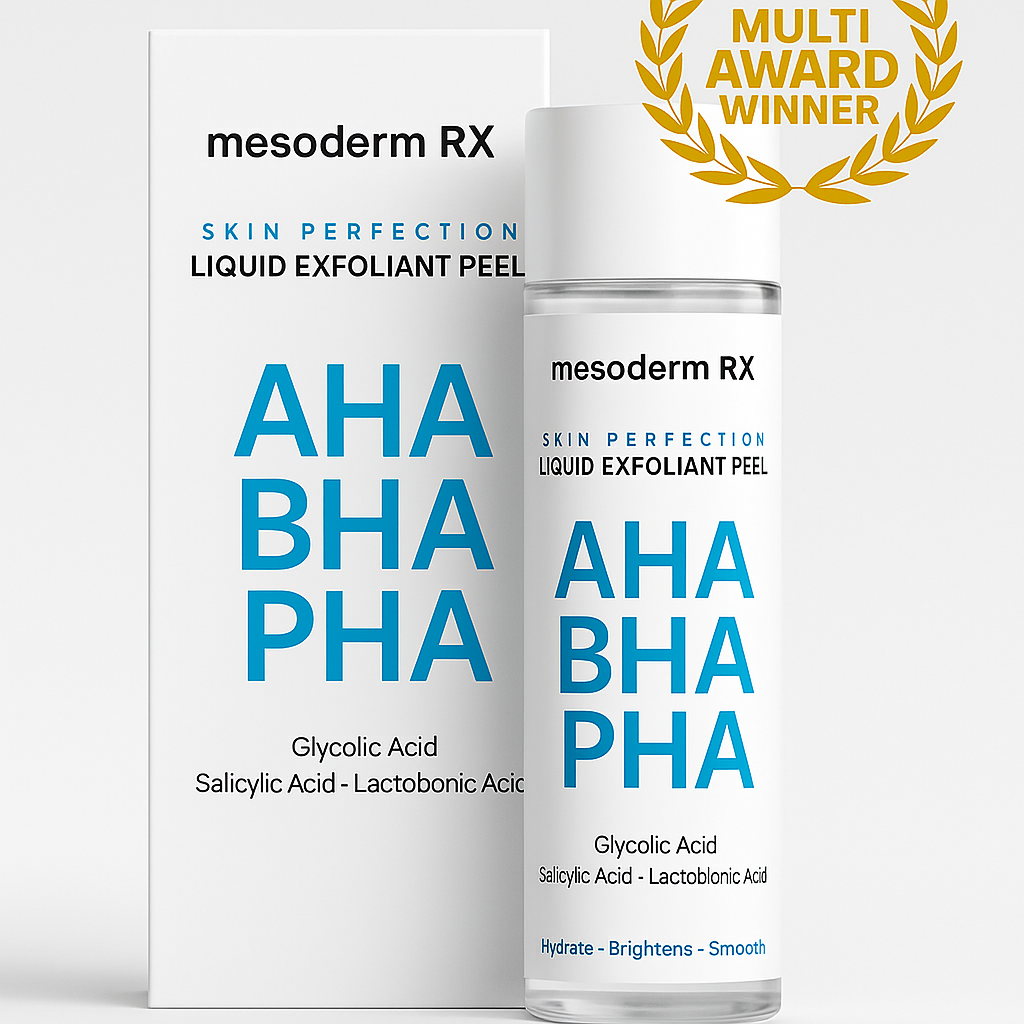
Featured Product
Skin Perfection Liquid Exfoliant Peel | AHA BHA PHA Resurfacing Treatment
A multi-acid peel that exfoliates dead skin cells, unclogs pores, and smooths texture—revealing clearer, brighter, and more refined-looking skin with regular use.
Shop Now →What actually separates good from bad
A useful glycolic formula needs a precise balance. It has to be acidic enough to work, but supported enough that the skin can tolerate repeated use.
That’s also why “stinging equals working” is such a poor rule. Stinging can mean active acid exposure, but it can also mean a destabilized barrier, compromised skin, or a formula that delivers aggression without control. Results come from repeatable resurfacing, not from chasing discomfort.
Decoding Glycolic Acid at 10 Percent Concentration
Glycolic acid is an alpha hydroxy acid, or AHA, derived from sugarcane. Its importance in formulation starts with size. It is the smallest AHA, which is why it penetrates more efficiently than larger-molecule acids and reaches the superficial layers of skin with more authority.

That small size is the reason glycolic acid behaves differently from “gentler exfoliating creams” that mostly polish the surface. It acts more like a key cut to fit a tighter lock. It can access the compact outer skin layers where retained dead cells, rough texture, and superficial pigment tend to linger.
According to Harris Clinic’s review of glycolic acid, glycolic acid at 10% concentration is a standard at-home formulation and its small molecular size helps it penetrate deeper than other AHAs. The same source notes that consistent use has been associated with up to a 25% increase in collagen fibers, which is why this concentration is used for concerns like fine lines, uneven tone, and hyperpigmentation.
Why 10 percent became the benchmark
At-home glycolic acid has to do two jobs at once. It needs enough strength to create visible change, and it must remain workable in a regular routine.
That’s why 10% has become the benchmark range for serious home resurfacing. It’s strong enough to move beyond simple brightening and into texture refinement, visible smoothing, and pigment management, but it doesn’t automatically push the user into the territory reserved for professional peels.
In the clinic and in formulation review, this concentration tends to make sense for:
- Uneven tone and dark marks: Especially when old surface pigment and sluggish turnover are part of the picture.
- Dull, rough skin texture: When skin feels thickened, dry on top, or makeup sits unevenly.
- Early to moderate photoaging signs: Fine lines, crepey texture, and loss of visual smoothness.
- Oily or combination skin with congestion: Because exfoliation helps clear the dead-cell component of blocked pores.
What 10 percent can and can’t do
A proper glycolic acid cream 10 can improve the look of skin, but it isn’t a magic eraser. It won’t replace daily UV protection, it won’t override chronic inflammation, and it won’t fix pigment recurrence if the trigger remains active.
What it does well is predictable. It helps shed compacted surface cells, improves how light reflects off the skin, supports smoother texture, and creates conditions that let brightening and hydrating products perform better.
Glycolic acid works best when you treat it as a controlled remodeling tool, not as a one-step miracle.
The Cellular Mechanism of Skin Resurfacing
A clinically active glycolic cream changes skin because it alters what happens between cells, not because it “scrubs” anything off. That distinction matters.
The outermost layer of skin, the stratum corneum, holds dead corneocytes together through adhesive structures and intercellular material. When those cells stay attached too long, skin looks dull, uneven, rough, and visually older. Glycolic acid breaks that retention cycle chemically.
Free acid value decides whether 10 percent is real or cosmetic
A formula can contain glycolic acid on paper and still underperform on skin. The deciding factor is free acid value, which depends on both concentration and pH.
According to SkinCeuticals’ explanation of Glycolic 10 Renew Overnight, a 10% glycolic acid cream requires a pH of 3 to 4 for effective exfoliation and a high free acid value. At that range, the acid can penetrate the stratum corneum, dissolve intercellular bonds, accelerate epidermal turnover by up to 25%, and boost collagen production by 15% to 20% after 12 weeks.
That’s the point many product pages avoid. “10%” without appropriate pH control isn’t equivalent to “10% active exfoliation.”

What happens in the epidermis
At an effective free acid value, glycolic acid acts as a keratolytic. It helps dissolve the connections that keep old cells stuck together. Those old cells release more evenly, and newer cells move upward with less obstruction.
That creates several visible effects:
- Smoother texture: Surface roughness drops because compacted dead-cell buildup is removed more evenly.
- Brighter appearance: Light reflects off a more uniform surface instead of scattering across dry, uneven patches.
- Cleaner pore environment: Glycolic acid helps reduce the dead-cell component that contributes to sebum blockage.
- Better product penetration: Once the dead-cell barrier is reduced, supportive actives can reach skin more effectively.
What happens with pigment
Hyperpigmentation isn’t one thing. Melasma, post-inflammatory hyperpigmentation, and scattered sun spots do not behave identically, and they shouldn’t be treated as if they do.
Still, glycolic acid can help in several pigment pathways. By increasing turnover, it helps move excess pigment upward and out. In clinically designed formulas, it has also been associated with tyrosinase inhibition, which matters because tyrosinase is central to melanin production. Less retained pigment at the surface, plus less ongoing overproduction, is why tone can gradually look more even.
Practical rule: If a user has hyperpigmentation and skips sunscreen, the routine is working against itself.
What happens in the dermis
The anti-aging value of glycolic acid isn’t just exfoliation. Repeated, controlled exposure also sends signals deeper in the skin. Fibroblasts respond by supporting collagen production, which is why skin can look firmer and finer lines can soften over time.
Many users make a basic mistake. They judge glycolic acid only by how quickly it brightens. Brightening can show first, but collagen-related change is slower, cumulative, and dependent on consistency.
Why minimal-additive design matters
For a high-potency acid cream, every extra irritant matters. Fragrance, unnecessary dyes, and a crowded formula raise the odds that the user reacts to the product for the wrong reason.
A strong glycolic system should do three things well:
| Formulation factor | Why it matters | What to look for |
|---|---|---|
| Acid availability | Determines whether exfoliation actually occurs | Effective pH and meaningful free acid value |
| Barrier compatibility | Reduces avoidable irritation | Supportive humectants or calming co-actives |
| Low-noise formula | Minimizes nonessential triggers | Fewer unnecessary additives |
The best formulas don’t feel “busy.” They feel deliberate.
Why Your Glycolic Acid Cream Is Failing You
When glycolic acid cream 10 fails, the problem usually sits in one of two camps. The formula is too weak to do much, or the routine around it is too chaotic to let it work.
Users often move between both errors. They start with a heavily buffered cream that barely exfoliates, see no progress, then switch to stacking acids, retinoids, and brighteners all at once. The skin gets inflamed, pigment looks worse, and glycolic acid gets blamed for the damage created by poor routine architecture.
Failure point one is a weak formula
A neutralized or overly cushioned formula may feel elegant while doing very little. This is the paradox of many retail “acid creams.” They’re designed to offend nobody, so they also transform very little.
If texture hasn’t changed, if discoloration remains static, and if the product feels more like a standard moisturizer than a resurfacing treatment, weak acid activity is a reasonable suspicion. A front-label percentage can’t rescue a formula with poor acid availability.
Failure point two is barrier neglect
Some users don’t need a stronger acid. They need a better protocol.
A glycolic product can be correctly formulated and still create problems if the skin barrier is already compromised. Recent irritation, aggressive cleansing, over-washing, retinoid overuse, frequent scrubbing, and unprotected sun exposure all lower tolerance.
According to ATZEN’s Glyco 10 page discussing a 2025 clinical trial, 78% of users on a 10% glycolic acid formula with soothing ingredients reported no irritation after 6 months, while 45% experienced irritation with non-buffered formulas. That matters because the practical failure in glycolic use is often not lack of potency. It’s lack of support.
Failure point three is inconsistency
Pigment pathways don’t respond well to random treatment. Using glycolic acid intensely for a few nights, then stopping for a week, then restarting after irritation is not a resurfacing plan. It’s skin confusion.
Visible change with glycolic acid depends on repeat exposure. That doesn’t mean nightly use from day one. It means a frequency the skin can sustain.
Stinging isn’t proof of efficacy. Reliable progress comes from tolerance you can maintain.
Failure point four is poor sun discipline
This is the most expensive mistake because it wastes every other step. Exfoliated skin is more photosensitive, and hyperpigmentation-prone skin is especially unforgiving when UV exposure remains uncontrolled.
Common self-sabotage patterns include:
- Applying acid at night, then underusing SPF: The user resurfaces the skin, then allows daily UV exposure to restimulate pigment.
- Treating SPF as optional indoors: Incidental light exposure still matters when the skin is already reactive and pigment-prone.
- Using active products after visible sun irritation: That often converts a manageable routine into an inflammatory one.
Failure point five is mixing the wrong actives
Users who want fast results usually combine too much. Glycolic acid plus a strong retinoid plus another exfoliant on the same night is not “advanced skincare.” It’s one of the fastest ways to create redness, burning, flaking, and rebound discoloration.
The smarter route is sequencing. Let glycolic acid do its job on its own night. Let barrier-supportive products handle recovery. That’s how you keep efficacy high without forcing the skin into chronic irritation.
A Clinical Protocol for Integrating 10% Glycolic Acid
A good acid formula still needs a disciplined method. Without one, even a strong glycolic cream becomes guesswork.
The working rule is simple. Start below your maximum tolerance, then build upward only if the skin stays calm. For most users, especially those dealing with dark spots or sensitivity, restraint at the beginning produces better long-term results than enthusiasm.
Step one is patch testing and skin timing
Do not patch test casually and call it done. Test the formula on a discreet area of skin, then watch for delayed redness, persistent burning, excessive dryness, or itching before moving to full-face use.
Timing matters too. Do not start glycolic acid right after sunburn, waxing, picking, a compromised barrier episode, or a night of overusing other actives.
Step two is frequency ramping
Advanced Clinicals’ 10% glycolic cream guidance notes that effective formulas at pH 3 to 4 should be paired with soothing and antioxidant ingredients such as licorice root or phytic acid, and that users should start with 2 to 3 applications per week while monitoring for erythema. That is the correct structure.
Use this schedule as a practical starting point:
-
Weeks one and two
Apply on 2 to 3 nights per week. Keep the rest of the routine simple. -
Weeks three and four
Increase only if the skin stays stable. “Stable” means brief mild tingling is possible, but ongoing redness, heat, scaling, or worsening sensitivity are not. -
After tolerance is established
Some users can move toward more frequent use. Others will do better keeping glycolic on alternating nights long term. The best frequency is the one that preserves results without triggering inflammation.

Step three is correct placement in the night routine
Apply glycolic acid cream 10 after cleansing, on dry skin. Damp skin can increase penetration and, for some users, irritation.
A practical PM sequence looks like this:
- Cleanser first: Use a non-stripping cleanser.
- Optional prep step: If your skin does better with balanced post-cleansing skin condition, use a pH-balance skin toner that doesn’t add more exfoliating stress.
- Glycolic acid cream: Apply a controlled amount, not a thick mask layer.
- Barrier support if needed: Follow with a bland hydrating or cushioning product if your skin tends to run dry.
Step four is pairing correctly
The best support ingredients don’t compete with glycolic acid. They reduce collateral irritation.
Useful partners include:
- Niacinamide: Helpful for visible redness-prone skin and for routines centered on uneven tone.
- Hyaluronic acid: Useful when the skin feels dehydrated rather than oily.
- Licorice root or phytic acid: Good choices when pigment concerns and tolerance both matter.
- Ceramide-focused support: Helpful for users who tend to overreact to active routines.
Step five is knowing what not to mix
Avoid turning one night into a chemistry experiment.
Products best kept off the same-night routine include:
| Same-night product | Why it’s a problem | Better approach |
|---|---|---|
| Retinoids | Raises irritation risk fast | Alternate nights |
| Additional exfoliating acids | Duplicates keratolytic stress | Use one exfoliation pathway per night |
| Strong low-pH vitamin C | Can be too aggressive in the same window | Move vitamin C to morning if tolerated |
| Physical scrubs | Adds friction to chemically loosened skin | Remove entirely while acclimating |
If erythema lingers into the next day, your routine isn’t “purging.” It’s telling you to reduce frequency and rebuild support.
Step six is SPF without negotiation
Morning sun protection is mandatory after nighttime glycolic use. This is not an optional add-on and not a “be careful if you’re outdoors” suggestion. It’s part of the treatment itself.
If you’re treating hyperpigmentation, think of SPF as the lock that keeps the progress from being stolen overnight and reversed during the day.
Glycolic Acid 10% vs Other Exfoliants
Not every exfoliant solves the same problem. People often compare acids by irritation level alone, which misses the more important question: What is the target? Surface dullness, oil congestion, collagen support, body pigmentation, and sensitivity do not all call for the same tool.
Where 10 percent glycolic sits
A well-formulated glycolic acid cream 10 is the benchmark when the goal is visible resurfacing with anti-aging relevance. It reaches farther than lower-strength maintenance products and stays more practical for home use than aggressive peel strengths.
Its role extends beyond the face as well. According to Replenix’s discussion of 10% glycolic resurfacing cream, 2025 to 2026 data showed 35% growth in sales for body uses such as keratosis pilaris and body melasma, and a 2026 study reported 62% reduction in body pigmentation when paired with daily SPF50+.
Comparison by function
AHA and BHA products are often grouped together in shopping guides, but they behave differently on skin.
| Exfoliant | Primary Action | Molecular Size | Best For |
|---|---|---|---|
| Glycolic acid 10% | Resurfacing, smoothing, visible tone refinement, collagen support | Small | Texture, dullness, fine lines, uneven tone |
| Lower-strength glycolic | Mild surface renewal | Small | Beginners, maintenance, lighter exfoliation |
| Higher-strength glycolic peels | Aggressive resurfacing | Small | Professional use when downtime and close supervision are acceptable |
| Lactic acid | Gentler exfoliation with a more comfort-focused profile | Larger than glycolic | Dry or more reactive skin needing softer surface renewal |
| Salicylic acid | Oil-soluble pore-focused exfoliation | Different class, BHA | Congestion, oily skin, blackhead-prone areas |
What works better and when
Choose 10% glycolic when the target includes rough texture, visual dullness, superficial discoloration, or early aging signs. It’s especially useful when you want one exfoliant to affect both tone and skin feel.
Choose lactic acid when the user is highly reactive and needs a milder entry point. It may be easier to tolerate, but it doesn’t usually give the same resurfacing push glycolic can provide.
Choose salicylic acid when oil and pore congestion lead the case. If the main complaint is blackheads and inflamed breakouts rather than roughness or diffuse discoloration, BHA often makes more strategic sense.
Professional-strength glycolic has a place, but it’s not a substitute for a stable home routine. In many cases, users get better outcomes from a controlled, repeatable 10% protocol than from occasional stronger interventions they can’t maintain.
Troubleshooting and Advanced Applications
The first week with glycolic acid cream 10 shouldn’t feel dramatic. Mild tingling can happen. Persistent burning, visible swelling, and next-day rawness are not signs to “push through.”
Stinging, purging, and dryness
“Purging” is often used too loosely. Glycolic acid may speed up turnover, but many reactions blamed on purging are in fact irritation.
Use this distinction:
- Short-lived mild tingling: Often acceptable when first introducing the product.
- Redness that lingers, shiny tight skin, or patchy burning: Usually irritation.
- Flaking with tenderness: Reduce use and simplify the routine immediately.
If the skin becomes reactive, stop stacking actives. Return to a bland cleanser, barrier-focused hydration, and restart only when the skin feels normal again.
Sometimes the fastest way forward is two recovery nights, not a stronger product.
How long visible change usually takes
Brightening tends to show before firming. Texture often improves before deeper discoloration does.
The key is to judge the right endpoint. For dark spots, look for gradual softening of edges and less contrast rather than expecting instant erasure. For fine lines, look for smoother skin quality and better light reflection before expecting obvious structural change.
Body use and delicate areas
A properly formulated 10% glycolic product can be useful on the body, especially for rough bumps, uneven tone, and post-inflammatory marks on areas like the arms or legs. Body skin often tolerates exfoliation differently than facial skin, but that doesn’t mean it can be treated carelessly.
Intimate or very delicate areas are different. These sites are more reactive, more prone to friction, and easier to over-irritate. If brightening is the goal, use products specifically designed for that region and proceed more cautiously than you would on the face or body.
Daily UV protection still matters for exposed body areas. If you’re unsure how much sun protection you need while using exfoliants, this guide on whether you can tan with SPF 30 is worth reviewing because “wearing sunscreen” and “getting adequate protection” are not always the same thing.
If you want a routine built around high-potency actives without the usual clutter of added fragrance, dyes, and unnecessary fillers, Mesoderm RX offers a focused approach. Their formulas are designed for people targeting dark spots, uneven tone, texture, and visible aging with a system that prioritizes efficacy, tolerance, and daily skin protection.