


Fragrance Free Sunscreen
Most sunscreen advice is too simple to be useful. “Choose sensitive skin SPF” sounds practical, but it ignores how skin reacts. A product can feel light, carry a gentle label, and still drive redness, sting, breakouts, or a deeper cycle of inflammation that keeps hyperpigmentation active.
That matters if you're treating melasma, post-acne marks, or uneven tone. UV exposure doesn't just darken existing pigment. It keeps melanocytes active, sustains oxidative stress, and prolongs the inflammatory signals that tell skin to produce more melanin. Add fragrance or other incompatible ingredients to that equation and you've created a daily trigger, not a protective step.
A fragrance free sunscreen is often the right starting point. It just isn't the whole answer. The important question is whether the total formula matches your skin's barrier status, pigment tendency, oil production, and filter tolerance.
Why Your Sensitive Sunscreen May Be Worsening Your Skin
The label sensitive skin has almost no clinical value on its own. It doesn't tell you whether the formula contains fragrance, masking agents, reactive filters, heavy film formers, or a base that traps heat and sweat against already inflamed skin. It only tells you what the marketing team wanted you to feel.
Consumer demand has clearly shifted toward simpler formulas. Hypoallergenic and fragrance-free SPF products experienced a 22% global growth rate, reflecting stronger demand for minimal-additive sun protection, according to Market Reports World's sunscreen cream market data. Demand is rising faster than ingredient literacy.
That gap is where most sensitive skin failures happen. People remove one obvious irritant, then keep using a sunscreen that still burns around the eyes, congests the T-zone, or flares pigment after a few days of use.
A practical starting point is learning how reactive skin behaves beyond the front label. ArtNaturals' sensitive skin guide is useful for that because it frames sensitivity as a barrier and trigger issue, not just a product category problem.
What the skin is reacting to
Sensitive skin usually isn't “weak.” It's over-signaled. The barrier is more permeable, nerve endings are more reactive, and immune cells respond faster to exposure. When a sunscreen stings, pills, overheats, or leaves the skin looking darker by evening, the formula is often interacting poorly with one of these systems.
Where the common advice fails
A common recommendation is to look for these words:
- Gentle: Not a technical standard.
- Dermatologist tested: Doesn't tell you what was tested, on whom, or against which triggers.
- For sensitive skin: Useful only if the ingredient deck supports the claim.
Sensitive skin doesn't need softer marketing. It needs lower trigger load.
If you're fighting dark spots, the wrong sunscreen can keep the pigment cycle active. Comfort is only part of the test. The better question is whether the formula protects without provoking the skin that has to wear it every day.
The Cellular Impact of Fragrance on Pigmentation and Sensitivity
Fragrance isn't just a comfort issue. In reactive skin, it can change cell behavior.

When fragrance compounds contact skin, they don't stay on the surface as a passive scent. Volatile aromatic molecules can disturb the lipid matrix of the stratum corneum, especially when the barrier is already compromised by exfoliants, retinoids, acne, rosacea, or chronic dryness. Once that barrier is destabilized, water escapes more easily and irritants penetrate more easily.
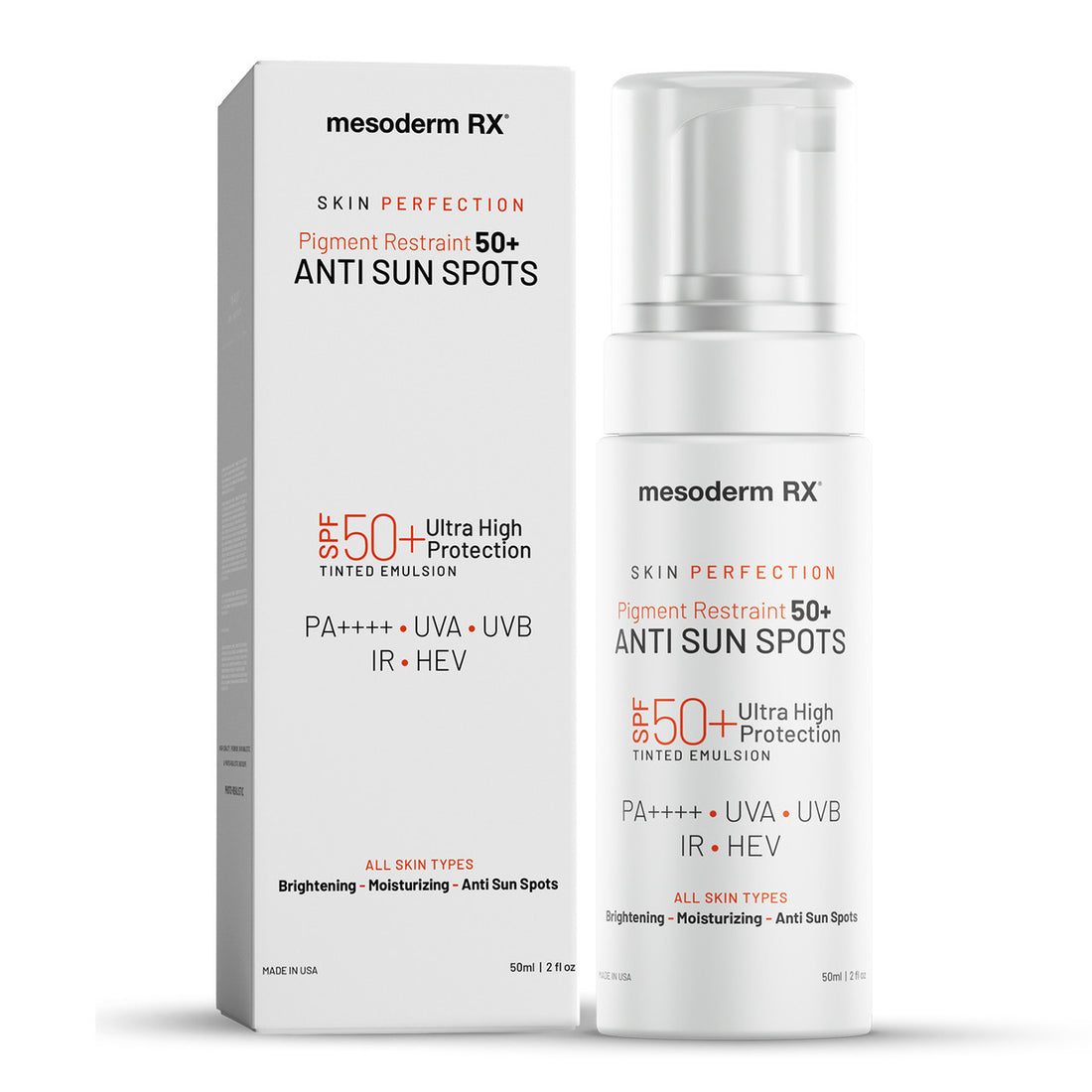
Featured Product
Pigment Restraint Ultra High Sun Protection
SHIELDS FROM UV DAMAGE AND SUN-INDUCED DARK SPOTS
Shop Now →How irritation becomes pigment
At the cellular level, the sequence is straightforward.
- Barrier disruption happens first. The outer layer becomes less efficient at keeping irritants out and water in.
- Immune signaling follows. Mast cells and other inflammatory pathways respond with redness, itch, warmth, or sting.
- Melanocytes receive the message. Inflammatory mediators can increase tyrosinase activity, the enzyme involved in melanin production.
- Pigment lingers after the visible flare settles. That's one route into post-inflammatory hyperpigmentation.
This is why melasma, PIH, and irritation often travel together. Melasma is not the same as sun spots, and it isn't the same as post-acne discoloration. But all three worsen when UV exposure and inflammation keep melanocytes in a more active state.
Why a pleasant scent is biologically expensive
Fragrance offers no protective skin function. It doesn't improve UV defense, pigment control, or barrier repair. It only adds exposure.
Dermatologists recommend non-comedogenic, fragrance-free sunscreens for daily use because they provide broad-spectrum UV protection while minimizing irritation, making them particularly suitable for oily, acne-prone, and pediatric skin types, as outlined in The Deconstruct's overview of fragrance-free sunscreen benefits.
Clinical point: If a product is designed for repeated all-day use, every unnecessary sensitizer matters more.
For patients using active routines, I also care about what supports the barrier around sunscreen use. Anti-Aging Powerhouse includes a rich serum with peptides, DMAE, collagen, vitamin C, and alpha lipoic acid, and the product snapshot notes that it fortifies the skin's moisture barrier while supporting hydration and the appearance of fine lines. That barrier support matters because reactive skin rarely improves when treatment is strong but daily protection is irritating.
What works better
Fragrance-free is the baseline. Better still is a formula that avoids added scent while respecting the rest of the skin environment.
Look for these priorities:
- Barrier tolerance: A sunscreen should sit on skin without creating heat, sting, or delayed itch.
- Pigment discipline: If you're prone to dark marks, any recurring irritation is counterproductive.
- Routine compatibility: Sunscreen has to coexist with actives, not amplify their side effects.
A formula can protect from UV and still sabotage results if it keeps the skin mildly inflamed every morning.
Decoding Labels Fragrance-Free vs Unscented
The most misunderstood label in this category is unscented. People assume it means no fragrance. It doesn't.
True fragrance-free means zero added aromatic compounds, essential oils, or masking agents, while unscented products may contain fragrances to neutralize raw ingredient odors. That confusion matters because up to 30% of sensitive skin users experience reactions despite choosing unscented labels, according to The Face Shop's discussion of fragrance-free versus unscented sunscreen.
Comparison Fragrance-Free vs Unscented
| Attribute | Fragrance-Free | Unscented |
|---|---|---|
| Added fragrance compounds | None | May still be present |
| Essential oils | Should be absent if the claim is accurate | May be present |
| Masking agents | Not included | May be used to neutralize odor |
| Odor | Raw ingredient smell may remain | Designed to smell neutral |
| Sensitive skin compatibility | Often better | Variable |
That difference isn't cosmetic. Masking chemicals can trigger the same practical outcome as obvious perfume: sting, itch, flushing, eye irritation, and a longer inflammatory tail after application.
What to check on the ingredient list
The front label is not enough. Read the INCI.
Watch for:
- Parfum or fragrance: The obvious red flag.
- Essential oils: These can still be biologically active scent compounds.
- Botanical extracts used mainly for aroma: “Natural” doesn't mean non-reactive.
- Neutral-smelling claims without clarity: If the product says unscented, verify the back panel.
This same label literacy helps across other personal care categories. If you're also reacting to cleansers or hair products, Fillaree's guide to best sensitive skin shampoo is a useful reminder that fragrance can keep exposure going well beyond facial skincare.
A neutral smell is not the same thing as a non-reactive formula.
One example of how to evaluate a sunscreen beyond labeling is Pigment Restraint Ultra High Sun Protection, which is described in the catalog snapshot as a fast-absorbing, non-greasy formula with a protection complex for UVA, UVB, IR, and HEV-combination rays, intended to help reduce the look of visible sun damage and support a more even-toned appearance. The useful takeaway isn't the marketing language alone. It's that sunscreen selection should be based on the full protective and compatibility profile, not a single front-label claim.
Evaluating Sunscreen Filters and Base Formulas
A fragrance free sunscreen can still fail sensitive skin. In practice, I see that happen when the UV filters themselves or the base formula provoke the reaction.

That isn't a fringe issue. Even 100% fragrance-free sunscreens trigger allergies in 15-20% of sensitive skin users due to non-fragrance components, and a 2025 clinical review found that 68% of fragrance-free sunscreen failures were linked to UV filter sensitivity, not fragrance, as described in Sky and Sol's review of fragrance-free sunscreen for sensitive skin.
Mineral filters versus chemical filters
Mineral and chemical filters create different trade-offs on the skin.
| Filter type | What people often like | Common trade-off |
|---|---|---|
| Mineral | Often preferred when skin is highly reactive | Can feel heavier or leave visible residue |
| Chemical | Often feels lighter and more cosmetically elegant | Some users react to specific filters |
| Hybrid | Can improve wear feel | Still requires full-ingredient review |
If you're highly sensitive, mineral-heavy formulas are often the cleaner first test because they remove one major variable. That doesn't make them automatically tolerable. The particle system, coating, dispersion, preservatives, and base still matter.
The base formula often decides wearability
The vehicle matters almost as much as the filter.
- Creams: Better for dry or barrier-impaired skin, but some can feel occlusive.
- Lotions: Usually the easiest middle ground for mixed skin.
- Gels: Often preferred by oily skin, but some sting compromised barriers.
A person with acne and post-inflammatory hyperpigmentation may react not because the sunscreen is “bad,” but because a gel base on freshly exfoliated skin can increase sting and flush. Another person may do poorly with a rich cream because it traps sweat and worsens congestion.
For readers comparing options that also address visible cast and skin reactivity, Mesoderm RX has a guide on tinted sunscreen for sensitive skin that's worth reviewing alongside ingredient lists.
What actually helps you choose
I don't recommend starting with brand promises. Start with your reaction pattern.
Ask these questions:
- Do you sting immediately? Suspect filter or solvent sensitivity.
- Do you itch later in the day? Look at film formers, preservatives, or accumulated irritation.
- Do you break out after repeated use? Review the entire base, not just the active filters.
- Do dark marks linger longer when using it? Ongoing subclinical irritation may be part of the problem.
The right sunscreen is the one your skin will tolerate at full daily use, not the one that sounds the cleanest on the front label.
Integrating Sunscreen with a High-Potency Routine
Most irritation attributed to sunscreen stems from a routine conflict. The sunscreen is the step people feel, so it gets accused first. But the underlying problem is often an overworked barrier from acids, retinoids, scrubs, or too many brightening products stacked without control.
If you're using potent treatment products, your morning and evening structure has to make biological sense. Protection and correction only work together when the barrier stays functional.
A cleaner morning sequence
For most pigment-prone or sensitive skin, the morning order should be simple:
- Gentle cleanse if needed.
- Treatment serum with a clear role. Keep it focused.
- Moisturizer when the barrier needs support.
- Fragrance free sunscreen as the final step.
That order reduces unnecessary friction. Serums sit closer to the skin. Moisturizer buffers where needed. Sunscreen forms the protective top layer instead of being diluted or disrupted by products applied over it.
Where people overload the skin
The usual mistakes are predictable.
- Too many actives at once: Vitamin C, exfoliating acids, retinoid, and brightening agents all in the same cycle can push the skin into low-grade inflammation.
- Skipping barrier support: Strong treatment without hydration often makes sunscreen burn.
- Using actives right up to the eye area: Then blaming the sunscreen when the eye margin stings.
- Changing multiple products together: That makes the trigger impossible to identify.
If your sunscreen suddenly starts burning, review the week before you replace the bottle.
A treatment plan can also include in-office work, but timing matters. If you're considering procedures, advanced skin treatments from Ayla Aesthetics are a useful example of the kind of professional care that still depends on disciplined post-procedure barrier management and sunscreen tolerance.
A realistic evening structure
Night is where you do more corrective work. Keep it controlled.
Use a rhythm such as:
- Retinoid nights: Cleanse, treatment, moisturizer.
- Exfoliation nights: Not on the same night as every other strong active if you're already sensitive.
- Recovery nights: Hydrating, barrier-supportive steps only.
That approach gives melanocytes fewer inflammatory triggers while still allowing progress on texture and discoloration.
If congestion is part of the picture, Mesoderm RX also has a practical read on non-comedogenic face sunscreen. The point isn't to chase a perfect label. It's to choose a protective step that fits the rest of the routine instead of fighting it.
A Clinical Protocol for Application and Patch Testing
Correct sunscreen choice means very little if the dose is too low or the testing is careless.

Proper application requires the two-finger rule, meaning sunscreen equivalent to two fingers' length on the face, neck, and ears, with reapplication every two to three hours to maintain protection, according to Dr. Alpana's guidance on fragrance-free sunscreen use.
Apply enough to get the labeled protection
Under-application is one of the main reasons people think a sunscreen “doesn't work.” The SPF on the bottle depends on adequate coverage.
Focus on these areas people routinely miss:
- Eyelids and orbital bone: Only if the formula is tolerated there.
- Ears: Front, back, and the upper rim.
- Neck: Especially the sides.
- Lips and around the mouth: Use a compatible protective product.
- Hands and tops of feet: Frequent pigment sites that people ignore.
For sensitive skin, application technique matters too. Don't aggressively rub. Spread, press, and let the film set.
Patch test like a professional
A proper patch test is slow by design.
- Choose a discreet site such as the jawline, side of neck, or inner forearm.
- Apply a small amount once daily.
- Repeat for several days before full-face use.
- Watch for more than redness. Itch, delayed bumps, warmth, dryness, and eye watering all matter.
- Test on high-risk zones last if you're prone to perioral dermatitis, eyelid eczema, or acne.
This kind of visual walkthrough can help with technique:
When to stop
Stop the test if you see persistent sting, escalating redness, swelling, clustered breakouts, or delayed irritation that worsens with each use. Sensitive skin often reacts cumulatively. The first application may be quiet. The third may not be.
Practical rule: Don't patch test on a day when you're also introducing a new acid, retinoid, or treatment cleanser.
How to Choose Your Ideal Fragrance Free Sunscreen
The right fragrance free sunscreen is the one that protects pigment-prone skin without adding avoidable inflammatory load. That means choosing by total ingredient compatibility, not by a single claim on the front.
The selection checklist
Use this filter:
- Verify the claim: Check that the ingredient list doesn't hide fragrance, parfum, essential oils, or masking agents.
- Match the filter to your skin behavior: If you're highly reactive, start with the filter system most likely to reduce variables for you.
- Review the base formula: Cream, lotion, and gel each behave differently on dry, oily, acne-prone, or barrier-impaired skin.
- Prioritize high protection: For sensitive skin, SPF50 blocks approximately 98% of UVB rays compared to about 96% with SPF30, a difference noted in Altruist Sun's explanation of sunscreen for sensitive skin.
- Expect trial, not perfection: A fragrance-free label lowers one major risk. It doesn't guarantee universal tolerance.
What this means for pigment control
If you're treating melasma, PIH, or persistent uneven tone, sunscreen isn't just prevention. It's part of treatment. Every day of uncontrolled UV exposure or repeated product irritation makes brightening work slower and less stable.
That's why I favor the more actives, less additives philosophy. Fewer unnecessary triggers gives treatment products a better chance to work without the skin staying stuck in an inflammatory loop.

If you want a broader framework for evaluating cleaner makeup and skincare choices around reactive skin, Mesoderm RX also has a guide to fragrance-free cosmetics brands. That bigger view matters because sunscreen rarely operates in isolation. The total exposure load from the whole routine often decides whether skin stays calm.
A good sunscreen should do one job exceptionally well. Protect skin from UV while staying quiet on the skin. No scent benefit is worth a longer pigment cycle.
Mesoderm RX formulates for that exact intersection of protection, brightening support, and lower additive load. If your skin reacts easily, darkens after irritation, or never seems to tolerate daily SPF for long, explore Mesoderm RX for routines built around high-potency actives, minimal unnecessary additives, and practical daily compatibility.