


Dark Spots on Elbows: A Clinical Treatment Guide
If you're trying to scrub dark spots on elbows away, you're usually making them worse. That advice survives because elbows often feel rough and dry, so people assume the discoloration is just buildup. It usually isn't.
Most dark spots on elbows are a pigmentation problem, not dirt and not a disease by themselves. The common drivers include friction, sun exposure, dead skin buildup, scars, psoriasis, medication side effects, and hormone shifts such as pregnancy, as outlined in Medical News Today's overview of dark elbows. In practice, several of those triggers often show up together.
That's why random hacks fail. You don't fix a friction-driven pigment cycle with harsher friction. You interrupt the cycle, calm the skin, regulate turnover, and reduce the signals that keep melanocytes producing excess pigment.
Beyond Dry Skin The Real Cause of Dark Elbows
People usually frame dark elbows as a cleansing problem. Wrong diagnosis, wrong treatment.
Elbows darken because this area lives under repeated pressure, rubbing, bending, and dehydration. The skin responds defensively. It thickens. It holds onto compacted dead cells. It amplifies pigment after low-grade irritation. What looks like “stubborn dirt” is often a mix of hyperkeratosis and hyperpigmentation.

Why the elbow is a problem zone
The elbow is structurally set up to look darker than smoother, better-moisturized areas. It takes constant mechanical stress from leaning on desks, floors, armrests, gym mats, and clothing seams. Add dryness and the outer layer becomes even more compact and uneven.
If you care about barrier support, ingredient quality matters. That's why it helps to understand how brands select sustainable body care ingredients that reinforce moisturization rather than relying on harsh stripping formulas.
Practical rule: If the skin feels rough, that doesn't mean you should attack it. Roughness on elbows often means the tissue is already in defensive mode.
What scrubbing misses
Dark elbows are often treated like a housekeeping issue. People reach for pumice stones, gritty scrubs, lemon juice, or baking soda because they want immediate lift. That instinct is understandable, but biologically crude.
Aggressive rubbing creates more micro-irritation. The skin answers by building more protective thickness and, in many people, laying down more pigment. The result is familiar: temporary smoothness, then rebound roughness and a darker-looking patch.
A better way to think about dark spots on elbows is this:
- Friction starts the problem: pressure and rubbing trigger irritation.
- Dryness locks it in: poorly hydrated skin sheds less evenly.
- Pigment makes it visible: inflammation cues the skin to produce more color.
- Thickness makes it stubborn: compacted surface cells keep the area looking dull and dark.
That's why successful treatment is never one-dimensional. Moisturizer alone usually won't clear it. Scrubbing definitely won't. You need a protocol that addresses texture, inflammation, pigment signaling, and recurrence.
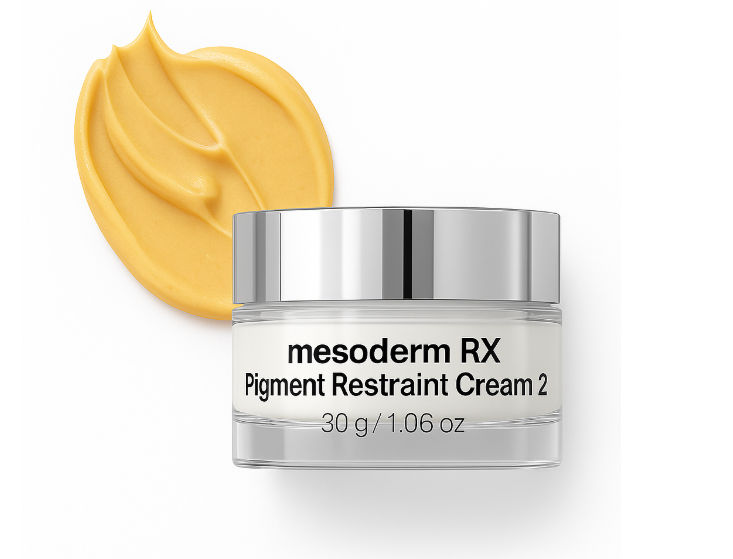
Featured Product
Pigment Restraint Cream
Visibly fade the look of dark spots and uneven tone — no clinic visit required. A brightening cream made to target the look of stubborn discoloration, whether it’s from post-blemish marks, sun exposure, or dullness that years of serums haven’t improved.
Shop Now →Understanding the Pigment Production Cascade
Pigment in dark elbows follows a repeatable biological sequence. If you want the area to lighten, you have to interrupt that sequence instead of polishing the surface and hoping for a cosmetic win.
Elbows darken easily because the area deals with constant pressure, low natural oil support, and slower-looking surface shedding. Earlier discussion covered the common triggers. The part that matters here is what happens after that stress reaches living skin cells.

How pigment actually gets produced
The melanocyte produces pigment. It starts with tyrosine, then uses the enzyme tyrosinase to build melanin. That pigment is packaged into melanosomes and transferred into surrounding keratinocytes, which is the point where discoloration becomes visible on the skin.
On elbows, this process is rarely isolated. Friction and repeated pressure trigger low-grade inflammation. Inflammation increases signaling to melanocytes. At the same time, the skin often becomes thicker and more compacted, so pigmented cells sit in a rough, dull layer that reflects light poorly and looks even darker.
That is why simple exfoliation underperforms. It may remove some surface buildup, but it does not reliably reduce inflammatory signaling, regulate melanin transfer, or normalize barrier function. A useful background reference is this guide to hyperpigmentation causes, types, and treatment.
Different drivers can produce a similar look
Dark elbow patches can have different biological drivers.
Post-inflammatory hyperpigmentation is the pattern I see most often in benign elbow darkening. Repeated rubbing, chronic dryness, and minor irritation keep cytokine signaling active, melanocytes respond by producing more pigment, and hyperkeratosis makes that pigment look denser than it really is. The patch may feel rough, look matte, and sit exactly where pressure is highest.
Acanthosis nigricans follows a different pathway. It tends to appear thicker, more velvety, and more diffuse, with texture changes that are out of proportion to ordinary friction. That distinction matters because the treatment plan changes when the darkening is linked to an underlying metabolic issue rather than surface stress alone.
A product formulated for multi-zone discoloration can be reasonable when the issue is benign pigment change with roughness and no signs of a medical disorder. Mesoderm RX Intimate Skin Lightening Cream for Under Arms, Inner Thighs & Private Area is marketed for areas including elbows and uses tranexamic acid, niacinamide, and arbutin, which are ingredients commonly used to suppress excess pigment signaling rather than just strip the surface.
Pigment correction works better when each step has a job. Reduce inflammation. Loosen compacted cells. Suppress excess melanin production. Repair the barrier so the cycle does not restart.
Why Aggressive Scrubbing and DIY Remedies Backfire
The worst elbow routines are always the most intuitive. Scrub harder. Use acids from the kitchen. Dry the area out. Repeat daily. That approach feels active, but it keeps the biology moving in the wrong direction.
A more accurate model is a friction-inflammation-thickening-pigment loop. Elbows often darken through a feedback loop of hyperkeratosis and post-inflammatory hyperpigmentation caused by repeated friction and dryness, and this process can lead to more persistent pigment deposition, especially in darker skin tones. The same explanation notes that benign frictional darkening is usually bilateral and asymptomatic, as outlined in this discussion of dark knees and elbows.
The loop most people keep feeding
Here's what happens when you over-treat the area:
- You abrade the surface. Scrubs, brushes, and rough towels create more mechanical stress.
- The skin interprets that as injury. Even if you don't see redness, low-grade inflammation is still a signal.
- The barrier weakens. Water escapes more easily, so the area gets drier.
- The skin thickens to protect itself. That's hyperkeratosis.
- Pigment becomes more visible and more persistent. You now have roughness and darkening reinforcing each other.
Why common DIY fixes are poor choices
A few examples deserve blunt treatment.
- Lemon juice: It's unpredictable, irritating, and often too harsh for skin already dealing with inflammation.
- Baking soda: High-irritation potential. It doesn't correct pigment signaling.
- Salt or sugar scrubs: They increase friction on a friction-driven problem.
- Pumice stones: Useful for callus reduction in the wrong context. Not a smart first-line approach for pigmented elbows.
That doesn't mean exfoliation is useless. It means physical aggression is the wrong tool. Controlled chemical exfoliation is different because you can regulate intensity and reduce the urge to overwork the skin. If you need a practical framework for choosing acids, this explainer on AHA and BHA products is worth reading.
What failure usually looks like
People often tell themselves the area is “purging” or “just needs consistency.” Sometimes the issue is simpler. They're irritating the elbow faster than the skin can normalize.
If a dark elbow routine leaves the area stinging, tight, shinier, or rougher, the protocol is failing. More effort won't rescue a bad mechanism.
The goal isn't to strip the elbow into submission. The goal is to lower friction, normalize shedding, and stop triggering pigment in the first place.
A Multi-Pathway Protocol for Brighter Elbows
Dark elbows do not respond well to single-step routines because the problem is not single-step biology. Friction keeps the area inflamed. Inflammation disrupts normal shedding. Retained surface cells thicken the stratum corneum, increase roughness, and create more drag. Melanocytes then keep receiving signals to produce pigment. A useful protocol interrupts that loop at several points at once.

Pillar one normalizes buildup
Start with controlled resurfacing. Elbows often hold onto compacted, dry cells far longer than smoother body areas, which makes discoloration look darker than it is. A low-strength AHA or PHA helps loosen corneocyte cohesion so the surface can shed in a more orderly way.
Restraint matters here. Over-exfoliation recreates the same inflammatory input that caused the darkening. Use enough acid to soften retention and reduce roughness, not enough to provoke sting, glossiness, or rebound dryness.
This first pillar addresses three practical problems:
- rough texture
- uneven cell turnover
- the thick surface layer that makes pigment appear more stubborn
Pillar two reduces pigment signaling
Once the elbow is less compacted, leave scrubbing behind and switch to biochemical control. Brightening agents then earn their place. Ingredients such as tranexamic acid, arbutin, and niacinamide are used because they act on pigment pathways rather than just removing surface debris.
A body-area brightening formula can fit here if it is designed for persistent discoloration and not just general moisturization. As noted earlier, Mesoderm RX Intimate Skin Lightening Cream for Under Arms, Inner Thighs & Private Area is one example that includes tranexamic acid, niacinamide, and arbutin and is described for use on elbows. If you want to discover skin solutions, compare formulas by active pathway and irritation profile, not by before-and-after marketing.
Pillar three lowers re-triggering
Pigment correction fails when the original trigger stays in place. Repeated pressure at desks, floors, gym mats, armrests, and tight sleeves keeps feeding the friction cycle. Dryness makes that mechanical stress worse by increasing surface drag.
Daily moisturizer belongs here for a reason. Better lubrication and barrier support reduce micro-irritation from contact. Sunscreen matters too when elbows are exposed, because UV adds another stimulus for melanin production. For readers who need a lower-irritation option while building this step, this guide to a brightening serum for sensitive skin is a useful reference.
Here is the sequence I use most often:
| Step | What to use | What it addresses |
|---|---|---|
| Evening, a few nights per week | Gentle chemical exfoliant | Softens retained buildup and roughness |
| Evening, on alternate nights or after tolerated exfoliation | Brightening treatment | Reduces ongoing pigment signaling |
| Daily | Barrier-supporting moisturizer | Lowers dryness, friction, and surface stress |
| Daytime when exposed | Broad-spectrum sunscreen | Reduces UV-driven darkening |
A good routine should produce calmer texture first, then slower fading of discoloration. If the elbow becomes tighter, shinier, more reactive, or rougher, the protocol needs adjustment. In practice, that usually means the skin is being pushed harder than it can recover.
Gentle Brightening for Sensitive or Reactive Skin
Sensitive skin doesn't need a weaker strategy. It needs a smarter one.
Most irritation comes from poor dosing, bad product stacking, or damaged barrier status, not from the simple fact that brightening ingredients exist. People with reactive skin often give up too early because they start with a frequency their elbows can't tolerate.
How to lower risk without losing efficacy
Use milder exfoliants first. Mandelic acid and PHAs are often easier entry points than stronger resurfacing systems. Apply them less often, then increase only if the skin stays calm.
Patch testing isn't optional. Dark spots on elbows already involve pigment dysregulation, and irritated skin can darken further. If your elbow reacts with burning, persistent redness, or obvious worsening of texture, reduce intensity immediately.
A good adaptation plan looks like this:
- Start slower: Apply active products every other day or less at first.
- Keep the formula simple: Avoid fragranced products and unnecessary extras.
- Moisturize generously: Barrier support reduces the dryness that makes elbows overreact.
- Don't stack too fast: One active routine beats three irritating ones.
A calm protocol usually wins
Reactive skin responds better to consistency than force. If you want a reference point for choosing lower-irritation formulas, this guide to a brightening serum for sensitive skin lays out the kind of formulation logic that matters.
One mistake I see often is people treating sensitivity as a reason to stop all correction. That's not necessary. It usually means you should adjust vehicle, frequency, and exfoliation strength.
Sensitive skin can brighten well. It just won't tolerate impatience.
Judge the routine by skin behavior. If the elbow gets smoother, more comfortable, and gradually more even, you're on the right track. If it gets hotter, tighter, shinier, and darker, the protocol is too aggressive.
When to Consult a Dermatologist
Not every case of dark spots on elbows should be handled as routine frictional pigmentation. Certain patterns deserve medical evaluation.
One of the most important is acanthosis nigricans. It can appear as dark, thick, velvety skin on the elbows and in body folds, and reporting summarized in this article on whether darkened elbows are a cause for concern notes that it can be an early visible sign of insulin resistance and prediabetes. The same reporting also notes that while it's often associated with obesity, sudden severe pigmentation can, in rare cases, signal an internal issue.

Signs that push this beyond cosmetics
A benign friction-related pattern is usually quiet. It tends to be fairly symmetrical and doesn't come with dramatic textural change.
Get assessed if you notice:
- Velvety thickening: not just dark color, but a plush or raised texture
- Rapid spread: the area darkens quickly or extends beyond the elbow
- Other locations involved: neck, armpits, knuckles, groin, or knees show similar changes
- Systemic concern: unexplained health changes alongside the pigmentation
What a clinician needs to sort out
A dermatologist or physician isn't just identifying color. They're differentiating between superficial hyperpigmentation, inflammatory thickening, and signs that point to a broader metabolic issue.
That distinction matters because topical brightening alone won't solve a systemic driver. If the skin is signaling insulin resistance, the right response isn't a stronger acid. It's proper medical workup.
Dark elbows that are sudden, thick, velvety, or spreading deserve diagnosis before treatment escalation.
If your discoloration is long-standing, bilateral, and tied to pressure or dryness, a topical protocol may be enough. If the presentation changes character, treat it as clinical information, not just a cosmetic annoyance.
If you want a routine built around high-potency, minimal-additive brightening care, explore Mesoderm RX for hydroquinone-free options designed to target uneven tone, rough texture, and discoloration while staying compatible with sensitive skin goals.