


Cruelty Free Fragrance Free Skincare: A Clinical Guide
The most popular advice about cruelty free fragrance free skincare is also the least precise: choose both labels and assume your skin will be safer. That shortcut confuses two unrelated promises. Cruelty-free concerns animal testing and supply-chain controls. Fragrance-free concerns the formulation that contacts your skin. Neither claim, by itself, tells you whether a brightening serum will calm inflammation, whether a preservative system will sting, or whether a product can improve hyperpigmentation without damaging the barrier.
That distinction matters most when you're treating reactive, melanated, or pigment-prone skin. A formula can be vegan and cruelty-free yet contain essential oils, exfoliating acids, or a high-irritation solvent. It can also be fragrance-free and still fail ethically if its supplier-testing policy is vague. The useful approach has three layers: understand what the labels cover, diagnose how irritation feeds pigment, and build a low-additive routine that still uses effective actives.
Why Cruelty Free and Fragrance Free Are Not the Same Promise
Cruelty-free and fragrance-free aren't interchangeable labels. They answer different questions at different points in the product chain.
Cruelty-free asks: Were the finished product, ingredients, suppliers, and laboratories involved in development subject to new animal testing? A credible answer requires more than a statement printed on a carton. Leaping Bunny certification requires a fixed cut-off date, supplier monitoring, annual recommitment, and independent audits. The program says certified companies must exclude new animal testing at every stage of product development, including ingredients and laboratories, as explained in Leaping Bunny's certification overview.
Fragrance-free asks: What was put into the bottle? Under EPA Safer Choice fragrance-free guidance, fragrance materials and masking scents must not be used. A product can smell neutral and still contain masking ingredients, so “no noticeable perfume” isn't a sufficient test.
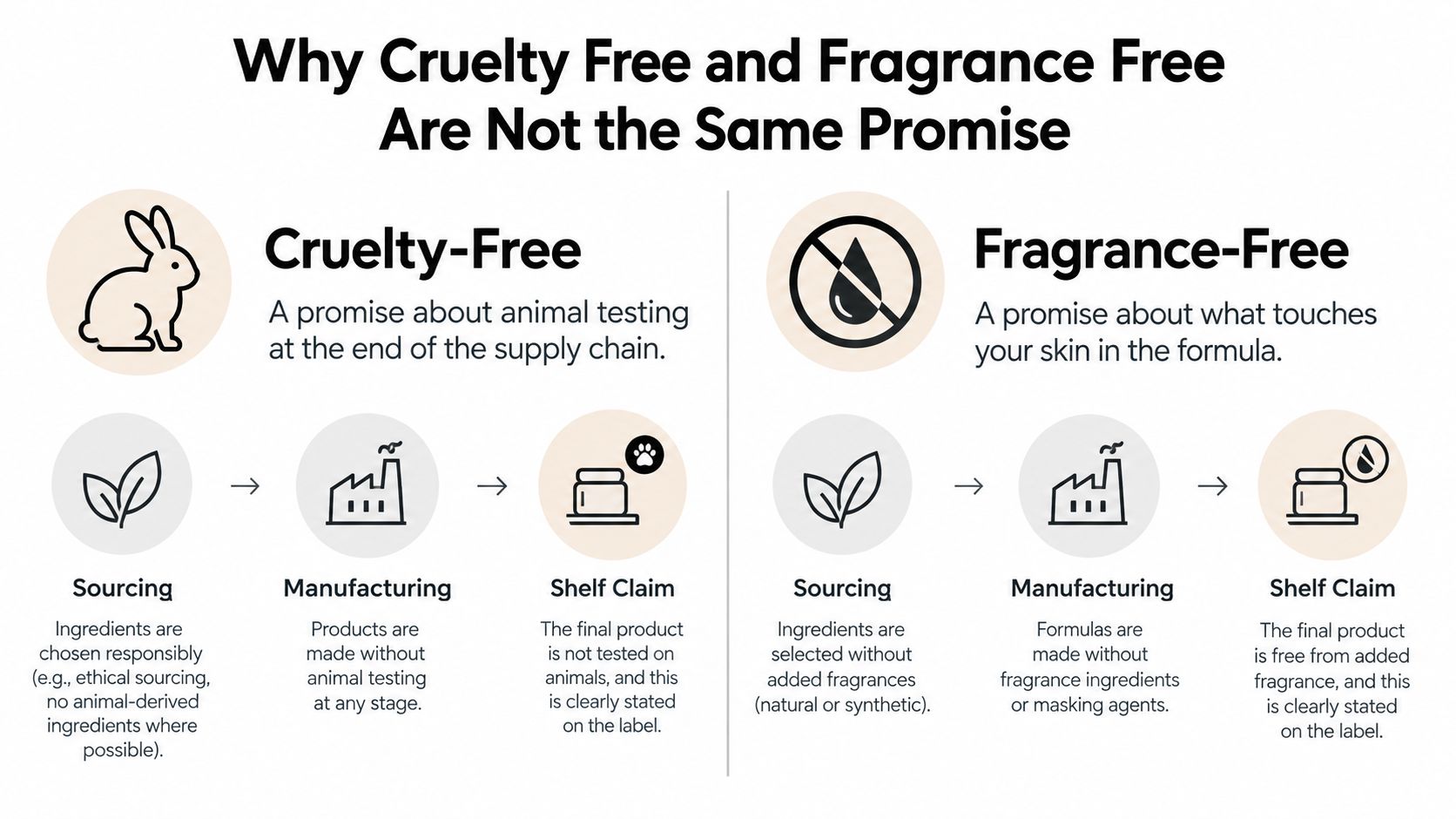
Two claims, two failure points
Cruelty-free is primarily a supply-chain verification problem. A brand has to know what its raw-material suppliers and contract laboratories do, maintain documentation, and monitor changes over time. A finished formula doesn't become cruelty-free merely because nobody tested that final bottle on animals.
Fragrance-free is a formula and label-reading problem. The absence of parfum doesn't automatically mean the formula contains no potentially sensitizing aromatic components. Essential oils and individually listed fragrance allergens still deserve scrutiny, particularly in leave-on products used repeatedly on compromised skin.
Practical rule: Treat the claims as separate filters. Verify the ethics through certification and the skin-tolerance profile through the INCI list.
Featured Product
AHA + BHA + PHA Skin Brightening Serum 30ml
This powerful formula combines exfoliating acids to brighten dark spots, refine skin texture, and reveal a smoother, more radiant complexion. Perfect for tackling uneven tone and promoting skin renewal, it leaves your skin feeling fresh, hydrated, and rejuvenated.
Shop Now →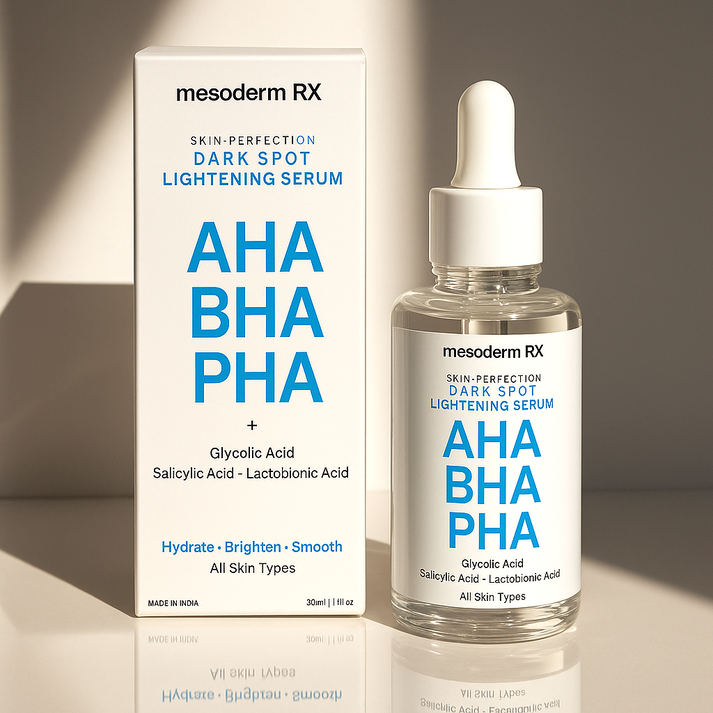
For readers comparing ethical and sensitive-skin standards, this breakdown of Leaping Bunny certification is useful because it keeps animal testing controls separate from irritation claims. That separation is the foundation of an effective routine. You need ethical traceability, transparent formulation, and a pigment strategy that doesn't create more inflammation than it resolves.
What Cruelty Free and Fragrance Free Actually Mean
Start with the vocabulary, because packaging often compresses several distinct claims into one reassuring impression.
Cruelty-free refers to animal-testing policy. In practice, the strength of the claim depends on its scope. Leaping Bunny requires no new animal testing across product development, supplier controls, a fixed cut-off date, annual renewal, and audits. A self-declared statement may represent a genuine policy, but it gives shoppers less independent accountability unless the company publishes meaningful supply-chain information.
Vegan refers to ingredient origin. It generally means the formula excludes animal-derived materials, but it doesn't answer whether the product or its ingredients were tested on animals. A vegan formula can contain fragrance, and a cruelty-free formula can contain animal-derived ingredients. These terms overlap for some brands, but they aren't synonyms.
Fragrance-free should mean that fragrance materials and masking scents haven't been added. Unscented is weaker. It can describe a formula with no obvious perfume while odor-masking ingredients neutralize the natural smell of raw materials. The label tells you how the product presents to your nose, not necessarily what allergenic materials are absent.
Compare the claims before you buy
| Claim | What It Covers | What It Does NOT Cover | Verification Standard |
|---|---|---|---|
| Cruelty-free | Animal-testing policy across relevant development and supply-chain stages | Irritation risk, vegan status, or formula quality | Prefer certification with supplier monitoring and audits |
| Fragrance-free | No added fragrance materials or masking scents | Allergen-free status, preservative tolerance, or absence of irritating actives | Read the complete INCI and assess the claim's definition |
| Vegan | No animal-derived ingredients | Animal-testing policy or sensitivity | Look for a recognized vegan certification and transparent INCI |
The European Commission describes fragrance contact allergy as affecting about 1 to 3% of the general population and around 16% of patients patch-tested for suspected allergic contact dermatitis in its consumer guidance on perfume allergies. The European regulatory framework also requires disclosure of designated fragrance allergens when present above applicable thresholds, but disclosure isn't the same as absence. If you react to a listed allergen, cross-reference the full INCI rather than relying on the front label.
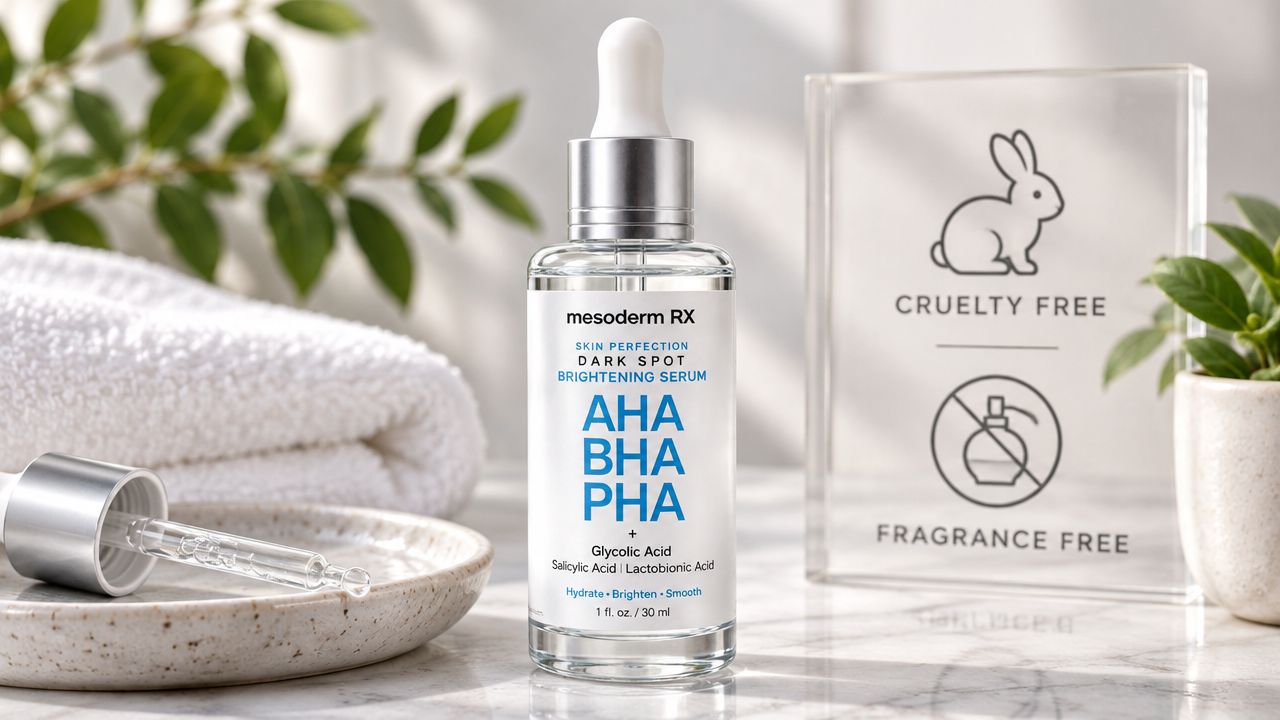
A product such as AHA + BHA + PHA Skin Brightening Serum 30ml illustrates why the claims must be separated from the active strategy. Its product snapshot identifies kojic acid, glycolic acid, lactic acid, salicylic acid, lactobionic acid, hyaluronic acid, and hexapeptides, and describes it as vegan, cruelty-free, and free of perfume. Those details help you assess ethics and formula intent, but they don't replace patch testing or individual tolerance assessment. A practical guide to fragrance-free cosmetics can help with the label side of that decision.
The Skin Biology Behind Sensitive and Pigmented Skin
Pigment isn't a surface stain you can scrub away. Melanocytes produce melanin, and the enzyme tyrosinase controls a central step in that production pathway. When inflammation, ultraviolet exposure, visible light, hormones, or skin injury stimulate melanocyte activity, pigment becomes more persistent.
That matters because reactive skin creates its own pigment triggers. A compromised barrier permits greater penetration of irritants, increases water loss, and lowers the threshold for burning or redness. Repeated exposure to fragrance allergens, harsh solvents, or essential oils can keep the skin in an inflammatory state. For people prone to post-inflammatory hyperpigmentation, the irritation itself can become part of the discoloration problem.
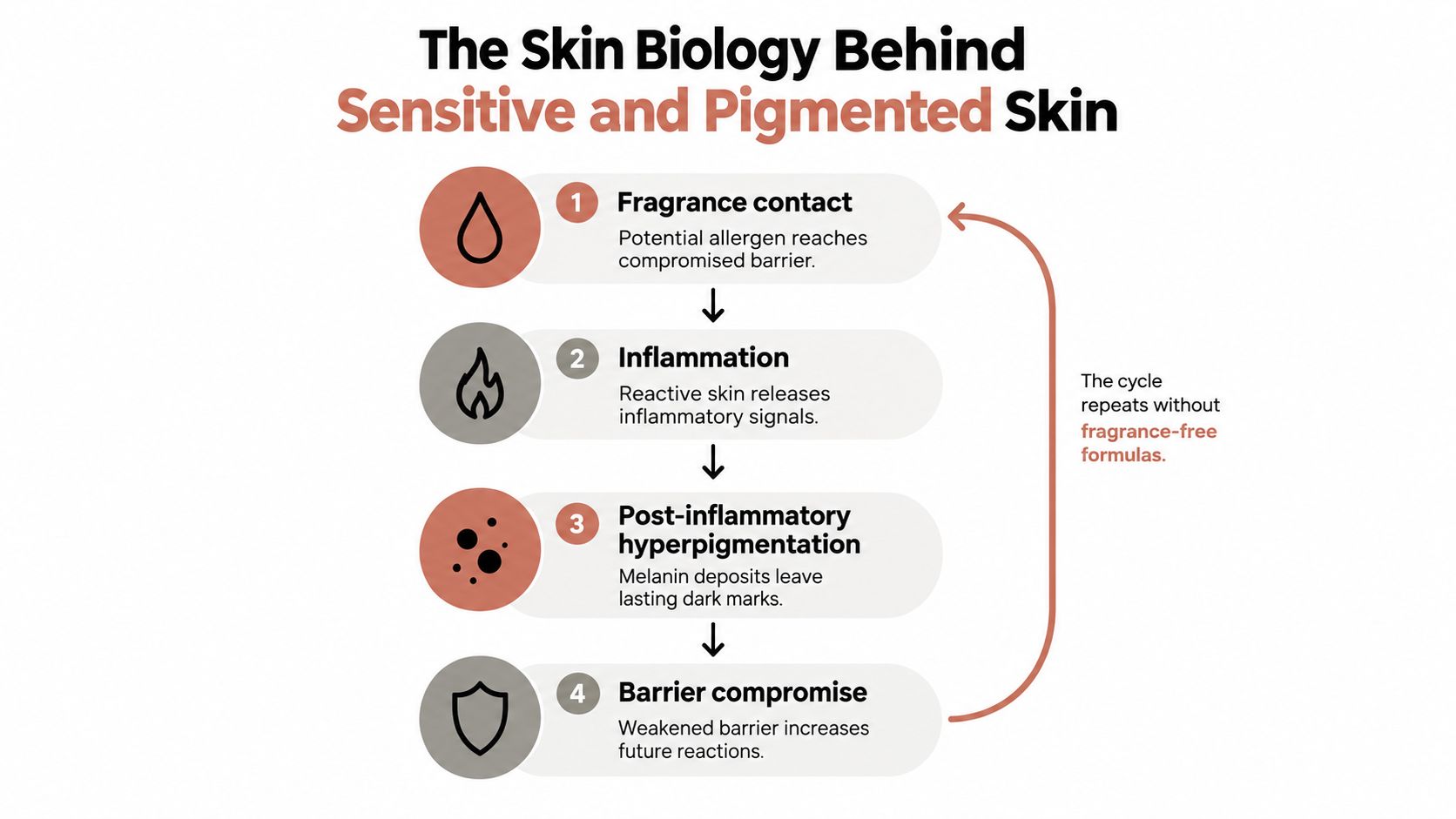
Hyperpigmentation has more than one diagnosis
Melasma isn't the same as sun spots or PIH. Melasma commonly presents as patterned facial pigmentation and has inflammatory components within its pathogenesis. PIH follows inflammation or injury, such as acne, dermatitis, friction, or an overly aggressive treatment. A peer-reviewed review also describes roles for mast-cell histamine and dermal fibroblast-derived KGF in PIH mechanisms, which is one reason a dark mark after acne shouldn't automatically be treated as melasma. The distinction is discussed in this peer-reviewed melasma and pigmentation review.
A low-additive, fragrance-free base doesn't cure either condition. It removes one avoidable source of inflammatory load, giving targeted actives a more stable environment. That's why I prioritize barrier support before increasing potency. A cleanser that removes residue without leaving the skin tight is also foundational, and this explanation of how bio cleansers work with skin provides useful context for evaluating cleansing systems.
For sensitive, pigment-prone skin, assess burning, persistent redness, scaling, and tightness as formulation feedback, not as proof that a product is effective. A routine built around a fragrance-free vehicle, measured active use, and consistent photoprotection is more rational than repeatedly escalating exfoliation. Guidance on a brightening serum for sensitive skin is most useful when it considers both pigment biology and barrier tolerance.
The Intimate Skin Lightening Cream for Under Arms, Inner Thighs & Private Area is described in its product snapshot as containing tranexamic acid, niacinamide, and arbutin for discoloration in exterior delicate areas. That kind of product still belongs within the same biological framework. Friction, inflammation, and repeated irritation can sustain uneven tone, so “sensitive area” doesn't justify ignoring the ingredient list or patch testing.
Certifications That Actually Verify the Claims
A certification mark is valuable only when it represents an operating system. The rabbit icon matters because it can signal supplier declarations, a defined cut-off date, audit access, and continuing oversight. Without those controls, “not tested on animals” may describe a narrow finished-product statement while leaving the upstream chain unexplained.
Leaping Bunny reported that its program had grown to more than 2,300 certified brands in September 2025 and noted that some companies had held certification for over 20 years. The program's logo was introduced in 1996, according to Cruelty Free International's history of the Leaping Bunny logo. That continuity doesn't make every certified formula suitable for sensitive skin, but it does show why certification has become a recognizable verification framework rather than a niche slogan.
Read the mark by what it audits
| Mark | Verifies Animal Testing Policy | Verifies Animal-Derived Ingredients | Audits Suppliers | Recognized Region |
|---|---|---|---|---|
| Leaping Bunny | Yes, under its program requirements | No | Yes, with monitoring and independent audits | International |
| Vegan certification | Usually not the primary purpose | Yes, according to the certifier's standard | Depends on the certifier | Varies by program |
| Self-declared cruelty-free claim | Only what the brand defines | No | Not necessarily | Depends on the brand and market |
Choose Cruelty Free and PETA's Beauty Without Bunnies are also encountered in the market, but their standards and verification processes aren't identical. The consumer task isn't to collect logos. It's to identify which organization stands behind the mark, what parts of the supply chain it covers, and whether the certification remains active.
What certification cannot tell you
Leaping Bunny status doesn't confirm fragrance-free formulation, hypoallergenic performance, vegan ingredients, or compatibility with eczema, rosacea, melasma, or PIH. A vegan logo doesn't confirm animal-testing policy. Fragrance-free claims generally lack one universally applied cosmetic certification, so the INCI remains essential.
The Leaping Bunny difference is operational: fixed cut-off dates, supplier monitoring, independent audits, and annual recommitment. Those controls justify more trust than decorative language, but they still answer only the ethics question. Your skin needs a second investigation.
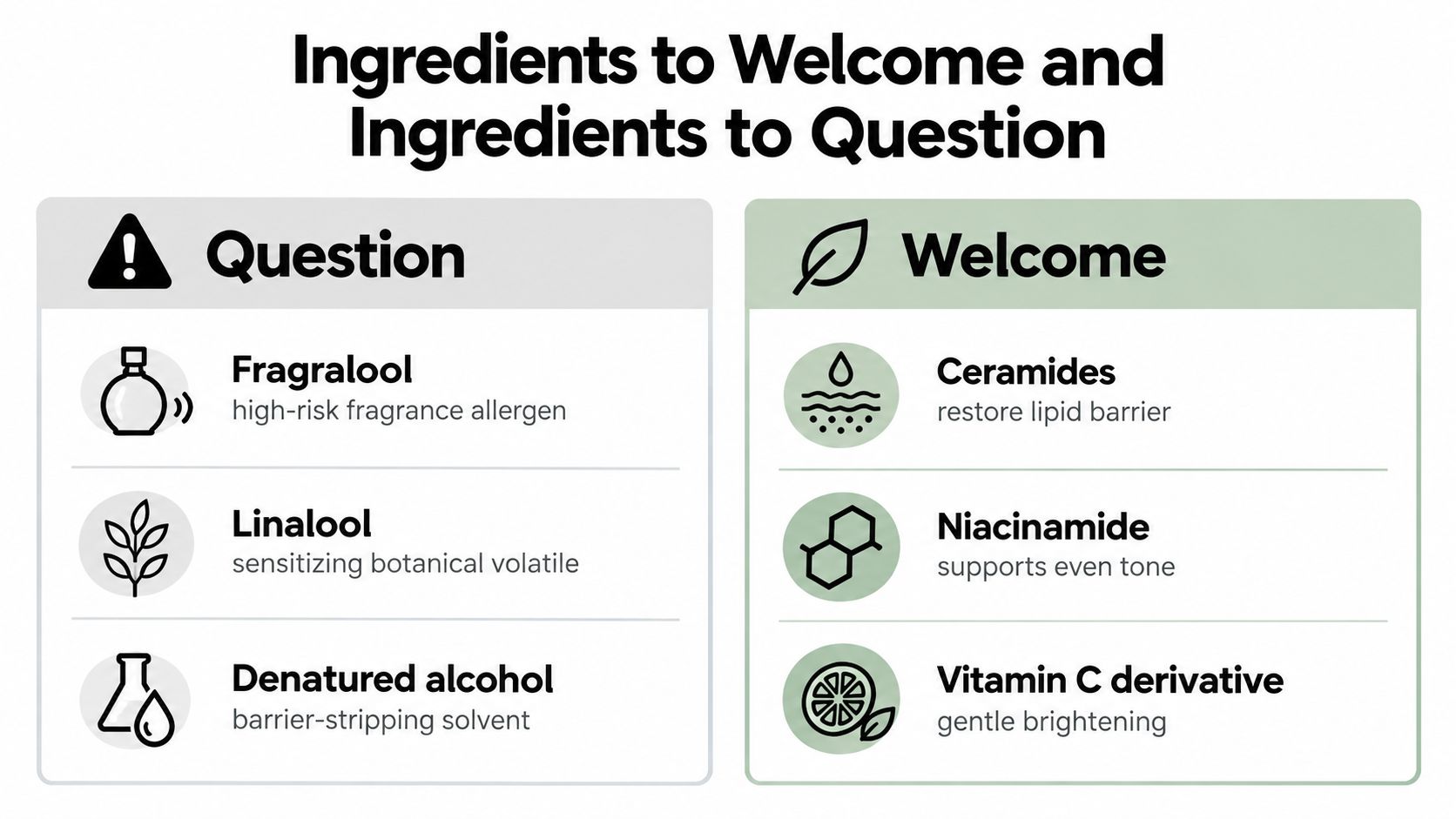
Ingredients to Welcome and Ingredients to Question
A low-additive formula isn't defined by a short ingredient list alone. It should contain ingredients with clear jobs, a sensible vehicle, and no unnecessary sensory decoration that raises the irritation burden.
Start with the question list. Look for parfum, fragrance, essential-oil components, and undisclosed botanical blends sold as “natural scent.” Common fragrance allergens include limonene, linalool, geraniol, citronellol, citral, eugenol, and coumarin. A label may list these individually rather than using the word fragrance, so searching only for parfum misses relevant information.
Build the welcome list around function
For pigmentation, I look for actives that influence melanin pathways or inflammation without requiring a damaged barrier to “push through.” Useful categories include:
- Tone-supporting actives: Niacinamide, azelaic acid, alpha-arbutin, cysteamine, and thiamidol can fit a brightening plan when the formula and frequency match the user's tolerance.
- Barrier lipids: Ceramides, cholesterol, and free fatty acids support the lipid structure of the stratum corneum. Their balance and vehicle matter more than seeing one lipid isolated on a label.
- Water-binding ingredients: Glycerin, hyaluronic acid, and polyglutamic acid improve hydration support, which can make active routines more comfortable.
- Soothing systems: Oat-derived agents and suitable post-biotic ingredients can complement a barrier-first routine, provided the complete formula remains tolerated.
Ingredient order offers clues, not certainty. Ingredients near the beginning often represent a larger proportion of the formula, while ingredients near the end may be used at lower levels or within regulated exceptions. You still can't infer an exact concentration from order alone.
A sophisticated formula isn't the one with the longest active list. It's the one that delivers a useful signal without keeping the barrier in a constant alarm state.
Some combinations are chosen for tolerability rather than drama. Niacinamide may pair well with retinal in a carefully designed routine, while azelaic acid with panthenol can give pigment-focused treatment a more supportive base. By contrast, stacking multiple acids, a retinoid, essential oils, and drying alcohol in the same routine creates a troubleshooting problem, not necessarily a stronger result.
Question “fragrance cross-polymer” and similar masking terminology when the brand doesn't explain the ingredient's function. Also question volatile botanical blends that rely on “clean” language while leaving the aromatic components unclear. Natural origin is not a tolerability category. Skin responds to molecular behavior, concentration, exposure, and barrier condition.
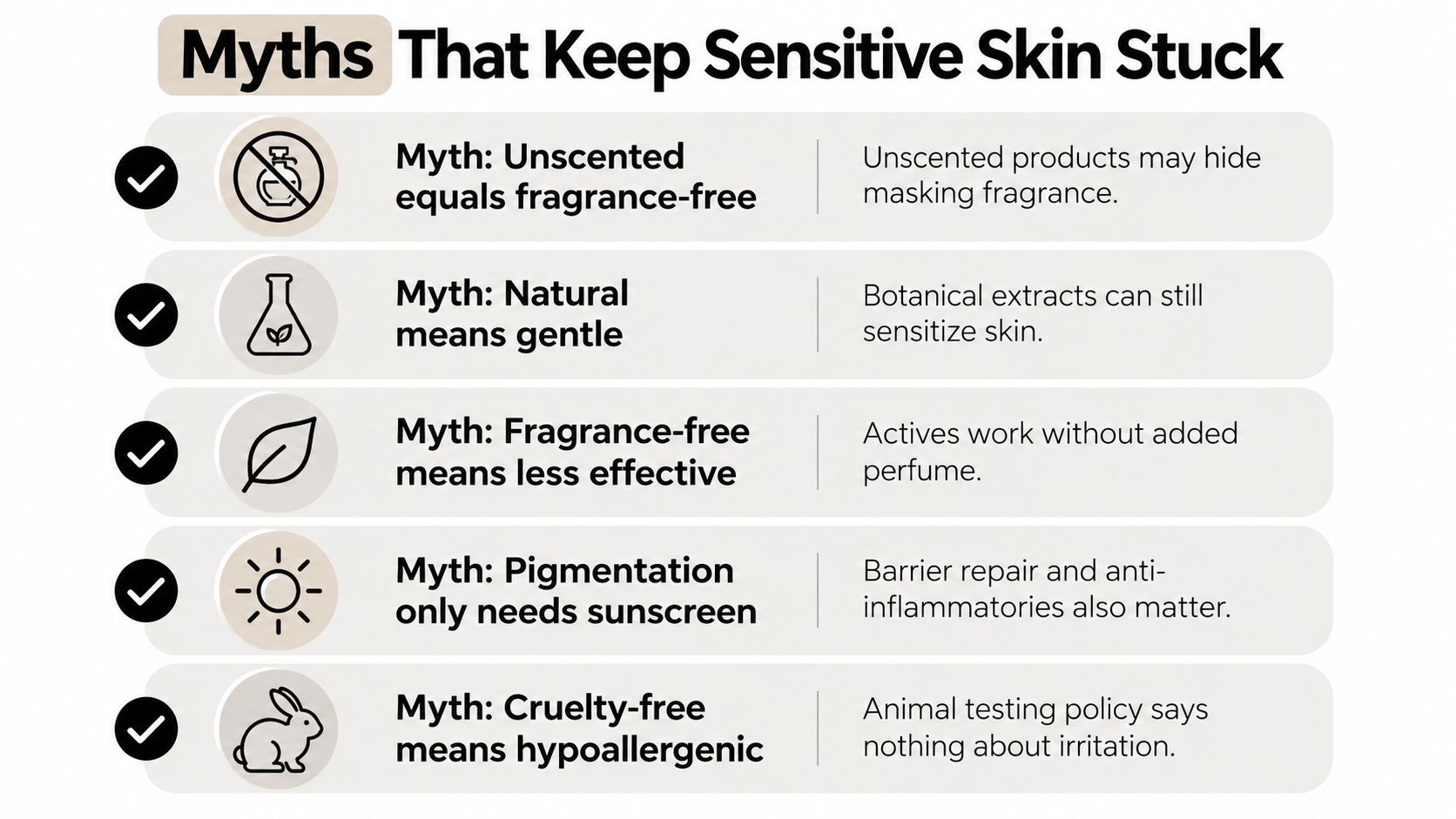
Myths That Keep Sensitive Skin Stuck
Sensitive skin doesn't need a softer marketing story. It needs accurate distinctions.
Myth: Unscented equals fragrance-free. Unscented describes the sensory result, not necessarily the ingredients used to achieve it. Masking fragrance can neutralize raw-material odor without creating an obvious perfume experience. A genuinely fragrance-free label should be supported by a complete INCI and a clear definition.
Myth: Natural means gentle. Rose, citrus, ylang-ylang, peppermint, eucalyptus, and other botanical aromatic materials can sensitize or irritate. “Natural” tells you origin, not concentration, allergenicity, photoreactivity, or barrier compatibility.
Efficacy and tolerance aren't opposites
Myth: Sensitive skin can't tolerate actives. Uncontrolled irritation is the problem, not pigment treatment itself. Niacinamide, azelaic acid, low-dose retinal, and thiamidol can be considered in a structured routine, with introduction frequency adjusted to the person rather than dictated by a product's most aggressive use case.
Myth: Vegan equals cruelty-free. Vegan status concerns animal-derived inputs. Cruelty-free status concerns animal testing. You need both claims verified separately if both values matter to you.
Myth: If it stings, it's working. Stinging can indicate irritation, barrier disruption, or an unsuitable vehicle. For skin prone to PIH, repeated irritation may create more melanocyte stimulation and prolong the very marks you're trying to fade.
One more correction deserves attention: pigmentation doesn't only need sunscreen. Photoprotection is central, but persistent discoloration also requires a diagnosis, barrier support, inflammation control, and an appropriate pigment-modulating active. Sunscreen limits ongoing stimulation. It doesn't replace the rest of the plan.
How to Build a Low Additive Routine That Still Works
Routine design should follow three constraints: minimal additive load, confirmed tolerance, and meaningful pigment activity. Removing fragrance is useful, but removing every active leaves you with a calm routine that may not address the reason you started treatment.
Morning structure
Use a gentle cleanser with a low-irritation vehicle. If cleansing leaves tightness or heat, change the cleanser before adding another serum. Follow with an antioxidant or a carefully selected brightening serum, then niacinamide or azelaic acid if your skin tolerates the combination.
A ceramide-rich moisturizer supports the barrier, and broad-spectrum SPF 30 or higher should be the final daytime treatment. For melasma and persistent facial pigmentation, visible-light protection may also matter, so consider a product that offers protection beyond ultraviolet exposure. Reapply according to your exposure, product directions, sweating, and time outdoors.
Evening structure
At night, cleanse without scrubbing. Apply one targeted cell-communicating or pigment-inhibiting active, such as a retinoid alternative or another clinically appropriate treatment, then use a repair-focused moisturizer. An occlusive layer can be useful when the barrier is dry or compromised, but it shouldn't be used to force a highly irritating active through the skin.
Layer from lighter to heavier vehicles. Apply water-based products before emulsions and creams, and avoid chasing a particular pH sequence when the combination causes burning. Formula compatibility and tolerability matter more than ritual precision.
Patch test a new product on the jawline or another small area for seven to fourteen days before applying it broadly. Introduce one change at a time, start active treatments less often than the label's maximum direction if you're reactive, and increase only when the skin remains comfortable. Keep a skin diary with product names, dates, frequency, burning, redness, breakouts, and pigment changes. Review the pattern over eight to twelve week cycles, because pigment biology is slower than the instant cosmetic glow from exfoliation.
Rotate demanding actives instead of stacking them automatically. Avoid known fragrance allergens, abrasive tools, and repeated product switching. For an additional routine perspective, this UK sensitive skincare guide is useful as a comparison point, but your own response and a clinician's diagnosis should take priority.
Reading Any Label Like a Formulator
Read the INCI from the top, but don't treat it like a precise recipe. The first five ingredients usually reveal the main vehicle, whether the product is primarily water, a gel, an emulsion, or an oil-rich system. Ingredient order provides concentration clues, not exact percentages.
Use a five-question label audit
- What is the primary vehicle? Water, silicones, esters, fatty alcohols, and oils change how a product spreads, absorbs, and feels. A rich vehicle may improve comfort, while a lightweight gel may suit oily skin but still sting if its active or preservative system is poorly tolerated.
- Where are the functional actives? Look for niacinamide, azelaic acid, arbutin, exfoliating acids, retinoid-related ingredients, or other pigment-supporting materials. Don't assume an impressive ingredient list means every active is present at a clinically meaningful level.
- Are fragrance precursors present? Scan for parfum, fragrance, essential oils, and individual allergens such as linalool, limonene, geraniol, and citronellol. Also look for botanical blends described as scent or aroma ingredients.
- What preserves the formula? Preservation is necessary for product safety, but sensitive users should note the complete system and watch for a reaction pattern. A fragrance-free claim doesn't make a preservative automatically harmless or harmful.
- Can the ethical claim be verified? Check the parent company, certification database, fixed cut-off policy, supplier controls, and whether the brand publishes a complete ingredient list. Packaging language should be the starting point, not the evidence.
A curated reference such as best fragrance free products for sensitive skin can help you compare options, but don't outsource the label audit. Retailer pages may be incomplete or outdated, so confirm the current packaging and full INCI before purchase.
The best decision lens combines all three questions: Does the brand control its testing chain? Does the formula minimize avoidable sensitizers? Does it contain a measured strategy for the condition you're treating? That approach prevents cruelty-free from being mistaken for hypoallergenic, fragrance-free from being mistaken for risk-free, and “high potency” from being mistaken for clinically intelligent.
Mesoderm RX offers U.S.-made, vegan, cruelty-free, Leaping Bunny Certified skincare with fragrance-free, minimal-additive formulas aimed at dark spots, uneven tone, barrier support, and visible aging concerns. Explore the Mesoderm RX collection and compare each product's active strategy and INCI against your skin's tolerance before building a routine.