


Leaping Bunny Certified: The Only Standard You Can Trust
Most advice about cruelty-free skincare starts and ends with packaging language. That's the mistake.
A brand can print “cruelty-free” on a box, put a rabbit icon beside it, and still leave major gaps in ingredient sourcing, supplier verification, and ongoing oversight. In formulation, that kind of vagueness would be unacceptable. If you claim a pigment-correcting serum reduces visible discoloration, you need a system behind the claim. Ethical claims deserve the same standard.
That's why Leaping Bunny Certified matters. Not because it looks reassuring, but because it subjects a brand's no-animal-testing claim to third-party scrutiny across the supply chain. In clinical skincare, rigor isn't optional. It's the difference between a label and a verified standard.
Beyond the Buzzword What Cruelty-Free Really Means
The popular advice says to “just look for cruelty-free on the label.” That advice is weak.
Cruelty-free on its own is largely a marketing phrase. It sounds absolute, but it doesn't automatically tell you who verified the claim, whether raw material suppliers were checked, or whether the company is still being monitored. For consumers trying to buy ethically, that gap matters. For formulators and brands, it should matter even more.
Why the term creates confusion
A useful way to think about it is this. In skin biology, inflammation, melanin signaling, and tyrosinase activity are precise processes. If someone confuses melasma with post-inflammatory hyperpigmentation, they often choose the wrong treatment path. Labeling works the same way. If you confuse a self-declared ethical claim with an independently verified standard, you can make the wrong purchasing decision for entirely understandable reasons.
If you're already evaluating adjacent personal care choices, it's worth seeing how ethical ingredient decisions extend beyond skincare. A practical example is this guide to explore vegan dental product benefits, which helps clarify how ingredient philosophy and verification can overlap in everyday routines.
Clinical view: A claim without a verification system is only a statement of intent.
What shoppers usually miss
Front-of-pack language is often read as proof. It isn't. Real proof requires a standard, documentation, and accountability beyond the brand's own marketing team.
That distinction becomes clearer when you compare body care labels that use broad ethical language versus products backed by stricter verification. For a practical adjacent read, see this breakdown of cruelty-free body lotion standards.
A self-made bunny logo, a soft promise, or “never tested on animals” wording may reflect good intentions. But in practice, good intentions don't trace ingredients, don't audit suppliers, and don't close loopholes in distribution decisions. Standards do.
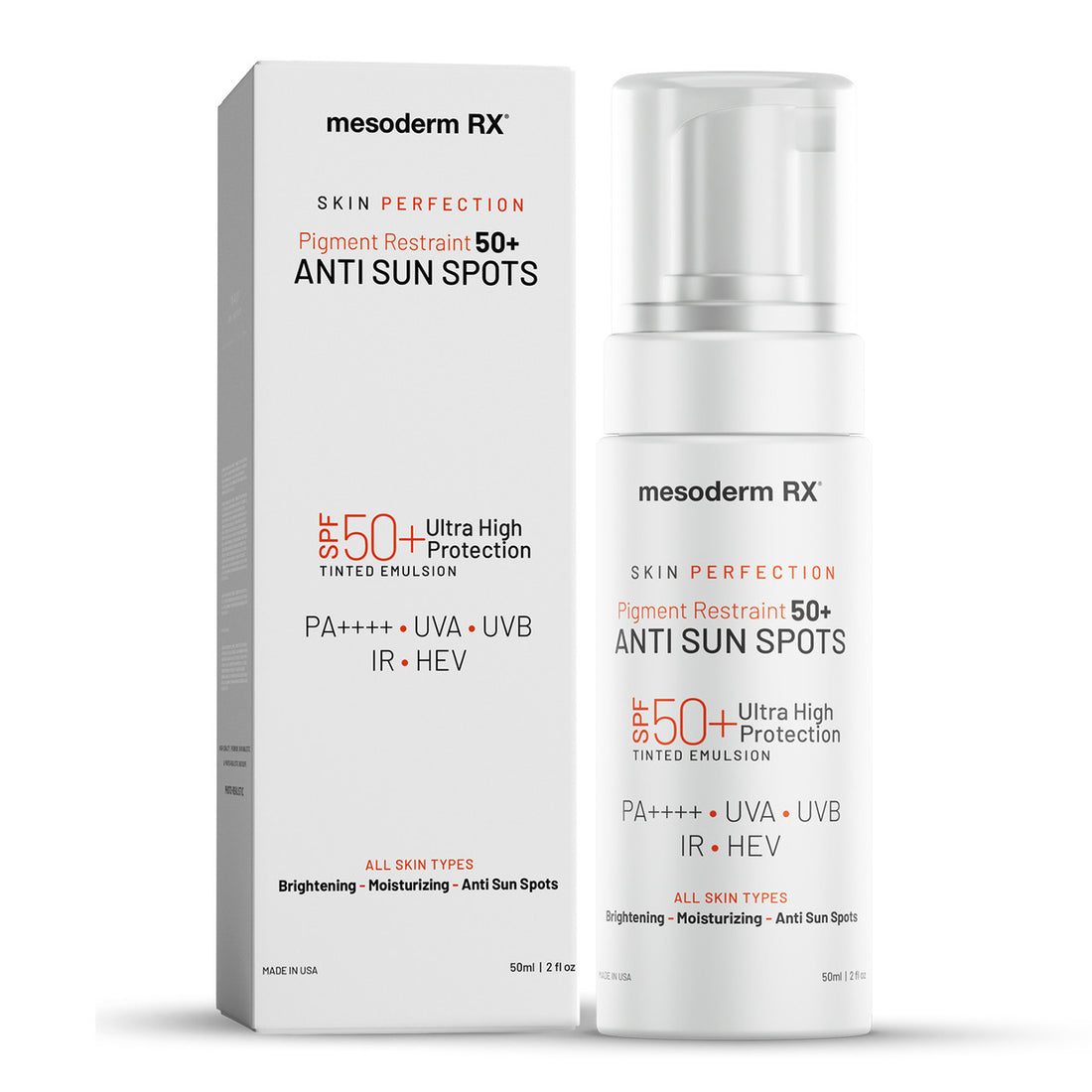
Featured Product
Pigment Restraint Ultra High Sun Protection
SHIELDS FROM UV DAMAGE AND SUN-INDUCED DARK SPOTS
Shop Now →Defining the Leaping Bunny Certified Gold Standard
Leaping Bunny Certified isn't just a symbol. It's an operating standard.
The Leaping Bunny Program certifies more than 2,300 companies globally, and those companies are verified to be free of animal testing at every stage of product development, including formulations by the company, its laboratories, and ingredient suppliers, according to Leaping Bunny program facts. That same source states it is the only internationally recognized standard that requires an absolute prohibition of new animal testing across the entire supply chain and requires companies to recommit annually.

What the certification actually covers
The standard sets itself apart from mere beauty-industry fluff. The program, managed by the Coalition for Consumer Information on Cosmetics and Cruelty Free International in major markets, doesn't limit scrutiny to the finished jar, bottle, or tube. It extends to:
- Finished products that the brand brings to market
- Formulations developed by the company or its labs
- Ingredients and raw materials sourced from suppliers
- Ongoing compliance through annual recommitment
That matters because most ethical failures don't happen in a slogan. They happen upstream, in procurement and vendor oversight.
Why independent verification matters
Think of Leaping Bunny like a financial audit. A company can say it's profitable. That statement means very little until an outside auditor reviews the books. In the same way, a skincare brand can say it's cruelty-free. The Leaping Bunny standard asks for the ethical equivalent of audited records.
Independent verification is what turns a brand claim into a credible standard.
For a clinically positioned brand, that level of scrutiny aligns with how product performance should be treated. You don't want hand-waving around UV protection, barrier support, or pigment control. The same logic applies to animal-testing claims.
That's also why categories like daily photoprotection should be viewed through both efficacy and ethics. A formula such as Pigment Restraint Ultra High Sun Protection is described as fast-absorbing and non-greasy, with a protection complex covering UVA, UVB, IR, and HEV-combination rays. Those are performance-facing details. Leaping Bunny addresses the separate question of how a product and its inputs were verified ethically.
How a Brand Earns the Leaping Bunny Logo
Certification only means something if the process is difficult enough to expose weak points. Leaping Bunny does that by forcing brands to formalize supplier control, ingredient traceability, and legal accountability.
One of the key mechanisms is the Fixed Cut-off Date, or FCOD. Under the Leaping Bunny framework, a company is legally bound to zero animal testing for finished products or ingredients after that date. To enforce that commitment, brands must implement a Supplier Monitoring System, or SMS, and undergo audits proving the supply chain complies, as laid out in the Leaping Bunny certification guidelines.

The two mechanisms that give the logo credibility
A loose pledge is easy. An FCOD plus supplier monitoring is not.
- Fixed Cut-off Date A brand doesn't get to say “we're cruelty-free now” in a vague, floating way. It has to anchor the claim to a date and legally bind itself to avoiding any new animal testing on finished products, raw materials, or ingredients after that point.
- Supplier Monitoring System Here, operational discipline is evident. The brand must collect written confirmations and maintain active oversight of manufacturers and ingredient suppliers. If a supplier can't confirm compliance, that's a problem that has to be solved, not ignored.
- Audit pressure Audits force recordkeeping to match the claim. Without that pressure, standards tend to soften into marketing language.
What slows the process down
In real operations, the bottleneck is rarely the brand's public statement. It's supplier response quality. Ingredient networks are complicated, especially when a formulation uses multiple specialty actives and functional support ingredients. Verification takes coordination.
The video below gives a useful visual overview of how brands move through this process.
Operational reality: If a supplier can't document compliance, that ingredient becomes a sourcing risk.
This matters in active skincare. Consider a treatment category like Skin Perfection Liquid Exfoliant Peel AHA BHA PHA, which is described as a leave-on resurfacing product with AHA, BHA, and PHA, including 2% salicylic acid and added ingredients such as kojic acid, hyaluronic acid, and hexapeptides. Complex formulas increase the importance of supplier discipline. More components mean more verification points. That's exactly where a serious certification should be difficult.
Comparing Cruelty-Free Claims and Certifications
Most shoppers don't fail because they don't care. They fail because the market mixes legally loose language with stricter certification systems and presents them as if they're equivalent.
They are not equivalent.
According to Earthbath's explanation of Leaping Bunny certification, 73% of US shoppers believe “cruelty-free” means no animal testing, yet only 28% can identify a certified brand. The same source notes that PETA requires only a written pledge, while Leaping Bunny requires independent annual audits and supplier compliance.
Where the confusion happens
A consumer sees one of three things:
- a self-declared “cruelty-free” claim on packaging
- a logo tied to a lighter verification model
- a Leaping Bunny mark tied to broader supply-chain enforcement
From a distance, they can look similar. Up close, the compliance burden is very different.
| Criterion | Leaping Bunny Certified | PETA Beauty Without Bunnies | Unregulated 'Cruelty-Free' Claim |
|---|---|---|---|
| Third-party audit requirement | Yes. Independent annual audits are required, as described in the Earthbath reference above. | No independent annual audit requirement cited in the verified data. The verified distinction given is a written pledge. | No third-party audit built into the claim itself. |
| Supply chain monitoring | Yes. Supplier compliance is part of the standard, as noted in the Earthbath reference above. | Not established in the verified data as a comparable requirement. | Usually unspecified. Depends on what the brand chooses to disclose. |
| FCOD policy | Yes. Covered under the Leaping Bunny certification guidelines discussed earlier. | Not established in the verified data. | Not part of an unregulated claim. |
| International recognition | Yes. The verified data identifies Leaping Bunny as the only internationally recognized standard with absolute prohibition of new animal testing across the supply chain. | Not described that way in the verified data. | No formal international recognition. |
| What the brand must do | Commit to documented, audited, supplier-tracked compliance. | Submit a written pledge, based on the verified distinction cited above. | Create its own wording and presentation. |
What works and what doesn't
What works is a standard that forces procurement, manufacturing, and compliance teams to align. What doesn't work is expecting consumers to infer all of that from a soft claim on a carton.
That same gap shows up in other ethical formulation conversations. If you want a parallel discussion focused on ingredients and philosophy in age-management formulas, this overview of vegan anti-aging skincare is useful.
A rabbit icon has value only if the system behind it is stronger than the marketing around it.
Why Mesoderm RX Is Leaping Bunny Certified
For a clinical skincare brand, ethics shouldn't sit in a separate department from efficacy. The same brand discipline that selects pigment-regulating, exfoliating, or barrier-supportive actives should also apply to ingredient sourcing and supplier verification.
That's why Leaping Bunny certification makes sense for Mesoderm RX. It isn't a decorative badge. It's consistent with a formulation philosophy built around direct claims, active-focused products, and tighter control over what enters the system.

Principle, not posturing
One detail that cuts through a common excuse is cost. The Leaping Bunny process includes a one-time logo fee based on annual sales, ranging from $500 to $4,500, according to this discussion referencing the certification process on BeautyGuruChatter. That scalable structure matters because it undercuts the idea that only large companies can pursue stronger verification.
Brands still have to do the operational work. They still have to monitor suppliers and maintain compliance. But the fee structure itself shows that certification is not reserved for massive corporations.
Why this matters in high-active skincare
When a brand works in categories like hyperpigmentation, visible sun damage, rough texture, dryness, and age-related changes, formulation decisions have to be deliberate. Melanin pathways, inflammatory triggers, barrier status, and UV exposure all affect outcomes. A careless brand can't hide for long in these categories because the skin exposes weak formulations quickly.
Ethical sourcing discipline belongs in that same precision mindset. It supports the broader framework presented on the brand's sustainability page, where ingredient and formulation choices are treated as part of a larger quality standard.
A practical example of that active-first product style is Anti-Aging Powerhouse, which includes a peptide-focused serum described as supporting the moisture barrier while improving the appearance of fine lines, wrinkles, firmness, resiliency, and hydration. Those are formulation-facing details. Leaping Bunny certification answers a different but equally important question. Was the ethical claim verified with rigor?
Common Questions About Cruelty-Free Skincare
Is cruelty-free the same as vegan
No. They answer different questions.
Cruelty-free refers to animal testing. Vegan refers to ingredients and whether the formula contains animal-derived substances. A product can be vegan without having strong third-party cruelty-free verification. A product can also be cruelty-free in testing terms while still not being vegan in ingredient composition.
If you care about both standards, check both. Don't assume one automatically proves the other.
How can I verify whether a brand is really Leaping Bunny Certified
Use the official Leaping Bunny website and search the brand directly in its brand database or certification resources. Don't rely only on marketplace listings, retailer filters, or copied product descriptions.
A practical verification routine is simple:
- Check the official listing Confirm the brand appears in the Leaping Bunny system, not just on a reseller page.
- Match branding carefully Make sure the company name matches the actual manufacturer or brand entity you're buying from.
- Look for consistency Packaging, product pages, and official brand communications should align with the certification claim.
Does Leaping Bunny allow sales in markets that require animal testing by law
No. One of the reasons the standard is stricter than generic cruelty-free language is that it closes this loophole. The program's rules prohibit companies from selling in countries where animal testing is mandated by law, as covered in the Leaping Bunny material referenced earlier.
That point matters because a brand's ethical claim can collapse if distribution strategy overrides sourcing policy.
If you want certainty, verify the certification itself, not just the wording on the label.
Does certification say anything about product efficacy
No. Certification doesn't tell you whether a serum controls visible discoloration well, whether an exfoliant is tolerable for your barrier, or whether a sunscreen sits comfortably under makeup. It addresses animal-testing compliance.
That's the right division of labor. Performance should be judged by formulation logic, ingredient selection, skin compatibility, and consistent use. Ethics should be judged by verification, not by sentiment.
If you want skincare that treats efficacy and ethics with the same level of discipline, explore Mesoderm RX. The brand focuses on high-potency, minimal-additive formulas for concerns like dark spots, uneven tone, dryness, and visible aging, while maintaining Leaping Bunny Certified status across its lineup.