


Antioxidants for Skin Aging: What Actually Works
The counterintuitive truth is that antioxidants for skin aging work best before the mirror shows the damage. By the time dullness, pigment irregularity, and etched lines are obvious, oxidative stress has already pushed collagen breakdown, inflammation, and barrier injury far enough that repair costs more effort than prevention. Vitamin C is a good example of why the category matters, because skin already contains high concentrations of it and it supports collagen synthesis plus antioxidant defense against UV-induced photodamage (PMC review).
Why Antioxidants Belong at the Center of Any Anti-Aging Plan
Antioxidants belong at the center of an anti-aging plan because they address the conditions that make visible damage harder to manage. UV exposure, pollution, glycation, and chronic inflammation generate reactive oxygen species that affect collagen, barrier function, and pigment signaling. A brightening serum may fade dark spots, and a peptide cream may support firmer-looking skin, yet neither addresses ongoing oxidative pressure on its own.
Prevention beats rescue in skin aging
Repeated oxidation changes the skin's supporting biology before every effect is obvious in the mirror. Structural proteins and cell membranes become more vulnerable, barrier performance declines, and recovery from daily exposure becomes less predictable. Clinical summaries of topical vitamin C report that use at 3 to 10% for at least 12 weeks has been associated with decreased wrinkling, reduced protein fiber damage, lower skin roughness, and increased collagen production (PMC review).
That evidence does not make every antioxidant product effective. Stability, delivery, concentration, compatibility, and consistent use determine whether a formula can produce a meaningful result. I assess Mesoderm RX formulations by those criteria, separating mechanism from marketing rather than accepting an ingredient name as proof of performance.
Practical rule: build antioxidant protection into the daily routine before adding more products to correct the fallout.
Oral supplements may support a broader nutrition plan, but they do not replace a well-designed topical routine. For a plain-language overview of oral antioxidant use, VitzAi.com supplement advice offers useful background. Skin care still requires local delivery, appropriate formulation, and routine sequencing where exposure occurs.
The Biology of Oxidative Stress and How It Ages Skin
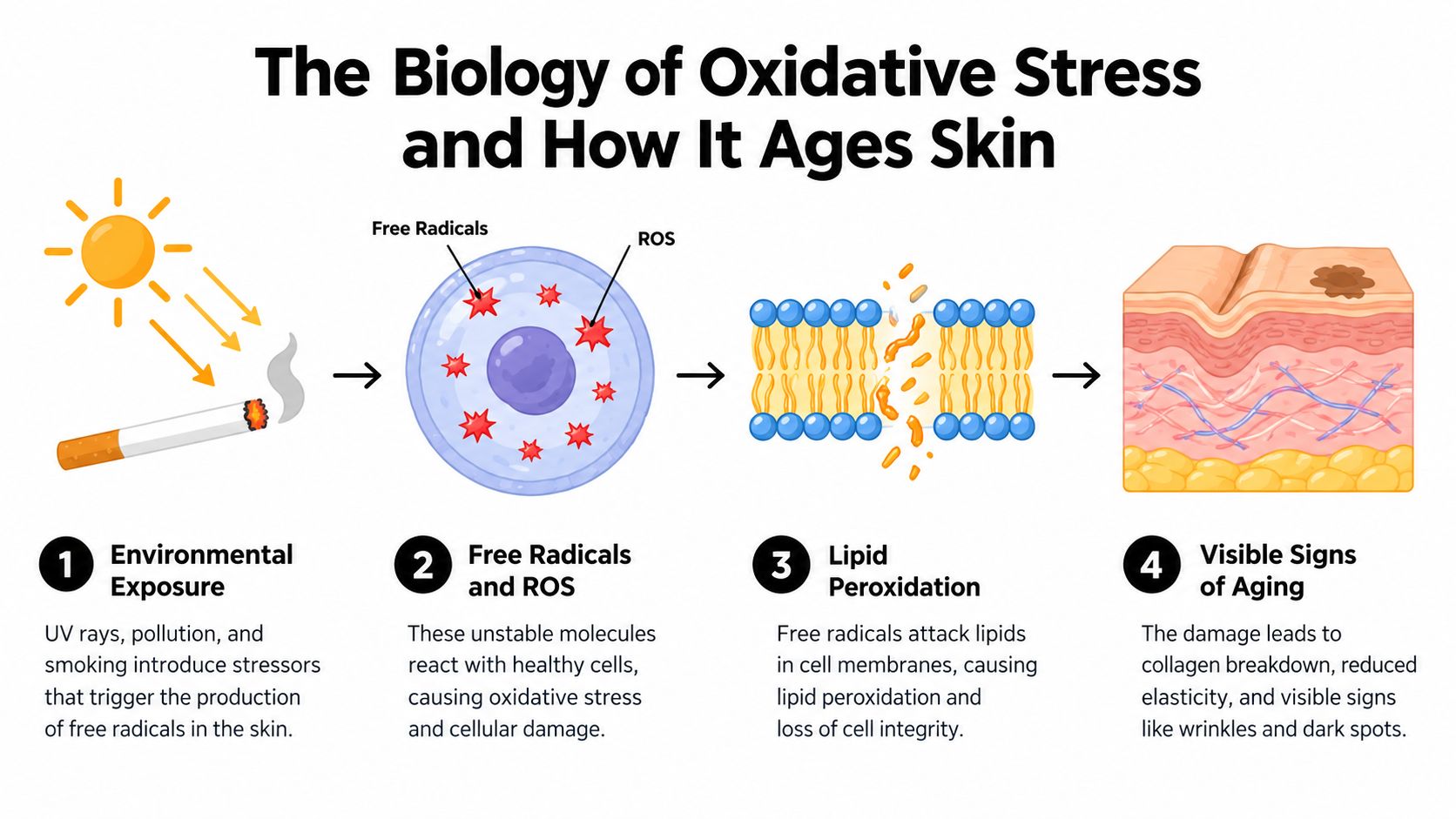
Free radicals are unstable molecules that steal electrons from nearby structures. In skin, that usually means reactive oxygen species, which attack lipids, proteins, and DNA. When cell membranes and sebum undergo lipid peroxidation, the byproducts don't stay quiet, they trigger inflammatory signaling and make the surface look rougher, redder, and less reflective.
From oxidation to pigment and wrinkles
The wrinkle pathway and the dark-spot pathway overlap more than is commonly realized. UV exposure stimulates matrix metalloproteinases, including MMP-1, which break down collagen, while inflammatory signaling encourages melanocytes to overproduce pigment. At the same time, oxidation damages barrier lipids, so water escapes faster and skin starts looking thinner and less resilient.
Glycation runs in parallel. Sugars crosslink collagen fibers, which makes them stiffer, yellower, and less elastic. That's one reason some faces look “older” without being wrinkled, the texture shifts before the crease does.
Skin aging is rarely one process. It's a stack of damage pathways that hit at the same time.
The skin does have an internal defense system, including glutathione, superoxide dismutase, and vitamin E reserves. But that buffer is finite, and with ongoing exposure it becomes easier for oxidative load to outrun local repair. That's the point where topical reinforcement starts to matter most.
Evidence-Backed Antioxidant Ingredients and What Each One Does
Choose an antioxidant by the visible concern and the formula's delivery system, not by trend. Vitamin C targets photodamage and uneven tone. Vitamin E plus ferulic acid support photoprotection. Niacinamide addresses pigment transfer and barrier weakness. Resveratrol provides antioxidant and anti-glycation support, while bakuchiol offers a gentler matrix-supporting route for people who cannot tolerate stronger night actives.
Featured Product
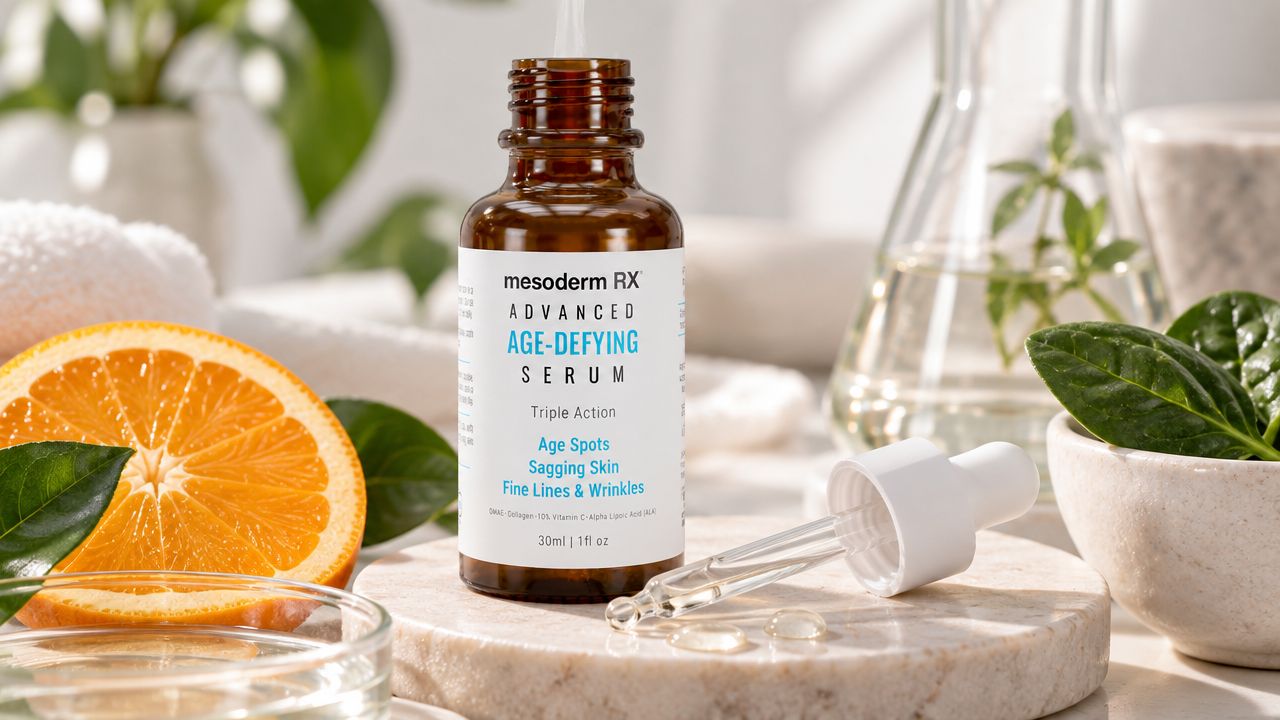
Advanced Triple Action Age-Defying Serum
Defy the signs of aging and restore your youthful glow with a serum that works to smooth, firm, and brighten your skin.
Shop Now →
Match the molecule to the sign
Vitamin C suits collagen loss, dullness, and UV-related darkening. It supports collagen synthesis and can help suppress tyrosinase activity, provided the formula remains stable long enough to reach the skin. A 2024 review of photoaging linked topical vitamin C with reduced MMP-1 expression, increased collagen production, improved microrelief density, fewer deep wrinkles, and protection against erythema and hyperpigmentation (PMC review).
Vitamin E and ferulic acid are useful partners because antioxidant combinations can perform better than isolated ingredients. A systematic review of 23 studies reported improvements in wrinkles, pigmentation, hydration, and elasticity across topical vitamin C, vitamin E, ferulic acid, niacinamide, bakuchiol, and plant-derived antioxidants. Vitamin C, vitamin E, and ferulic acid serums showed enhanced efficacy, with irritation generally mild and temporary (systematic review). For formulation context, Mesoderm RX's resveratrol guide explains why resveratrol needs careful handling.
Niacinamide is a practical choice when uneven melanin, barrier weakness, and sensitivity occur together. Bakuchiol fits a retinol-adjacent evening routine for users who react to more aggressive turnover. Resveratrol is narrower in application, but it can suit products designed around oxidative stress, environmental exposure, and visible fatigue.
| Antioxidant Ingredients at a Glance | Mechanism | Effective Range | Best For | Stability Risk |
|---|---|---|---|---|
| Vitamin C | Collagen support, antioxidant protection, tyrosinase inhibition | 3 to 10% in clinical summaries, with at least 12 weeks of use | Dullness, early lines, photoaging, dark spots | High, especially in air and light |
| Vitamin E plus ferulic acid | Lipid-phase support, photoprotection synergy | Formulation dependent | UV defense, dry or exposed skin | Moderate, depends on vehicle |
| Niacinamide | Barrier support, pigment transfer control | Often used at 4 to 5% | Uneven tone, sensitivity, barrier weakness | Low to moderate |
| Resveratrol | Antioxidant, anti-glycation support | Formulation dependent | Fatigue, environmental stress, aging-prone skin | High if under-stabilized |
| Bakuchiol | Antioxidant plus matrix-supporting action | Formulation dependent | Night routines, retinoid-sensitive users | Moderate |
Advanced Triple Action Age-Defying Serum lists DMAE, collagen, vitamin C, and alpha lipoic acid in its product snapshot. That places it in an antioxidant-plus-structural-support category rather than a basic moisturizer. If you are evaluating a buy glutathione research peptide option, check whether its form remains stable, reaches the intended skin compartment, and matches the concern being treated. The delivery system matters more than the ingredient name alone.
Antioxidant Myths That Keep People From Seeing Real Results
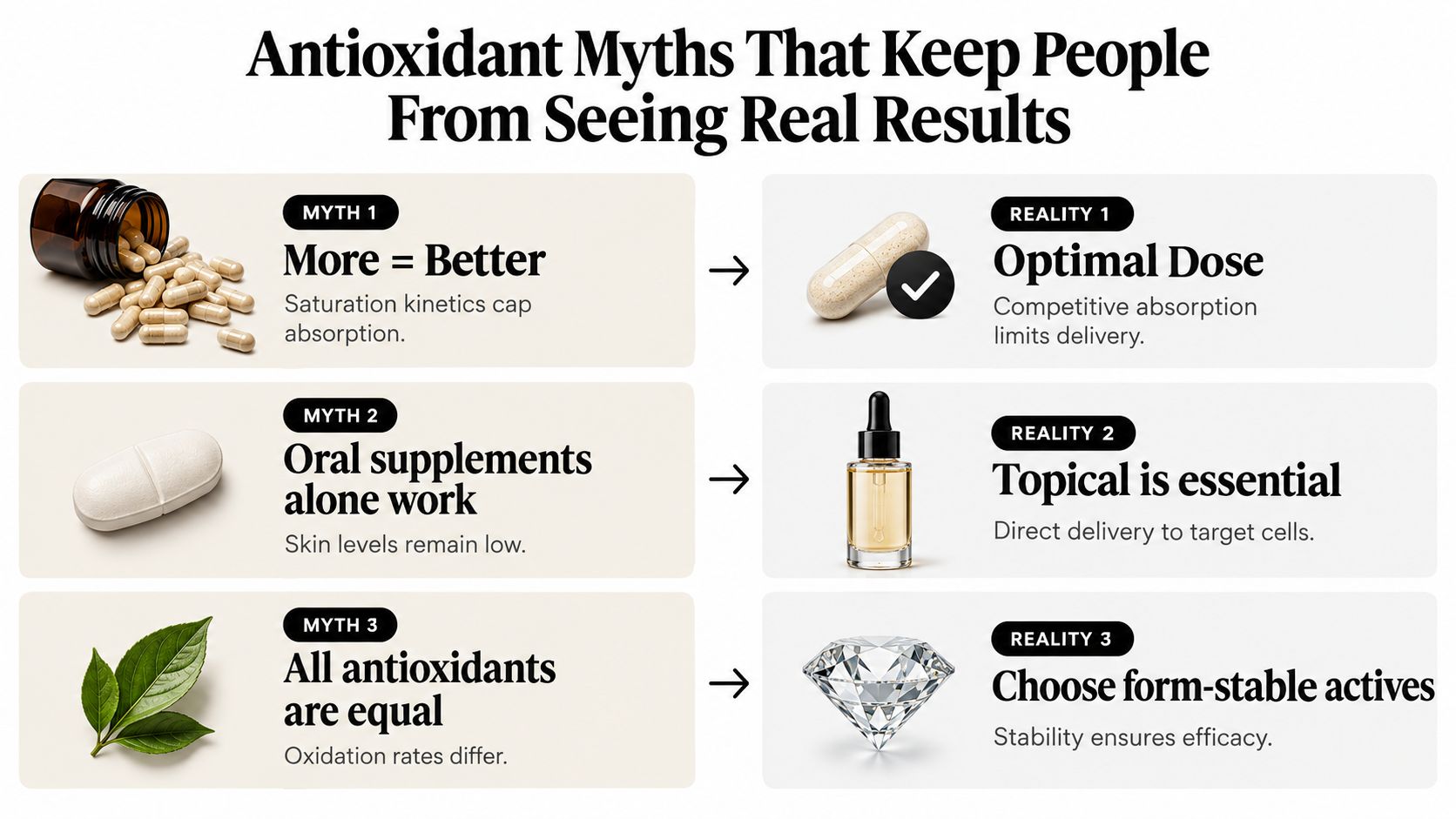
The first myth is that more antioxidants automatically means better skin. It doesn't. Delivery has ceilings, and once a formula saturates the skin's usable window, extra actives don't keep compounding in a straight line. That's why dose, vehicle, and stability matter more than a crowded ingredient deck.
Oral does not replace topical for visible aging
A second myth is that supplements alone can do the whole job. Oral antioxidant-rich supplementation can help overall skin status, and the verified clinical data include an oral study where women with dull complexion saw skin luminosity increase by 25.9% and facial imperfections fall by 18.0% after supplementation (PMC review). Helpful, yes. Replacement for topical delivery, no, because the surface still needs direct exposure to the active.
The third myth is that “natural” equals gentle. That's not reliable. Unstable plant extracts can oxidize, and some resveratrol byproducts can irritate if the formula isn't built correctly. The issue isn't whether an ingredient sounds botanical, it's whether the finished system stays chemically intact on skin.
If you want a clinical example of how ingredient delivery is being explored in the world, Beverly Wilshire Aesthetics' exosome therapy page shows how much attention the market gives to mechanism, but skincare still wins or loses at the level of formulation, not marketing language.
Reading an Antioxidant Formula Like a Formulator
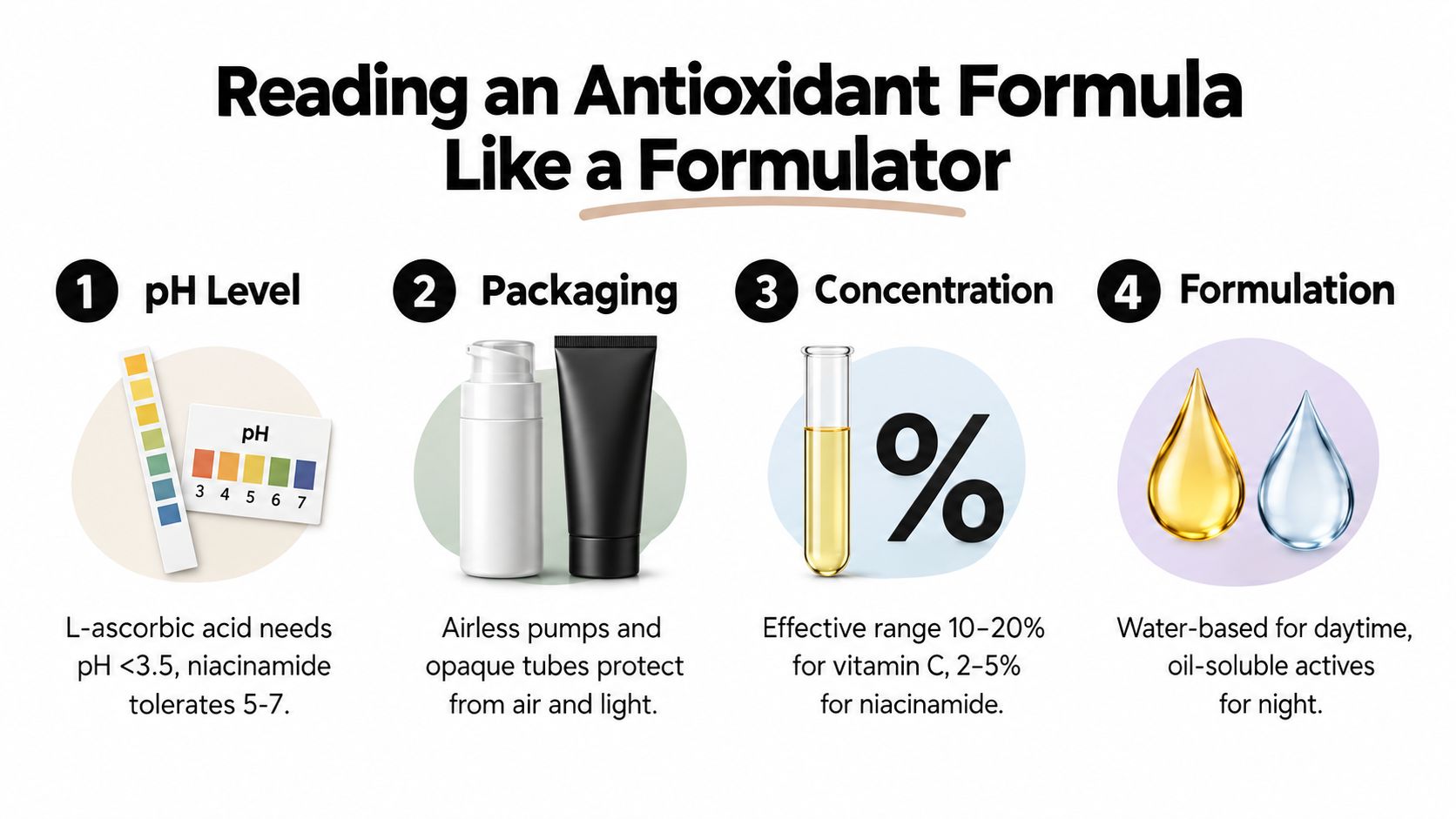
A label tells you more than the front of the bottle does. pH, packaging, vehicle type, and ingredient order are the four checkpoints that predict whether the antioxidant claim will survive contact with air, light, and skin.
What to look for on the label
L-ascorbic acid is the clearest example. It needs a low pH to penetrate well, while niacinamide tolerates the mid-range much better, so a formula that ignores pH compatibility often ends up underperforming. Water-based serums suit L-ascorbic acid, while emulsion or oil bases make more sense for vitamin E, resveratrol, and bakuchiol.
Packaging matters just as much. Airless pumps and opaque tubes protect oxygen-sensitive ingredients better than jars and droppers, which expose the formula every time you open it. If a vitamin C serum looks elegant but lives in a clear dropper bottle, I'd be cautious.
Formulator's shortcut: if the packaging invites air and light, the formula is probably losing potency before you finish the bottle.
Ingredient order on the INCI list also gives a practical clue. Actives tend to appear higher when they're used at meaningful levels, while very low positions often mean the ingredient is there for label appeal. That doesn't prove a product is bad, but it does tell you whether the claim has substance.
How to Layer Antioxidants With Retinoids, Acids, and Peptides
Antioxidants are strongest when they're sequenced, not thrown in randomly. Vitamin C pairs cleanly with morning sunscreen because you're protecting against ongoing UV-driven oxidation, while niacinamide and retinoids can work well together when the skin barrier is resilient enough to tolerate both.
Use compatibility, not optimism
Strong acids and retinoids in the same routine can be too much for sensitive skin, especially if you're already using an unstable vitamin C formula. That mix often leads to irritation, barrier compromise, and then more pigment stress, which is the opposite of what people want. Peptides are the easiest category to layer, because they generally fit with everything except very strong acid conditions.
| Antioxidant Stacking Compatibility | Pairs Well With | Avoid Stacking With | Timing Note |
|---|---|---|---|
| Vitamin C | Sunscreen, niacinamide in tolerant skin, moisturizer | Very low pH acid cocktails in the same step | Best in the morning |
| Niacinamide | Retinoids, peptides, moisturizers | Usually nothing major, if the formula is well built | Flexible morning or night |
| Vitamin E plus ferulic acid | Vitamin C, sunscreen, barrier creams | Unstable, oxidizing formula systems | Usually morning |
| Bakuchiol | Peptides, niacinamide, moisturizers | Overly harsh acid routines | Often better at night |
| Retinoids | Niacinamide, peptides, barrier support | Strong acids in the same routine for sensitive users | Night only |
For a practical sequencing reference, Mesoderm RX's layering guide is worth checking if you want to see how product order changes when you move from theory to a live routine. The useful rule is simple. If the skin stings, peels, or flushes, the stack is too aggressive, even if every ingredient is “good” on paper.
A Practical Antioxidant Routine for Dark Spots and Aging
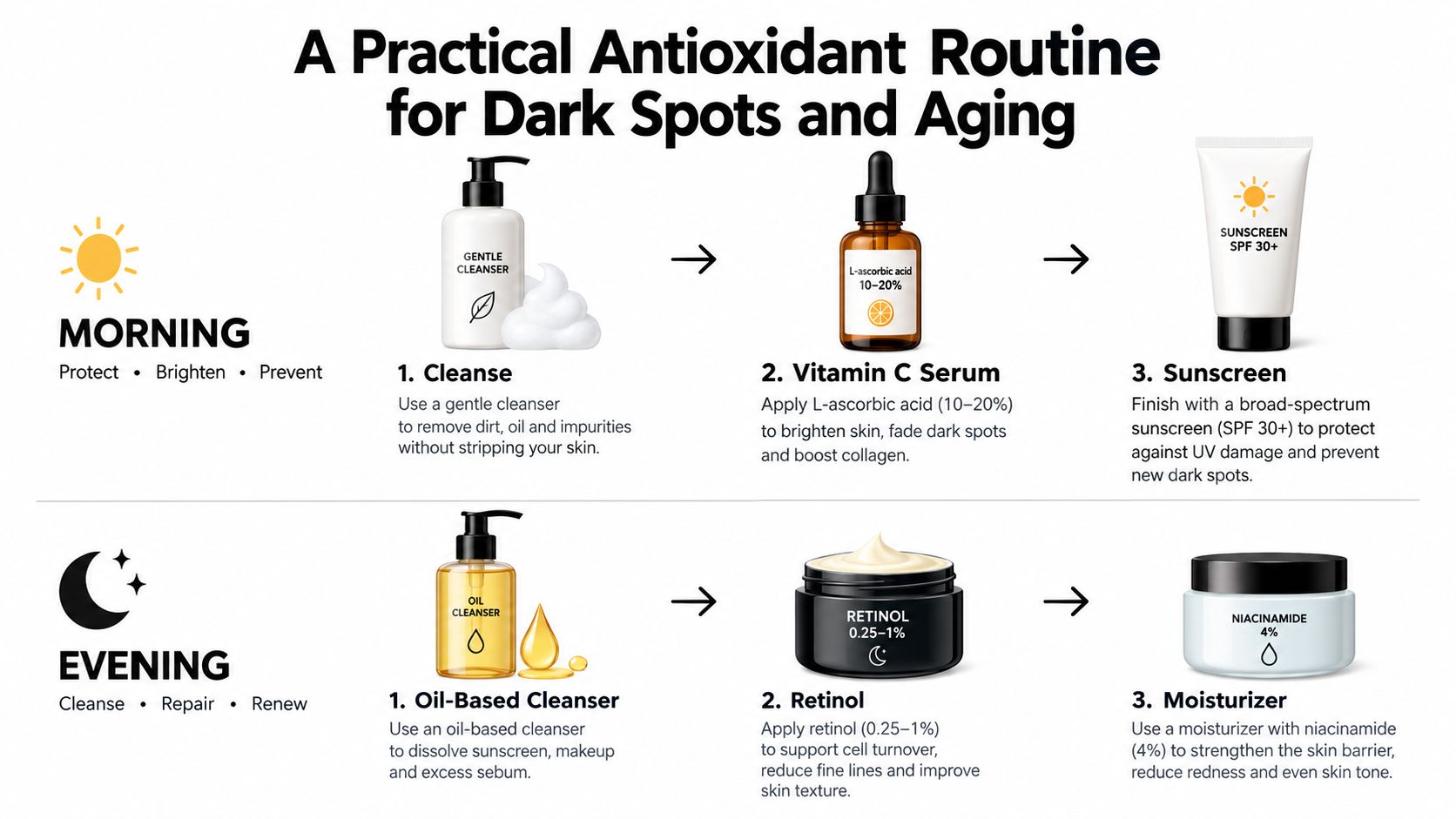
The routine that works is the one people can repeat without triggering irritation. For dark spots, I start with a gentle cleanser, then a vitamin C serum on dry skin, then niacinamide or azelaic acid if pigment is the main issue, then moisturizer, and finally broad-spectrum SPF 50 every morning.
Morning and evening sequencing
In the evening, the structure changes. A bakuchiol or low-dose retinoid step can handle turnover, while resveratrol or vitamin E plus ferulic acid fills the antioxidant gap, and a ceramide-rich moisturizer locks in barrier support. If the skin is reactive, separate acids and retinoids on alternating nights instead of forcing them together.
Sensitive or melanin-rich skin does better when the routine avoids unnecessary inflammation. That matters because irritation itself can darken marks after the fact. Wait times are usually simple, dry skin before vitamin C, then give the formula a moment to settle before moisturizer, but don't turn the process into a ritual that makes compliance collapse.
| Routine Step | Practical Order | Why It's There |
|---|---|---|
| Cleanser | First | Removes residue so actives can contact skin |
| Vitamin C | Morning, on dry skin | Targets oxidative stress and tone |
| Niacinamide or azelaic acid | After vitamin C or in a separate step | Supports uneven tone and barrier function |
| Moisturizer | After actives | Reduces transepidermal water loss |
| SPF | Final morning step | Prevents new UV-driven oxidation |
| Retinoid or bakuchiol | Evening | Supports turnover and visible aging concerns |
A stabilized C plus E ferulic serum belongs in the morning lane, a bakuchiol or retinal alternative fits the evening lane, and a niacinamide-correcting serum makes sense for spot-prone zones. That's also where Mesoderm RX's antioxidant-rich moisturizer fits naturally, because barrier support and antioxidant support are not separate jobs when the skin is aging and dehydrating at the same time.
Building an Antioxidant System That Lasts Beyond One Bottle
Antioxidants shouldn't be treated like a one-time purchase. They work as a maintenance system, and the results usually build in layers, first tolerance and less redness, then brighter tone and softer lines, then steadier fading of marks if the formula is stable and the routine stays consistent.
What to expect over 12 weeks
A realistic run usually looks like this. The first couple of weeks are about barrier comfort and visible calm. Weeks three through six tend to bring the more obvious brightening response. By weeks seven through twelve, people usually notice more even tone and more predictable fading of post-inflammatory marks if they haven't kept adding irritation on top.
Store bottles away from light and humidity, and replace opened vitamin C products before they oxidize. In practice, I like seasonal rotation too, using one format when the weather is colder and a more stable derivative when heat and humidity rise. That isn't about chasing novelty, it's about preserving chemistry.
Consistency beats complexity. The best antioxidant routine is the one that stays stable long enough to work.
A quarterly reassessment helps too. Skin changes, pigment changes, and barrier tolerance change with it. When those shifts are monitored, antioxidants stop being a trend and become the connective tissue that lets every other anti-aging step perform better.
If you want a routine built around stable actives, barrier support, and pigment control, visit Mesoderm RX and review the formulas against the same clinical standard used here. Their antioxidant and brightening products are designed for people who want straightforward steps, not hype, so you can choose the right fit for dark spots, uneven tone, and aging skin without guessing.