


Your Guide: What Is Dark Spot Corrector
Most advice about dark spot correction is wrong at the starting point. It treats pigmentation like a stain that sits on top of skin and can be erased by one strong serum. That isn't how hyperpigmentation works.
A dark spot forms because skin cells have been instructed to make, transfer, retain, and repeatedly protect excess pigment. If you only attack one step, the cycle usually continues. That's why people bounce from vitamin C to acids to “spot fading” pens and still feel stuck.
Defining the Modern Dark Spot Corrector
If you're asking what is dark spot corrector, the most accurate answer is this. It's not one magic bottle. It's a topical pigment-management strategy designed to reduce the appearance of excess melanin over time, especially in concerns such as post-inflammatory hyperpigmentation and solar lentigines.
Clinically, that distinction matters. A modern corrector isn't just trying to bleach a mark. It's trying to slow new pigment signaling, help remove already-darkened surface cells, and prevent the triggers that keep the spot active.
In one 12-week clinical study of a targeted pigment-correcting treatment, overall hyperpigmentation improved starting at Week 2 and continued through Week 12, and 85% of participants saw an overall improvement in skin condition by the end of the study. That timeline is the point. Dark spot correction is cumulative.
What the term should mean in practice
A useful dark spot corrector should do more than make skin feel active. It should fit into a system that addresses:
- Pigment production: reducing the overactivity that drives excess melanin
- Pigment removal: helping discolored surface cells shed in a controlled way
- Pigment recurrence: limiting UV and visible-light triggers that restart the process
Clinical reality: If a product fades a spot slightly but you aren't controlling the trigger, the skin often re-darkens.
That's also why educational resources matter. Patients often understand that they have “dark spots,” but not why one person needs an exfoliant-focused routine while another needs a melasma-aware plan with stricter light protection. Teams building patient-facing skincare education can study approaches like ButterflAI's beauty content solutions to see how complex skin topics can be explained more clearly without flattening the science.
What a corrector is not
It isn't an instant fix. It isn't a scrub. It isn't a harsh bleaching shortcut. And it isn't a universal answer for every form of pigmentation.
If you approach it as a long-game correction protocol, you're already closer to results than those who keep shopping by trend.
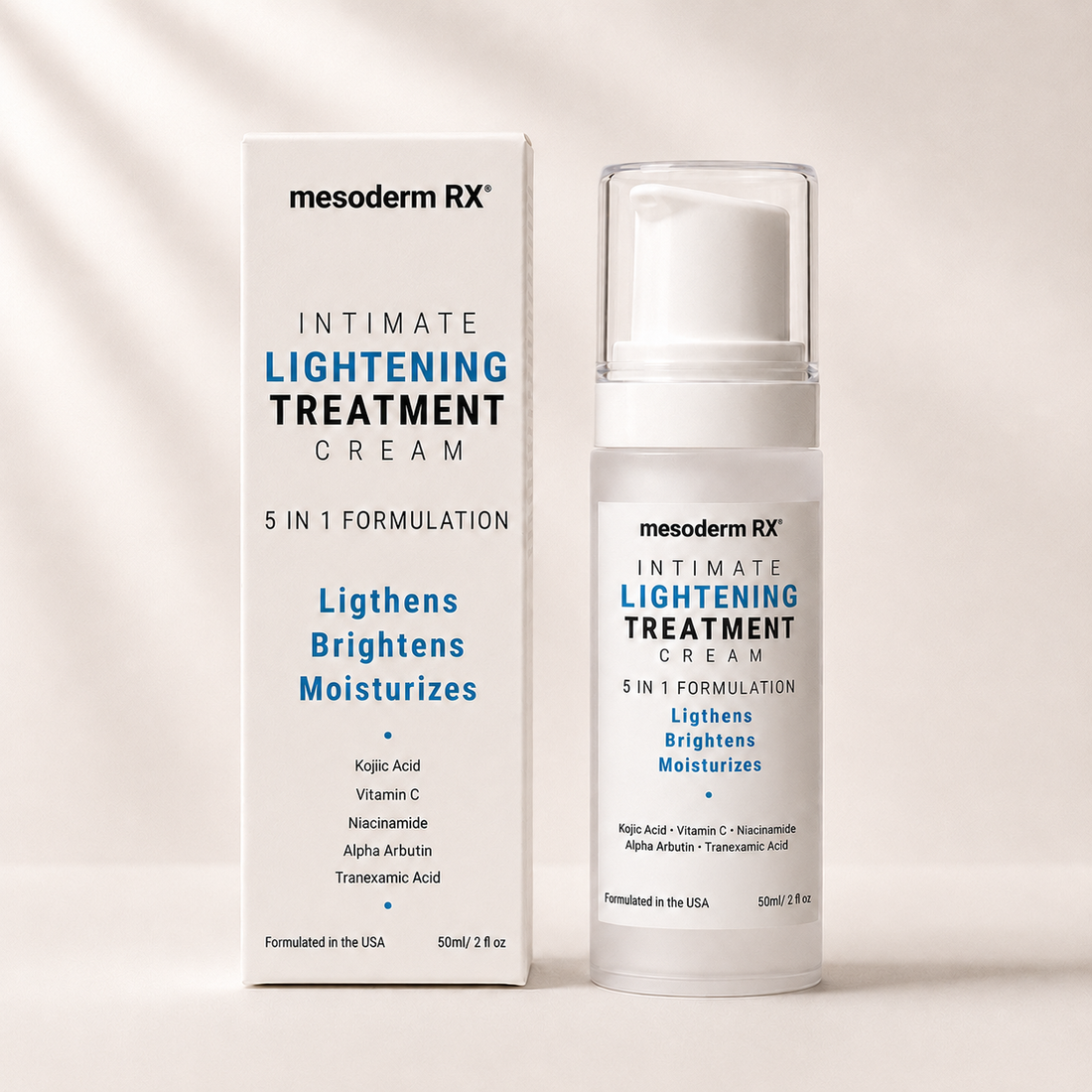
Featured Product
Intimate Skin Lightening Cream for Under Arms, Inner Thighs & Private Area
WHITENS AND LIGHTENS FOR A SMOOTHER, EVEN COMPLEXION.
Shop Now →Understanding the Biology of a Dark Spot
A dark spot is the visible result of melanogenesis going off-balance in a specific area. To treat it well, you need to understand the cell biology, not just the marketing language.

The pigment factory model
Think of the melanocyte as a pigment factory. Its job is to produce melanin, which is part of skin's natural defense system. Melanin helps protect tissue when skin is exposed to ultraviolet light and other stressors.
Inside that factory, tyrosinase functions like a key production enzyme. When triggers activate the melanocyte, tyrosinase helps increase pigment production. That pigment is then transferred into surrounding skin cells, where it becomes visible as uneven tone, patches, or spots.
If the trigger is short-lived, the mark may gradually fade. If the trigger continues, the spot keeps getting reinforced.
The three common triggers
Three drivers show up repeatedly in clinical practice:
- UV exposure: repeated sun exposure pushes melanocytes to keep producing protective pigment
- Inflammation: acne, eczema, picking, friction, burns, or aggressive treatments can leave pigment behind after the initial problem settles
- Hormonal signaling: this is especially relevant in melasma, where pigment activity isn't just surface-deep
Skin doesn't create extra pigment at random. It does it because it has received a signal.
For a broader primer on causes and treatment logic, this guide on hyperpigmentation causes, types, and effective treatment is a useful companion.
Not every dark spot is the same diagnosis
The common failing point for many routines occurs prematurely. People use the same “brightening serum” on different pigment disorders and expect the same outcome.
A simple distinction helps:
| Type | Typical cause | Common appearance | Treatment implication |
|---|---|---|---|
| Post-inflammatory hyperpigmentation | Prior inflammation such as acne or irritation | Flat marks left after a breakout or injury | You must control both pigment and the original inflammatory trigger |
| Solar lentigines | Chronic sun exposure | More defined sun spots on exposed areas | UV prevention is central, along with pigment suppression and turnover support |
| Melasma | Hormonal and light-triggered pathways | Often patchy and more diffuse, commonly symmetrical | Usually needs a stricter, relapse-aware approach |
Why diagnosis matters more than enthusiasm
If you have post-acne marks, a spot corrector may work well when acne is also controlled. If you have sun spots, the routine has to include serious photoprotection or you'll keep feeding the cause. If you have melasma, the plan often needs more precision because the pigment is biologically more reactive.
That's the core mistake in many routines. People treat “dark spot” as a cosmetic category when it is a biological endpoint with different causes.
Why Most Pigmentation Treatments Fail
Most failures aren't because the skin is “resistant.” They happen because the treatment logic is poor.
People scrub too hard, use acidic DIY remedies, stack too many actives, or expect one ingredient to override ongoing sun exposure and inflammation. Pigmentation doesn't usually fail treatment because it's stubborn by personality. It fails because the routine keeps provoking the same biology.
The false fixes
Harsh scrubbing is a classic example. It may remove some dull surface scale, so skin looks temporarily brighter. But repeated friction can inflame the skin barrier, and inflammation is one of the signals that drives more pigment.
Lemon juice is another common mistake. It's unpredictable, irritating, and not a controlled pigment therapy. On reactive skin, it can produce exactly the kind of irritation that leaves darker marks behind.
Practical rule: If a “fix” stings, burns, or leaves you visibly inflamed, it may be deepening the pigment cycle rather than correcting it.
The strategic error
The bigger problem is narrower than people think. Most routines target only one pathway.
A single brightening ingredient may help reduce pigment production. But if dead pigmented cells aren't turning over well, improvement is slow. If sunscreen use is inconsistent, new pigment keeps forming. If the formula is too aggressive, barrier injury can sustain post-inflammatory darkening.
That is why modern testing has shifted. A registered ClinicalTrials.gov study of a hydroquinone-free dark spot corrector regimen used a structured system with cleanser, moisturizer, sunscreen, and a treatment phase followed by maintenance, reflecting a broader move away from single-ingredient lighteners and toward multi-step compatibility and tolerability.
If your current cream isn't delivering, this breakdown of why a skin discoloration cream isn't working captures the same practical issue. The problem is often the missing system, not just the wrong tube.
What failure usually looks like in clinic terms
- Too much irritation: the patient mistakes damage for progress
- No real prevention: treatment is used, but daily protection is weak
- Wrong diagnosis: melasma gets treated like a leftover acne mark
- Inconsistent use: actives are applied sporadically, then abandoned early
A dark spot corrector works best when it's part of a protocol. Used as a lone hero product, it often becomes another half-finished bottle on the shelf.
Key Ingredients That Regulate Pigmentation
Ingredient lists matter, but mechanism matters more. You're not looking for a fashionable active. You're looking for a formula that regulates different parts of pigment biology without creating enough irritation to trigger more discoloration.

Tyrosinase inhibitors
These ingredients aim upstream. They help reduce the enzymatic steps involved in melanin synthesis.
Clinically relevant formulation examples in market-leading dark spot products include 3% tranexamic acid, 1% encapsulated kojic acid, and 5% encapsulated glycolic acid, with encapsulation used to improve stability and support more gradual delivery in some formulas, as described by Dermatica's Advanced Dark Spot Corrector Serum page.
Kojic acid is particularly useful to understand because it shows why delivery matters. It has legitimate brightening value, but it's also unstable under light and air. If a formula doesn't protect the active well, performance drops. If it delivers too aggressively, irritation risk rises.
Exfoliants
Exfoliants don't stop pigment from being made at the source. They help remove pigmented cells that are already visible in the upper layers of skin.
That's why acids often improve the look of post-acne marks and sun-induced discoloration. They support turnover. But this category is often misused. Stronger is not always smarter, especially in darker or reactive skin where barrier disruption can worsen post-inflammatory hyperpigmentation.
A practical way to think about them:
- AHAs: useful for surface renewal and uneven texture
- BHAs: useful when acne, pore congestion, and residual marks overlap
- PHAs: gentler resurfacing support with a more forgiving skin feel
One example of this category is Skin Perfection Liquid Exfoliant Peel AHA BHA PHA, a leave-on exfoliant described as combining AHA, BHA, and PHA with kojic acid, along with stated benefits around exfoliation, clarifying pores, and improving the appearance of hyperpigmentation and skin texture. The reason a formula like this can make sense is not that exfoliation alone solves pigment. It's that controlled cell turnover can complement inhibition-based products.
Transfer regulators and support actives
Pigment control also depends on what happens after melanin is produced. Some ingredients are used to help limit pigment transfer or support a more even visual outcome. Others function more as supportive partners by reducing oxidative stress or improving tolerability.
A few examples commonly used in brightening routines include:
- Niacinamide: often used in routines aimed at uneven tone and barrier support
- Vitamin C: commonly used as an antioxidant brightening partner
- Resorcinol derivatives: expert guidance notes that agents such as hexyl resorcinol and thiamidol-class ingredients are often used around 0.5% to 1%, typically with daytime sunscreen in a broader pigment routine
A good pigment formula doesn't just “hit dark spots.” It balances efficacy with enough tolerability that the patient can keep using it.
What to avoid when reading labels
A label full of famous actives doesn't guarantee a useful product. Ask better questions:
| Better question | Why it matters |
|---|---|
| What pathway does this target? | Pigment production, transfer, turnover, or prevention |
| How likely is this to irritate me? | Irritation can prolong or worsen discoloration |
| Is the delivery system thoughtful? | Stability and gradual release can affect tolerability |
| What supports this in the morning? | Without protection, correction is incomplete |
That's the chemistry lesson. Effective dark spot correction comes from combined pathway control, not ingredient collecting.
Building Your Clinical Brightening System
The right routine is simple in structure and strict in logic. You need to inhibit, renew, and protect. Miss one of those, and the system weakens.

A useful reference for the sequence and pacing is this guide to a skincare routine for dark spots and hyperpigmentation. The core principle is that each step should do a different job.
Inhibit and correct at night
Night is where many people place their pigment-suppressing step because it's easier to tolerate uninterrupted treatment without daytime environmental stress.
A dedicated correcting cream serves a vital function. Pigment Restraint Cream is described in the catalog as a depigmentation cream intended to target melasma, sun damage, age spots, and uneven tone by inhibiting melanin at the source while also supporting the barrier. That kind of mechanism is what you want from a nighttime corrector. Not just “brightening,” but active restraint of recurring pigment formation.
Use this category on clean, dry skin. Don't stack it immediately with every active you own. The point is sustained inhibition, not sensory drama.
Exfoliate and renew on alternating days
Exfoliation belongs in the system, but not as punishment. Its role is to help clear pigmented surface cells and improve penetration conditions for the rest of the routine.
A measured schedule is often more effective than daily overcorrection. If your skin tends toward sensitivity, alternating use often produces better long-term consistency than forcing nightly acid use and then stopping because your face is inflamed.
A disciplined exfoliation step should feel controlled, not raw.
Stop chasing the strongest peel you can tolerate once. Choose the exfoliation level you can repeat without destabilizing the barrier.
An instructional demonstration can help more than marketing copy. The application sequence below gives a visual sense of pacing and layering:
Protect and prevent every morning
Morning protection is not the final decorative step. It is part of treatment.
You can suppress melanin at night and exfoliate intelligently, but if daylight keeps reactivating pigment pathways, your progress slows or reverses. That's why sunscreen isn't an accessory to a dark spot routine. It is one of the treatment pillars.
A workable morning framework looks like this:
-
Gentle cleanse if needed
Remove residue without stripping the skin. -
Targeted corrective layer when appropriate
Some people tolerate a daytime brightening step well. Others do better keeping stronger actives at night. -
Moisturize for barrier support
Pigment-prone skin often does better when the barrier is calm and intact. -
Broad sun protection every day
This step prevents re-darkening and protects gains already made.
Why systems outperform spot pens
A spot pen sounds appealing because it promises precision. Biology doesn't always cooperate. Hyperpigmentation often reflects broader field behavior in surrounding skin, not just a single isolated dot. Treating only the darkest center while ignoring adjacent photodamage, inflammation history, and exposure patterns usually under-treats the problem.
That's why systematic routines keep outperforming random product rotation. The skin responds better when each step has a defined role and the overall routine is stable enough to maintain.
Using Actives Safely and Managing Expectations
The fastest way to sabotage a brightening routine is to make it too aggressive to continue. Pigment correction requires consistency, and consistency requires tolerability.
Start with patch testing. Apply the new product to a small area first, especially if you're using acids or pigment inhibitors. If your skin reacts with persistent burning, marked redness, swelling, or worsening irritation, that's not “proof it's working.” It's a sign to stop and reassess.
Introduce slowly
Don't launch a full pigment stack in one night. Bring in one active category at a time and give your skin room to show you how it behaves.
A safer pattern looks like this:
- Begin with one corrective product: establish baseline tolerance first
- Add exfoliation gradually: alternate days is often more sustainable than immediate daily use
- Keep the rest of the routine bland: cleanser, moisturizer, and protection should support the barrier, not compete with the actives
Learn the difference between adjustment and irritation
Mild dryness or a brief increase in flaking can happen when you introduce exfoliants or strong brightening agents. Persistent stinging, escalating redness, or a shiny compromised barrier is different. That's irritation.
When people ignore that distinction, they often create the exact inflammatory environment that fuels more discoloration.
If your skin becomes increasingly reactive, the answer usually isn't another active. It's less frequency, fewer layers, and better barrier support.
Set the right expectation
Dark spots don't clear on your preferred deadline. The visible response depends on the type of pigmentation, the depth of pigment, your consistency, and whether you keep retriggering the process.
What matters most is staying with a plan long enough to judge it fairly, while adjusting if irritation develops. If the formula is so harsh that you use it for a week and quit, it's not a practical treatment.
For people who have been burned by harsh products before, formulation philosophy matters. Mesoderm RX states that its products avoid hydroquinone, parabens, sulfates, phthalates, mineral oil, petrolatum, dyes, and added fragrance, and the brand also offers a 60-day money-back guarantee. That doesn't replace good clinical judgment, but it does lower the risk for shoppers who want a hydroquinone-free, minimal-additive approach.
Frequently Asked Clinical Questions
Is a dark spot corrector the same as a whitener
No. A proper dark spot corrector is meant to address uneven excess pigment, not change your natural skin tone. The clinical goal is a more even distribution of melanin, not an artificial lightening of healthy skin.
Can a dark spot corrector help post-acne marks
Yes, when those marks are post-inflammatory hyperpigmentation and not active acne, persistent redness, or textural scarring. The best results usually come when you treat both pigment and the breakout process that caused it.
Why do my spots return even though I use sunscreen
Because standard sunscreen doesn't solve every trigger for every patient. The American Academy of Dermatology notes that stubborn hyperpigmentation, especially in darker skin tones, can be triggered by visible light, which is why the AAD recommends tinted sunscreen with iron oxides for dark spots in appropriate cases.

When is a corrector not enough
If the pigmentation is patchy, recurrent, difficult to control, or suspicious for melasma, a more specific plan is usually needed. That may mean changing the routine, tightening light protection, or getting a dermatologist's evaluation rather than continuing to experiment.
If you want a hydroquinone-free routine built around pigment correction, exfoliation, and daily protection, explore Mesoderm RX for products designed to fit that kind of structured brightening system.