


Tranexamic Acid Benefits for Skin: Fade Dark Spots & Melasma
Most brightening routines fail for one reason. They treat every dark mark as if it formed through the same pathway.
That's false biology.
If your discoloration is driven mainly by surface pigment buildup, exfoliants and classic tyrosinase inhibitors can help. If it's being sustained by inflammation, UV-triggered signaling, hormonal influence, or post-injury cross-talk between keratinocytes and melanocytes, those same products often plateau. Skin looks a little brighter, then stalls. The patch returns after sun exposure. The acne mark fades slowly, then leaves a brown shadow behind.
That's where tranexamic acid's benefits for skin become clinically interesting. Tranexamic acid is not just another “brightening acid.” It works on a different axis. Instead of only trying to lighten pigment that already exists, it helps interrupt the signals that tell skin to keep making more.
That distinction matters most in melasma, stubborn post-inflammatory hyperpigmentation, and reactive skin that can't tolerate aggressive bleaching agents or constant resurfacing. When the diagnosis is wrong, the routine is wrong. And when the routine is wrong, people blame their skin instead of the mechanism they never targeted.
Why Your Brightening Routine Might Be Failing
Vitamin C, glycolic acid, kojic acid, arbutin, retinoids. None of these are useless. But many people use them as if hyperpigmentation were one condition with one cause.
It isn't.
A flat brown sun spot, a post-acne mark, and melasma may all look similar in the mirror. At the cellular level, they behave very differently. That's why patients often cycle through “brightening” products without getting durable improvement. They're targeting pigment output at the wrong stage, or they're irritating skin enough to keep the inflammatory loop active.
For people comparing treatment paths, this overview of ProMD Health Washington, DC is useful because it frames hyperpigmentation as a category that often requires different treatment strategies depending on cause and depth. The same logic applies at the formulation level.
Where common routines break down
Most failed routines have one of these problems:
- Too much resurfacing: AHAs can help lift superficial pigment, but repeated irritation can keep post-inflammatory marks active in sensitive skin.
- Wrong target: Tyrosinase inhibitors work downstream. They don't fully address inflammation-driven pigment signaling.
- Poor UV control: If you're fading discoloration without strict daily sun protection, you're trying to empty a sink with the tap still on. This guide on sunscreen for hyperpigmentation explains why protection is part of treatment, not an optional add-on.
- Mislabeling melasma as “dark spots”: Melasma is the condition that most often exposes a weak routine. It commonly relapses because the signaling network behind it is more complex than simple overproduction of melanin.
Clinical reality: If a product only brightens by exfoliating faster, it may improve tone transiently while leaving the root trigger untouched.
That's why tranexamic acid earns a different place in a protocol. It's useful when pigment is being pushed by ongoing cellular communication, not just leftover discoloration on the surface.
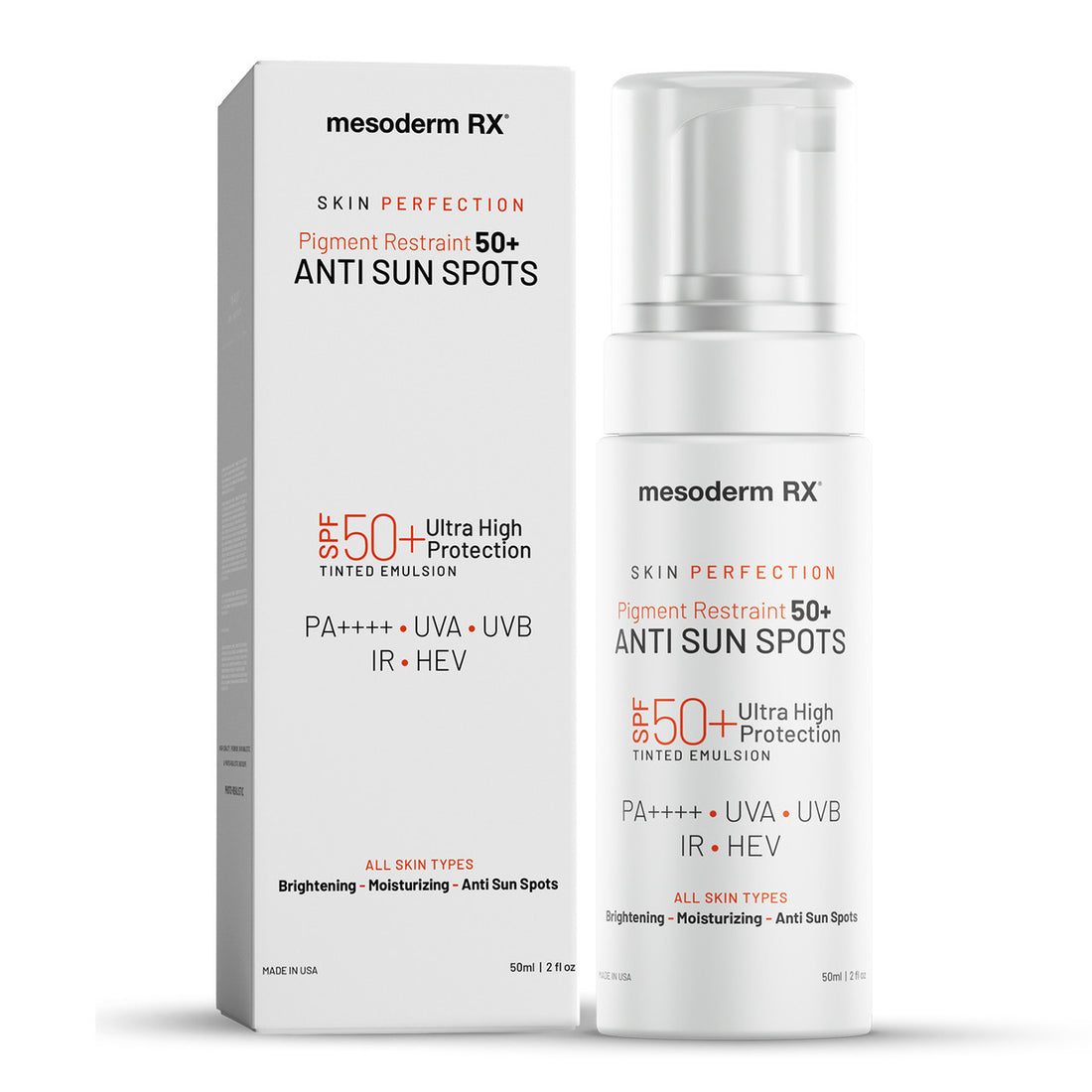
Featured Product
Pigment Restraint Ultra High Sun Protection
SHIELDS FROM UV DAMAGE AND SUN-INDUCED DARK SPOTS
Shop Now →Understanding Pigmentation at the Cellular Level
Hyperpigmentation isn't one diagnosis. It's a visual sign with several biological origins. If you don't separate them, treatment becomes guesswork.
A useful primer to explore hyperpigmentation causes can help patients understand that discoloration has multiple triggers. In practice, that distinction is what determines whether tranexamic acid is central, supportive, or unnecessary.
For a broader breakdown of categories and treatment logic, Mesoderm RX also has a clear guide on what hyperpigmentation is, its causes, types, and how to treat it effectively.
Sun spots are not melasma
Solar lentigines, often called sun spots, are usually tied to cumulative UV exposure. They tend to be more discrete, more stable in shape, and less hormonally reactive. In these cases, pigment production is often more localized and less dependent on the inflammatory cascades that define melasma.
These spots often respond well to strategies that combine photoprotection, antioxidant support, and controlled resurfacing.
PIH starts with injury
Post-inflammatory hyperpigmentation, or PIH, forms after skin injury or inflammation. Acne, friction, picking, eczema, and overuse of strong actives can all trigger it. The insult comes first. The pigment is a consequence.
In PIH, melanocytes respond to inflammatory mediators released after visible or microscopic injury. That's why people with acne often make PIH worse by trying to “scrub it off.” More trauma creates more signaling.
Melasma is more networked
Melasma is a frequently misunderstood condition. It isn't just excess melanin. It involves a more complex signaling environment that can be influenced by UV exposure, inflammation, and vascular factors.
That's why melasma often looks symmetrical, recurs easily, and resists routines that work well for isolated sun spots.
| Condition | Typical trigger | What often fails |
|---|---|---|
| Sun spots | Chronic UV exposure | Relying only on one serum without sunscreen |
| PIH | Inflammation or injury | Over-exfoliating reactive skin |
| Melasma | UV, inflammation, hormonal and signaling factors | Treating it like a simple surface stain |
Melasma doesn't usually need “more aggressive” care. It needs more precise care.
For mature skin dealing with uneven tone plus barrier decline, a supportive formula like Advanced Triple Action Age-Defying Serum can fit around a pigment protocol because it's a rich, creamy moisturizer with skin-perfecting peptides that fortifies the skin's moisture barrier, promotes firmness and hydration, and includes DMAE, Collagen, Vitamin C, and Alpha Lipoic Acid.
How Tranexamic Acid Calms Pigment Signals
Tranexamic acid belongs in the conversation because it doesn't behave like a typical brightener. It does not primarily work by peeling skin faster. It does not sit in the same category as hydroquinone just because both are used for discoloration.
Its value is upstream control.

The signaling cascade that matters
A simplified way to understand it is this. UV exposure or inflammation activates a cascade. That cascade increases plasmin-related activity in skin, which then amplifies communication between keratinocytes and melanocytes. Once that signaling loop is active, melanocytes receive repeated instructions to produce more pigment.
According to this Dovepress review on tranexamic acid for hyperpigmentation, tranexamic acid inhibits hyperpigmentation by interrupting the fibrinogen-keratinocyte-melanocyte signaling pathway, specifically reducing keratinocyte-derived prostaglandins that stimulate melanocytes to increase tyrosinase activity and melanin synthesis. That mechanism is why it has particular relevance in melasma.
In plain terms, tranexamic acid helps quiet the message before melanocytes fully act on it.
Why that's different from other brighteners
Hydroquinone and arbutin are discussed mainly as tyrosinase-focused strategies. They aim at pigment synthesis more directly. AHAs and other exfoliants act at the level of desquamation and surface turnover. Those approaches can be useful, but they don't target the same trigger point.
Tranexamic acid sits in a different lane:
- It is not an exfoliant. It doesn't improve discoloration by forcing rapid shedding.
- It is not a bleach. Its core relevance is signal interruption.
- It is especially useful when inflammation keeps reactivating pigment.
This is why tranexamic acid benefits for skin are often most visible in conditions that relapse or linger. When the problem is recurrent signaling, not just residual pigment, upstream control becomes far more important.
Mechanism first: If your dark spots are being re-triggered by UV and inflammation, removing surface pigment alone won't hold.
Clinical Efficacy and Realistic Timelines
A mechanism matters only if it translates clinically. Tranexamic acid does.
For oral use in melasma, the evidence is stronger than most people realize. A review published on PubMed Central reports that oral tranexamic acid at doses of 250 to 500 mg twice daily has demonstrated sustained clinical improvement in melasma with a reported success rate of up to 89%, and results often appear as early as eight weeks of treatment. The same review notes that in a large case series involving 561 patients, only 7% reported adverse events. You can review those details in the PMC article on tranexamic acid for melasma.
That doesn't mean everyone with pigmentation needs oral tranexamic acid. It means the ingredient has real therapeutic value when melasma is persistent and clinically assessed.
What patients should expect
Topical tranexamic acid usually requires consistency. It's not a one-week ingredient, and it's not an overnight corrector. The people who do best are the ones who stop treating hyperpigmentation like a spot emergency and start treating it like a signaling problem.
A realistic framework looks like this:
- Early phase: Skin may look calmer and more even before obvious spot fading is dramatic.
- Visible phase: Improvement is usually gradual, not sudden.
- Maintenance phase: Results depend on whether UV exposure, inflammation, and barrier disruption are controlled.
Where expectations go wrong
The most common mistake is comparing tranexamic acid to an exfoliating “glow” product. Those can create a fast cosmetic effect because they alter surface texture quickly. Tranexamic acid is usually quieter. Its strength is not flash. Its strength is relevance to the biology of stubborn discoloration.
Oral tranexamic acid can be highly effective in melasma, but oral use belongs under medical supervision, not casual self-prescribing.
The practical takeaway is simple. If pigment has resisted standard brighteners, tranexamic acid deserves consideration. If you expect instant peeling-style results, you'll misjudge it.
Building a Tranexamic Acid Protocol That Works
A serum alone rarely solves stubborn pigmentation. Systems work better than hero products because pigment isn't being pushed by one trigger.
Start with the protocol, not the product fantasy.

The morning structure
Morning care should reduce re-triggering.
- Use a gentle cleanser. If cleansing leaves skin tight, you're starting from irritation.
- Apply tranexamic acid consistently. Doing so targets the pigment signaling axis.
- Layer antioxidant support if tolerated. Vitamin C is useful here because it addresses oxidative stress on a separate pathway.
- Finish with broad-spectrum sunscreen. If there's one crucial part of a pigment protocol, it's this. For product selection logic, see this guide to the best serum for dark spots, which also reinforces why serums work only when the surrounding routine supports them.
The evening structure
Night care should correct without provoking new inflammation.
- Cleanse without stripping.
- Apply tranexamic acid again if your skin tolerates twice-daily use.
- Use a retinoid carefully if appropriate. Retinoids can support turnover and normalization, but overuse on reactive skin can prolong PIH.
- Seal with a barrier-supportive moisturizer.
That's where people often get the order wrong. They stack acids, retinoids, and brighteners all at once because they want speed. The result is often low-grade irritation that slows pigment recovery.
Here's a useful comparison.
| Goal | What helps | What often backfires |
|---|---|---|
| Calm recurring pigment | TXA plus sunscreen plus barrier care | Rotating harsh actives nightly |
| Improve texture | Controlled exfoliation | Daily aggressive acid layering |
| Support long-term tone | Consistency and low inflammation | Product hopping |
A practical add-on for antioxidant support is insights into this Australian superfruit, especially if you're comparing vitamin C-adjacent ingredients and how they can complement a pigment routine.
Later in the protocol, this demonstration is worth watching because application consistency matters as much as ingredient choice:
Where Mesoderm RX fits
If you're building a system rather than chasing a single active, one option is the AHA + BHA + PHA Skin Brightening Serum 30ml. It combines kojic acid, glycolic acid, lactic acid, salicylic acid, lactobionic acid, hyaluronic acid, and hexapeptides. That makes it more relevant for texture, surface pigment, and uneven tone than for replacing tranexamic acid's signaling role.
That distinction matters. Use resurfacing formulas to improve turnover and visible dullness. Use tranexamic acid when the pigment pattern suggests inflammation-driven recurrence.
Who Benefits Most and Is Tranexamic Acid Safe
Tranexamic acid is not for every form of discoloration equally. It is most compelling when pigment is stubborn, recurrent, or tied to inflammatory signaling.
That includes melasma, lingering post-acne marks, and patients with reactive skin who don't tolerate hydroquinone, high-strength exfoliation, or overbuilt brightening routines.

The overlooked benefit in sensitive skin
A point that deserves more attention is barrier support. According to Aesthetics by Design's discussion of tranexamic acid, tranexamic acid's role extends beyond pigment because it increases occludin production to tighten membrane bonds and reduce inflammation in rosacea and acne patients. That makes it especially useful for people whose skin gets red, hot, or easily disrupted by stronger depigmenting agents.
This is a major practical advantage. Many brightening ingredients work in theory but fail in real life because the patient can't use them consistently without irritation. Tranexamic acid often survives that test better.
Who usually does well with it
- Melasma-prone patients: Especially when discoloration flares with sun exposure or inflammation.
- Post-acne PIH sufferers: Particularly when aggressive exfoliation keeps making marks linger.
- Sensitive and redness-prone skin: The dual role in pigment control and calming reactivity is clinically useful.
- Darker skin tones needing low-irritation strategies: A gentler pathway matters when inflammation itself can provoke more pigment.
Skin that can't tolerate hydroquinone or repeated acid exposure often needs a quieter strategy, not a stronger one.
Safety still requires judgment. Oral tranexamic acid is a medical decision. Topical use is simpler, but even gentle ingredients should be introduced thoughtfully if the barrier is compromised.
Frequently Asked Questions About Tranexamic Acid
Is oral or topical tranexamic acid better for melasma
For severe melasma, oral treatment is generally more impactful than topical treatment alone. A PubMed Central review reports that oral tranexamic acid at 250 mg twice daily achieved 95.9% improvement after 6 months, whereas topical tranexamic acid was less effective alone but highly potent when combined with procedures like microneedling. The same review notes that dermatologists increasingly use combination protocols for stubborn pigment. See the full data in this PMC review on tranexamic acid in melasma treatment.
Topical tranexamic acid still has a role. It's often the better starting point when melasma is moderate, when skin is sensitive, or when a patient needs maintenance support after in-office treatment.
Can tranexamic acid be used on the body or intimate areas
It can be relevant in body hyperpigmentation if the discoloration is tied to friction, inflammation, shaving, or post-inflammatory darkening. The same rule applies as on the face. Don't assume all darkness is “staining.” If the trigger is ongoing friction or irritation, you need to remove the trigger as well as treat the pigment.
For intimate or delicate areas, formulation matters more than trend ingredients. That area requires low-irritation systems designed for sensitive skin, not repurposed facial peels.
Should you stop once dark spots fade
Usually, no. You may reduce intensity or frequency, but stopping all prevention often leads to relapse if the original trigger remains. Melasma, especially, behaves like a chronic signaling disorder. If UV, inflammation, or friction continues, pigment can return.
The smarter approach is maintenance. Keep the barrier stable. Keep UV exposure controlled. Keep irritants low. Use stronger interventions only when the condition calls for them.
Mesoderm RX formulates hydroquinone-free, high-potency skincare for discoloration, uneven tone, and barrier-conscious brightening. If you're building a routine around evidence-based actives instead of chasing harsh quick fixes, browse Mesoderm RX for targeted options that fit into a structured pigment protocol.