

Sun Protection Balaclava: The Clinical Guide for Skin
Most advice on pigment control is too casual. “Wear sunscreen” is correct, but incomplete. If you're treating melasma, post-inflammatory hyperpigmentation, or recurrent darkening along the cheeks, forehead, jawline, and upper lip, casual protection fails because pigment cells respond to repeated exposure, not just dramatic burns.
A sun protection balaclava is often dismissed as sports gear. In practice, it functions as a clinical barrier. For patients who are serious about visible improvement, especially those using brightening agents or exfoliating actives, a physical UV shield can be the difference between maintaining progress and repeatedly undoing it.
The Biology of Sun Induced Hyperpigmentation
Hyperpigmentation starts as a biological defense response. Ultraviolet radiation reaches the skin, triggers cellular stress, and stimulates melanocytes to increase melanin production. That response is protective in intent, but cosmetically it creates uneven color, persistent patches, and relapse in patients who thought their pigment was already under control.
The key enzyme in that pathway is tyrosinase. Once UV exposure and inflammation push tyrosinase activity upward, the skin produces more pigment than the area needs. In skin that is already reactive, melanin doesn't always distribute evenly. It clusters. It lingers. It becomes visible discoloration.

For a broader clinical overview of pigment disorders, Mesoderm RX's guide on what hyperpigmentation is, its causes, types, and treatment approaches is a useful companion read.
The pigment disorders people confuse
Consumers often use one term for every dark mark. That leads to poor treatment choices.
| Condition | What it is | What usually drives it |
|---|---|---|
| Melasma | Patchy, symmetrical discoloration | Hormonal influence, visible light and UV exposure, heat, relapse tendency |
| Solar lentigines | Distinct sun spots | Cumulative sun exposure over time |
| Post-inflammatory hyperpigmentation | Residual darkening after injury or irritation | Acne, eczema, picking, procedures, friction, inflammation |
These are not interchangeable.
Melasma is especially frustrating because it isn't just a surface stain. It behaves like a chronic pigment disorder with triggers that repeatedly reactivate melanocytes. Solar lentigines are more directly linked to accumulated exposure. Post-inflammatory hyperpigmentation, or PIH, follows inflammation. That inflammation might come from acne, aggressive exfoliation, heat, or friction from something as simple as poorly chosen face covering fabric.
Clinical point: If the skin keeps getting inflamed, pigment control keeps failing, even when the brightening serum is well chosen.
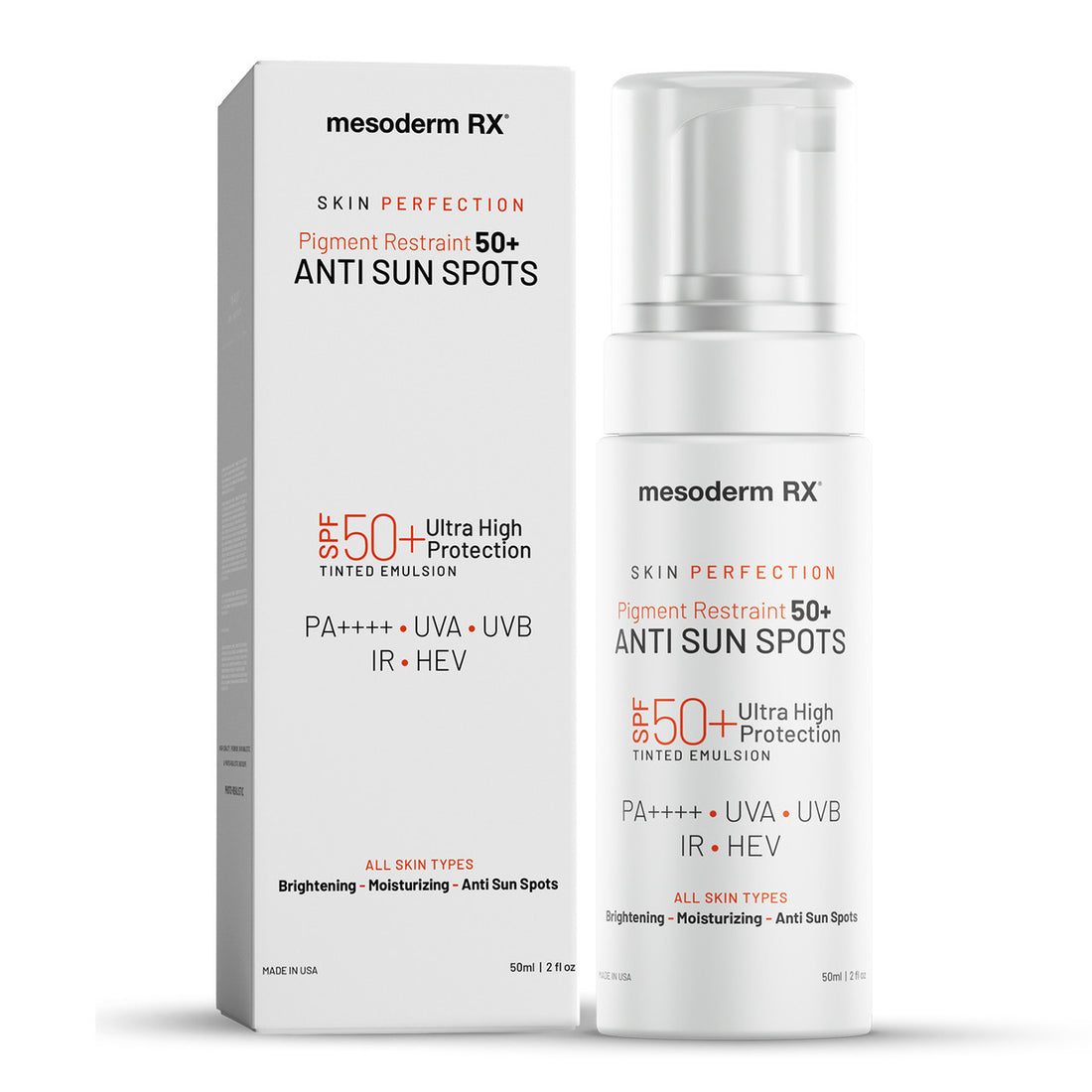
Featured Product
Pigment Restraint Ultra High Sun Protection
SHIELDS FROM UV DAMAGE AND SUN-INDUCED DARK SPOTS
Shop Now →Where a physical barrier matters
A sun protection balaclava interrupts the process early. It doesn't “treat” tyrosinase directly the way a topical depigmenting formula might. It reduces the trigger load hitting the skin in the first place. For patients with melasma or PIH, that's the essential part. You cannot out-correct daily stimulation with stronger and stronger actives.
What works is reducing activation at the source, then pairing that reduction with a consistent topical program. What doesn't work is resurfacing irritated skin while leaving the face, neck, ears, and hairline exposed to repeated UV contact.
Why Sunscreen Alone Is an Incomplete Strategy
Sunscreen is foundational. It is not self-sufficient.
That distinction matters because many people use SPF as if the label guarantees outcomes. It doesn't. Outcomes depend on how the product is applied, how evenly it's spread, whether exposed areas are missed, and whether protection is maintained once sweat, touching, outdoor activity, and time begin to interfere.

Patients who ask whether they can still darken while using sunscreen are asking the right question. The practical answer is yes, which is why this discussion of whether you can tan with SPF 30 is worth reading.
Where sunscreen-only routines break down
The failure points are usually mundane.
- Coverage gaps: Hairline, ears, under the jaw, sides of the neck, and the bridge around the nose are often underprotected.
- Too little product: Sunscreen is often not applied with the consistency or density needed for reliable real-world coverage.
- Poor reapplication: Daily life interrupts ideal use. Meetings, driving, sweat, wiping the face, and outdoor transitions all reduce protection.
- False confidence: Sunscreen often makes people stay exposed longer.
That doesn't mean sunscreen is weak. It means sunscreen is vulnerable to human behavior.
Why pigment patients need reinforcement
If your goal is to avoid a noticeable burn on a beach day, sunscreen may feel adequate. If your goal is to suppress melasma relapse or prevent recurrent PIH, small failures matter. Tiny daily exposures add up biologically because melanocytes respond to repeated stimulation.
Sunscreen works best when it's treated as one layer in a system, not as a permission slip for prolonged exposure.
A physical barrier earns its place. Fabric doesn't forget the ears. It doesn't slide off the jawline because someone rubbed their face. It doesn't depend on perfect distribution at every contour.
One topical option within that broader system is Pigment Restraint Ultra High Sun Protection, described by the brand as a fast-absorbing, non-greasy formula designed to help reduce the look of visible sun damage while protecting against UVA, UVB, IR, and HEV-combination rays. Used correctly, a formula like this supports baseline daily coverage. It does not eliminate the need for physical shielding when pigment control is the priority.
Understanding Sun Protection Balaclava Technology
Hyperpigmentation care often fails at the fabric level. Patients use strong pigment suppressors, apply sunscreen carefully, then leave highly reactive areas exposed to reflected and incidental light. A sun protection balaclava closes that gap by reducing UV contact before it reaches skin.
SPF and UPF describe different protection systems. SPF measures how a sunscreen product limits UV injury on skin. UPF measures how much ultraviolet radiation a textile blocks as light passes through the fabric. For pigment-prone skin, that distinction matters because melasma and post-inflammatory hyperpigmentation relapse are driven by repeated exposure, not only obvious outdoor sun.

What the technology is actually doing
A true sun protection balaclava creates a physical interception layer over the cheeks, jawline, chin, neck, ears, scalp margin, and sometimes the upper chest. Those are exactly the zones where sunscreen is often applied too thinly, disturbed by sweat, or missed along curves and borders.
A UPF 50+ sun protection balaclava made with certified fabric blocks over 98% of UVA and UVB radiation, and the benchmark standard for UPF 50+ requires blocking more than 97.5% of UV rays according to this UPF 50+ balaclava product specification. In pigment management, that reduction in incoming UV matters because fewer photons reach the skin to stimulate melanocytes while topical brightening agents do their work.
This is also why I treat UV-protective fabric as part of a protocol, not as an accessory. Patients using retinoids, hydroquinone alternatives, exfoliating acids, or cysteamine often have less margin for irritation. A wearable barrier can reduce the need to keep layering and rubbing sunscreen onto already reactive skin during long outdoor periods.
The fabric features that change real-world performance
The label alone means very little. Textile density, fiber structure, stretch behavior, moisture handling, and contour fit determine whether a balaclava protects consistently or spends half the day pulled below the nose.
Dense technical knits generally outperform loose casual fabrics because they allow less UV transmission. Breathability still matters. If heat builds up, patients touch the face more, shift the garment more often, and create friction on the same areas already prone to post-inflammatory discoloration. Poor seam placement can also become a clinical problem. Repetitive rubbing along the cheek or jawline may be enough to prolong visible pigment in susceptible skin.
For patients with long outdoor exposure, face protection works best as one part of a broader clothing strategy. This guide to lightweight long sleeve hiking apparel shows how fabric selection can extend that protection beyond the face and neck.
Useful design: stable coverage, breathable fabric, low-friction seams, and a fit that stays in place during movement.
Poor design: hot fabric, shifting edges, rough stitching, and pressure points that make the wearer keep adjusting it.
Mesoderm RX also publishes a practical guide to tinted sunblock for body, which is relevant for patients trying to keep body exposure controlled while treating uneven tone. The principle is simple. Physical barriers and topical protection support each other, especially when the treatment plan includes active ingredients that can increase sensitivity.
How to Select the Right Balaclava for Your Skin
Selection should be clinical, not cosmetic. If you have hyperpigmentation, sensitivity, or are using active skincare, the wrong balaclava can create friction, heat buildup, and inconsistent wear. The right one should protect without becoming another source of irritation.

Start with material and seam construction
High-performance sun protection balaclavas may use 53% polyester and 47% PBT blends engineered for chlorine resistance and rapid drying, and they may include Flatlock stitching to reduce chafing in sensitive skin, as described in this technical balaclava specification. That combination matters because pigment-prone skin doesn't only react to sunlight. It also reacts to repetitive irritation.
A rough seam over the cheekbone can be enough to keep someone adjusting the garment all day. A fabric that stays damp can increase discomfort and make adherence worse. Once wear time drops, protection drops.
Use this decision framework
- Prioritize dense technical fabric: Loose, casual knits may feel soft, but they aren't the same as purpose-built UV protective textiles.
- Check the seams: Flatlock construction is preferable when the balaclava will sit over treated or reactive skin.
- Look for stable coverage: The design should protect the neck, lower face, sides of the face, and hairline without obvious gaps.
- Choose breathable structure: If the fabric traps heat aggressively, wearers will likely pull it down or stop wearing it.
- Match it to your environment: Humid, marine, or pool settings demand materials that dry quickly and hold their performance.
Fit is a treatment issue, not a style issue
Poor fit causes two different problems. First, it creates exposed edges around areas that often darken first. Second, it increases rubbing. Both matter in PIH-prone skin.
A useful balancing question is simple: can you wear it long enough, comfortably enough, without constant adjustment? If the answer is no, it isn't the right clinical tool for you.
If you also spend time outdoors for sports, shade strategy and accessory choice matter. This overview of innovative golf hats is a helpful example of how brim design and sun coverage thinking can extend beyond facial gear.
Here is a short visual reference on fit and wear considerations:
What sensitive skin patients should avoid
| Avoid | Why it backfires |
|---|---|
| Rough interior texture | Can aggravate irritation and prolong inflammation |
| Tight pressure points | Increase rubbing on cheeks, nose, and jawline |
| Incomplete neck coverage | Leaves a common pigment-prone zone exposed |
| Heat-trapping design | Reduces compliance and encourages frequent removal |
The best balaclava is the one that protects consistently without provoking the skin you're trying to calm.
The Integrated Protocol for Physical and Chemical Protection
Patients often assume the hard part of pigment treatment is choosing the right brightening serum. It usually is not. The harder part is preventing daytime UV exposure and irritation from undoing that work.
A sun protection balaclava belongs inside a treatment protocol, not beside it as an accessory. That matters for melasma, post-inflammatory hyperpigmentation, and recurrent uneven tone because melanocytes respond to both ultraviolet light and inflammation. A routine that brightens at night but provokes the skin during the day gives inconsistent results.

The rule that prevents predictable setbacks
Keep strong morning actives off skin that will sit under fabric for hours.
Exfoliating acids, retinoids, and aggressive depigmenting formulas can increase sting, warmth, and friction sensitivity once heat and pressure build under a face covering. In pigment-prone skin, that irritation is not a minor side effect. It can prolong inflammation and stimulate more discoloration.
Use corrective actives at night whenever possible. Skin tolerates them better without sweat, UV exposure, and fabric contact competing at the same time.
A workable daily protocol
Morning on balaclava days
Keep the skin quiet.
Cleanse gently if needed. Apply a plain moisturizer if the barrier feels dry or easily irritated. Then apply sunscreen to all exposed areas and to any border where the balaclava may shift with movement. Coverage around the orbital rim, upper cheeks, hairline, and neck often needs extra attention.
Pigment Restraint Ultra High Sun Protection can fill that sunscreen role within a pigment routine. The practical point is the formula profile, not branding. A fast-absorbing, non-greasy sunscreen is easier to reapply to exposed margins and less likely to increase discomfort under protective gear.
Evening treatment window
Night is the treatment window for doing more.
That is the time for brightening agents, resurfacing products, and targeted pigment correctors because the skin is no longer dealing with ultraviolet exposure, heat buildup, or rubbing from a face covering. I see more stalled pigment cases from daytime irritation than from lack of active ingredients.
Where friction changes the plan
The protocol should change as soon as the skin shows signs of barrier strain. A patient with eczema, recent peeling, retinoid dermatitis, or a history of PIH after minor trauma needs a more conservative setup.
Watch for these clues:
- Persistent rubbing at fixed points: Common along the cheekbone, bridge of the nose, and jawline.
- Heat with stinging: Usually a sign that the morning routine under the fabric is too active.
- Patchy darkening near edges: Suggests exposed transition zones are being missed.
- Tightness, flaking, or increased reactivity: Signals barrier injury. Reduce corrective intensity until the skin settles.
Build a full protection system
Pigment control works best as a layered system. The balaclava reduces direct exposure across a large surface area. Sunscreen covers the margins and any uncovered skin. Sunglasses protect the periocular region, where discoloration often extends onto the temples and upper cheeks. choosing sunglasses with UV protection is part of that plan, especially for patients who rely on topical lighteners around the eyes but leave that area exposed outdoors.
Results improve when each layer does a specific job. Use fabric to reduce UV burden and limit repeated exposure. Use sunscreen to close the gaps. Use night treatment to correct pigment without adding daytime irritation.
Your Non-Negotiable Tool for Serious Pigment Control
If hyperpigmentation is your real concern, a sun protection balaclava shouldn't sit in the category of optional outdoor accessories. It belongs in the category of clinical protection tools.
Pigment disorders don't improve because the active serum is expensive or because the sunscreen label looks reassuring. They improve when you reduce melanocyte stimulation, control inflammation, and stop repeating the same daytime mistakes. That means fewer UV gaps, less friction, better coverage, and a routine that respects the skin barrier.
This is why physical protection changes outcomes. It reduces the reliance on perfect sunscreen behavior. It protects areas people routinely miss. It supports, rather than competes with, a corrective regimen.
For melasma, sun spots, and PIH, results come from a system. Corrective skincare has a role. Daily sunscreen has a role. A well-selected sun protection balaclava has a role. Remove one of those layers, and the whole protocol becomes less reliable.
If you're working on dark spots, uneven tone, or recurrent pigmentation, build your routine around protection first and correction second. Mesoderm RX offers high-potency, minimal-additive skincare designed for brightening, smoothing, and daily defense, which makes it a practical place to start when you want a pigment routine built as a system rather than a single-product fix.