


How to Tighten Neck Skin: 2026 Clinical Guide
Most neck-tightening advice fails because it treats the neck like a smaller version of the face. It isn't. A random “neck cream,” a few upward massage strokes, or jaw exercises won't correct structural laxity.
To tighten neck skin, you need to match the method to the problem. Thin skin, collagen loss, UV injury, muscle banding, and contour changes don't respond to the same intervention. That's why a systems-based approach works better than a single hero product or device.
In practice, the strongest plans combine three layers. Daily topical support to protect and stimulate the skin. At-home tools used with realistic expectations. Professional treatment when laxity has moved beyond what skincare can meaningfully shift.
The Biology of Neck Aging Why Skin Laxity Happens
Neck skin does not usually loosen because someone picked the wrong cream. It loosens because several support systems start declining at the same time, and the neck has less reserve than the face.
The tissue here is thinner, bends constantly, and gets repeated exposure to sun, sleep friction, and downward head posture. Over time, that combination weakens both the skin surface and the structures underneath it.
A core part of the process is collagen loss. Collagen production begins declining in early adulthood at about 1% per year, and UV exposure accelerates elastin damage that contributes to laxity and texture changes, as outlined in Healthline's overview of nonsurgical neck lift options. In practice, that means the neck gradually loses tensile strength, recoil, and resistance to folding.

The five forces behind a sagging neck
Neck laxity usually comes from five overlapping changes, not one isolated problem.
- Collagen and elastin breakdown reduces firmness and snap-back.
- Platysma changes make vertical banding more visible and can pull on the lower face.
- Fat redistribution under the chin softens the jawline and changes the cervicomental angle.
- Gravity stretches tissue that has already lost support.
- Cellular repair slows down, so daily damage from UV exposure and inflammation is not corrected as efficiently.
This leads to the common description of the neck looking crepey, loose, or older than the face. The appearance is structural. Dryness can make it look worse, but dryness is rarely the root cause.
Why face products often underperform on the neck
Facial products often fail on the neck for two reasons. They are built for a different skin environment, and they are expected to solve problems they cannot reach. A moisturizer can reduce roughness and improve slip. It does not rebuild a weakened support matrix on its own.
Clinically, the neck responds best when treatment is built as a system. Topicals help protect collagen, improve skin quality, and support gradual remodeling. Devices may add another layer. Posture, sleep position, and UV control affect how much new damage keeps occurring. If you want a useful overview of what active ingredients can support firmness, this guide to a serum to firm skin and reduce wrinkles is a relevant place to start.
One distinction matters. Not every neck complaint is a skin problem. Fine lines and crepiness can improve with a disciplined skincare plan. Platysmal bands, submental fullness, and heavier tissue descent usually need a different toolset. That is why standalone neck creams so often disappoint. They are trying to treat a mixed problem with one narrow intervention.
Use the right diagnosis first. Then match each layer of the system to the biology that is driving the laxity.
A Clinical Topical Regimen for Neck Firming
A neck routine fails when it asks one cream to solve a structural problem. The neck responds better to a treatment system that covers collagen protection, barrier support, controlled renewal, and long-term consistency.
Topicals will not correct heavy tissue descent or platysmal banding. They can improve crepiness, rough texture, dryness, and the overall quality of the skin when the formula and schedule match how the neck behaves.

Neck skin is thinner and often more reactive than facial skin. The same discussion of saggy neck skin and sensitivity notes that it can be about 40% thinner than facial skin, which helps explain why aggressive anti-aging routines frequently backfire here. In practice, fragrance-free, hydroquinone-free formulas with peptides, niacinamide, antioxidants, and barrier-supportive humectants tend to outperform harsher products because patients can stay on them long enough to see change.
What to use in the morning
Morning care should protect the collagen you still have and keep the barrier calm.
-
Cleanse lightly
Use a non-stripping cleanser or just rinse if the neck is not dirty. Tight, squeaky skin after cleansing is a sign you started the day by impairing barrier function. -
Apply a treatment serum
This is the workhorse step. A formula built around antioxidants, peptides, and supportive firming actives makes more sense than a heavy cream that only adds slip. Advanced Triple Action Age-Defying Serum is one example used on the face, neck, and hands. It contains DMAE, Collagen, Vitamin C and Alpha Lipoic Acid, and the directions call for three to five drops on clean skin once or twice daily, followed by moisturizer. Availability and price can vary by retailer, so check the product page before recommending it to a patient or adding it to your own routine. -
Moisturize if the neck runs dry or sensitive
A barrier-supportive moisturizer reduces irritation from actives and improves adherence. That matters more than people think. A good formula used every day beats a stronger formula used for six days and abandoned.
One rule keeps this section honest. If a firming routine leaves the neck red, stingy, shiny, or flaky, it is too aggressive for that tissue.
For a closer look at ingredient selection, this guide on what works in a firming serum for wrinkles and skin support gives a useful breakdown.
What to use at night
Night treatment is where remodeling support usually fits best, but restraint matters. The neck does not tolerate the same intensity that many people use on the face.
A practical PM sequence looks like this:
- Start with clean skin so leave-on actives sit evenly.
- Repeat your firming serum if the formula is designed for twice-daily use and your skin is tolerating it.
- Use exfoliation selectively to reduce rough buildup and improve product contact. Once or a few times weekly is often enough, depending on the formula and the patient's tolerance.
- Finish with moisturizer to limit dryness and cumulative irritation.
I prefer measured exfoliation over nightly acid use. The goal is smoother texture and better penetration, not chronic low-grade inflammation.
Manual massage can support circulation and reduce tension in the area, but it is an adjunct, not a lifting treatment. For readers who want a gentle primer on technique, this resource on older adult self-care massage is a reasonable starting point as long as pressure stays light and the skin is not being dragged.
Why systems beat single products
The neck usually needs separate inputs for separate jobs. That is why “all-in-one lifting creams” underperform.
| Goal | Best topical category | Why it matters |
|---|---|---|
| Preserve skin support | Antioxidant serum | Helps limit daily oxidative stress that degrades collagen |
| Improve firmness appearance | Peptide-focused treatment | Supports a smoother, firmer look over time |
| Refine rough or crepey texture | Gentle exfoliating product used strategically | Improves surface quality without constant irritation |
| Maintain tolerance | Fragrance-free barrier moisturizer | Keeps the neck calm enough to stay on plan |
The common failure pattern is easy to spot in clinic. People buy one product labeled “neck firming,” apply it inconsistently, skip barrier support, and irritate the area with too many acids or retinoids. Then they decide topicals do not work. Usually the problem is not the category. The problem is that the regimen was never built as a system.
At-Home Enhancements Devices and Massage
At-home tools have a clear role in a neck-firming system. They work best as maintenance, as support for mild laxity, and as a way to keep momentum between office visits. Results depend less on owning a device and more on whether the device fits the biology you are trying to influence.

What at-home devices can realistically do
Home radiofrequency is the most plausible option for mild looseness because it targets heat-related collagen remodeling. Expectations still need to stay grounded. At-home devices run at lower energy than in-office platforms for safety, so changes tend to be gradual and modest. In practice, the best candidates are people with early crepiness, slight softening under the jaw, or patients trying to hold onto results they already built with a stronger plan.
Microcurrent does something different. It can create a short-term improvement in the look of tone, especially along the jawline and upper neck, but it does not have the same rationale for collagen remodeling that heat-based devices do. LED can support recovery and help some patients stay consistent with treatment time, but I do not build a neck-tightening plan around LED alone.
Device quality matters. A poorly designed tool usually fails in one of three ways. It does not deliver enough consistent output to justify the time, it irritates the neck because the instructions are vague, or it becomes another product that sits in a drawer after two weeks.
What tends to disappoint
Neck exercises get recommended far more often than they deliver. Skin laxity is usually a collagen, elastin, and structural support problem. Repetitive muscle work does not tighten loose skin in any meaningful way, and in some people it can even make platysmal banding more noticeable.
Mechanical stimulation at home needs the same caution. A tool like a dermaroller designed for skincare routines can fit into some regimens, but technique, hygiene, needle depth, and skin tolerance determine whether it helps or creates irritation. I reserve that category for patients who follow instructions well and do not already have an impaired barrier.
A device earns its place by improving consistency without increasing irritation.
That standard sounds strict, but it prevents a common mistake. People stack a retinoid, an acid, a device, and vigorous massage onto thin neck skin, then wonder why the area looks redder and crepier. More stimulation is not automatically better.
Massage has a role, but it is supportive
Massage helps with fluid movement, tissue comfort, and temporary puffiness. It does not create true lifting. Gentle sweeping motions toward the collarbone and light work along the sides of the neck can reduce a congested look, especially in the morning or before an event.
Pressure should stay light. Dragging the skin back and forth defeats the point, particularly on a neck that already shows creasing or laxity. For readers who want a safe starting point, this guide to older adult self-care massage is a practical reference because it keeps the technique simple and low-force.
A short visual walkthrough can also help you judge technique and pacing before you start using any device at home.
The Pillars of Prevention Sunscreen Posture and Sleep
If you're trying to tighten neck skin without prevention, you're working against yourself every day. Treatment builds. Prevention protects what you built.
Many routines collapse for these reasons. People apply active products at night, then stop sunscreen at the jawline, spend hours with the head dropped forward, and sleep in ways that crease the same skin repeatedly.

Sunscreen is not optional
UV exposure drives elastin damage and accelerates visible aging in the neck. If you treat the neck with actives but leave it unprotected in daylight, you're inviting ongoing breakdown.
The rule is simple. Apply broad-spectrum sunscreen from the face through the neck and down toward the chest every morning. Reapply when exposure justifies it. If you want a refresher on how tanning and SPF intersect, this article on whether you can tan with SPF 30 explains the basic misconception clearly.
Posture leaves marks
Horizontal lines often get blamed on age alone. Repeated folding from device use is a real contributor. Forward-head posture compresses the front of the neck for hours at a time, and that constant mechanical stress doesn't help skin that's already becoming less resilient.
For people who spend long hours on screens, a guide to correcting tech neck and forward head posture can help reduce the repetitive positioning that deepens neck lines.
You can't ask the neck to remodel while you keep creasing it in the same direction all day.
Sleep can help or hurt
Sleep position won't create all neck aging, but it can reinforce folds. Side sleeping and stomach sleeping can compress the neck and chest in ways that repeat nightly. Back sleeping reduces that mechanical wrinkling for some people, and smoother pillowcase fabrics may reduce friction.
These habits aren't glamorous. They also matter more than many are willing to concede. When someone says their products “stopped working,” I usually look at UV exposure, posture, and habit friction before I blame the formula.
Professional Treatments When to See an Expert
A better question than “Which treatment tightens neck skin?” is “Which tissue is failing?” On the neck, loose-looking skin can come from collagen loss, surface damage, fat fullness, platysmal banding, or true excess skin. That is why standalone neck creams disappoint so many people. They can support the system, but they cannot correct every layer.
Professional treatment makes sense when home care has improved hydration and texture, yet the neck still looks loose, folded, or poorly defined. I also advise an in-person evaluation sooner if there is visible jowling, etched horizontal lines, crepey skin that is paired with laxity, or neck bands that show even at rest.
Fractional CO2 for texture plus tightening
Fractional CO2 laser is often the strongest non-surgical option when the problem is mixed. It treats surface roughness and stimulates remodeling deeper in the skin. In a clinical study on neck rejuvenation, investigators reported 63% improvement in skin texture and 57% mean improvement in skin tightening at two months post-treatment in appropriately selected patients, according to the published PMC study on fractional CO2 neck rejuvenation.
The trade-off is downtime. Expect redness, swelling, and a recovery period that is more noticeable than microneedling or nonablative devices. Skin tone, healing history, and willingness to follow aftercare all matter here.
Microneedling and RF microneedling
Microneedling fits mild to moderate laxity better than advanced sagging. Its role is collagen induction over time, not instant lift. Following a series of four monthly sessions, peak efficacy is typically seen at 3 to 6 months, with a reported 20 to 30% increase in epidermal thickness, as noted earlier in the article.
RF microneedling adds thermal injury to mechanical injury. In practice, that usually makes it the better choice when early laxity is more of a concern than rough texture alone. It can improve firmness with less downtime than aggressive resurfacing, but results are usually subtler than surgery and often depend on a series.
Ultrasound, RF bulk heating, and when surgery enters the conversation
Focused ultrasound and in-office RF bulk heating can help patients with early to moderate laxity who want less downtime and no incisions. These treatments depend on the skin still having enough reserve to contract and remodel. They are not reliable fixes for heavy tissue, strong platysmal banding, or a large amount of extra skin.
That threshold matters.
If the neck has substantial skin excess, loss of jawline definition, or prominent structural aging, a surgical consult is the more honest next step. In those cases, reviewing neck lift surgery options can clarify what surgery corrects that devices cannot.
| Concern | Better fit | Why |
|---|---|---|
| Crepey texture plus laxity | Fractional CO2 | Improves surface damage and stimulates tightening |
| Mild to moderate laxity | Microneedling or RF microneedling | Supports collagen remodeling over a series |
| Early looseness with minimal downtime preference | Ultrasound or in-office RF | Heats tissue without ablating the surface |
| Marked excess skin or strong banding | Surgical evaluation | Corrects structural problems non-surgical treatments cannot |
The best treatment plans are layered. Topicals support skin quality. Devices add stimulation. Procedures target the dominant failure point. Surgery enters the conversation when the anatomy, not the routine, is the limiting factor.
Your Timeline to Tighter Skin A Phased Approach
Neck skin does not tighten on a consumer timeline. It responds on a tissue-repair timeline.
That distinction is why isolated neck creams disappoint so often. A product can improve hydration and surface texture, but laxity usually reflects a broader system problem: collagen loss, repeated UV exposure, chronic flexion from screen posture, sleep-related compression, and in some cases deeper structural descent. The plan has to match that biology.
Phase 1 builds the base
Start by stabilizing the skin and removing the factors that keep it inflamed or dry. In practice, that means daily sunscreen, a topical routine you can tolerate without irritation, and fewer interruptions from over-exfoliating or switching products too often.
Early progress usually shows up as better texture, less ashiness, and a smoother look under makeup or direct light. That is useful progress. Healthier barrier function gives later treatments a better chance to work.
Focus on three basics:
- Use your routine consistently so the neck is treated every day, not only when it looks crepey.
- Apply morning UV protection because sun exposure breaks down collagen faster than most firming products can support it.
- Reduce irritation triggers if redness, stinging, or peeling keep resetting the skin.
Phase 2 adds measured stimulation
Once the skin is calm and consistent, add stimulation with a purpose. This is the stage for a home device, structured massage, or an office-based series if the degree of laxity calls for more than skincare can deliver.
As noted earlier, collagen induction from treatments like microneedling follows a biological timeline, not a shopping schedule. Results tend to show in stages. Surface quality may improve first. Firmness takes longer. Patients who switch methods every few weeks usually lose momentum because they never stay with one plan long enough to judge it fully.
I tell patients to evaluate this phase by trend, not by day-to-day fluctuations. The neck can look better one morning and looser by evening because hydration, angle, and posture change what you see in the mirror.
Skin tightening works best as a sequence. Build tolerance first, stimulate second, then decide if the anatomy needs more.
Phase 3 is the decision point
After a few months of consistent care, the pattern usually becomes clear.
If texture has improved but the skin still hangs or folds, home care has probably done its part and a procedure may be the better tool. If the neck looks somewhat firmer and the result matches your goal, maintenance may be enough. If platysmal banding, heavier tissue, or clear skin excess still dominate the picture, the limiting factor is structural, not cosmetic.
Use these questions to decide what comes next:
-
Has the skin quality improved more than the looseness?
That usually points toward an in-office tightening treatment. -
Are you seeing modest gains that hold with maintenance?
Then your current system may be appropriate for prevention and mild firming. -
Does the neck still look structurally aged despite good compliance?
A professional evaluation makes more sense than adding stronger topicals.
This phased approach prevents two expensive mistakes. One is buying increasingly aggressive products for a problem that needs energy-based treatment or surgery. The other is booking procedures before fixing the daily habits that keep collagen under stress.
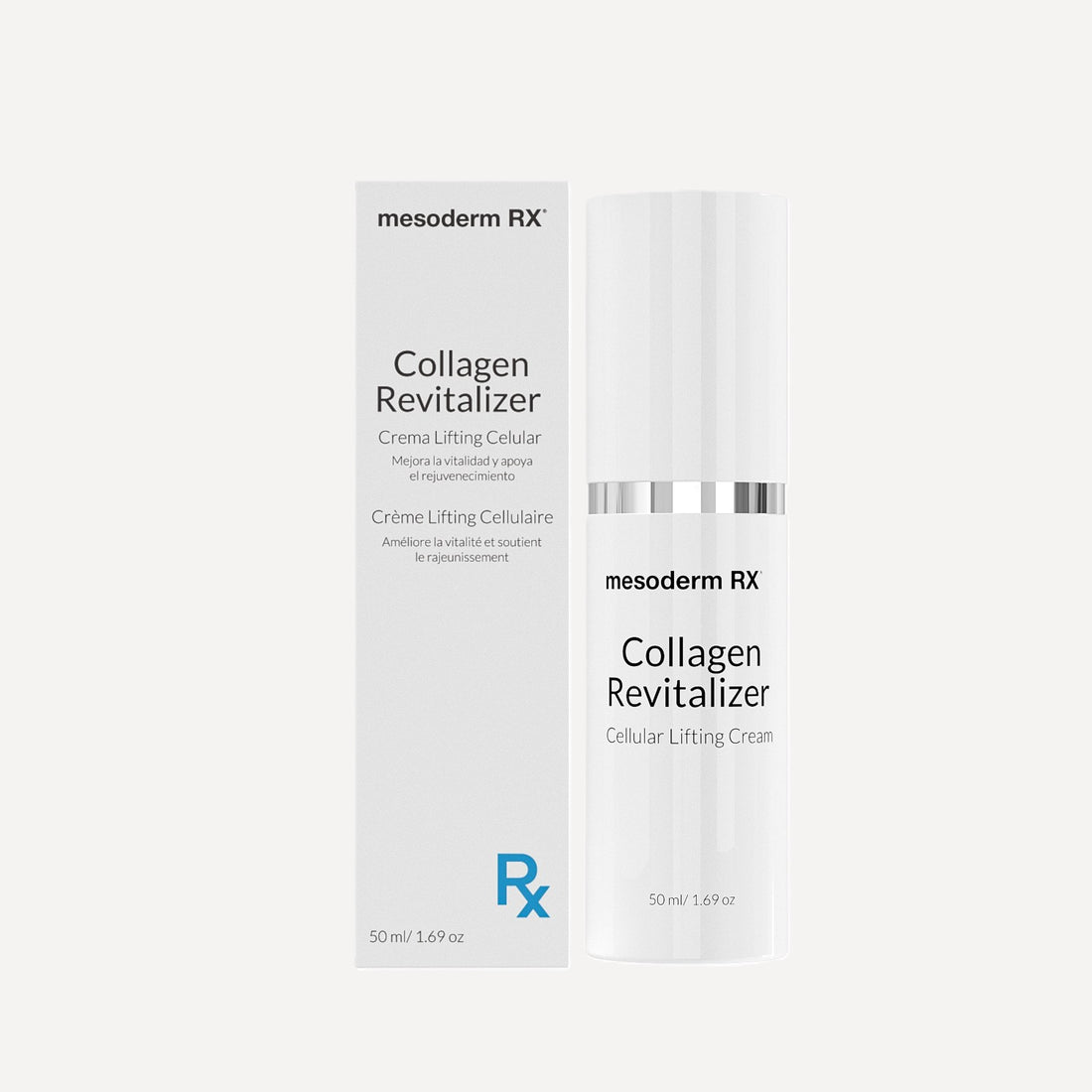
A tighter-looking neck usually comes from coordinated inputs, not a single hero product. Mesoderm RX offers active-focused, sensitive-skin-conscious formulas that can fit into that kind of system. Results depend less on doing more and more on using the right tools long enough, in the right order.