


Melasma Cream For Face: Top Hydroquinone-Free Options
Most advice about melasma cream for face is built on the wrong premise. It treats melasma like a stubborn spot that needs a stronger bleach, a harsher peel, or a faster fix.
That framing is why so many routines fail.
Melasma isn’t just excess color sitting on the surface. It’s a chronic pigment disorder driven by melanocyte overactivity, inflammatory signaling, and relentless re-triggering from light exposure. If you chase one “miracle” cream and ignore the rest of that biology, you can expect temporary fading followed by irritation, rebound, or both.
A better approach is a system. Control pigment production. Reduce inflammatory triggers. Support the barrier. Use strict photoprotection. Then choose actives you can stay on long enough to matter.
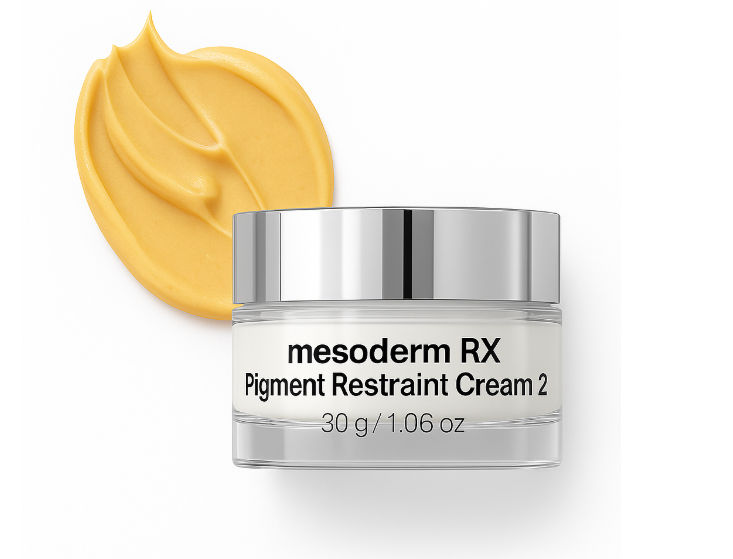
Featured Product
Pigment Restraint Cream
Visibly fade the look of dark spots and uneven tone — no clinic visit required. A brightening cream made to target the look of stubborn discoloration, whether it’s from post-blemish marks, sun exposure, or dullness that years of serums haven’t improved.
Shop Now →The Biology of Melasma Why It Is More Than a Dark Spot
Calling melasma a dark spot leads people toward the wrong treatment plan.
Melasma is a disorder of pigment signaling. The visible patch is only the end result. Underneath it, melanocytes are reacting too easily and too often. These pigment-producing cells respond to ultraviolet light, visible light, heat, hormonal shifts, and inflammatory mediators released by irritated skin. That is why melasma behaves less like a stain and more like a relapsing process.

Melanin is the output, tyrosinase is the engine
Tyrosinase sits near the center of melanin production. When skin receives pro-pigment signals, tyrosinase activity increases and melanin synthesis rises with it.
That point shapes treatment. A melasma cream can suppress one part of the pathway, but melasma usually has several active inputs at the same time. Light exposure keeps signaling going. Inflammation amplifies it. Barrier damage lowers tolerance and makes the skin easier to trigger again. Good management has to account for all of that.
A practical way to frame the biology:
- Melanocytes produce pigment
- Tyrosinase helps drive that production
- Inflammatory signals push the system harder
- UV and visible light keep reactivating the process
Target only one of those inputs and recurrence becomes much more likely.
Melasma is not the same as PIH or sun spots
This distinction is important because treatment mistakes frequently begin with mislabeling.
Post-inflammatory hyperpigmentation (PIH) follows an obvious injury or inflammatory event. Acne, eczema, rash, friction, or an overly aggressive procedure leaves pigment behind after the initial irritation calms down. The pattern usually matches the site of inflammation.
Solar lentigines, commonly called sun spots, are more defined and more localized. They reflect cumulative sun exposure and do not usually show the same symmetric, hormonally influenced pattern seen in melasma.
Melasma tends to appear as broader, patchy, often symmetric discoloration on sun-exposed facial areas, especially the cheeks, forehead, and upper lip. Reviews of the condition consistently describe it as chronic, recurrent, and influenced by more than one trigger. That is why diagnosis matters before product selection.
Melasma is a chronic signaling disorder with visible pigment, not a simple deposit of excess color.
Why facial melasma keeps returning
Patients often assume recurrence means a product failed. In practice, the trigger network was never fully controlled.
The repeat drivers are familiar in clinic:
- Light exposure: Daily incidental exposure is enough to reactivate melanocytes in susceptible skin.
- Hormonal influence: Hormonal shifts can increase melanocyte activity and make flares harder to control.
- Inflammation: Over-exfoliation, harsh cleansers, friction, and irritating actives can deepen pigmentation over time.
- Barrier disruption: A weak barrier increases sting, redness, reactivity, and dropout from treatment.
This is also why single-product thinking falls short. One brightening cream may reduce pigment output for a period, but melasma persists when light, inflammation, and barrier instability are still in play. For a broader comparison of pigment conditions, Mesoderm RX explains what hyperpigmentation is, its causes, types, and treatment approaches.
What this means for treatment selection
An effective melasma plan needs four jobs covered at once:
| Treatment goal | Why it matters |
|---|---|
| Restrain pigment production | Slows excess melanin formation |
| Reduce inflammatory signaling | Lowers a major re-trigger pathway |
| Support barrier function | Improves tolerance and treatment consistency |
| Block daily light exposure | Helps prevent melanocyte reactivation |
That is the core mistake behind the search for a miracle melasma cream for face. Melasma responds better to a system than to a single hero product. A hydroquinone-free protocol built for long-term use usually fits the biology better, because success depends on control, tolerance, and repeatable daily adherence.
The Hydroquinone Paradox Why First-Line Treatments Often Fail
Hydroquinone is often treated like the answer to melasma. In practice, it is a tool. Sometimes a very useful one, but still only one tool.
That distinction matters because melasma is not a one-phase problem. It improves, relapses, gets irritated, settles down, then reappears with sun exposure, heat, hormones, or an aggressive routine. A cream that lightens quickly can still fail the patient if the skin cannot tolerate it long enough to stay consistent.

Why hydroquinone became the standard
Hydroquinone became first-line treatment because it can suppress melanin production efficiently and produce visible fading faster than many alternatives. That short-term performance made it the benchmark against which other topical agents were judged.
Used carefully, it can still be effective. The mistake is assuming that early response equals long-term control.
The trade-off patients often experience
The main limitation is not lack of pigment suppression. It is treatment friction.
Hydroquinone routines often run into redness, stinging, peeling, and cumulative irritation. In melasma, that is not a cosmetic inconvenience. Irritated skin is less predictable, less adherent, and more likely to spiral into post-inflammatory darkening in reactive patients.
Triple-combination regimens show this trade-off clearly. They can produce impressive clearance, but they also produce irritation often enough that many patients reduce use, apply inconsistently, or stop altogether, as noted earlier.
High efficacy with poor tolerability is not a durable strategy for a chronic pigment disorder.
Why first-line does not mean long-term
Hydroquinone is better framed as a short-course suppressive agent than as a permanent maintenance cream. That is how many dermatologists use it in real practice. Push hard enough to interrupt active pigment production, then shift to a plan the skin can live with.
That shift is where many routines break down. Patients are handed a strong depigmenting cream, see some improvement, and assume the job is finished. Then they taper badly, keep using too many irritating actives, or replace one harsh brightener with another. The pigment returns because the system around the cream was never built.
This is the paradox. The ingredient can work, while the overall treatment plan still fails.
Where hydroquinone goes wrong in real life
Failure patterns are usually behavioral and biological at the same time:
- Overuse: applying more often or over a larger area than instructed increases irritation without improving control
- Actives overload: combining hydroquinone with exfoliating acids, retinoids, scrubs, or benzoyl peroxide often pushes skin into dermatitis
- Poor maintenance planning: stopping after initial fading leaves no strategy for recurrence control
- Weak photoprotection: visible improvement falls apart fast when daily UV and visible light exposure continue
Clinically, I see the same issue repeatedly. Patients chase a stronger cream when what is needed is a better protocol.
Why hydroquinone-free maintenance makes more sense
For long-term melasma management, the better question is not which single cream is strongest. The better question is which routine suppresses excess pigment while keeping the barrier stable enough for daily use over months.
That is why hydroquinone-free care has become the more intelligent maintenance path. Lower-irritation actives can be layered more strategically, used more consistently, and adjusted more easily for sensitive skin. That gives better odds of adherence, and adherence is what separates a brief cosmetic win from stable control.
Hydroquinone still has a place. It just should not be mistaken for the whole treatment model.
Melasma responds best to a system: pigment regulation, inflammation control, barrier support, and strict light management working together. That is the standard a modern protocol should meet, and it is the logic behind hydroquinone-free systems such as the Mesoderm RX approach.
Building a Modern Hydroquinone-Free Melasma Protocol
The right melasma protocol is built like a treatment system, not a shopping list.
A single cream rarely controls melasma for long because melasma is not driven by one pathway. Pigment production, inflammatory signaling, epidermal turnover, barrier integrity, and daily light exposure all influence how quickly patches deepen or return. A hydroquinone-free routine makes sense when each step is assigned to one of those jobs and the skin can tolerate the plan for months, not just two aggressive weeks.

Lower irritation improves consistency
In clinic, the strongest routine is usually the one a patient can keep using without drifting into stinging, scaling, or rebound darkening.
That is the practical advantage of hydroquinone-free care. It gives more room to combine pigment suppressors, barrier-supportive ingredients, and measured exfoliation without forcing repeated stop-start cycles. For a chronic condition like melasma, consistency matters more than intensity spikes.
The ingredients that make sense biologically
A modern protocol usually combines several ingredient classes, each targeting a different part of the process.
Tranexamic acid
Tranexamic acid is useful because melasma has a vascular and inflammatory component, not just excess pigment. Topically, TXA helps reduce signaling that pushes melanocytes into overproduction.
It is often a smart choice for patients who react poorly to harsher brightening routines or who need a steady maintenance ingredient.
Azelaic acid
Azelaic acid helps regulate uneven pigment while also calming skin that is prone to redness or post-inflammatory change. That dual action matters in melasma, where irritation often makes the condition harder to control.
The trade-off is tolerability. Some patients do well with daily use, while others need to start a few nights per week and build slowly.
Kojic acid and related brighteners
Kojic acid works by interfering with pigment formation. On its own, it is rarely enough. Inside a layered routine, it can add useful suppression without relying on hydroquinone.
Formulation matters here. A well-balanced serum can make kojic acid more usable than a harsher standalone treatment.
Niacinamide
Niacinamide is valuable for reducing melanin transfer and supporting barrier function. Those two effects work well together because skin with a stronger barrier usually tolerates pigment-correcting actives more reliably.
It is not a dramatic ingredient, and that is part of its value. Melasma improves faster when the routine stays calm enough to continue.
Gentle exfoliants, especially PHAs
Pigment that has already reached the upper layers of the skin does not disappear overnight. Gentle exfoliation helps release that retained discoloration in a more controlled way.
PHAs are often a better fit than aggressive acid stacks because they can smooth surface buildup with less sting. In melasma-prone skin, moderate turnover usually performs better than a harsh “peel” mindset.
The strongest protocol is the one that suppresses pigment from multiple angles without triggering the inflammation that keeps melasma active.
System design beats ingredient chasing
A workable routine has to be functionally balanced. Many patients build a brightening routine by mixing random products from different brands, then wonder why the skin becomes reactive. The problem is usually not a lack of strong actives. It is poor system design.
A better framework looks like this:
| Function | What to use |
|---|---|
| Pigment suppression | TXA, azelaic acid, kojic acid, niacinamide |
| Surface renewal | Gentle acids, often with PHA-led exfoliation |
| Barrier maintenance | Fragrance-free moisturizer with a low-irritancy profile |
| Recurrence control | Daily broad-spectrum sunscreen and disciplined reapplication |
Visible light matters here too, especially in melasma-prone skin. Patients who assume morning sunscreen alone solves the problem usually underprotect during the hours that drive relapse. This guide on whether you can tan with SPF 30 helps clarify why “wearing sunscreen” and getting adequate protection are not always the same thing.
One example of this system-first approach is the Mesoderm RX AHA BHA PHA Dark Spot Whitening Serum, which fits the role of a hydroquinone-free resurfacing and tone-correction product inside a broader pigment routine rather than acting as a stand-alone fix.
A short visual overview can help if you’re comparing ingredient roles and routine structure:
What does not work well
Several common habits keep melasma stuck in a cycle of partial fading and quick recurrence.
- Treating only the darkest patch: melasma usually behaves as a field disorder, so isolated spot treatment often gives uneven results.
- Using scrubs or strong at-home peels: irritation can reactivate pigment.
- Changing products too quickly: most non-hydroquinone protocols need steady use before their value becomes clear.
- Stacking too many “brighteners” at once: more actives can mean more dermatitis, not better control.
- Relying on a serum while neglecting daily light protection: correction fails if reactivation continues every day.
A hydroquinone-free melasma cream for face works best as one part of a structured protocol. That is how long-term control is built.
Your Daily Melasma Treatment Blueprint AM and PM Routines
A useful routine has two jobs. Morning prevents reactivation. Night corrects what’s already there.
If either half is missing, results become unstable.
The AM protective routine
Morning care should feel restrained. This is not the time to stack every active in the cabinet.
Start with a gentle cleanser that removes oil, sweat, and residue without leaving the skin tight. Tightness after cleansing is an an early sign that the barrier is already being pushed too hard.
Then apply your treatment layer. If you use a pigment serum, keep the amount modest. A pea-sized amount is enough for the face. Spread it thinly and evenly. Don’t rub aggressively into the patches as if friction will make it work better.
Your moisturizer comes next if your serum isn’t moisturizing enough on its own. Look for bland support. Fragrance-heavy formulas and “tingly” botanical blends are rarely helpful in melasma-prone skin.
Then comes the essential treatment anchor.
Broad-spectrum sunscreen is essential. If a routine includes a melasma cream for face but skips reliable sun protection, it isn’t a treatment system. It’s wishful thinking. In practical terms, use a high-protection product daily and reapply when you’re outdoors.

For people who still wonder whether sunscreen really matters even on days they tan, this overview on whether you can tan with SPF 30 explains the practical limits of relying on SPF casually rather than using it as a disciplined part of treatment.
What the morning routine should feel like
Use this as a quality check:
- Skin should feel comfortable, not hot
- There shouldn’t be immediate stinging every day
- Makeup should sit normally over the routine
- By midday, skin shouldn’t feel stripped or over-dried
If your morning products leave you red before noon, the routine needs simplification.
The PM corrective routine
Night is where active correction belongs. It’s also where most overuse happens.
Cleanse first. If you wear heavy sunscreen or makeup, remove that thoroughly but gently. Then apply your pigment-correcting serum or cream in a thin layer across the affected facial zones, not just the darkest points. Melasma tends to behave as a pattern.
Follow with moisturizer after the treatment layer settles. If you’re sensitive, moisturizer can act as a buffer and improve tolerance.
A practical PM structure looks like this:
| Night routine stage | Purpose |
|---|---|
| Gentle cleanse | Removes residue without provoking inflammation |
| Treatment serum or cream | Targets pigment pathways |
| Barrier-support moisturizer | Reduces dryness and improves adherence |
How to layer without creating irritation
Discipline matters more than enthusiasm in this step.
- If you’re new to actives, start every other night. Daily use can come later.
- Don’t combine multiple strong exfoliants in one session. Melasma doesn’t reward aggression.
- Keep application thin. More product means more dermatitis, not faster fading.
- If skin burns beyond mild transient tingling, stop and simplify. Ongoing inflammation is not a sign of efficacy.
Application rule: Thin layers, regular use, and strict SPF beat heavy-handed treatment every time.
Common routine mistakes
A lot of failed routines look impressive on a shelf and chaotic on the skin.
The most common errors are:
- Using a brightening serum, an acid toner, a retinoid, and a scrub in the same week without a plan
- Applying treatment only when patches look darker
- Skipping moisturizer because skin is oily
- Treating sunscreen like the final optional step
The routine that works is boring in the best way. Consistent cleanser. Consistent treatment. Consistent moisturizer. Consistent sun protection.
That’s how pigment disorders are managed in practice.
Optimizing Results and Managing Sensitive Skin
Melasma responds to consistency, not force. That principle matters even more if your skin stings easily, flushes quickly, or reacts to products marketed as “strong.”
Visible change takes time. Many individuals need a sustained routine before they can judge whether a formula is helping. Early impatience leads to product hopping, and product hopping leads to confusion.
Build tolerance on purpose
Sensitive skin doesn’t always need weaker treatment. It needs smarter pacing.
If you’re introducing a hydroquinone-free pigment serum or exfoliating formula, start with reduced frequency. Every other night is enough to learn how your skin behaves. Once the skin stays calm, increase as tolerated.
A simple tolerance strategy:
- Use fewer variables: Introduce one core treatment first.
- Buffer when needed: Apply moisturizer after the active, or keep the rest of the routine very bland.
- Pause other irritants: Scrubs, harsh masks, and unnecessary acids should come out first.
- Watch the skin, not the calendar: Dryness, persistent sting, and visible redness mean the barrier needs relief.
Know the difference between activity and damage
A little transient tingling can happen with active products. Persistent burning, scaling, and patchy redness are different. Those signs don’t mean the product is “working harder.” They mean the skin is losing tolerance.
That distinction is where many people sabotage progress. They treat irritation as proof of potency and continue pushing through it. In melasma, chronic irritation can become its own pigment trigger.
Consistency beats intensity. A moderate routine you can maintain will outperform an aggressive routine that repeatedly inflames the skin.
Practical adjustments that improve outcomes
When results stall, I look at the routine mechanics before blaming the ingredients.
Try this checklist:
| Problem | Better adjustment |
|---|---|
| Stinging after application | Reduce frequency and simplify the rest of the routine |
| Dry, tight skin by morning | Increase moisturizer support and reduce exfoliation load |
| Patchy progress | Apply treatment evenly across affected zones, not only the darkest edge |
| Frequent setbacks | Reassess daytime light protection and routine irritation |
What patients often misread
Not every flare means the product is wrong. Sometimes the routine is too crowded. Sometimes the cleanser is too harsh. Sometimes the sunscreen isn’t being reapplied. Sometimes heat, friction, or picking is the issue.
The hydroquinone-free advantage is that it gives you more room to adjust without immediately defaulting to a stop-start cycle. That makes long-term management easier, especially for reactive skin that needs pigment control without repeated inflammation.
Advanced Strategies and Complementary Treatments
Topicals matter even when you pursue in-office treatment. They prepare the skin, reduce unnecessary inflammation, and help maintain gains after procedures.
That’s an important point because many patients overestimate what peels or laser sessions can do on their own. Procedures can help selected cases, but melasma is still a recurrence-prone condition. If the home routine is weak, the result won’t hold.
Where procedures fit
A well-built topical routine can complement professional treatments such as carefully selected chemical peels or non-ablative devices. It helps lower the background pigment drive and gives the skin a more stable maintenance plan afterward.
What doesn’t work is treating procedures like a replacement for disciplined daily care. They’re additions, not substitutes.
A newer option for sensitive users
One of the more interesting hydroquinone-free developments is cysteamine. An emerging dermatology trend is its use as a rinse-off antioxidant alternative for hyperpigmentation management. Applied for 15 minutes daily, it targets pigmentation without the irritation profile many people experience from leave-on actives (discussion of cysteamine as an emerging hydroquinone alternative).
That rinse-off format is clinically useful. It gives reactive skin another way to pursue pigment correction without keeping a strong active on the skin all night.
How to place it in a protocol
Cysteamine makes the most sense for:
- Sensitive skin that can’t tolerate leave-on brighteners well
- Patients who want a prescription-avoidant approach
- Maintenance phases where irritation control matters
If you’re comparing it with retinoid-centered strategies, Mesoderm RX also has a background article on tretinoin cream and Obagi that helps frame where stronger prescription-style pathways fit and where they become limiting.
The broader principle stays the same. Advanced options work best when they plug into a system. They don’t replace one.
Frequently Asked Questions About Managing Melasma
Can melasma come back after it fades?
Yes. Melasma is chronic and trigger-responsive. Fading the pigment doesn’t remove the tendency to repigment. That’s why maintenance matters.
Is one melasma cream for face enough on its own?
A single cream is not enough on its own. A single cream can help, but melasma management works better as a system that includes daily sunscreen, a tolerable corrective active, and barrier support.
Why do some people worsen with “strong” products?
Because melasma-prone skin reacts badly to inflammation. If a routine causes repeated burning, peeling, or irritation, it can interfere with adherence and may aggravate pigmentation.
Do I need sunscreen even if I’m using a powerful treatment?
Yes. A 12-week double-blind RCT showed good-to-excellent improvement in 81.2% of patients using a triple-combination cream, but non-compliance with daily SPF 50+ was linked to a 70% melasma recurrence rate within 6 months (clinical summary of triple-combination outcomes and recurrence with poor SPF adherence). Even potent treatment fails if daily light protection fails.
Are hydroquinone-free routines suitable long term?
In many cases, yes. That’s one of their core advantages. They’re easier to keep in place over time because they don’t depend on the same short-course logic used with hydroquinone.
What should I do if my skin is sensitive?
Reduce frequency first. Simplify the routine. Protect the barrier. Then build back up gradually. Sensitive skin does better with controlled pacing than with lower commitment.
If you want a results-driven, hydroquinone-free approach to persistent discoloration, explore Mesoderm RX. The line is built around high-potency actives, minimal additives, and daily-use formulas that fit the kind of long-term pigment protocol melasma requires.