


Hyperpigmentation Skin Lightening Cream: Top 2026 Guide
Most advice about hyperpigmentation skin lightening cream is too simple to work well.
People are told to buy one brightening ingredient, use it faithfully, and wait. When that fails, they assume their skin is stubborn. Usually, the underlying problem is the treatment design. Uneven pigment is not a one-step process, so a one-step cream often gives partial results at best.
Pigment disorders also are not interchangeable. Melasma behaves differently from post-acne marks. Sun spots behave differently from both. If you treat all dark areas as the same problem, you usually get mixed outcomes, irritation, or relapse.
A better approach starts with biology. Then it moves to diagnosis. Then it builds a system that suppresses new pigment, limits pigment spread, speeds removal of discolored cells, and protects skin from the triggers that keep the cycle going.
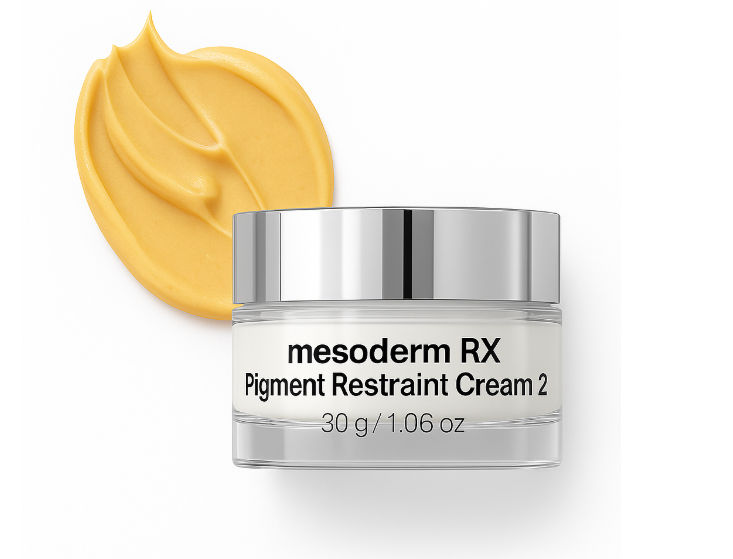
Featured Product
Pigment Restraint Cream
Visibly fade the look of dark spots and uneven tone — no clinic visit required. A brightening cream made to target the look of stubborn discoloration, whether it’s from post-blemish marks, sun exposure, or dullness that years of serums haven’t improved.
Shop Now →Why Your Hyperpigmentation Cream Is Not Working
Most failed pigment routines do not fail because the skin is "resistant." They fail because the product strategy is too narrow for the biology driving the discoloration.
A cream can contain a respected brightening active and still give weak, inconsistent results. I see this often in patients who have already tried one acid, one antioxidant, or one pigment inhibitor for months. The spot may soften at the edges, then stall. Or the skin gets irritated before the pigment meaningfully lifts. Both outcomes point to the same problem. One mechanism was targeted, while the rest of the pigment cycle stayed active.
Single-ingredient thinking breaks down in practice
Hyperpigmentation is not one event. It is a sequence. Pigment has to be triggered, produced, packaged, transferred into surrounding cells, and held in the skin long enough to remain visible. If treatment interrupts only one step, the untreated steps keep feeding the mark.
That is why "hero ingredient" marketing creates so much disappointment. Hydroquinone, tranexamic acid, kojic acid, azelaic acid, niacinamide, retinoids, and exfoliating acids can all help, but each has limits when used alone. Some mainly reduce production. Some help with transfer. Some improve clearance. Some calm the inflammatory signals that keep melanocytes switched on. A better regimen uses several of these functions at once, with tolerable dosing, instead of trying to force a single active to do every job.
If you need a quick refresher on the major pigment types before choosing products, this guide on what hyperpigmentation is, what causes it, and how to treat it effectively lays out the basics clearly.
Wrong diagnosis, wrong outcome
One of the most common clinical errors is treating all dark marks as if they behave the same way.
Melasma is relapse-prone and strongly linked to UV exposure, visible light, heat, hormones, and vascular and inflammatory signaling. Post-inflammatory hyperpigmentation follows acne, eczema, picking, friction, or cosmetic irritation. Sun spots reflect cumulative photodamage and often respond differently from either of the first two. If the diagnosis is off, product choice is off. Patients then conclude that lightening creams do not work, when the underlying issue is that the regimen does not match the pigment disorder.
A second failure point is speed.
A common clinical observation is that patients attempt to force faster fading by overusing acids, stacking too many strong actives, or scrubbing the area aggressively. That backfires. Inflamed skin sends more pigment signaling, weakens barrier function, and extends recovery time. In darker or easily reactive skin tones, irritation can create new discoloration while you are trying to clear the old.
Key takeaway: Redness, burning, persistent peeling, and stalled results usually mean the regimen is incomplete, irritating, or mismatched to the type of pigmentation.
What effective treatment has to do
A useful pigment routine does four jobs at the same time:
- Suppress new melanin production with inhibitors that reduce overactive pigment signaling
- Reduce pigment transfer so melanin spreads less efficiently into surrounding skin cells
- Increase removal of discolored cells with controlled turnover, not constant irritation
- Block the triggers with daily UV and visible-light protection and better inflammation control
That is the difference between random product shopping and a system. Hyperpigmentation improves faster, and relapses less often, when treatment is built around multiple biological failure points instead of one celebrated ingredient.
Understanding the Biology of Uneven Skin Tone
To treat hyperpigmentation effectively, it helps to understand it as a biological factory problem inside the epidermis, not a simple surface stain.
Melanocytes make pigment. Tyrosinase and related enzymes help convert amino acid building blocks into melanin. That melanin is then packaged into melanosomes and transferred into surrounding keratinocytes, where it becomes visible as patches, marks, or generalized uneven tone.

That sequence matters because pigment can be interrupted at more than one step. A formula that only slows tyrosinase may reduce new melanin, yet still leave transfer, retention, and re-triggering untouched. This is one reason single-ingredient products often plateau.
In practice, uneven tone usually reflects three overlapping events. Skin is making too much pigment, distributing that pigment too efficiently, or clearing pigmented cells too slowly. Many cases involve all three.
If you want a broader background on causes and types, Mesoderm RX has a useful explainer on what hyperpigmentation is, what causes it, and how to treat it effectively.
Melasma, PIH, and sun spots behave differently
Melasma is a relapse-prone disorder of overactive pigment signaling. It often appears in broader, symmetric patches on the cheeks, forehead, upper lip, or jawline. Sun exposure, visible light, heat, hormones, and irritation can all keep it active, which is why melasma rarely responds well to a fading cream alone.
Post-inflammatory hyperpigmentation, or PIH, follows injury. Acne, eczema, picking, friction, burns, aggressive exfoliation, and some procedures can all set it off. The visible mark is the aftereffect of inflammation, not the original disease. If the inflammation continues, pigment production continues.
Solar lentigines, often called sun spots, are more localized. They reflect cumulative UV exposure and tend to sit as discrete brown macules rather than diffuse patches. They can improve with topical treatment, but they usually respond more slowly than patients expect because the pigment is well established.
Inflammation is a pigment trigger
This is the part many routines ignore.
Inflammatory mediators can stimulate melanocytes even when the original breakout, rash, or irritation seems minor. I see this often in patients who are using strong acids correctly on paper but too often for their skin tolerance. The result is a cycle of low-grade irritation, persistent signaling, and stalled fading.
Barrier injury also changes how well treatment is tolerated. Once the barrier is compromised, patients reduce use, skip nights, or stop treatment altogether. A pigment plan fails long before the jar is empty if the skin stays inflamed.
Why light protection has to be built into treatment
Ultraviolet light keeps melanocytes active. Visible light can also worsen discoloration in pigment-prone skin, especially melasma and darker skin tones. Any routine that ignores daily protection is leaving the main trigger in place.
Sunscreen does not remove existing pigment on its own. It protects the progress created by inhibitors, transfer blockers, and controlled turnover. Without that protection, the skin keeps receiving the same signal to make more pigment, and results remain unstable.
Diagnosing Common Failures in Hyperpigmentation Treatment
Treatment failures usually come from two clinical mistakes. The biology is under-treated, or the skin is over-treated.
Both problems are common because pigment is often approached as a cosmetic nuisance instead of a signaling disorder. Melanocytes respond to injury, light, hormones, and inflammatory mediators. A routine that only chases visible darkness, without controlling those inputs, often plateaus early or triggers more discoloration.

Aggression often backfires
Irritation is still one of the most overlooked reasons treatment stalls.
Physical scrubs, cleansing brushes, lemon juice, undiluted acids, and repeated rubbing do not speed pigment correction. They create controlled or uncontrolled injury, and pigment-prone skin often answers that injury with more melanin. Patients then mistake the temporary smoothness or sting for progress and keep escalating.
The warning signs are easy to spot. Skin starts looking glossy, tight, warm, red, or unusually reactive. At that point, the barrier is losing the ability to tolerate the very ingredients needed for steady improvement.
Single-actives often hit a ceiling
One-ingredient routines can help, but they rarely manage stubborn discoloration on their own.
Vitamin C may improve overall brightness while leaving entrenched patches behind. An exfoliating acid may refine texture while doing little for ongoing melanocyte activity. A pigment inhibitor may reduce new production while old pigmented keratinocytes remain in place too long. Each approach addresses one part of the problem and leaves the others active.
That is why many patients describe a familiar pattern. Early improvement. Then a stall.
Product volume does not equal product quality
The category is crowded, and many formulas are shallow. A label can show one recognizable brightening ingredient and still be poorly built for recurrent hyperpigmentation. I see this often with products that rely on token amounts of trendy actives, weak delivery systems, or formulas that ignore irritation control altogether.
A popular cream may still fail if it does not inhibit pigment production, reduce transfer, and support the clearance of stained surface cells in a tolerable way.
Hydroquinone has limits in real-world use
Hydroquinone remains a legitimate pigment agent, but it is not a complete long-term plan for every patient.
As noted earlier, reported use patterns show a practical problem. Many users stop early, many do not find it effective enough on its own, and a smaller group continues beyond a year. This raises concern about long-term safety issues such as ochronosis, particularly when use is unsupervised or poorly structured.
That is why I treat hydroquinone as a tool, not a system. It can be useful in selected cases, but maintenance usually requires a broader regimen that patients can tolerate and repeat.
Practical tip: If a cream only works while your skin stays irritated, the formula is fighting your barrier as much as your pigment.
A short diagnostic checklist
If progress has stalled, check the failure point before adding another product:
- Wrong target: Melasma, post-inflammatory hyperpigmentation, and sun spots are being treated as if they respond the same way
- Weak pathway coverage: The routine uses one hero ingredient instead of addressing production, transfer, and removal together
- Poor tolerance: The formula is active on paper but too irritating to use consistently
- Ongoing friction: Scrubbing, picking, rubbing, or over-cleansing is keeping inflammatory signaling active
- No clearance support: New pigment is being suppressed, but older pigmented cells are not turning over efficiently
- Stacking without structure: Too many actives are introduced at once, and the barrier fails before the pigment fades
The fix is usually not a stronger random cream. It is a better-designed system.
The Multi-Pathway Strategy a Superior Approach
The most effective hyperpigmentation skin lightening cream is not really a single cream concept. It is a multi-pathway strategy built into a routine.
That matters because pigment has more than one biological entry point. If you only suppress tyrosinase, pigment transfer can continue. If you only exfoliate, melanocytes can keep overproducing pigment. If you only use sunscreen, you may prevent worsening without fading established discoloration efficiently.

The three treatment jobs that matter most
Clinical formulation for pigment correction should handle three jobs at once.
Inhibit new pigment production
Tyrosinase remains a primary target. It is a key enzyme in melanin formation, and competitive inhibition of tyrosinase is a core mechanism in pigment treatment. This is still foundational.
Block pigment transfer
Even after pigment is made, it still has to move into surrounding skin cells to become visibly embedded in the epidermis. Ingredients such as niacinamide can help interfere with that transfer step through PAR-2 related pathways.
Accelerate removal of pigmented cells
Chemical exfoliants and retinoids help move already-pigmented cells upward and off the skin more efficiently. This does not stop pigment production by itself, but it improves visible clearing.
According to the PubMed summary of multi-mechanism melanogenesis inhibition in hyperpigmentation treatment, advanced formulations are significantly more efficacious because they combine tyrosinase inhibition, pigment transfer blocking, and increased cell turnover rather than relying on a single pathway.
Why systems outperform hero products
A single-active serum often creates an illusion of treatment precision. It sounds clean and disciplined, but biologically it is narrow.
A proper system can also include two more pillars that people overlook:
| Pathway | Why it matters |
|---|---|
| Inflammation control | Reduces the signals that drive post-inflammatory pigment recurrence |
| UV protection | Prevents new stimulation while treatment is trying to fade existing pigment |
This why many disappointing routines are not wrong in ingredient choice. They are wrong in architecture.
Key takeaway: Hyperpigmentation improves most reliably when a regimen handles production, transfer, turnover, inflammation, and UV exposure together.
Delivery matters too
A good formula is not just about the ingredient list. It is also about how the actives are delivered and tolerated.
Advanced delivery systems can protect sensitive actives from degradation and improve where they act in the skin. In practical terms, this means you should care about formulation quality, not just ingredient trends.
That is also why copying a routine from social media often fails. People compare labels and ignore concentration balance, delivery, barrier impact, and product sequencing.
Key Actives for a Modern Skin Lightening Regimen
Not all brightening ingredients do the same job. Lumping them together creates weak routines.
A better way to evaluate a hyperpigmentation skin lightening cream is to sort ingredients by function. Ask what they do in the pathway, not whether they are currently fashionable.
Actives that reduce pigment production
These ingredients aim upstream.
Tyrosinase inhibitors work by reducing the machinery involved in melanin synthesis. This category is central in pigment treatment because if melanocytes keep producing excess melanin, surface fading remains incomplete.
Kojic acid and arbutin are often placed in this group. They are used because they target the production side of pigmentation. These ingredients can be useful, but they tend to perform better when paired with transfer-blocking and turnover-support ingredients rather than used in isolation.
Some formulas also include other brightening agents intended to regulate visible discoloration more gradually. For recurrent or stubborn hyperpigmentation, this broader architecture matters more than any one ingredient headline.
Actives that limit pigment transfer
Niacinamide is one of the most useful modern ingredients because it is not trying to do everything. It has a specific role.
It helps reduce pigment transfer into surrounding skin cells, which is valuable when darkening is persistent or diffuse. This makes it especially useful in routines built for maintenance, sensitive skin, and recurrent discoloration.
Hydroquinone-free alternatives also matter in delicate areas. A combination of 4% niacinamide and a mild corticosteroid has been shown to effectively depigment axillary hyperpigmentation, offering a gentler path for sensitive and intimate areas according to the Louis Widmer discussion of hyperpigmentation treatments and hydroquinone-free options.
That is one reason intimate-area lightening requires restraint. The skin there is more reactive, more friction-exposed, and less forgiving of harsh depigmenting agents.
Actives that increase turnover
This category clears the visible backlog.
AHAs such as glycolic and lactic acid, PHAs such as gluconolactone, and BHA salicylic acid help exfoliate the upper layers of the epidermis. Retinoids support epidermal turnover as well.
The mechanism matters. Controlled chemical exfoliation helps shed pigmented cells more efficiently, while retinoids support epidermopoiesis and complement exfoliants in fading discoloration. The formulation rationale is discussed clearly in this guide to AHA and BHA products.
A few practical distinctions:
- AHAs are often useful when dullness, roughness, and superficial discoloration overlap
- BHA is useful when hyperpigmentation sits alongside congestion or oiliness
- PHAs can be a better fit for reactive skin that needs gentler resurfacing
- Retinoids help with turnover, texture, and uneven tone, but they need careful pacing
Antioxidants and support ingredients
Vitamin C has a place in pigment routines, especially for brightening support and environmental defense. It is not enough on its own for many stubborn cases, but it can strengthen a broader plan.
Barrier-support ingredients matter just as much. Ceramides and panthenol help reduce the irritation that can trigger more pigmentation. This becomes even more important in skin that tends to darken after minor inflammation.
Why many clinicians move away from hydroquinone-heavy thinking
Hydroquinone is often framed as the benchmark because of potency. That framing misses several practical issues.
Long-term tolerability, rebound concerns, sensitive-skin use, and intimate-area use all push clinicians toward hydroquinone-free structures. Modern regimens often favor layered mechanisms with better tolerability over brute-force depigmentation.
That is where brand philosophy matters. A minimal-additive approach with meaningful actives often makes more sense than a harsher formula padded with fragrance, dyes, or unnecessary irritants. Mesoderm RX follows that logic with hydroquinone-free formulas built around resurfacing, pigment control, and UV defense rather than dependence on a single bleaching agent.
How to Build Your Daily Anti-Pigmentation Routine
A good regimen should be boring in the right way. Repeatable. Tolerable. Precise.
People make hyperpigmentation harder than it needs to be by changing products too fast, layering too much, or treating every day like an experiment.

Morning routine
Morning is about protection and pigment control without provoking inflammation.
- Use a gentle cleanser. Remove oil and residue without stripping the barrier. Tight, squeaky-clean skin is not the goal.
- Apply a targeted antioxidant or pigment serum. Here, vitamin C or niacinamide can fit well, depending on tolerance and the rest of your regimen.
- Moisturize if needed. Not everyone needs a heavy cream in the morning. Many do need some barrier support, especially if exfoliants or retinoids are used at night.
- Apply broad-spectrum sun protection every day. This step is essential. If you are inconsistent here, you keep reactivating the pigment cycle you are trying to suppress. If you need a practical refresher on exposure expectations, see this guide on whether you can tan with SPF 30.
Evening routine
Night is where correction does the heavier work.
Start simple.
- Cleanse thoroughly but gently.
- Use your treatment layer. This may be a pigment-focused serum or cream with multiple actives.
- Add exfoliation on a controlled schedule, not impulsively. If your routine includes an AHA/BHA/PHA resurfacing product, use it at a frequency your skin can tolerate.
- Use a moisturizer or barrier-supporting layer when needed.
This pacing matters more than people think. Hyperpigmentation improves when skin remains calm enough to continue treatment consistently.
A practical weekly structure
Many people do better with a rhythm than with a maximalist nightly stack.
- Most mornings: antioxidant or niacinamide support, then sunscreen
- Most nights: pigment treatment serum or cream
- Selected nights: exfoliation or retinoid support, depending on tolerance
- Any time irritation rises: reduce frequency before the skin escalates into reactive darkening
Here is a useful clinical reminder on application habits and expectations:
Realistic timelines matter
People often quit too early or overcorrect too fast.
Some visible brightening from Vitamin C can appear in 4 to 8 weeks, while actives like niacinamide often take 8 to 12 weeks to show significant depigmentation. A regimen that combines multiple actives, such as an AHA/BHA/PHA resurfacing serum, can accelerate visible results in 6 to 10 weeks, according to Dermalogica guidance on hyperpigmentation timelines and multi-active routines.
That timeline range is far more realistic than “results overnight” claims.
Practical tip: Track progress every few weeks in the same lighting. Daily mirror checks make normal progress look invisible.
Where product selection fits
A routine should choose one good option for each job, not three for each job.
For example, someone with post-acne marks and rough texture may do well with a resurfacing serum that combines exfoliating acids at night, followed by strong daily UV protection. Someone with sensitive underarm or inner-thigh discoloration needs a gentler hydroquinone-free cream built for delicate skin, not a face acid repurposed for intimate use.
The principle is simple. Match the formula to the area, the pigment pattern, and the skin’s tolerance.
What not to do
Avoid these common self-sabotage moves:
- Do not chase stinging. Irritation is not proof that pigment is fading.
- Do not stack every brightener at once. More actives can mean less adherence.
- Do not skip sunscreen because you are indoors. Ambient exposure still matters for pigment-prone skin.
- Do not use body-area products on intimate skin without checking suitability. Delicate skin needs lower-irritation design.
- Do not quit at the first dry phase. Adjust frequency and support the barrier instead.
Achieving Lasting Clarity with a Consistent System
The idea of a single “hero” pigment cream is the reason many routines stall. Lasting improvement comes from suppressing pigment production, limiting transfer, clearing retained discoloration, and preventing the triggers that reactivate melanocytes. If one part is missing, the cycle restarts.
That is the practical standard. Hyperpigmentation is not one step gone wrong. It is a chain of biological events, and durable control usually requires a system that addresses more than one failure point at the same time.
What durable progress looks like
In practice, long-term clarity usually depends on four things:
- Treat the driver, not only the visible patch
- Use a multi-pathway regimen instead of relying on one ingredient
- Keep the barrier intact so treatment remains tolerable
- Maintain daily UV protection to reduce relapse
Patients often fail here by treating pigment as a spot problem instead of a signaling problem. A dark mark may sit on the surface, but the instruction to make more pigment often starts deeper, with inflammation, friction, hormones, or light exposure. If the regimen fades existing discoloration but does not reduce those inputs, results plateau or reverse.
The standard should be higher
A modern hyperpigmentation skin lightening cream should have a defined role inside a larger routine. It may suppress tyrosinase, reduce inflammatory signaling, support controlled exfoliation, or help maintain tolerance. It should not be expected to carry the full workload by itself.
I look for formulas that are clinically sensible, low on unnecessary irritants, and matched to the treatment area. Facial skin, body folds, underarms, and intimate-adjacent skin do not tolerate the same acid strength, penetration profile, or application frequency. Good results depend as much on fit and consistency as on ingredient choice.
Final takeaway: The goal is not to bleach skin. The goal is to reduce excess pigment safely, keep new pigment from being overproduced, and maintain those gains with a routine people can follow for months.
That is why a system outperforms a single tube in practical application. If you want a hydroquinone-free, minimal-additive routine built around clinically aligned pigment control, resurfacing, and daily UV defense, explore Mesoderm RX for options designed for dark spots, uneven tone, body discoloration, and sensitive areas.