


How to Treat Hyperpigmentation at Home: A Clinical Guide
Dark spots rarely persist because you have not found the right “miracle” serum. They persist because most at-home routines attack hyperpigmentation too aggressively, too randomly, or too narrowly.
People scrub. They spot-treat with kitchen acids. They bounce between exfoliants, vitamin C, retinoids, and whitening creams without understanding what each one is supposed to do. Then the skin becomes inflamed, the barrier weakens, and pigment lingers even longer.
How to treat hyperpigmentation at home starts with a less glamorous truth. Pigment correction is not a one-product problem. It is a biological problem involving melanin production, inflammation control, cell turnover, and UV exposure. If the routine does not address all four, results stall.
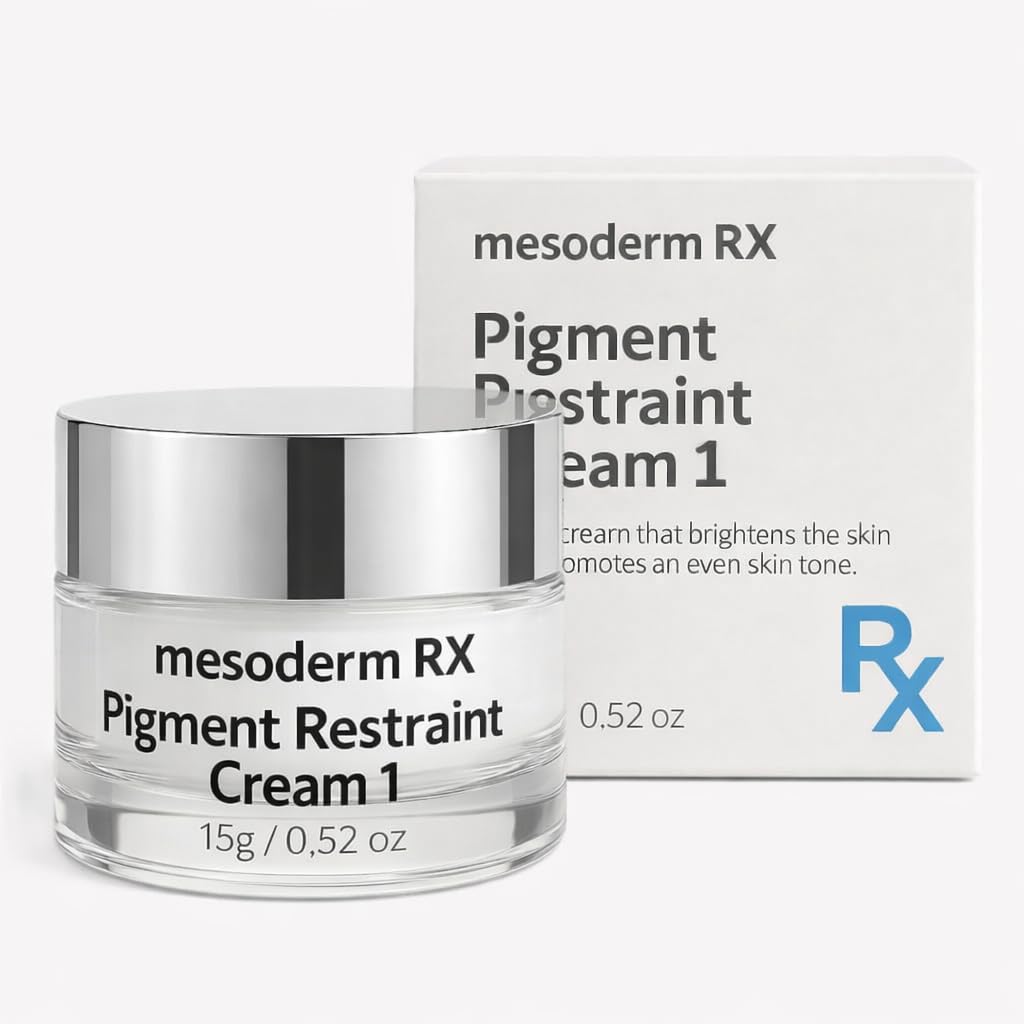
Featured Product
Pigment Restraint Cream 1 | Early-Stage Dark Spot & Tone Correction
Helps address mild pigmentation and uneven skin tone, promoting a clearer, smoother, and more balanced-looking complexion with regular use.
Shop Now →The Vicious Cycle of Fading and Failing
The most popular advice on dark spots is often the least useful. “Use lemon.” “Exfoliate more.” “Buy a stronger brightener.” That thinking is exactly why so many people spend months fading one mark while creating the next.
Hyperpigmentation is not stubborn by accident. Skin darkens after a trigger, then stays dark when the trigger continues. Sometimes that trigger is UV exposure. Sometimes it is acne, friction, hormones, or irritation from the treatment itself.
Why the usual approach backfires
A common pattern looks like this:
- The spot appears: After acne, sun exposure, or a rash, pigment production increases.
- The routine becomes aggressive: Scrubs, harsh peels, or DIY acids create more inflammation.
- The barrier weakens: Skin becomes reactive, dry, or stinging.
- Pigment lingers: Melanocytes stay activated, especially in skin that pigments easily.
That cycle is especially relevant because hyperpigmentation is significantly more prevalent among individuals with darker skin types, which helps explain the heavy reliance on over-the-counter home treatment options discussed in the Journal of Cosmetic Dermatology review on topical options and market demand.
The correction many individuals require is not a harsher product. It is a system. One part removes pigmented surface cells. One part slows new pigment formation. One part speeds renewal. One part protects the skin from getting darker again.
Treating dark spots is less about bleaching skin and more about interrupting the pigment cycle without provoking new inflammation.
That is the difference between temporary brightening and real correction. If you understand the mechanism, product choice becomes much simpler. If you do not, every new bottle looks promising and most routines fail for the same reason.
Understanding the Biology of Discoloration
Hyperpigmentation is excess melanin in the skin. Melanin itself is not the problem. It is a normal protective pigment made by specialized cells called melanocytes. The problem begins when those cells are pushed into overproduction or when pigment is deposited unevenly.

What creates a dark spot
Melanocytes sit in the epidermis and manufacture melanin through a process called melanogenesis. One of the key control points in that pathway is tyrosinase, the enzyme that helps switch pigment production on.
When the skin encounters a trigger, melanocytes respond. They package pigment into melanosomes and transfer that pigment into surrounding skin cells. If the signal is strong enough or repeated often enough, the area looks darker than the skin around it.
The main triggers are straightforward:
- UV exposure: Sunlight tells skin to produce more melanin.
- Inflammation: Acne, eczema, picking, burns, and harsh treatments can leave pigment behind.
- Hormonal signaling: This is a major driver in melasma.
- Mechanical stress: Friction and repeated rubbing can sustain discoloration on body areas.
For a broader clinical primer on pigment patterns and causes, see this overview of what hyperpigmentation is, its causes, and how to treat it effectively.
Not all hyperpigmentation is the same
Treating every dark spot as if it were identical is a major mistake. The cause shapes the plan.
| Type | Typical trigger | Pattern | Treatment reality |
|---|---|---|---|
| PIH | Acne, rash, injury, irritation | Individual marks where inflammation occurred | Often responds well when inflammation is controlled |
| Sun spots | Chronic UV exposure | More defined spots on exposed areas | Requires strict photoprotection and turnover support |
| Melasma | Hormones plus UV and visible light triggers | Patchy, symmetrical discoloration | Harder to manage, often relapses |
Depth matters
Some pigment sits more superficially in the epidermis. That usually responds better to home care. Deeper pigment is slower to shift and may look gray-brown rather than tan-brown.
This is why one person gets fast improvement with a mild routine and another sees very little change despite “strong” products. They may not have the same kind of pigmentation at all.
Dark spots are a final appearance, not a diagnosis. The trigger, depth, and degree of inflammation determine what will work.
Once that is clear, the next problem becomes obvious. Most home routines fail because they treat hyperpigmentation like a stain to scrub off, not a process to interrupt.
Why Most At-Home Hyperpigmentation Treatments Fail
The skin usually tells you why a routine is failing. It gets tight. It stings. It turns red. New marks appear after every breakout. People often interpret that as “purging” or “the product working.” In pigment treatment, it usually means the opposite.

Failure point one: treating pigment with irritation
A dark mark from acne is often post-inflammatory hyperpigmentation. If you then attack it with rough scrubs, undiluted acids, or repeated peels, you create more inflammation on top of an inflammatory condition.
That is why so many “fast fix” methods backfire.
The risks of DIY treatment are not theoretical. Lemon juice can cause phytophotodermatitis, leading to burns or worsened pigmentation with UV exposure. Apple cider vinegar’s acidity, around pH ~2-3, can disrupt the skin barrier and increase inflammation. Dermatologist reviews also indicate that 20-30% of hyperpigmentation cases in sensitive skin worsen with unguided DIY acids, as noted in this review of home remedies for pigmentation and their risks.
Failure point two: chasing one ingredient
People often build an entire routine around one active. Usually it is vitamin C, niacinamide, a retinol, or a single acid toner. That can help, but hyperpigmentation develops through multiple pathways. One ingredient may address one part of the process while leaving the others untouched.
A few examples:
- Using only an antioxidant: Helpful for environmental stress, but weak if dead pigmented cells are not turning over efficiently.
- Using only an exfoliant: Surface discoloration may brighten, but active pigment production continues.
- Using only a retinoid: Renewal improves, but new pigment still forms if there is no melanin control and no rigorous sun protection.
Failure point three: ignoring the barrier
The skin barrier dictates how much treatment you can tolerate. If the barrier is compromised, almost any brightening routine becomes inflammatory. Once inflammation is ongoing, melanocytes stay active.
People with sensitive skin run into this constantly. They are not “bad at skincare.” They are overloading a barrier that cannot support the routine being used.
A better framework is simple:
- Calm the skin enough to tolerate treatment
- Use leave-on actives with a defined role
- Protect the skin every day
- Adjust frequency before adjusting strength
Failure point four: inconsistency with the one step that matters most
Most home pigment routines fail at sunscreen. Not because people never apply it, but because they use too little, skip reapplication, or wear brightening actives at night and then expose sensitized skin the next day.
This creates a frustrating pattern. The routine lightens skin incrementally, then daily UV exposure reactivates melanogenesis. The person concludes that “nothing works.” In reality, the treatment and the trigger are running at the same time.
If a brightening routine is not paired with disciplined UV protection, the skin is being treated and retriggered in the same week.
Failure point five: using products in a biologically incoherent way
The order and timing matter.
Retinoids on damp skin can hit too hard for some users. Strong acids and retinoids stacked together can push sensitive skin into chronic irritation. Spot treating without addressing full-face inflammation often leaves the surrounding skin reactive and uneven.
This is why random routines feel busy but do not perform. They are collections of products, not protocols.
What works is more methodical. Exfoliate with intent. Use turnover agents at a sustainable pace. Block new pigment formation. Guard the skin from UV every day. That is the structure that consistently produces change.
The Pillars of a Successful Pigment-Correcting Regimen
Hyperpigmentation does not respond best to a “hero” product. It responds to a regimen that handles pigment from several angles at once. That means removing existing discolored cells, slowing new melanin production, controlling inflammation, and preventing retriggering.

Exfoliation and desquamation
Pigment that sits in the upper skin layers fades faster when cell turnover is supported properly, which is why AHAs, BHAs, and PHAs matter.
AHAs such as glycolic acid help detach dull, pigmented surface cells. BHAs are useful when breakouts and clogged pores are part of the pigment story. PHAs can be useful when skin is reactive but still needs gentle resurfacing.
The key trade-off is straightforward. More exfoliation does not automatically mean better fading. Overuse can create the very inflammation that keeps pigment active.
One clinically relevant detail: gentle leave-on glycolic acid has evidence for improving discoloration and texture, with some formulations showing effectiveness in reducing discoloration over several months.
A practical example of this category is the AHA and BHA product guide from Mesoderm RX, which reflects the basic idea that resurfacing works best when acids are used as part of a broader pigment plan rather than as a stand-alone fix.
Tyrosinase inhibition and melanin control
This is the pillar people skip most often. If you do not interrupt melanin synthesis, skin keeps producing fresh discoloration while you are trying to clear old pigment.
Niacinamide is one of the most useful over-the-counter options because it is well tolerated and works without the harshness people often associate with “lightening” products. In a double-blind, placebo-controlled study, niacinamide applied twice daily significantly reduced the size of hyperpigmented spots over several weeks.