


Best Skin Lightening Cream for Dark Spots: A Clinical Guide
Most advice on dark spots starts in the wrong place. It starts with shopping.
People search for the best skin lightening cream for dark spots as if one jar can override biology, friction, inflammation, hormones, acne, and daily light exposure. That's why so many routines underperform. The issue usually isn't that you haven't found a “strong enough” product. It's that the treatment plan doesn't match the kind of pigment you have, or it ignores the triggers that keep telling your skin to make more melanin.
A dark spot is not a stain sitting on top of the skin waiting to be scrubbed off. It's a signal-driven pigment problem. If you treat it like a surface problem only, you get partial fading, rebound discoloration, irritation, or all three.
Why Your Search for a Lightening Cream Likely Failed
The most popular advice is also the least useful. Buy a brightening cream. Apply it to the spot. Wait.
That approach fails because hyperpigmentation is a process, not a patch. The skin doesn't create excess pigment by accident. Melanocytes respond to triggers. UV exposure is one trigger. Visible light can be another. Inflammation from acne, picking, shaving, eczema, friction, or aggressive exfoliation is another. Hormonal signaling matters too, especially in melasma.
If you use a fade cream without controlling the trigger, you're pressing the brake while the skin is still hitting the accelerator.
That's why people often cycle through vitamin C, kojic acid, exfoliating acids, and random “whitening” products and say nothing works. Some of those ingredients can work. But they won't work well in isolation, and they won't work predictably if the diagnosis is wrong.
A cream can't fix the wrong diagnosis
Three people can all say “dark spots” and mean completely different problems:
- Post-inflammatory hyperpigmentation after acne or irritation
- Sun spots that formed after cumulative UV exposure
- Melasma driven by light and hormonal factors
These don't behave the same way. They also don't respond the same way.
Clinical reality: If the trigger remains active, even a well-formulated product can look weak.
The better question isn't “What's the strongest cream?” It's “What type of pigment is this, what keeps it active, and which pathway should I target first?” If you're sorting through options for a skin discoloration cream guide, that distinction matters more than marketing language on the label.
Understanding the Root Cause of Dark Spots
Hyperpigmentation starts with melanocytes, the pigment-producing cells in the skin. Their job is to make melanin, the pigment that helps determine skin color and helps protect skin from injury caused by light exposure. The problem begins when these cells receive repeated signals to make or distribute more pigment than the surrounding skin.

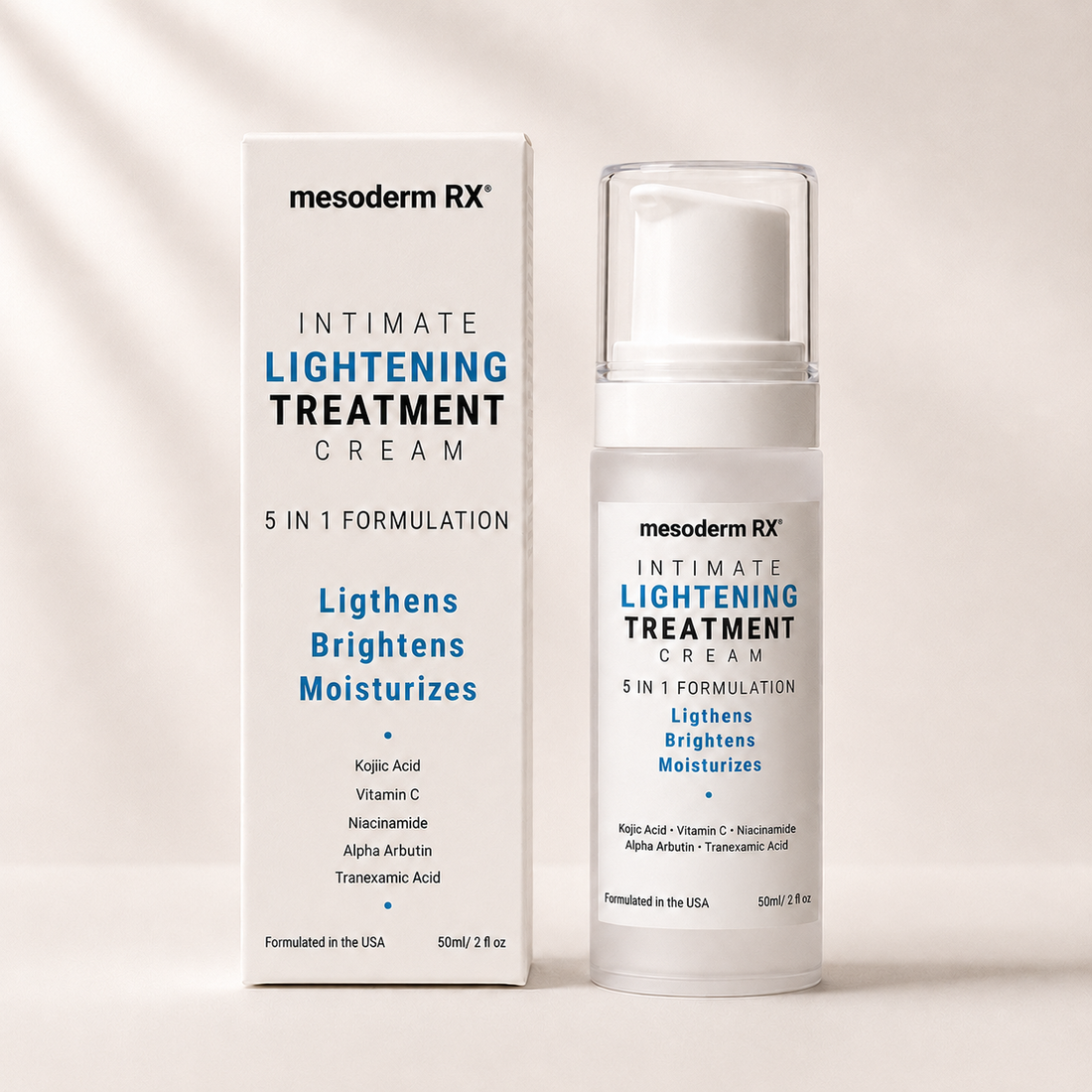
Featured Product
Intimate Skin Lightening Cream for Under Arms, Inner Thighs & Private Area
WHITENS AND LIGHTENS FOR A SMOOTHER, EVEN COMPLEXION.
Shop Now →How pigment is produced
A useful way to think about it is this. Melanocytes are the factory. Tyrosinase is one of the key enzymes that keeps the assembly line moving. Melanin is the final product. When UV light, inflammation, or hormonal signaling stimulates the factory, pigment production rises. That pigment is then transferred into surrounding skin cells, where it becomes visible as uneven tone or a dark mark.
Treatment works best when it targets more than one part of that pathway:
- Reduce melanin production
- Limit pigment transfer
- Speed removal of pigmented surface cells
- Prevent new stimulation from light or inflammation
That's why single-ingredient routines often disappoint.
Not all dark spots are the same condition
Post-inflammatory hyperpigmentation, or PIH, follows injury or inflammation. Acne is a common cause, but so are ingrown hairs, rashes, burns, cosmetic procedures, picking, and friction. PIH often improves when you stop the trigger and use a formula that combines anti-inflammatory support with controlled exfoliation and pigment suppression.
Solar lentigines, commonly called sun spots, usually reflect cumulative light exposure. These tend to sit in predictable areas such as the cheeks, forehead, chest, shoulders, and backs of the hands. They often need a combination of pigment inhibitors and exfoliating support over time.
Melasma is more complicated. It's often symmetrical, tends to recur, and reacts strongly to light exposure. It can worsen even when people think they are being “careful,” because visible light also matters for many patients.
Treating melasma like a simple spot can backfire. It usually needs the most disciplined maintenance plan.
Why the market moved away from hydroquinone-only thinking
For years, hydroquinone was treated as the reference standard in the U.S. Dermatology sources describe it as the gold standard, but also note it is generally used short-term, often around 3 to 4 months, because of irritation and other risks. The FDA states that over-the-counter skin lightening products containing hydroquinone are illegal in the U.S., and it has received reports of serious adverse effects including rashes, facial swelling, and permanent skin discoloration called ochronosis. The same dermatologist review notes that a 2002 study found a 2% niacinamide sunscreen formula reduced melanosome transfer by 35% to 68%, which helps explain the shift toward hydroquinone-free, multi-action formulas for longer-term use (dermatologist review on dark spot correctors).
That shift matters because long-term pigment management usually requires consistency, not a short burst of aggressive bleaching.
A formula such as AHA + BHA + PHA Skin Brightening Serum 30ml fits the modern logic better than a one-note approach. Its listed ingredients include kojic acid plus glycolic, lactic, salicylic, and lactobionic acids, which makes sense mechanistically because hyperpigmentation often responds better when exfoliation and pigment control are handled together.
Common Failures in Treating Hyperpigmentation
Most treatment failure isn't mysterious. It usually comes from one of a few repeated mistakes.

Failure one is still the biggest one
People treat dark spots and then leave the skin unprotected. That cancels out progress.
The American Academy of Dermatology states that effective dark spot treatment begins with sunscreen. It recommends broad-spectrum, water-resistant SPF 30 or higher, and specifically notes that tinted sunscreen with iron oxide helps protect against visible light that can contribute to dark spots. The same guidance says sunscreen can both prevent new dark spots and help clear existing ones, and one expert review recommends reapplying every 2 hours outdoors (AAD guidance on fading dark spots).
If someone asks me why their brightening cream “stopped working,” this is one of the first places I look.
The usual pattern of treatment failure
- Wrong target: A product may be reasonable, but it's being used on melasma as if it were acne PIH, or on friction-related darkening as if it were a facial sun spot.
- Too much irritation: Over-exfoliation creates more inflammation. More inflammation can mean more pigment.
- Inconsistent use: Hyperpigmentation responds to steady signaling, not occasional application.
- Poor formulation strategy: A single active often can't cover production, transfer, turnover, and protection at the same time.
- Treating all body areas the same: Facial skin, underarms, inner thighs, and post-shave areas don't tolerate the same intensity.
Skin that stays inflamed won't lighten efficiently, no matter how many “brightening” products you layer on top.
What doesn't work well in practice
Here's a simple comparison clinicians think through all the time:
| Approach | What usually happens |
|---|---|
| Spot-treating without sunscreen | Existing pigment lingers and new pigment continues forming |
| Scrubbing or frequent peeling | Irritation rises, barrier function drops, marks can look darker |
| Chasing the strongest active | Short-term intensity, poor adherence, more sensitivity |
| Using one product for every body zone | Higher chance of irritation in delicate or friction-prone areas |
A daily protective product like Pigment Restraint Ultra High Sun Protection is relevant here because the product snapshot describes a fast-absorbing, non-greasy formula intended to protect against UVA, UVB, IR, and HEV-combination rays, which aligns with the practical need to keep exposure from undermining treatment.
Clinically Proven Ingredients That Work
The best skin lightening cream for dark spots usually isn't defined by one heroic ingredient. It's defined by whether the formula targets the pigment pathway from multiple angles.

The ingredients that suppress pigment production
Some ingredients work upstream by reducing melanin synthesis. Kojic acid, azelaic acid, and similar brightening actives earn their place through this mechanism. They're useful because they address the production side of hyperpigmentation rather than just helping old pigment shed away.
These ingredients are often more effective when paired with exfoliants or transfer-blocking agents instead of being used alone.
The ingredients that reduce pigment transfer
Niacinamide matters because hyperpigmentation isn't only about how much pigment is made. It's also about how pigment is transferred into surrounding skin cells. That's why niacinamide shows up so often in well-built dark spot formulas.
For readers comparing options, this overview of proven and natural ingredients for hyperpigmentation is useful because it frames ingredients by what they do, not by trend status.
The ingredients that speed visible clearing
Exfoliating acids and retinoids work downstream. They help move pigmented cells out of the upper layers of skin more efficiently.
The American Academy of Dermatology lists common OTC fade-product actives that can help fade existing spots, including azelaic acid, glycolic acid, kojic acid, retinoids, and vitamin C. In practice, this is why formulas that combine controlled exfoliation with pigment suppression often outperform formulas built around one antioxidant alone.
A short visual explanation helps here:
Why combination formulas usually win
Dermatology-oriented guidance indicates that combination formulas typically outperform single-actives because they attack hyperpigmentation through multiple pathways. Expert reviews note that visible improvement is commonly reported in 4 to 8 weeks with consistent use, while deeper pigmentation may require 3 to 6 months (dermatologist ingredient guide for dark spots).
That timeline is clinically sensible. Pigment doesn't disappear all at once. It has to be suppressed, transferred less efficiently, and then cleared gradually.
Treatment rule: If a formula only does one job, expect slower and less reliable results.
This is also why products designed for friction-prone body zones often use a broader active mix than a simple facial serum. Underarm Brightening Cream, Fade Dark Underarms in 30 Days is one example of that multi-pathway design. Its snapshot lists Tranexamic Acid, Kojic Acid, Arbutin, Niacinamide, Vitamin C, AHA, Azelaic Acid, and Hexylresorcinol, which reflects a more targeted approach for darkness linked to shaving, deodorant, and friction.
Targeted Solutions for Face Body and Intimate Areas
A common mistake is assuming the same routine should be used everywhere. It shouldn't. The face, body, underarms, bikini line, and inner thighs face different triggers and tolerate different levels of exfoliation.

Face needs control, not aggression
Facial hyperpigmentation often sits at the intersection of acne, UV exposure, visible light, and barrier irritation. That means the right facial routine is usually a serum-plus-protection system. Use a brightening formula with pigment-suppressing and exfoliating support, then maintain strict daily sunscreen use.
If your skin is reactive, lower the intensity before you increase the number of products. A calmer barrier usually responds better than a stripped one.
Body discoloration usually reflects friction and delay
On the body, darkening often develops in places that experience repeated rubbing, shaving, follicular irritation, or slow post-inflammatory recovery. Knees, elbows, chest, back, underarms, and inner thighs don't always respond to the same format that works on the face.
When treating larger areas, leave-on body formulas and targeted creams make more sense than trying to spot-correct with a harsh facial acid. Larger areas benefit from consistency and tolerability.
Sensitive and intimate areas need a different chemistry
For delicate zones, gentler actives matter more than brute strength. Independent formulation guidance notes that PHAs provide gentler surface exfoliation than AHAs, and that undecylenoyl phenylalanine inhibits a melanin-stimulating pathway and may visibly lighten dark areas within 1 to 6 weeks of daily use (formulation guidance on skin-brightening systems).
That matters because underarms, bikini lines, and inner thighs are often dark for mixed reasons:
- Shaving-related irritation
- Friction from clothing or skin-to-skin contact
- Occlusion and moisture
- Residual post-inflammatory pigment
Those areas usually do better with brightening systems designed for sensitivity rather than a repurposed facial peel.
For practical guidance on this category, a resource on how to lighten intimate areas is helpful because it addresses the biology of friction-prone skin rather than treating the concern as cosmetic trivia.
Delicate skin rarely needs the most aggressive formula. It needs the most appropriate one.
Achieving and Maintaining Clear Even-Toned Skin
Clearer skin tone comes from a protocol, not a miracle product. First identify the pigment type. Then remove or control the trigger. Then use a formula that addresses pigment production, transfer, and turnover. Finally, protect the result every day so the skin isn't pushed back into the same cycle.
That's the definitive answer to the search for the best skin lightening cream for dark spots. The best option is the one that fits the biology of the spot, the sensitivity of the area, and the discipline of the routine.
People fail when they treat hyperpigmentation like a stain. They succeed when they treat it like a signaling problem.
Maintenance matters just as much as correction. Even after visible fading, skin with a history of melasma, acne PIH, shaving irritation, or friction-related darkening remains prone to recurrence. The routine has to stay smart after the spot lightens.
Mesoderm RX offers one practical option for people who want a hydroquinone-free, actives-focused approach to uneven tone across the face and body. If you want to build a more targeted routine around pigment control, exfoliation, and daily protection, browse the formulations at Mesoderm RX.