


Best Body Sunscreen for Everyday Use That Actually Works
The label number is not the whole story for body sunscreen. The core challenge is coverage and compliance, because the product that looks strongest on paper can fail fast when it's under-applied, hard to rub in, greasy on the body, or impossible to live with on busy mornings. That's why the best body sunscreen for everyday use is the one that protects the skin you expose, in a texture you'll wear again tomorrow.
Daily sunscreen use has real evidence behind it, but the benefit only matters when the formula gets on the skin in the right amount and stays there long enough to work. Public guidance also keeps coming back to the same baseline, broad-spectrum SPF 30+ on skin that isn't covered by clothing, with reapplication during meaningful exposure Stanford Medicine, FDA broad-spectrum guidance, AAD label guidance. The part most shoppers miss is that the number only means something if the bottle is practical enough to use in a full-body amount.
Why Everyday Body Sunscreen Fails in Real Life
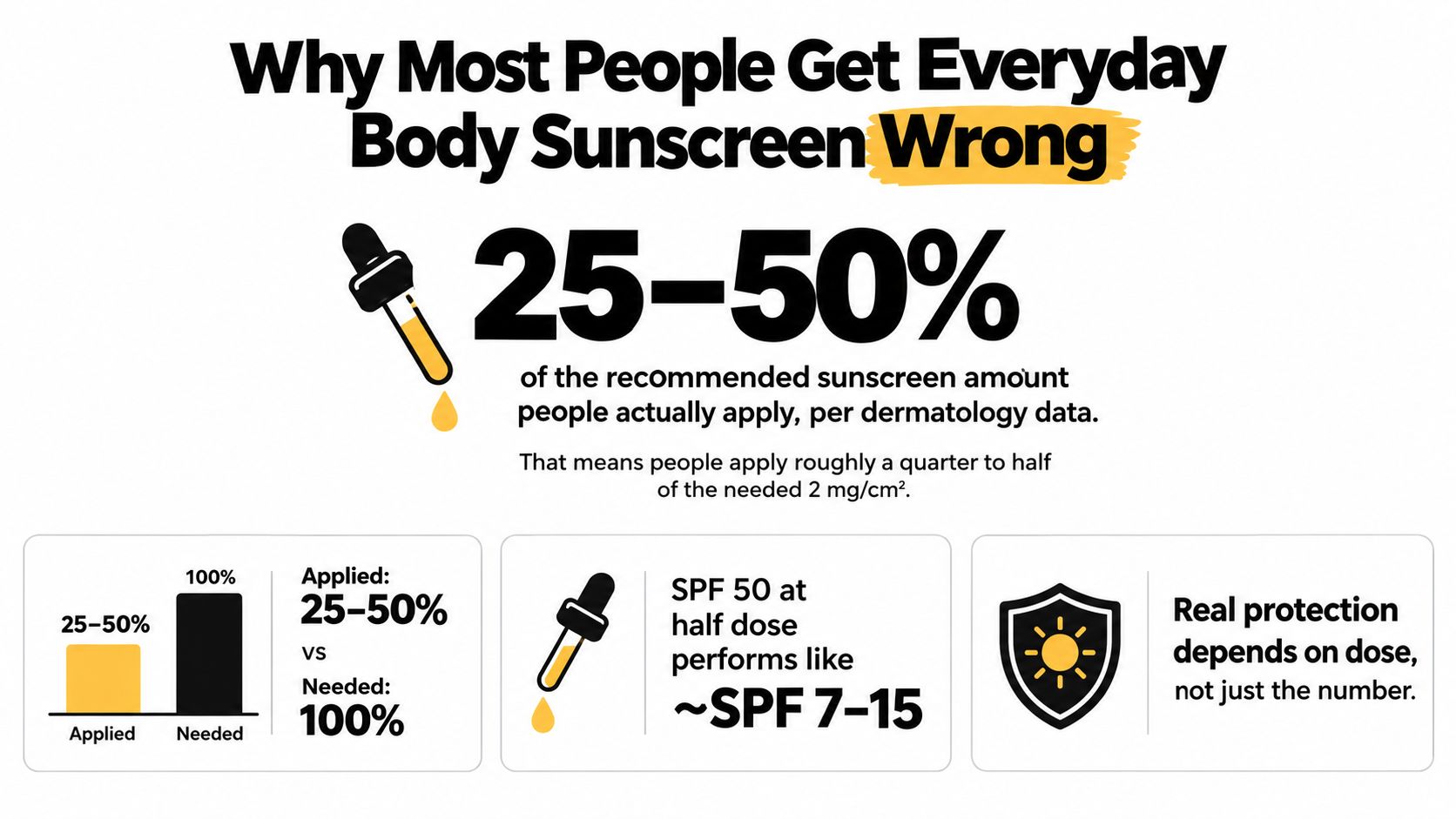
The weak point in daily body sunscreen is rarely the label number. It is whether enough product reaches every exposed area, spreads evenly, and feels acceptable on an ordinary weekday. Users often under-apply, skip awkward zones, or abandon formulas that feel thick, greasy, chalky, or difficult to layer under clothing.
Dose beats fantasy SPF
The SPF on the bottle comes from a standardized laboratory application. Real-world users often apply much less, so protection can fall sharply even when the product carries a high number. A dense lotion, slow-drying film, or strong white cast encourages the exact behavior that undermines the label claim.
Practical rule: if a body sunscreen feels unpleasant enough that you instinctively use half the amount, it is an occasional product, not a reliable daily one.
Coverage also fails at the margins. Ears, the back of the neck, tops of the feet, behind the knees, and the mid-back are easy to miss. Body skin presents more surface area than the face, so a small delay or skipped zone can leave a meaningful patch unprotected.
The useful formula is the one you can distribute quickly and evenly. Chemical filters may offer a thinner, more transparent finish, while mineral formulas can suit shoppers who prefer zinc oxide or find some chemical filters irritating. Either choice fails if the texture makes a full-body application unrealistic.
Wearability is part of protection
Greasy films, pilling under clothing, and visible residue create friction. You may apply less, rush the job, or stop using the product outside holidays. That is a protection failure, not a minor cosmetic complaint.
The best body sunscreen for everyday use supports three behaviors: adequate dose, fast spreadability, and repeat use. Choose a finish you can tolerate on workdays, then apply it generously enough to cover exposed skin without treating SPF as a substitute for coverage.
How UV Actually Damages Skin Beyond the Burn
UV damage isn't only about redness after a beach day. On body skin, the bigger problem is the slow accumulation of inflammation, pigment signaling, and collagen damage from repeated exposure that never feels dramatic in the moment. That's why daily body sunscreen matters on errands, commutes, and cloudier days too.
UVB burns, UVA ages, visible light can worsen pigment
UVB is the shorter-wave radiation most closely tied to visible burning and direct DNA injury. UVA penetrates deeper, drives oxidative stress, and pushes the skin toward photoaging and persistent pigment problems. In darker or hyperpigmentation-prone skin, that deeper oxidative load can matter even when there's no visible burn.
Visible light adds another layer for pigment-prone skin. It doesn't always announce itself with redness, but it can still aggravate melanin activity and make uneven tone harder to settle. For that reason, body sunscreen for daily use isn't just a beach filter, it's a shield against the exposures that steadily worsen tone over time.
The condition also matters. Melasma, post-inflammatory hyperpigmentation, and ordinary sun spots are not the same thing, and they don't behave the same way. Melasma is a pigment disorder that tends to persist and flare, PIH follows inflammation or injury, and sun spots reflect cumulative UV damage. If the skin is reactive, inflamed, or already uneven, the daily body routine has to protect against both UV and the irritation that can trigger more pigment.
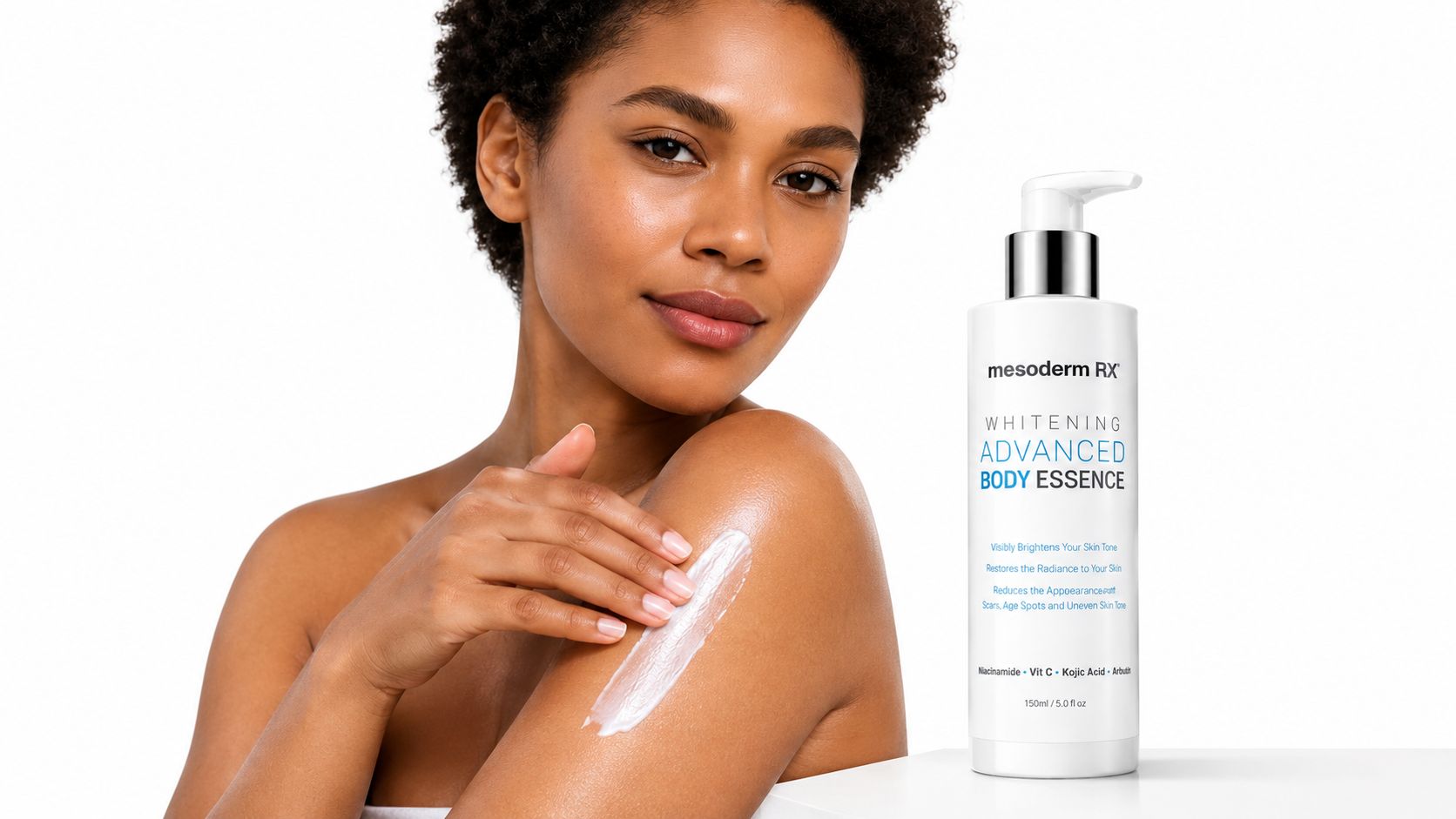
Whitening Advanced Body Essence Lotion is positioned as a body lotion for brightening and evening tone, but it should still sit under a real UV strategy rather than replace one. The logic is simple, treat pigment-prone skin as a skin-biology problem first, not just a cosmetic one.
SPF, Broad-Spectrum, and PA Explained in Real Numbers
A sunscreen label only helps when its measurements translate into enough product on the body. SPF primarily reflects UVB protection, while broad-spectrum indicates coverage against both UVA and UVB. For everyday exposed skin, choose broad-spectrum SPF 30 or higher. Add water resistance when sweat, swimming, or clothing friction could remove the film, as outlined in FDA sunscreen basics and AAD label guidance.
What the numbers really mean
Under test conditions and at the tested dose, SPF 15 blocks about 93% of UVB, SPF 30 about 97%, and SPF 50 about 98% Cancer Council Australia fact sheet. Those figures describe a controlled application, not the thin layer usually spread across arms, legs, chest, and shoulders. The practical advantage of a higher label is the extra margin it provides when coverage is imperfect.
PA is a UVA rating shown on some products, using plus signs to indicate the level stated on the label. Treat it as supporting information, not a substitute for confirmed broad-spectrum coverage.
| Label | What it measures | Everyday compliance decision |
|---|---|---|
| SPF | UVB protection under standard testing | SPF 30+ is the floor. Choose SPF 50 when you tend to under-apply or need more margin over large areas FDA |
| Broad-spectrum | UVA and UVB coverage | Required for routine body exposure, especially when uneven tone is a concern |
| Water resistance | How long the film holds in water | Choose a product tested for 40 or 80 minutes when sweating or swimming, then reapply as directed FDA |
The best label is the one you can apply generously and repeat. A product discussed in this broad-spectrum SPF guide makes sense only when its texture supports full-body coverage and regular use.
Mineral vs Chemical vs Hybrid Filters for Sensitive Skin
The filter choice is where most “best body sunscreen” lists get lazy. For sensitive, acne-prone, or hyperpigmentation-prone skin, the best choice is not universal. It depends on whether the skin needs the gentlest possible filter stack, the most invisible finish, or a compromise between the two.
Mineral first when the skin is reactive
Mineral sunscreen uses zinc oxide or titanium dioxide. These filters sit on the skin and are often the first choice for reactive or post-procedure bodies because they're usually easier to tolerate. The trade-off is obvious, they can leave a cast and take more effort to rub in evenly.
Chemical filters absorb UV and tend to feel lighter and more invisible. Modern options can wear beautifully, but the wrong formula can still irritate. If a body product includes filters that sting or bother your skin, it won't stay in rotation, and a brilliant INCI list won't save it.
Hybrid formulas combine mineral and chemical filters to balance tolerance with wearability. That combination often makes the most sense when the main bottleneck is compliance. If the product feels good enough to apply to arms, chest, legs, and shoulders without a fight, the skin gets more consistent protection.
| Filter Type | Active Filters | Pros | Cons | Best For |
|---|---|---|---|---|
| Mineral | Zinc oxide, titanium dioxide | Often well tolerated, good for reactive skin | Can cast, feel thicker | Sensitive, post-procedure, redness-prone skin |
| Chemical | Avobenzone, octisalate, octocrylene, homosalate, modern UVA filters | Lighter feel, easier spread | Some formulas irritate or sting | People who want an invisible finish |
| Hybrid | Mineral plus chemical | Balances feel and tolerance | Formula quality varies widely | Daily body users who need wearability |
The filters to seek on body SKUs are the modern, broad-spectrum options that fit your skin tolerance. If your skin gets reactive easily, start mineral-first. If compliance is the issue, a well-built hybrid is often the better move.
How to Match Texture and Finish to Your Skin Type
Texture is not a minor preference on body sunscreen, it's the difference between finishing the bottle and abandoning it in a drawer. A formula can be technically excellent and still fail if it feels heavy on your shoulders, tacky on your calves, or impossible to reapply after lunch. Daily body protection has to fit climate, skin type, and how much friction your day creates.
Match the format to the skin, not the trend
Lotions are the default when you want full-body coverage and a balanced finish. Milks spread quickly and usually feel lighter, which makes them useful on larger areas. Gels are the best fit when shine is the enemy, especially for oily or hairy skin.
Sprays can help with reapplication on hard-to-reach areas, but they're not a trustworthy primary method for full-body protection because coverage is too easy to miss. Sticks work for targeted touch-ups on shoulders, chest, and hands. Creams are the richest option and can make sense in dry climates or for mature skin that wants more emollience.
If you want a useful pairing guide, a sailing clothing resource like PADL's Florida sailing apparel guide is a practical reminder that sunscreen works best when it's coordinated with what covers the skin. For dry skin specifically, a body formula can also be paired with hydrating sunscreen guidance for dry skin, because texture and moisture support affect adherence.
Wear-test rule: if you can apply it to arms and legs, wait a few minutes, pull on clothes, and still feel comfortable one hour later, the texture is likely good enough for daily use.
For mature skin, a serum-like supporting product such as Advanced Triple Action Age-Defying Serum can sit in the broader routine, but it doesn't replace sunscreen. The sunscreen still has to carry the UV load.
The Everyday Application System That Works
Daily body sunscreen is a coverage-and-compliance problem. A technically strong formula cannot protect skin where the film is thin, skipped, or rubbed away. Use a repeatable process: apply enough, cover predictable gaps, let the layers settle, and reapply while exposure continues.

Use the right amount every time
An average adult body needs about 35 mL, or roughly seven teaspoons, for full coverage. Apply it about 20 minutes before going outside, as outlined in the Cancer Council Australia fact sheet. Divide the amount across body areas rather than spreading one small pump over everything. That makes missed coverage easier to spot and reduces the temptation to stretch the bottle.
Reapply every 2 hours during sustained exposure, and sooner after swimming, sweating, or towel-drying, following FDA sunscreen guidance. For a practical explanation of timing and exposure, see how often to reapply sunscreen. Clothing friction can also remove product from shoulders, waistbands, and other high-contact areas. Check those zones instead of assuming the morning layer remains intact.
Cover the miss zones
Apply deliberately to the ears and hairline, back of neck and chest, hands and feet, and behind the knees and inner arms. These areas are easy to overlook, frequently exposed, or repeatedly rubbed. The AAD label guidance is useful when checking whether a product provides the labeled broad-spectrum protection.
Layering affects coverage. Apply body actives such as AHAs, BHAs, niacinamide, or vitamin C to clean skin first. Let them absorb, add body lotion if needed, then apply sunscreen last. A brief pause between layers helps prevent pilling and leaves the protective film more even.
Water, sweat, and friction demand stricter application on outdoor trips. The guide how to avoid sunburn snorkeling illustrates why exposed skin needs checking after water activity. If the bottle runs low, replace it rather than applying less. Under-application compromises the protection you bought.
Everyday Body Sunscreen Myths That Are Sabotaging You
A lot of sunscreen advice sounds sensible until you look at how the skin behaves. The myths are usually too simple for a body routine that has to work across clothing, sweat, pigment risk, and long days away from home. The fix is to swap each myth for a behavior that holds up in real life.
The biggest mistakes are behavioral
Myth 1, SPF 100 is dramatically better than SPF 50. The actual difference is much smaller than most shoppers assume, while the cosmetic burden can be much higher. For body use, a formula you'll apply well beats a heavier one you'll avoid.
Myth 2, dark skin doesn't need sunscreen. Every skin tone can take UV damage, and pigment-prone skin can be especially sensitive to ongoing UVA exposure. That's why broad-spectrum coverage matters even when the skin doesn't burn visibly.
Myth 3, SPF in lotion or makeup is enough. It usually isn't, because most of those products are worn too lightly and don't cover the body's missed zones. They're adjuncts, not a replacement for a real body sunscreen.
Myth 4, one morning application lasts all day. Sweat, clothing friction, and time all wear the film down. Reapplication is part of the system, not a sign that the first application failed.
The replacement behavior is boring, but it works, choose broad-spectrum SPF 30+ or higher, apply enough, and reapply when exposure continues.
Building a Brightening Body Routine Around Daily SPF
Tone correction without UV control is a dead end. If the skin is being hit with ongoing UV exposure, the pigment pathway stays active and brightening products have to keep fighting the same fire. The smarter approach is to make sunscreen the anchor and use treatments to support the result, not to chase it in isolation.
Use actives to support tone, not replace protection
Start with clean skin in the morning, add a hydrating layer if you need one, then put treatment actives under sunscreen rather than over it. For body tone work, niacinamide and azelaic acid are common choices because they support a calmer-looking surface, while AHAs and BHAs belong more in the evening or on limited nights per week. Sunscreen then becomes the daytime shield that keeps new discoloration from building back up.
A mineral SPF 50 with broad-spectrum coverage fits this logic well for hyperpigmentation-prone skin because it's a protective anchor, not a standalone cosmetic step. Pigment Restraint Ultra High Sun Protection is the kind of product positioned for that role, but only if the rest of the routine stays disciplined. Use enough product, let it set, and keep it on the skin during the exposures that drive pigment.
Avoid stacking strong actives in ways that make the skin sting or overreact, especially if the body is already inflamed or dry. If the barrier is irritated, pigment can rebound. The routine has to reduce triggers, not create new ones.
The routine that earns consistency
- Cleanse or rinse the skin.
- Apply treatment actives if you use them.
- Add moisturizer if the skin needs it.
- Apply enough broad-spectrum sunscreen to exposed areas.
- Reapply during real exposure.
That system is plain, but it's the one that works when the goal is fewer dark spots, steadier tone, and less daily UV stress.
Mesoderm RX focuses on high-potency, minimal-additive skincare for dark spots, uneven tone, dryness, and visible signs of aging, including body products and daily UV protection. If you want a routine built around brightening support and serious sun defense, visit Mesoderm RX and look for formulas that fit the way you wear body sunscreen every day.