


Best Anti Aging Serum for Men: A Clinical Guide
Most advice on the best anti aging serum for men is too blunt to be useful. It treats male skin as if the only difference is tolerance for a stronger formula. That's lazy thinking. Men don't just need “more potent” skincare. They need a strategy that accounts for thicker skin, more oil, larger pores, regular shaving, and the fact that visible aging often shows up as both wrinkles and uneven tone.
That changes product choice completely. A serum that performs well on paper can still fail on a male routine if it stings after shaving, disrupts the barrier, or ignores pigmentation caused by sun exposure and post-inflammatory marks. A good formula has to do more than soften lines. It has to support structure, manage irritation risk, and fit into a routine a man will keep using.
Why "For Men" on a Serum Label Actually Matters
The reflexive take is that “for men” on a skincare label is just marketing. Sometimes it is. But in anti-aging treatment, that assumption can miss the underlying clinical issue.
Male facial skin doesn't age in exactly the same way, and it doesn't respond well to the same lazy product design. Men often deal with a combination of thicker skin, more visible pores, higher oil output, and chronic low-grade irritation from shaving. Those factors affect how a serum penetrates, how it feels, and whether the user keeps using it long enough to get results.
Biology changes the formulation brief
A targeted men's anti-aging serum should be built to do three things well:
- Address structural decline: Wrinkles, laxity, and loss of contour need ingredients that act below the surface, not just surface hydration.
- Handle textural stress: Roughness, visible pores, and uneven tone are common in male skin and often get worse when cleansing and shaving are too aggressive.
- Respect barrier disruption: Daily friction from razors makes irritation far more likely with retinol, acids, and some vitamin C formats.
That's why the better formulas don't behave like generic moisturizers with a masculine fragrance added.
Biotherm positions Force Supreme Blue Serum specifically for men's aging skin with Pro-Retinol, Pro-Xylane, collagen peptide fractions, and Life Plankton. In brand product testing, it reported over 90% approval across 10 aging signs, plus a 20% increase in firmness, 22% increase in elasticity, and 22% reduction in wrinkles on its men's anti-aging product page.
Clinical takeaway: “For men” matters when it reflects how the formula targets wrinkle depth, firmness, texture, and tolerability. It doesn't matter when it only changes branding.
If a serum ignores shaving stress and pigmentation, it's incomplete. If it relies on one hero ingredient and calls that anti-aging, it's underbuilt.
Understanding How Male Skin Loses Firmness and Clarity
Aging in male skin isn't just “less collagen.” That shorthand leaves out the mechanisms that shape what you see in the mirror: rougher texture, a softer jawline, patchy tone, and skin that looks tired even when lines aren't yet severe.

Structural aging is only half the story
Firm skin depends on collagen, elastin, and water balance working together. When collagen support weakens and elastin becomes less resilient, the skin doesn't rebound as well. Hyaluronic acid loss adds another layer because dehydrated skin looks flatter, rougher, and more lined.
Men often miss this because they focus on depth of wrinkles alone. But the more accurate visual read is this: skin starts to look less crisp. Contours blur. Pores stand out more. Texture gets uneven. If you want a useful refresher on what helps with firmness and lines, this guide on what works to firm skin and reduce wrinkles breaks down the logic clearly.
Oxidative stress and glycation change how skin behaves
Sun, pollution, and daily exposure to environmental stress increase oxidative damage. That stress pushes skin toward dullness, roughness, and visible aging. Then there's glycation, which is less discussed but relevant. In simple terms, sugar byproducts can stiffen collagen fibers, making the support network less flexible. Skin doesn't just get thinner with age. It can also get more rigid and less responsive.
That's one reason some men develop a tired, coarse look before they think of themselves as “aging.”
Clarity problems are aging problems too
Pigmentation gets treated like a separate issue, but clinically it belongs in the anti-aging conversation. Uneven tone often comes from melanin dysregulation, where inflammation and UV exposure increase pigment production. The enzyme tyrosinase plays a central role in that process. When it's overactive, dark spots and blotchy areas become more visible.
This matters for men with post-acne marks, sun spots, or discoloration around the cheeks, temples, and forehead. A serum that only targets wrinkles is incomplete if the face still looks patchy or photoaged.
Most men don't need a harsher serum. They need one that addresses firmness, texture, and pigment at the same time.
Common Mistakes That Sabotage Anti-Aging Results
Bad outcomes usually don't come from a total lack of effort. They come from using the right category the wrong way.

Mistake one is treating irritation like proof it's working
Men commonly overestimate what their skin can tolerate. That problem gets worse when shaving is part of the routine. The barrier is already being stressed by friction, water exposure, cleansers, and aftershaves. Then a high-strength retinoid or exfoliating acid goes on top.
That's a predictable route to redness, peeling, and stinging. Dermatology guidance discussed in WebMD's retinoid overview advises starting retinoids slowly, a few nights per week, and buffering with moisturizer because those side effects are common and often cause people to stop treatment.
Mistake two is confusing more product with better treatment
A serum isn't a performance category by itself. Men often pile on acid toner, vitamin C, retinol, scrub, and aftershave in the same routine, then wonder why their skin stays inflamed. Over-application doesn't improve efficacy. It raises the chance of barrier disruption.
When the barrier is inflamed, several things happen at once:
- Redness increases: Skin looks older because inflammation exaggerates texture and tone irregularity.
- Water loss rises: Fine lines look worse when the surface is dehydrated.
- Pigment can linger: Inflammatory signaling can keep discoloration visible longer, especially after acne or shaving bumps.
If discoloration is part of the concern, a pigment-focused product may make more sense than increasing retinol frequency. Pigment Restraint Cream is described as an at-home dark spot and melasma treatment that works by inhibiting melanin at its source while supporting barrier repair, which is a more logical fit for men whose main complaint is uneven tone rather than wrinkle depth alone.
Mistake three is trying to repair damage without preventing new damage
This is the biggest strategic failure. Men buy an anti-aging serum, use it at night, and ignore sun protection during the day. That cancels out progress. A treatment serum can push turnover, brighten tone, and support collagen. It cannot outwork daily UV exposure.
What usually fails: aggressive actives on a disrupted barrier, inconsistent use, and no protection against the damage that caused the problem.
A routine only works when it's tolerable enough to continue and protective enough to stop new injury.
The Active Ingredients That Deliver Verifiable Results
The best anti aging serum for men isn't built around hype ingredients. It's built around ingredient classes that act on different biological pathways. That distinction matters because aging in men rarely shows up as one isolated issue. It's usually a mixed picture of lines, rough texture, enlarged pores, dullness, and photoaging.

Healthline's review of anti-aging serum ingredients notes that a technically strong formula should prioritize retinoids, vitamin C, peptides, and acids because they act on different aging pathways, with retinoids increasing turnover, vitamin C supporting collagen and brightness, peptides supporting structure, and acids refining texture and tone in its ingredient breakdown. That's the right framework. If a formula only hydrates, it may make skin look better temporarily, but it won't address the underlying pattern.
What each ingredient class actually does
| Ingredient Class | Primary Function | Look For On The Label |
|---|---|---|
| Retinoids | Support cell turnover and reduce the look of wrinkles over time | Retinol, retinal, retinoid derivatives |
| Vitamin C and antioxidants | Help brighten tone, support collagen, and defend against oxidative stress | Vitamin C, ferulic acid |
| Peptides | Support skin structure and firmness | Peptides, collagen-supporting peptide blends |
| Hyaluronic acid and hydrators | Improve hydration and temporary plumping | Hyaluronic acid, glycerin |
| Exfoliating acids | Refine rough texture and uneven tone | Glycolic acid, other exfoliating acids |
Retinoids for turnover and wrinkle control
If lines and rough texture are central, retinoids belong in the plan. They increase epidermal turnover and help improve the appearance of wrinkles over time. But they are not a free pass to use the harshest formula available. In men, especially those who shave often, poor tolerability is one of the main reasons treatment fails.
Retinoids also need context. They're stronger at night, and they need barrier support around them.
Vitamin C for brightness and oxidative stress
Vitamin C matters when the face looks sallow, sun-marked, or blotchy. It supports collagen production and helps brighten tone. It also makes sense for men whose main complaint is “I look older” even when wrinkling is still mild, because discoloration often ages the face faster than line depth.
Ferulic acid adds another useful role because it provides antioxidant support and can improve the stability and effectiveness of other antioxidants such as vitamin C and vitamin E.
Peptides and hydrators for firmness you can maintain
Peptides don't replace retinoids, but they do support structure and pair well with them. Men often do better when a serum balances corrective ingredients with barrier-supportive hydration. Hyaluronic acid helps here because it improves hydration and gives temporary plumping, which softens the look of fatigue and fine lines.
For a peptide- and antioxidant-focused example, Advanced Triple Action Age-Defying Serum is described as a rich, creamy serum with peptides that fortifies the moisture barrier and includes DMAE, collagen, vitamin C, and alpha lipoic acid, with directions to apply three to five drops to clean skin once or twice daily. That type of formula is often better suited to mature or easily dehydrated male skin than a bare-bones active with no barrier support. This overview of why anti-aging serums with hyaluronic acid and peptides help smoother, firmer skin is useful if firmness and dehydration are showing up together.
Practical rule: Build around a system of turnover, antioxidant defense, structural support, and hydration. One flashy ingredient won't cover all of that.
How to Correctly Use and Layer Your Serum
Technique matters almost as much as the formula. A strong serum used badly underperforms. A well-chosen serum used consistently, with proper layering, usually does far better.

The morning sequence
Use a simple order that respects absorption and protection:
- Cleanse gently. If you shaved, avoid anything that leaves the skin tight or raw.
- Apply serum to dry or slightly damp skin. Press it in rather than rubbing aggressively.
- Seal with moisturizer if needed. Men with oily skin often skip this step, but treatment products work better when the barrier is intact.
- Finish with sunscreen. The American Academy of Dermatology recommends broad-spectrum SPF 30 or higher every day in its daily sunscreen guidance.
That last step is non-negotiable. Visible facial aging is heavily driven by UV exposure and uneven tone. If you treat at night and skip sun protection by day, you're letting the original damage continue.
The night sequence
Night is where the corrective work usually happens.
- Cleanse without stripping
- Use your serum
- Follow with moisturizer
- Reduce frequency if irritation starts
If your serum contains retinoids or exfoliating acids, don't layer every active you own on top of it. Men who shave in the evening may need to separate shaving nights from stronger treatment nights. Men with beards should work serum into the exposed skin beneath the beard line and not just the visible high points of the face.
A balanced prep step can also reduce unnecessary irritation. A pH-balanced skin toner can help make the skin feel less raw after cleansing, especially if your current wash leaves the face tight.
How to adjust for shaving and sensitivity
The right protocol changes when the barrier is reactive.
If a serum burns every time you use it, that's not a sign of effectiveness. It's a sign your routine isn't matched to your barrier condition.
Use this decision pattern:
- If you shave daily: Keep stronger actives away from freshly irritated skin when possible.
- If you sting easily: Start a retinoid or acid a few nights per week, not every night.
- If dark marks are the bigger issue: Prioritize brightening and pigment-control ingredients instead of escalating wrinkle actives first.
- If skin feels tight by midday: Add moisturizer after serum rather than increasing serum volume.
For a visual walkthrough on layering, this quick video is useful:
What works in practice is a repeatable system. Cleanse. Treat. Moisturize. Protect. Everything else is secondary.
Decoding Labels to Find a Truly Effective Serum
A lot of men buy anti-aging serums the same way they buy grooming products. They scan the front, look for words like firming or wrinkle repair, and stop there. That's how weak formulas win.
A better filter starts with the ingredient list and the packaging. If the key actives are hard to find, or the formula is housed in packaging that exposes unstable ingredients to light and air, the label is telling you more than the marketing copy.
What to check before you buy
- Look for evidence-based actives: The men's skincare market has shifted toward treatment-led routines centered on ingredients like sunscreen, antioxidants, and retinol, as described in Kiehl's guide to face serums for men.
- Check whether the formula matches your main problem: Wrinkles, discoloration, rough texture, and post-shave sensitivity don't need the same ingredient balance.
- Be cautious with added fragrance and drying alcohols: Men with shaving-related sensitivity often tolerate minimalist formulas better.
- Choose packaging that protects the formula: Opaque bottles and pumps are generally more sensible for oxidation-prone actives than wide-mouth jars.
- Don't confuse “multi-benefit” with “overloaded”: A good serum combines compatible actives. A bad one throws everything in and irritates the user into quitting.
The strongest buying decision is usually not “What's the most powerful serum?” It's “What formula can correct my actual pattern of aging without making my skin less stable?”
That's the right standard. It's how you find a serum that keeps working after the first week.
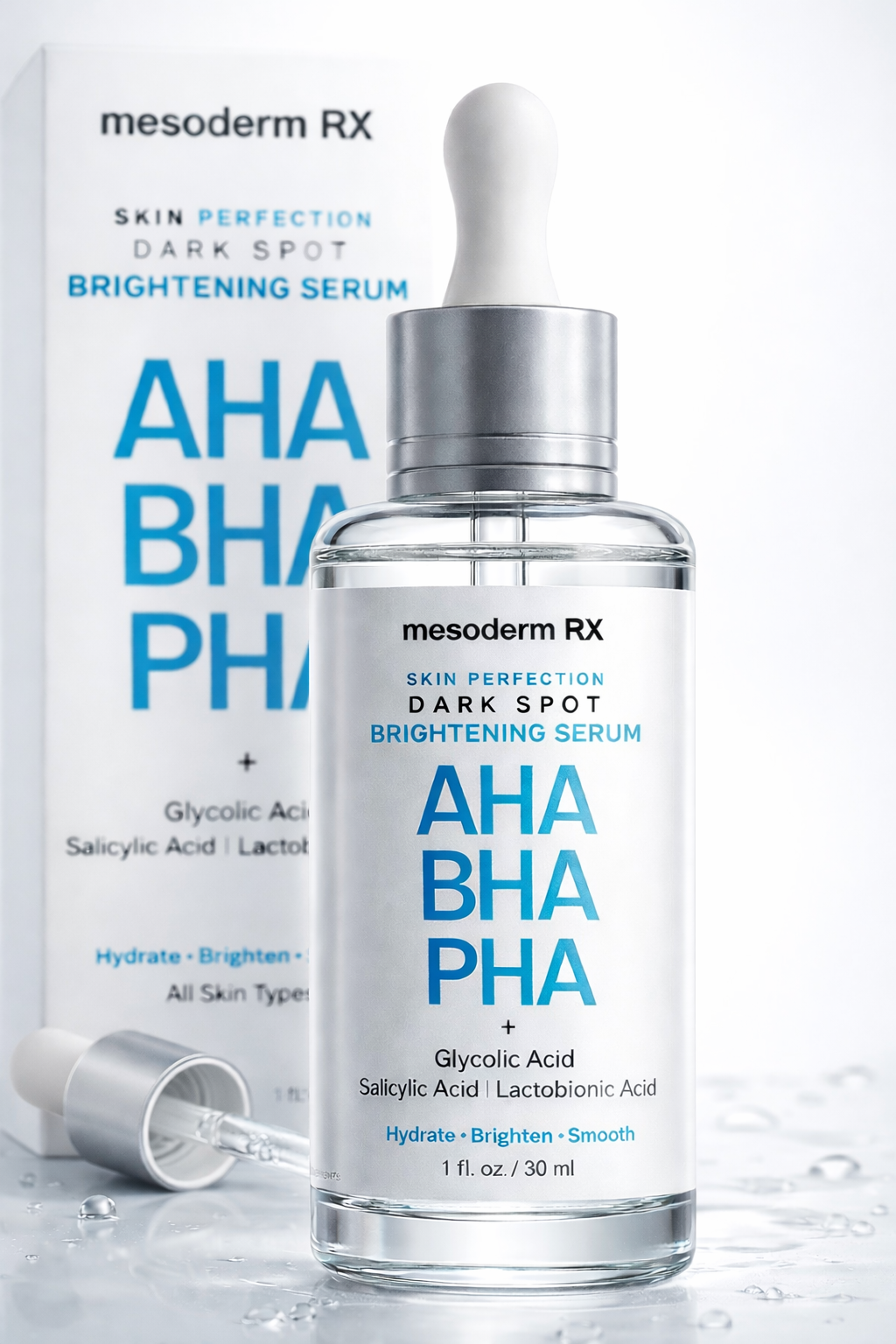
Mesoderm RX takes a useful position for that kind of decision-making: high-potency, minimal-additive formulas designed to brighten, smooth, and protect without unnecessary extras. If your concerns include both signs of aging and uneven tone, you can explore the brand's treatment-focused options at Mesoderm RX.