


Astaxanthin for Skin: A Clinical Guide to Results
Most advice about astaxanthin for skin gets the hierarchy backward. People buy a topical serum, expect fast brightening, then conclude the ingredient is overhyped when little changes.
That's the wrong use case.
Astaxanthin is most convincing when you treat it as systemic photoprotection and inflammation control first, then pair it with a targeted topical program for pigment, texture, and tone. If you want lighter post-inflammatory marks, melasma control, or smoother texture, astaxanthin alone usually won't do the heavy lifting. If you want stronger day-to-day defense against UV-driven oxidative stress, collagen breakdown, barrier decline, and irritation, it starts to make much more sense.
That distinction matters because skin aging and pigmentation aren't driven by one pathway. UV exposure triggers oxidative stress. Oxidative stress amplifies inflammation. Inflammation worsens barrier dysfunction and can worsen pigment signaling. A useful ingredient doesn't have to do everything. It has to do its job well, then fit into a complete protocol.
The Biological Engine of Astaxanthin
Astaxanthin is best understood by what it does, not by its category label. It acts like internal body armor for cell membranes.
Skin cells sit under constant pressure from ultraviolet light, pollution, heat, and ordinary metabolic activity. Those stressors generate reactive species that attack lipids, proteins, and structural components of skin. When that pressure persists, keratinocytes become more inflamed, fibroblasts produce less healthy matrix, and skin starts to look duller, drier, less elastic, and more wrinkled.
Why the molecule matters
Astaxanthin is a carotenoid derived most notably from Haematococcus pluvialis microalgae. Its relevance in skin biology comes from how it sits across lipid membranes. One part interacts with the membrane surface, while the central chain spans the fatty interior. In practical terms, that means it can help stabilize the membrane environment where oxidative damage often begins.
That's a more useful way to think about antioxidants. Many people imagine them as a vague neutralizer floating around the body. Astaxanthin is better viewed as a membrane-level shield.
Clinical perspective: If an ingredient mainly reduces oxidative and inflammatory stress, expect gradual improvements in resilience, not overnight correction of visible pigment.
This is why astaxanthin for skin fits photoaging so well. Photoaging isn't just “sun damage” in the cosmetic sense. It is cumulative oxidative injury, inflammatory signaling, and structural wear. When patients focus only on exfoliation or spot fading, they often ignore the internal side of the problem.
What it can and cannot do biologically
Astaxanthin doesn't directly function like a classic pigment inhibitor. It isn't the ingredient I'd choose if the immediate goal is to suppress melanin production at the surface. It also doesn't replace the role of exfoliants that speed the removal of already-pigmented cells.
What it can do is reduce some of the conditions that make skin age and destabilize in the first place. That includes UV-related oxidative stress and inflammatory signaling that can erode collagen support over time.
For that reason, astaxanthin pairs well with a surface routine built around proven barrier support and antioxidant care. If you want a practical topical complement, a well-built antioxidant-rich moisturizer makes more sense than relying on astaxanthin cream alone to carry the whole routine.
Four Pillars of Astaxanthin's Skin Benefits
Astaxanthin has a broad reputation, but clinically it's easier to understand through four distinct functions.

Photoprotection
This is the strongest pillar. Astaxanthin has long been recognized as one of the strongest naturally occurring antioxidants, and its skin relevance is tightly linked to UV defense. Reviews describe it as photoprotective and anti-inflammatory, with effects on UV-related reactive nitrogen species, inflammatory cytokine expression, and apoptosis in keratinocytes, as summarized in this astaxanthin review for clinical education.
That doesn't mean it behaves like sunscreen. It means it helps reduce some of the biological aftermath of UV exposure.
For real patients, that distinction is non-negotiable. Oral or topical antioxidants can support skin under UV stress. They do not block incident radiation the way sunscreen does. A daily UV filter is still the primary tool. A product such as Pigment Restraint Ultra High Sun Protection fits that role because it's described as a fast-absorbing, non-greasy formula with protection against UVA, UVB, IR, and HEV-combination rays.
Anti-aging support
Wrinkles don't appear only because skin gets older. They appear because collagen and elastin face repeated stress, then degrade faster than they're supported.
Astaxanthin's anti-aging relevance comes from lowering oxidative burden and dampening inflammatory cascades associated with matrix injury. When UV exposure drives enzymes such as MMP-1 upward, collagen maintenance becomes harder. An ingredient that helps reduce UV-triggered inflammatory damage can support a slower, steadier aging pattern.
Barrier and hydration enhancement
Aging skin often looks older because it is less hydrated and less stable. Water loss makes fine lines more obvious. Barrier weakness makes skin more reactive.
This is one of astaxanthin's more practical strengths. Instead of chasing an immediate brightening effect, many people do better when they use it to support the conditions that allow skin to stay calm and hydrated. Better moisture retention doesn't erase pigment, but it does improve the quality of the skin that you're trying to correct.
Inflammation reduction
A lot of disappointing skincare comes from treating inflamed skin as if it only has a color problem.
Astaxanthin may be especially useful when redness, reactivity, or UV-provoked irritation are part of the picture. That matters for patients who can't tolerate aggressive brightening regimens every day. If the skin is chronically irritated, even a good pigment plan tends to underperform.
Astaxanthin works best when you use it to lower background stress on the skin, not when you expect it to behave like a direct bleaching or peeling agent.
Oral vs Topical Astaxanthin Delivery
The delivery question is where most confusion starts. Oral and topical astaxanthin aren't interchangeable, and the evidence base is not evenly distributed.
Where oral use has the advantage
The strongest human data support oral astaxanthin, especially for photoprotection and skin quality outcomes. A peer-reviewed review summarized by News-Medical's overview of astaxanthin and human health reports that typical oral dosing of 4 to 12 mg/day for 8 to 16 weeks was associated with reduced UV-induced erythema, improved skin moisture, and better barrier support.
That profile makes sense biologically. Oral delivery gives you systemic distribution, so the ingredient can function as a whole-body support strategy rather than a spot treatment. If your concern is overall photoaging, seasonal dryness, low-grade irritation, or chronic UV burden, oral use aligns with the evidence much better than expecting a cream to transform the issue.
Why topical use often disappoints
Topical astaxanthin sounds appealing because it feels direct. Put the ingredient on the skin, fix the skin. In practice, it's harder than that.
Formulation matters. Stability matters. Penetration matters. Astaxanthin is highly pigmented, and at meaningful concentrations formulators have to manage color, oxidation, texture, and cosmetic elegance all at once. Many topical products never get the balance right. Some are too weak to matter. Others are cosmetically unpleasant enough that patients stop using them.
Topical use also tends to create unrealistic expectations. If someone is trying to fade melasma, post-inflammatory hyperpigmentation, or sun spots, topical astaxanthin isn't functioning like an acid, a retinoid, or a dedicated pigment regulator. That's why it often feels underpowered.
A clinical comparison
| Factor | Oral Astaxanthin (Supplement) | Topical Astaxanthin (Serum/Cream) |
|---|---|---|
| Best use case | Systemic support for photoaging, UV stress, hydration, and barrier resilience | Adjunct antioxidant support at the skin surface |
| Evidence strength for skin | Stronger human data profile for photoprotection and skin quality outcomes | More limited practical payoff unless formulation is excellent |
| Main strength | Reaches the body systemically and supports skin from within | Can complement a broader topical routine |
| Main weakness | Doesn't directly exfoliate or rapidly correct existing pigment | Stability, penetration, and cosmetic limitations can reduce real-world performance |
| Expectation setting | Gradual improvement over weeks, not instant brightening | Often overpromised as a shortcut, then underdelivers |
Practical rule: If your goal is UV resilience and calmer skin, oral astaxanthin is the smarter foundation. If your goal is visible pigment correction, you still need a dedicated topical strategy.
Patients also need to keep sunscreen logic straight. If you're still unclear on why protection strategy matters more than chasing a tan, this explanation of whether you can tan with SPF 30 is worth reading because it clarifies what sunscreen can and can't do in everyday exposure.
Decoding the Clinical Evidence on Astaxanthin
The evidence for astaxanthin for skin is real, but it has a very specific shape. It supports gradual changes in skin quality, not dramatic overnight cosmetic reversal.

What the human studies actually used
A major review in Marine Drugs summarized human supplementation studies largely from the 2000s to 2010s. Across those trials, oral astaxanthin at about 2 to 12 mg/day, most often 6 mg/day, was associated with measurable improvements in wrinkle parameters, skin elasticity, and moisture content. One cited randomized, double-blind, placebo-controlled human study found that 12 mg/day outperformed 6 mg/day for reducing inflammation, while both doses improved wrinkles and moisture, as detailed in the 2017 Marine Drugs review on astaxanthin as a potential protective agent.
One of the more useful historical details from that review is the 44-person study in healthy subjects where 2 mg/day astaxanthin plus 2 mg/day collagen hydrolysate for 12 weeks improved skin elasticity and barrier integrity. That doesn't prove everyone needs collagen with it, but it does show how combination strategies often make more clinical sense than ingredient minimalism.
How to read this evidence without overreading it
The pattern is consistent enough to be useful. You can reasonably view astaxanthin as an oral support ingredient for photoaged, dehydrated, or environmentally stressed skin.
You should not read it as proof that astaxanthin is a rapid depigmenting treatment. The measured outcomes skew toward elasticity, moisture, wrinkle parameters, and inflammatory modulation. Pigment correction is not where the ingredient is strongest.
When a supplement repeatedly helps moisture, elasticity, and UV response in controlled settings, it deserves a place in a protocol. It just doesn't deserve to be called a complete treatment plan.
Quality control also matters more than many buyers realize. If you're evaluating supplements generally, this overview of third-party testing standards from Defacto Labs is a useful framework for thinking about purity, verification, and label trustworthiness.
Why Most Astaxanthin Approaches Fail to Deliver
Failure usually isn't because astaxanthin does nothing. It's because the strategy is wrong.
The common mismatches
The first mistake is using astaxanthin as if it were a direct brightening active. It doesn't work like a dedicated tyrosinase inhibitor, and it doesn't remove existing pigment the way exfoliants can. If your main concern is melasma, post-acne marks, or blotchy uneven tone, expecting oral astaxanthin alone to clear that visibly is a setup for disappointment.
The second mistake is treating it as sunscreen backup that can replace sunscreen. It can't. If UV exposure keeps hitting the skin every day, you keep feeding the very pathways you're trying to calm.
Why topical-only plans underperform
A lot of topical astaxanthin products fail before they ever have a chance to help. The ingredient is difficult to formulate elegantly, and many products are either too mild, too unstable, too cosmetically awkward, or too diluted inside a long ingredient list.
Even when the formula is decent, the user often applies it into a broken routine. No daily UV protection. No exfoliation where appropriate. No pigment-focused topical. No patience.
That leaves astaxanthin doing a support job while being judged by the standards of a corrective treatment.
Expectations that need to change
If you want visible results, stop asking one ingredient to handle every layer of the problem.
- For UV stress: use astaxanthin as internal support.
- For existing pigment: use a targeted topical brightening plan.
- For barrier issues: reduce irritation and keep hydration consistent.
- For aging concerns: think in months, not days.
That's how astaxanthin for skin starts to perform like a useful clinical tool instead of a disappointing internet trend.
Building a Protocol with Astaxanthin
The right protocol is two-tiered. Internal defense, external correction.

Step one starts inside
Use oral astaxanthin as the foundation when your skin shows signs of chronic UV burden, dehydration, sensitivity, or early photoaging. That's where the ingredient makes the most clinical sense. It helps support the environment in which better skin can be maintained.
This is especially useful for patients who get stuck in a cycle of over-treating the surface. They peel, inflame, chase brightness, then wonder why the skin stays reactive. A systemic antioxidant approach won't replace corrective skincare, but it can make the skin easier to manage.
Step two corrects what oral support cannot
Oral astaxanthin does not exfoliate retained pigment. It doesn't directly accelerate turnover the way acid systems do. It doesn't function as a stand-alone resurfacing treatment.
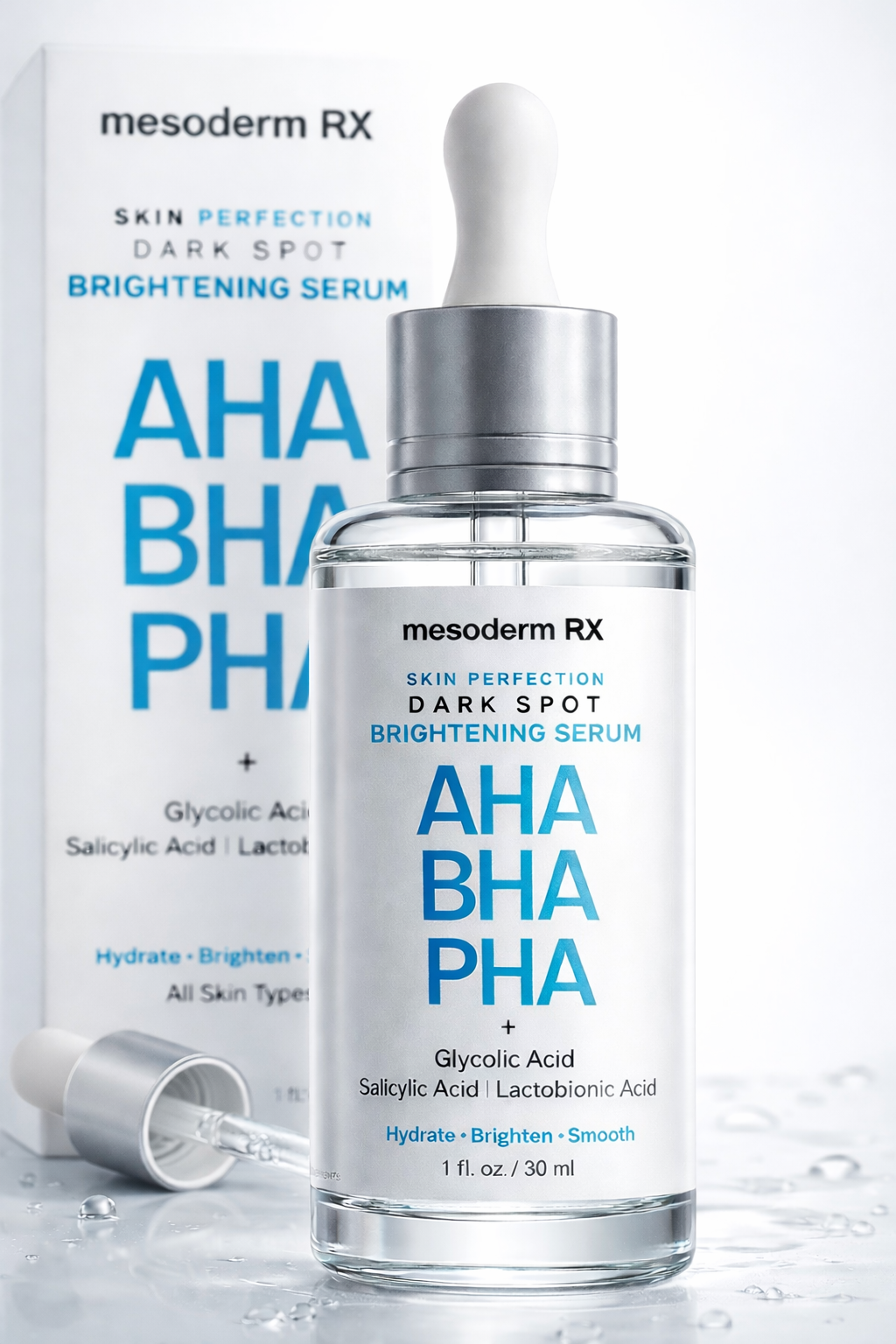
That's why a real protocol pairs internal support with a high-potency topical plan aimed at surface correction. For dark spots, dullness, and uneven texture, I'd rather see astaxanthin combined with acids, pigment regulators, and strict UV protection than used alone.
One example is Mesoderm RX, whose product philosophy centers on high-potency, minimal-additive formulas for visible concerns such as dark spots, uneven tone, dryness, and signs of aging. In practical terms, that approach fits astaxanthin well because the supplement addresses systemic stress while the topical routine handles turnover and pigment correction.
A barrier-conscious antioxidant strategy also pairs naturally with a broader routine that supports recovery and surface smoothness. If you're already using or considering supportive antioxidants topically, this guide to vitamin E serum helps frame where another protective layer can fit.
Here's a simple visual walk-through of the broader skin-support mindset:
What a practical routine looks like
-
Morning protection
Take oral astaxanthin consistently. Apply a dedicated sunscreen every morning. If pigmentation is present, reapplication habits matter as much as ingredient choice. - Evening correction Use your pigment-targeting or resurfacing topical at night. This application addresses existing discoloration and rough texture.
-
Barrier maintenance
Keep the skin hydrated and avoid stacking too many aggressive actives on the same night if irritation is building.
A good protocol separates jobs clearly. Astaxanthin defends. Topicals correct. Sunscreen prevents relapse.
Safety Profile and Final Recommendations
Astaxanthin's safety profile is one reason it keeps coming up in skin discussions. Reviews summarized in clinical education sources report that supplemental doses of 4 to 12 mg/day have been used for up to one year with no serious adverse effects in studies involving more than 2,000 participants, which supports its practical use as a long-term adjunct when chosen thoughtfully. That backdrop matters most for people who need a steady, low-irritation support strategy.
For sensitive or irritated skin, its strongest role is not fast cosmetic brightening. It is anti-inflammatory support. A PMC study found astaxanthin inhibited inflammatory cytokine secretion in epidermal keratinocytes and MMP-1 secretion in dermal fibroblasts after UVB exposure, with clinical findings showing reduced seasonal deterioration of wrinkles and skin moisture, as described in this review on astaxanthin and skin aging.
Final clinical recommendations
- Use it for the right indication: think photoprotection, resilience, hydration support, and inflammatory control.
- Don't use it as a sunscreen replacement: keep broad-spectrum sun protection at the center of the plan.
- Don't expect instant whitening: astaxanthin isn't a rapid pigment eraser.
- Pair it with targeted topicals: that's how you address the pigment and texture already present.
- Be consistent: astaxanthin works on a multi-week timeline, not a weekend timeline.
If you want a broader functional-medicine style overview of how oral support can fit into skin and eye health, this resource on support for vibrant skin and eyes is a reasonable companion read.
Astaxanthin for skin is worth using when you stop asking it to be a miracle and start using it as a strategic tool. As an internal shield, it has a credible place. As a stand-alone fix for dark spots, it usually falls short.
If you want a results-driven routine that doesn't rely on hype, explore Mesoderm RX for high-potency topical options that can pair with an evidence-based oral support strategy. The smart play isn't choosing between internal defense and surface correction. It's using both with clear roles.