


Natural Skin Brightening Ingredients: Proven & Safe
“Natural” is not a treatment strategy. It is a sourcing description.
That distinction matters because pigmentation does not fade because an ingredient sounds clean, botanical, or gentle. Dark spots respond when a formula interrupts melanin production, reduces inflammatory signaling, accelerates removal of pigmented surface cells, and prevents new stimulation from light exposure. If a product does not do those jobs, it is not a brightening system. It is just skincare with good branding.
A second problem is safety theater. Many people assume natural skin brightening ingredients are automatically less irritating. Some are well suited to sensitive skin. Some are not. Kojic acid, for example, is naturally derived, but it can still trigger sensitivity and should still be patch tested. The skin does not care whether irritation came from a lab or a fermentation process. Inflammation is inflammation, and inflammation can deepen discoloration.
The useful question is simpler. Which natural or naturally derived actives affect the biology of hyperpigmentation in a measurable way, and how should they be combined so sensitive skin can tolerate them long enough to work?
Rethinking Natural Skin Brightening
Most advice on natural skin brightening ingredients is built around lists. Turmeric. Licorice. Vitamin C. Aloe. Rice extracts. The format is easy to publish and easy to skim. It is also why so many routines fail.
Pigmentation is not a one-step problem. Melanin overproduction, pigment transfer, surface retention of discolored cells, and recurring inflammation all contribute. If you only attack one part of that chain, results tend to plateau. If you use too many actives without structure, you create irritation and prolong the problem you were trying to solve.
A clinically useful brightening routine starts with a harder truth.
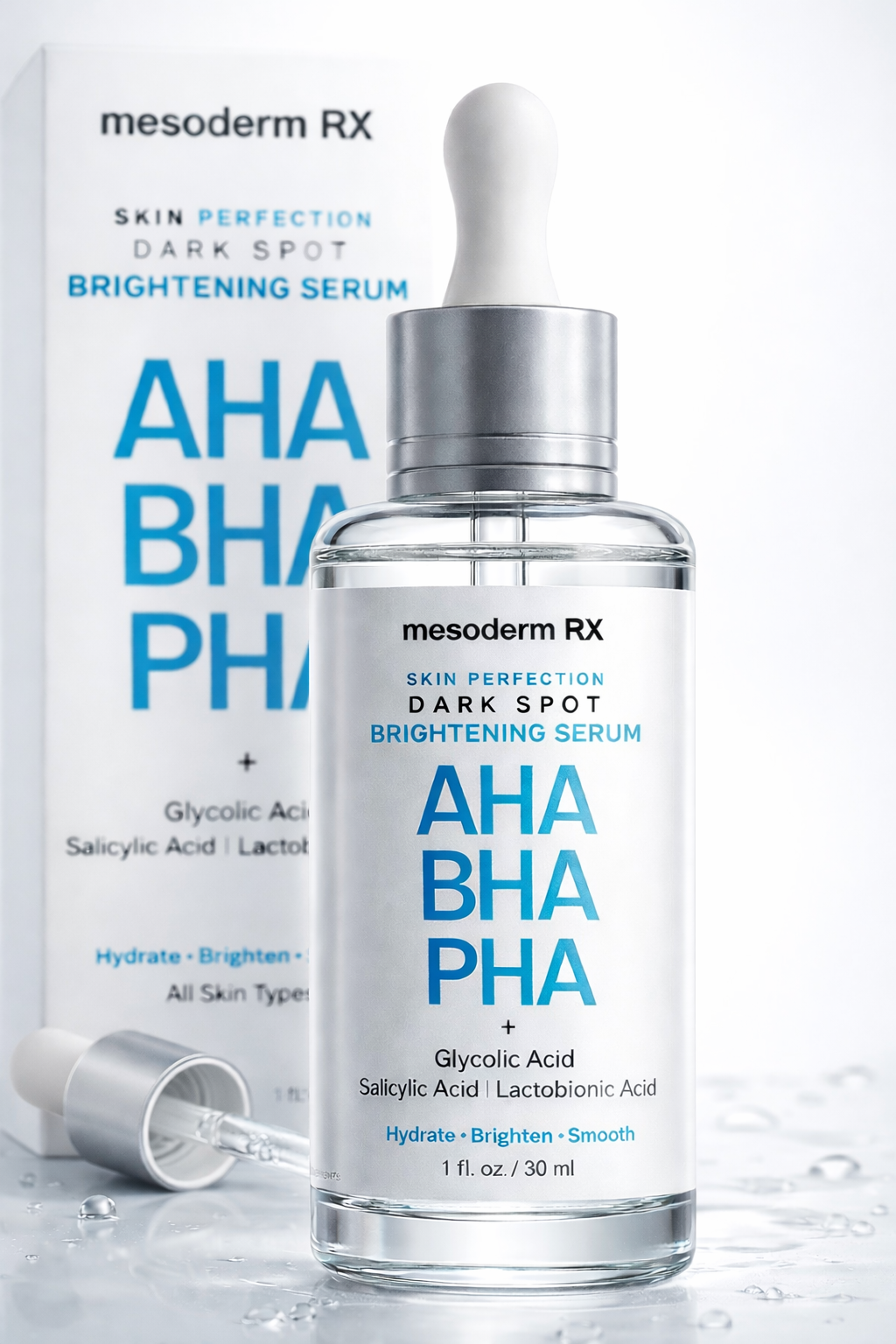
Featured Product
AHA + BHA + PHA Skin Brightening Serum (30ml) | Multi-Acid Exfoliating Glow Formula
A powerful multi-acid serum that gently exfoliates, unclogs pores, and improves skin texture. Helps enhance brightness and reveal a smoother, more radiant complexion.
Shop Now →What matters more than the label
Natural skin brightening ingredients deserve a place in treatment when they do one or more of the following:
- Slow melanogenesis: They reduce pigment production by interfering with tyrosinase, the key enzyme involved in melanin synthesis.
- Reduce inflammatory rebound: They calm the skin so new discoloration is less likely to form after acne, friction, or over-exfoliation.
- Support barrier recovery: Sensitive skin brightens more reliably when the barrier stays intact.
- Improve turnover: They help pigmented surface cells shed in a controlled way.
That framework is more important than whether an ingredient came from a fruit, a fungus, a root, or a fermentation process.
Brightening works best when you treat pigmentation as a system problem, not an ingredient shopping list.
The practical standard is this. Choose evidence-aware actives. Pair them intelligently. Control irritation. Protect results daily.
The Biology of Skin Tone and Discoloration
Pigmentation is regulated tissue behavior, not a cosmetic surface issue. If treatment only targets the color you see, and ignores the signals that produced it, brightening slows down or stalls.
Skin tone is set by melanin, made inside melanocytes and transferred to surrounding keratinocytes in packets called melanosomes. Baseline tone is normal physiology. Discoloration develops when pigment production increases, pigment transfer becomes uneven, inflammation keeps melanocytes activated, or pigmented cells are retained longer than they should be.

The enzyme that drives pigment production
At the center of melanogenesis is tyrosinase. This enzyme helps convert tyrosine into the intermediates that become melanin. That is why so many brightening ingredients, natural or synthetic, are judged first by whether they reduce tyrosinase activity.
That mechanism matters, but it is only one part of the system.
A useful brightening formula often does more than suppress pigment synthesis. It also reduces oxidative stress, limits inflammatory signaling, supports barrier recovery, and improves the removal of pigmented surface cells. For sensitive skin, that balance matters. A strong inhibitor used in an irritating base can create the exact inflammatory conditions that keep discoloration active.
Vitamin C is a good example of this dual role. It is used in brightening systems because it can interfere with melanin formation while also functioning as an antioxidant. In practice, formulation decides whether it helps or backfires. Low-pH ascorbic acid can be effective, but it is not automatically the best fit for reactive skin.
Why dark spots are not one diagnosis
“Dark spot” is consumer language. It is not a diagnosis, and it is not specific enough to guide treatment.
Post-inflammatory hyperpigmentation (PIH) follows injury or irritation. Acne, friction, picking, harsh exfoliation, and cosmetic reactions are common triggers. In this pattern, controlling inflammation is part of pigment treatment, not a separate issue.
Sun spots, or solar lentigines, develop after repeated UV exposure. They tend to be more localized and more persistent because the trigger has often been present for years.
Melasma behaves differently from both. Hormonal influence, visible light, heat, and UV exposure can all contribute. It often improves, then returns. That recurrence is one reason melasma needs a maintenance strategy instead of a short corrective phase.
For a more detailed breakdown of these categories, see this Mesoderm RX guide on what hyperpigmentation is, its causes, types, and effective treatment options.
Inflammation, oxidation, and pigment persistence
Melanocytes do not act in isolation. They respond to their environment.
Inflammatory mediators released after acne, irritation, or barrier disruption can push pigment production higher. That is why patients with sensitive, acne-prone, or over-treated skin often see discoloration linger longer than expected. The pigment pathway is still being stimulated even while they are trying to fade the mark.
Oxidative stress adds another problem. UV exposure and environmental stress increase reactive oxygen species, which can amplify pigment signaling and worsen uneven tone. Antioxidant support earns its place in a brightening routine, not as a trend ingredient, but as a way to reduce one of the biological drivers that keeps melanogenesis active.
Cell turnover also matters. Once pigment has been transferred into keratinocytes, the skin still has to clear those cells in an orderly way. If turnover is too slow, discoloration remains visible longer. If exfoliation is too aggressive, inflammation rises and fresh pigment can form. That trade-off is why brightening for sensitive skin has to be paced carefully.
| Discoloration type | Common trigger | Main treatment focus |
|---|---|---|
| PIH | Acne, irritation, injury, friction | Reduce inflammatory signaling and limit excess melanin production |
| Sun spots | Repeated UV exposure | Manage existing pigment and reduce ongoing light-driven stimulation |
| Melasma | Hormonal influence and light exposure | Long-term pigment regulation and strict daily protection |
The practical takeaway is straightforward. Effective brightening depends on matching the routine to the biology of the discoloration, then combining actives in a way the skin can tolerate long enough to work.
Why Most Brightening Routines Fail
Brightening routines usually fail for strategic reasons, not because every active is useless. People over-treat, under-protect, or combine products with no logic.
The most common failure pattern is simple. Someone sees a dark spot, buys a serum with one trendy ingredient, uses it inconsistently, feels impatient, switches products, then adds an exfoliant too aggressively. The pigment remains, but the barrier gets weaker.
Single-ingredient thinking
Hyperpigmentation rarely responds well to a one-note routine. A tyrosinase inhibitor may slow new pigment production, but it does not automatically address inflamed skin, slow turnover, or ongoing UV stimulation.
Ingredient hopping can cause damage. Every switch resets the skin’s adaptation curve. Sensitive skin does not respond well to constant experimentation, especially when acids, vitamin C, and spot correctors are layered without pacing.
Irritation disguised as treatment
A lot of people still use harsh DIY brightening tricks, especially acidic kitchen ingredients. These may create an immediate sensation, which people mistake for action. In practice, they often produce more inflammation.
That is the opposite of what PIH-prone skin needs. If a routine leaves the skin hot, tight, or persistently reactive, it is not moving toward clarity. It is producing conditions that can deepen discoloration.
If a brightening routine constantly stings, peels, or leaves prolonged redness, the routine itself may be maintaining the problem.
Poor layering decisions
There is a real guidance gap here. The advice online often lists ingredients individually but does not explain how to combine them without triggering inflammation. That matters because many people with dark spots also use exfoliants.
A notable example appears in this discussion of natural brightening ingredients, which notes that a 2002 study found niacinamide reduced hyperpigmentation without irritation, while clear guidance on combining niacinamide with exfoliants like AHAs for sensitive skin remains scarce.
Sunscreen noncompliance
This is the least exciting point and the most decisive one. Brightening without daily sun protection is an unstable strategy. Even a well-formulated pigment routine can be undermined by repeated light exposure.
People often think of sunscreen only as prevention. In pigmentation management, it is also treatment support. It helps preserve progress by reducing re-stimulation of the pathways you are trying to quiet down.
The patterns that waste time
These routines fail again and again:
- Using exfoliation as the whole plan: Exfoliation can help remove pigmented surface cells, but it does not replace pigment regulation.
- Stacking too many strong actives at once: More products does not equal faster fading. It often means more inflammation.
- Treating all discoloration identically: PIH, sun spots, and melasma do not behave the same way.
- Skipping barrier support: Sensitive skin needs a routine it can sustain, not just tolerate briefly.
A better routine does less guessing and more coordination.
Clinically Proven Natural Brightening Actives
A long ingredient list does not make a brightening formula effective. What matters is whether the actives cover the steps that keep discoloration visible: excess melanin production, inflammatory signaling, oxidative stress, and the slow release of pigmented cells from the surface.
That is how I evaluate natural brightening actives in formulation. By role first, ingredient second.

Vitamin C
Vitamin C earns its place because it can affect pigment formation while also limiting oxidative stress that keeps uneven tone active. That dual action is useful in skin exposed to UV, pollution, or chronic low-grade irritation.
Its weakness is not theory. It is formulation. Pure ascorbic acid can work well, but it is unstable, pH-sensitive, and easy to underdeliver if the package allows too much air or light exposure. Derivatives can be easier to tolerate, though they are not all equally effective. In practice, vitamin C works best when the formula is built for stability and the user does not expect it to carry the whole routine alone.
Kojic acid
Kojic acid remains one of the more respected naturally derived tyrosinase inhibitors in topical brightening. It is fermentation-derived, well known, and often effective in routines targeting persistent discoloration.
A summary from Instinct Medical Spa on natural skin brightening methods reports that kojic acid reduced hyperpigmentation in clinical use at 1% to 2% concentrations over 12 weeks. That helps explain why formulators still use it.
The trade-off is tolerability. Kojic acid can sting, especially in reactive skin or in formulas that also include exfoliating acids. I treat it as a strong option for targeted suppression of pigment production, but not one to introduce carelessly.
Niacinamide
Niacinamide is rarely the fastest route to visible fading, but it is one of the most practical actives in a sensitive-skin system. It supports barrier function and helps interrupt visible discoloration without the irritation profile associated with stronger exfoliants or more aggressive pigment inhibitors.
That matters because inflamed skin darkens more easily. Niacinamide helps lower the odds that treatment itself will keep the cycle going. It usually performs best in combination with a primary inhibitor such as vitamin C, arbutin, or kojic acid.
Licorice root extract
Licorice root extract deserves more respect than it gets in brightening formulas. Its value is not only melanin control. It is the combination of brightening support and anti-inflammatory activity.
That combination is useful in post-inflammatory hyperpigmentation, especially in skin that flushes, stings, or marks easily. A formula with licorice can be less aggressive while still contributing to pigment control. Used alone, it is often too mild for established spots. Used with a stronger inhibitor, it can make the whole system easier to tolerate.
Arbutin
Arbutin is a measured option for regulating tyrosinase activity. It tends to appeal to users who want a gentler path than harsher brightening agents but still need more pigment-focused action than niacinamide or soothing botanicals can provide.
Its main limitation is pace. Results are usually gradual, which is not a flaw if the skin is reactive and consistency matters more than intensity. In layered formulas, arbutin often makes sense as the quiet, steady part of the system.
Azelaic acid
Azelaic acid sits slightly outside the usual "natural brightener" marketing language, but it belongs in this conversation because it handles two common drivers of discoloration at once: abnormal pigment activity and inflammation.
That makes it especially useful for acne-prone skin with leftover marks. It can simplify a routine that would otherwise require separate products for breakouts, redness, and post-acne staining. It still needs a sensible start. Dryness and tingling are common early on, particularly if the barrier is already compromised.
A quick comparison
| Active | Primary job | Best use case | Main caution |
|---|---|---|---|
| Vitamin C | Melanin pathway support plus antioxidant protection | Dullness, UV-associated uneven tone, oxidative stress | Stability and packaging determine performance |
| Kojic acid | Strong tyrosinase inhibition | Persistent dark spots and hydroquinone-free brightening | Irritation risk rises in sensitive skin |
| Niacinamide | Barrier support and pigment transfer control | Sensitive skin, PIH-prone skin, layered routines | Usually not enough as a solo brightener |
| Licorice root extract | Brightening support with anti-inflammatory benefit | Reactive skin and redness-linked marks | Often too mild on its own |
| Arbutin | Gentle tyrosinase-focused support | Conservative routines for uneven tone | Results can be slow |
| Azelaic acid | Pigment regulation plus anti-inflammatory action | Acne-related discoloration and reactive skin | May cause dryness or tingling at first |
What works in formulation
Good brightening formulas are built as systems, not ingredient showcases.
A useful structure usually includes one primary pigment regulator, one barrier-supportive active, and one element that helps clear retained pigmented cells without pushing the skin into irritation. The exact combination changes by skin type. Sensitive skin may do better with niacinamide, licorice, and azelaic acid before stepping up to kojic acid. More resilient skin may tolerate vitamin C and kojic acid earlier.
This is the part many ingredient roundups skip. The goal is not to collect actives with brightening reputations. The goal is to combine mechanisms without creating enough inflammation to restart pigment production.
For a broader ingredient-level reference, Mesoderm RX has a guide on proven natural ingredients to treat hyperpigmentation and what to avoid.
One ingredient can help. Coordinated roles produce visible change.
Building Your Brightening System The Mesoderm RX Approach
Brightening routines fail when they are built like shopping lists.
Pigmentation responds better to a system with assigned jobs. One part of the routine needs to slow excess melanin signaling. Another needs to clear the discolored cells already sitting near the surface. A third needs to keep irritation low, because inflamed skin often makes more pigment while you are trying to reduce it. That is the part simple ingredient roundups usually miss, especially for sensitive skin.
Build around functions that work together
I formulate brightening routines in three roles.
A pigment regulator works at the production stage. Actives such as vitamin C, kojic acid, arbutin, azelaic acid, and licorice support can matter here, depending on skin tolerance and the type of discoloration involved.
A turnover support step helps release pigmented surface cells that would otherwise linger for weeks. This is usually where controlled acids earn their place.
A barrier stabilizer keeps the whole system usable. If the formula mix creates stinging, persistent dryness, or visible redness, the routine stops being corrective and starts feeding the same inflammatory cycle that drives post-inflammatory marks.

Exfoliation has a job, but it needs limits
Exfoliation belongs in a brightening system because discoloration is not only a pigment-production issue. It is also a cell-retention issue.
If pigmented keratinocytes remain packed at the surface, improvement looks slower even when melanin production is being reduced underneath. Mild, repeatable exfoliation can help clear that backlog and improve contact between leave-on actives and the skin surface. The trade-off is obvious. Push acid strength or frequency too far, and sensitive skin shifts into irritation, which can prolong discoloration instead of improving it.
That is why cadence matters more than aggression.
Formulas should reduce conflict inside the routine
A good brightening product does not need to do everything in one bottle, but it should fit cleanly into the system around it. I look for formulas that combine a clear corrective role with a low chance of triggering unnecessary reactivity. Fragrance, decorative dyes, and excess filler do not help manage pigmentation. For reactive skin, they can make the routine harder to sustain.
One example is Mesoderm RX AHA BHA PHA Dark Spot Whitening Serum, which combines exfoliating acids with brightening support in a way that suits users who need resurfacing and tone management together. The value is not that it contains more ingredients. The value is that the ingredients serve coordinated roles.
The goal is sustained pigment control with irritation kept low enough for the skin to tolerate the plan for months, not days.
The practical standard
The strongest brightening systems are usually restrained. They use a few mechanisms on purpose, sequence them carefully, and leave enough recovery room for the barrier to stay intact.
That approach matters even more for sensitive skin. A routine that looks weaker on paper often performs better in real use if it lowers inflammation, improves consistency, and gives each active a clear role.
A Practical Routine for Visible Brightening
A brightening routine should be boring in the right way. Repetition is what allows the skin to change.
Many individuals do not need an elaborate ten-step sequence. They need a routine they can repeat without burning out their barrier.

Morning routine
The morning shift is about defense.
- Cleanse lightly: Remove overnight oil and residue without stripping the skin.
- Apply an antioxidant brightener: Vitamin C is the clear fit here when tolerated.
- Add a supportive serum if needed: Niacinamide is helpful for people whose skin is reactive or prone to post-acne marks.
- Moisturize if your skin needs it: Keep this simple and non-irritating.
- Finish with broad-spectrum sun protection: This is the step that protects the work done by every brightening active underneath.
Morning routines fail when people treat SPF as optional. For visible uneven tone, it is part of correction, not just prevention.
Evening routine
Night is where most of the corrective work happens.
On some nights, focus on your pigment inhibitors. On other nights, use controlled exfoliation. Sensitive skin usually responds better to alternation than to stacking everything at once.
A practical rhythm might look like this:
- Night one: Cleanser, brightening serum, moisturizer
- Night two: Cleanser, exfoliating product, moisturizer
- Night three: Cleanser, barrier-supportive serum, moisturizer
Then repeat based on tolerance.
How to layer without creating irritation
Many people sabotage progress at this stage. They use vitamin C in the morning, then apply an exfoliating acid, a kojic acid treatment, and another spot serum all in the same evening. The skin may tolerate that briefly. Many barriers will not tolerate it for long.
Use decision rules instead:
- If your skin stings with water, reduce acids first
- If marks are acne-related, prioritize anti-inflammatory support
- If the skin feels smooth but remains blotchy, focus more on pigment control than more exfoliation
- If you are newly starting actives, add one variable at a time
A visual walkthrough can help if you prefer to see product sequencing in practice.
What to expect
Brightening is gradual because skin turnover is gradual. The visible pace depends on the type of discoloration, how much inflammation is still present, and whether you keep re-triggering pigment with light exposure or irritation.
The key is consistency without escalation. If a routine is effective but sustainable, it has a higher chance of fading discoloration than a more aggressive plan that you can only tolerate briefly.
A calm routine used consistently beats an intense routine abandoned after two weeks.
Red Flags to Avoid in Brightening Products
A brightening product can contain good actives and still be poorly built. Formula red flags often explain why a “promising” product performs badly on real skin.
Ingredients and design choices to question
- Added fragrance: Fragrance does not fade pigment. In reactive skin, it can increase irritation and prolong PIH.
- Decorative dyes: These add visual identity for the product, not treatment value for the skin.
- One harsh acid as the whole concept: High intensity without barrier support is a common route to rebound inflammation.
- Unclear vitamin C form or poor packaging: If stability is ignored, the formula may degrade before it can do useful work.
- No usage guidance for layering: If a brand sells multiple actives but gives no instruction on sequencing, the user carries the risk.
Claims that deserve skepticism
Be cautious when a product promises fast whitening, instant spot removal, or dramatic correction with no mention of SPF, irritation control, or routine structure. Pigmentation treatment is not magic. Real brightening requires repeated interruption of the same biological pathways.
This is also why sun protection needs to stay central. If you want a practical explanation of why SPF still matters even when tanning occurs, Mesoderm RX’s article on whether you can tan with SPF 30 is worth reading.
The most reliable natural skin brightening ingredients are not the ones with the loudest claims. They are the ones placed in formulas that respect skin biology, control inflammation, and support consistent use.
Clearer skin usually comes from restraint, not excess. If you want hydroquinone-free, minimal-additive formulas built around pigmentation control, exfoliation, and daily protection, explore Mesoderm RX.